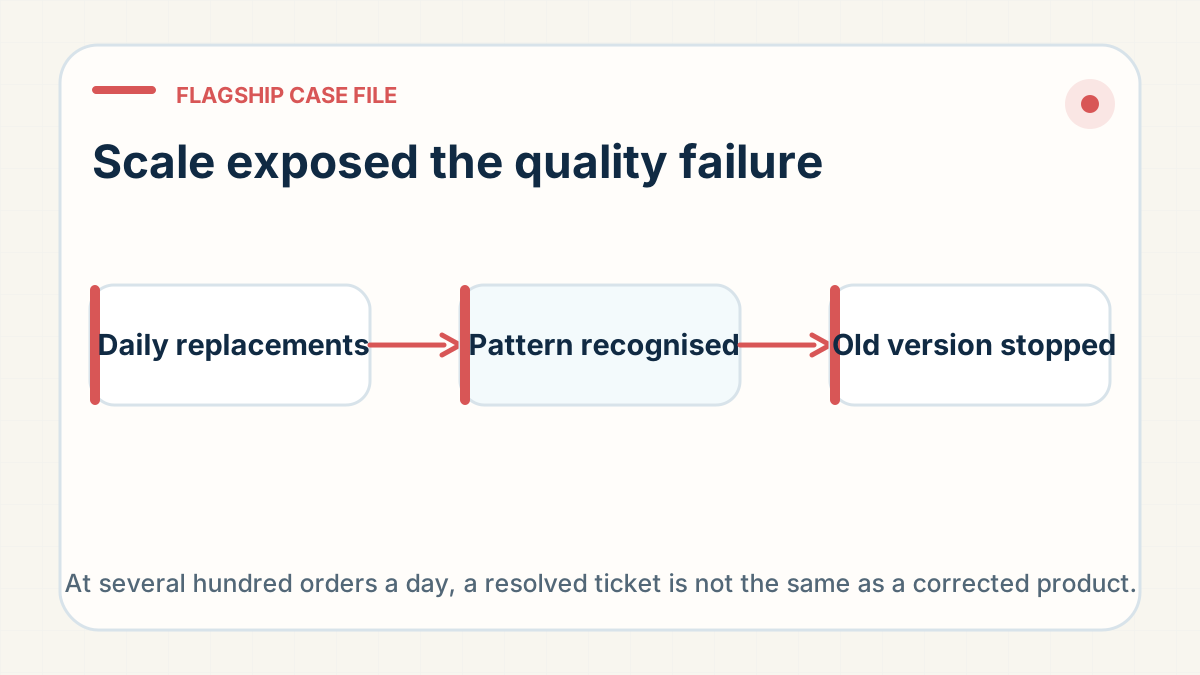
Flagship case file
When 500 Daily Orders Exposed a Product-Control Gap
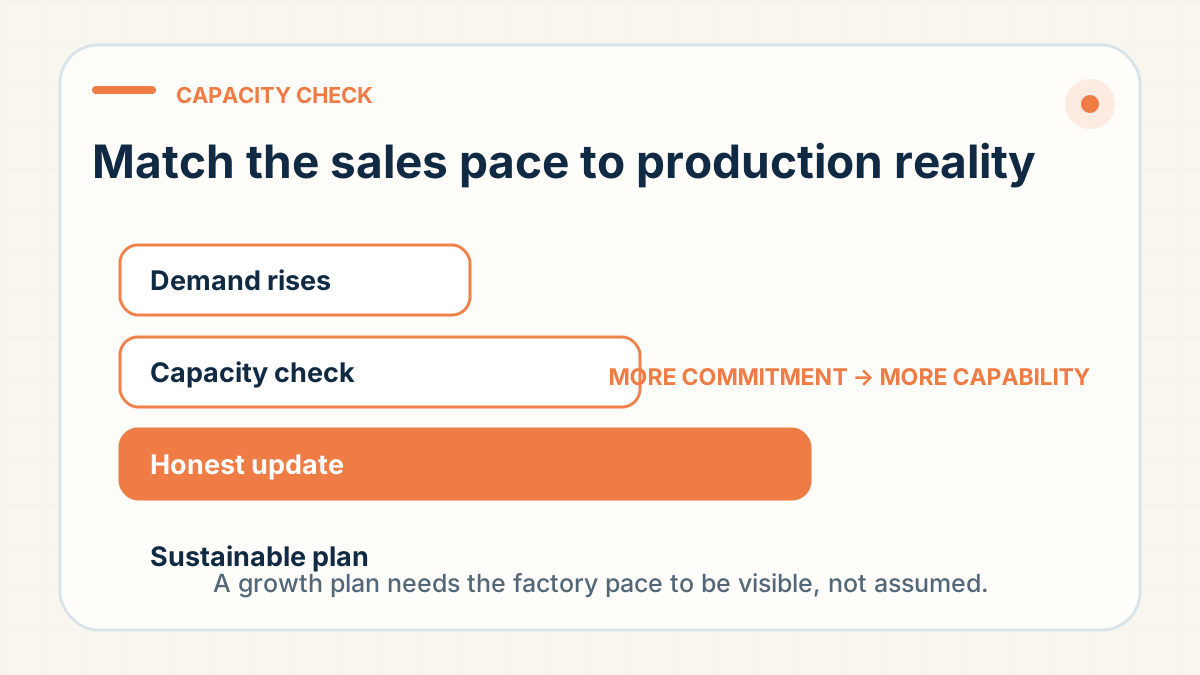
Scale exposed a repeat defect, the product-version correction and the limits of what the record proves.
Read the full case →True, anonymised stories and practical guides from running cross-border fulfilment since 2018.
Start with the real decisions
Scale exposed a repeat defect, the product-version correction and the limits of what the record proves.
Read the full case →The systems could be made ready. Unreserved stock could not be promised.
Read case →A paid-order backlog was reconciled before any blanket recovery promise was made.
Read case →The supplier conceded. The landed economics still did not work.
Read case →Real work, documented
Follow the sourcing calls, route checks, quality issues and order exceptions behind day-to-day ecommerce fulfilment. Each dated note shows the context behind a decision; the practical guides turn recurring lessons into steps you can use.
Browse operations posts by month
Daily notes, weekly wraps and monthly reviews.
Inside the diary: 136 daily notes · 20 weekly wraps · 3 monthly reviews
Explore all 159 operations entries →Results Intelligence
SHEIN, Shopify, Temu’s owner and the rest publish their numbers every quarter. Each guide reads the actual filing, checks every figure against it, and works out the one thing you should do differently: test it, price it, source it, ship it, or drop it. See the method and full guide list.
Newest guides
The company is the evidence. Your next move is the point.
Find a guide for: product demand · pricing · stock commitments · delivery costs
Browse all 27 guides →Complete library
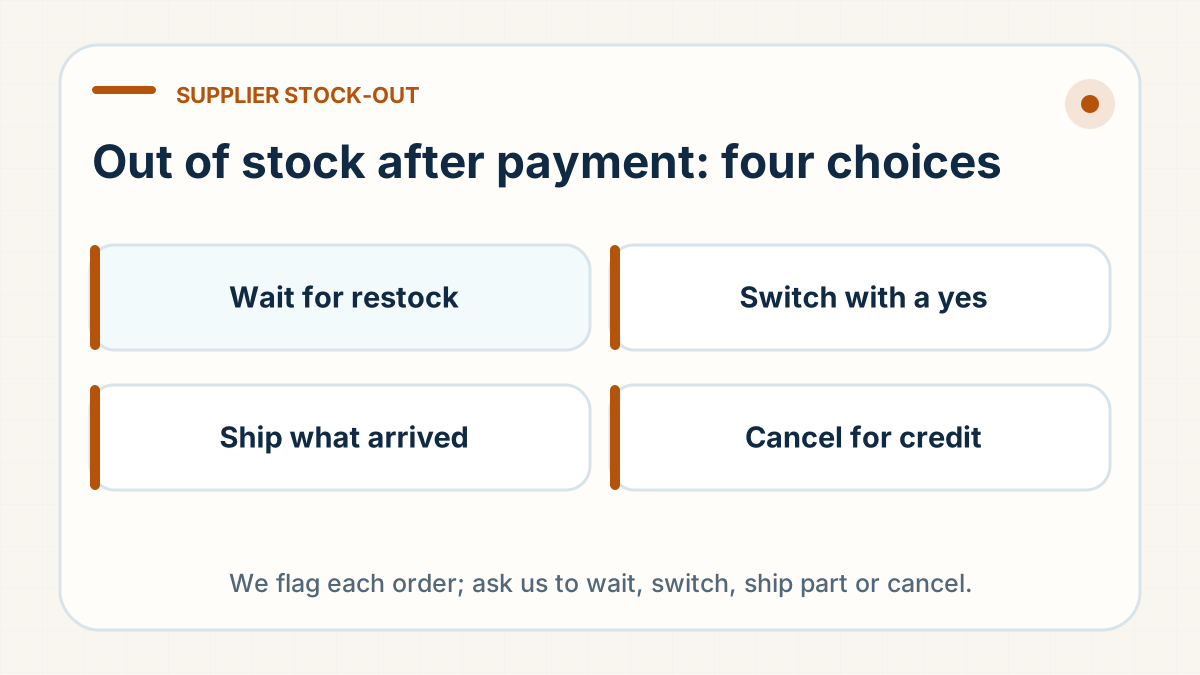
Your supplier ran out after your customer paid? We flag each affected order; ask us to wait, switch once you approve, ship what arrived, or cancel for a credit.
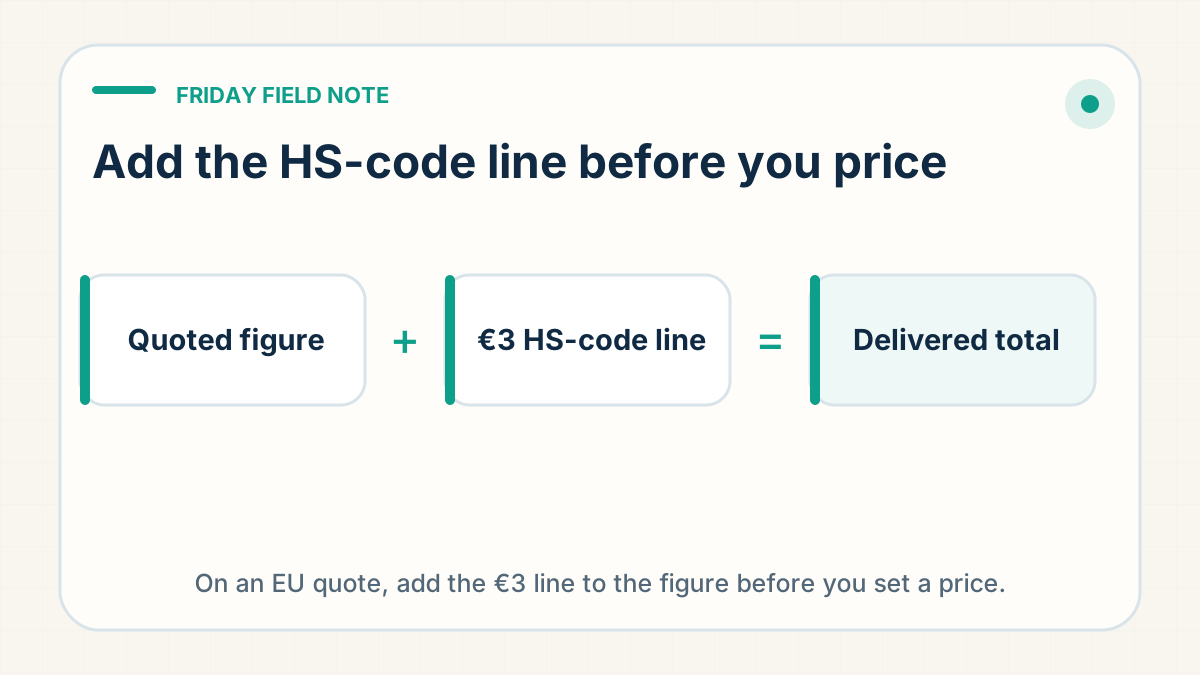
Get one delivered total per product and pack size, the quoted figure plus the EU €3 per-HS-code line in one currency, before you price a listing.
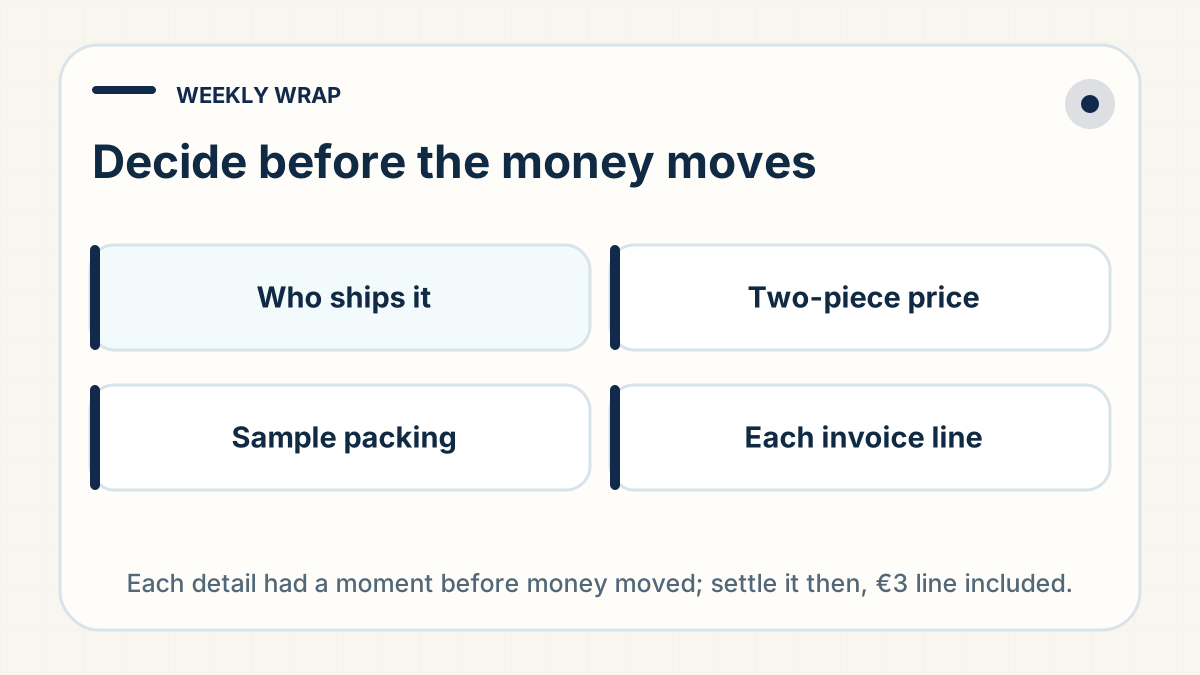
Decide before the money moves: who ships each order, the price for one, two and three pieces, the packing line, every invoice line and the EU €3 line.
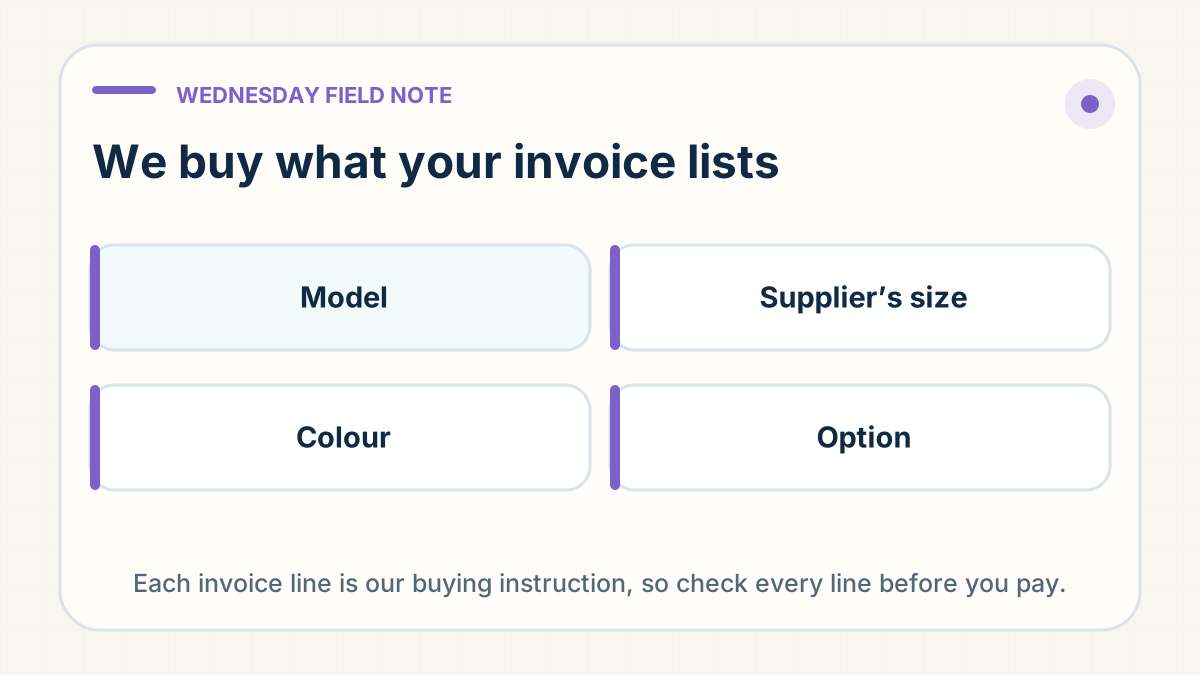
We buy what each invoice line names, so check every line for model, size in supplier units, colour and option against what your customer bought before you pay.
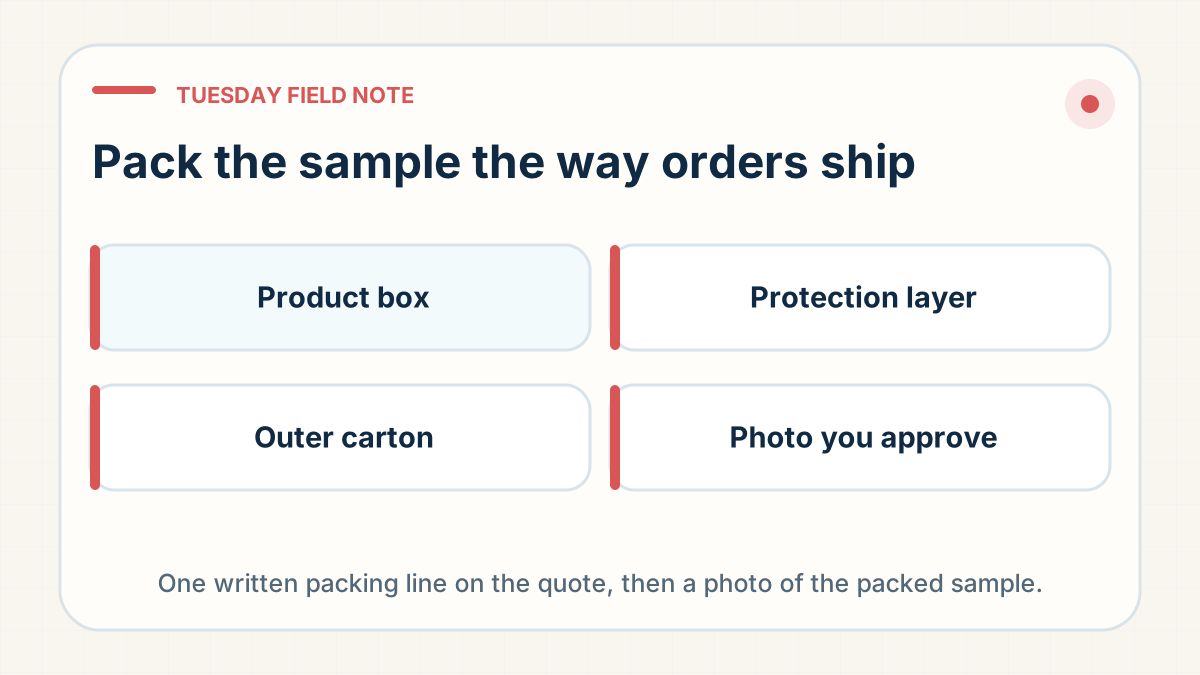
Pack the sample as orders will ship: get one packing line on the quote for the product box, protection layer and outer carton, and approve the packed photo.
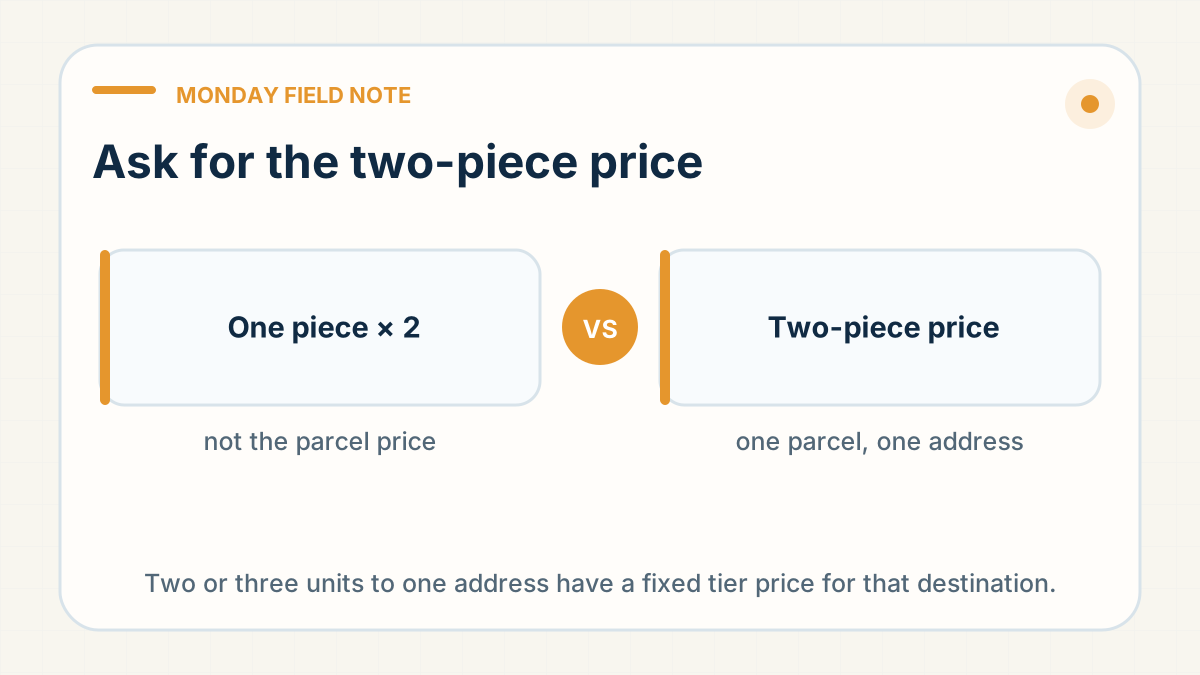
For two or three units to one address, ask for each destination’s fixed one-, two- and three-piece price in writing instead of multiplying the one-piece price.
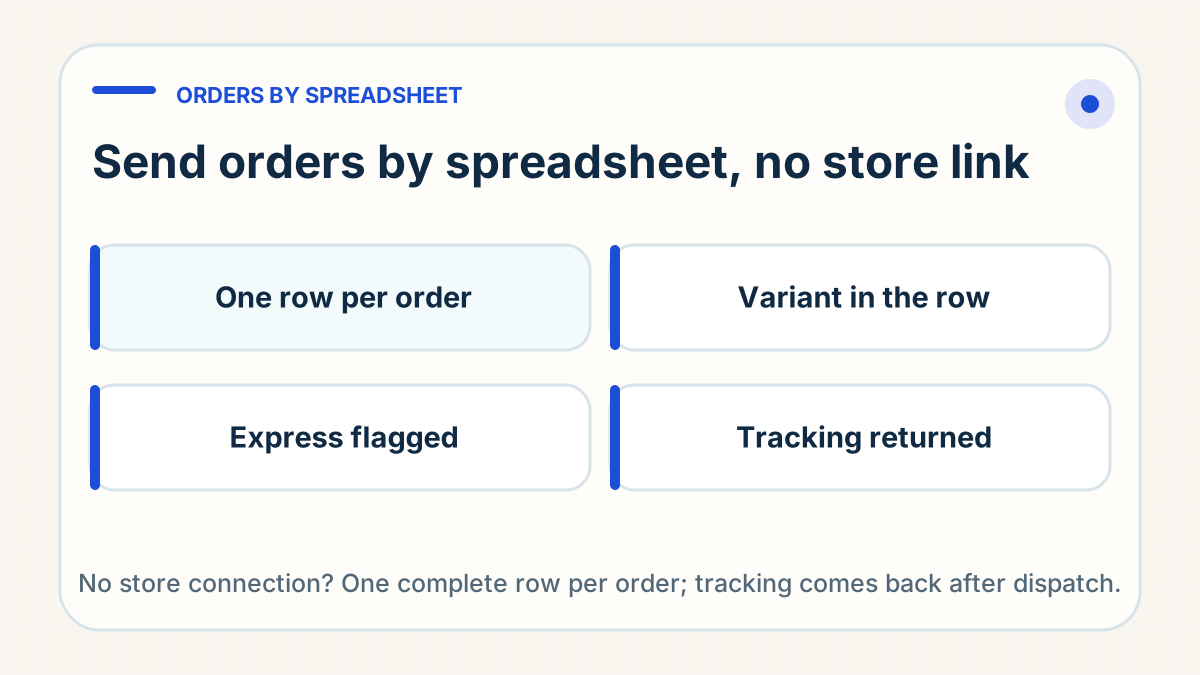
No store connection? Send orders as a CSV or Excel file or in a shared sheet. What each row needs, where tracking comes back, and when to connect instead.
Before you ship an order from your own stock, type each order number before we buy on Monday, then wait for our reply that names it as yours to ship.
Send your accountant’s field list and each store’s expected monthly total with the invoice request, so the orders and payments tie out before you pay.
Run the factory restart line by line: keep one register row per waiting order for blockers, ad restarts, missing pieces and invoices until it ships or closes.
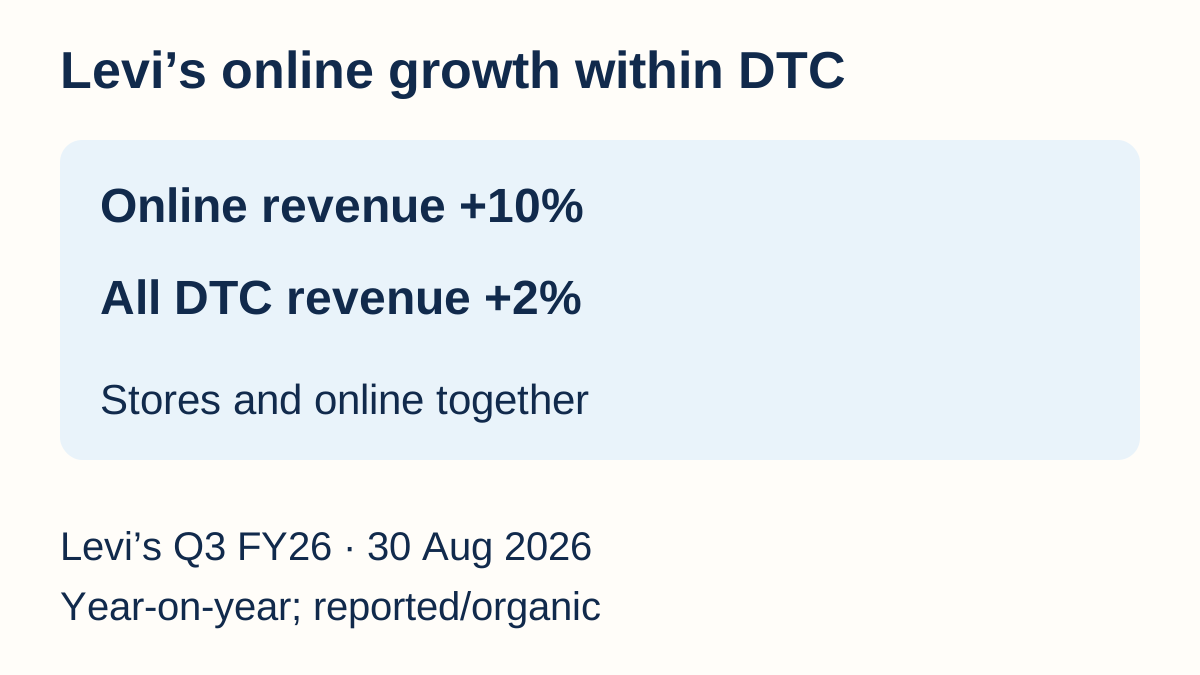
Online revenue grew faster than Levi Strauss’s combined direct business. Management describes softer store traffic in the Americas and Europe, with a different store story in Asia.
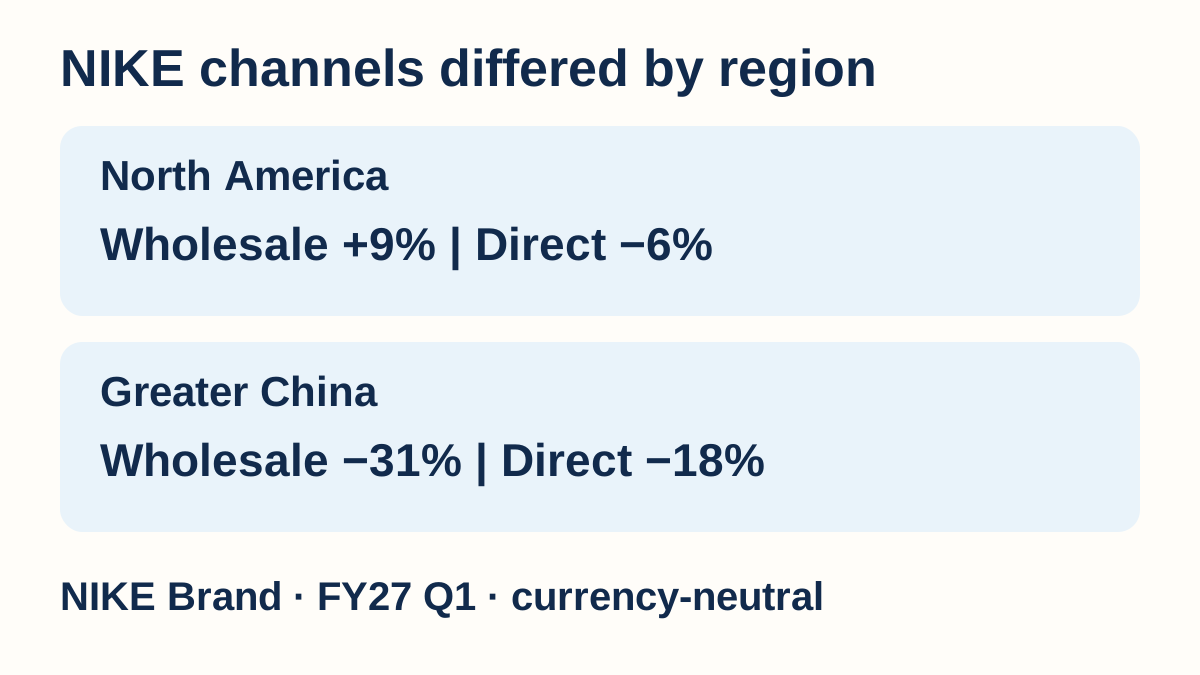
North American wholesale grew as NIKE Direct declined. Greater China showed a different pattern: both channels fell, with wholesale contracting faster.
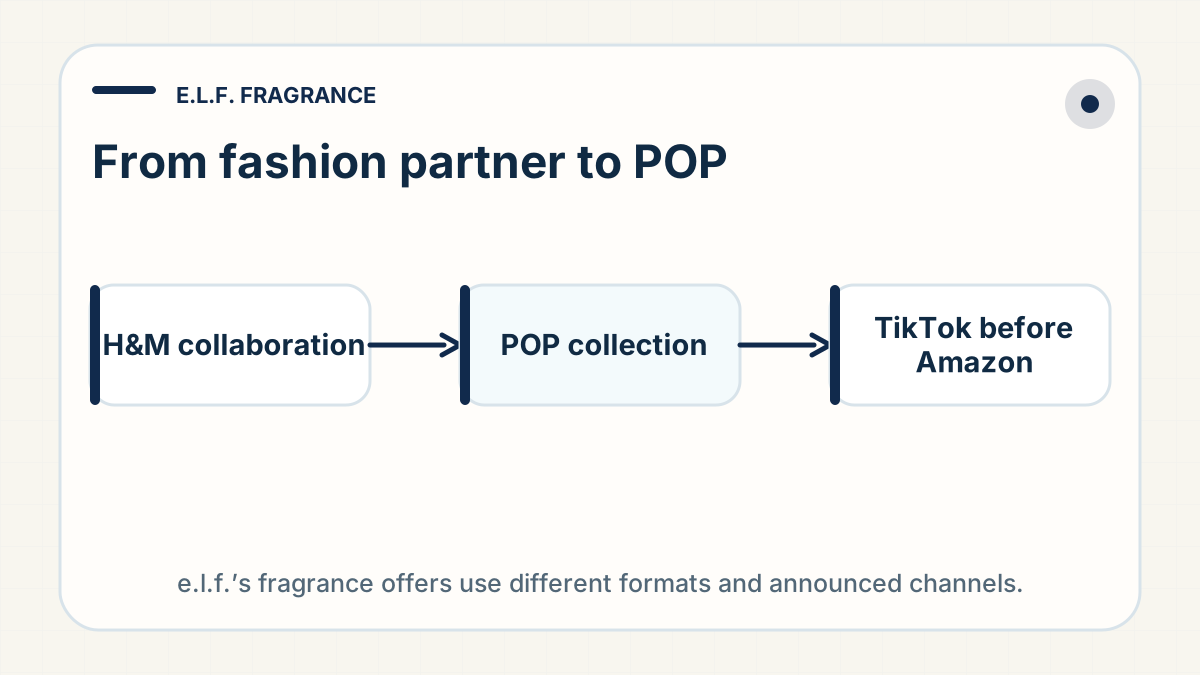
e.l.f. moved from an H&M scent collaboration to POP and a TikTok-first timetable.
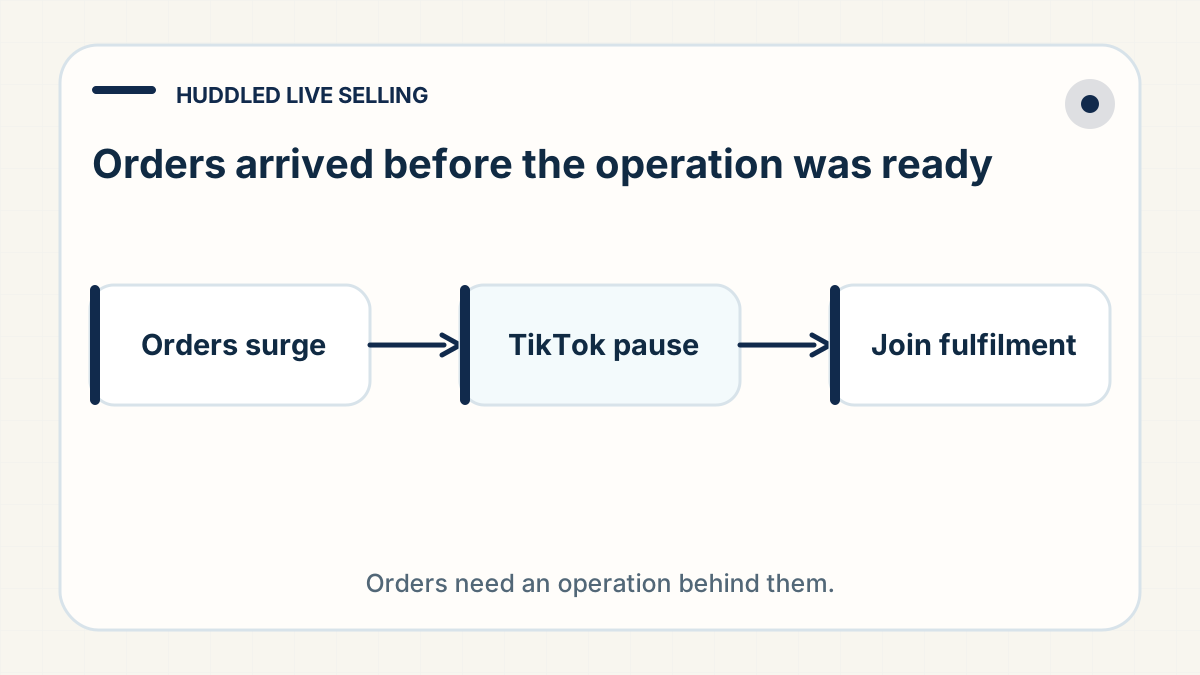
Huddled paused TikTok sales when fulfilment fell behind. The operation behind a live-selling show matters as much as the audience.
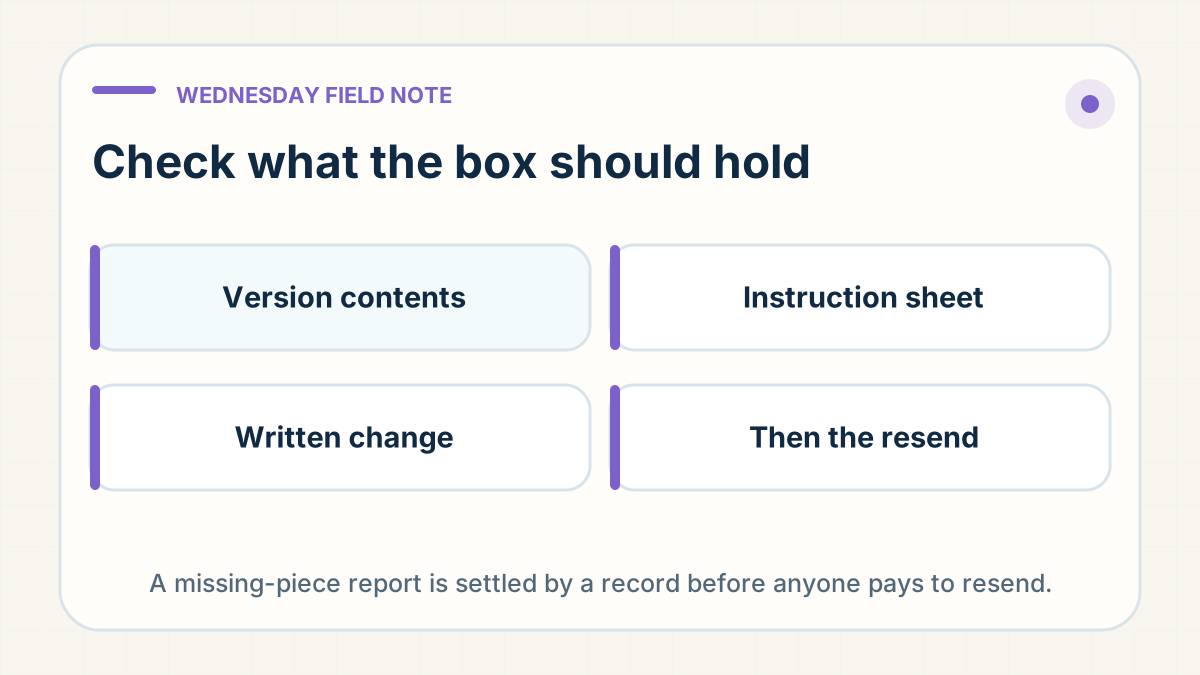
Before you pay for a resend of a “missing” piece, check the exact version’s contents list, the instruction sheet and any written change from the supplier.
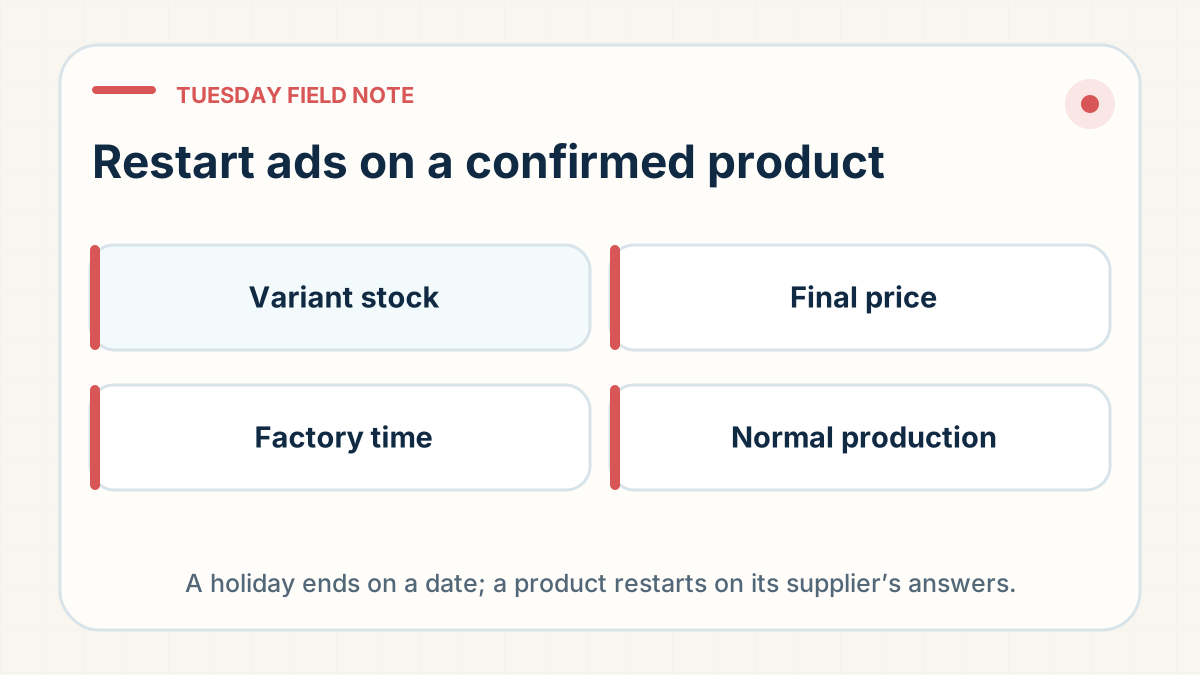
After a factory closure, restart ads only on five answers per variant: stock, final price, processing time, shipping time and whether production is normal.
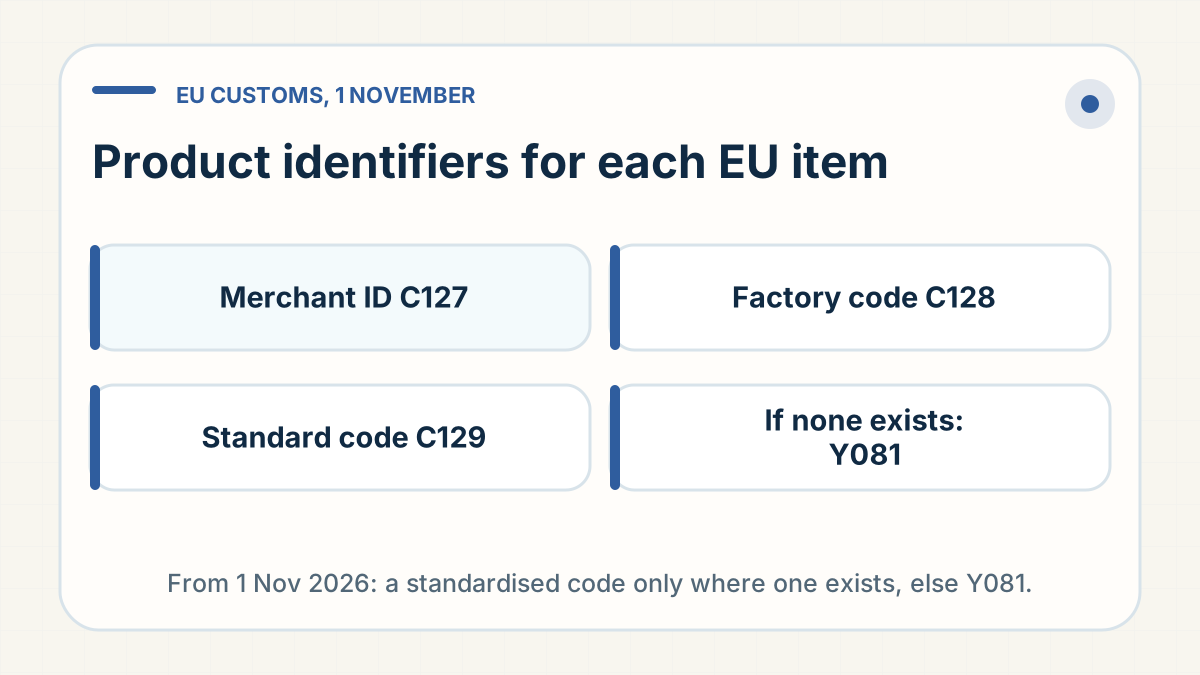
From 1 November 2026, EU distance-sale declarations carry a merchant ID, a manufacturer code and, only where one exists, a standardised code (else Y081) per item.
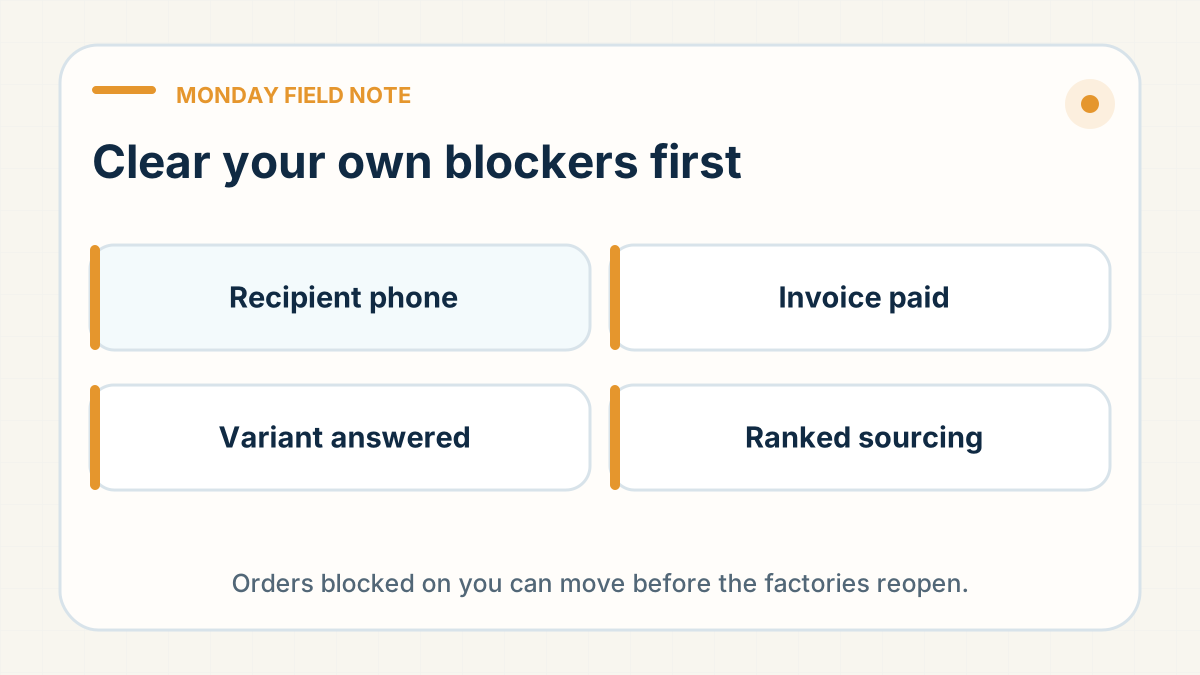
On the first day back after a China holiday, clear the orders blocked on you, such as a missing phone number or unpaid invoice, then send ranked new sourcing.
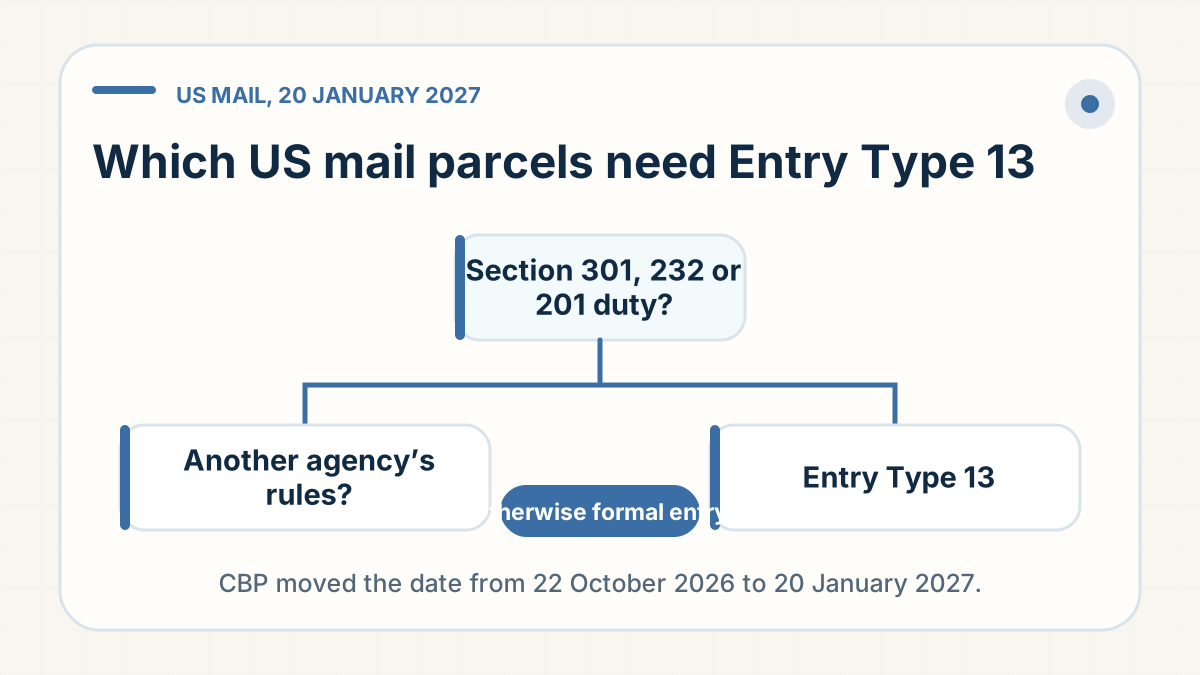
CBP moved its US mail Entry Type 13 date from 22 October 2026 to 20 January 2027. Ask your filer separately whether CPSC’s 22 October date still applies.
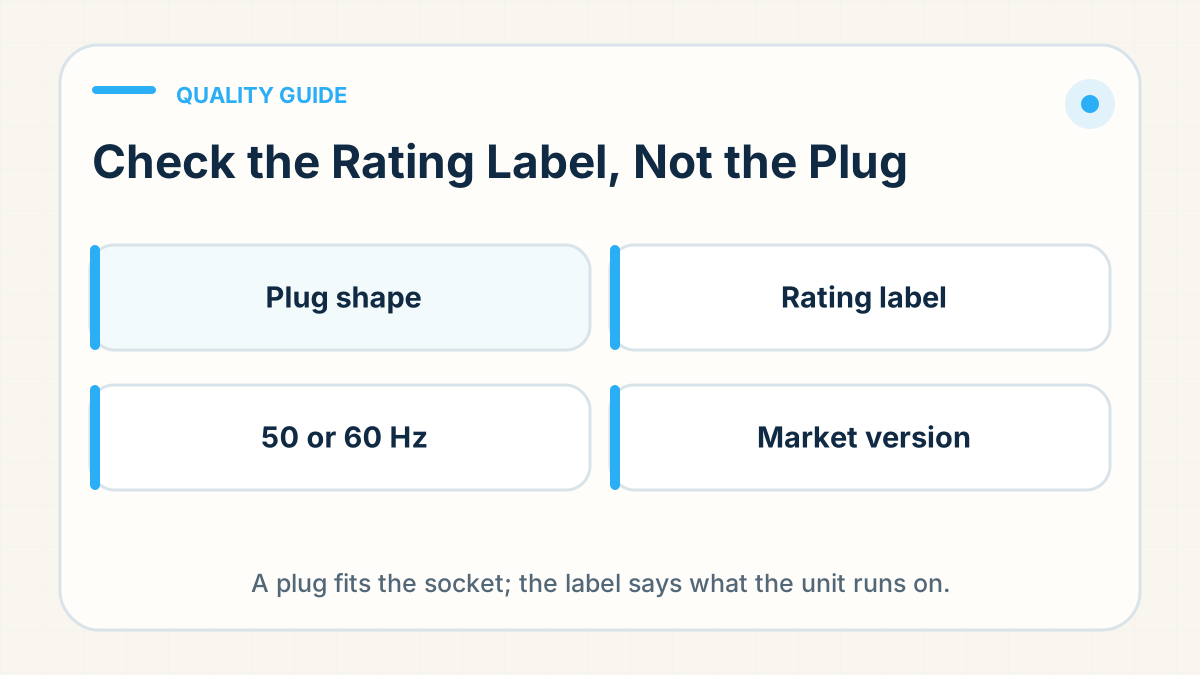
A plug shape is not a rating. Read voltage, frequency and wattage off the label of the exact unit before you list a mains product for a market.
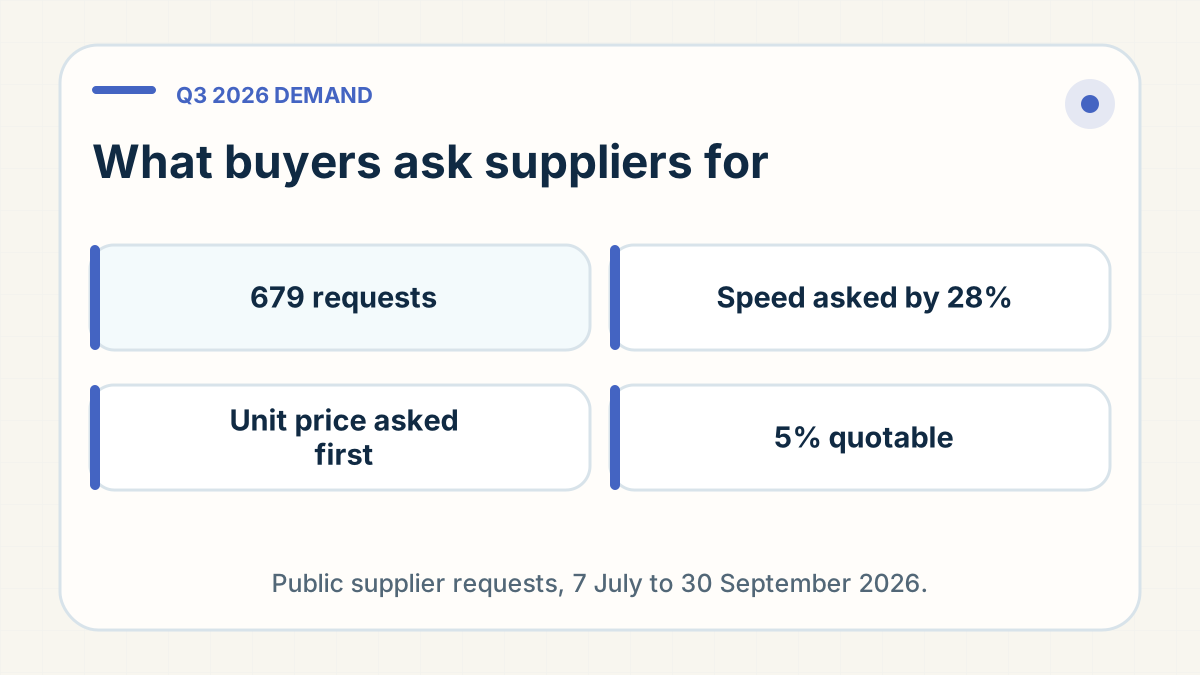
679 supplier requests in Q3 2026: 28% wanted fast delivery, 23% a long-term partner, 20% no MOQ. Only 33 gave a product, destination and volume.
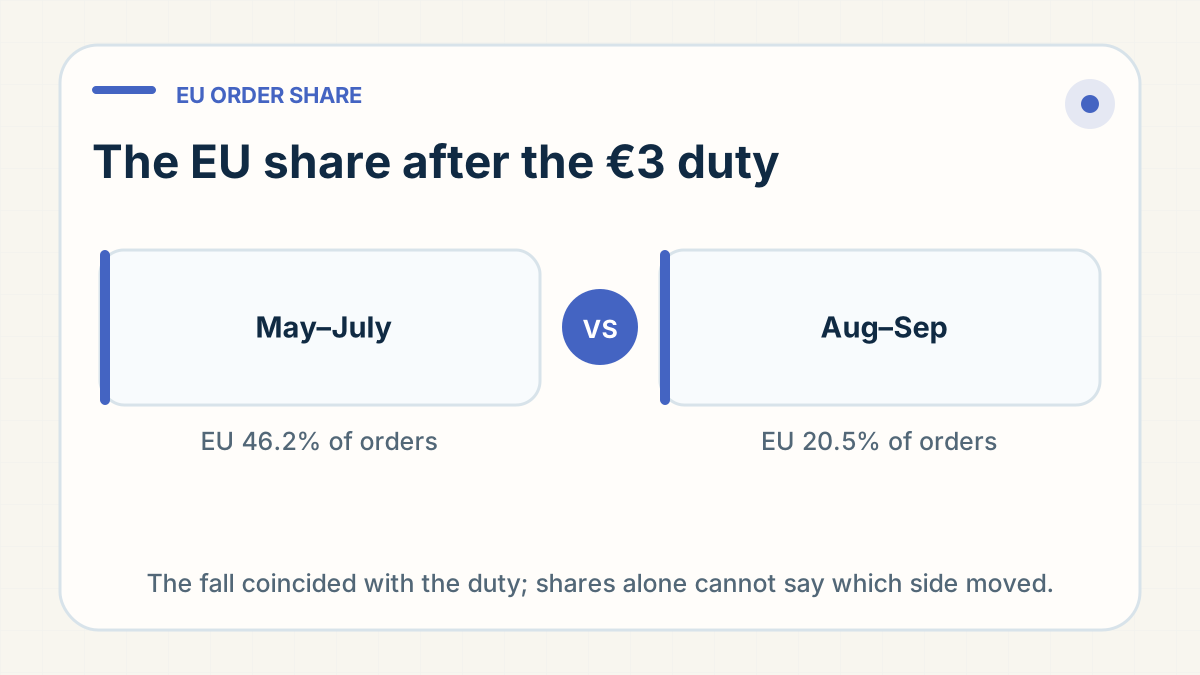
In our orders paid May–September 2026, the EU share held at 49% in July, the duty’s first month, then fell to 17.3% by September. What to check in your store.
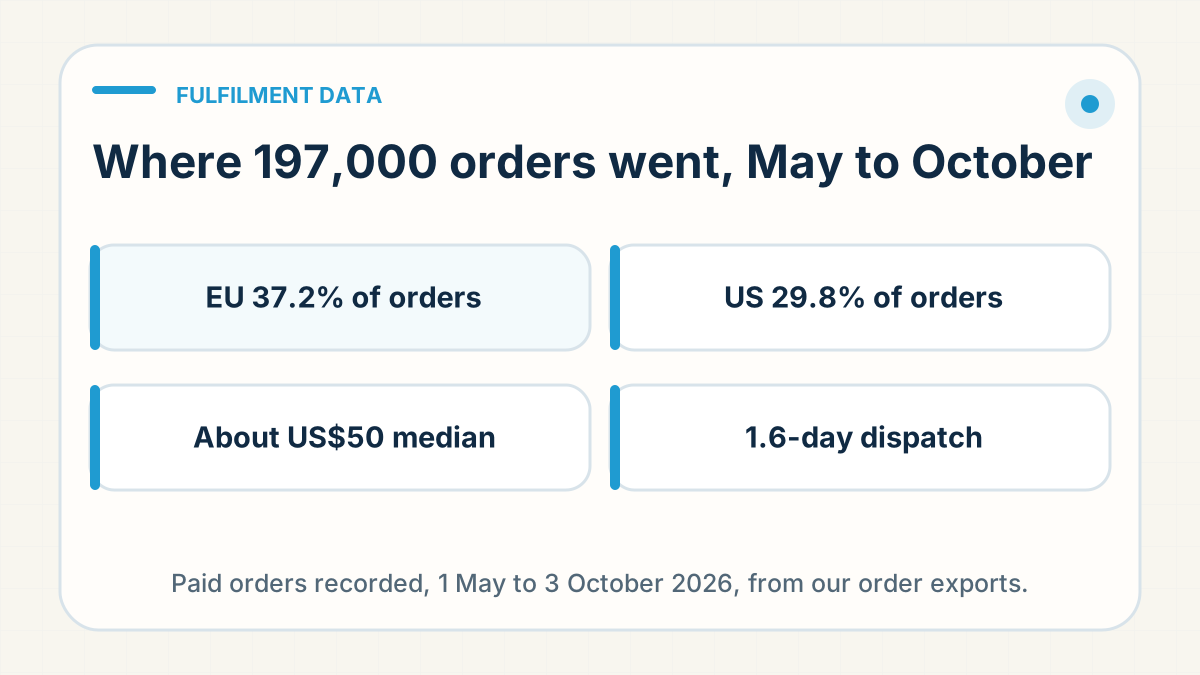
Destinations, categories, order values, declared weights, payment hours and dispatch speed from 197,000+ paid orders recorded, 1 May to 3 October 2026.
Yes, once intake is agreed before the goods move. What to send first, how parcels get matched to orders, what is checked on arrival and how it is priced.
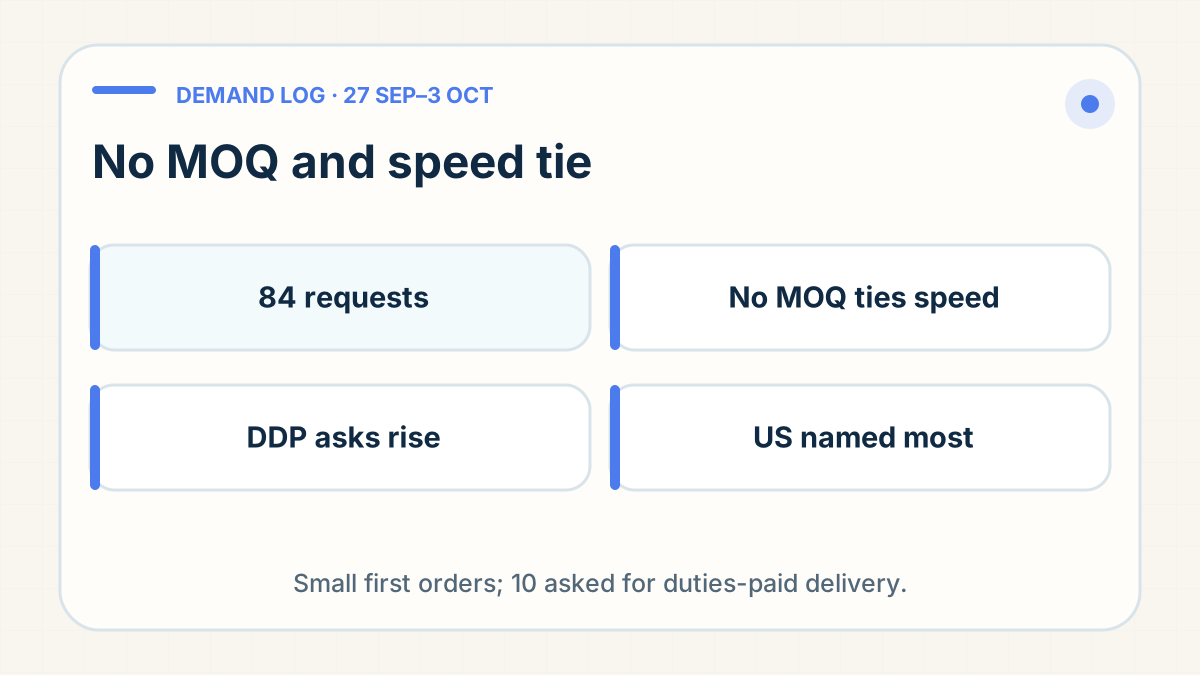
84 distinct supplier requests from 27 September to 3 October: no MOQ and speed tied on 23 each, duties-paid asks rose to 10 and the US was named most.
Send your maximum landed price per selling unit and destination with the brief, so the round after the holiday searches for your number, not a second quote.
Send one factory-question sheet with the brief: sizes made, the heavy line in the quote, open claims before a closure and your maximum landed price per unit.
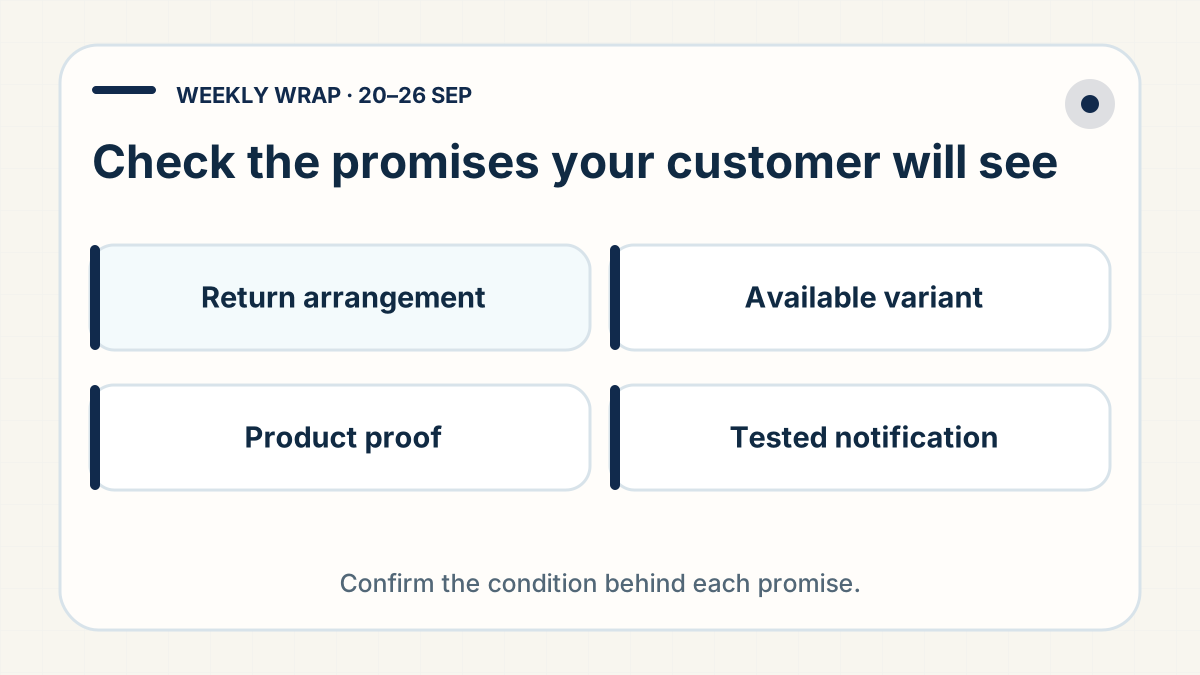
Beside each customer-facing promise, record who confirmed it and where: the receiving arrangement, the proof for the exact product and the tested notification.
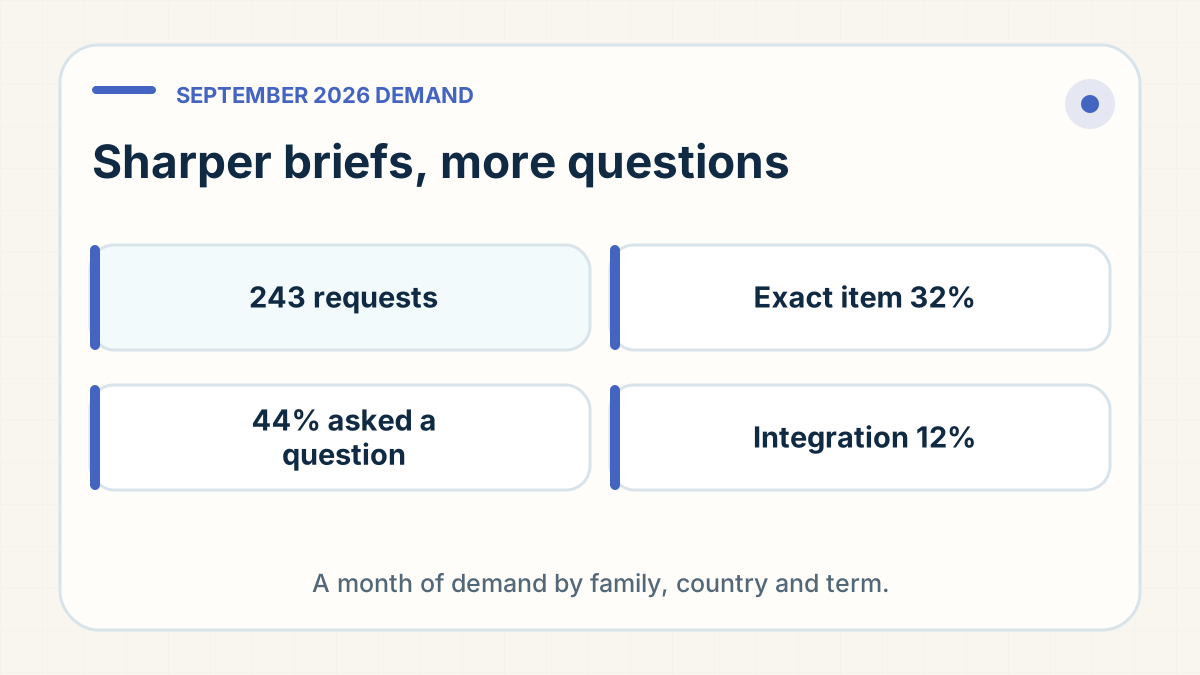
September 2026 supplier demand in proportions: 243 distinct requests by product family, destination and commercial term, compared with August.
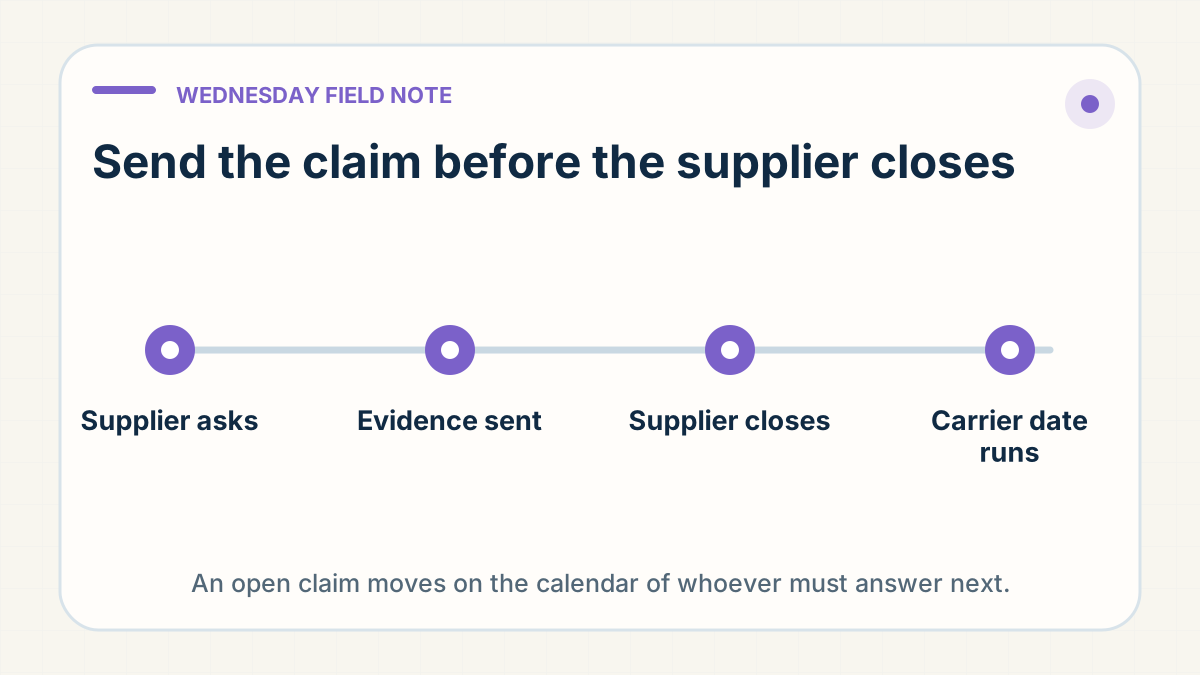
Before a China holiday, get each open claim’s next actor and return date, send what the supplier needs before it closes, and watch the carrier date.
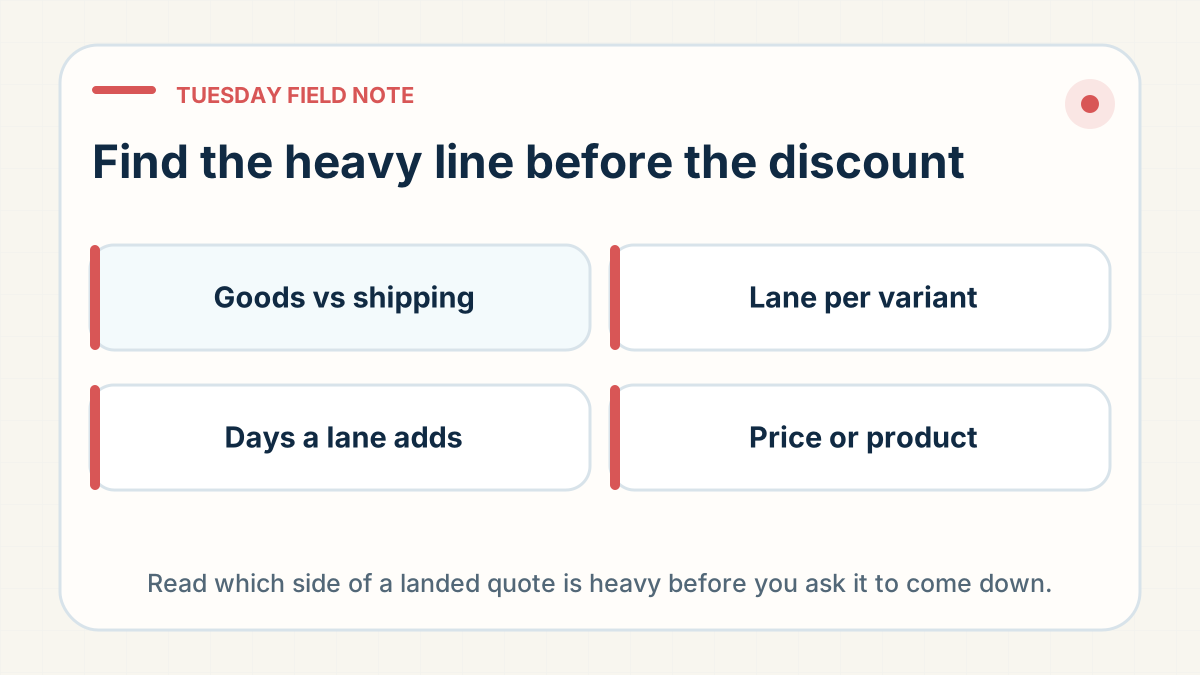
Before you ask for a discount, get the goods-and-shipping split of a landed quote and each variant’s lane, then pull the lever on whichever line is heavy.
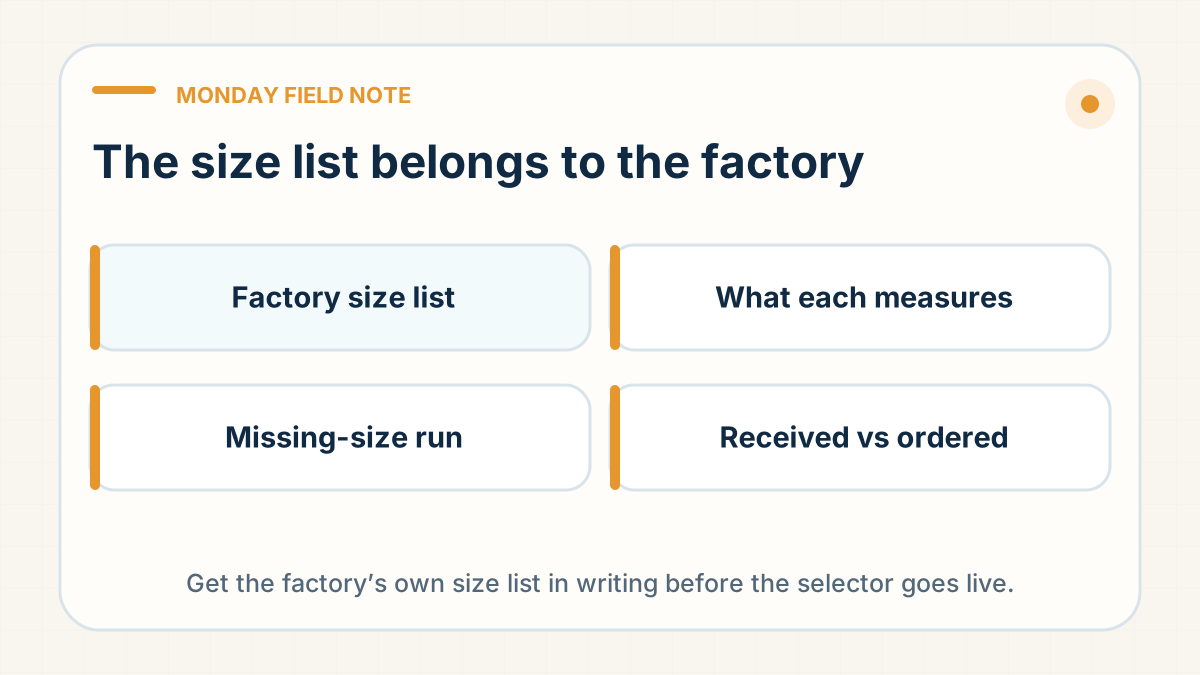
Get the factory’s own size list in writing before a size chart goes live, with what each measurement describes and the run terms behind any missing size.
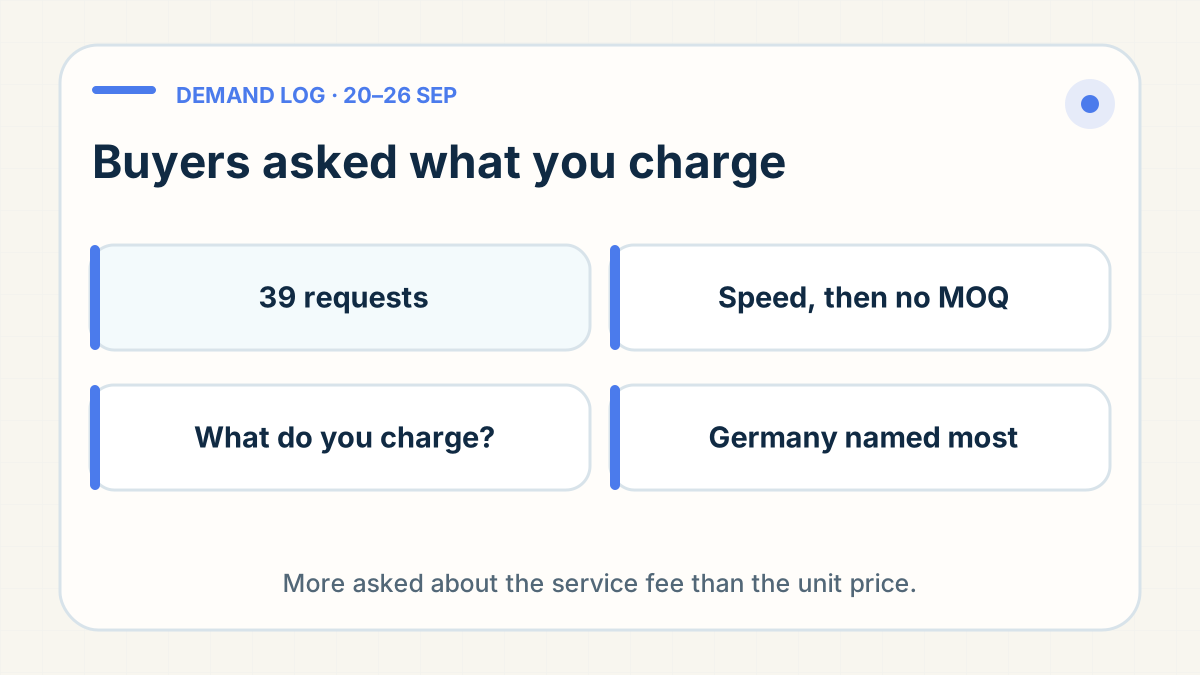
39 distinct supplier requests, 20–26 September: speed and no MOQ led the terms, and the question buyers put to suppliers most was what they charge.
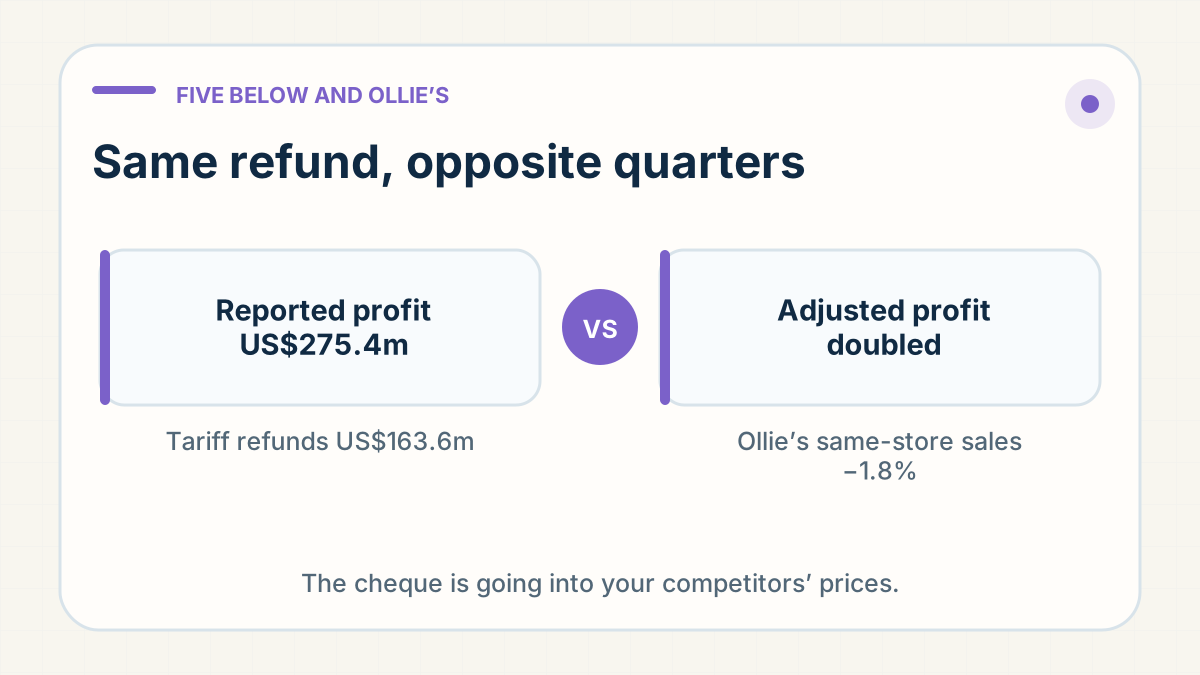
Five Below and Ollie’s both banked tariff refunds in one quarter. Strip them out and Five Below’s profit still doubled while Ollie’s stores sold less. What that means if you import from China.
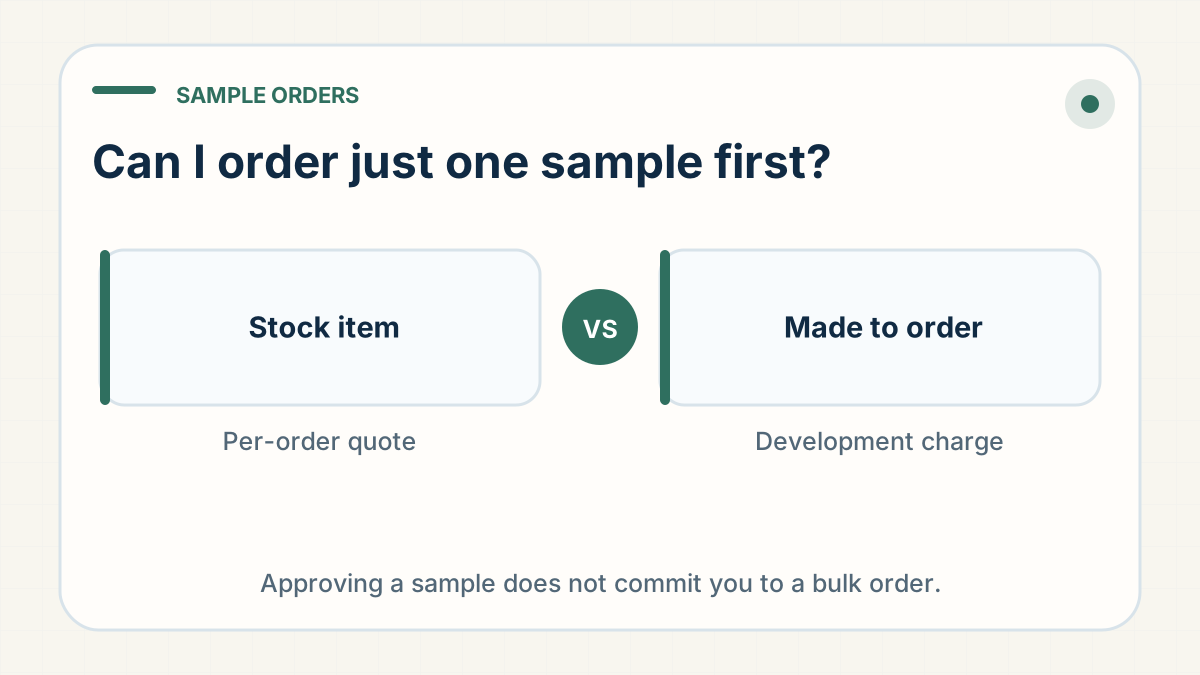
Yes — on a stock item the sample is priced against the per-order quotation you approved, not at a premium. What unlocks it, and what approving it commits you to.
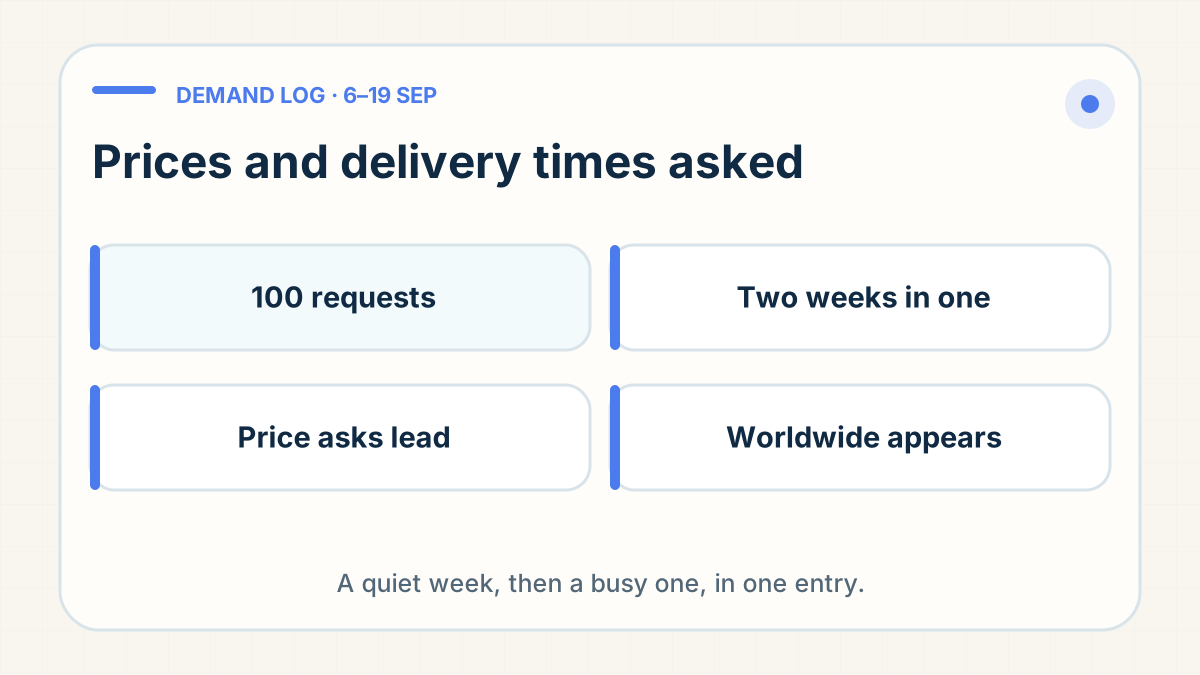
Two weeks, 100 distinct supplier requests, 6–19 September: apparel narrowly led, about half asked suppliers a direct question, and "worldwide" appeared six times.
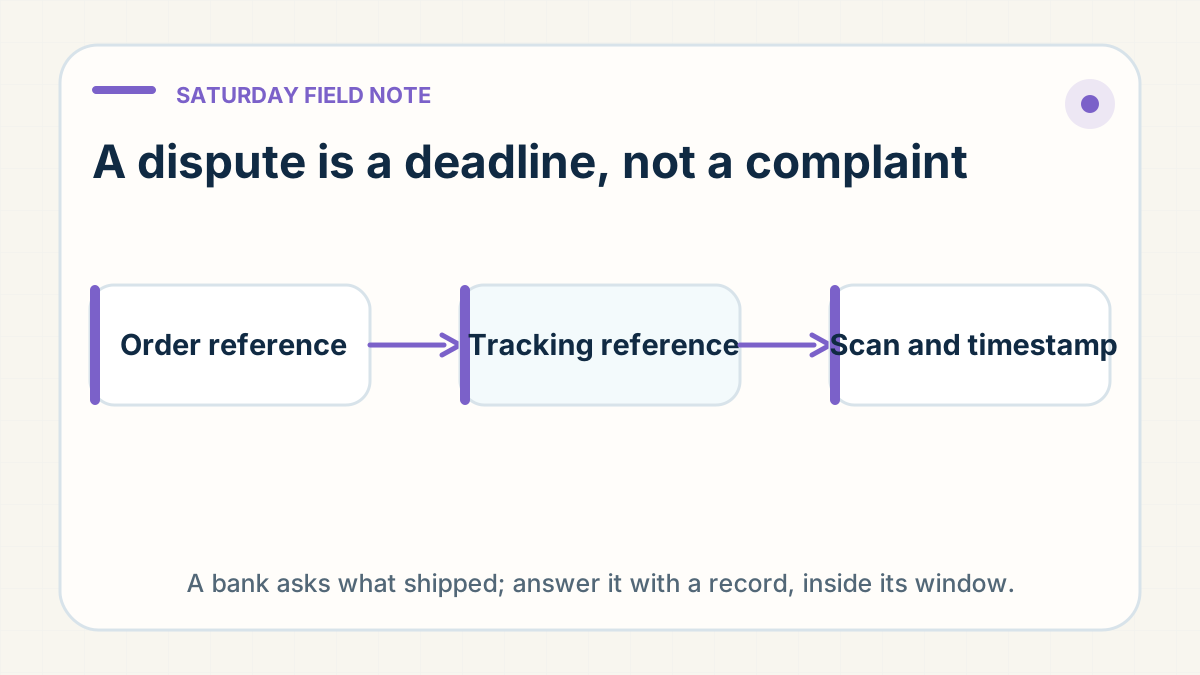
Get your partner’s shipment record format before a bank dispute asks for it, name the deadline when you request a reship, and hold the order before it ships.
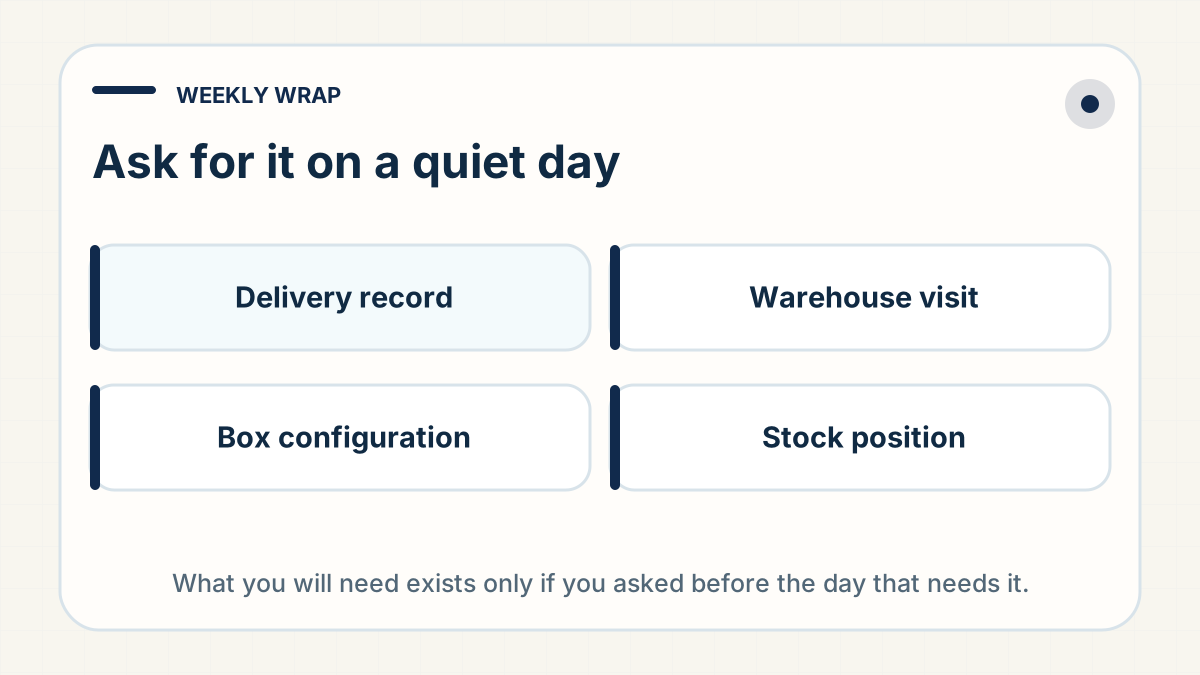
Ask on a quiet day for each record before the day that needs one: the shipment record format, carrier filing route, after-sales window and stock position.
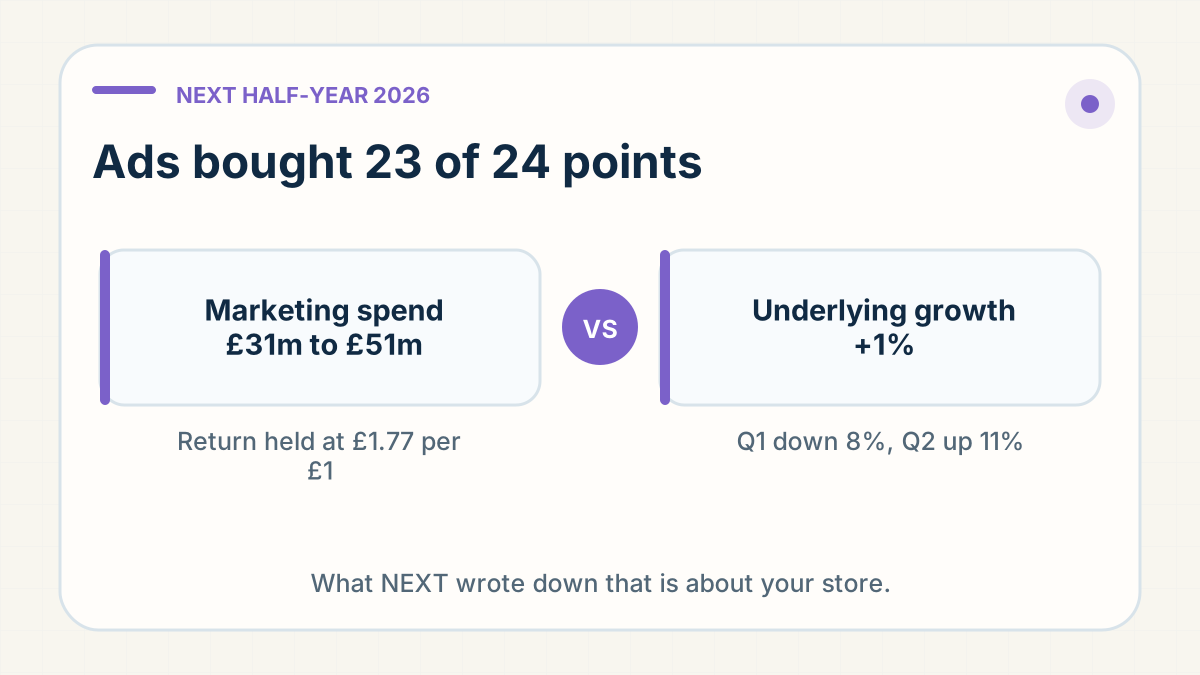
NEXT’s overseas online sales grew 24% in the six months to July 2026, and its own results say marketing drove 23 of those points. Three things it wrote down are about your world, not its.
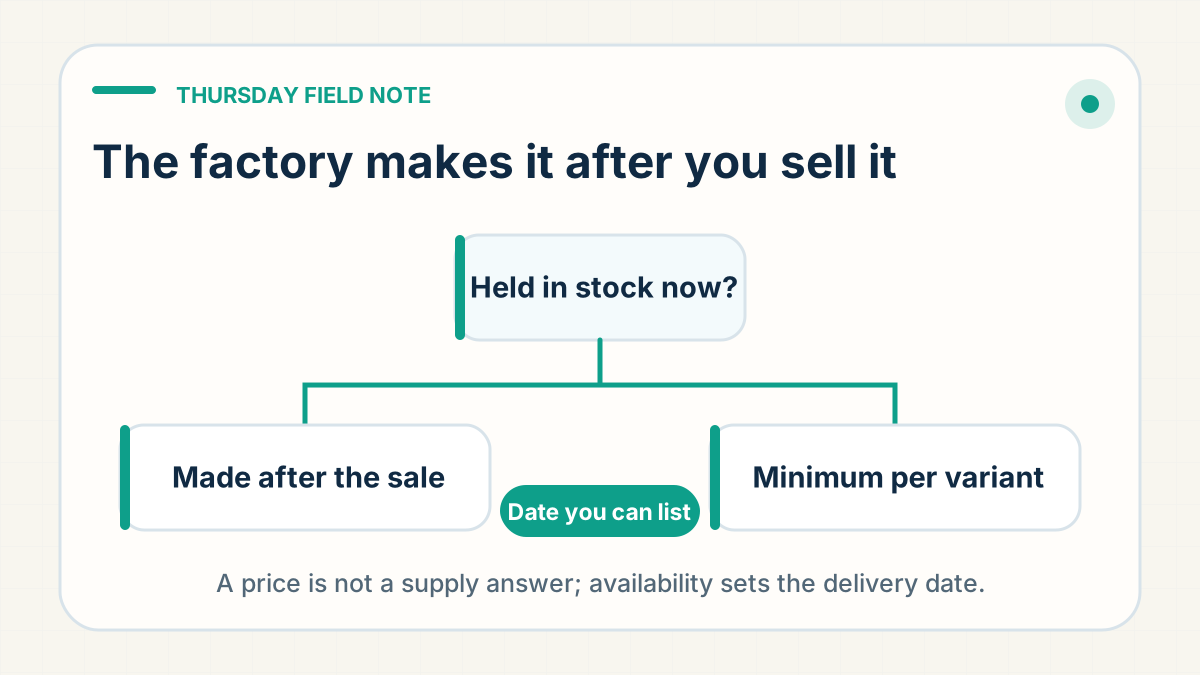
Before you list, ask in one message whether the factory holds the stock or makes it after your order, every minimum per variant, and when production starts.
The 140th Canton Fair spans twenty-one days between Golden Week and Singles Day, across the weeks you would spend restocking. Does your supplier exhibit?
Ten of the thirteen days from 25 September are non-working in China. Black Friday is Friday 27 November. The stock decision with a date on it falls first.
Google can recover missed conversions without creating new demand. Use a 28-day Shopify audit to compare ad conversions, paid orders and mature contribution.
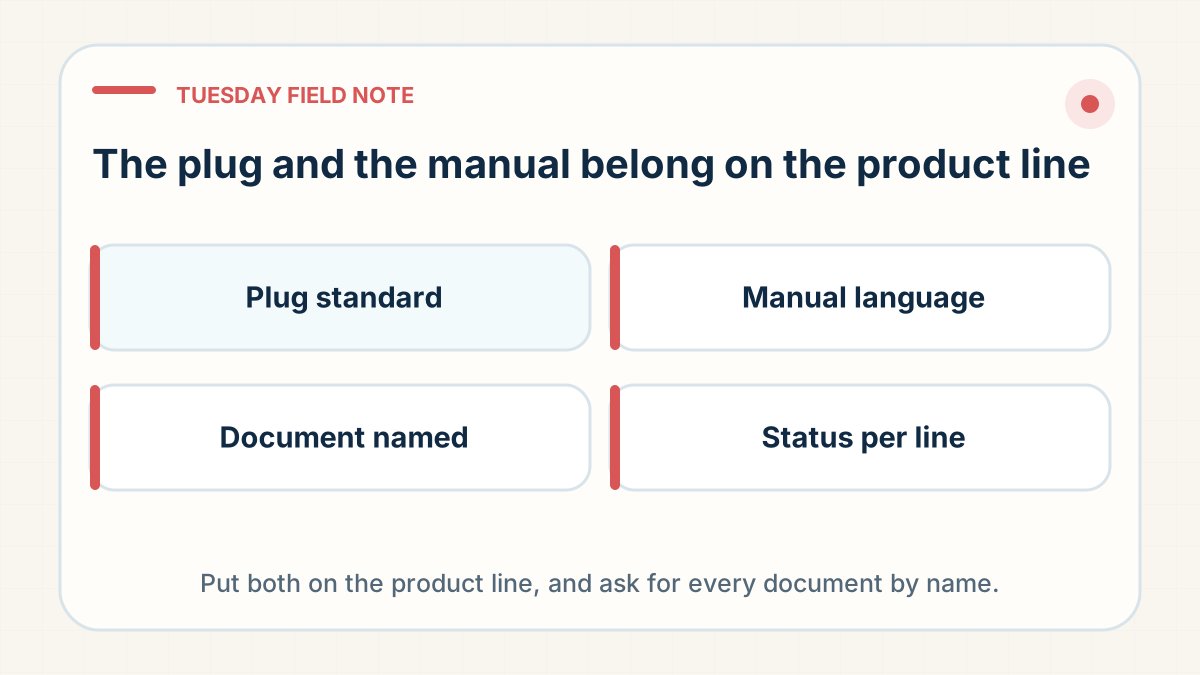
Put the plug standard and manual language for the exact unit on one quote line, and chase a document list that only half arrives by naming each document.
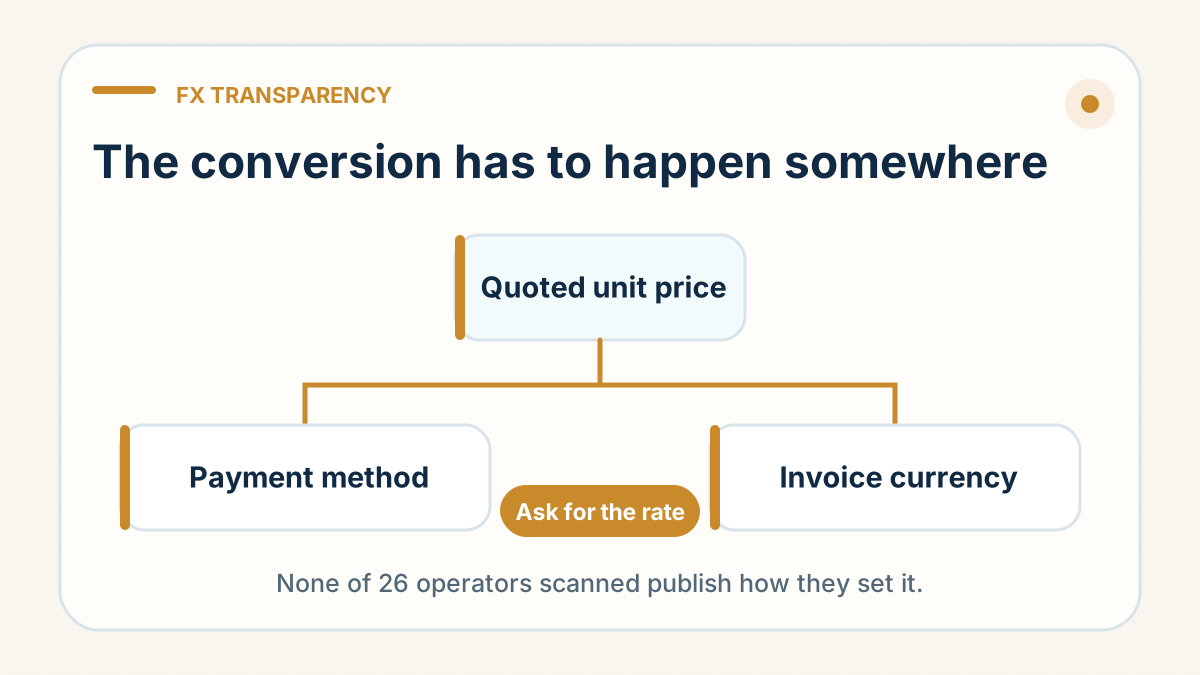
A market scan of 26 China fulfilment operators, dated 23 August 2026, found not one that publishes a foreign-exchange spread or a method for setting its rate.
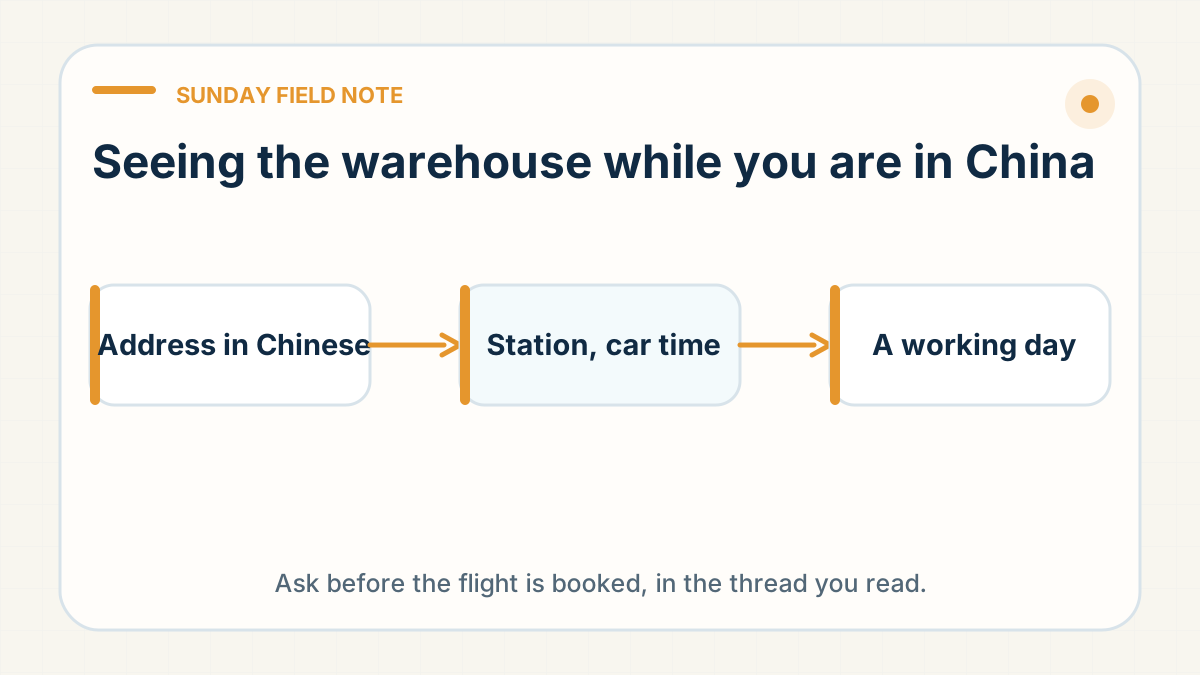
Before a China trip, get four things in one message: the warehouse address in the local language, the nearest station, the day it opens and a named host.
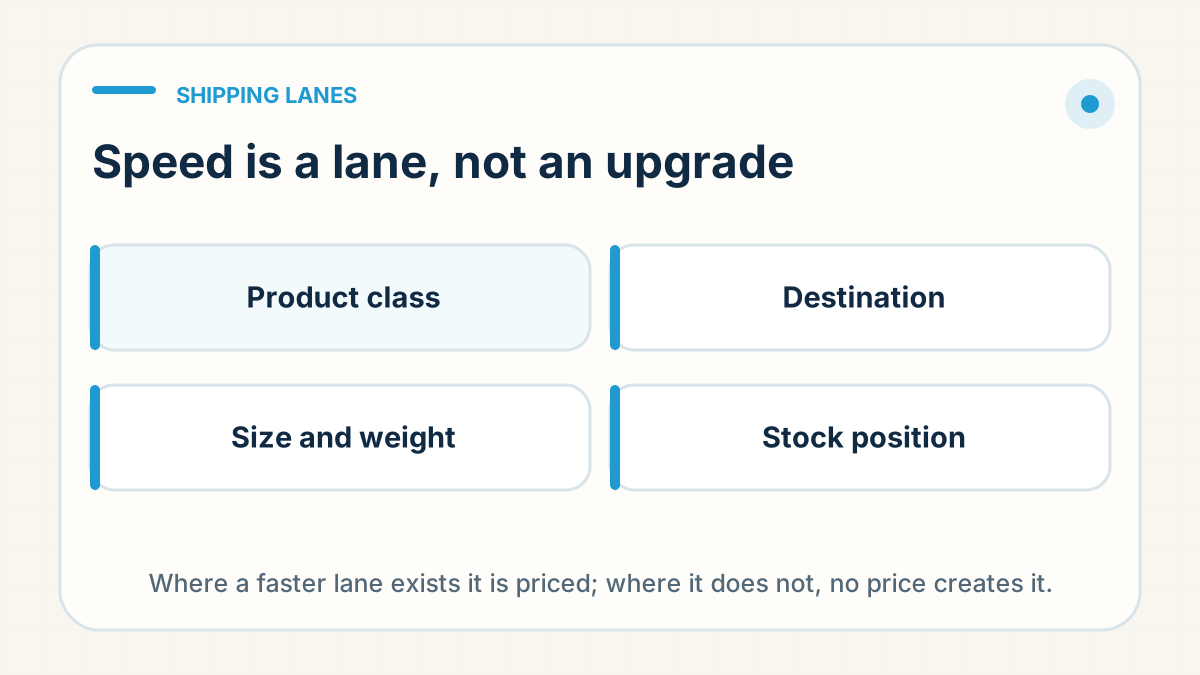
Sometimes — but a faster lane belongs to the product and the destination, not to your budget. How the check runs, per item, and what to do when there is none.
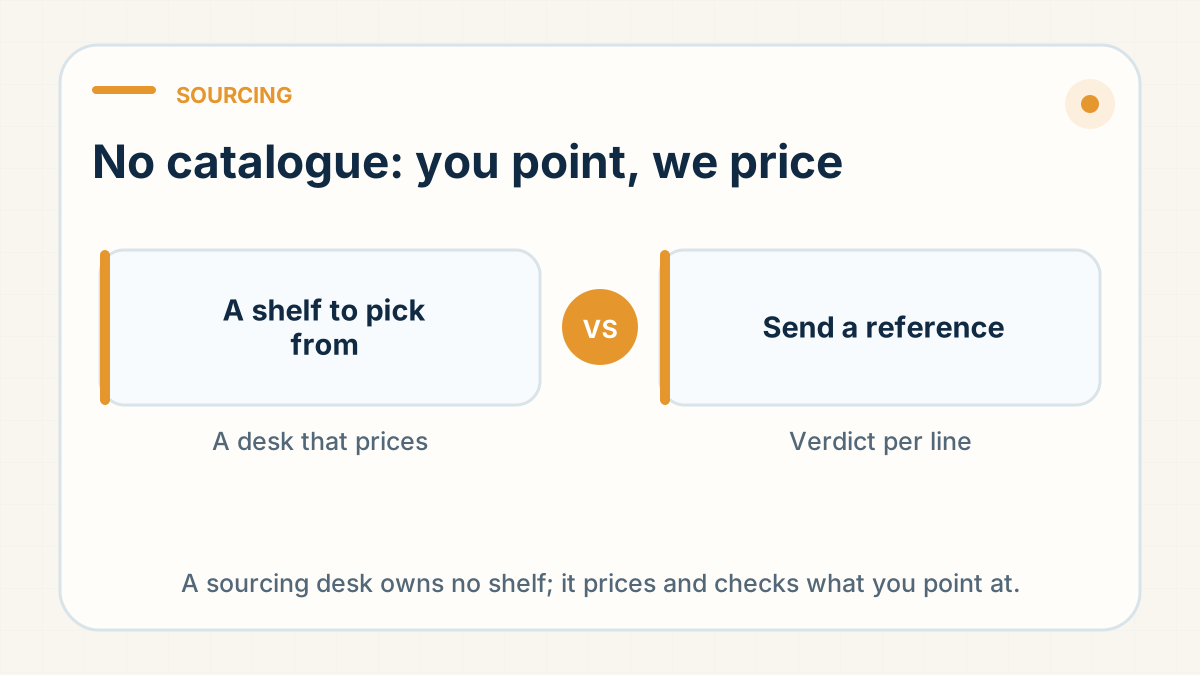
No catalogue and no product list: a sourcing desk prices the reference you send it. How to choose that reference, how to filter a listing, and what gets checked.
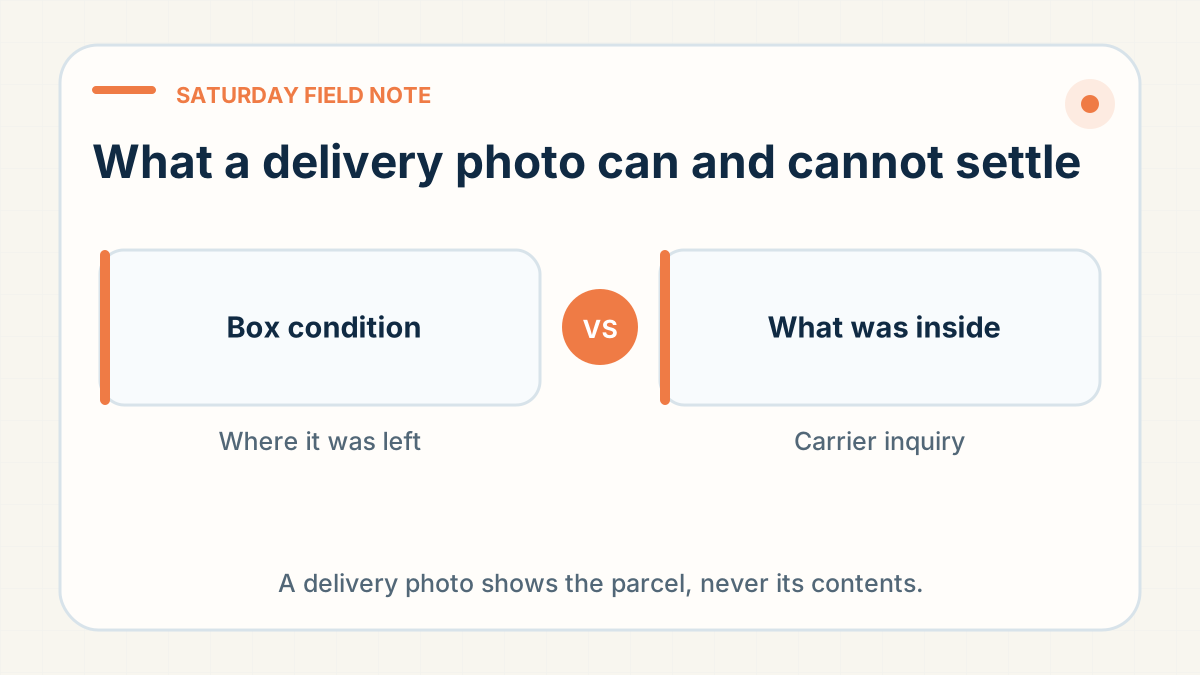
Read a carrier’s delivery photo for the parcel, not the address, and keep the destination carrier’s investigation channel and a filing guide for your recipient.
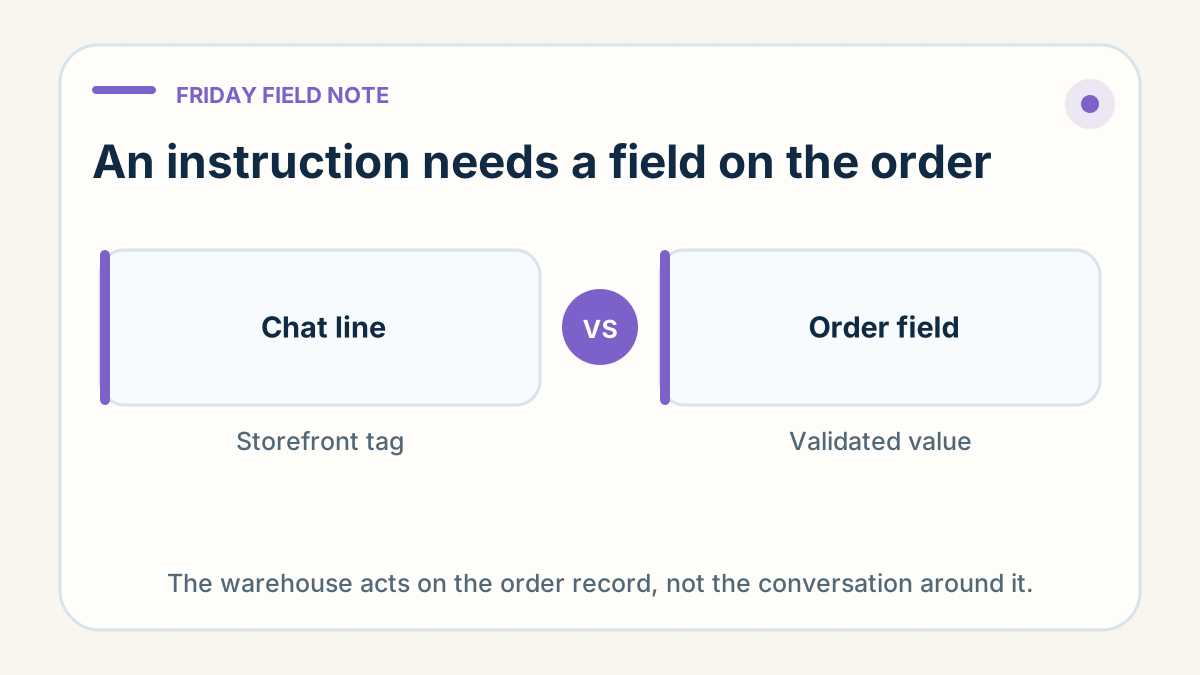
Ask which fields an order carries beyond name, address, postcode and phone, and which reach the label, before your checkout promises a delivery instruction.
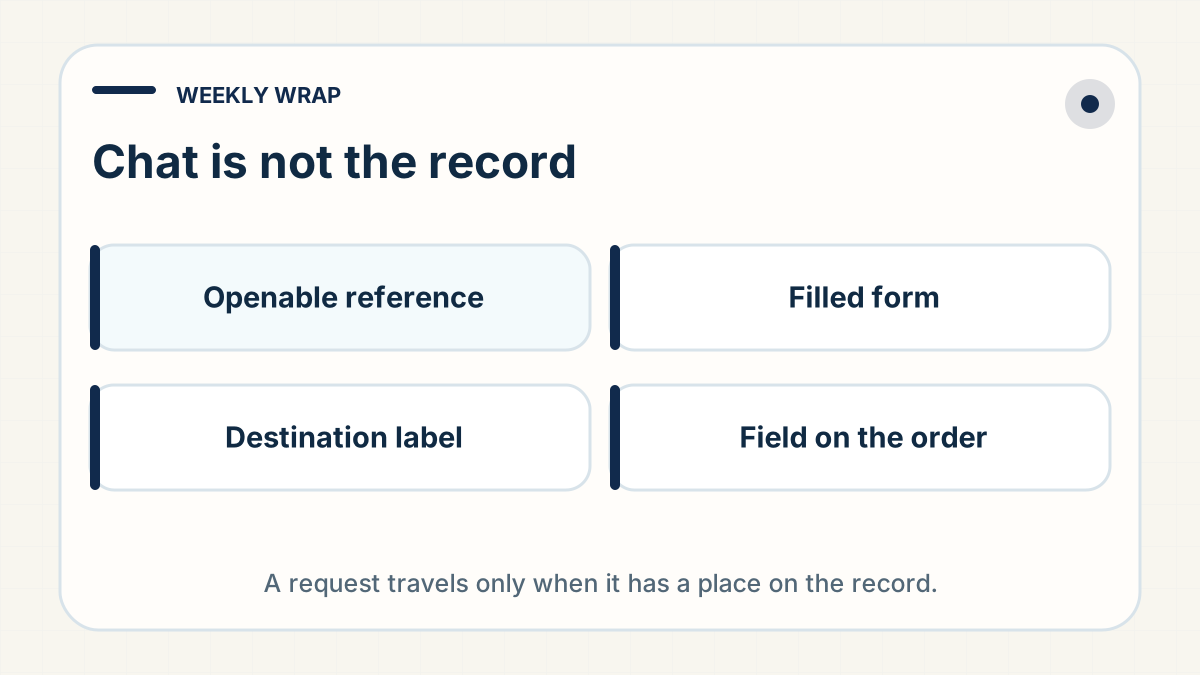
Map what your partner’s order record carries, not what the chat said: the openable reference, the closing form, the destination label and the payable line.
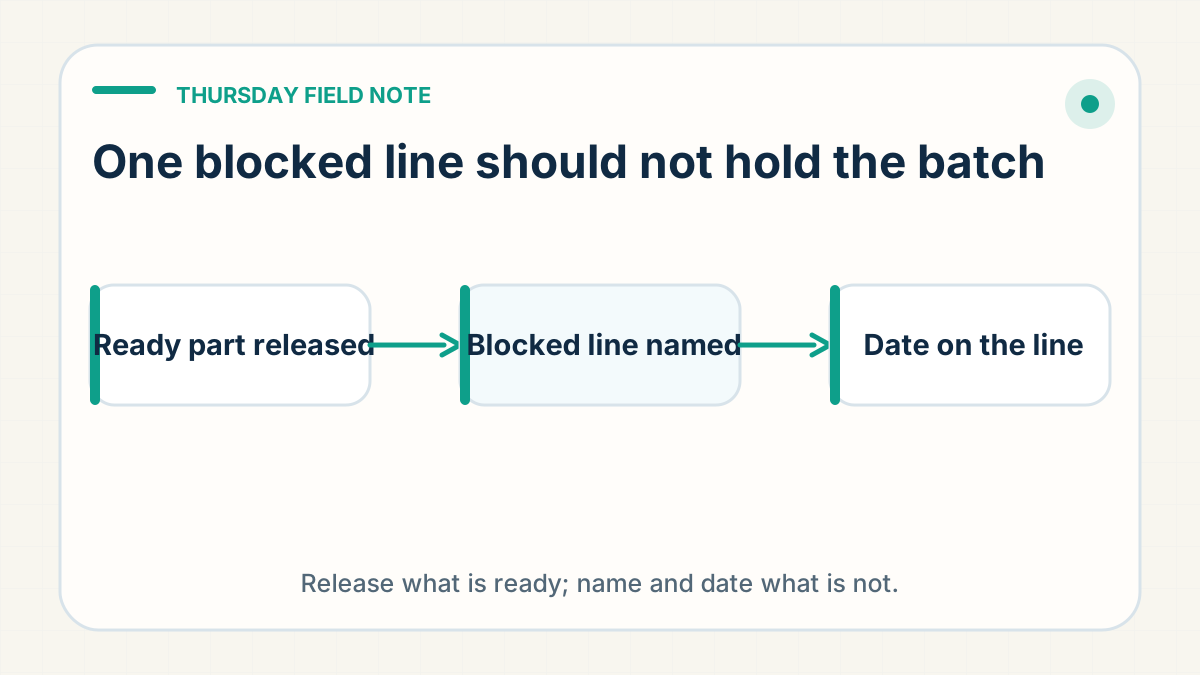
Ask for the ready part of a batch, name the one blocked line, and price the second parcel first, because a split can cost what a consolidated shipment saved.
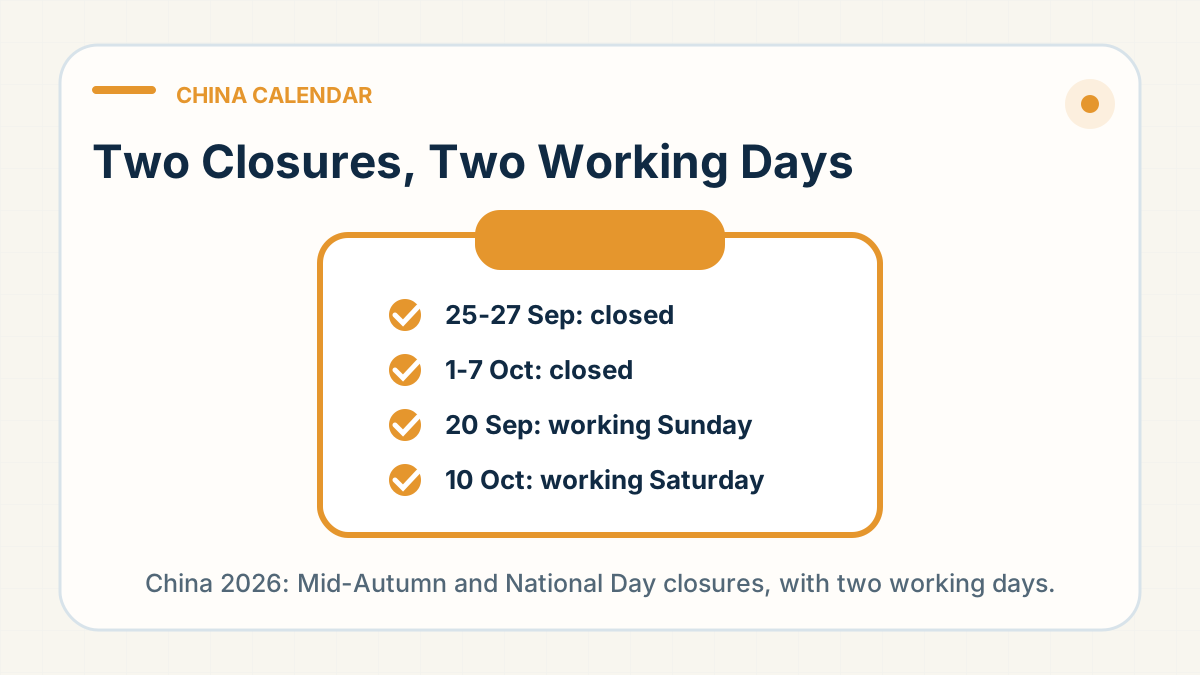
Many sellers assume China's autumn shutdown is one single event around National Day. It isn't. The PRC State Council's holiday notice for 2026, dated 4 November 2025, sets two separate closures: a three-day Mid-Autumn Festival break from 25 to 27 September, then a seven-day National Day Golden Week from 1 to 7 October. Two working days are added back around that second break: Sunday 20 September and Saturday 10 October. This is for anyone whose supplier, factory or freight forwarder sits in mainland China. It is not a schedule for your own courier, agent or customer service desk — check each of those separately.
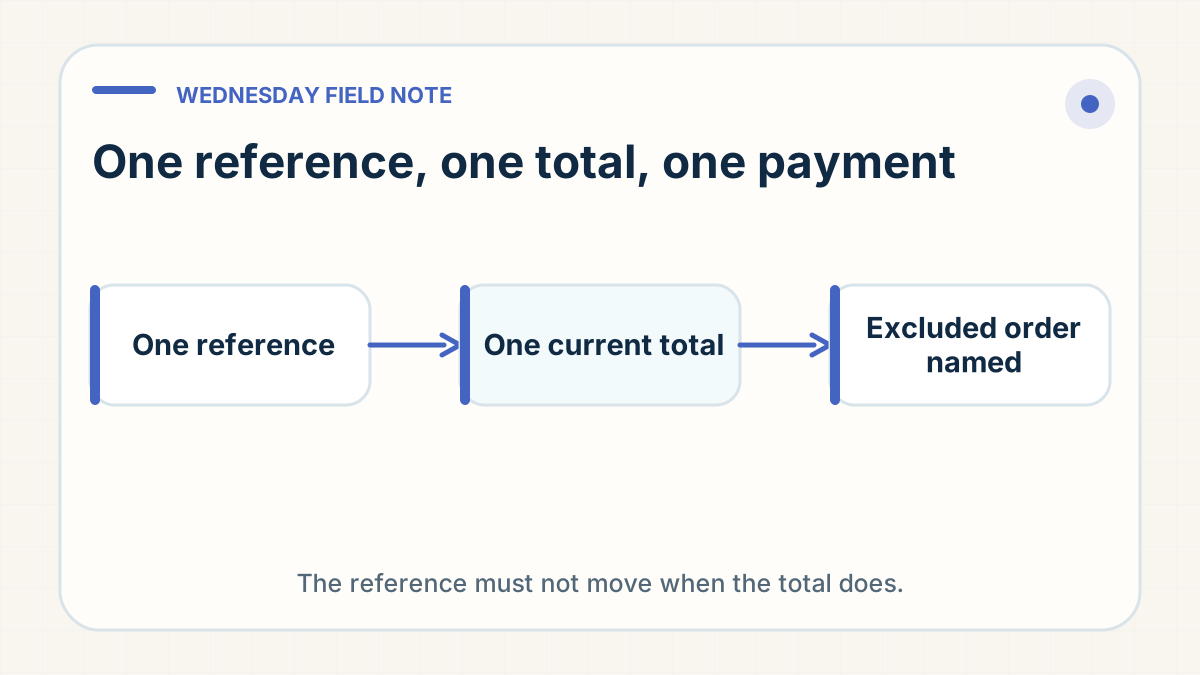
When a total moves under a reference you hold, ask if it corrects the first request or adds a second, and which period it closes: one reference, one payment.
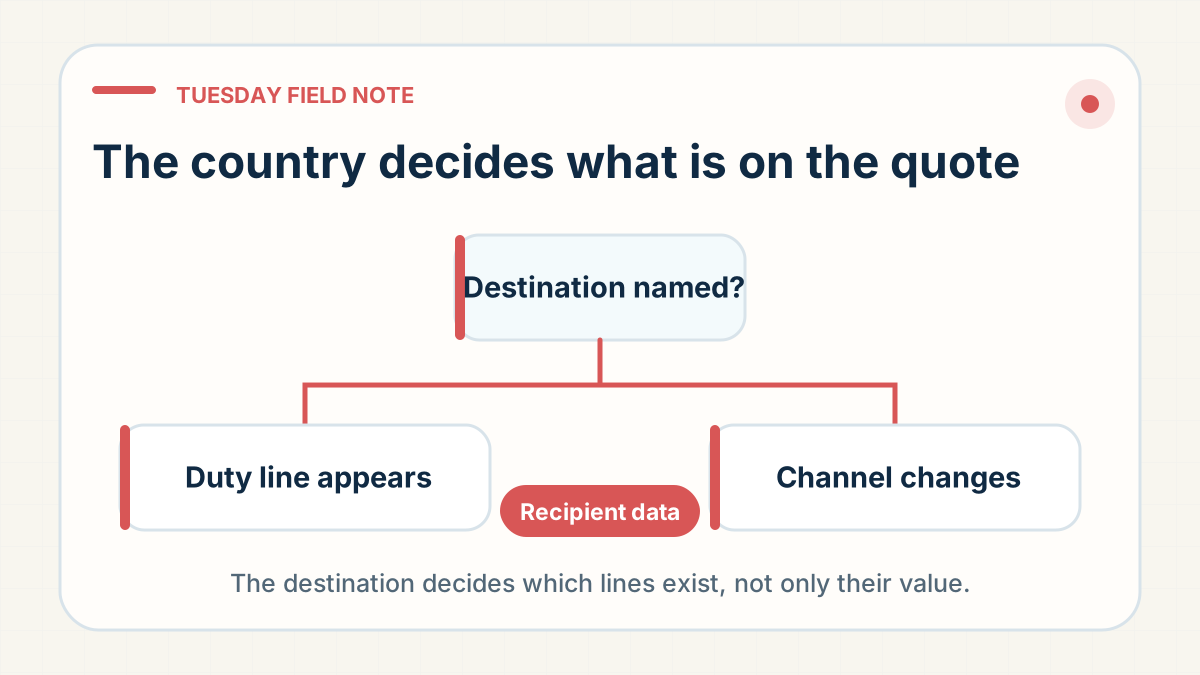
Ask which lines each destination adds to a quote, such as duty or a restricted-item channel and its window: a delivered total with no country is unusable.
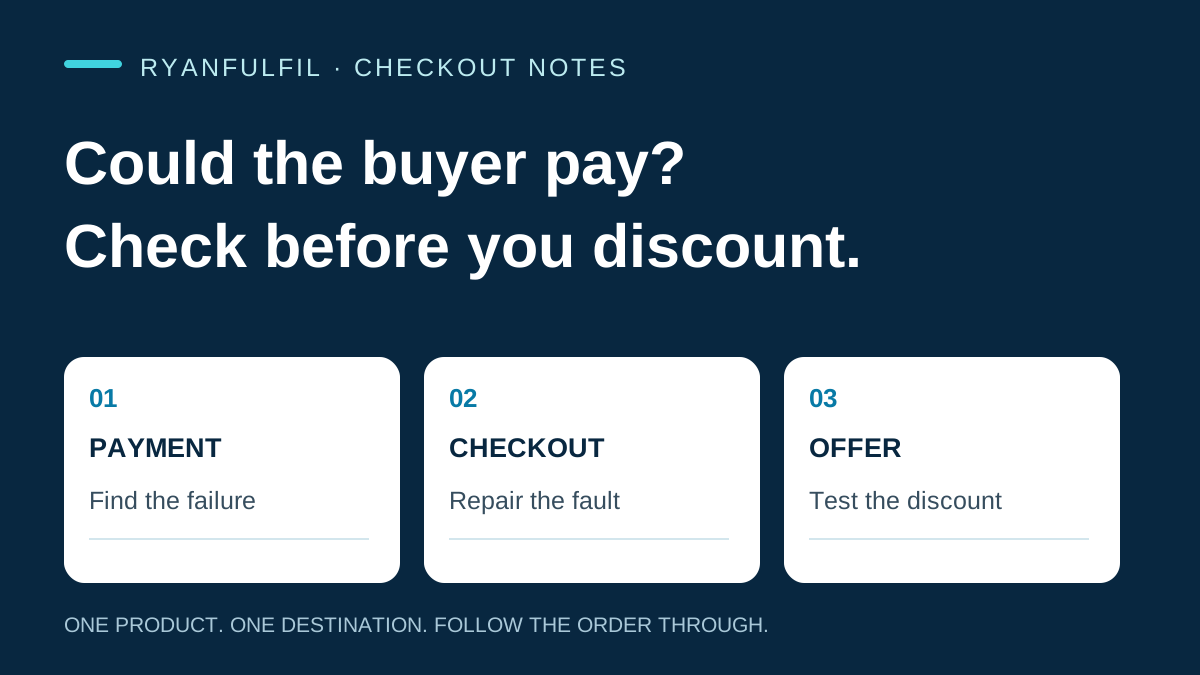
A failed checkout is not always price resistance. Check the payment path before testing a recovery discount.
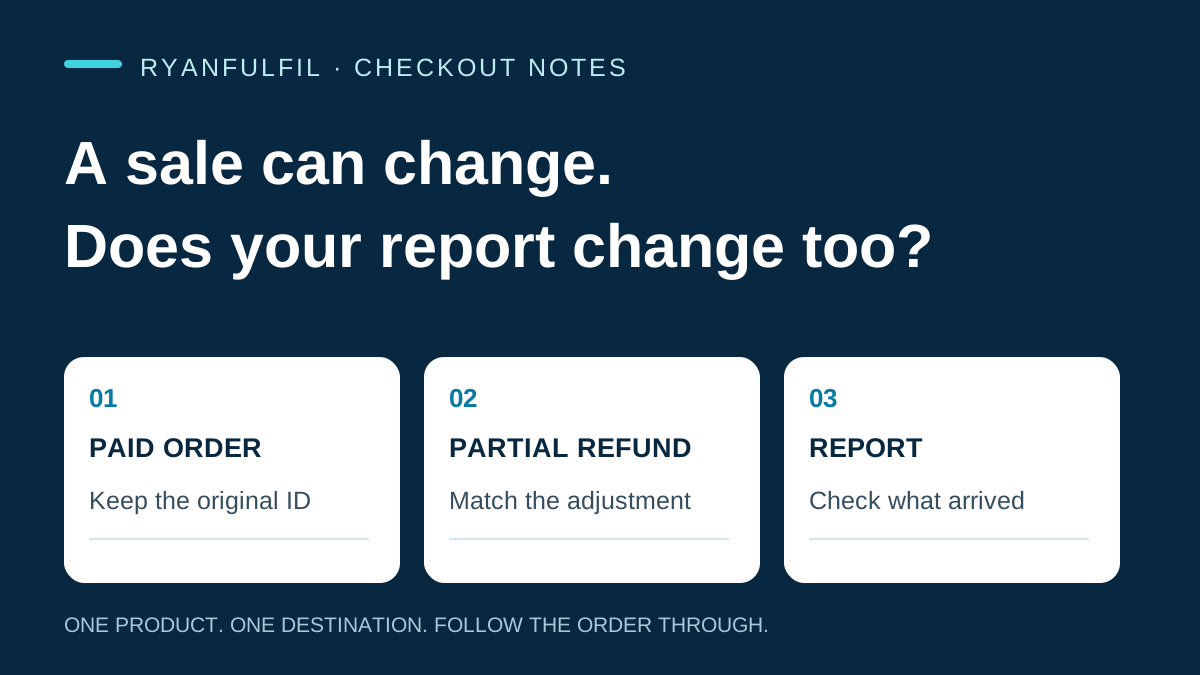
Check which Shopify refund adjustments reach Klaviyo before judging a campaign, bundle or customer segment. Reconcile full refunds, partial refunds and reships separately.
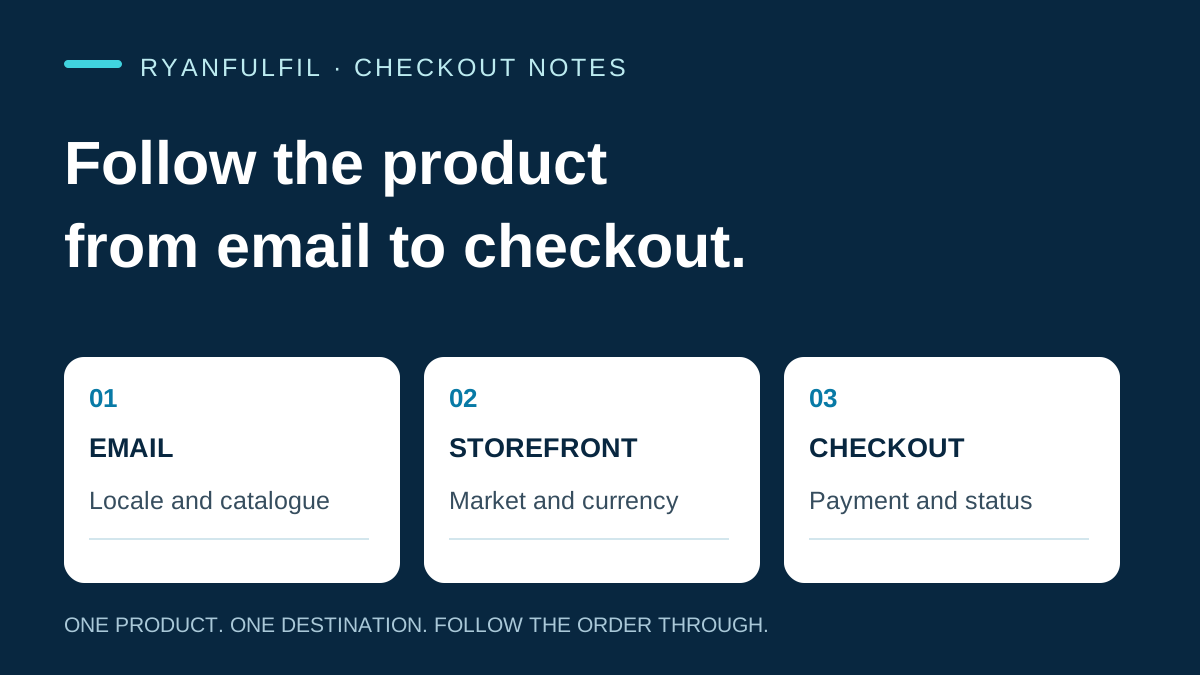
A translated email can still lead to the wrong currency, product URL or payment path. Test the full market-specific Shopify journey.
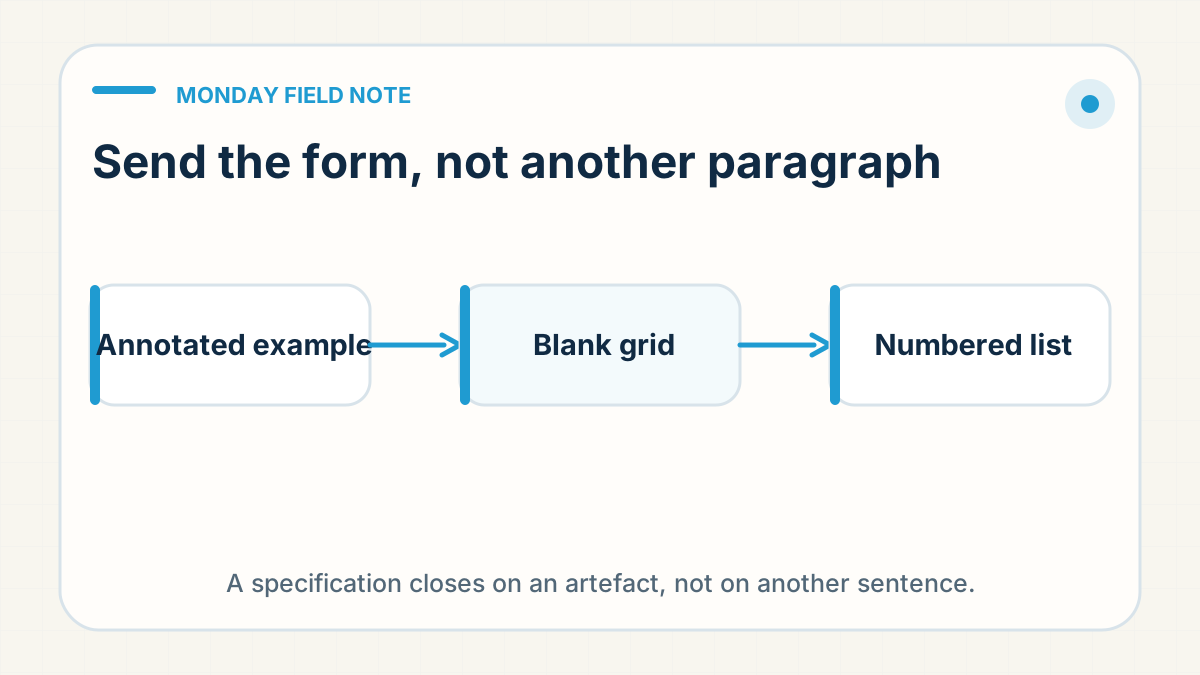
When a custom order stalls in chat, send something to fill in — a marked-up example, an empty grid or a field list — instead of another paragraph.
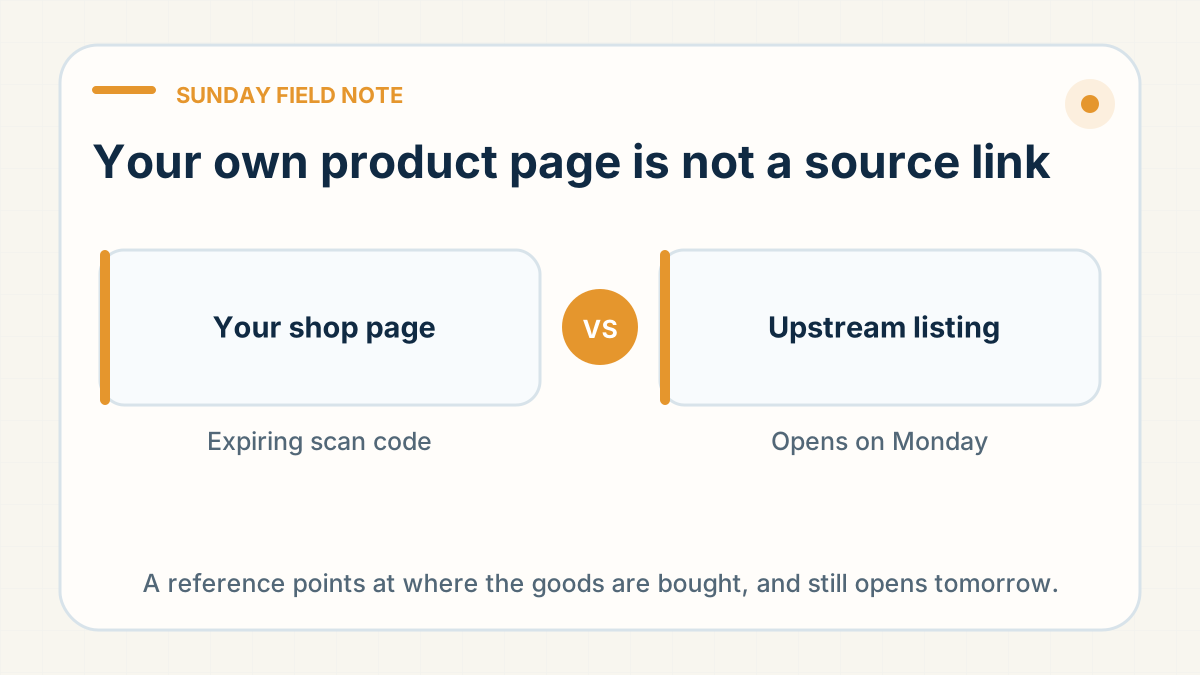
Get the supplier’s marketplace listing, or the same fields in writing, before you need a quote: your own storefront page cannot serve as a source link.
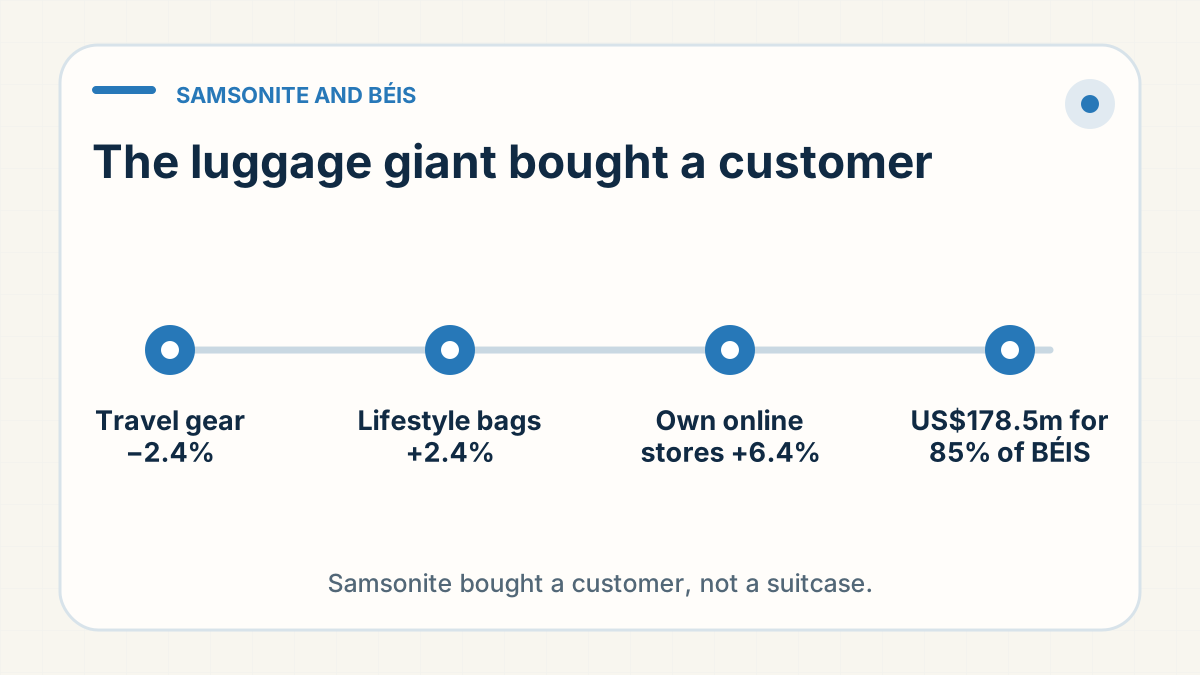
Samsonite sold 2.4% less travel gear in the first half of 2026, then paid US$178.5 million for 85% of BÉIS, a brand eight years old. What that says about travel gear worth selling.
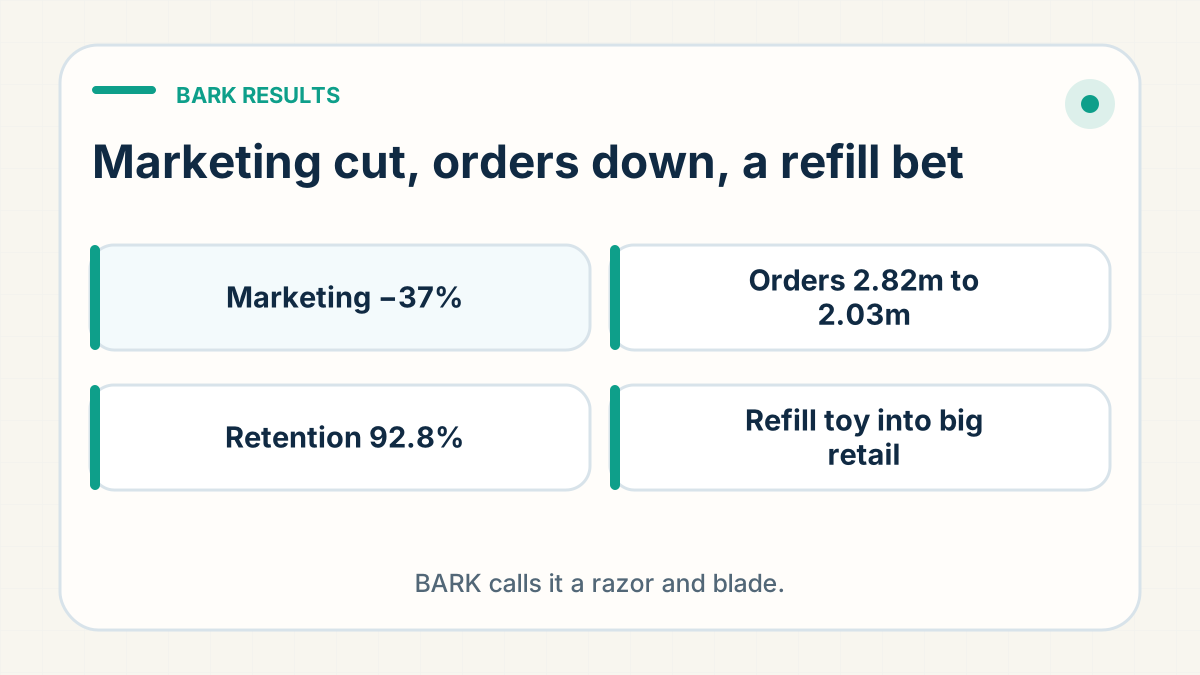
BARK cut marketing 37% and its orders fell from 2.82 million to 2.03 million. Its plan to grow again is a refillable dog toy it calls a razor and blade. Two rivals show how that bet can go.
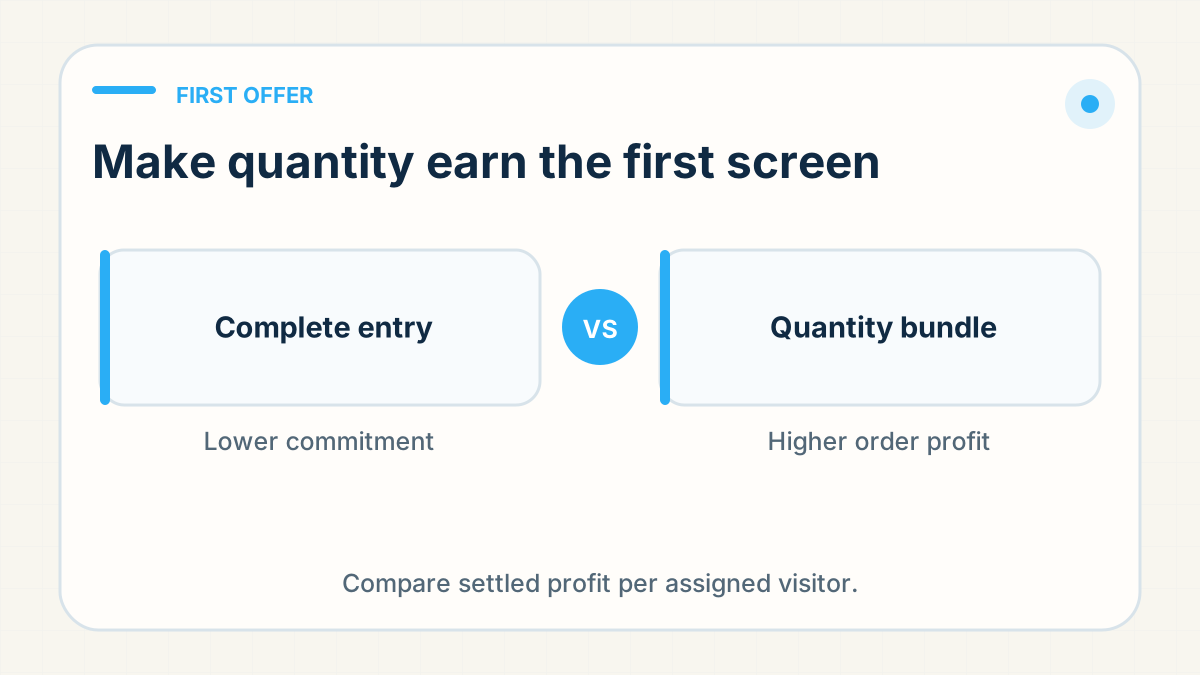
A larger bundle can make more per order and less from paid traffic. Test the smallest complete first offer, then judge profit after variable order costs per assigned visitor.
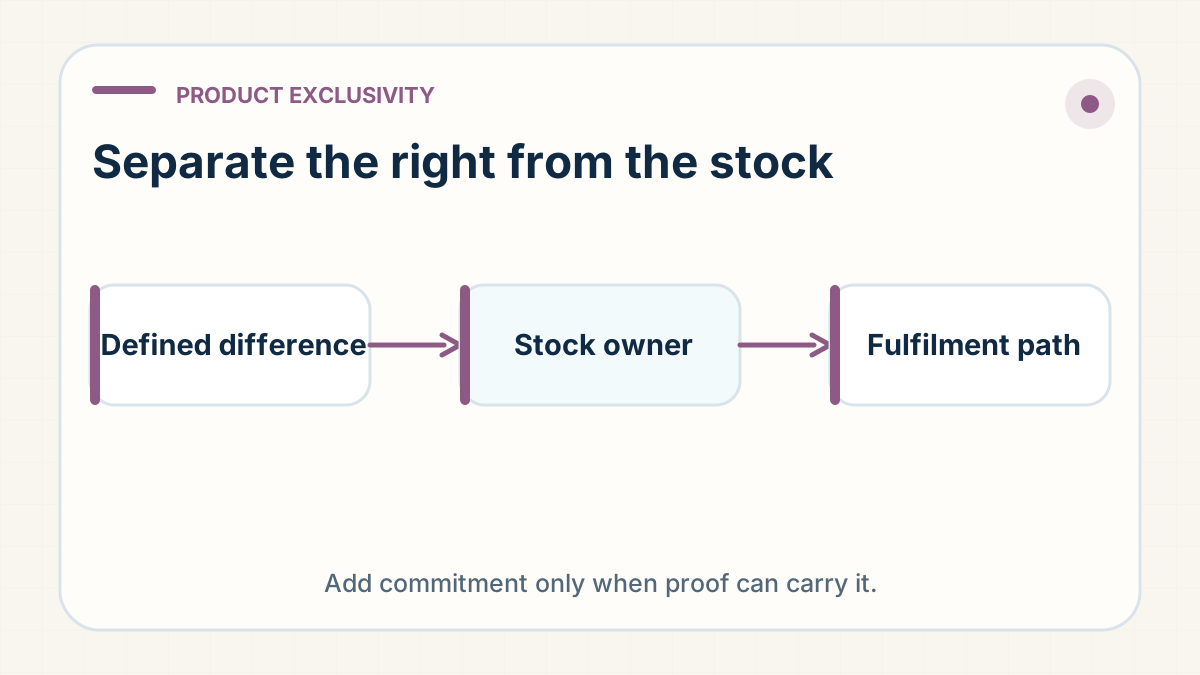
Exclusivity is not one promise. Define the product difference and rights separately from who buys the stock and who fulfils it, then make the extra setup repay itself before you widen the commitment.
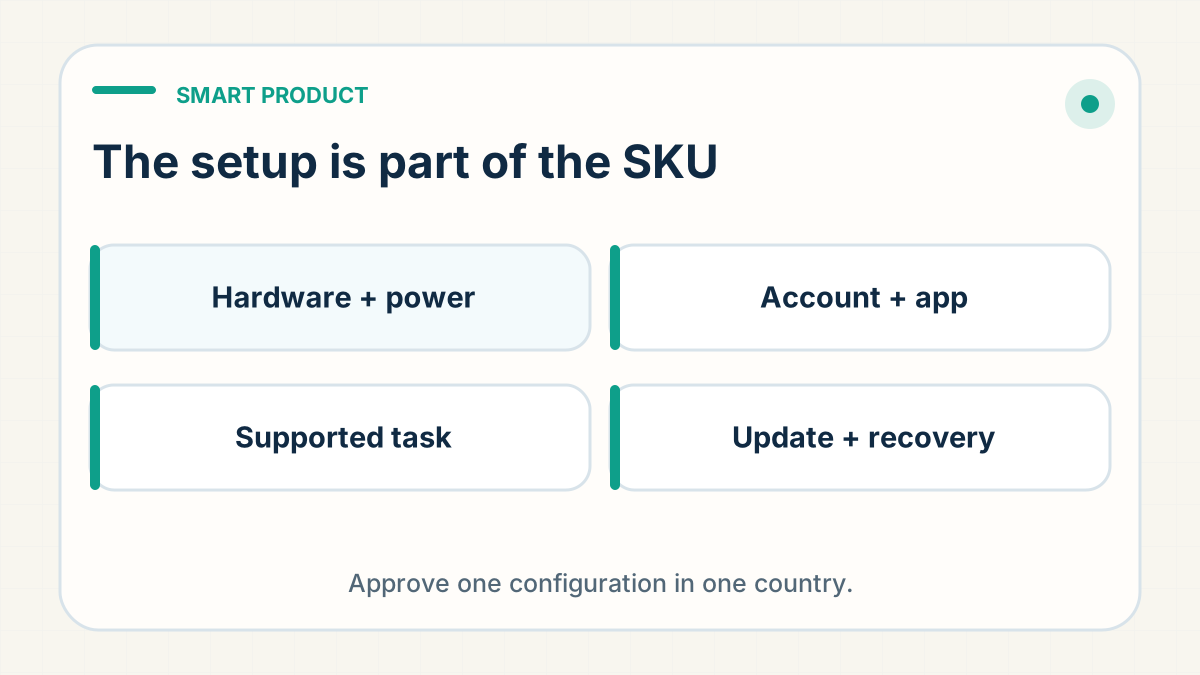
A connected gadget is hardware plus country, power, network, app, account, cloud, updates and support. Build a configuration passport and prove the advertised task before listing it.
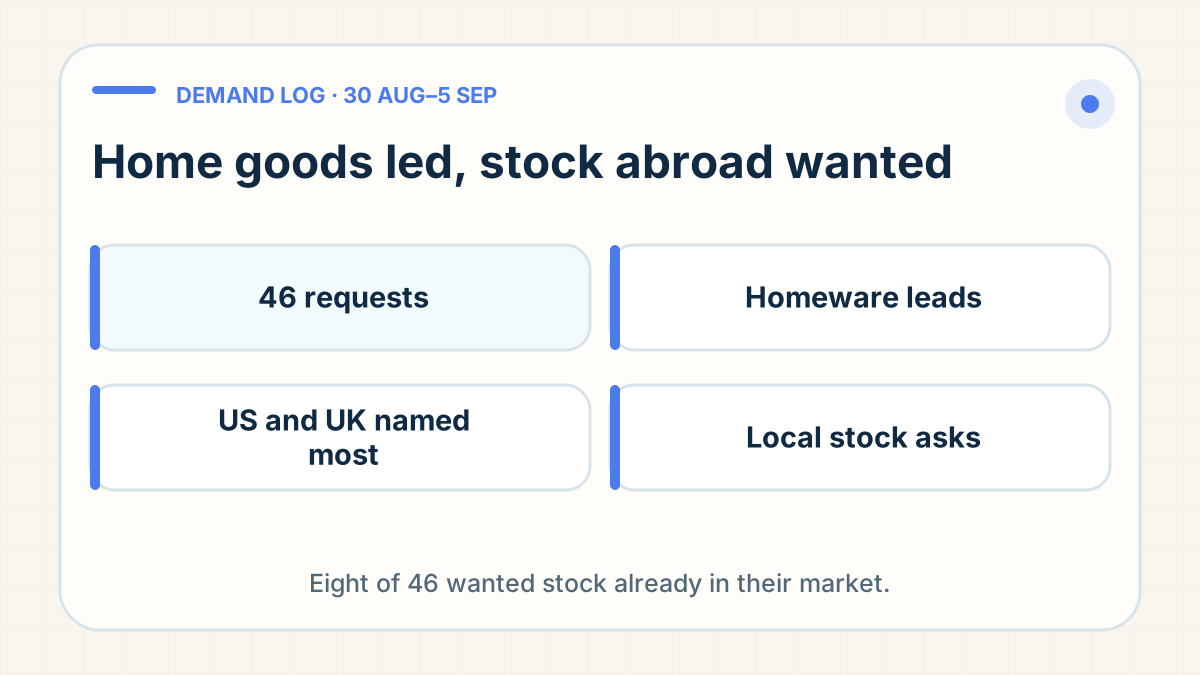
We logged 46 distinct supplier requests between 30 August and 5 September 2026: home and kitchen led, and one in three asked for a long-term partner.
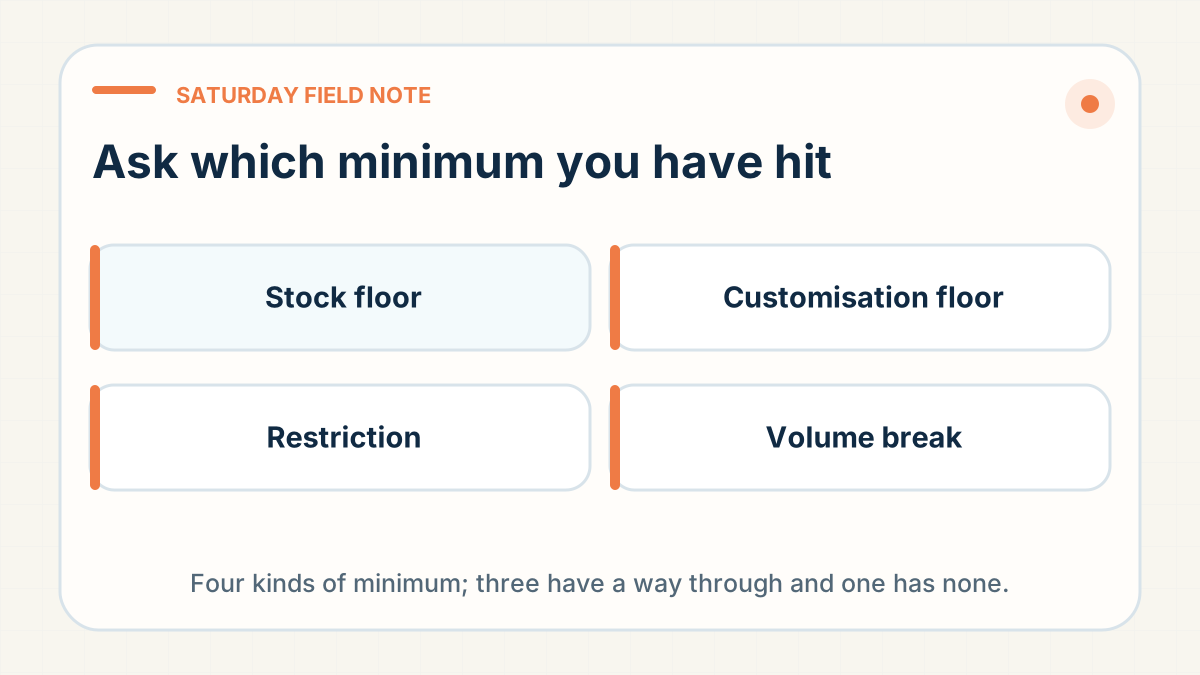
Ask which of the four kinds of supplier minimum you have hit before the listing goes up, all in one message, and which of them a bigger order can move.
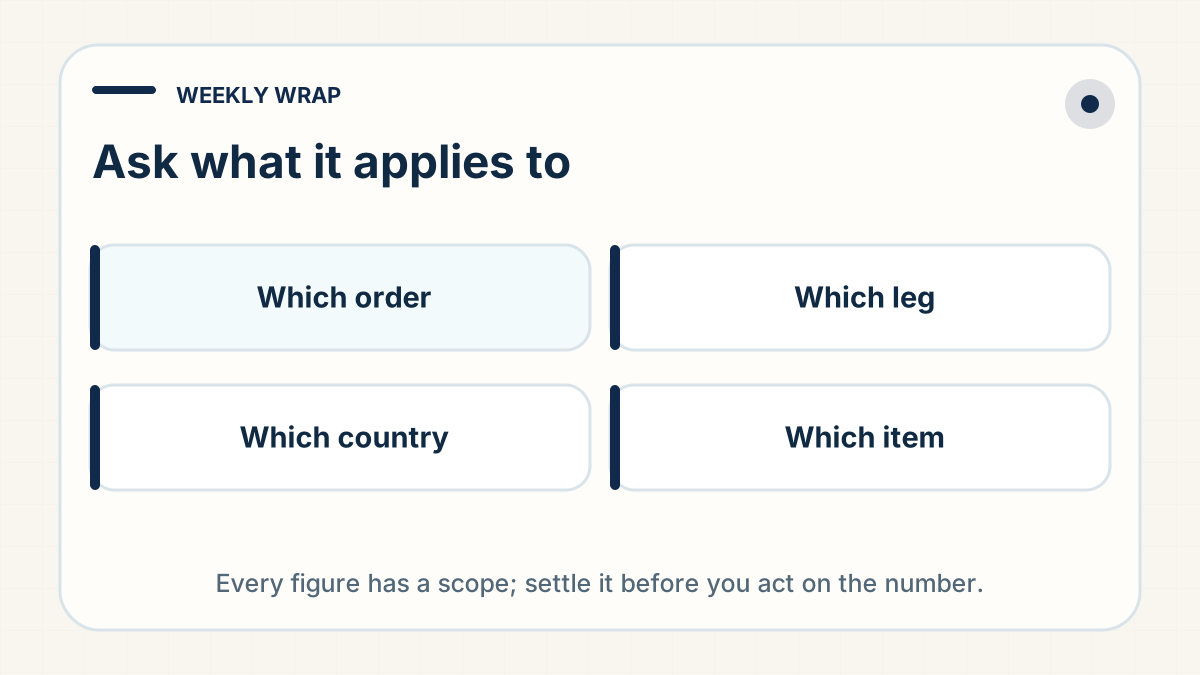
Keep one defaults sheet per account: the packing standard and its exceptions, materials you will not list, order series by destination and the intake fields.
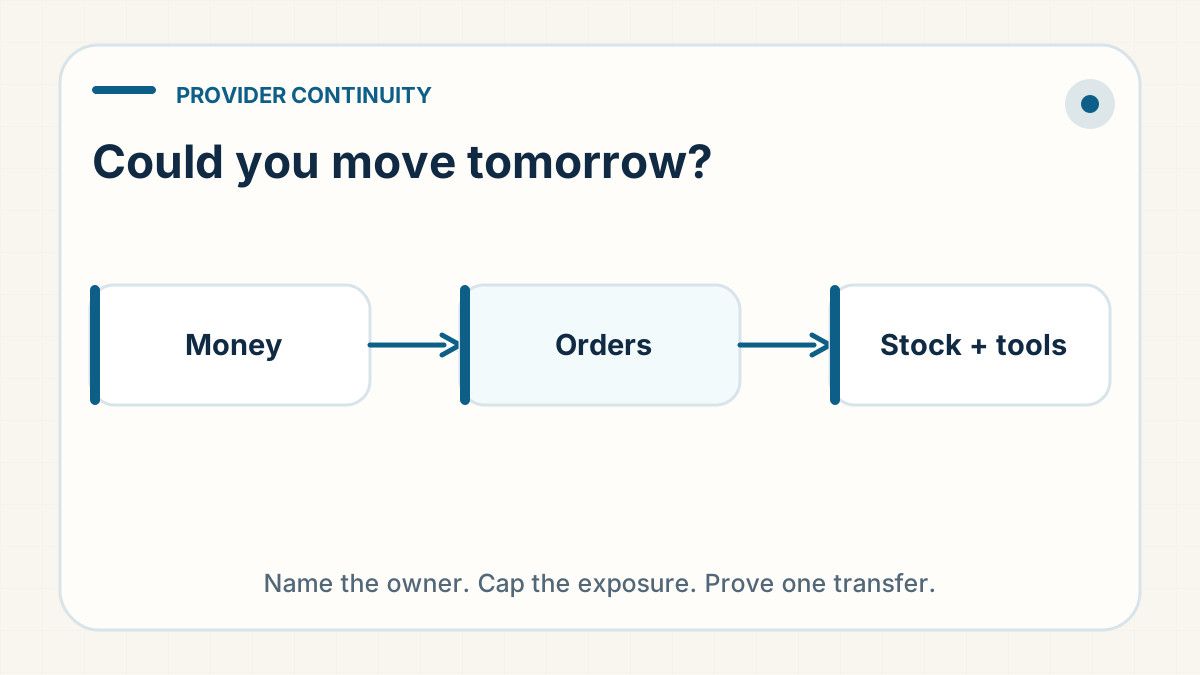
Your provider does not have to fail for concentration to hurt. A delayed release, disputed balance or missing export can be enough. Check five things, cap the exposure and prove a small transfer before volume makes the answer expensive.
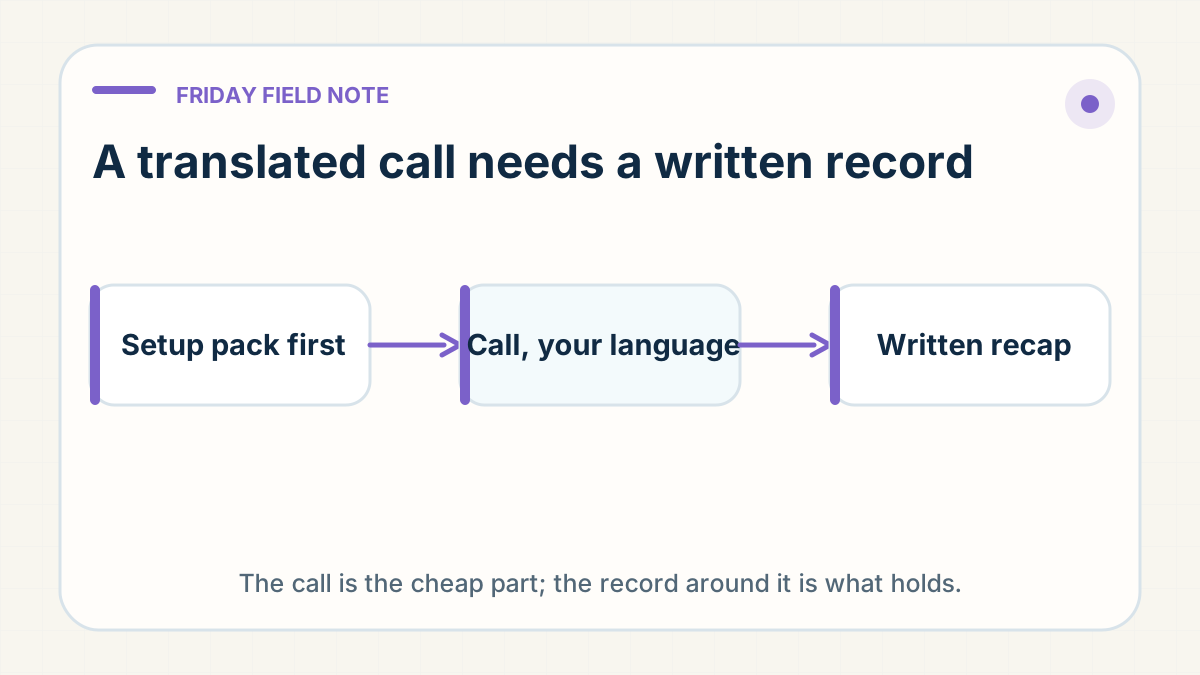
Get a written recap of a translated sourcing call before the first quote lands, with each transit figure’s lane, then reconcile any gap between the two.
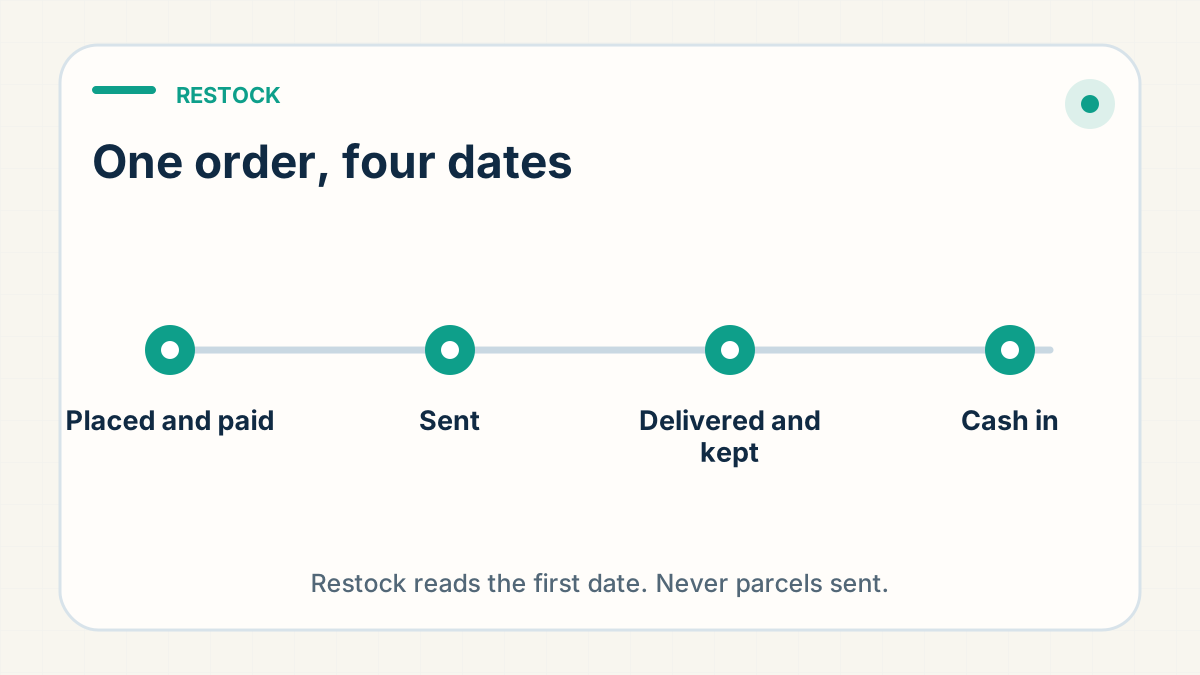
An order is placed, paid, sent, delivered, kept and paid out on different dates. Restock from the wrong one and you scale a backlog. Lands’ End just showed the trap at company scale; here is how to keep it out of your dashboard.
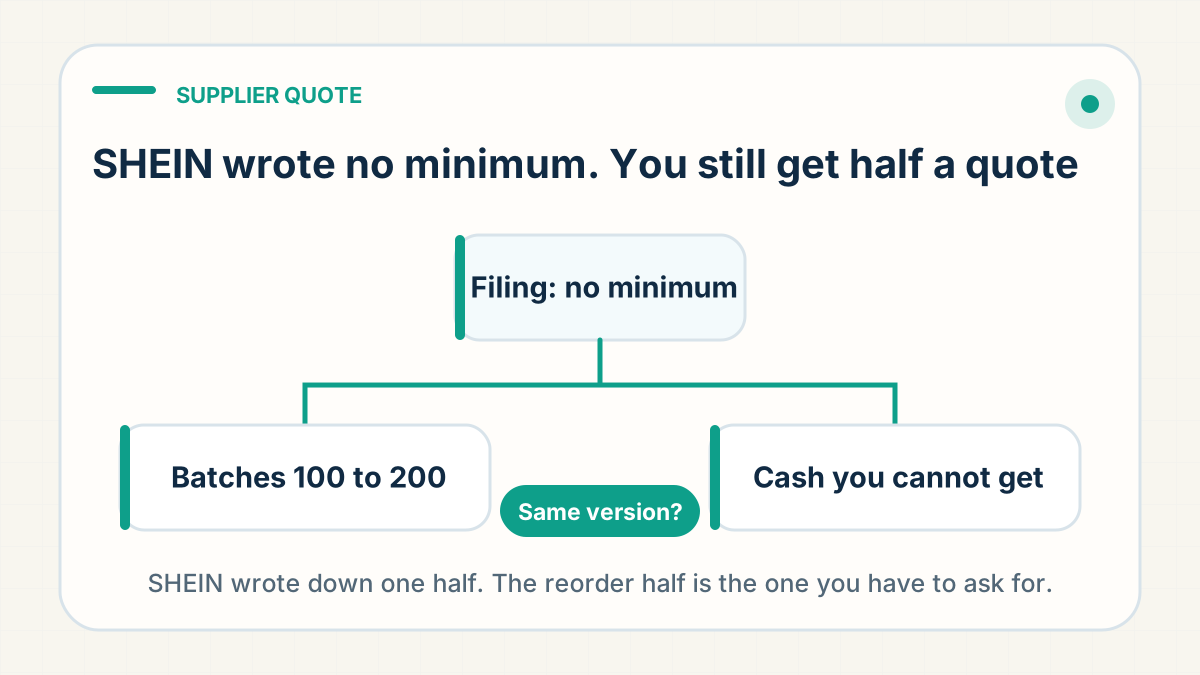
SHEIN’s standard contract with its makers sets no minimum purchase requirement. A low MOQ is still only half of what you are buying.
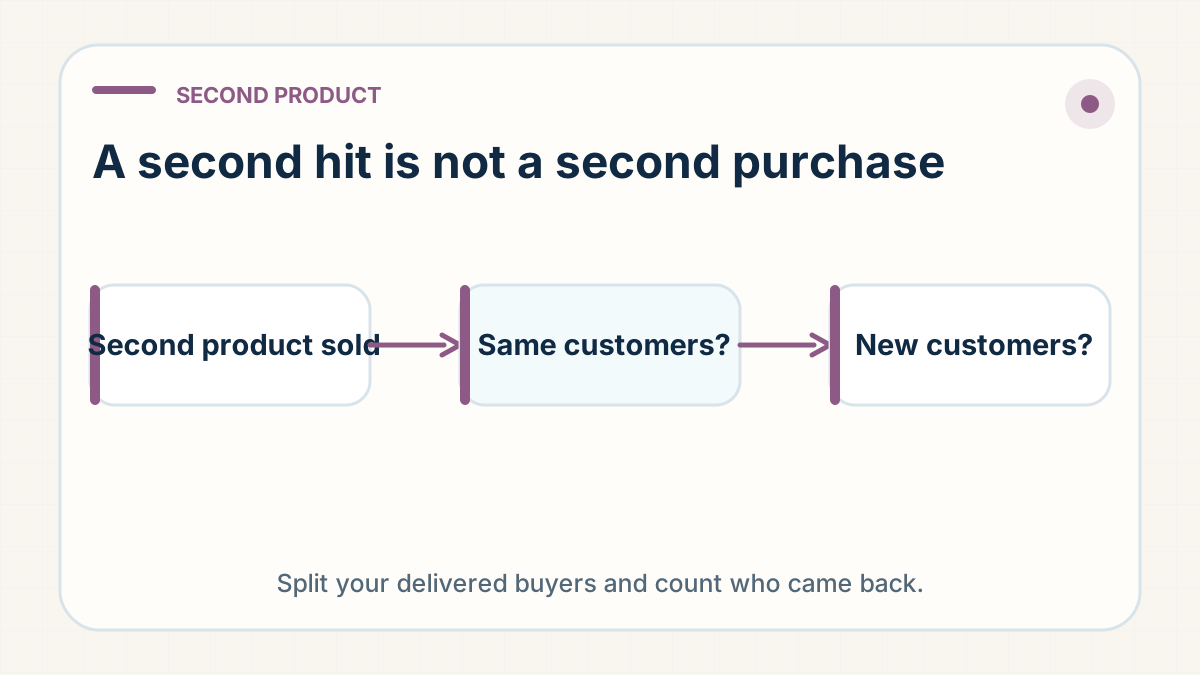
POP MART’s fastest-growing character supplied 68.6% of its first-half growth while its LABUBU line, THE MONSTERS, fell. A sales table cannot tell you who bought it.
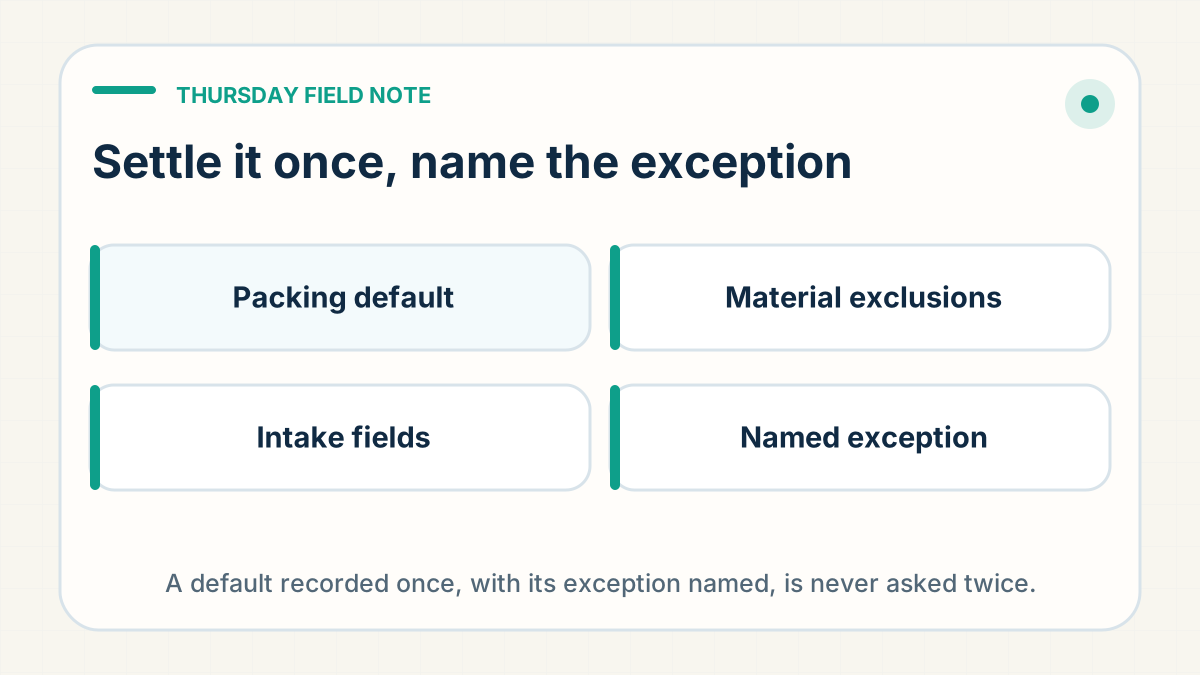
Ask your partner to read back your account defaults for packing, order intake and optional add-ons, and name each exception yourself so it sits on the order.
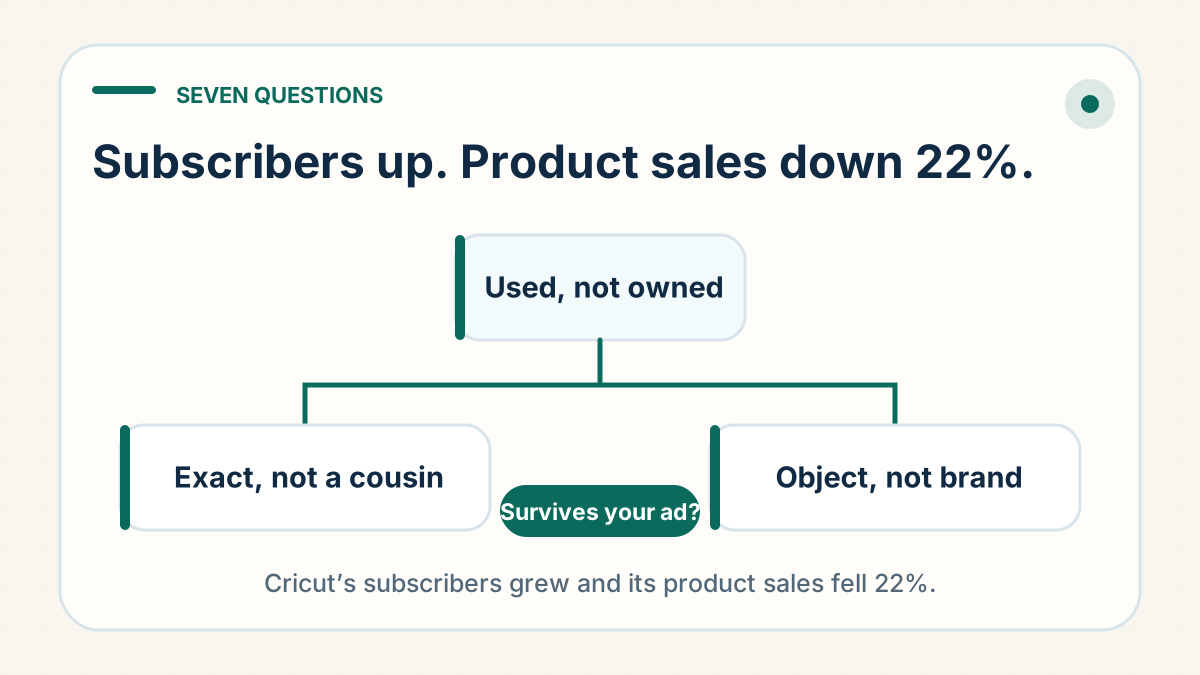
Cricut’s paid subscribers rose to 3.10 million while its machine and material sales fell 22 per cent. Seven questions before you source a big brand’s growth.
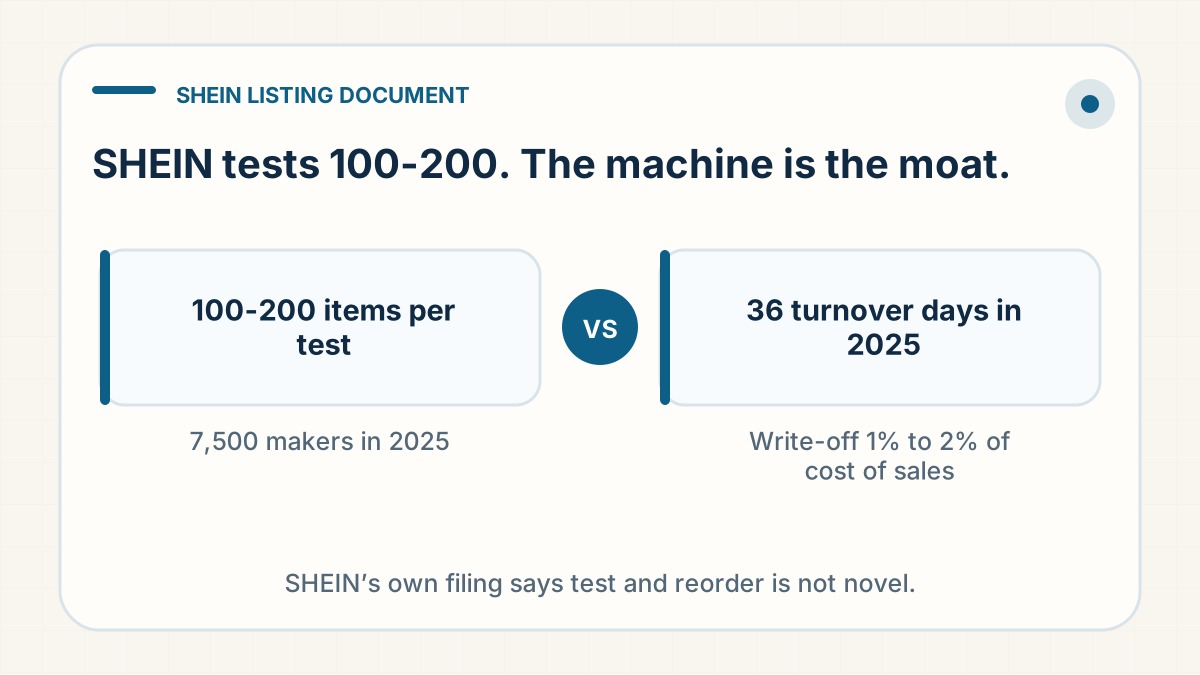
SHEIN launches a product in a batch of 100 to 200 items, then reorders. Its prospectus says that part is not novel. The expensive part is the machine underneath.
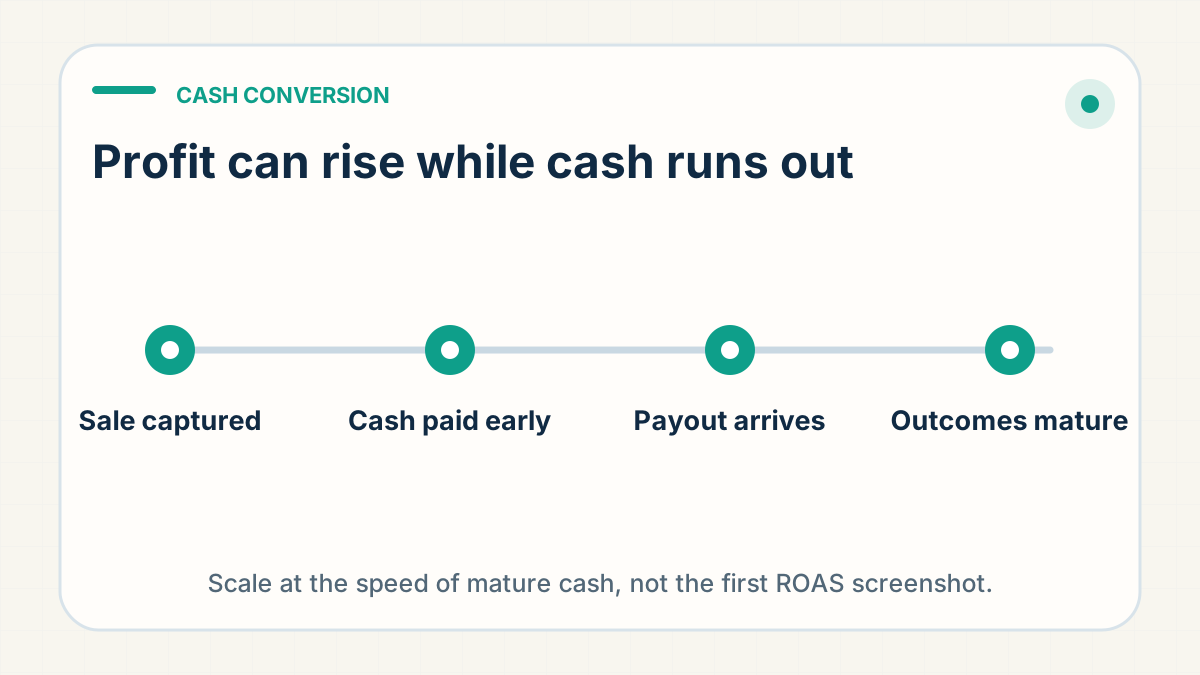
Your ROAS can look strong, your profit after costs can be positive, and your bank can still run dry. Map when each dollar lands, leaves and settles before you scale.
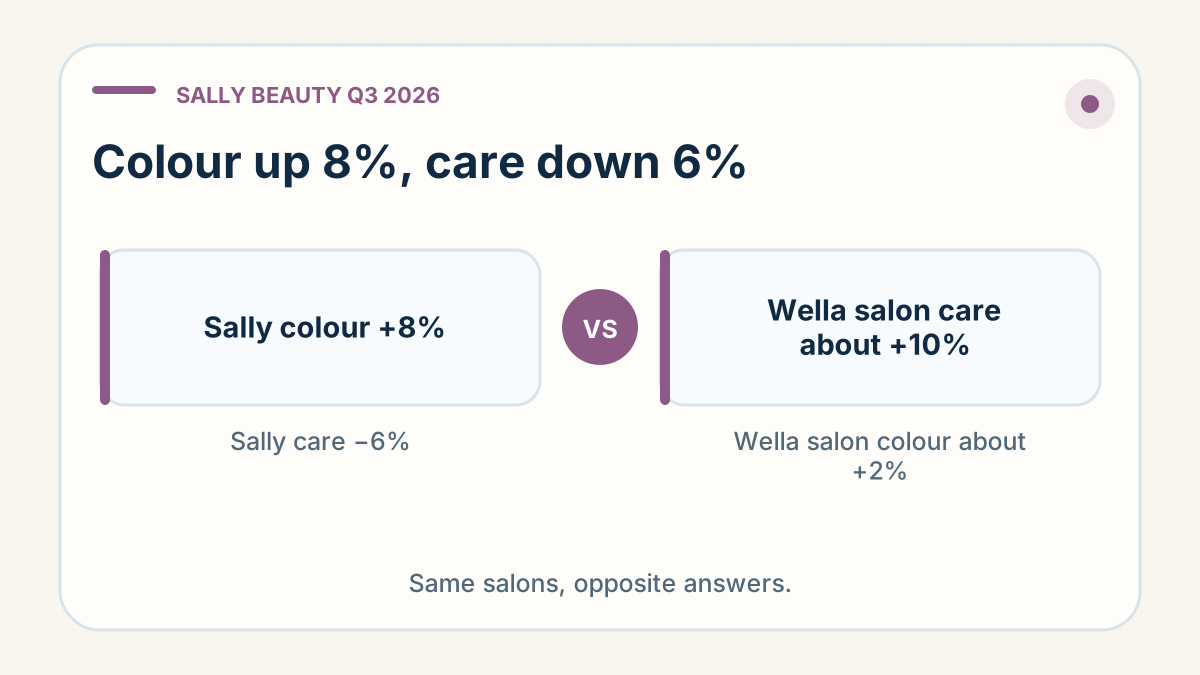
Sally Beauty’s colour sales rose 8% while care fell 6% in the same quarter. Wella’s salon numbers say the opposite. What that split, and a US$20 fragrance add-on, tell a haircare seller.
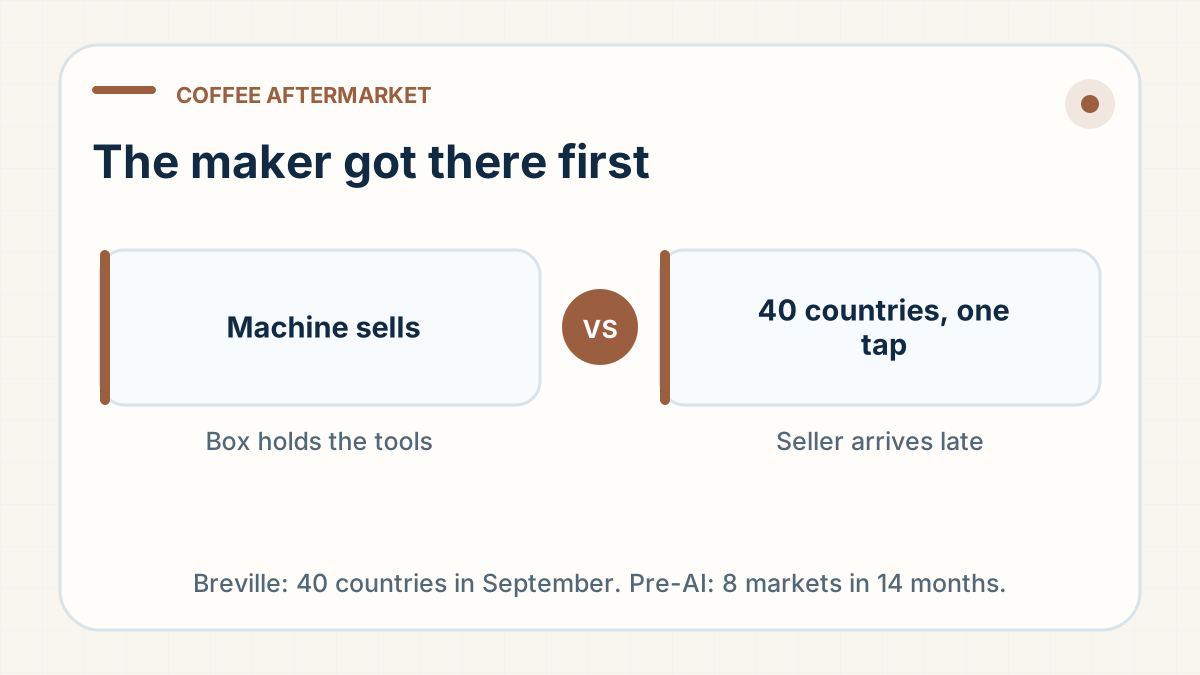
Breville says setup, recipes, care and accessories go live in 40 countries in September. A comparable rollout before AI reached 8 markets in 14 months.
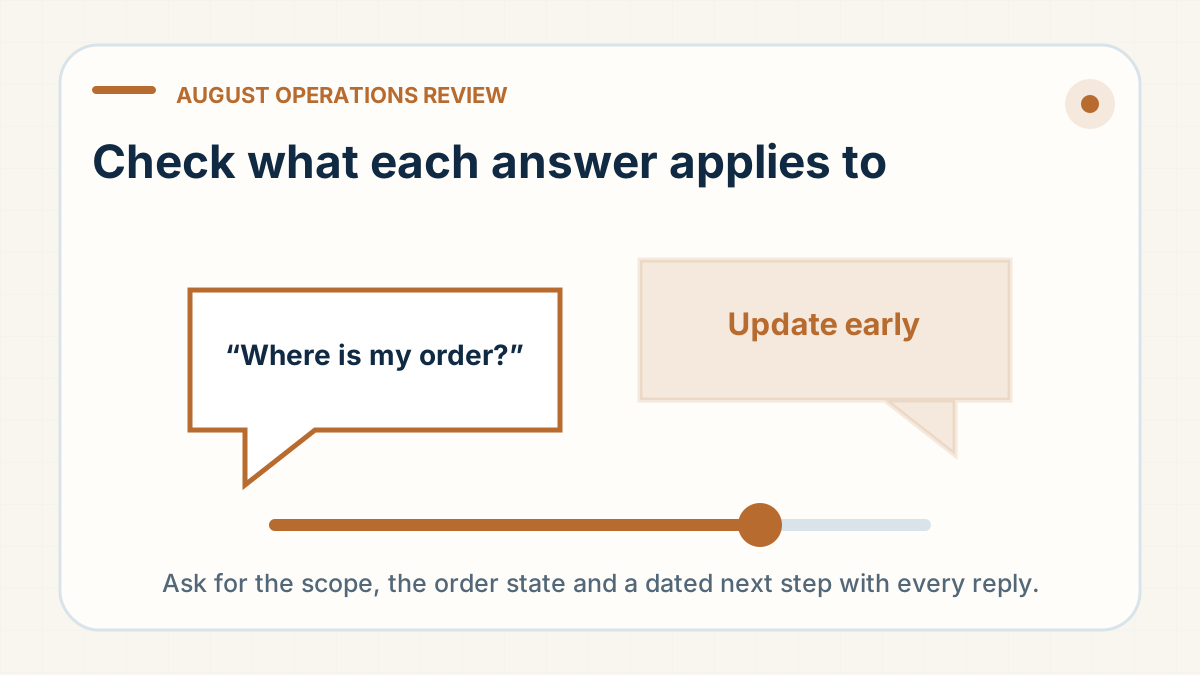
August in 31 daily notes and six weekly reviews: eligibility, change windows, quote legends, claim evidence and named next steps for dropshippers.
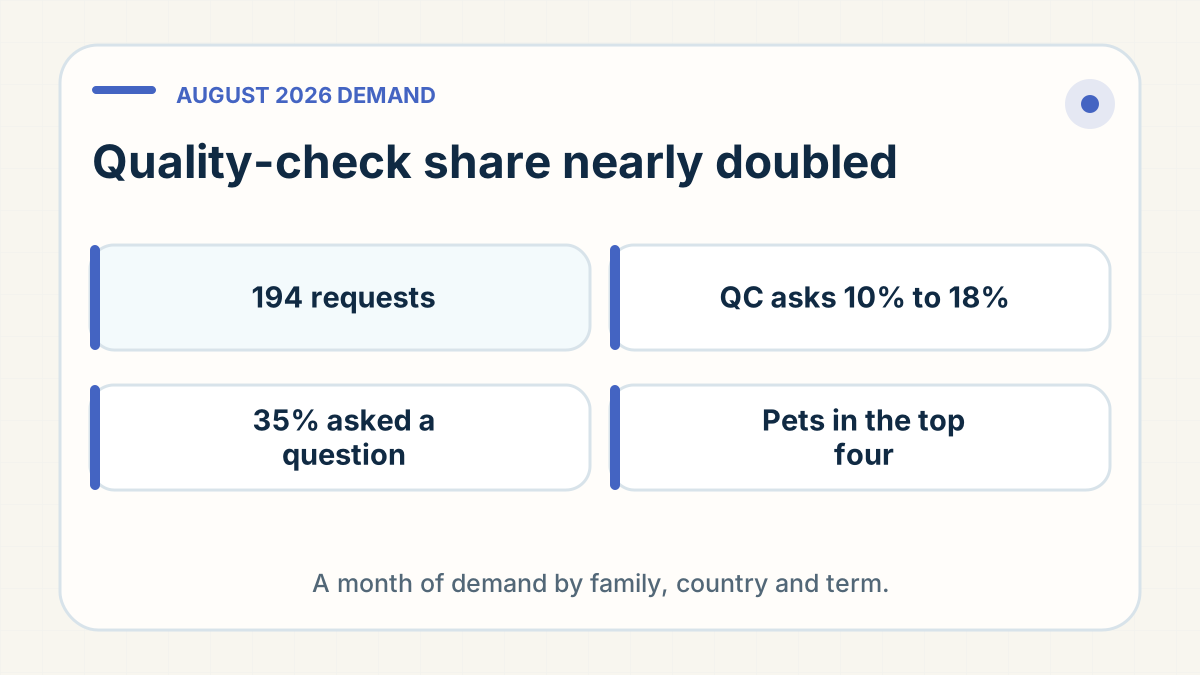
194 distinct supplier requests in August 2026 by product, country and terms vs July: quality checks and direct questions rose; pet supplies made the top four.
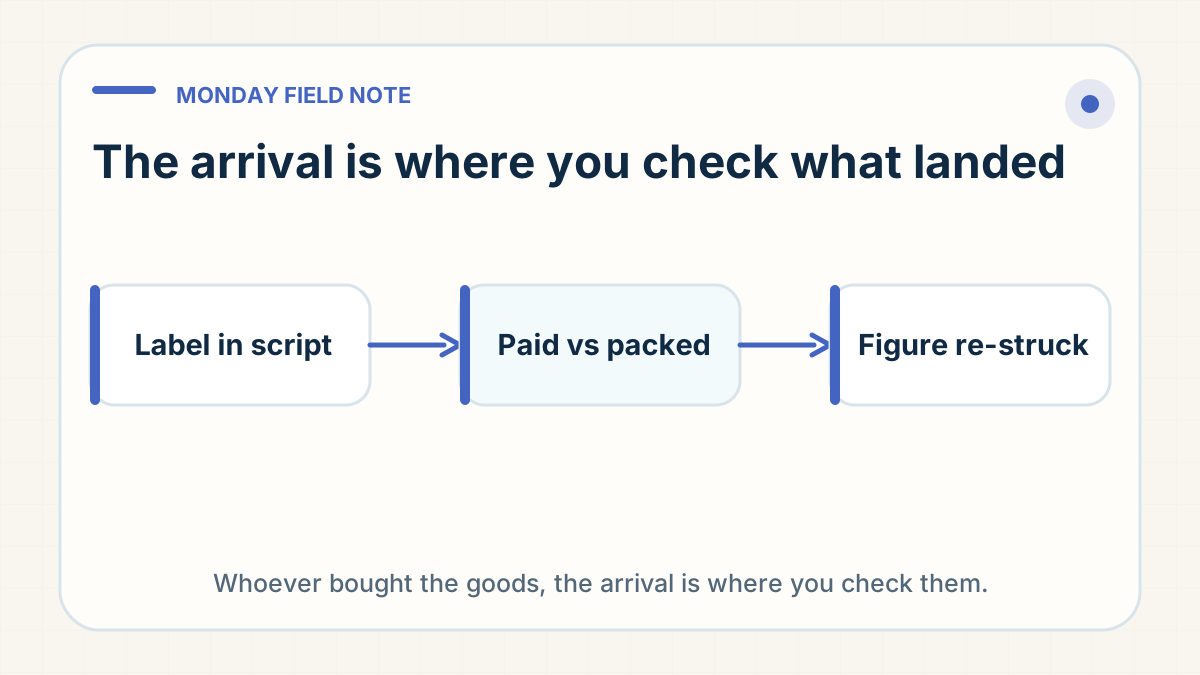
Before goods reach an agent’s China warehouse, get the label address in Chinese, who records their condition on receipt and who measures the packed parcel.
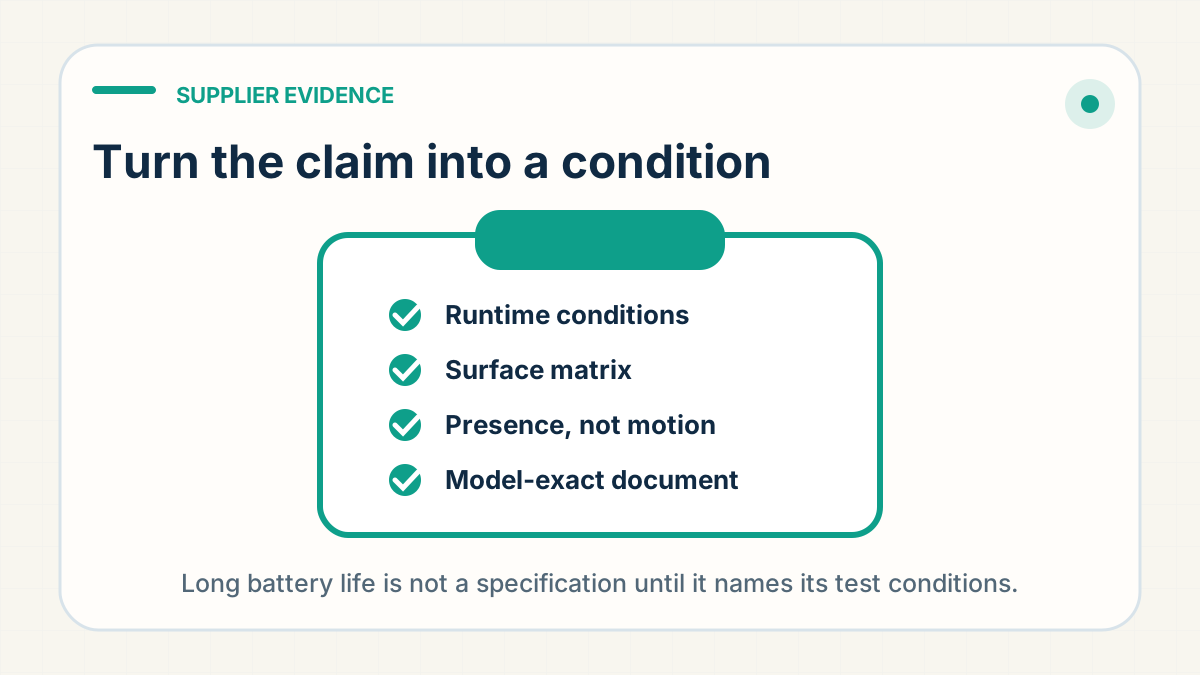
Long battery life and strong magnet are not a spec. Here are the questions that turn a lighting factory claim into something your receiving check can actually fail.
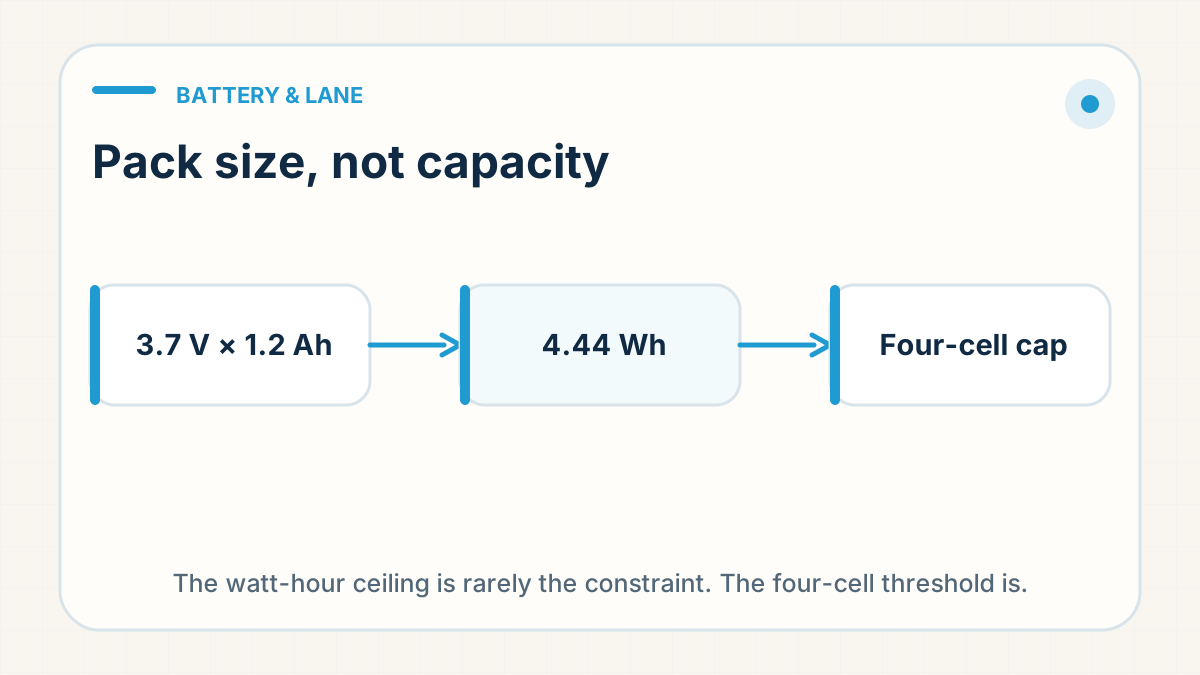
Nothing in consumer lighting is unshippable by air. What changes is which lane you have to buy, what it costs you and when your cut-off falls. Here is the sum.
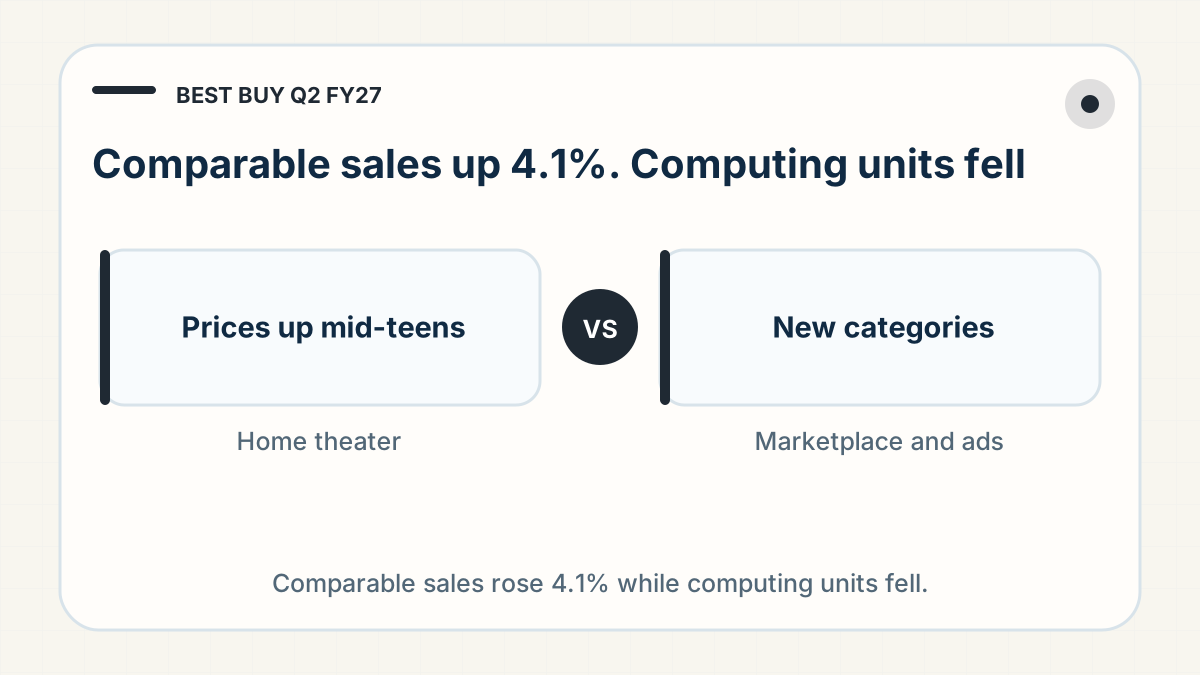
Best Buy’s comparable sales rose 4.1% while its computing units fell and prices rose mid-teens. A category growth number is not a demand signal.
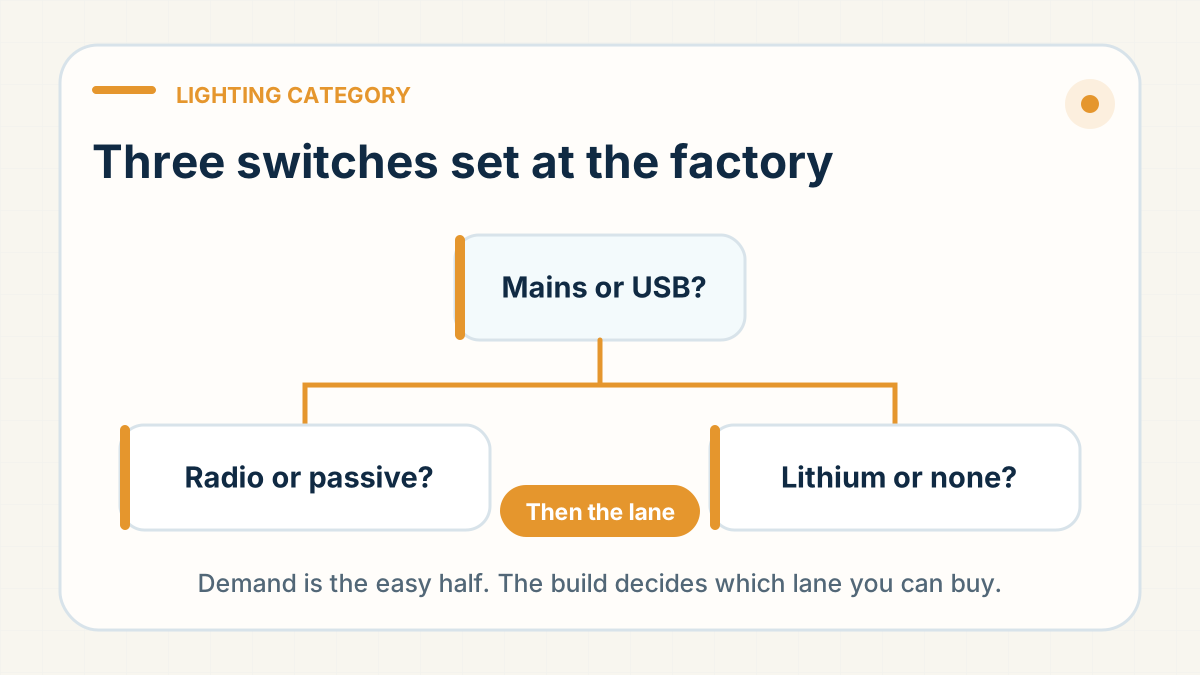
Everyone can tell you lighting sells. Which lighting products you can actually ship, on which lane and at what cost, is the half that decides whether you make money.
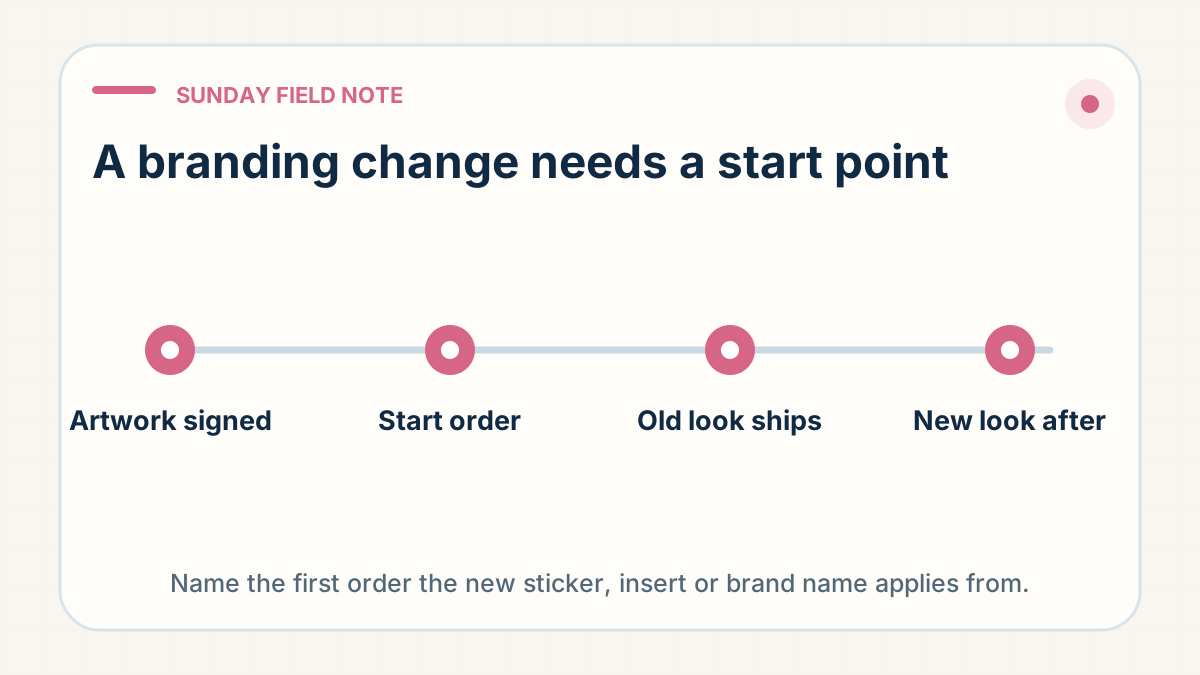
Put a branding change’s start point in writing: name the order that ships with the new sticker or card once it reaches the warehouse, not the approval day.
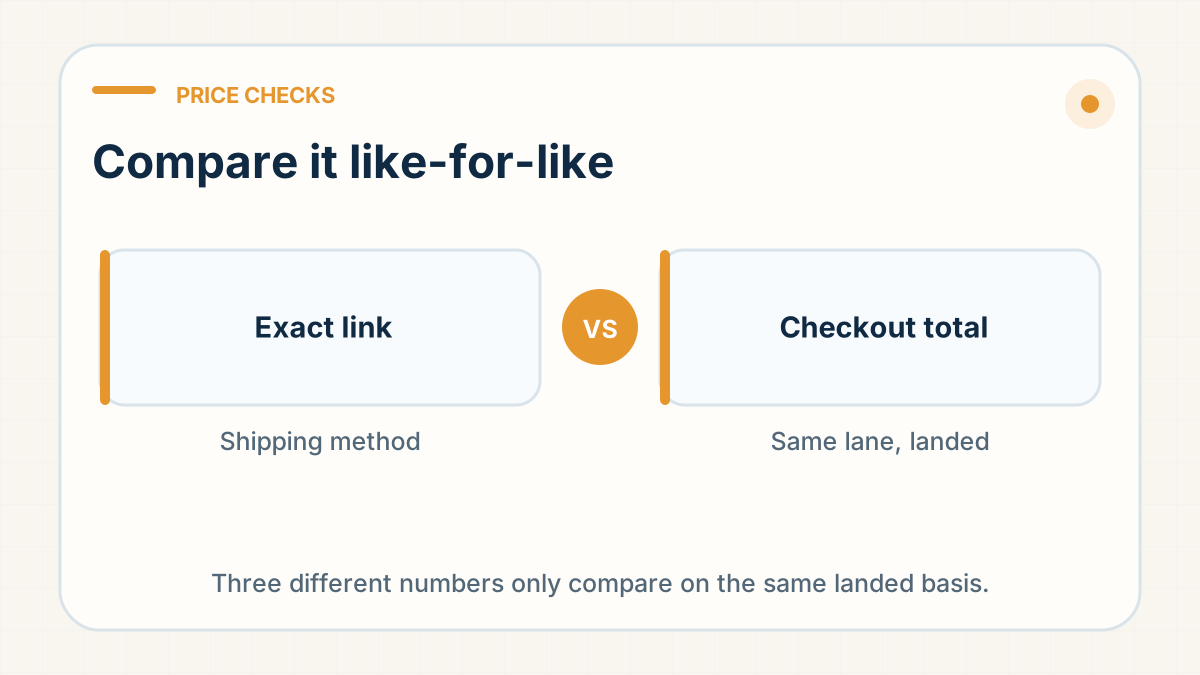
Compare the exact variant, complete delivered cost and shipping service. Send the alternative link and checkout total to see whether a lower quote covers the same order.
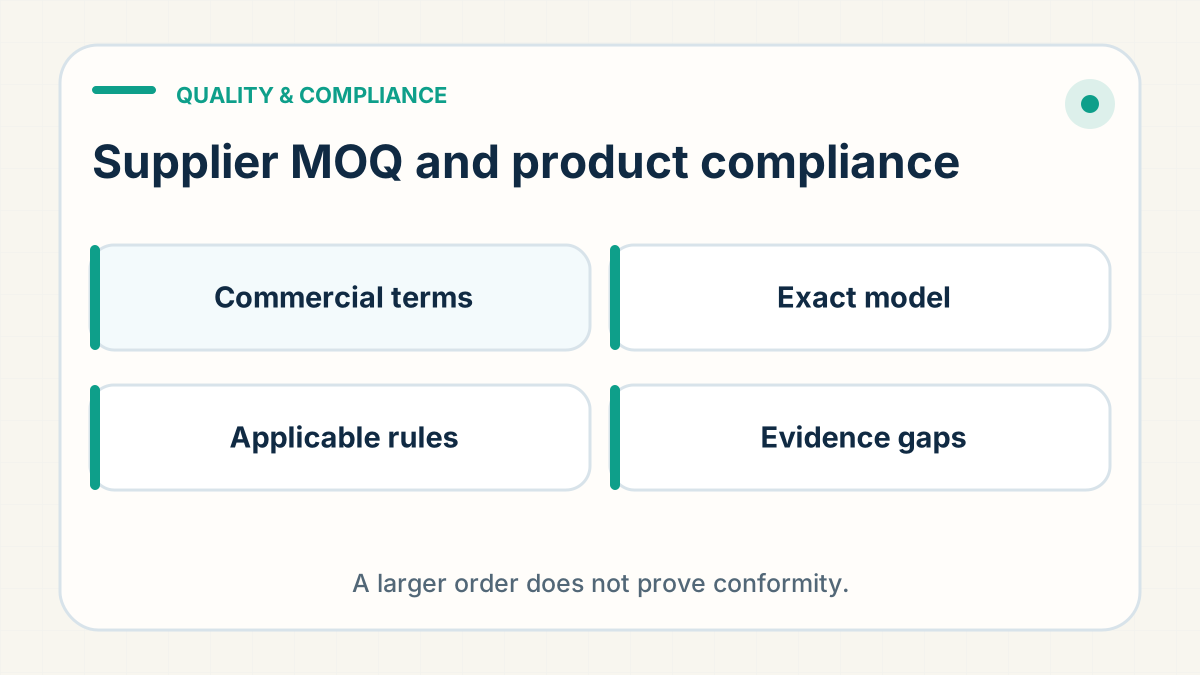
A supplier minimum or testing charge is a commercial condition. Check the exact product’s applicable conformity requirements and evidence before placing it on the market.
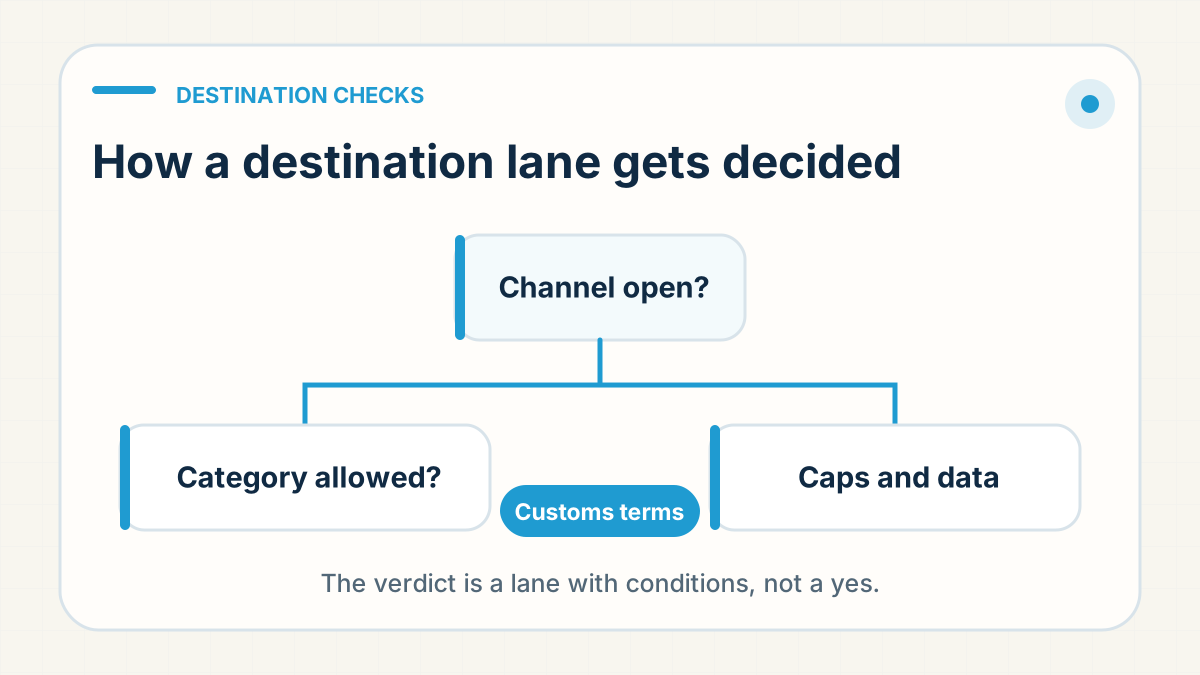
Whether we can ship to your country is never a yes or no: channel, product, size, recipient data and customs terms decide each lane. Here is how we check.
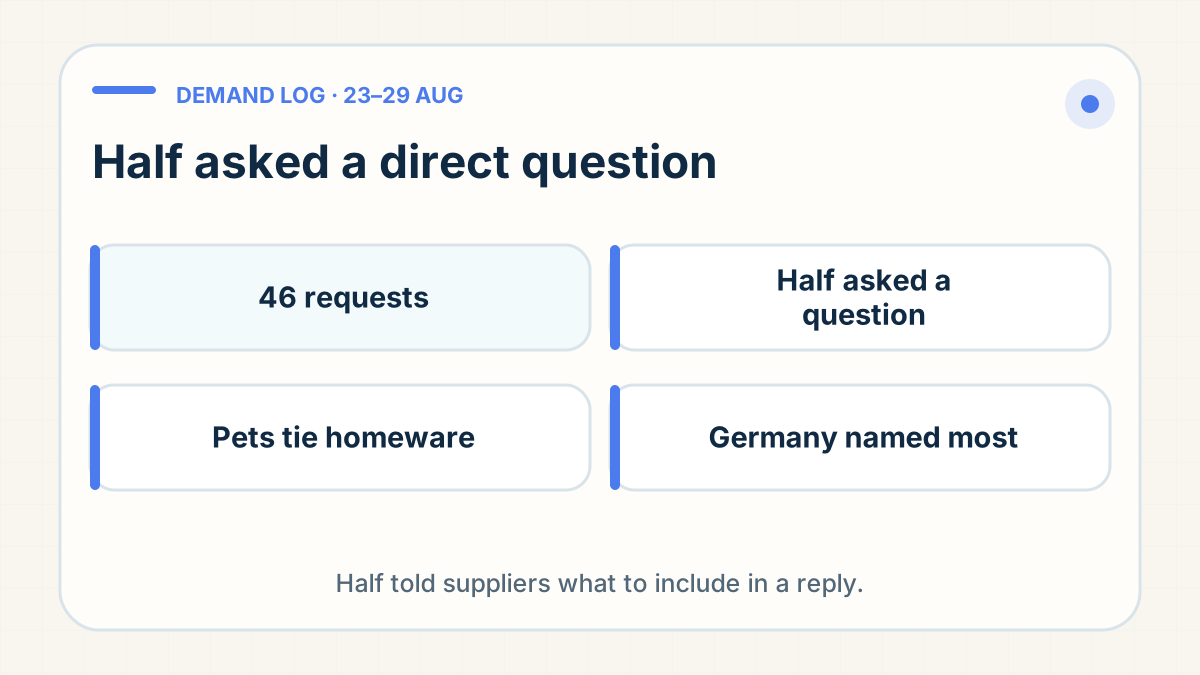
Of 46 distinct supplier requests between 23 and 29 August, half asked suppliers a direct question such as delivery time, unit price or shipping cost.
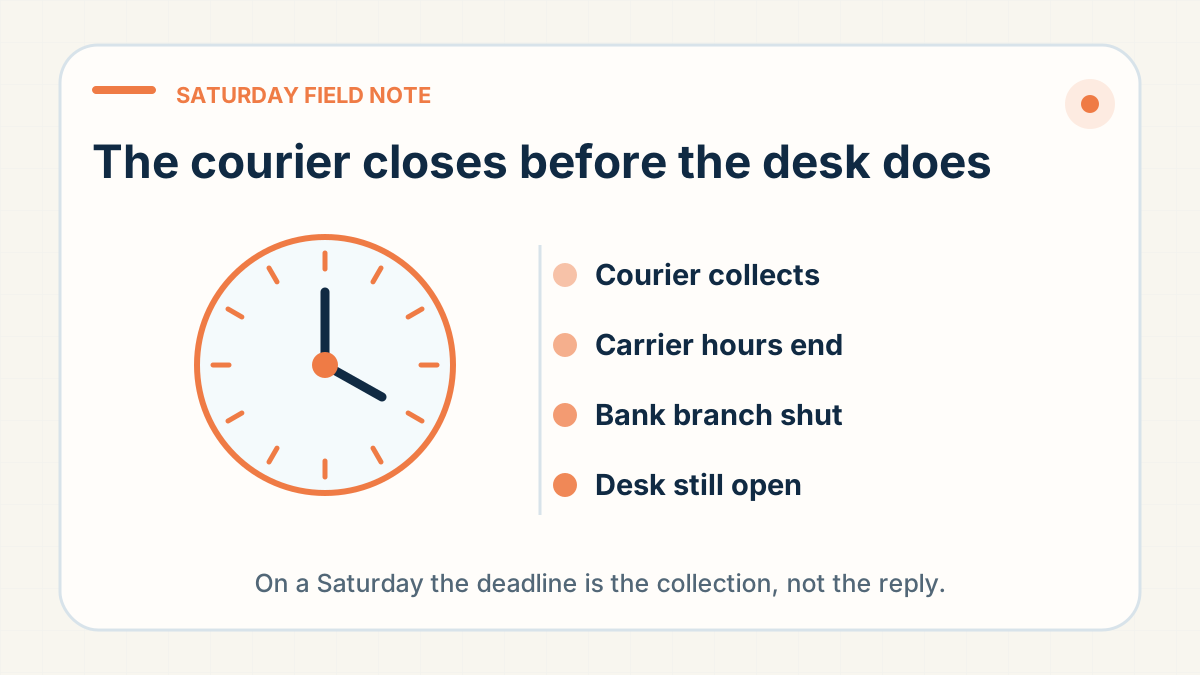
Ask when the courier collects on weekdays and at the weekend, and put both times in your cut-off table, because the first scan often waits for that collection.
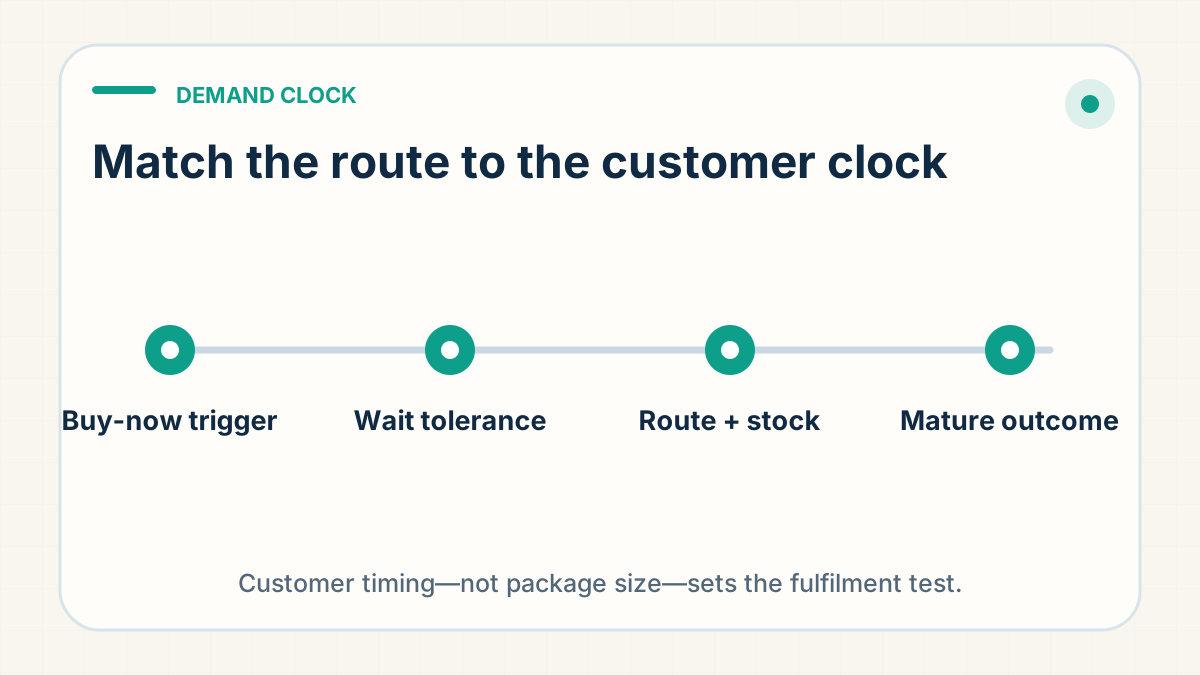
Work out why the customer is buying now, then match how long they will wait to your real delivery times, your stock, the life of the product and a dated stop rule.
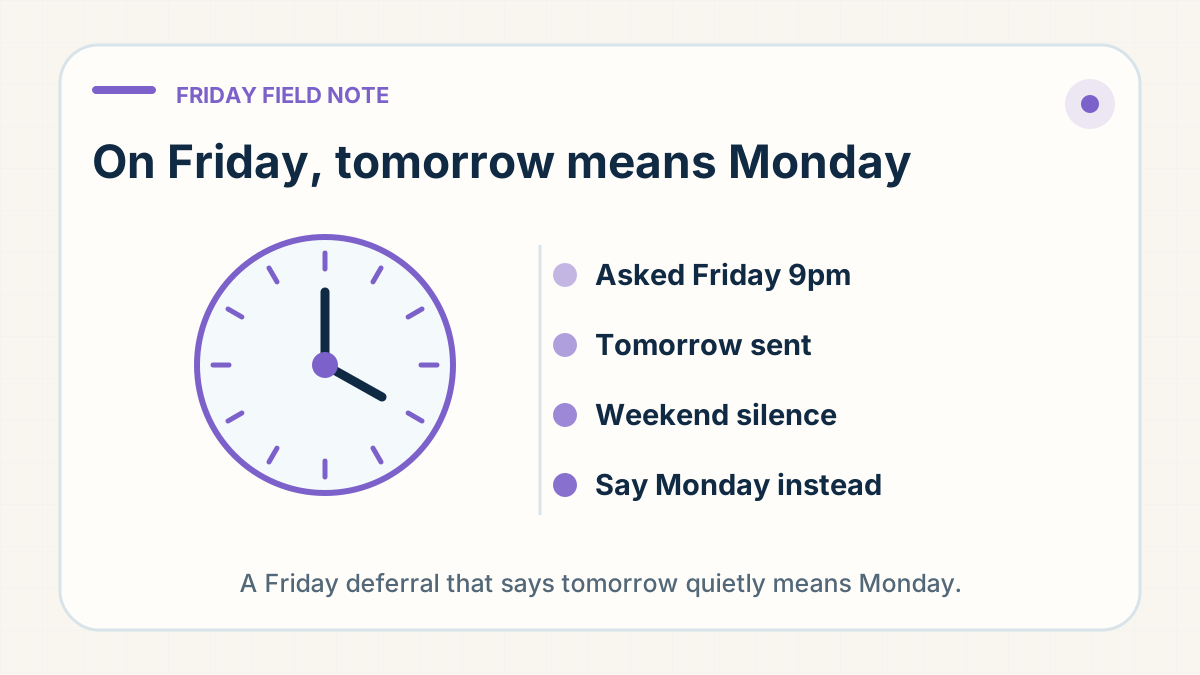
Before Friday ends, give every deferred question a named day, which on the last working day is Monday, and close any market whose lane maths fail.
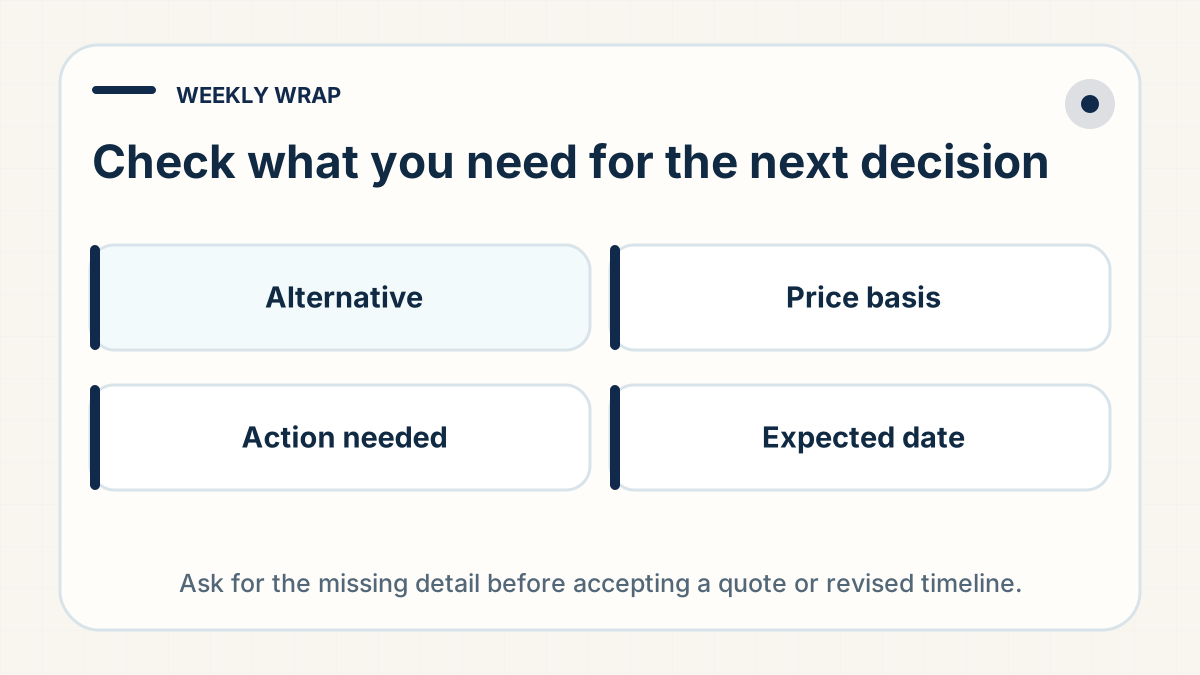
Ask for the next move in the same reply: the alternative after a refusal, the label on a claim, inclusions and lane beside a price, a named day for a check.
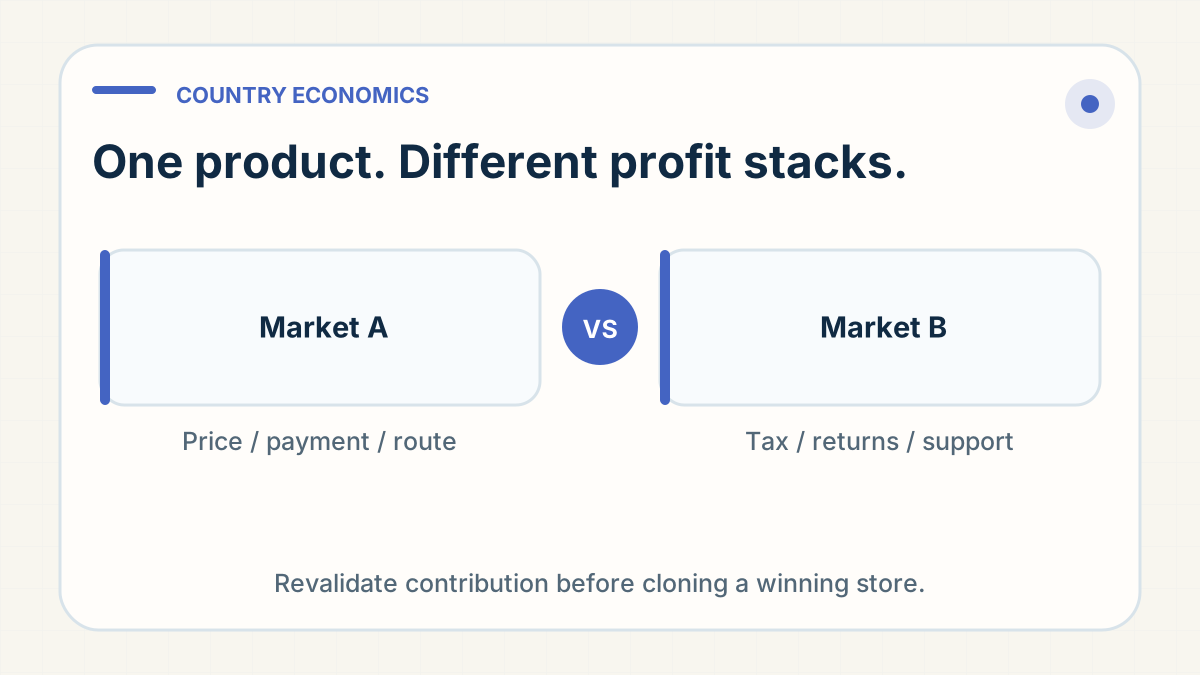
A winning product does not carry one profit model around the world. Work out what you keep again for every product, country and traffic source before you copy the store.
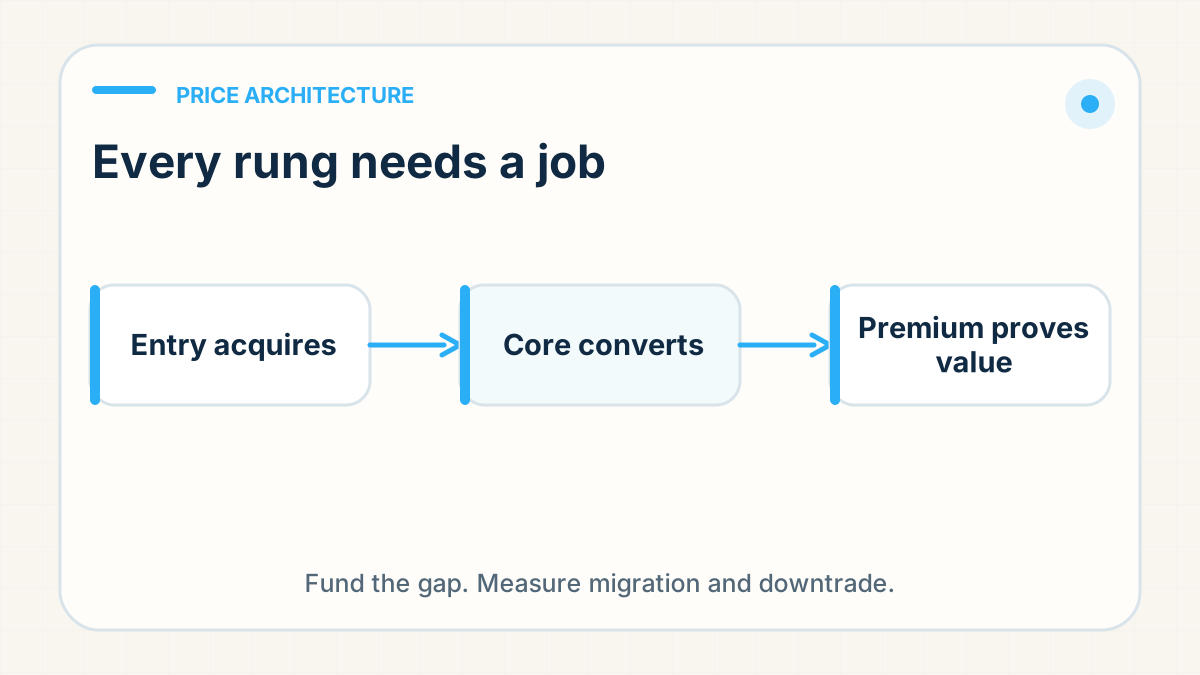
Your entry, core and premium prices are three jobs, not three numbers. Give each one a customer job, an exact product, a way to pay for it, a stock rule and a date you stop.
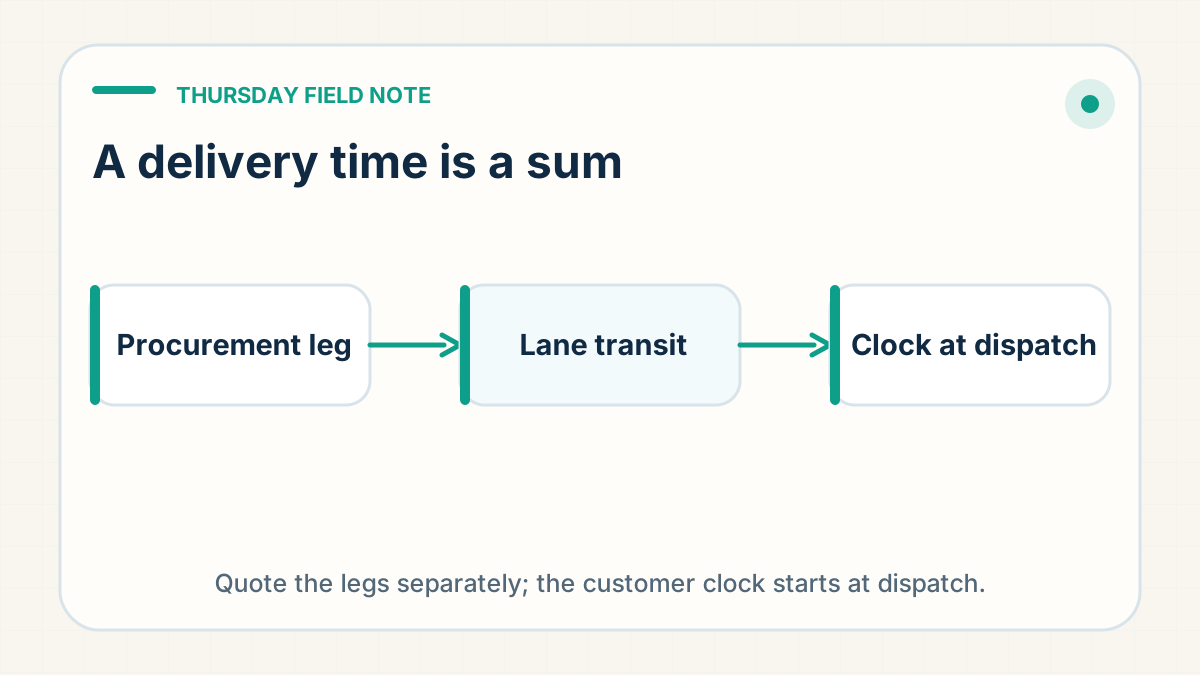
Show delivery time as legs, a procurement window then a named lane, start the clock at dispatch, and attach the alternative’s numbers to every no you send.
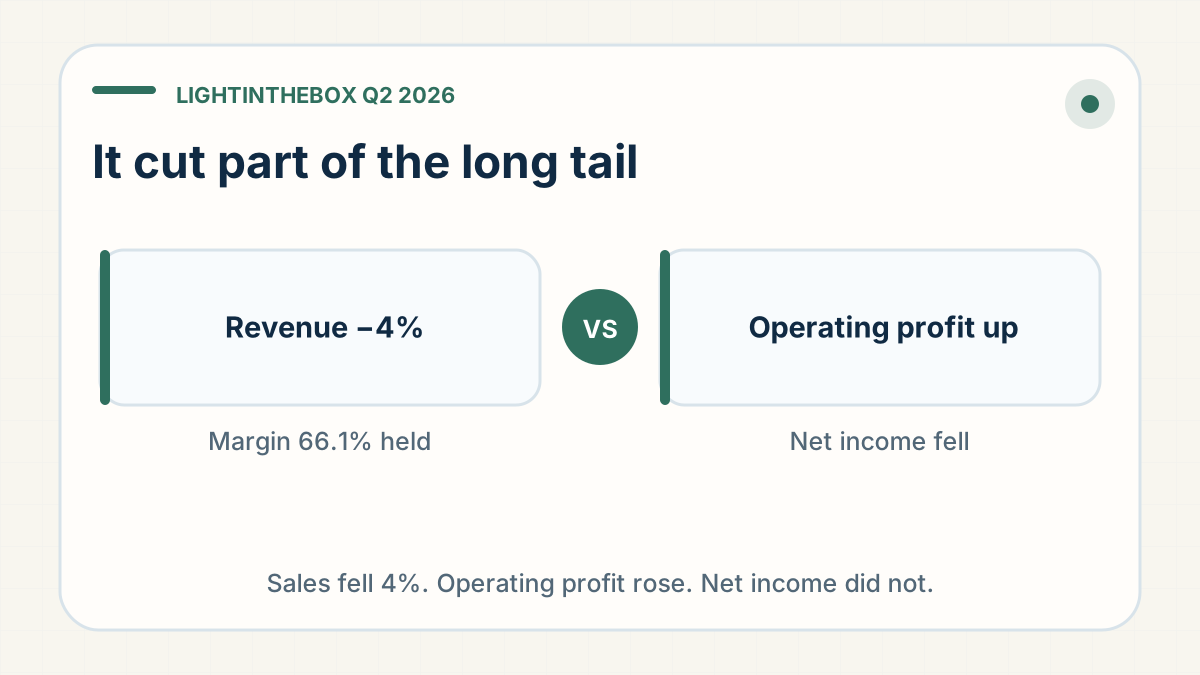
LightInTheBox told shareholders it cut some of its slow products on purpose. Revenue fell 4%, gross margin barely moved, costs fell. Cash fell over the half.
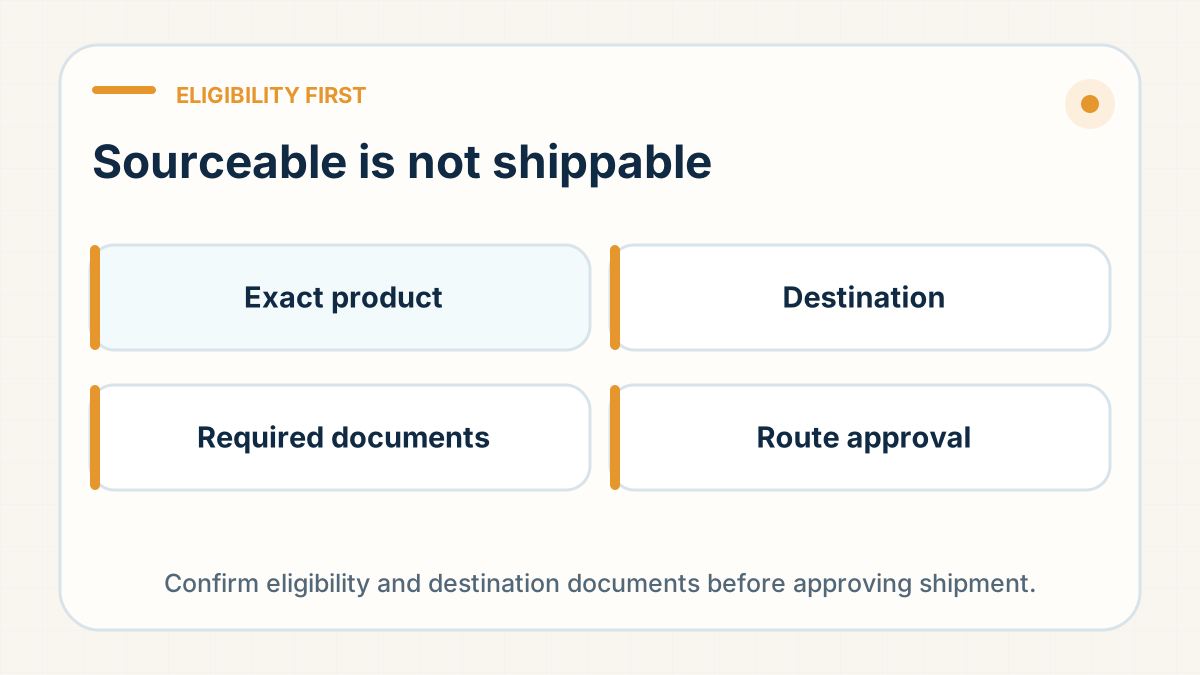
Before you treat a sourcing quote as shipment approval, check the product can leave China for your market: material, dimensions, battery, brand, certificates.
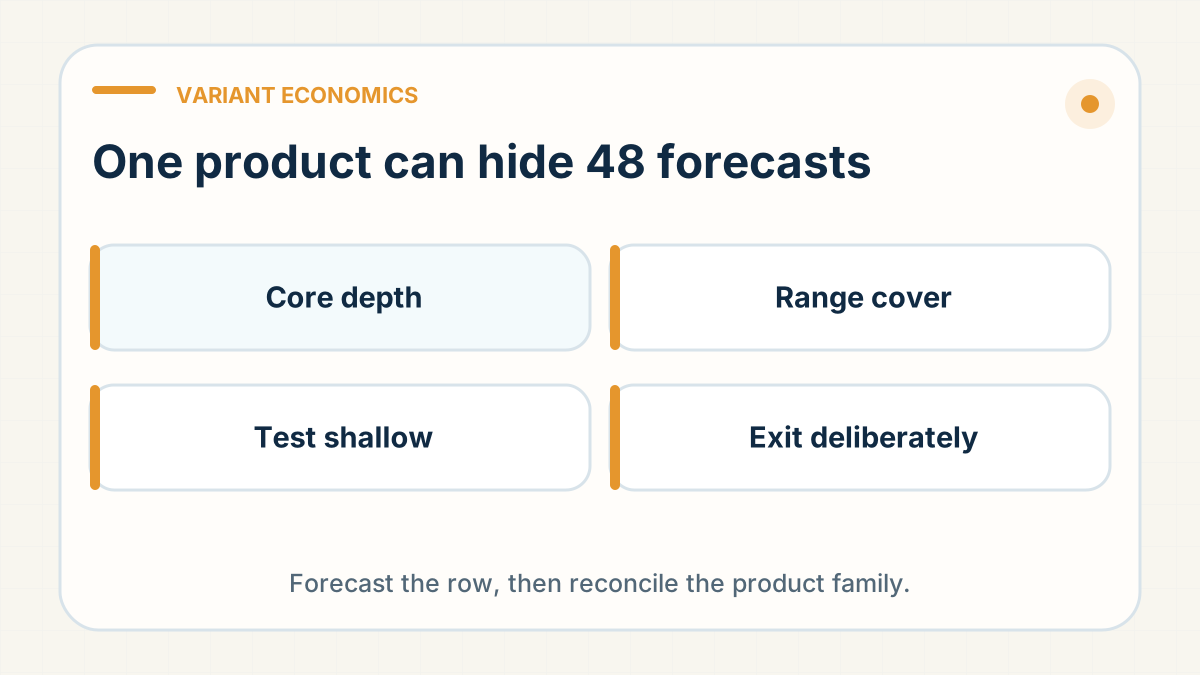
Six sizes and eight colours is 48 stock decisions, not one. A simple grid shows you the rows you keep running out of, the ones nobody wants, and the total that lies to you.
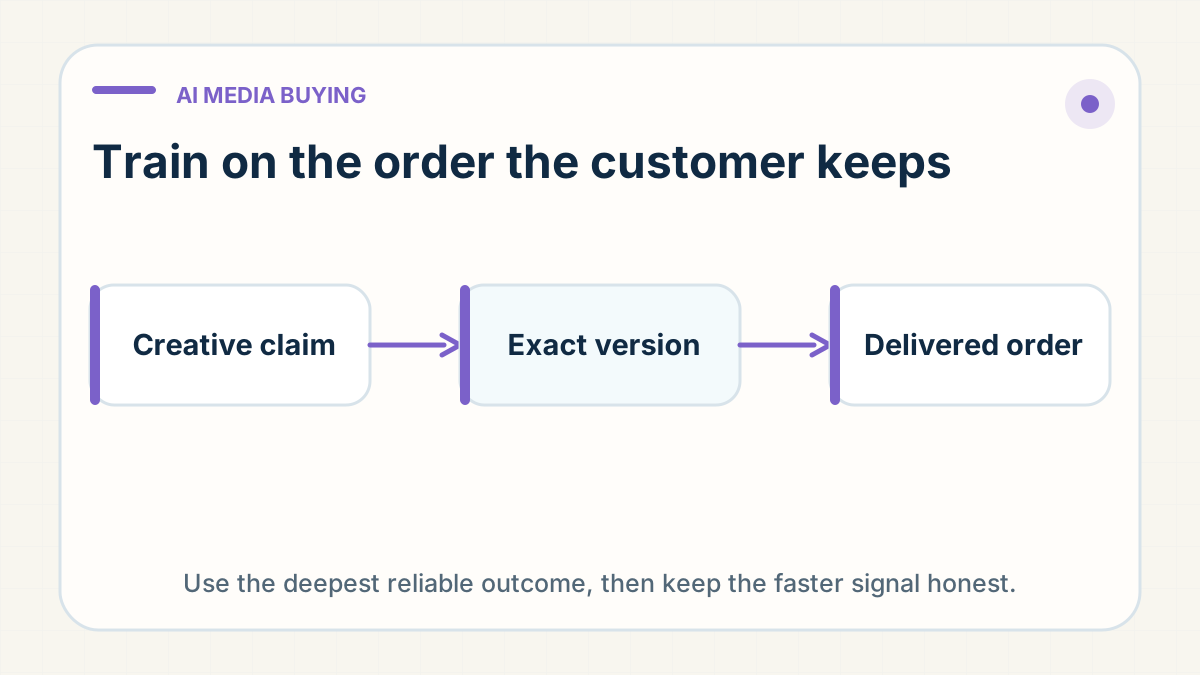
When the ad platform picks the audience and the creative, what you feed it is your job. Tie the ad promise to the exact version, the route and the orders people kept before you scale.
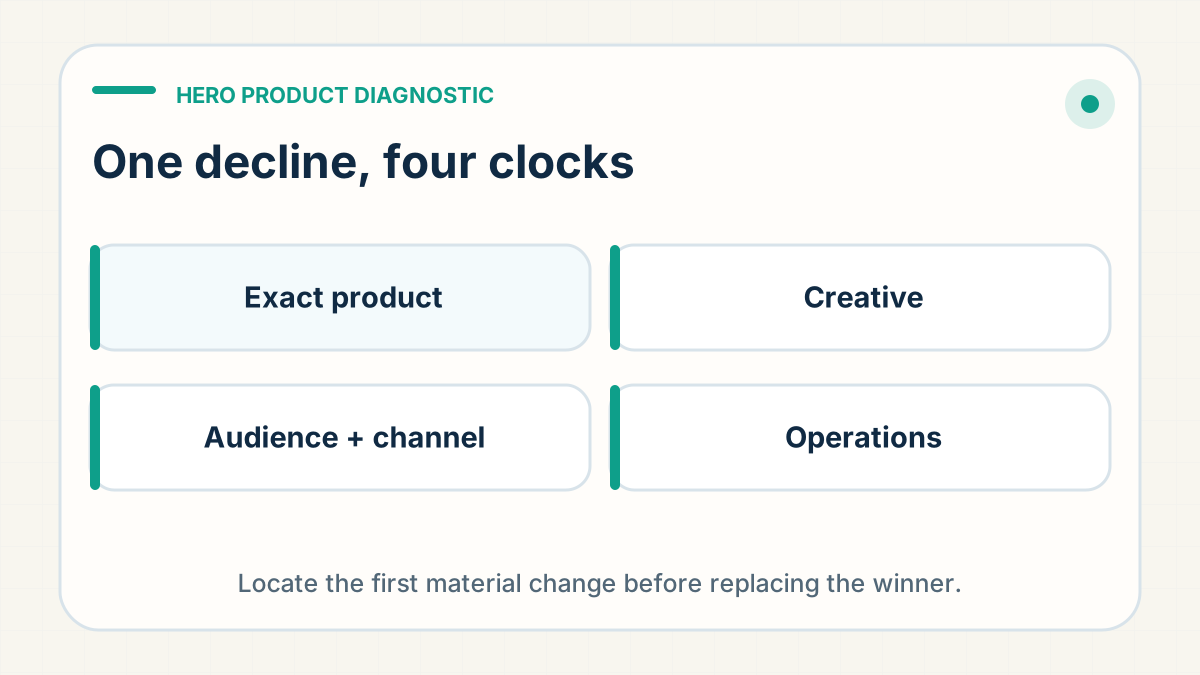
A four-clock diagnostic for separating product decay from creative fatigue, audience change and fulfilment drag before you kill, restock or replace a winning SKU.
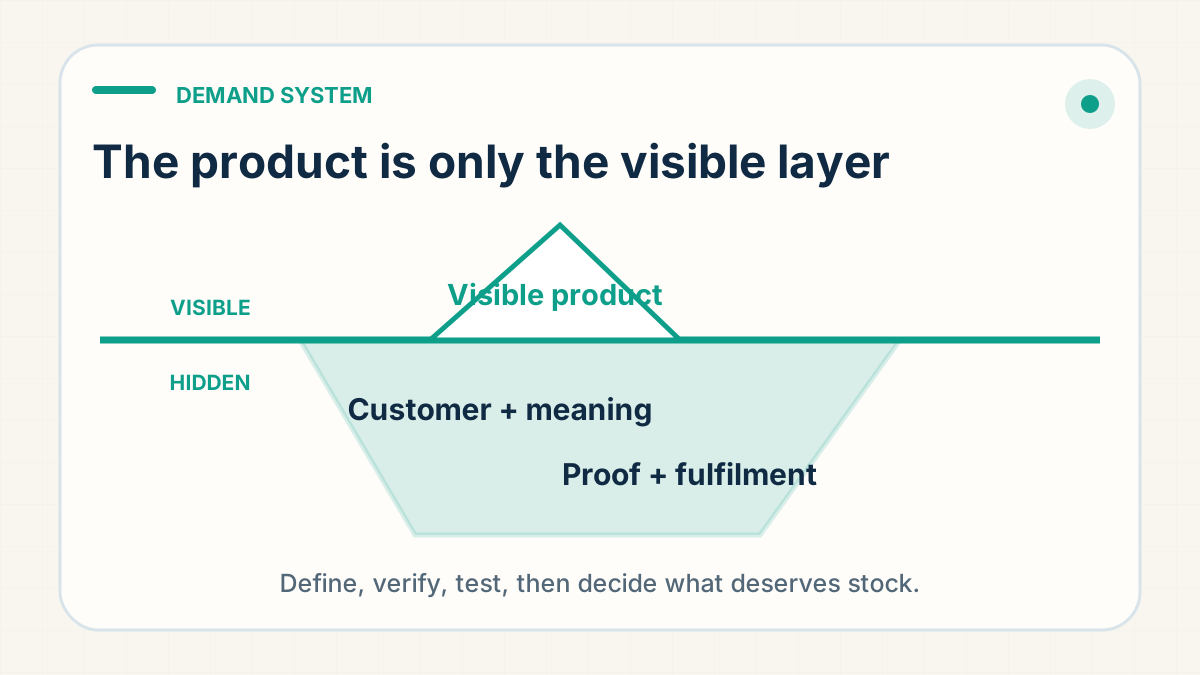
A winning SKU is the visible result of a system. Use exact-demand, customer-file and inventory tests before copying a trend or pre-stocking a product.
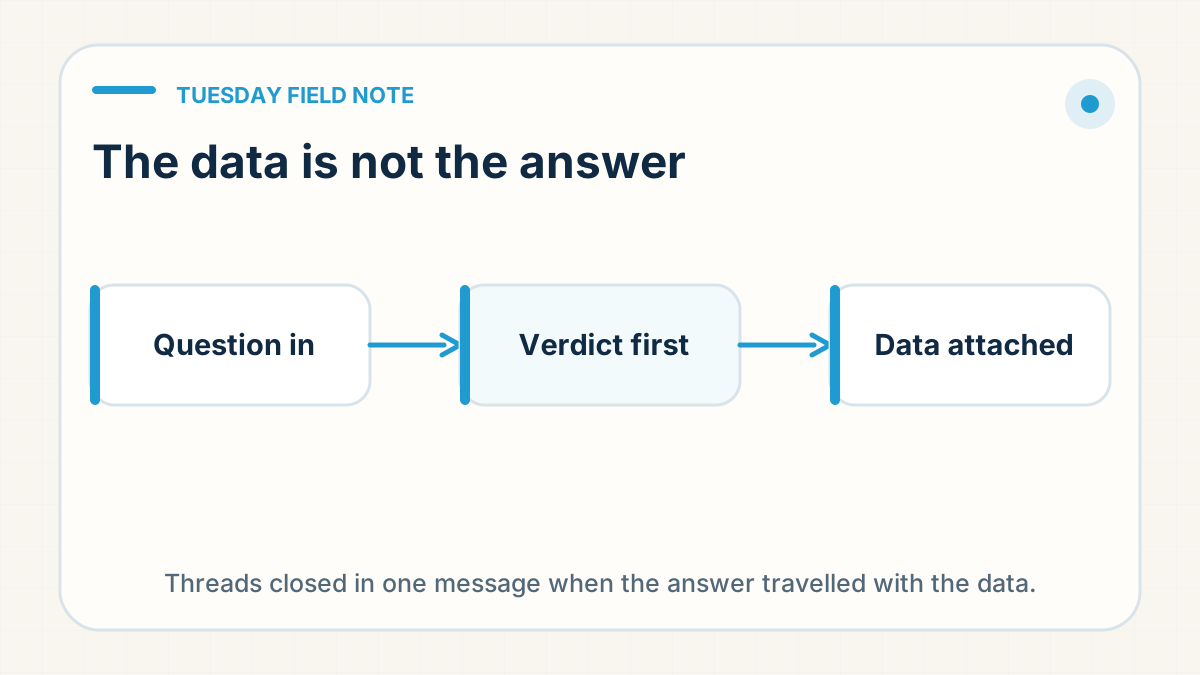
Put the verdict in a reply’s first line: a carrier contact card, a lookalike quote or a certificate PDF sent alone still leaves the seller without an answer.
Local retailers have cut delivery to hours. A parcel from China still takes days. This is how to measure that difference, price it, and decide whether the product is strong enough to carry it.
Walmart, Target, Home Depot and Lowe’s all grew online far faster than their comparable sales, and two of them served fewer customers than a year ago. What that gap changes for a seller shipping from China.
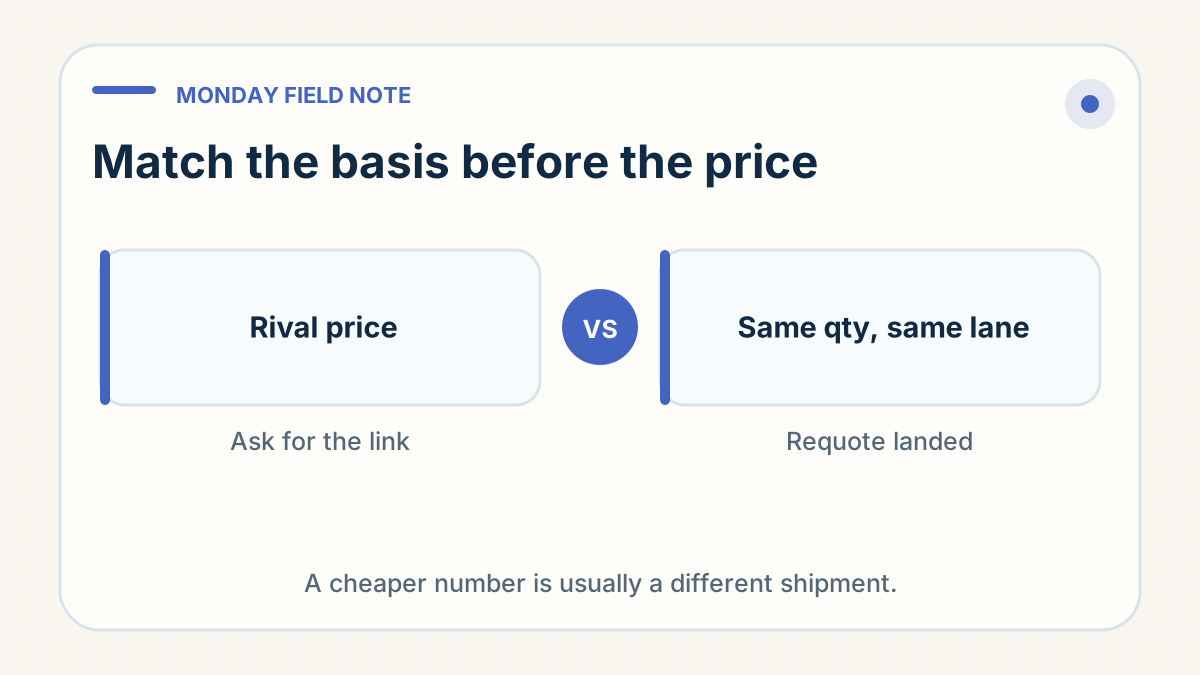
Check the basis before you match a price: exact spec, quantity, shipping method, inclusions and the certificate or file behind it, then decide once and say why.
A four-test framework for advising a dropshipping client to convert working capital into pre-stocked inventory — and why the order-count threshold you were handed is the wrong trigger.
Which fulfilment touchpoints an agency can brand as its own, and which ones a carrier, a bank or a customs authority keeps visible — so you audit your setup before you promise a client.
A framework for the fulfilment SLA you can actually stand behind: four separate clocks, each with a start event, a stop event, working hours, a missing-info pause, a peak-season exception, a severity and a credit rule.
How an agency re-quotes a landed price to a client honestly: one customer-ready unit, product plus packed shipping, route, destination, delivery range and exclusions — with your commission on top and no estimate passed off as a guarantee.
What is actually protected when you route a client through a fulfilment provider — registered ownership, non-solicitation, confidential product and sales data — and the honest limit: there is no product exclusivity.
The packaging ladder for agency clients: neutral, sticker, custom box, product branding — with the MOQ, setup cost, sample and lead-time question you ask at each rung, and how to decide when the upgrade earns its cost.
Switching a client off a failing fulfilment agent, from the agency seat: diagnose the reliability problem, capture the outgoing records, move one product first, and keep the old route live until the new one has passed live orders and an exception check.
The multi-store operating problem from the agency seat: one account structure, one contact, one invoicing rhythm, separate records per client store, and address quality as a standing cost.
What an agency actually needs to sell fulfilment without owning a warehouse — a real client product, a quotable spec, a landed price that survives the backend cost, a route-supported delivery promise, and a China operation — plus the warehouse claim that breaches the partner rules.
The three ways agencies charge for fulfilment — retainer, per-order commission, hybrid — what each suits, where each breaks, and how the commission you name sits inside the quote your client pays.
Chinese New Year closures and peak congestion move the whole fulfilment timeline for every seller at once. Here is the agency version of the plan: the dates to send clients early, when to pre-stock, and what to promise at checkout.
A claims playbook for agencies: take first line with your client, separate change-of-mind from real faults, and let RyanFulfil investigate the China and carrier side and return the evidence that decides the case.
A real onboarding checklist for the agency taking over a client's fulfilment: register the client, capture products and markets, agree the delivery promise, connect the store, test one live order, and set the exception rules before volume.
The fulfilment partnership choice is really one binary: refer the seller or own the client. Decide it on support appetite, margin and risk — routed by where your agency is today.
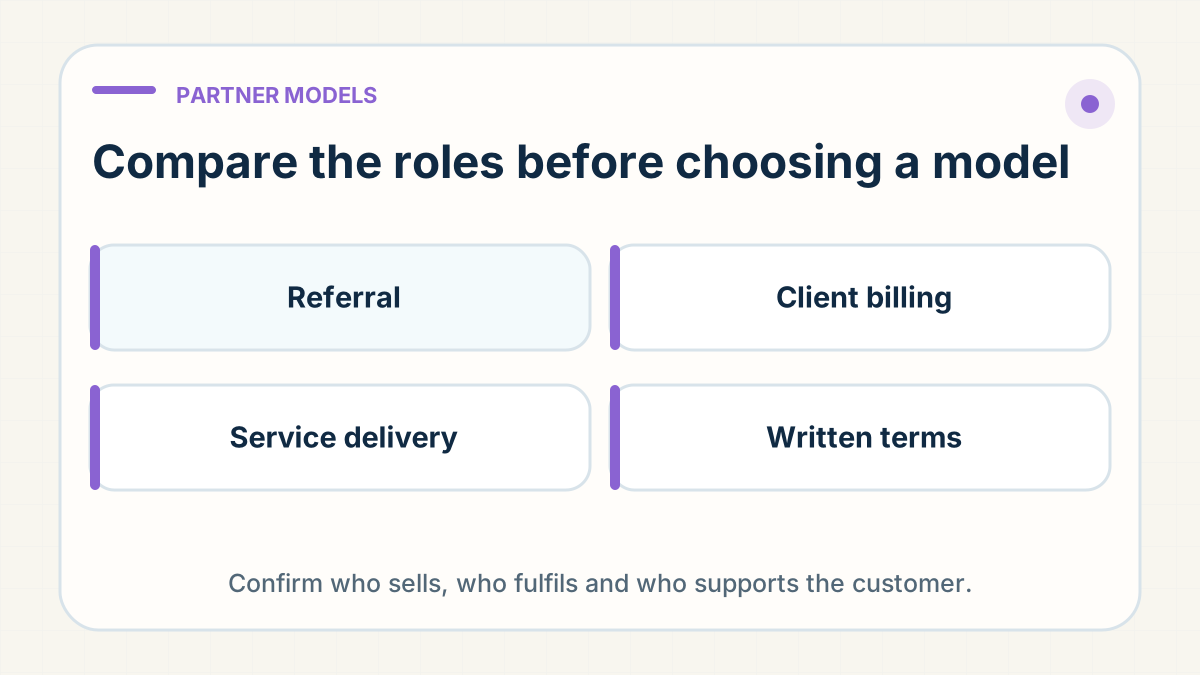
Affiliate, reseller and white-label fulfilment allocate responsibilities differently. Separate them on four questions, then map each to the path that fits your agency.
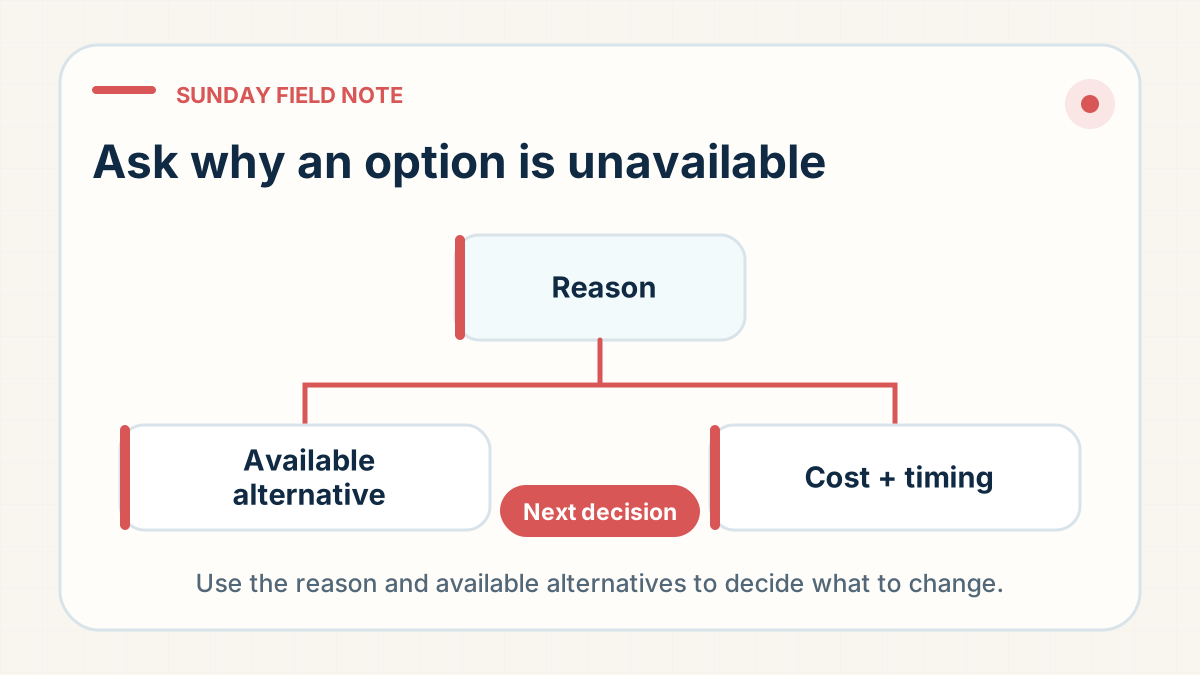
When a supplier cannot source your product, ask for the reason, any workable alternative and a date to check it, so you can choose the next step.
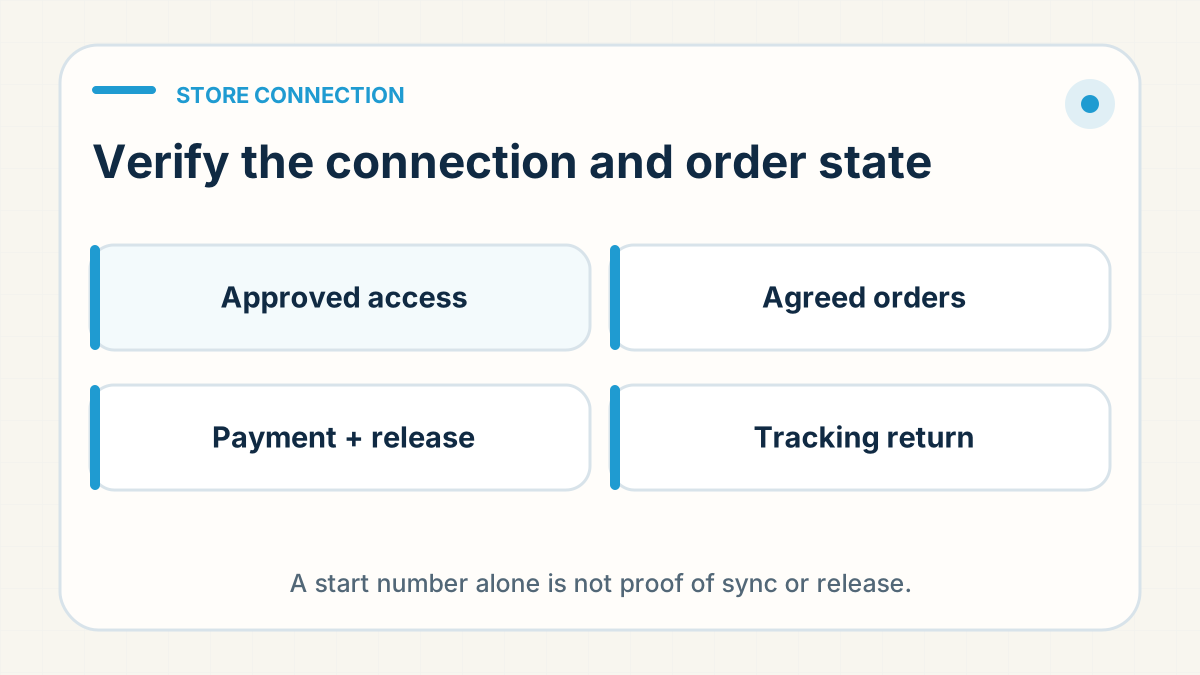
How a Shopify store connects to a fulfilment agent through collaborator access, why the start order matters, and the five connection problems we see most.
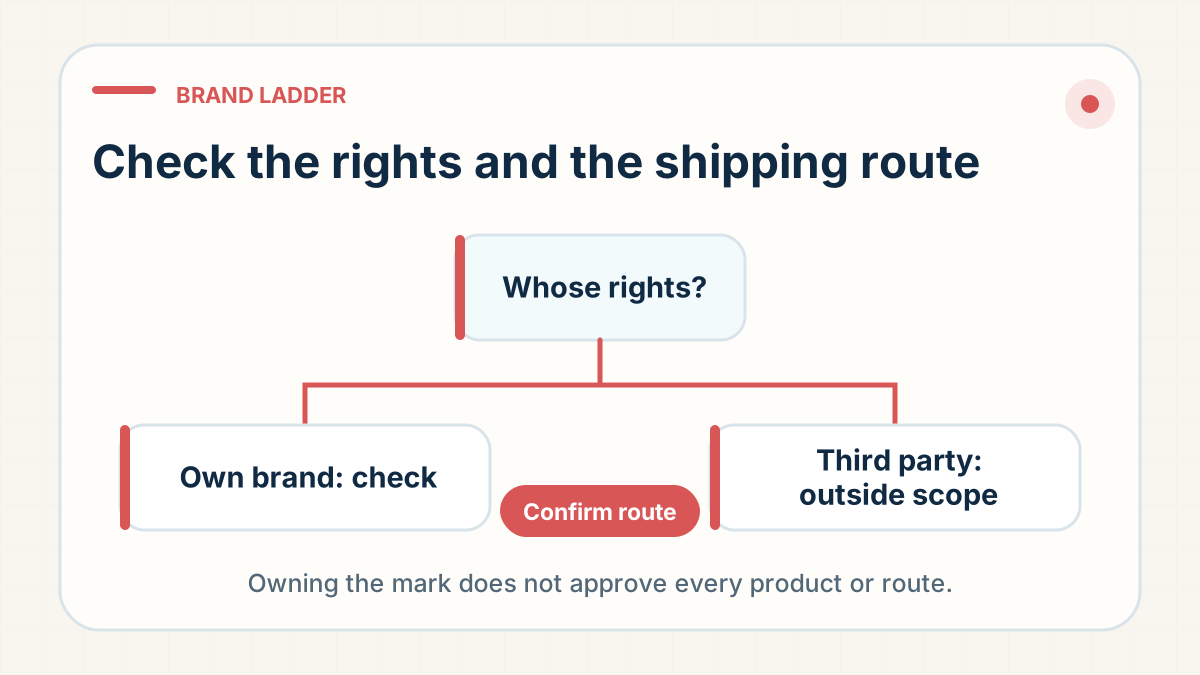
Tell us who owns the logo, design and artwork before requesting a quote. Your own branding requires product and document checks; RyanFulfil does not source counterfeit or third-party branded goods.
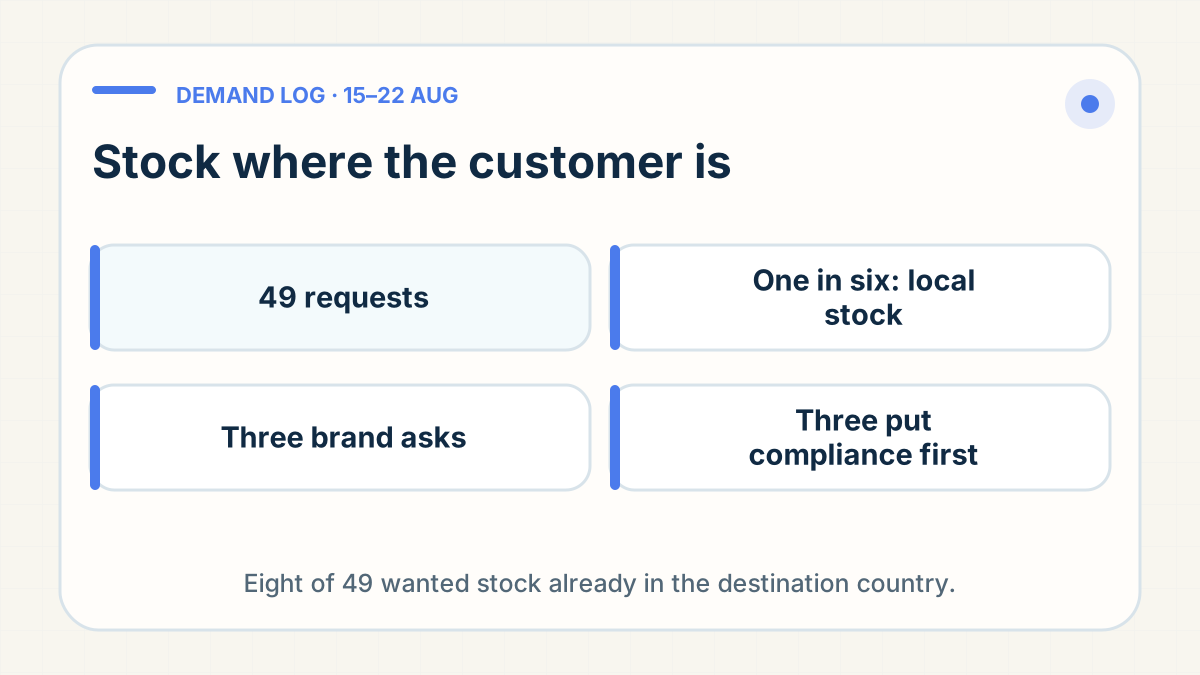
Eight days, 49 distinct supplier requests: one in six wanted stock already in the destination country; three wanted licensed brands, three put compliance first.
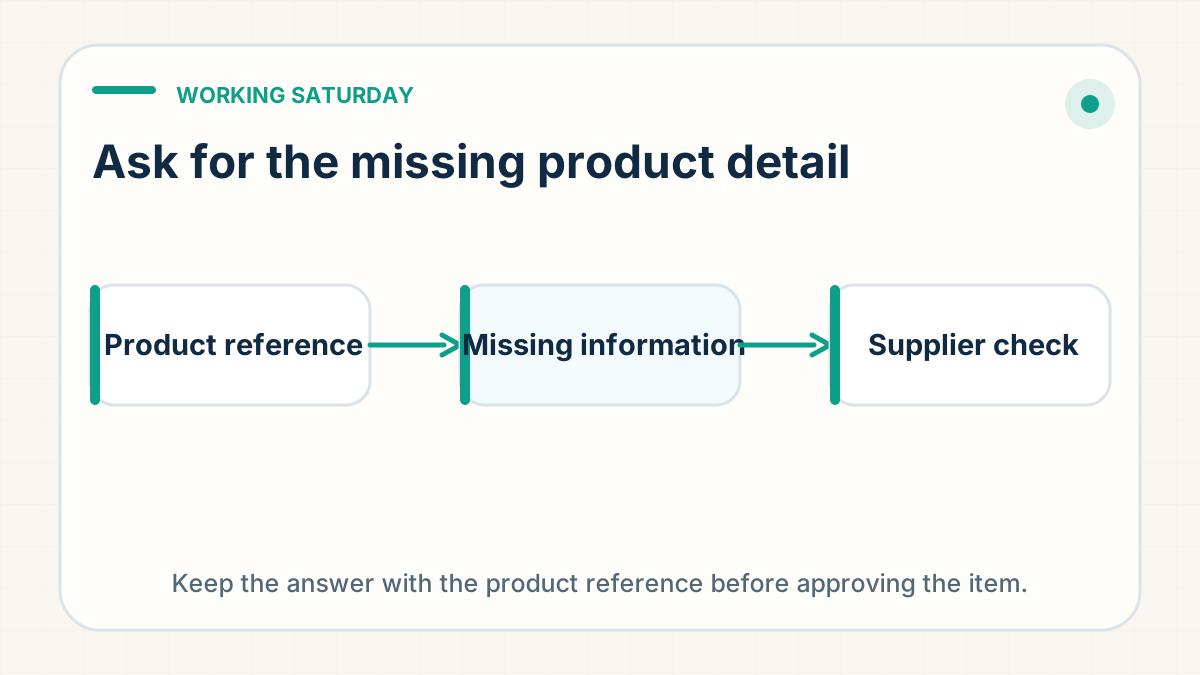
Ask for a quote that names its inclusions and any difference from your reference, supply destination fields at checkout, and agree when open cases update.
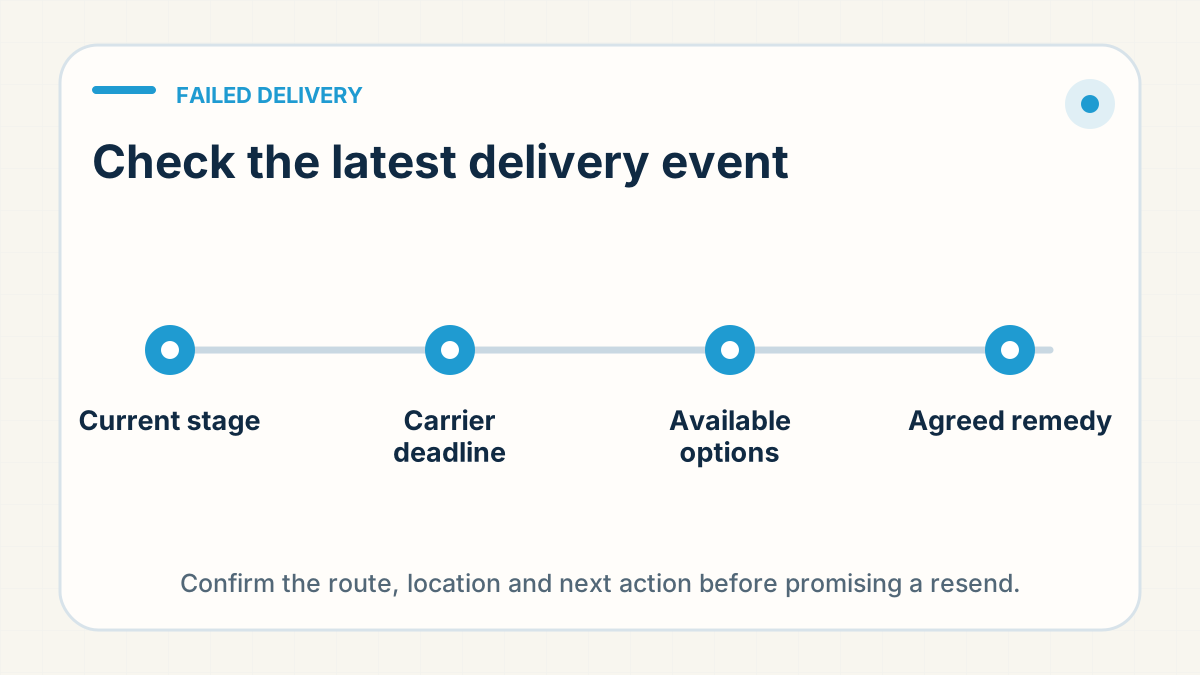
Check the destination carrier’s latest event, collection instructions and deadline. Confirm redelivery, return and disposal options for the actual service before promising the customer a remedy.
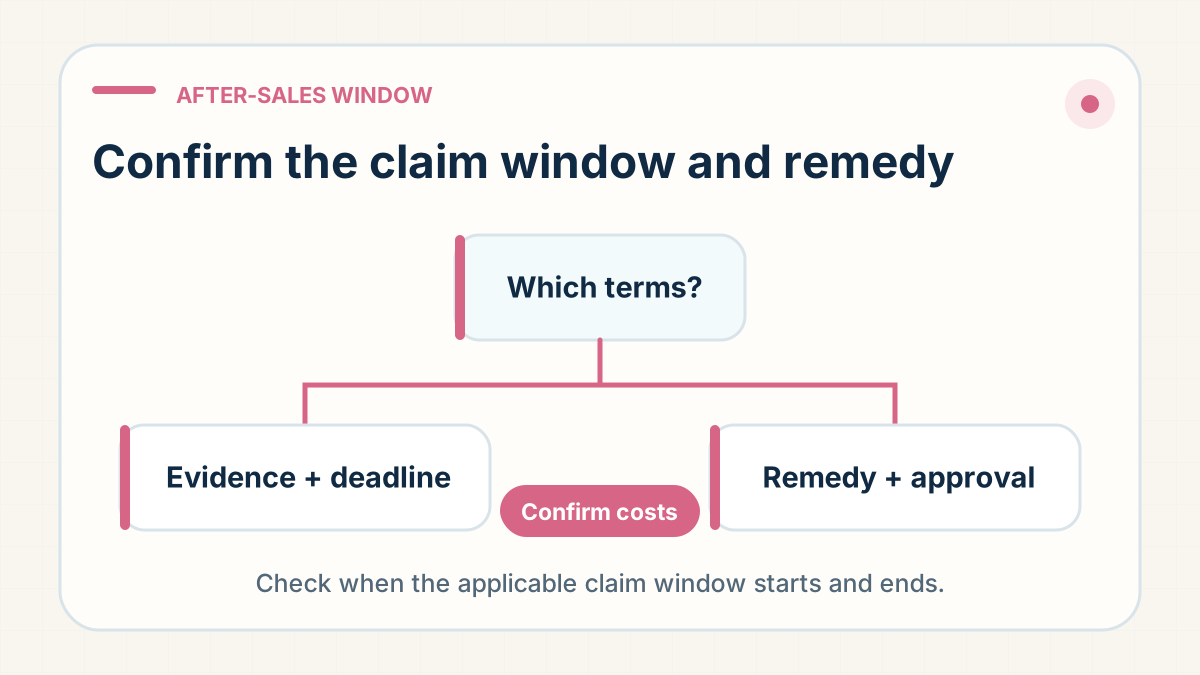
Confirm the supplier claim window, evidence and remedy costs before the first order. Keep those terms separate from your store’s customer policy and any applicable obligations.
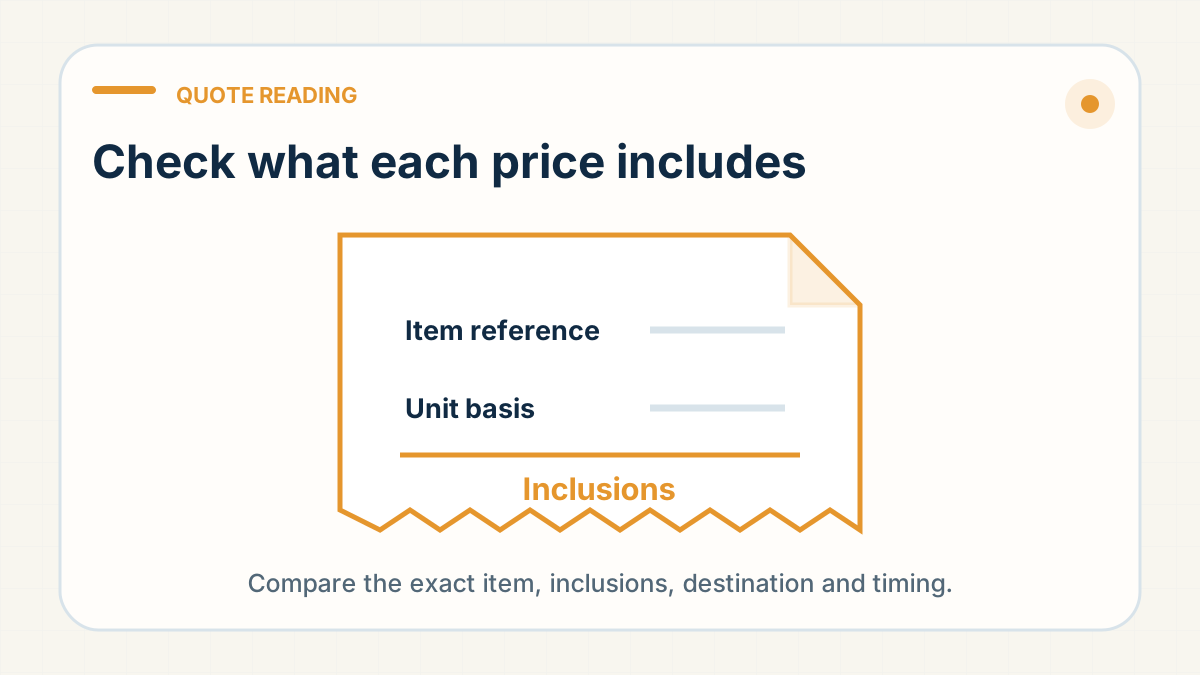
Compare the exact item, unit, inclusions, destination, shipping service and processing time. Ask for missing details before you pay or set your customer price.
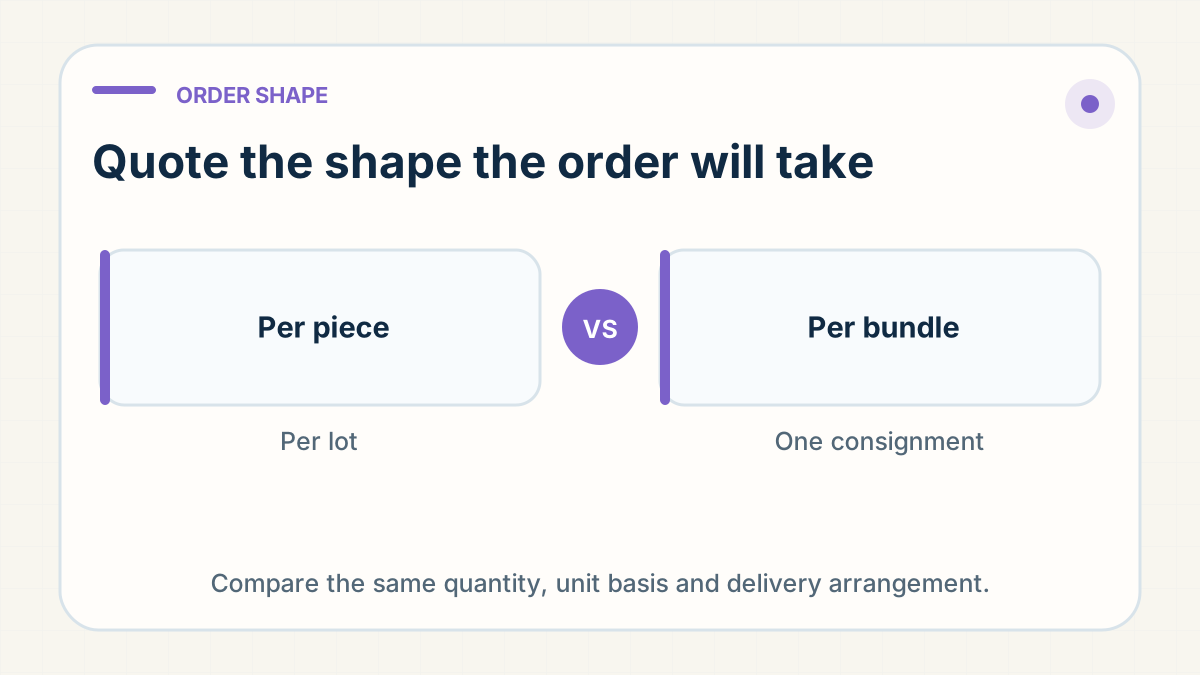
State the order’s shape before you ask for a price, per piece, lot or bundle, with exact item and currency, and expect one number back, stated the same way.
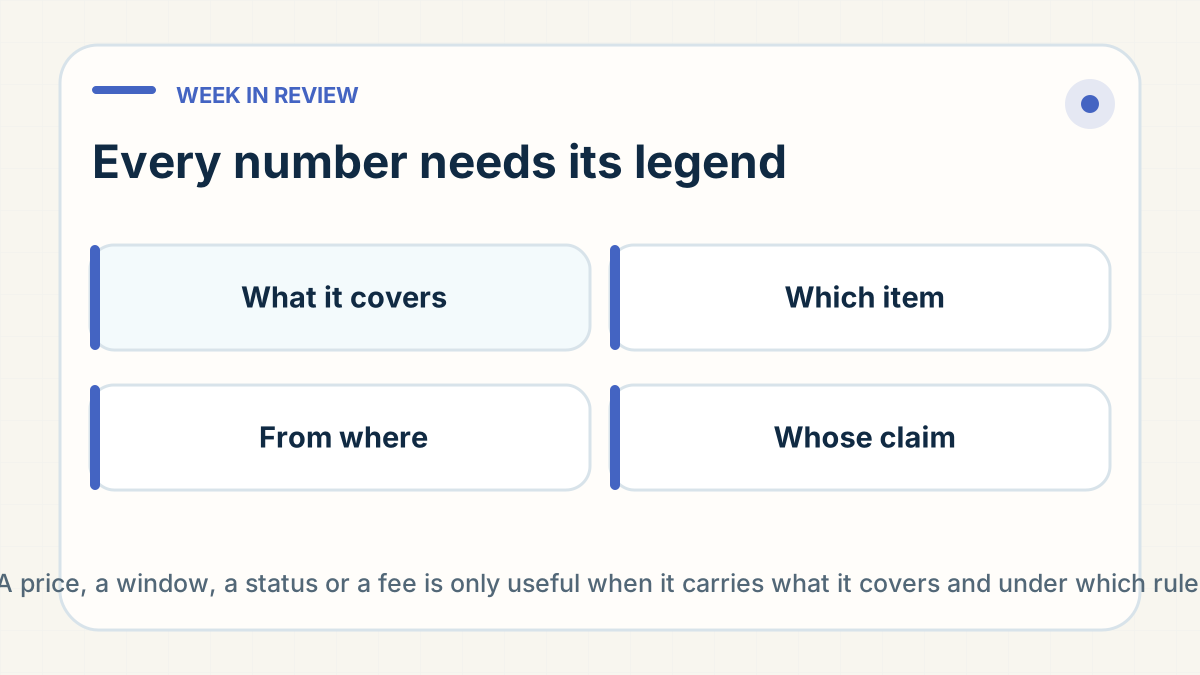
Pin a quote legend and a policy sheet in every client group, write each fee rule before it bills, and send status replies in four parts with a date.
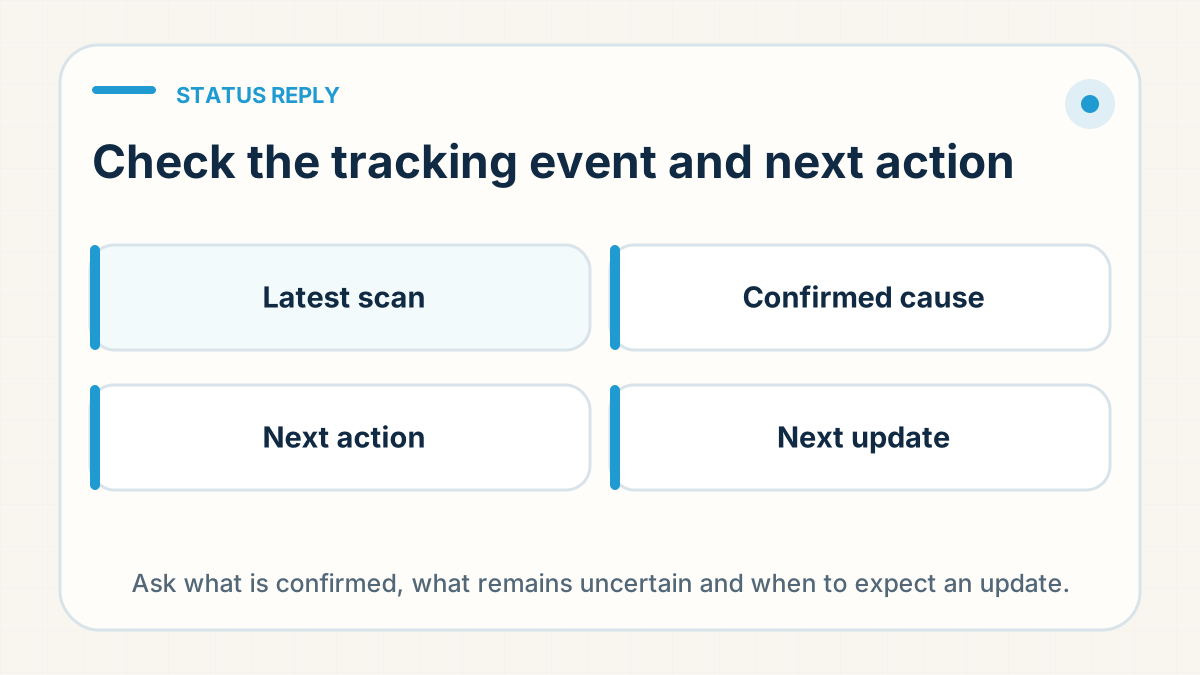
Forward a status only when it has all four parts, last scan, cause, next action and a date, and agree the after-sales default before the first case arrives.
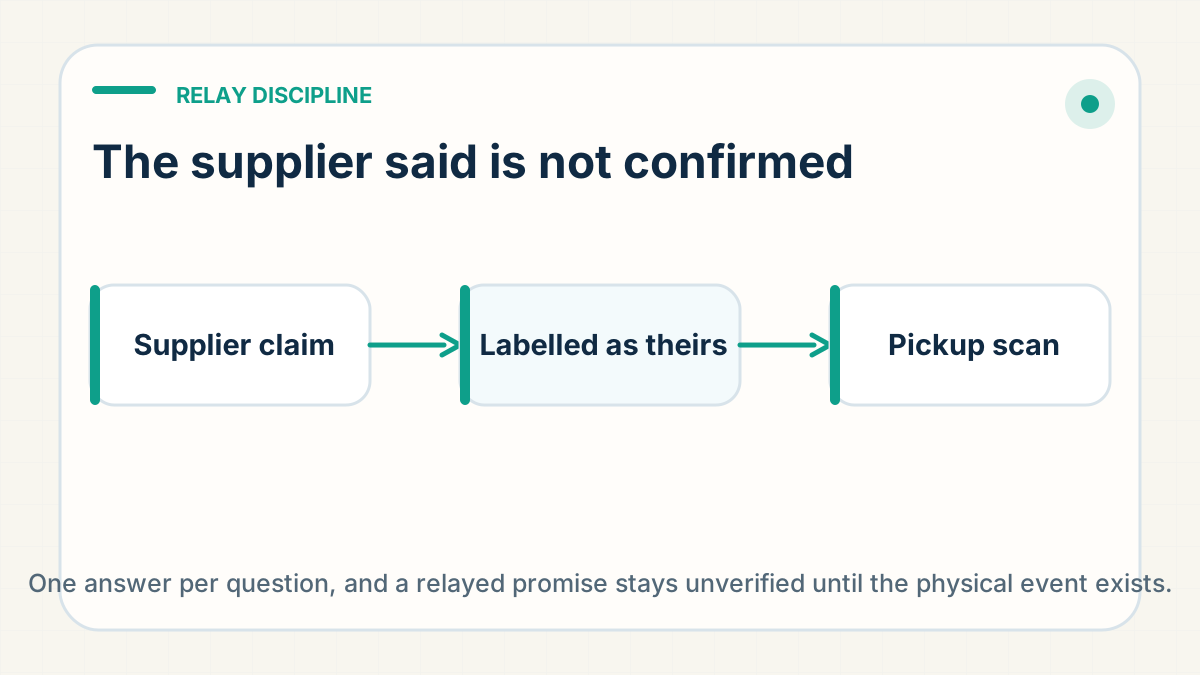
Give one answer per question, label each supplier or carrier claim with whose it is until evidence backs it, and ask for all missing fields in one message.
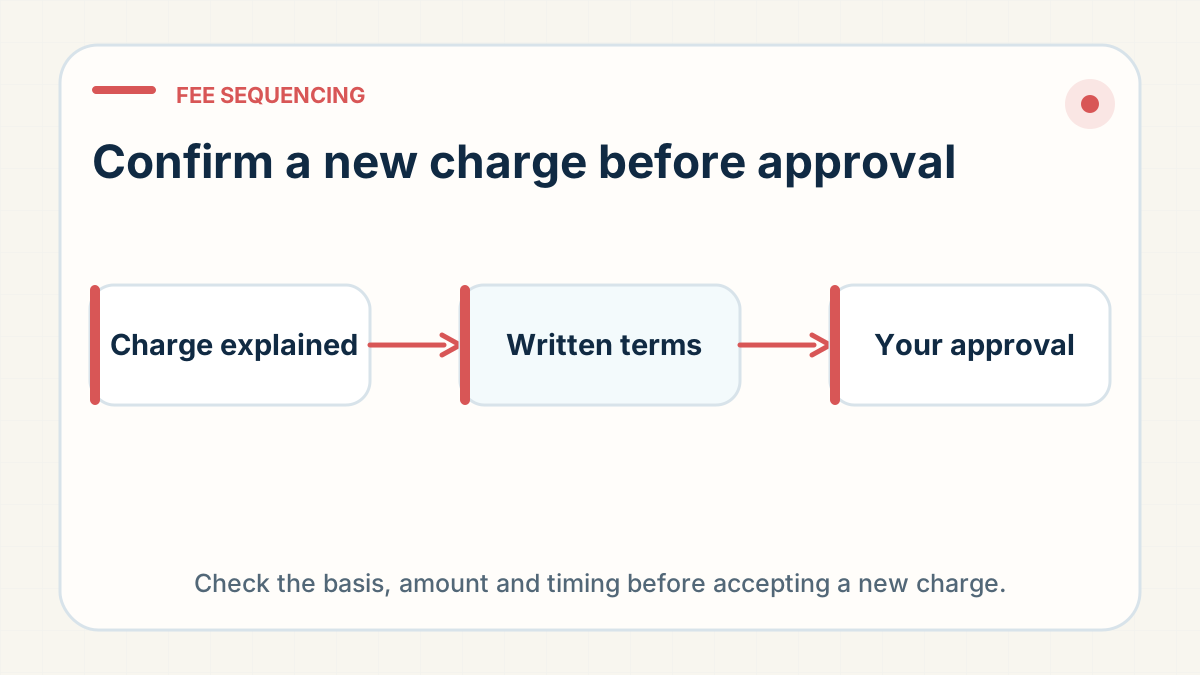
Ask for the basis of every unexplained fee, confirm the price before you approve a charged reship, and check eligibility from the listing before purchase.
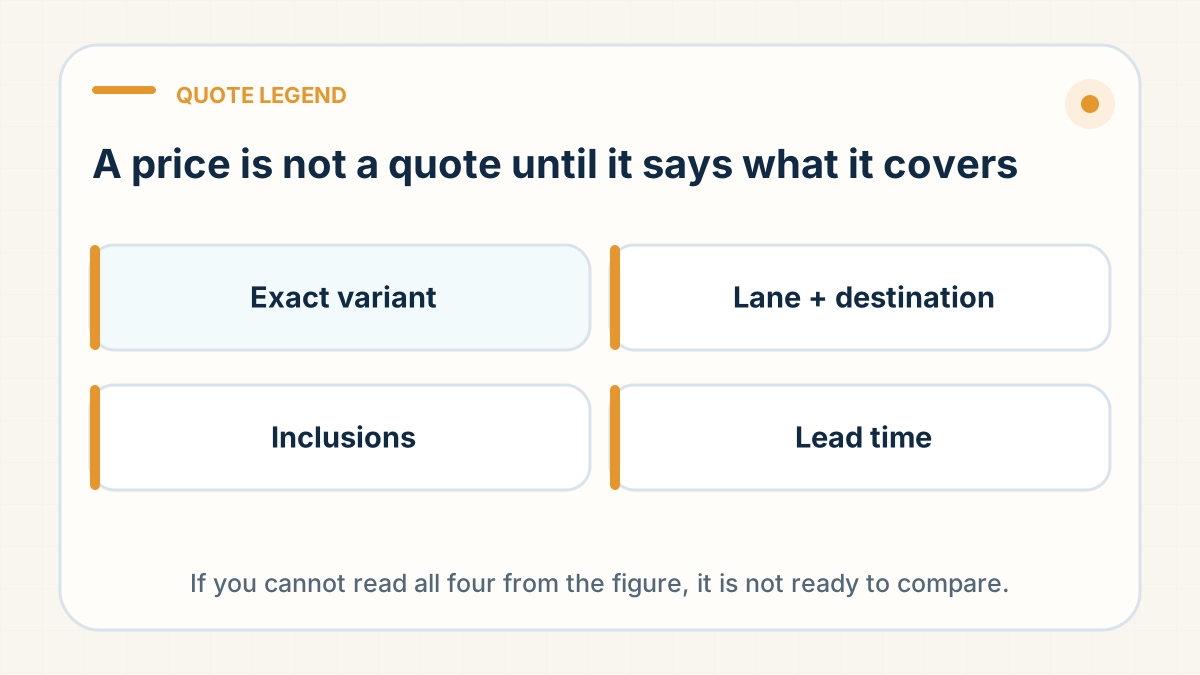
Compare a quote only once it states the five things a landed price covers: product, inclusions, destination, service and timing, with its terms confirmed first.
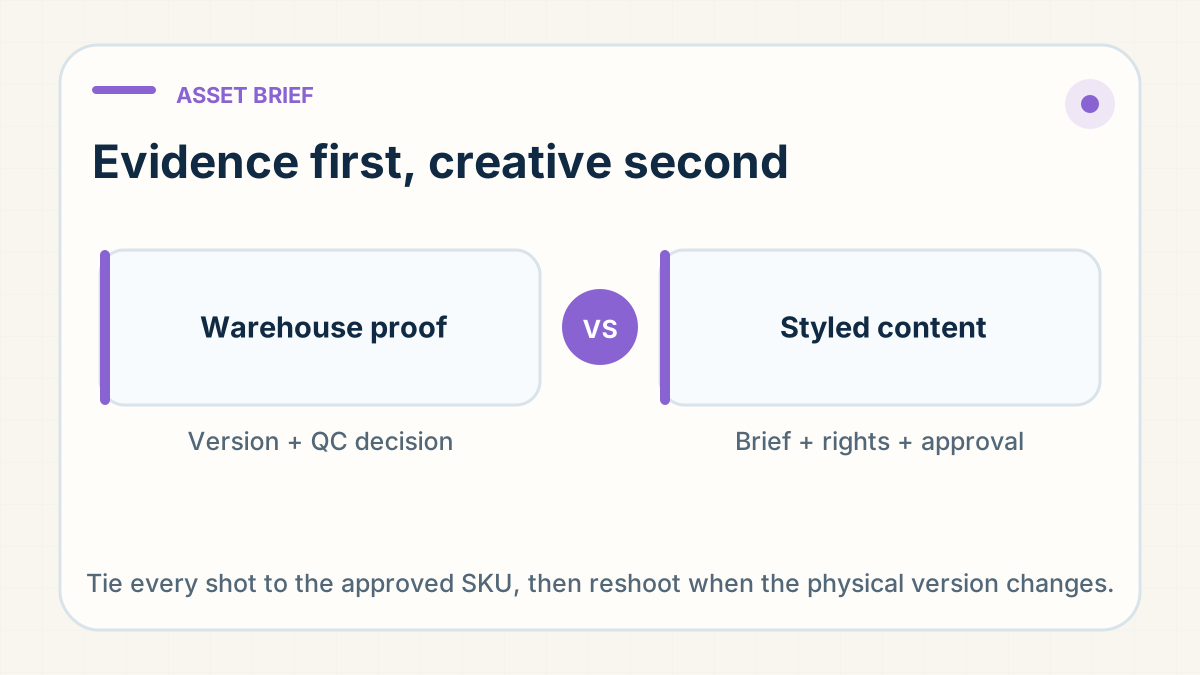
A practical brief for requesting warehouse proof, QC photos or separately scoped product content that stays tied to the exact SKU, variant, usage rights and approval state.
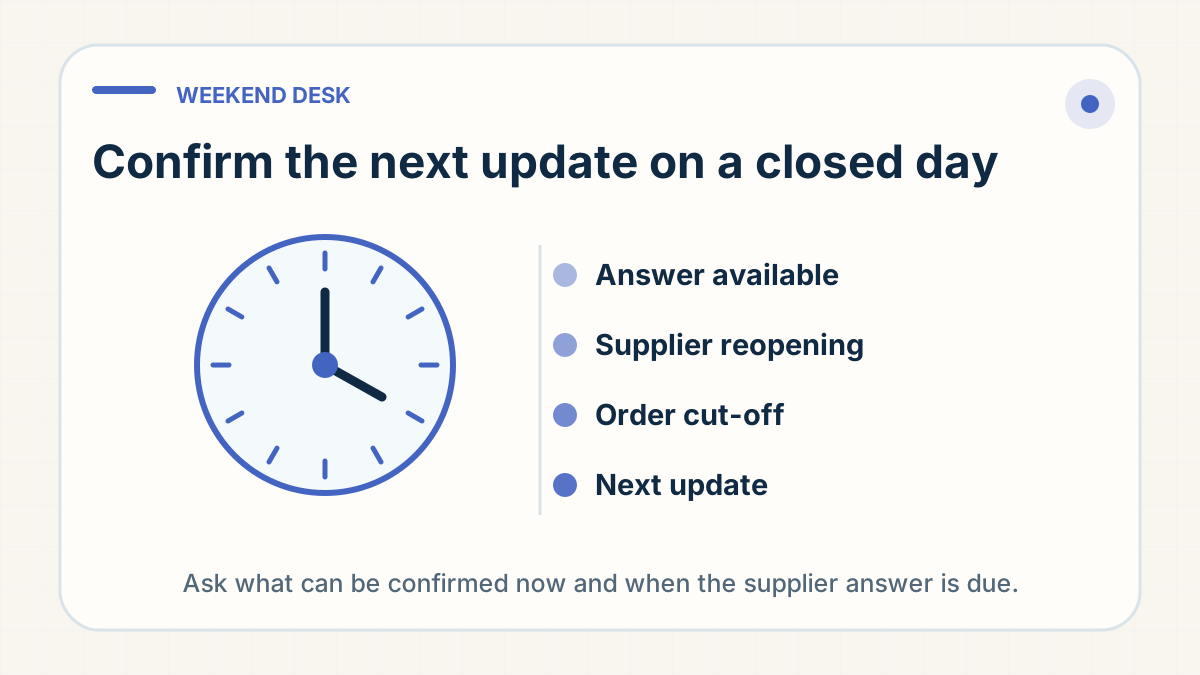
On a closed day, ask which answers can come now, which need a supplier check and when the next update is due, and say if you need parcels or a bulk shipment.
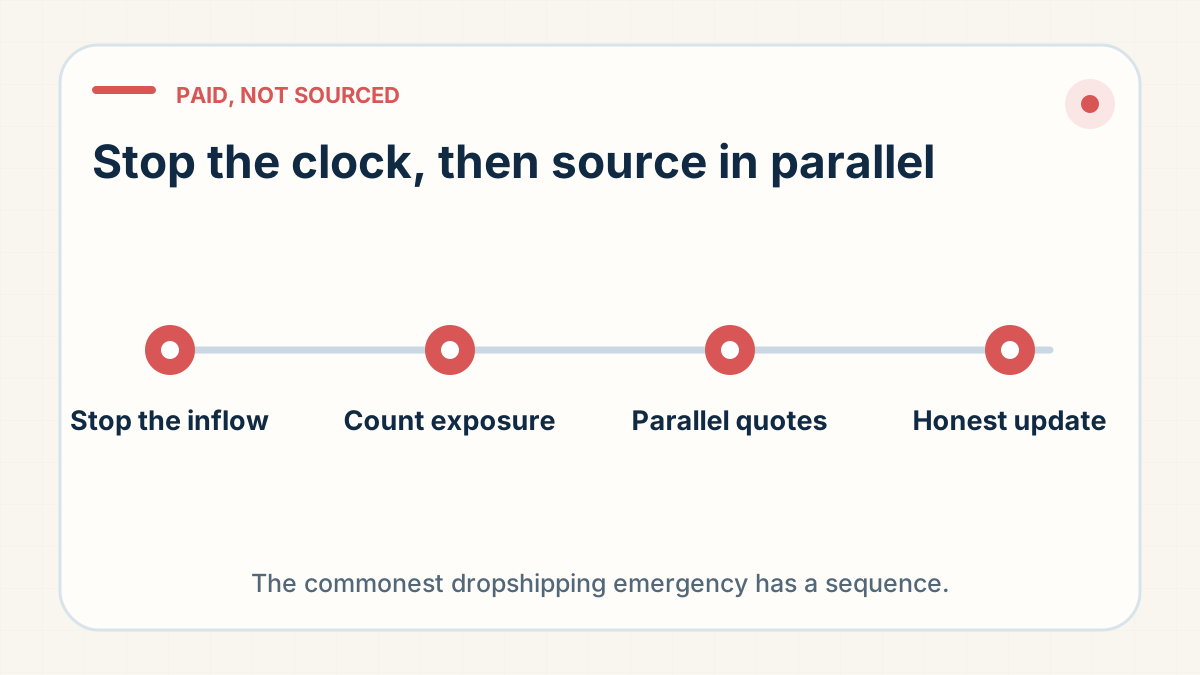
A recovery sequence for the commonest dropshipping emergency: orders taken before supply was secured. Stop the inflow, count the real exposure, source in parallel with a same-day brief, and keep the customer promise honest.
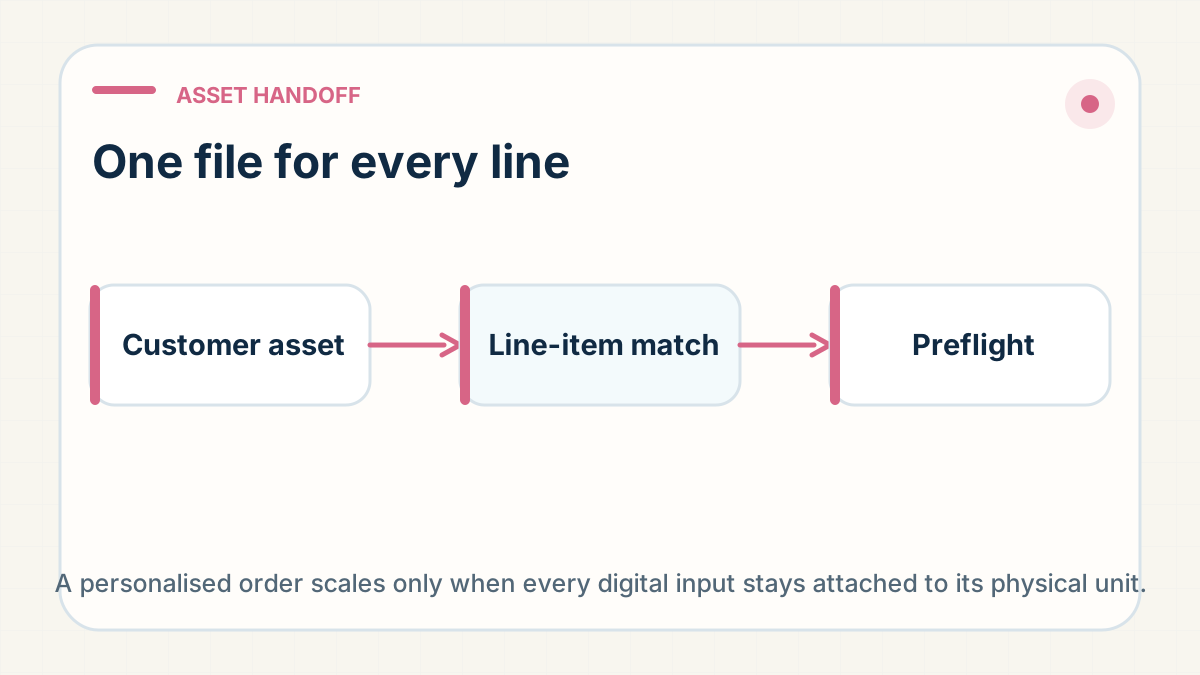
Treat each personalised line as its own job: map one customer asset to each line, validate the asset before release and test the customer-facing function.
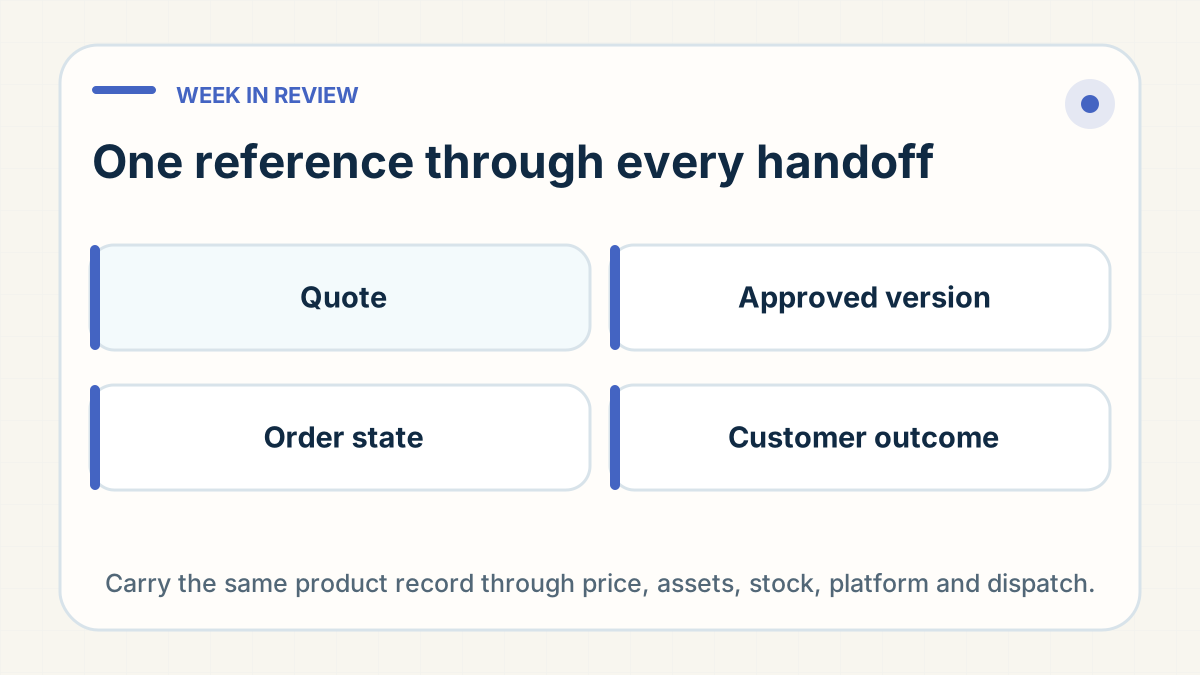
Carry one versioned product reference through quote, sample, asset, stock, order line, platform and dispatch, and record the confirmed state at each handoff.
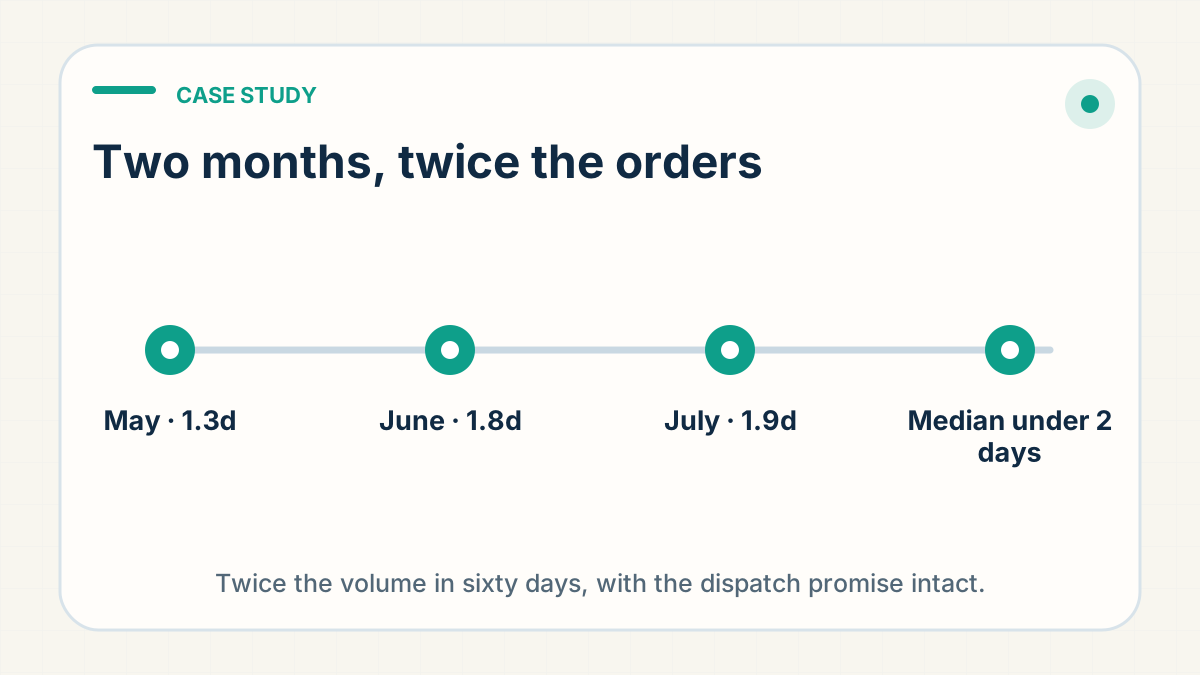
Monthly order volume roughly doubled between May and July 2026. The dispatch record shows what held, what slowed, and what a seller should check before scaling.
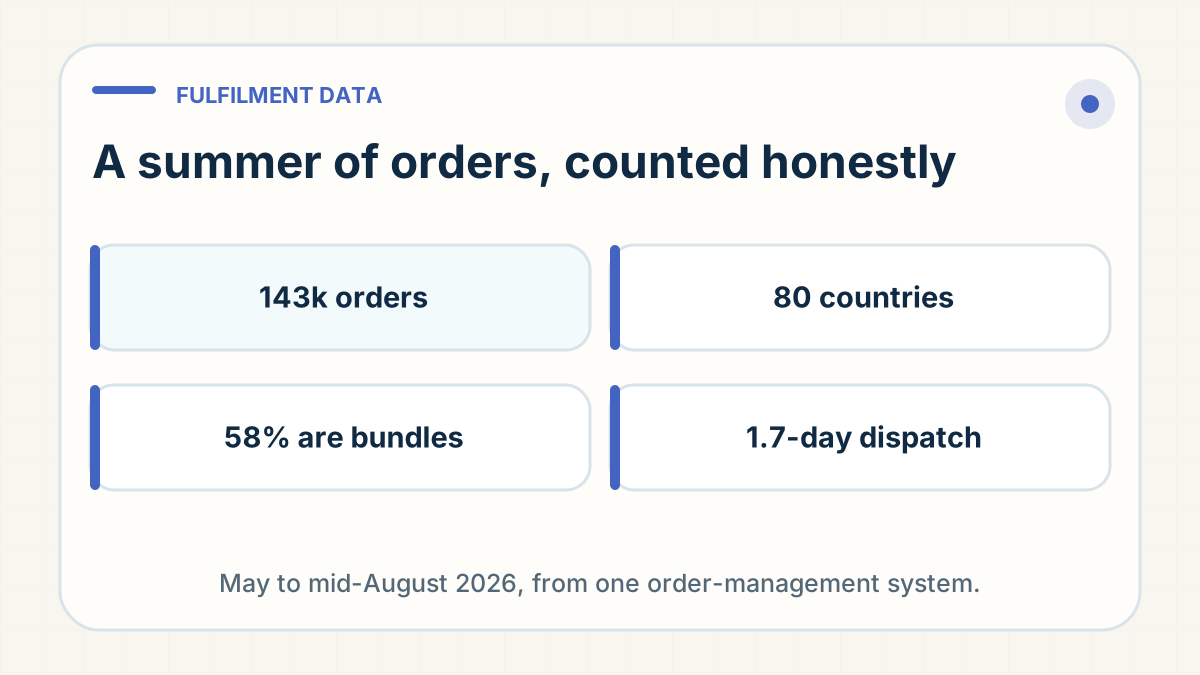
Destination countries, product categories, order values, bundle rates and dispatch speed from 143,000 orders fulfilled between May and mid-August 2026.
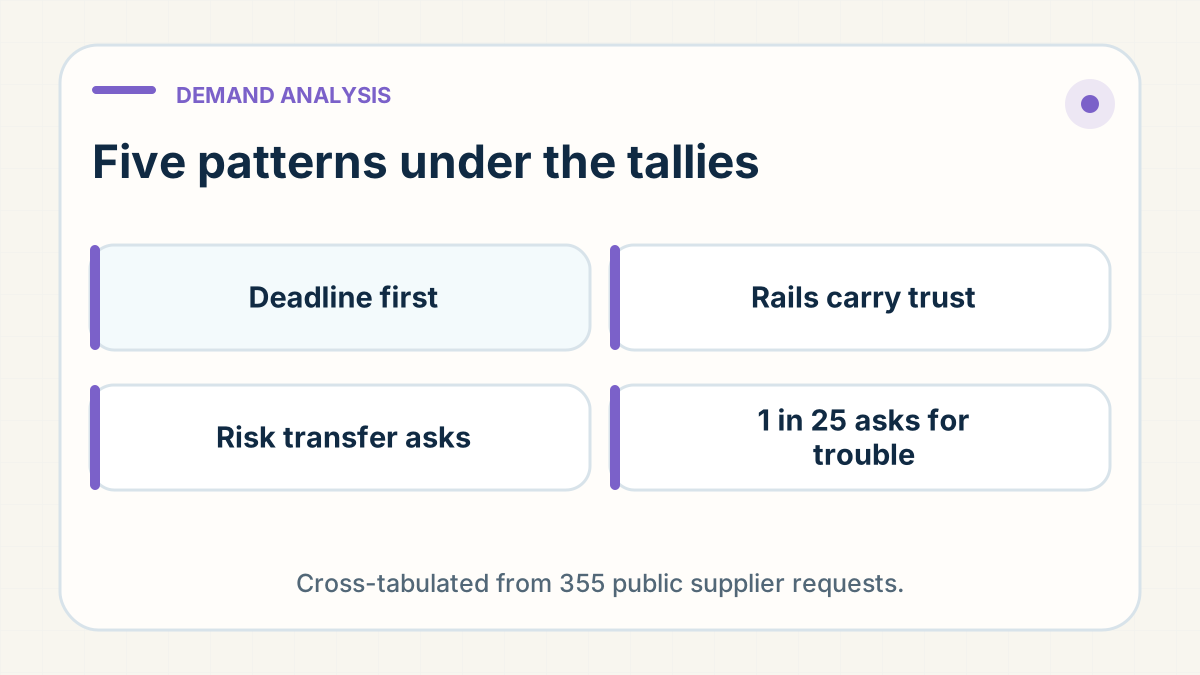
Five patterns from cross-tabulating a five-and-a-half-week archive of public supplier requests: deadline-first buying, payment rails carrying trust, open risk transfer, geography selecting the first question, and the asks a serious supplier refuses.
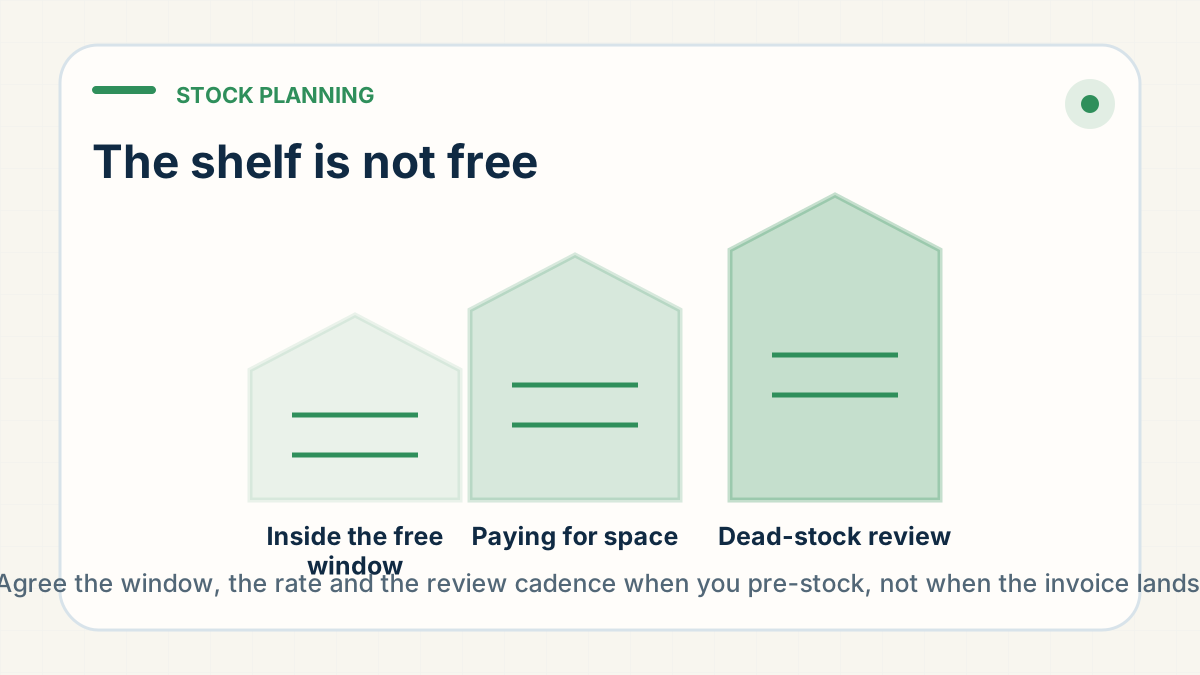
Free storage windows, monthly rates and overseas-warehouse costs decide how long stock can sit. Agree the terms when you pre-stock, not when the invoice lands.
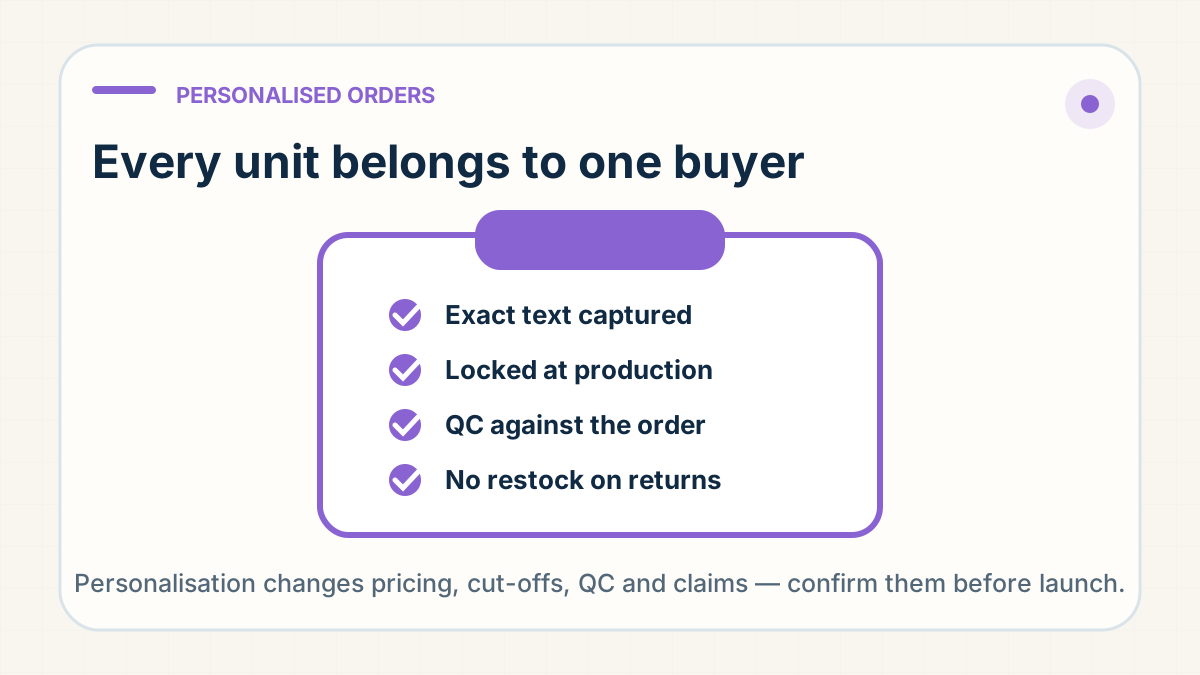
Engraving, embroidery and name customisation change pricing, cut-offs, QC and returns. Confirm five things before selling personalised products.
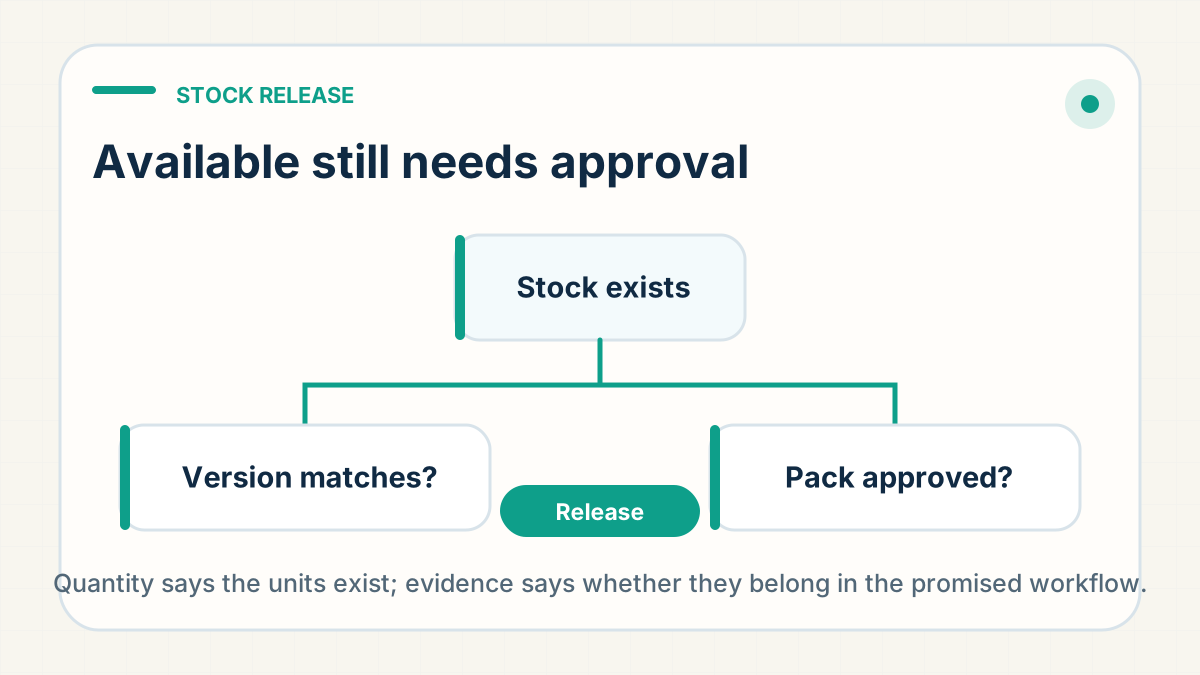
Release only approved stock: confirm the product identity and customer-ready presentation, and define the warehouse handoff when you supply the inventory.
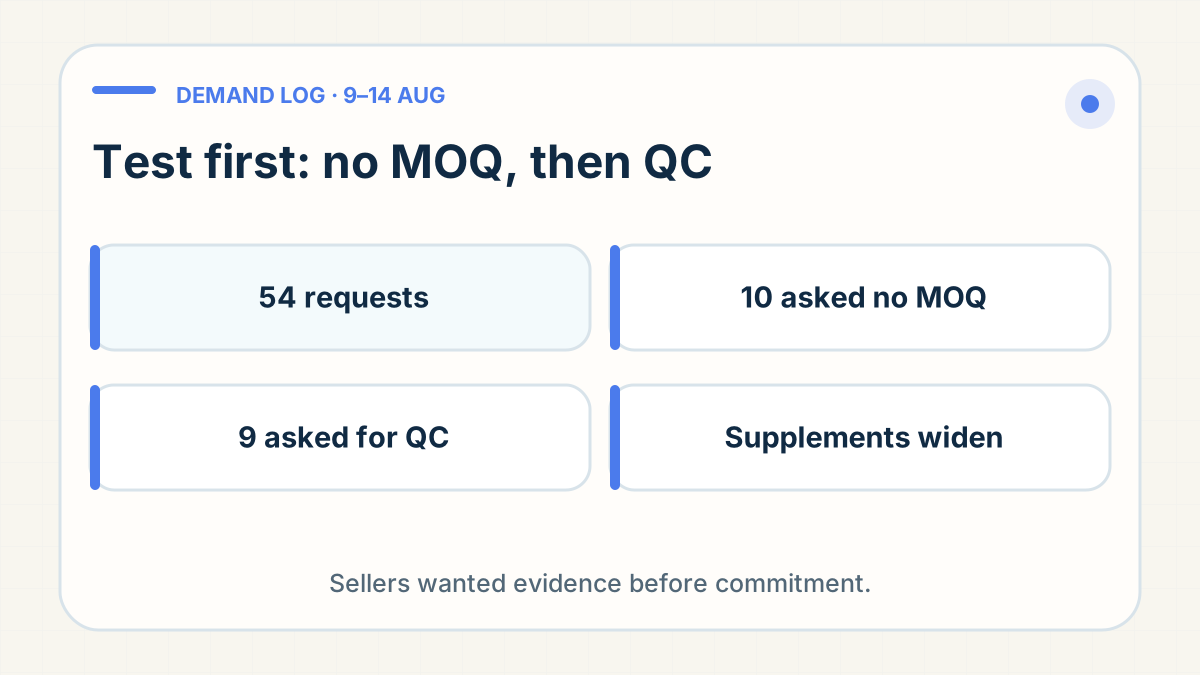
A six-day week of 54 distinct supplier requests: ten asked for no MOQ or single units, and nine for quality control before dispatch.
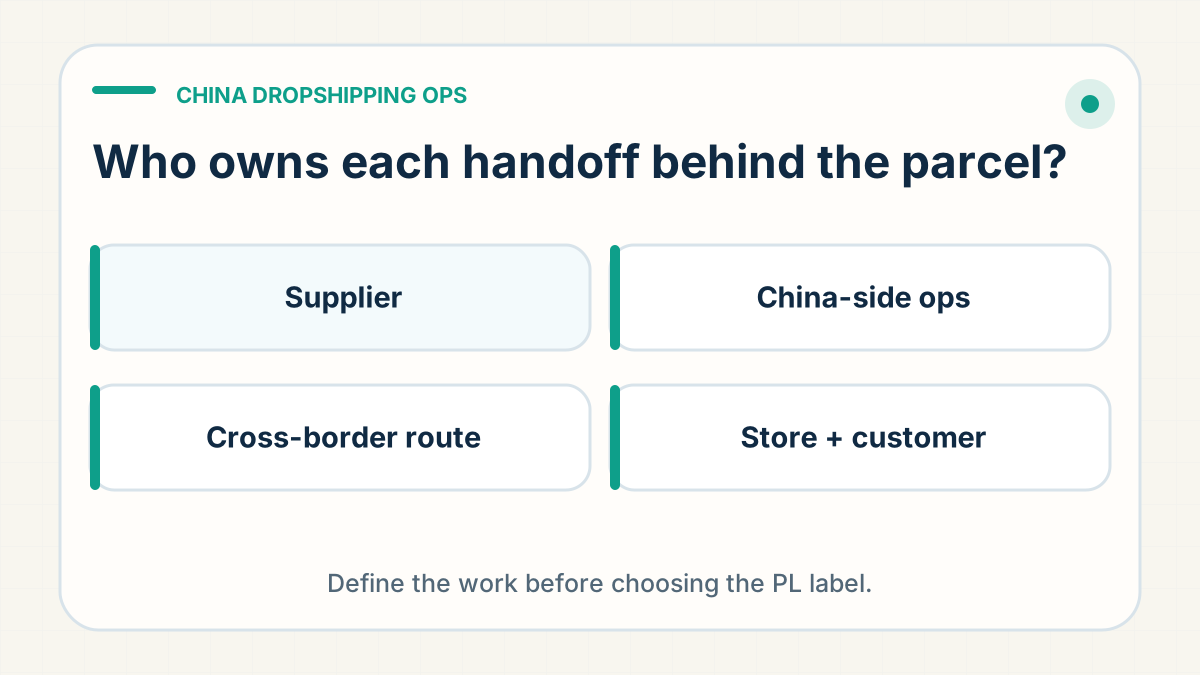
A practical China dropshipping guide to 3PL, 4PL and 5PL: who sources, checks, stores, packs, ships, returns tracking and owns exceptions when orders go wrong.
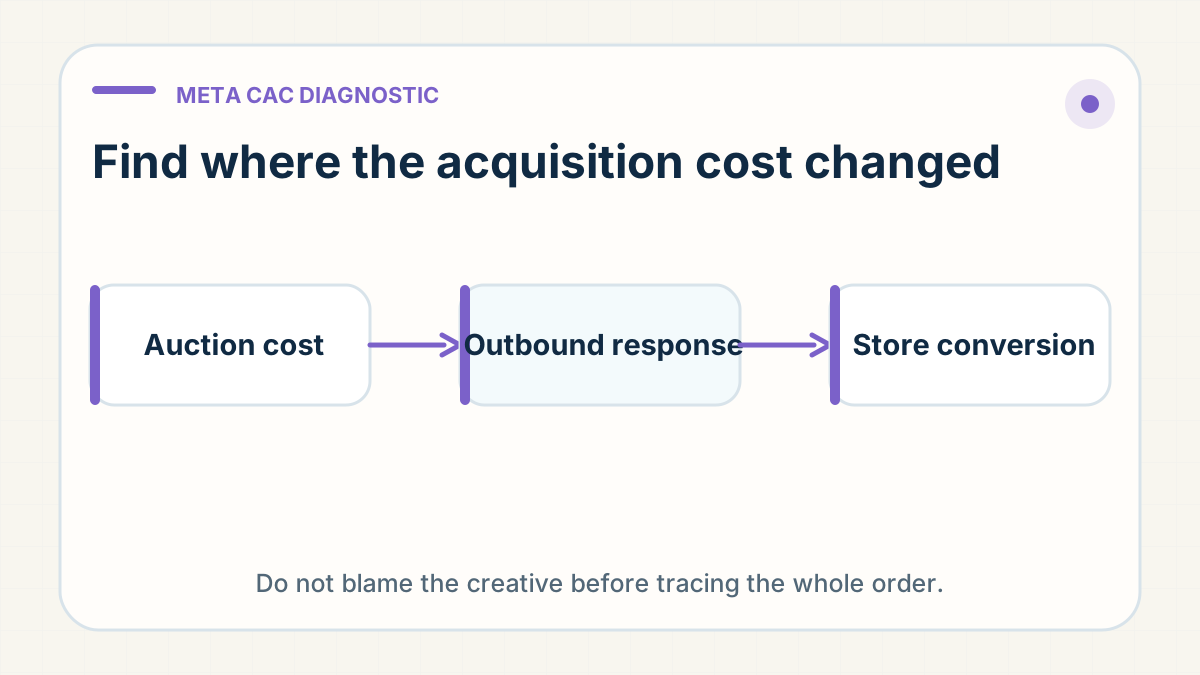
Meta ad costs, creative response and store conversion leave different fingerprints. Decompose CAC, calculate the delivered-contribution ceiling and change the part that actually failed.
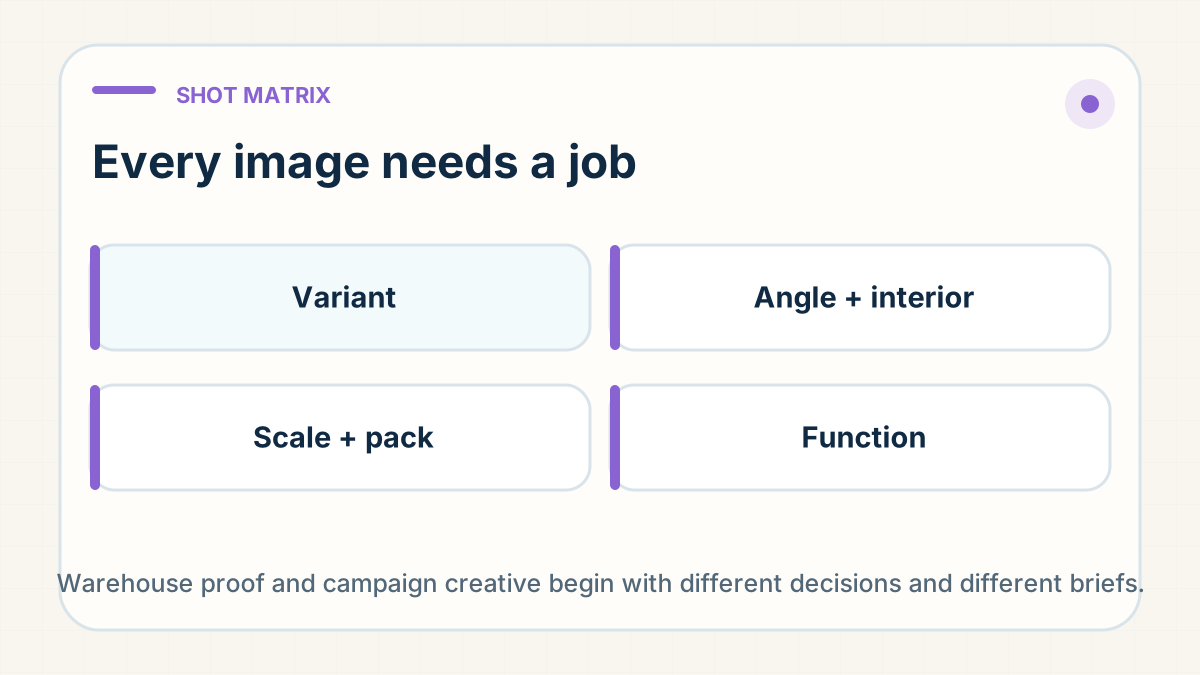
Give every requested image a job: name it proof or creative, tie it to the approved product version and list the decision each shot must support.
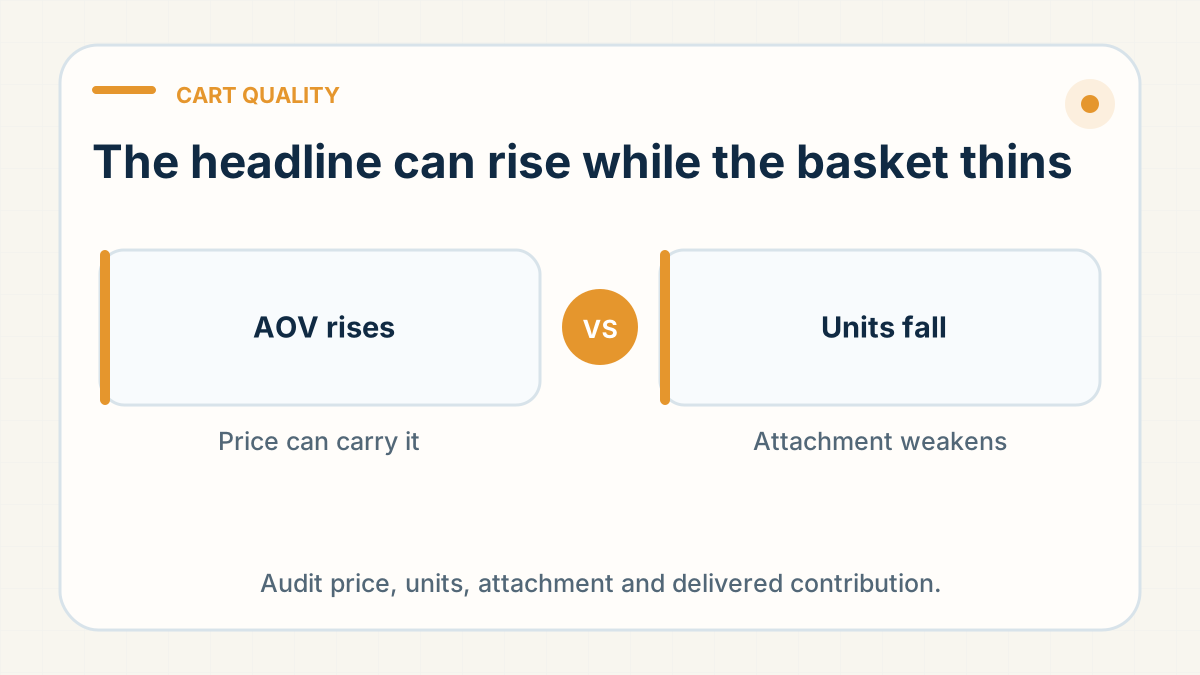
A higher average order value can hide price inflation, fewer units and weaker attachment. Audit the cart below the headline, then test whether each extra item improves delivered contribution.
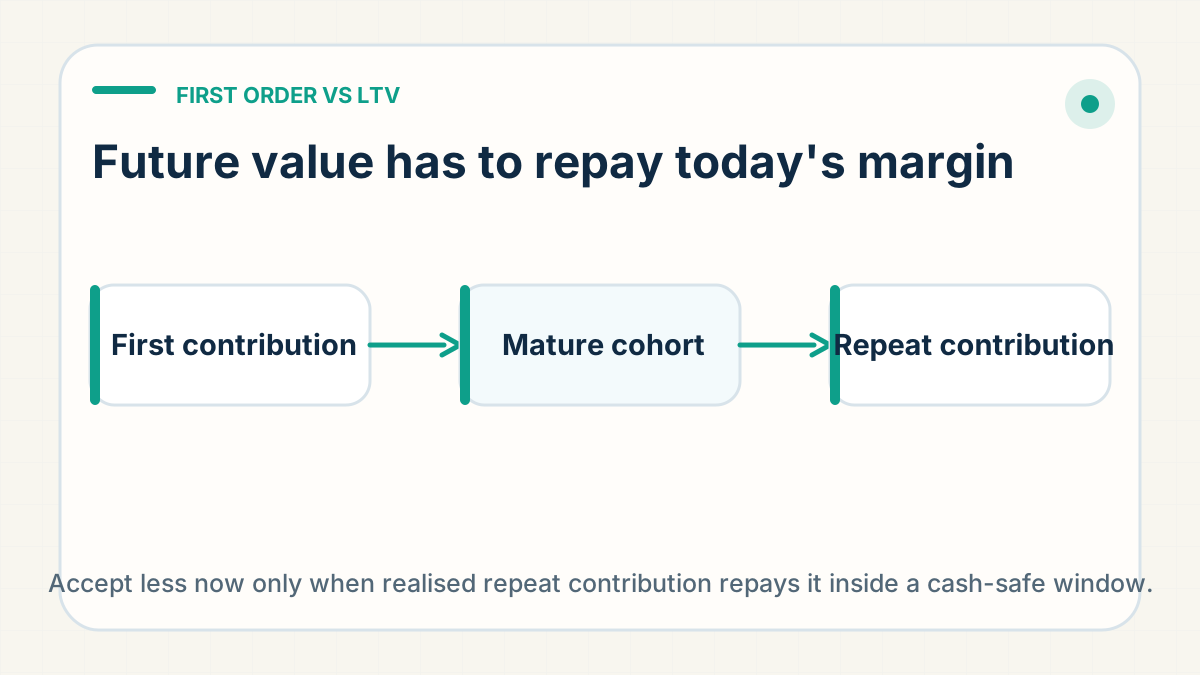
Life360 is a bounded example, not a loss-leader playbook: future customer value is a forecast while product, freight, refunds and CAC consume cash now.
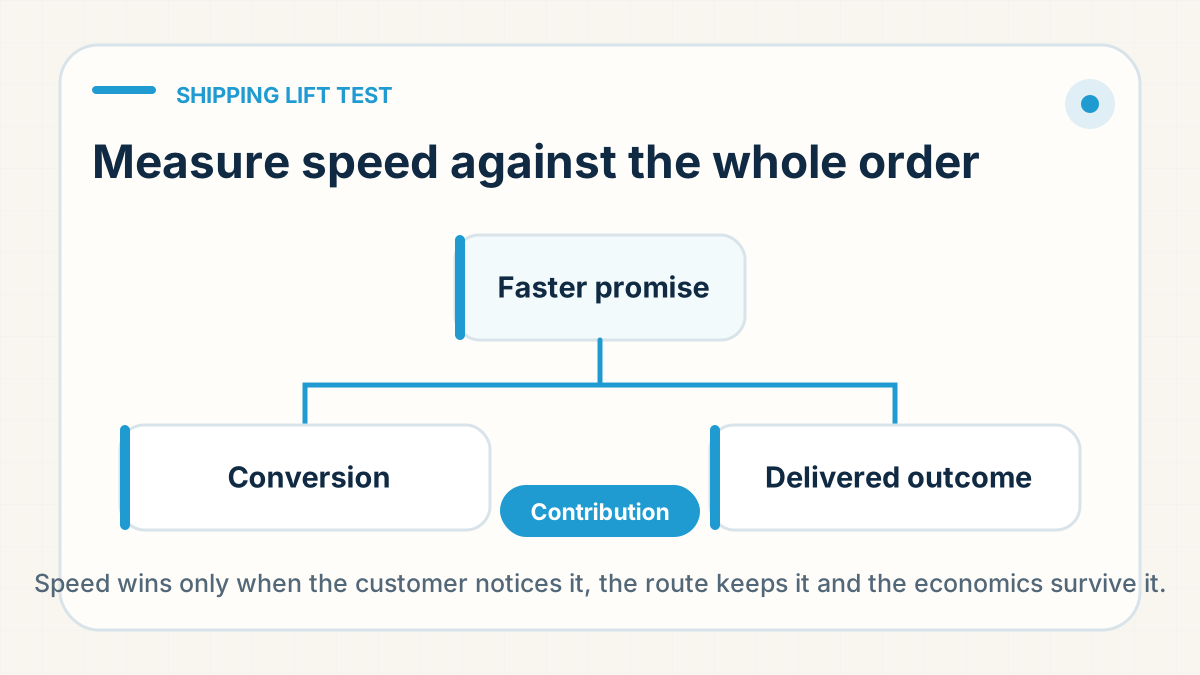
Faster shipping has to win three times: the customer notices it, the operation keeps the promise and the margin survives. Here is how to test all three.
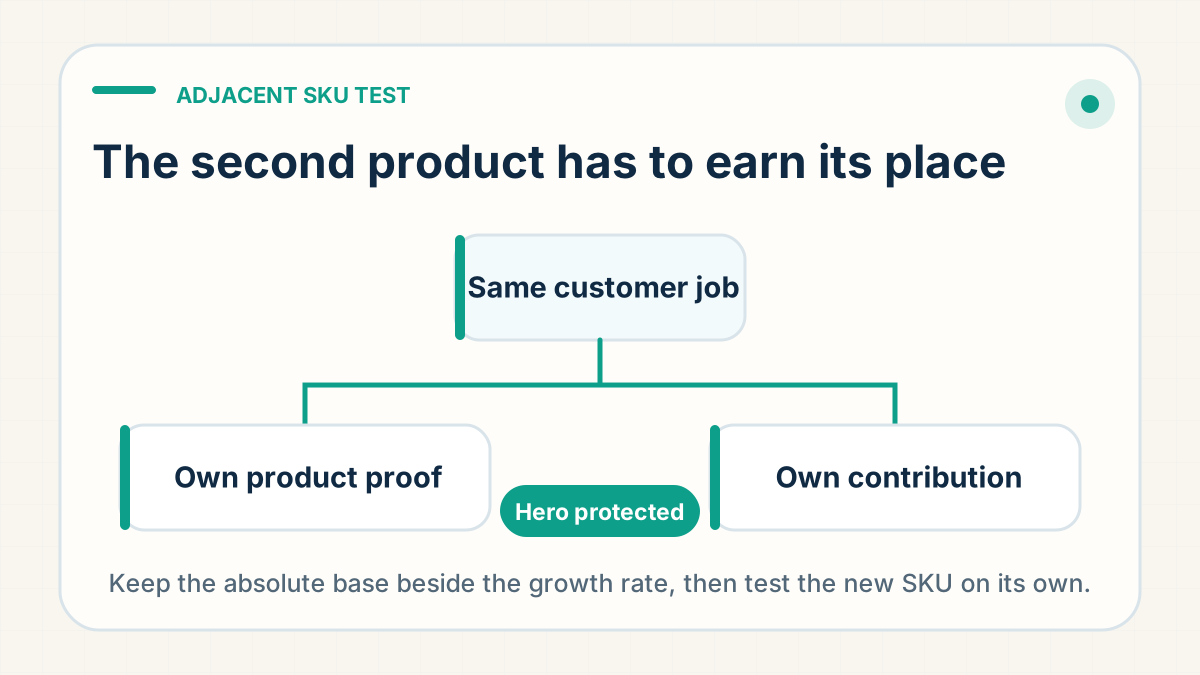
One winning SKU gives you customer evidence, not permission to expand. Use it to choose and test the next product without risking the operation that already works.
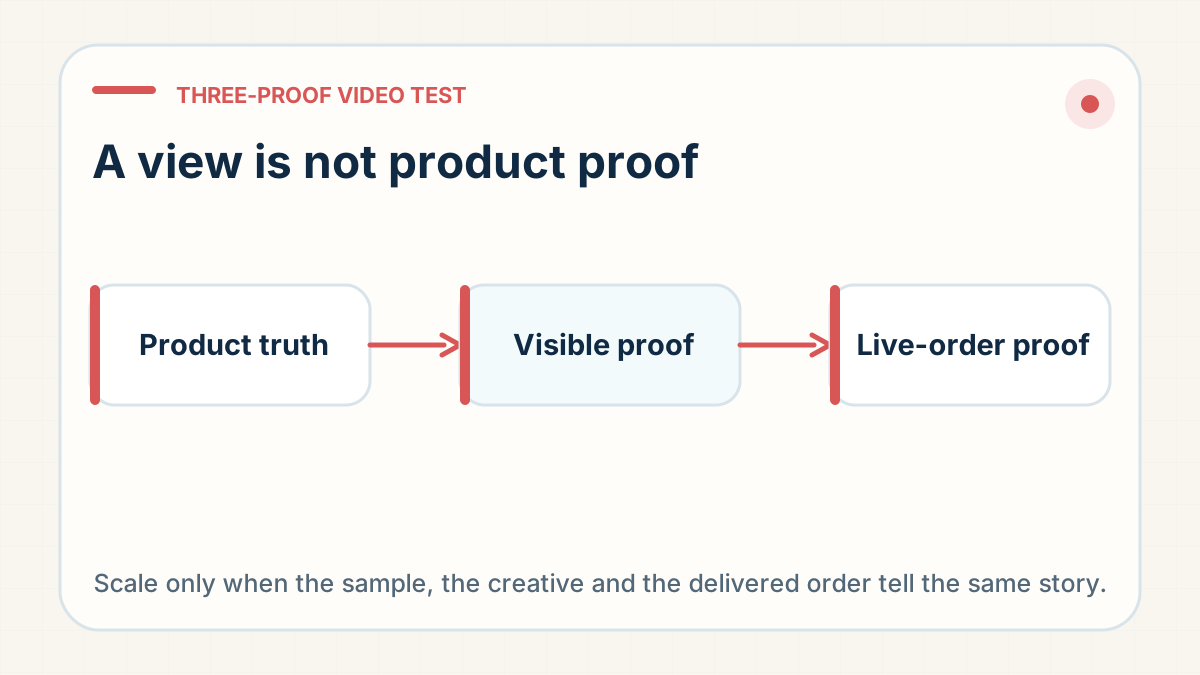
A viral clip can prove attention. It cannot prove the exact product, the claim or the live order path. Use this three-proof test before scaling spend.
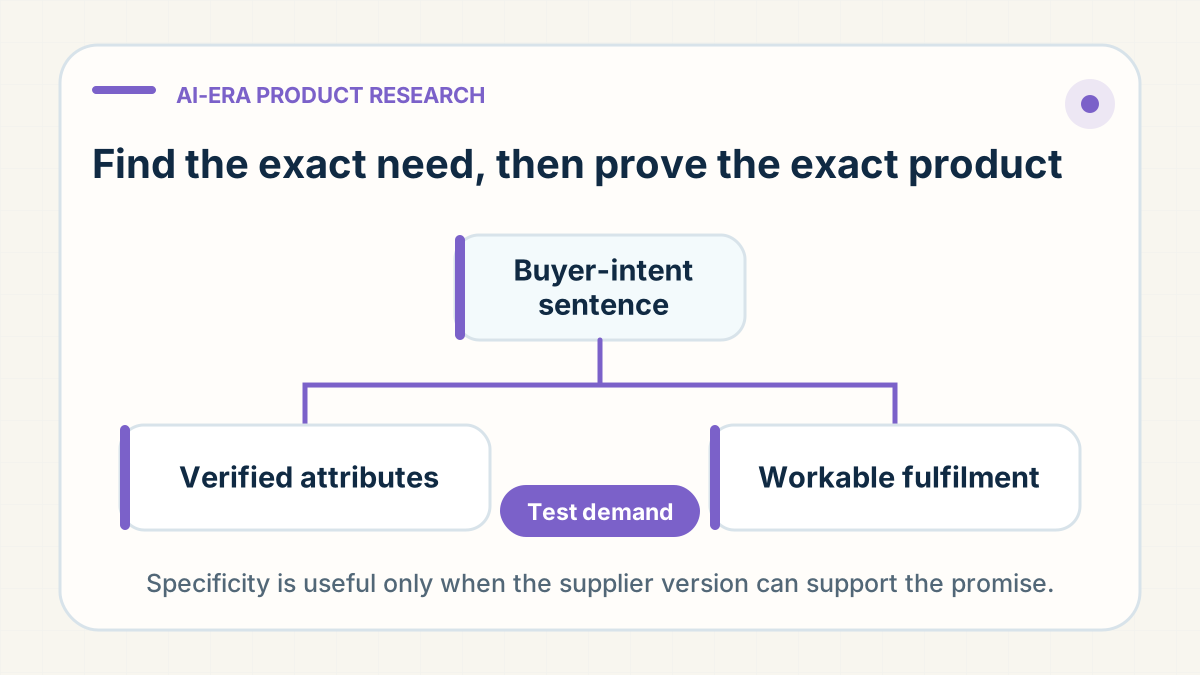
A product can look too small in a trend tool and still fit a valuable, specific need. Use constraint density, supplier evidence and a live-order test to find out whether the match is real.
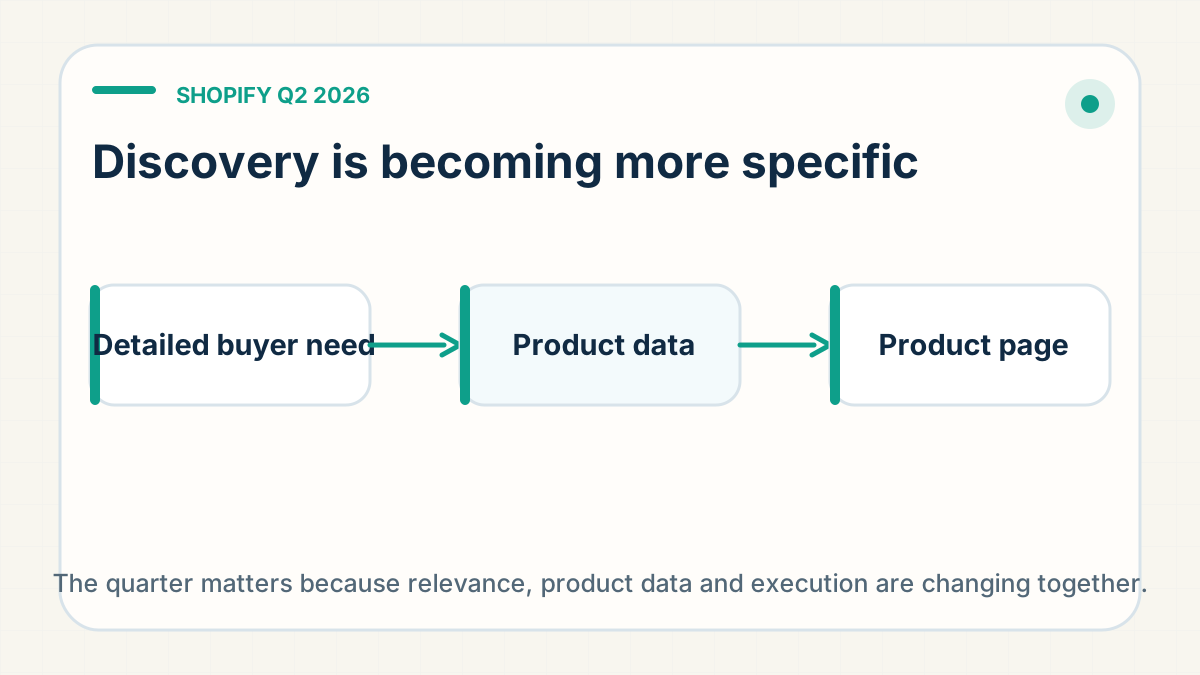
Shopify grew GMV by 32%, but the sharper Q2 signal is upstream: AI can judge the product data before a buyer sees the homepage, making catalog accuracy and fulfilment part of acquisition.
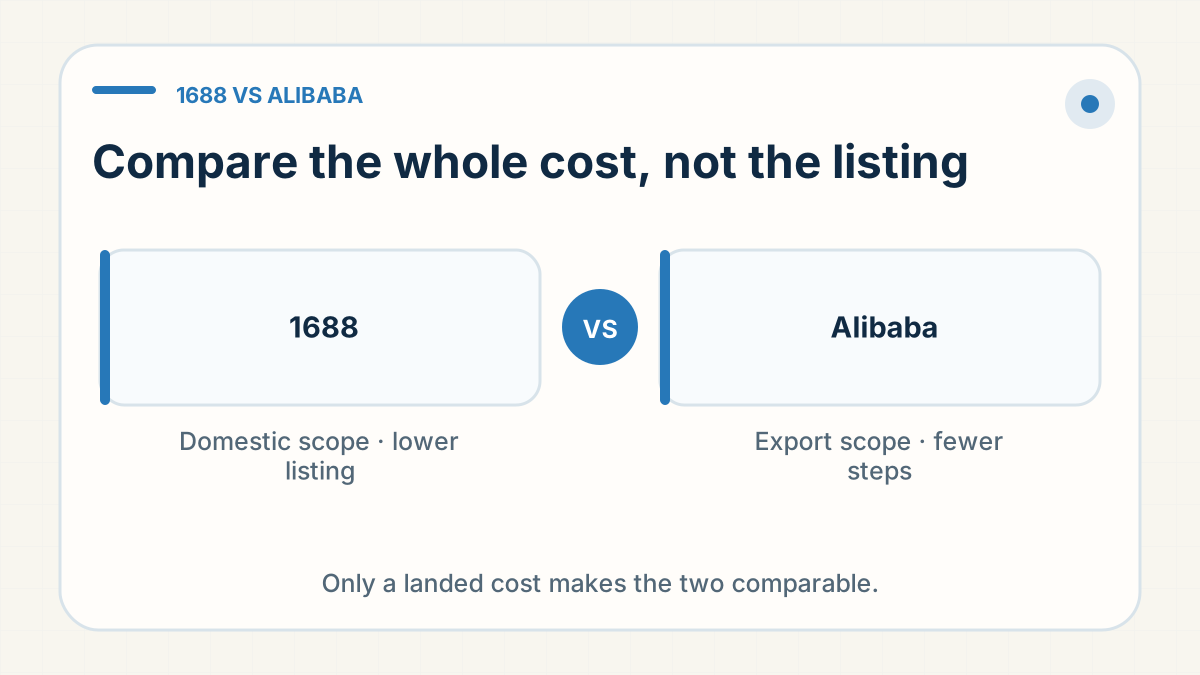
1688 focuses on China wholesale; Alibaba.com on international trade. Compare product details, minimum quantities and landed cost before choosing.
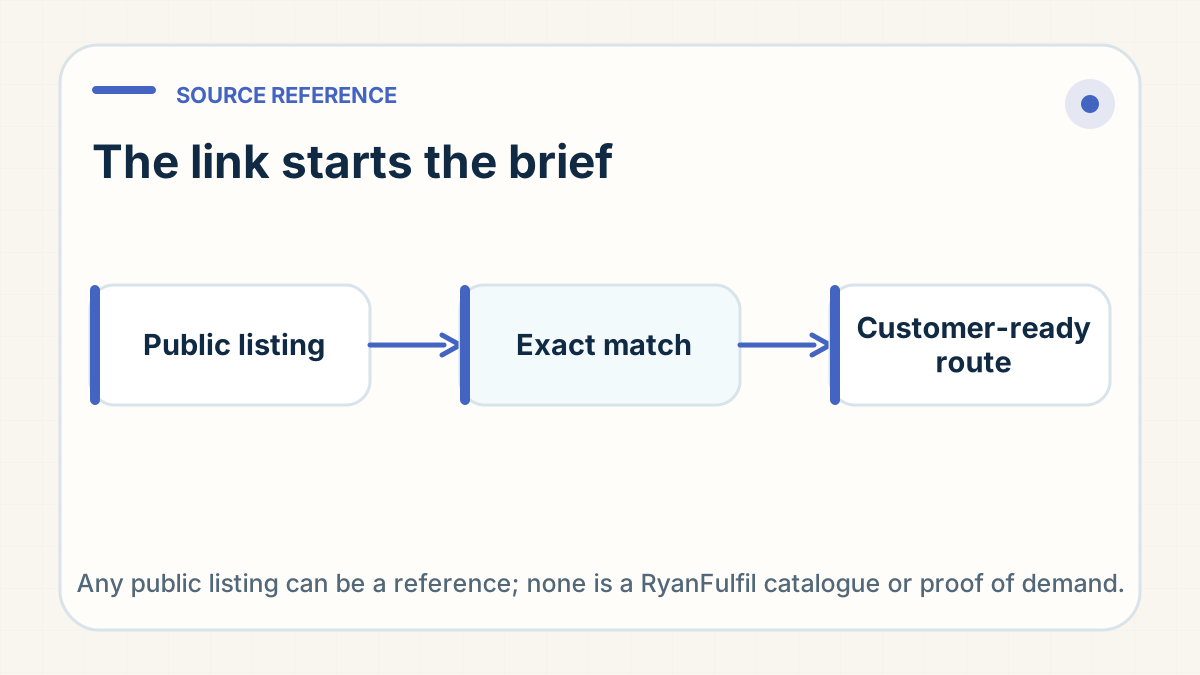
Turn a public listing into a full product-and-route brief, mark what matches and what still needs confirming, and test demand on your own store.
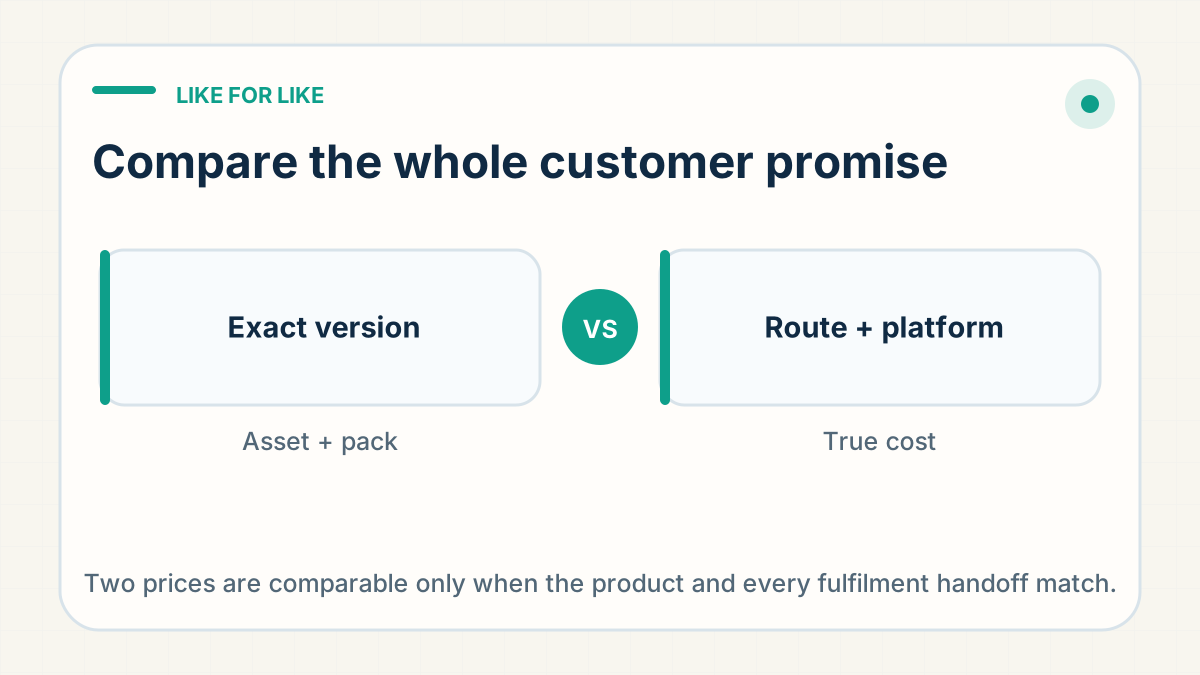
Prove two offers are the same product before you compare price: check identity, artwork handoff, pack, route and platform timing, and name each difference.
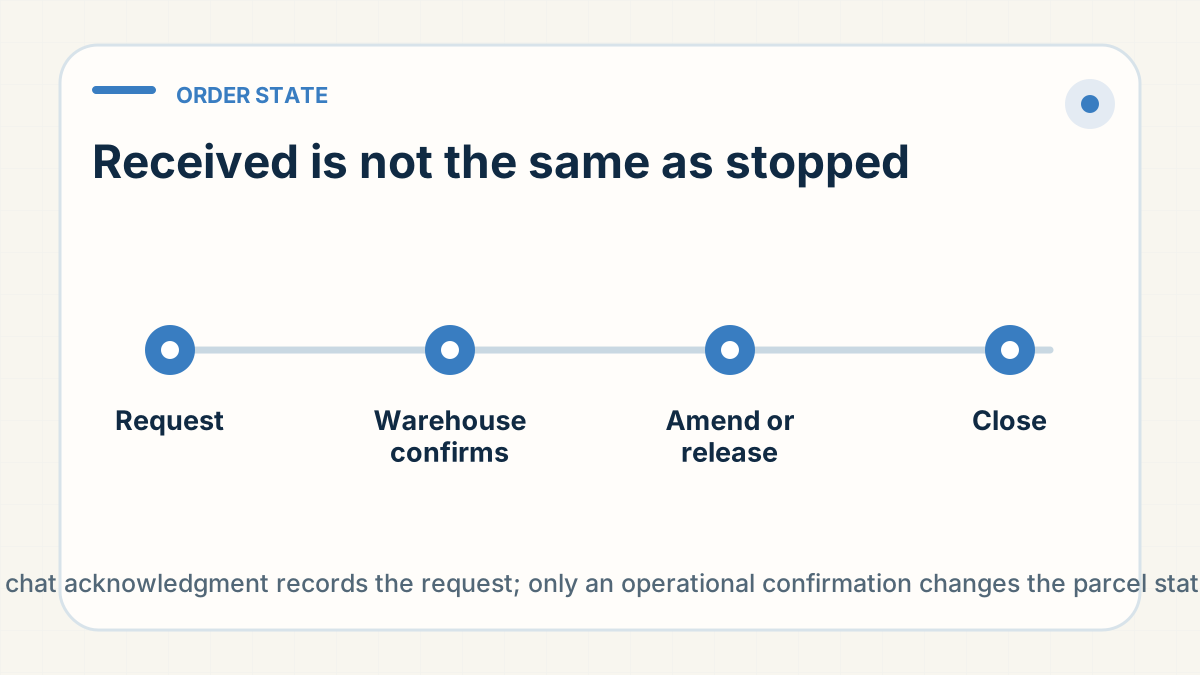
Treat each hold, cancellation and approval as a state change: record what you asked, what physically changed, who confirmed it and what releases the next step.
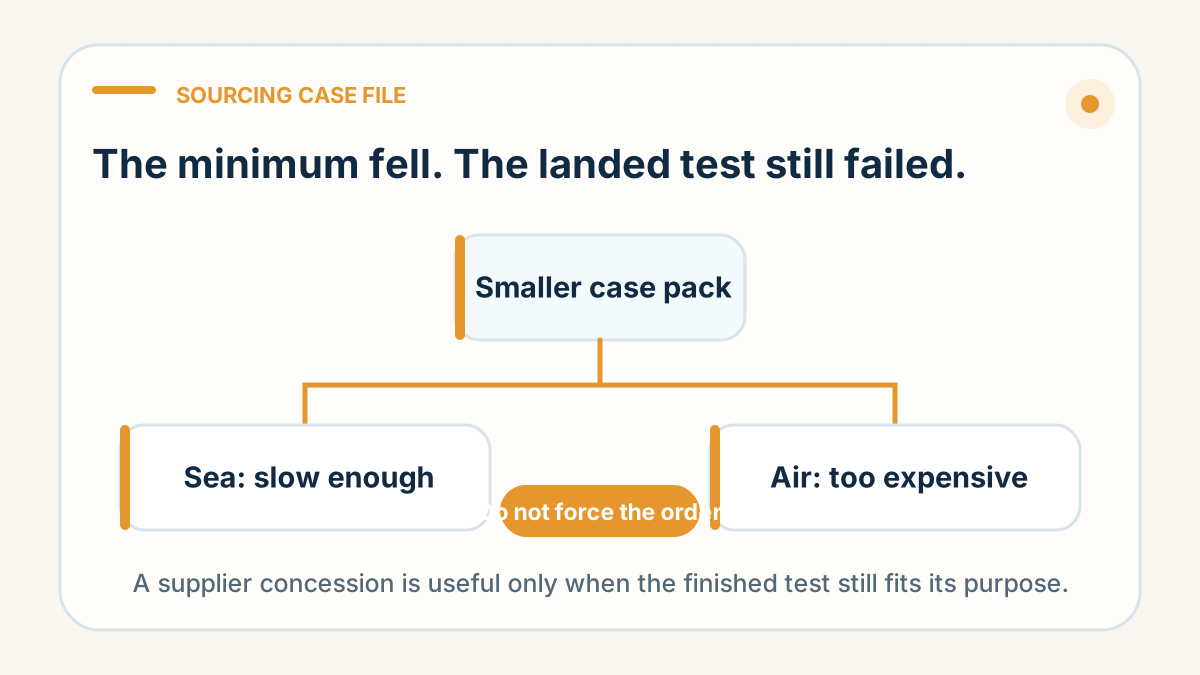
A pre-launch seller shipping to France negotiated a supplier minimum from 50 units into the mid-twenties. The smaller commitment still missed the landed-cost and delivery constraints.
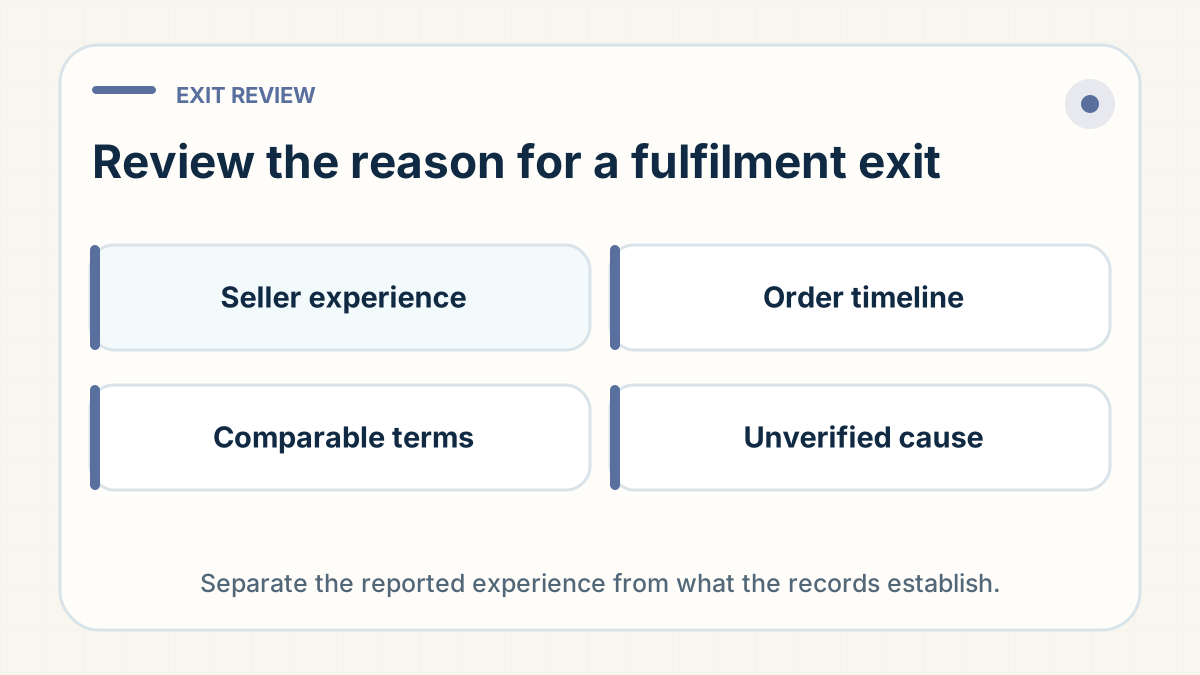
Exit feedback identifies what a seller experienced; it does not by itself establish root cause, prove a correction worked or explain whether price, delivery and product economics were compared like for like.
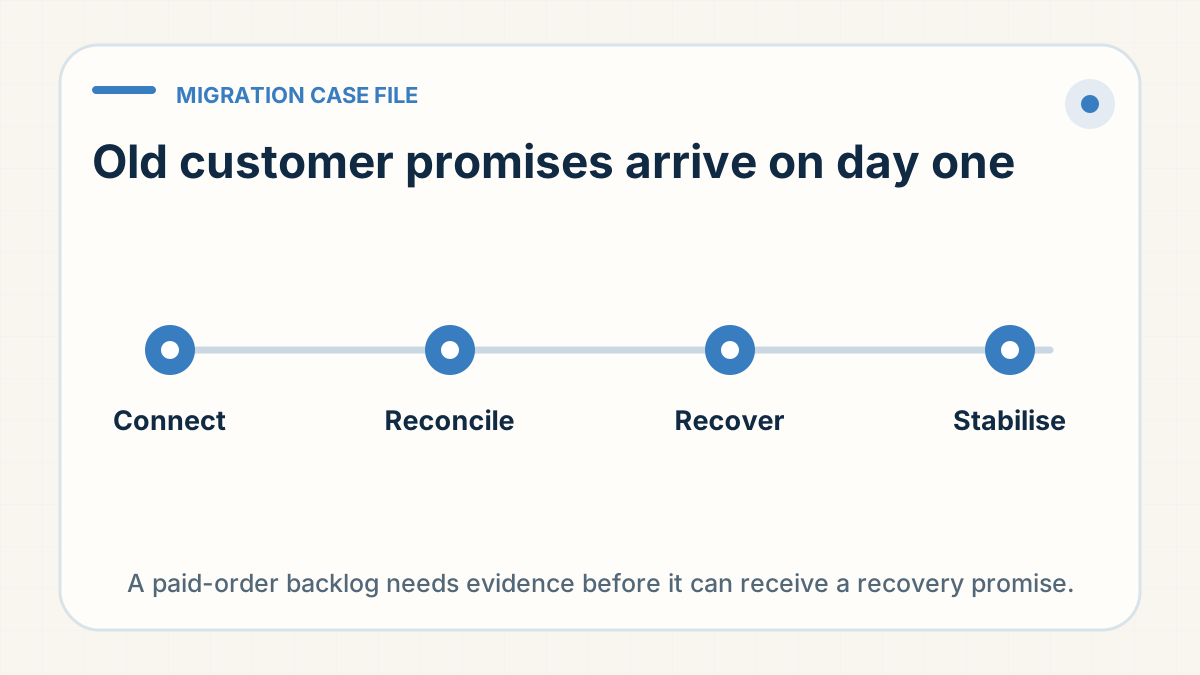
A seller arrived after the relationship with a previous agent had broken down, carrying more than 200 paid customer orders and incomplete records. The first job was not sourcing; it was deciding what could still be recovered.
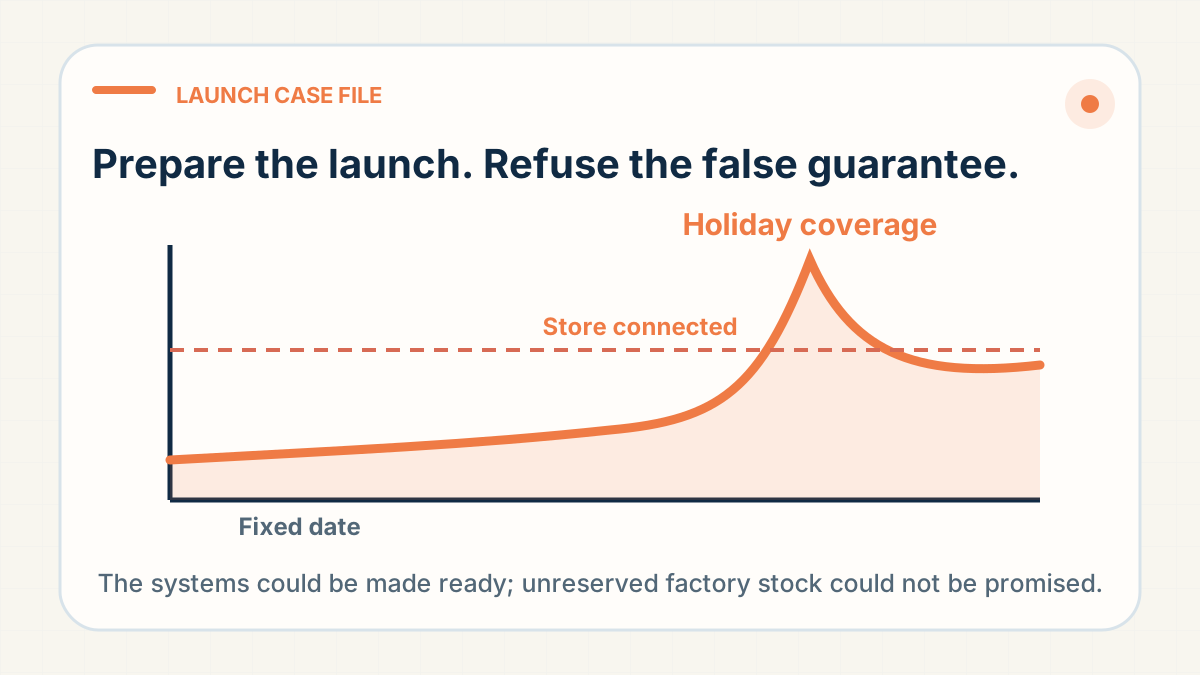
A fixed-date European launch was expected to generate roughly 3,000 orders inside 48 hours. We prepared the integration and holiday coverage, but refused to promise factory stock that had not been reserved.
An anonymised composite of client situations: a store scaling into several hundred daily orders, how repeated defects became a product-control problem, and the corrective actions and their measurement limits.
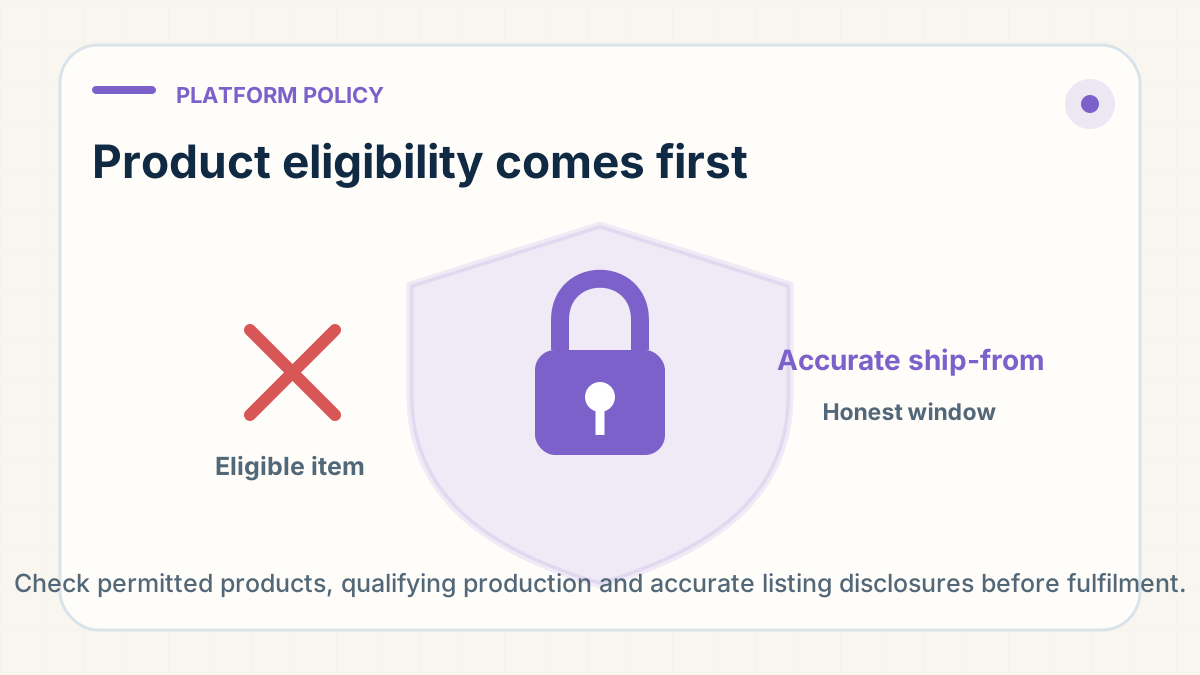
Check marketplace product eligibility, actual production and accurate ship-from details before choosing fulfilment. Etsy’s production-partner rules do not permit generic catalogue reselling.
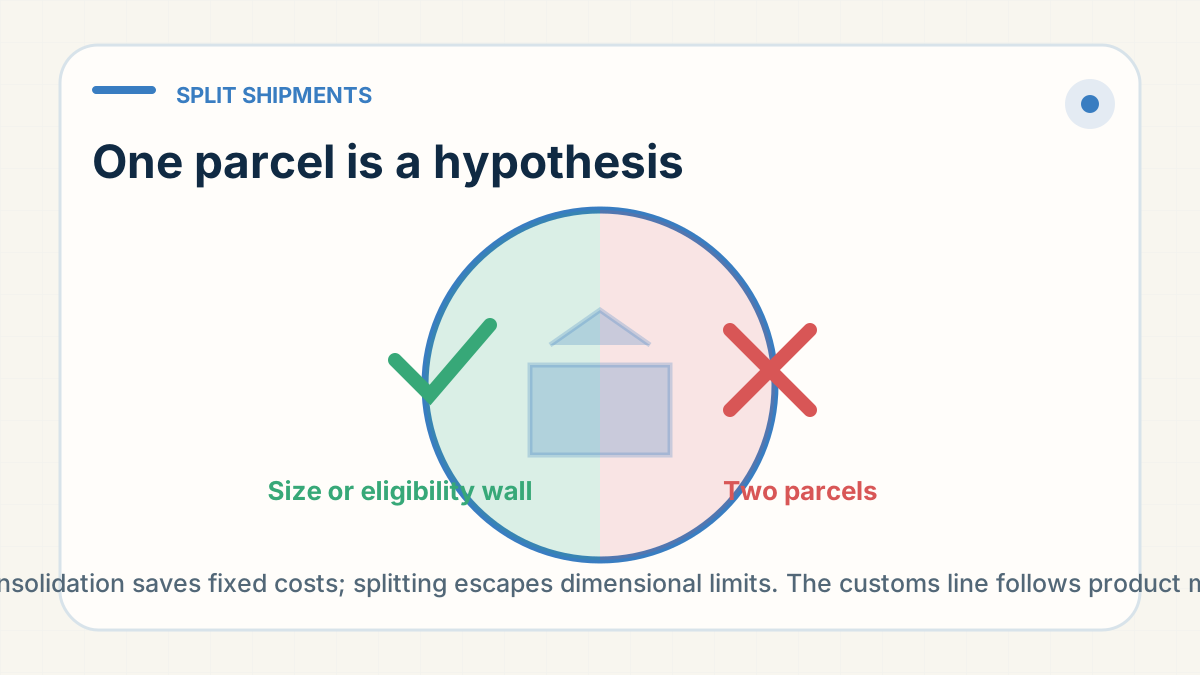
Why consolidation is not always cheaper, what forces a split, how splitting interacts with bulk pricing and per-consignment charges, and how to design offers that survive the packing bench.
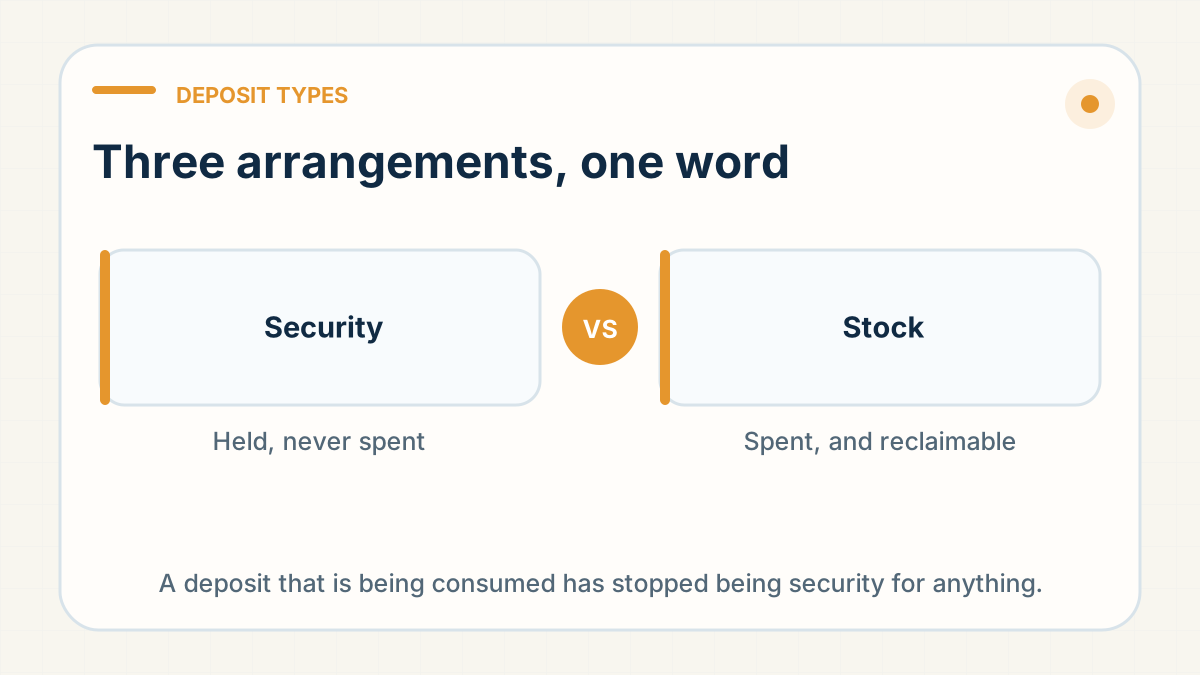
Security deposits, stock deposits and prepaid balances are three different arrangements with three different owners. How to tell them apart, size them and get the money back.
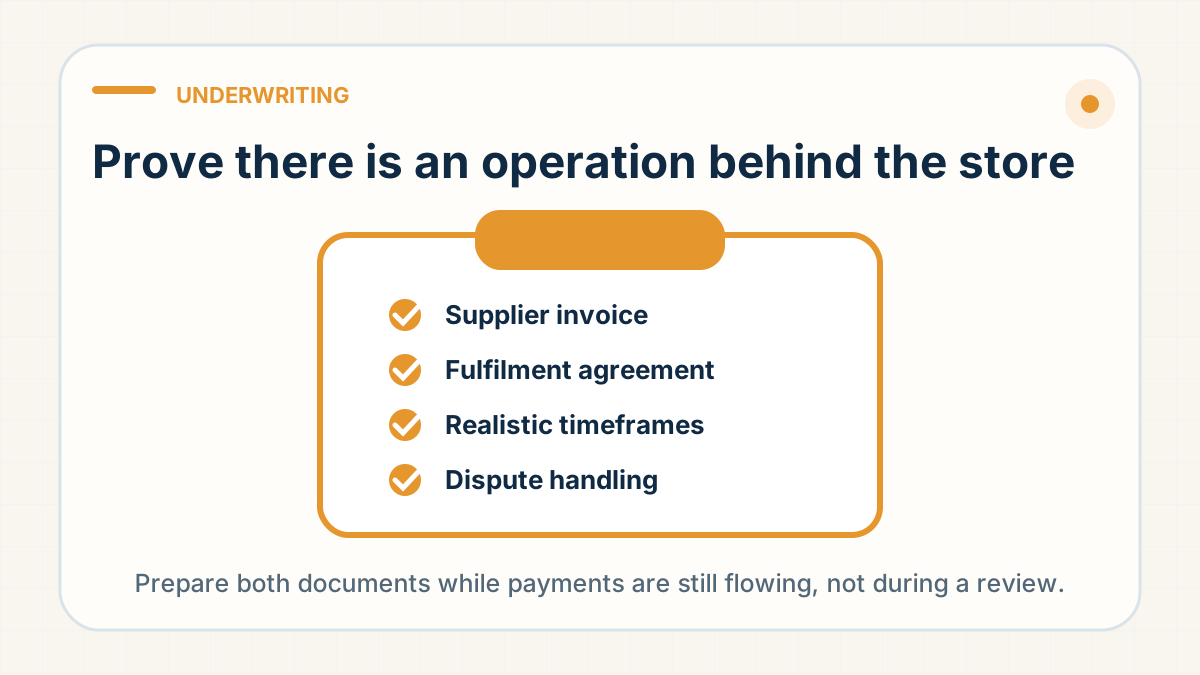
Why an underwriting review asks for supplier invoices and a fulfilment agreement, what those documents should contain, and how to prepare them before your payments are on hold.
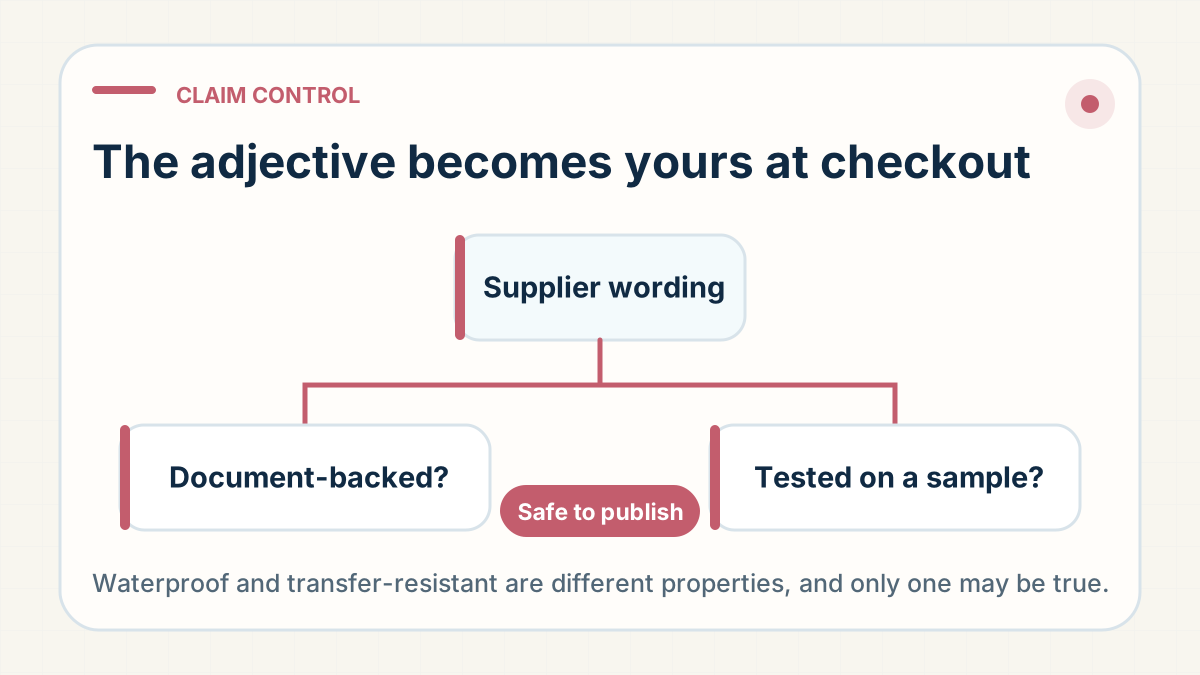
Why a supplier adjective is not a product claim, how colour drifts between a listing photo and the real item, and what to verify before a claim reaches your store.
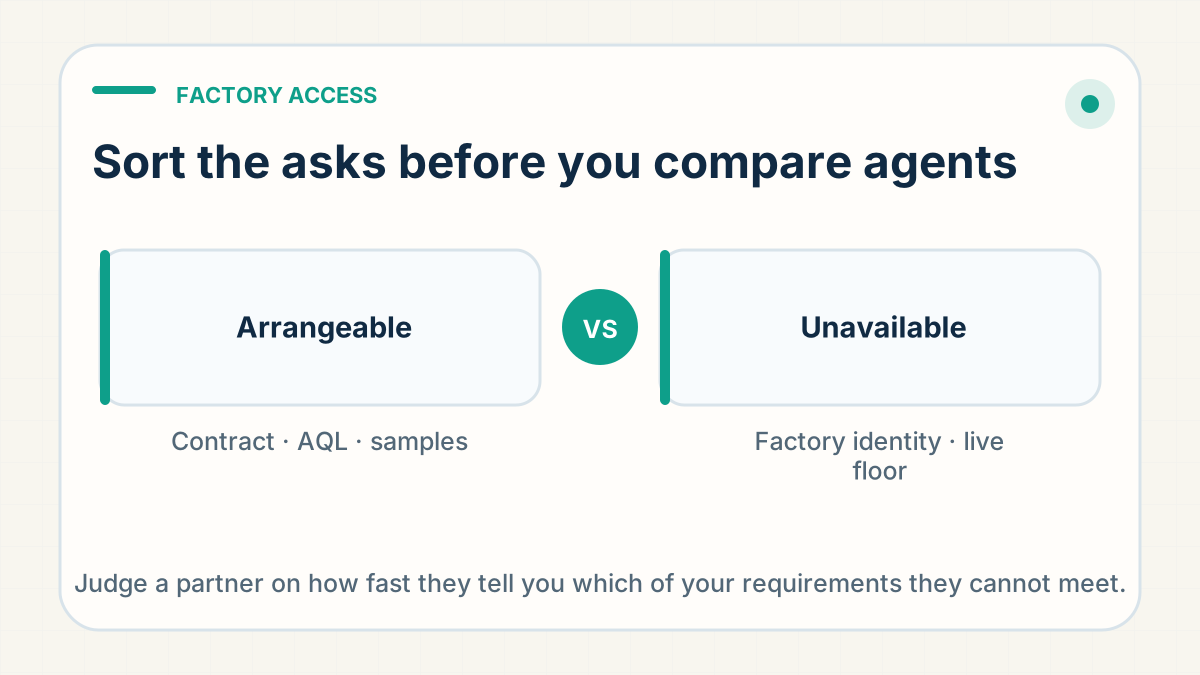
Factory disclosure, NNN and quality agreements, mould ownership, golden samples, lab testing and live video access — which of these you can actually get, and which you cannot.
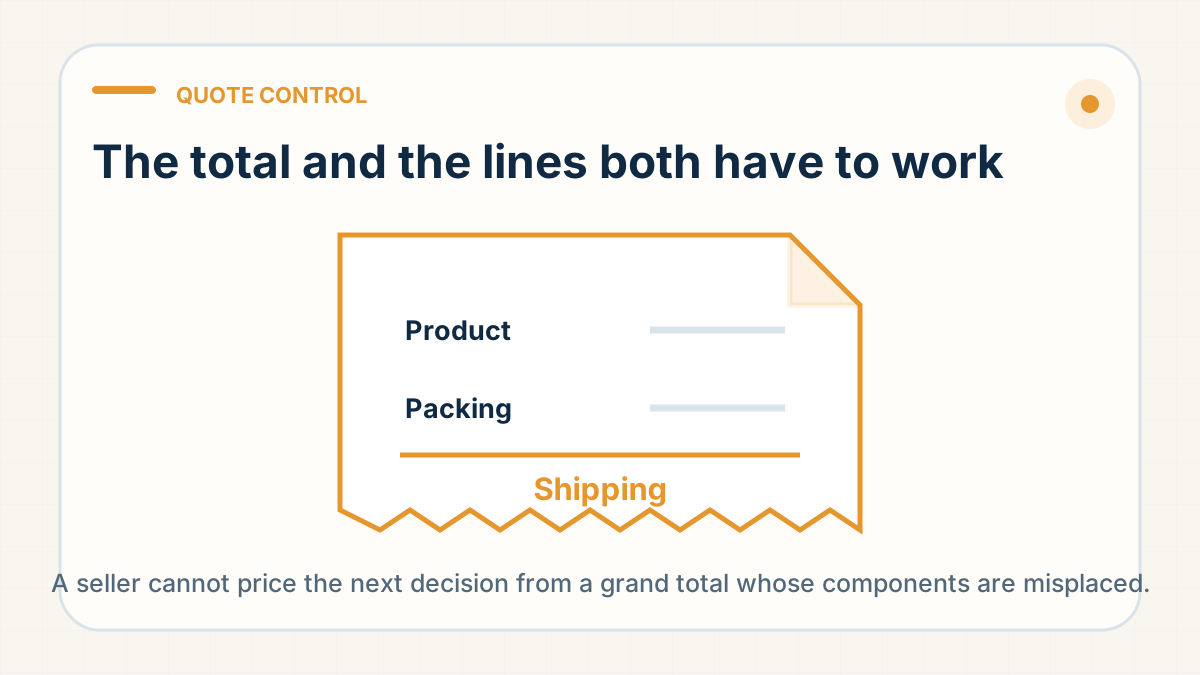
Approve a quote’s structure as well as its total: label what each cost and one-unit customisation covers, then name the next action for the seller’s stage.
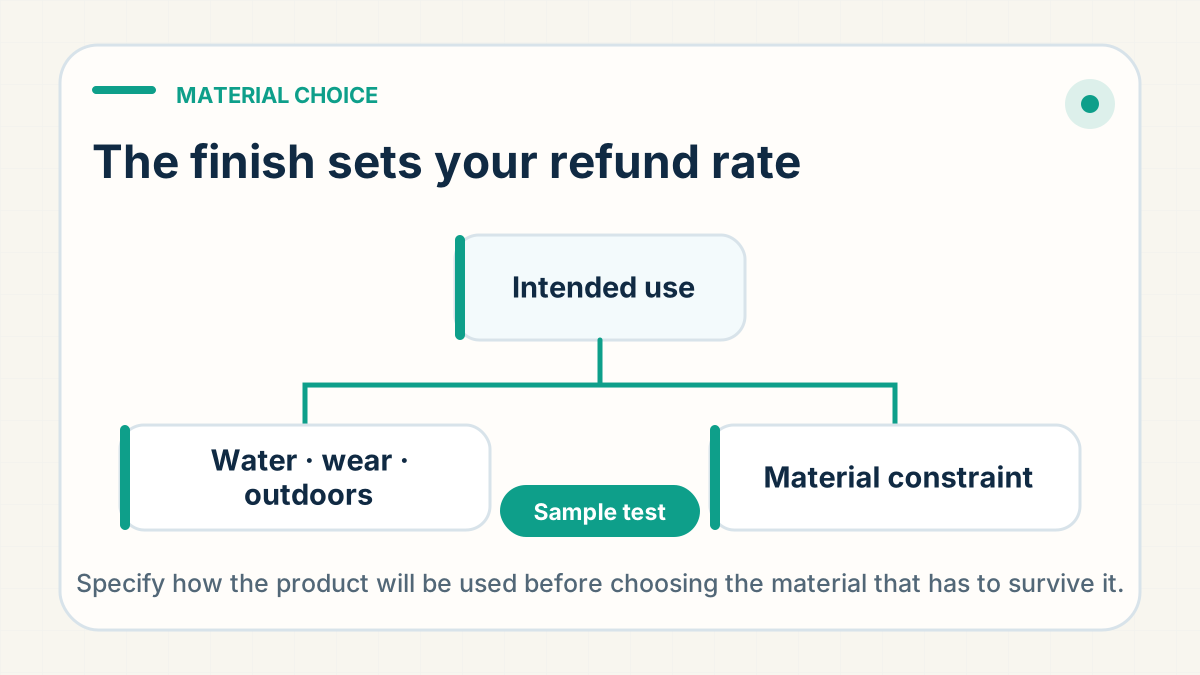
Material choice sets your refund rate before the first order ships. How to specify metals, plating and fabrics so the product survives ordinary customer use.
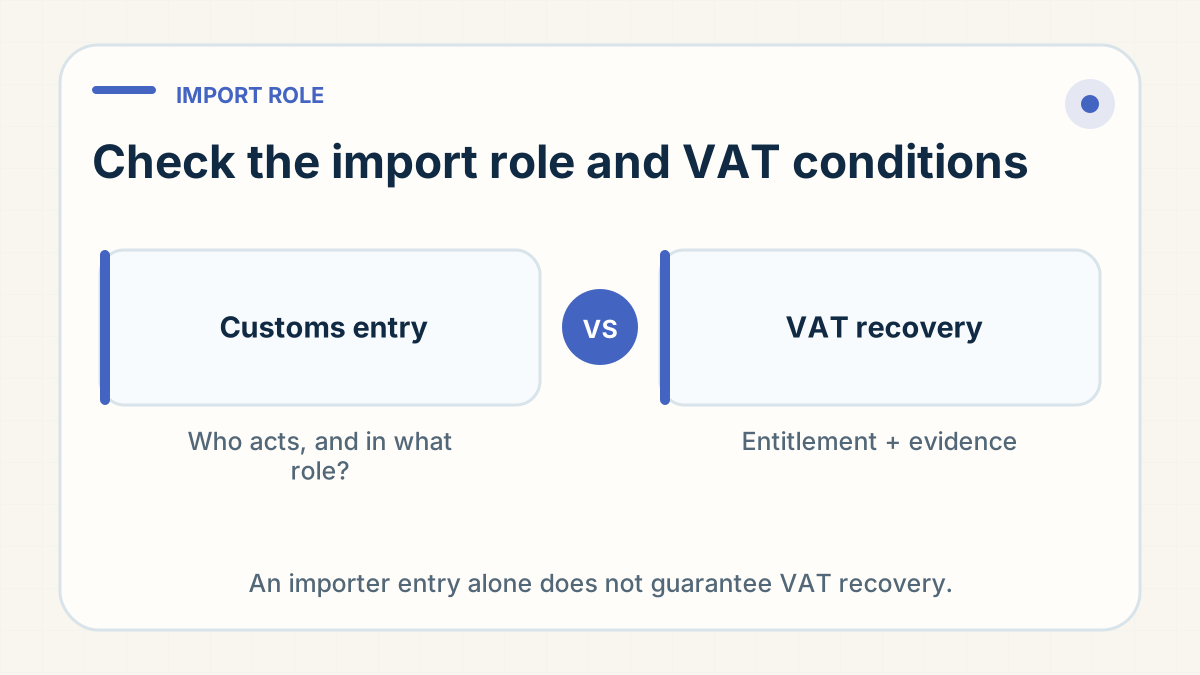
Ask who is named in the customs declaration, how VAT is handled and which records you receive. Parcel size or a DDP label alone does not determine the importer or VAT recovery.
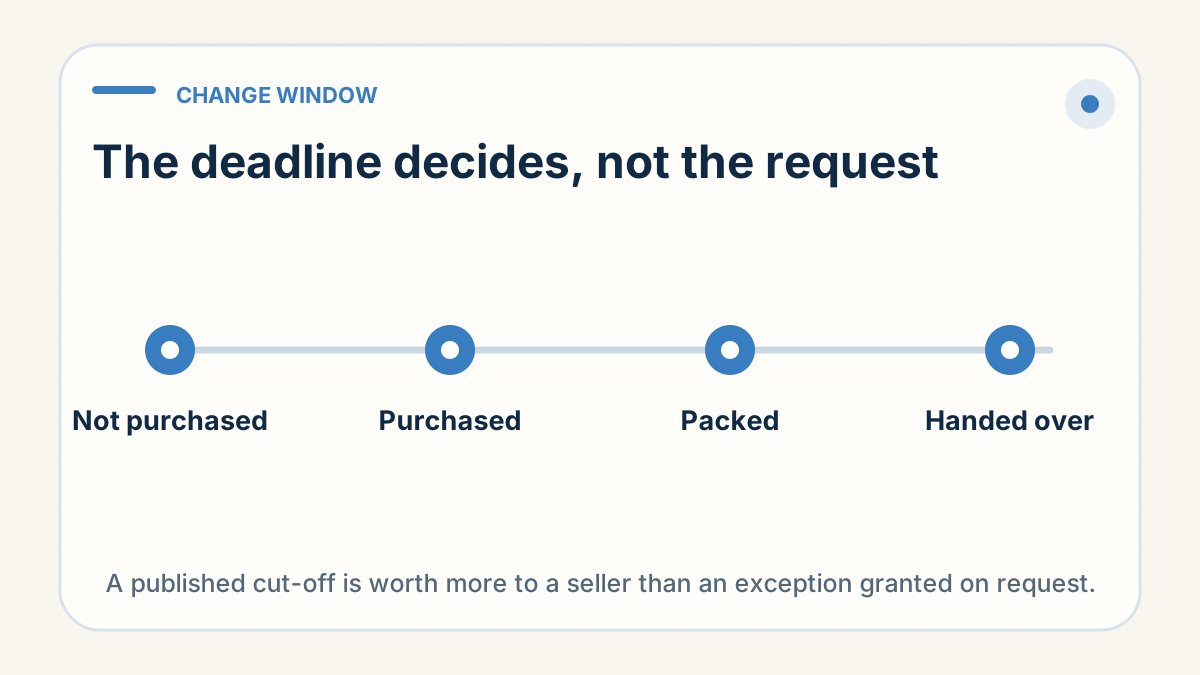
What can still be changed at each fulfilment stage, how to agree an explicit cut-off with your partner, and why a published deadline beats requesting an exception every time.
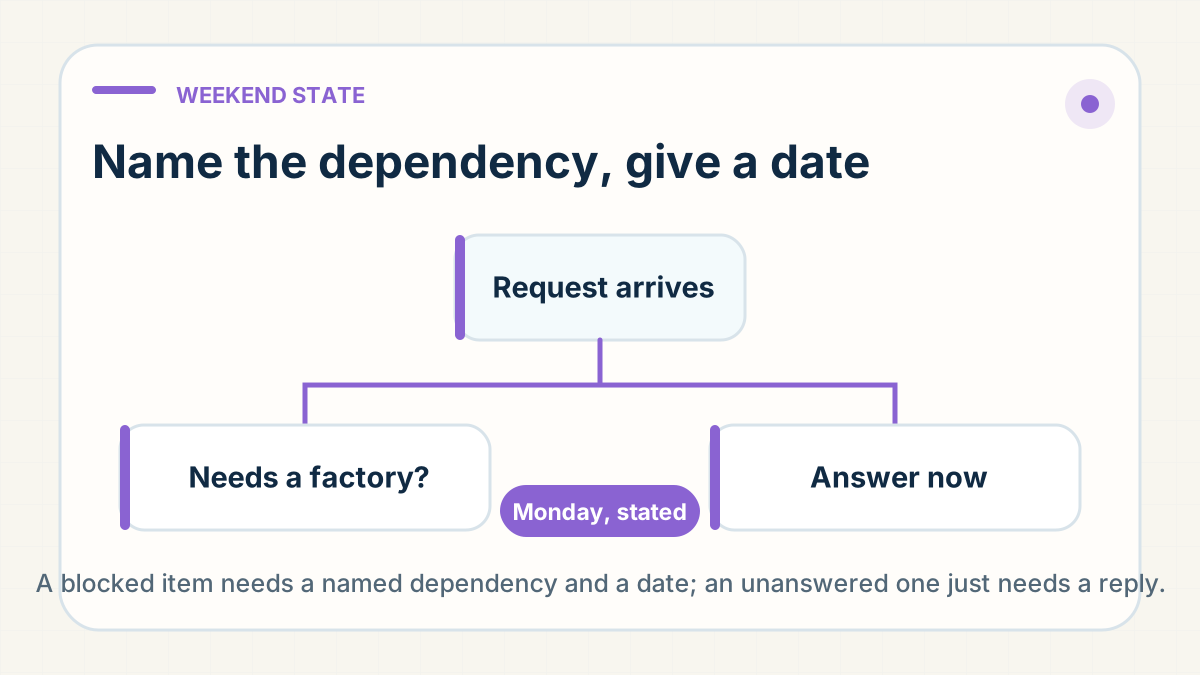
Before suppliers close for the weekend, separate blocked items, each with a named dependency and a date, from unanswered ones that just need a reply.
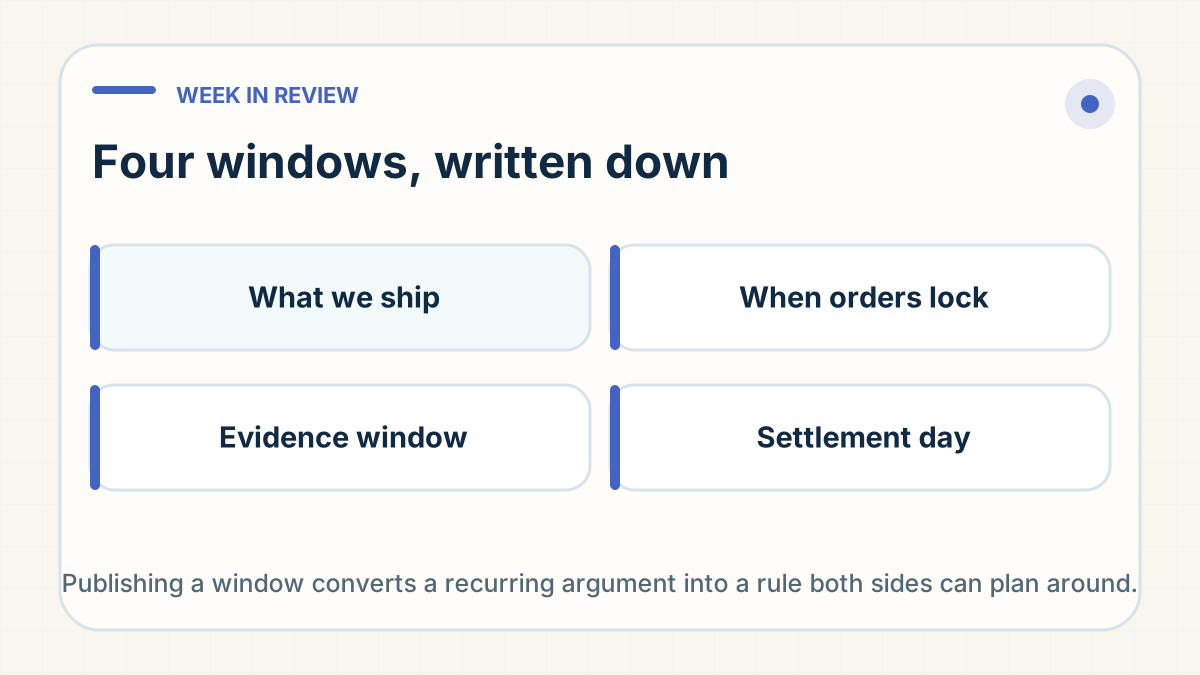
Write down four windows: what will not ship and why, when an order stops being editable, what evidence a claim needs and for how long, and when invoices settle.
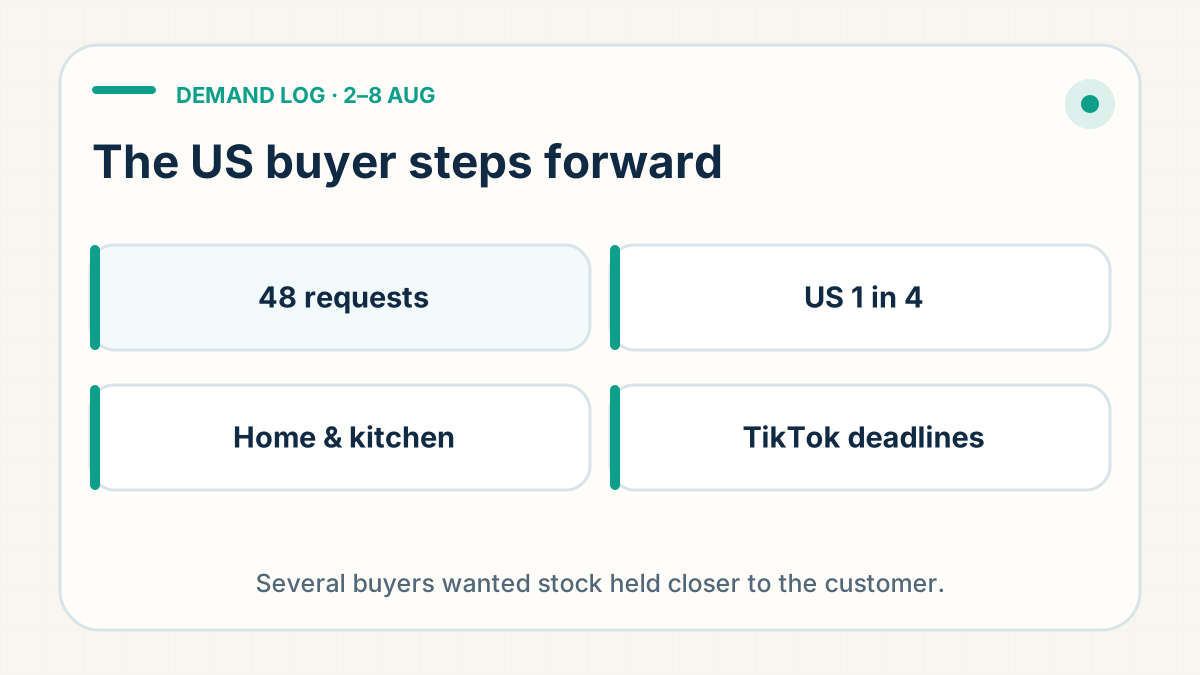
48 distinct supplier requests; the US was named in more than one request in four, and home and kitchen products led the families.
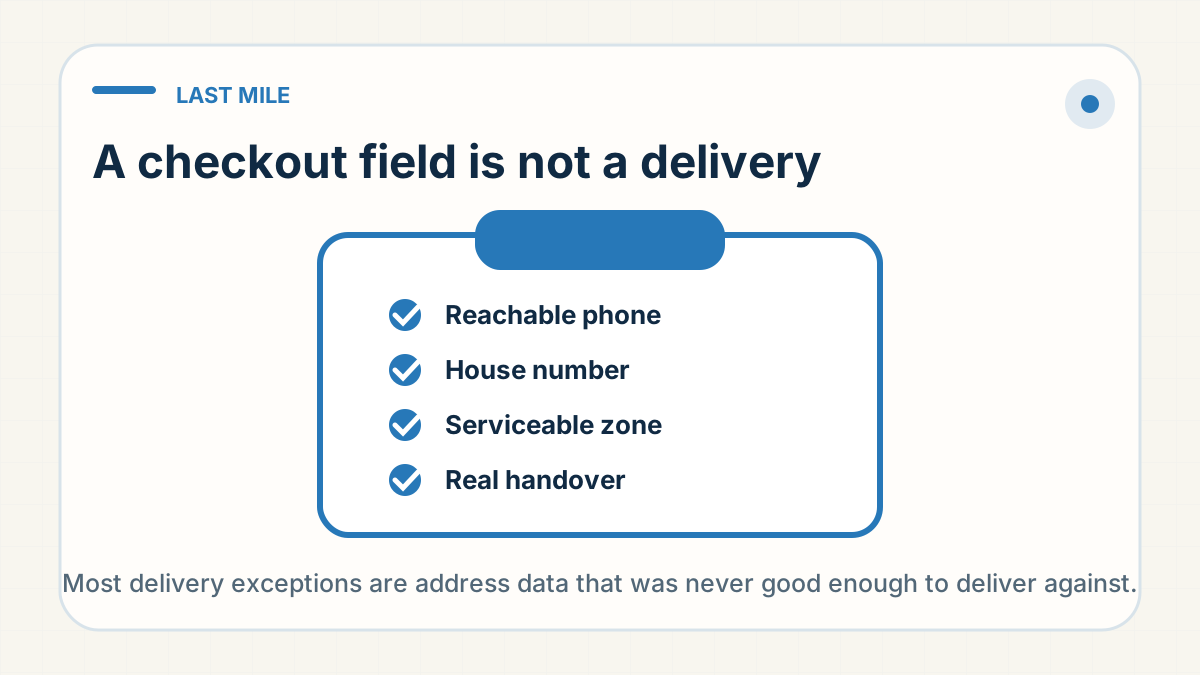
Collect a reachable telephone number and a full street address at checkout, and check coverage for island and forces addresses before you advertise there.
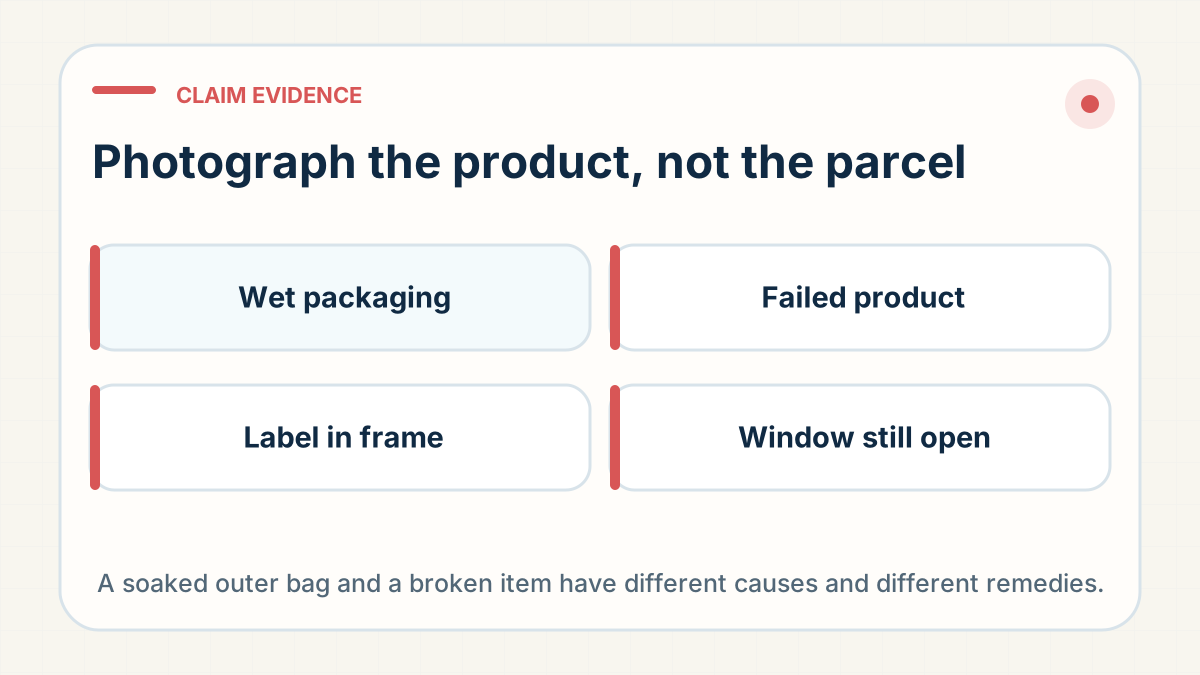
Photograph the damaged product, not only the parcel, and do it early: the evidence and whether the claim window is still open decide an after-sales claim.
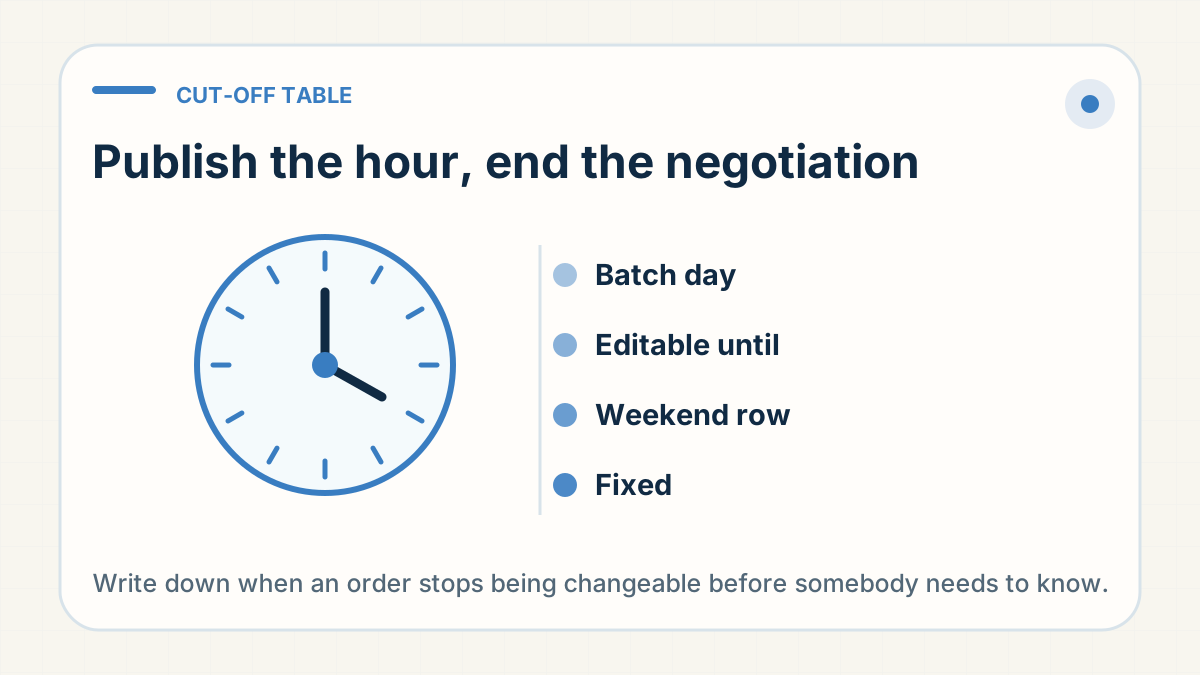
Get the order-change cut-off in writing before you need it: the hour, the day, and what each stage still allows once a parcel is packed and handed over.
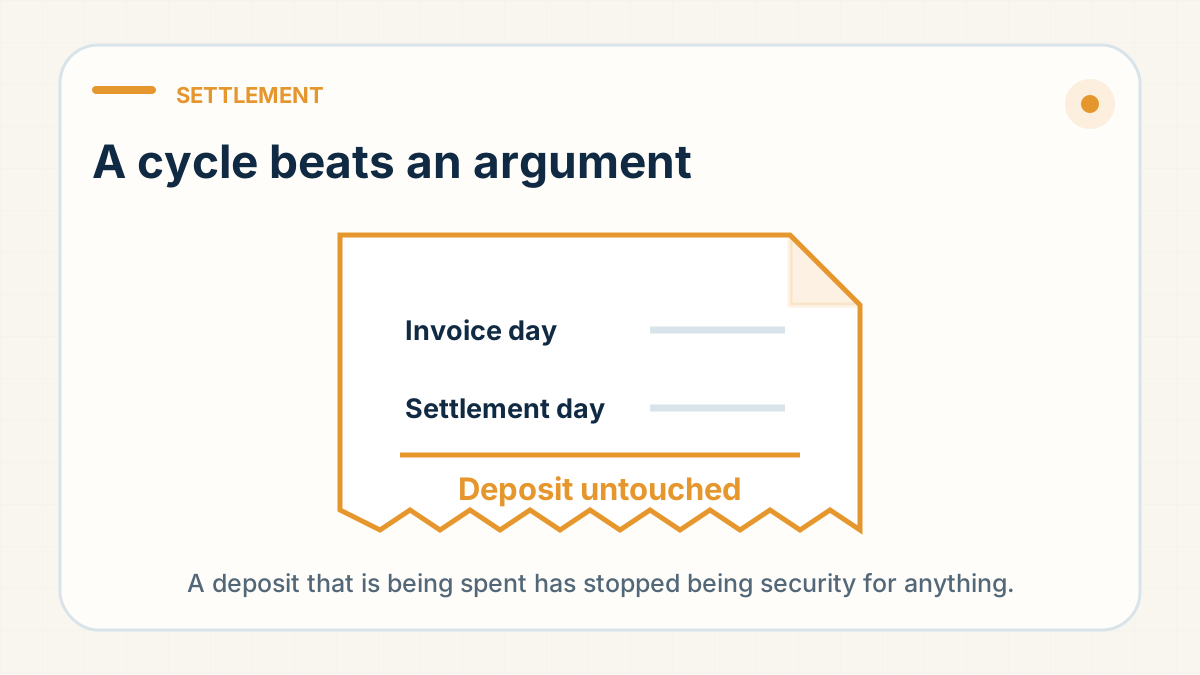
Replace the pay-before-fulfil standoff with a settlement rhythm: a named invoice day, a named payment day, an untouched deposit and a stated fallback.
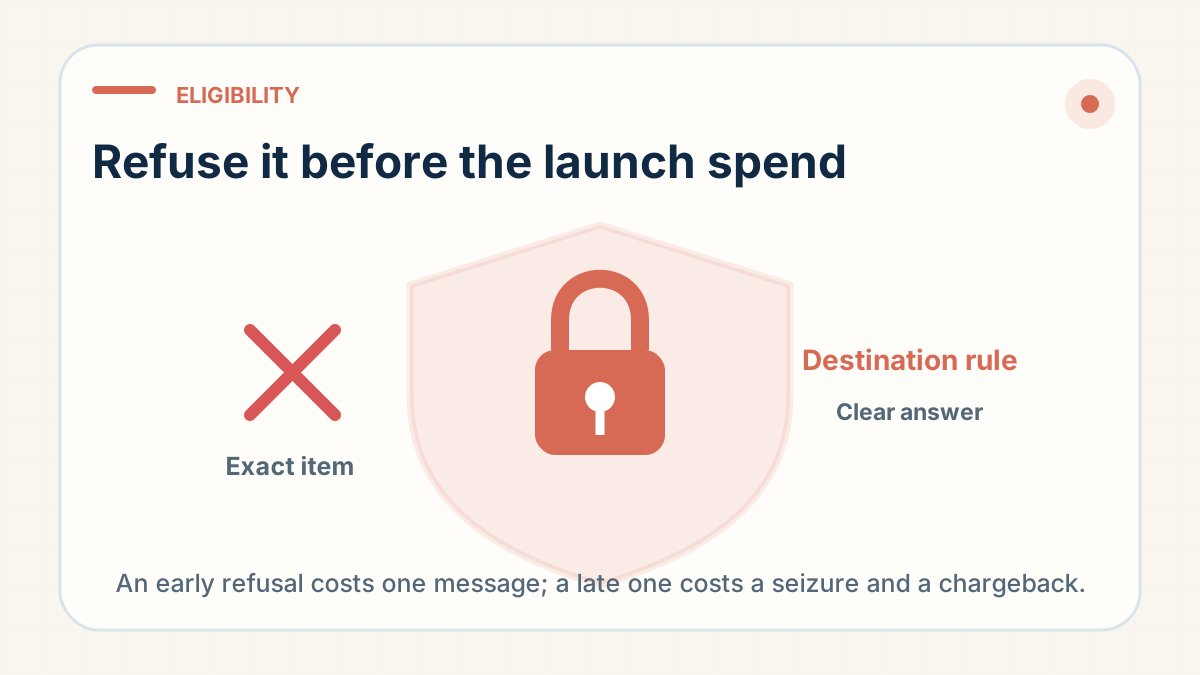
Screen the exact product against the destination before you spend on demand: brand marks, design patents, licensed imagery, and dangerous or oversized goods.
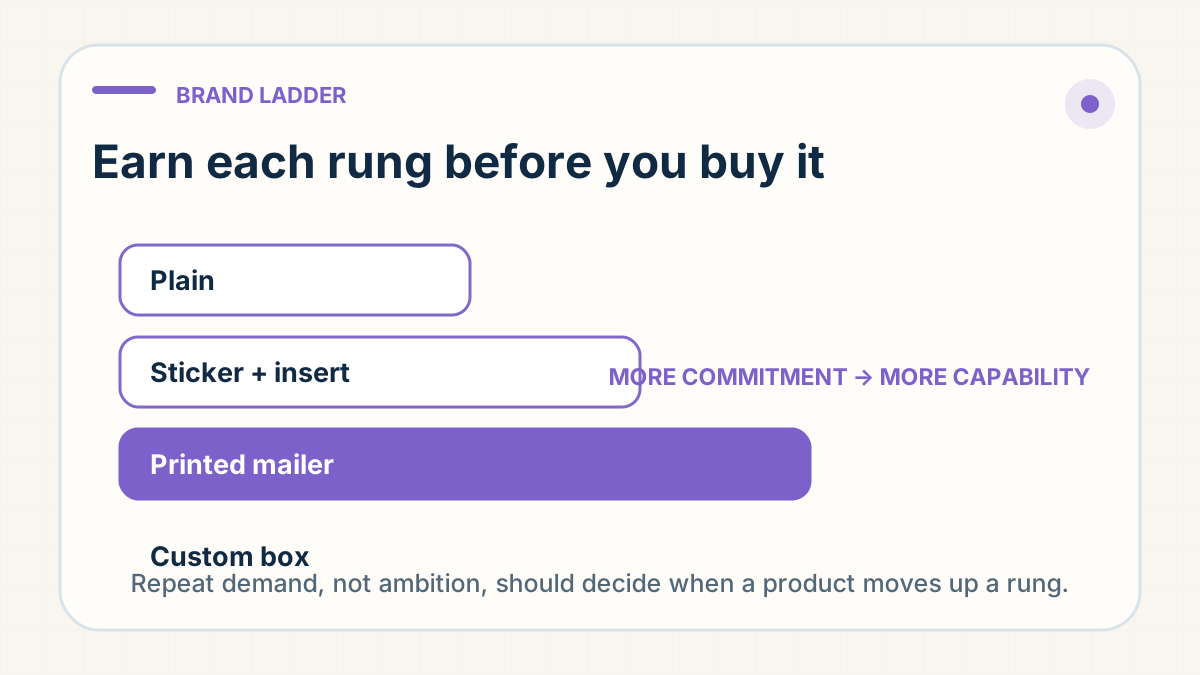
The realistic steps from unbranded packaging to fully custom presentation, what each rung costs in volume and commitment, and how to avoid paying for branding before a product has earned it.
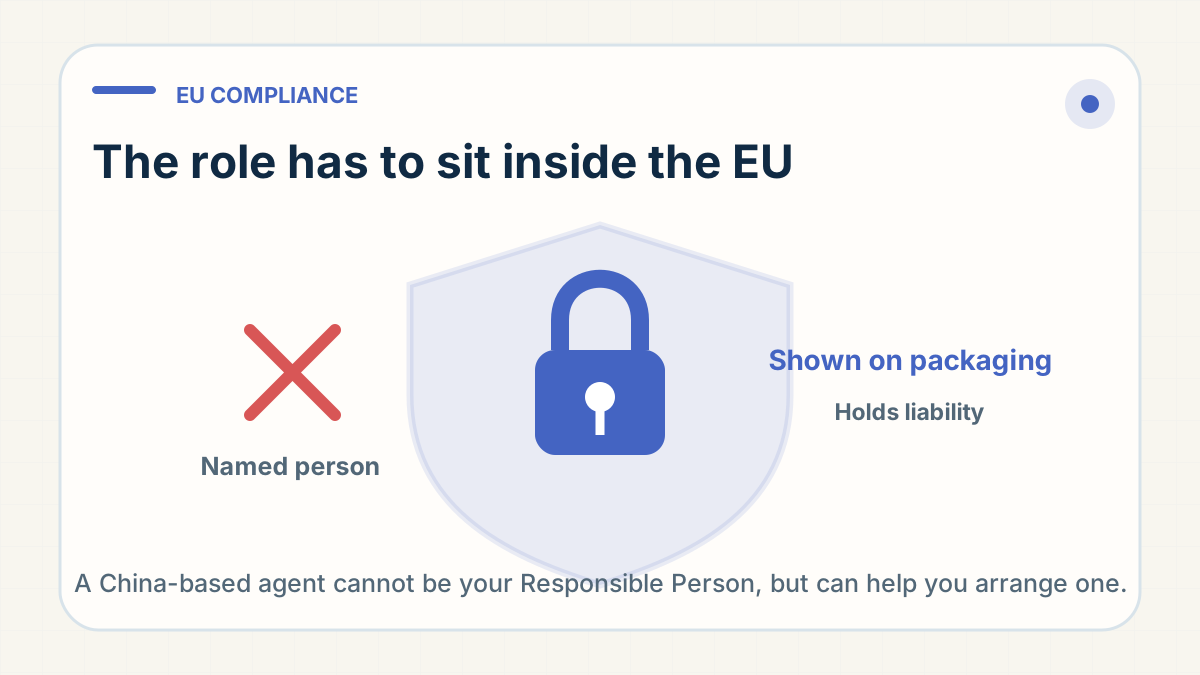
What the EU General Product Safety Regulation requires, why a China-based fulfilment agent cannot be your Responsible Person, and the practical options for arranging one.
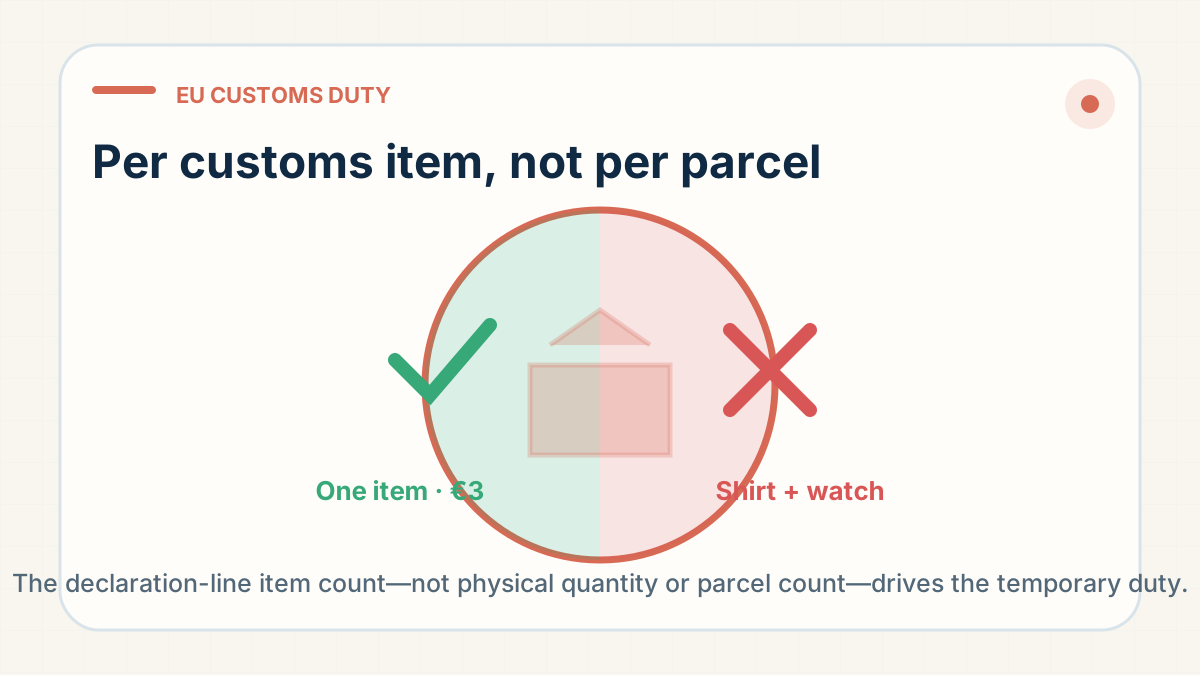
Since 1 July 2026, the EU’s temporary €3 duty applies per customs item in a low-value consignment. Count declaration lines before pricing bundles.
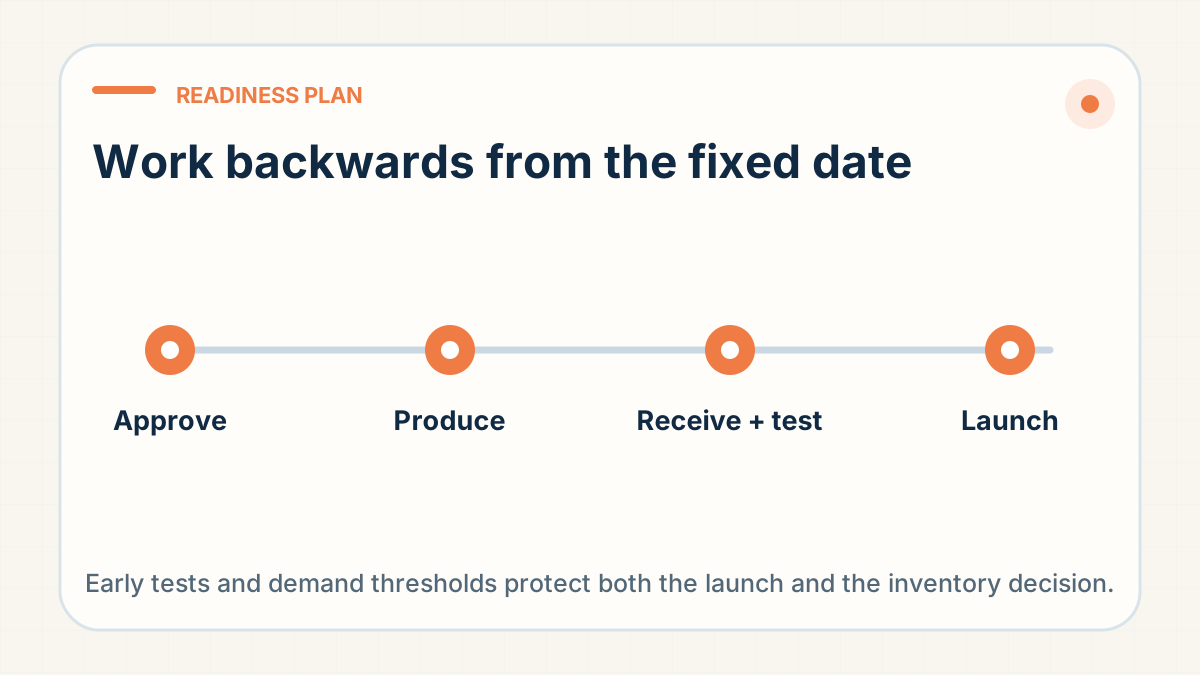
A practical launch and replenishment plan for factory closures, weather disruption and demand spikes without turning forecasts into unsafe stock commitments.
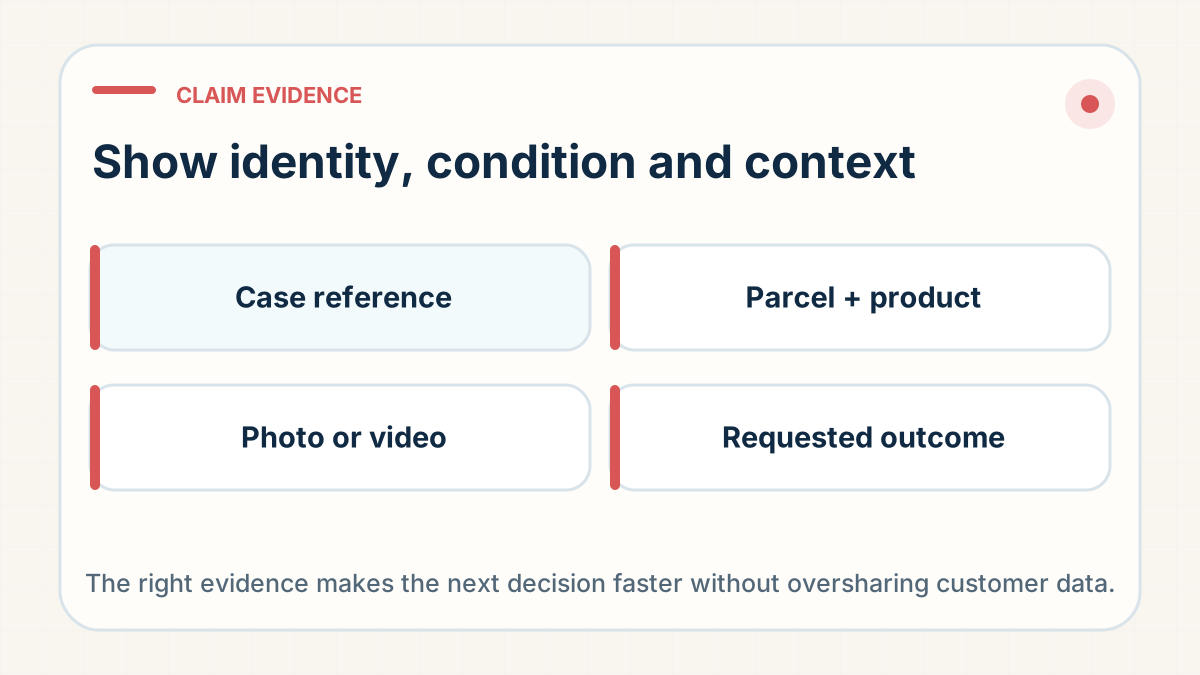
A practical evidence pack for damaged, wrong, incomplete, defective or missing orders, with enough context to reach the next decision faster.
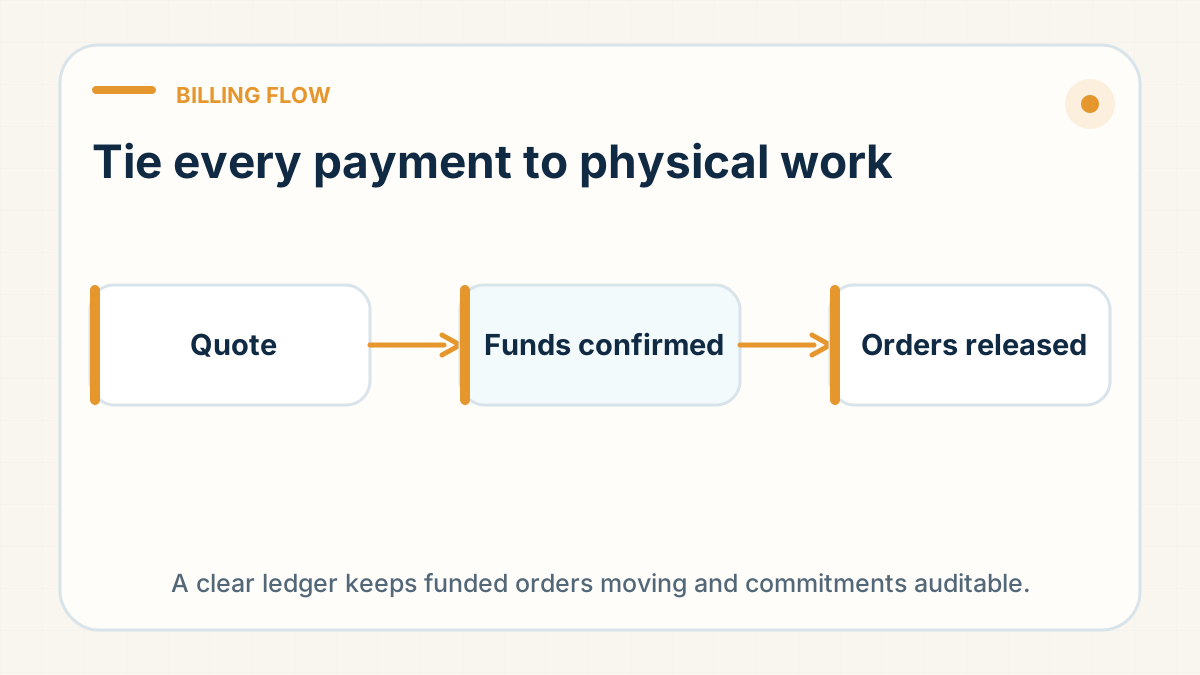
A plain-language guide to quotes, prepayment, prepaid balances, invoice batches, credits and the cash-flow choices behind international fulfilment.
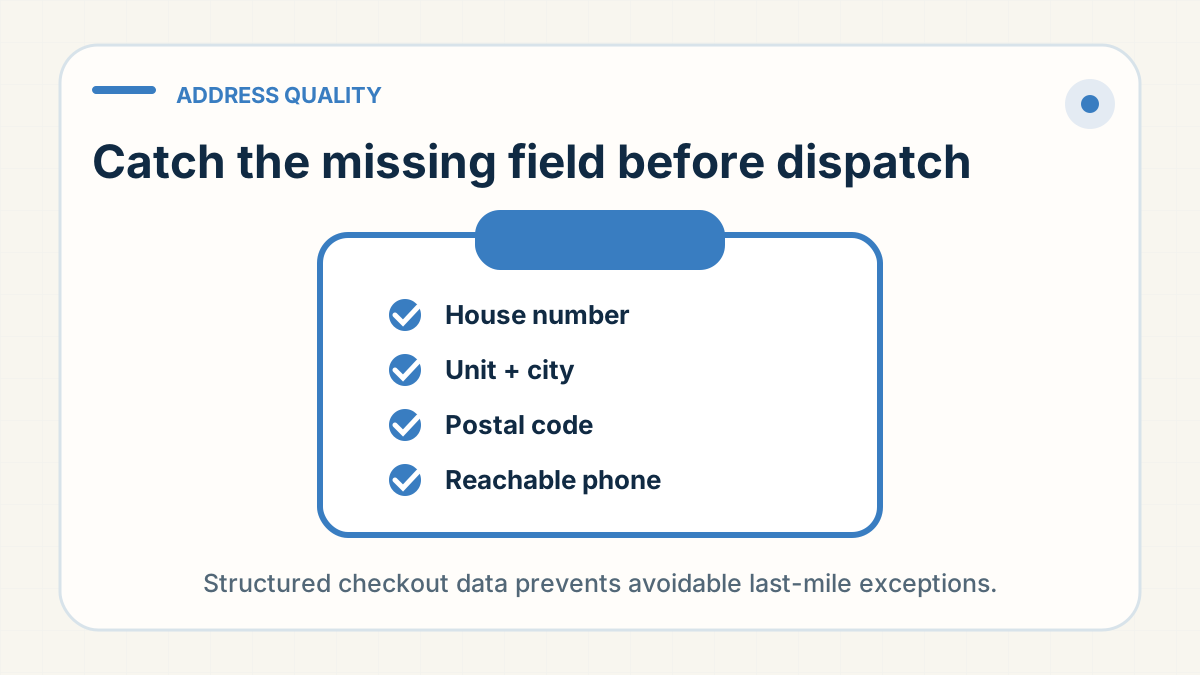
A field-by-field checkout and order-review checklist for catching incomplete addresses and unusable contact details before dispatch.
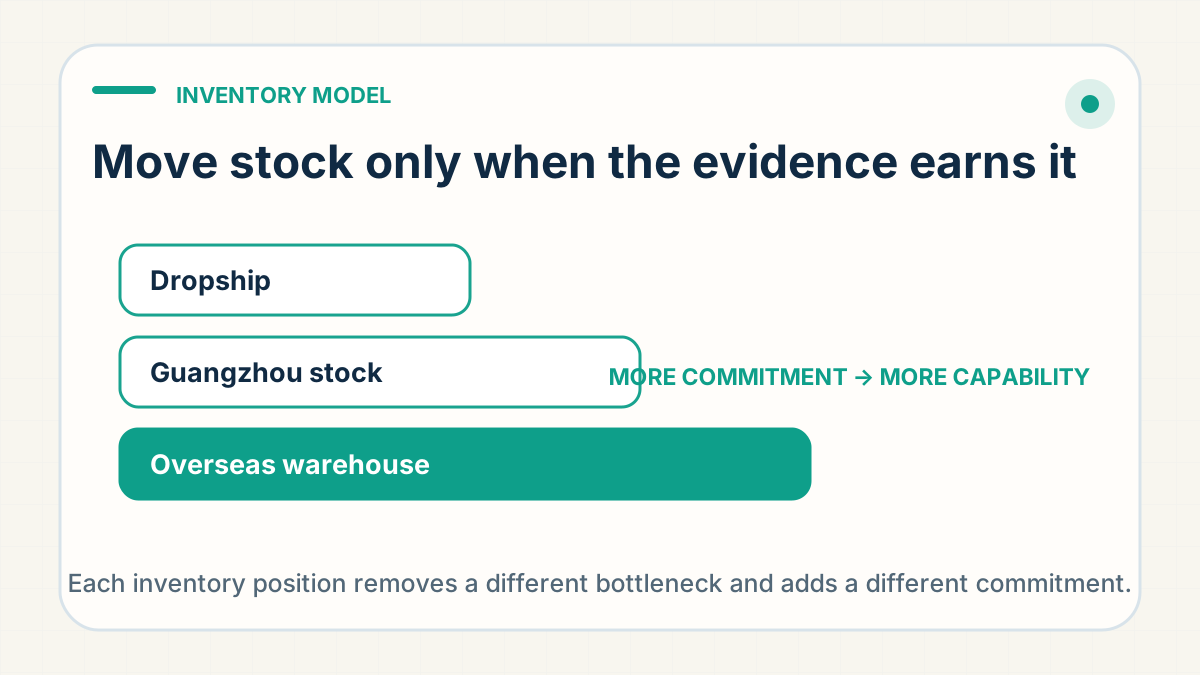
A decision guide for choosing order-by-order dropshipping, Guangzhou inventory or destination-country stock without confusing forecasts with commitments.
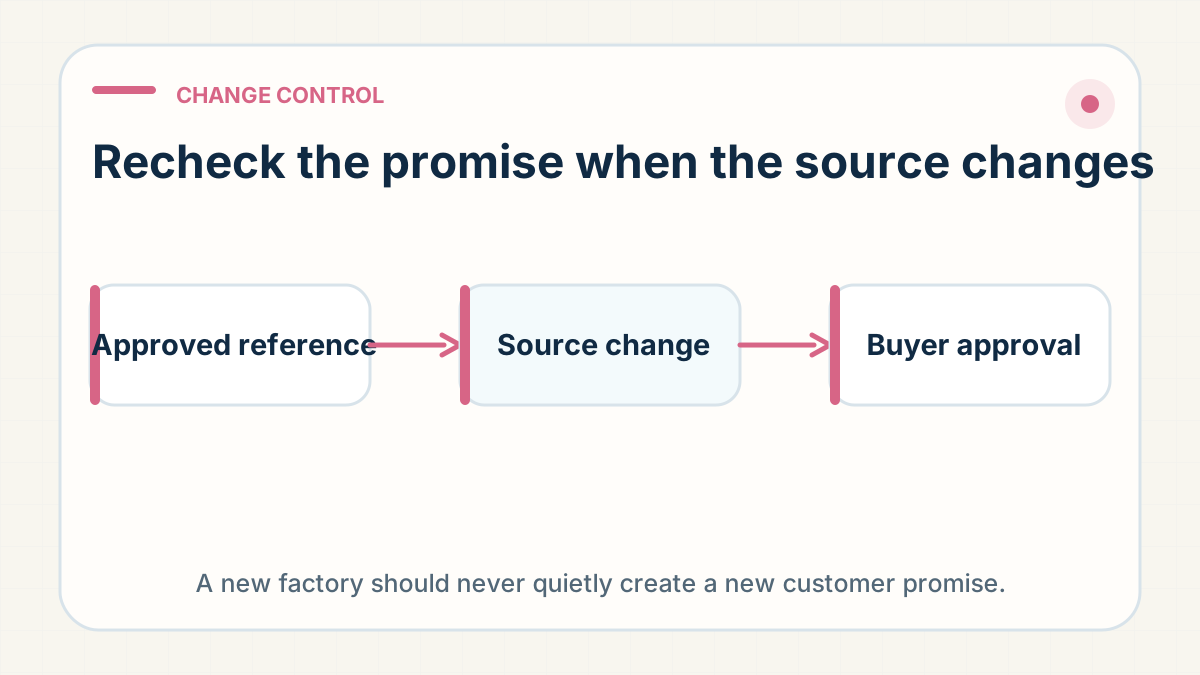
A practical process for keeping the approved product, packaging and documentation stable when a supplier, factory, component or SKU changes.
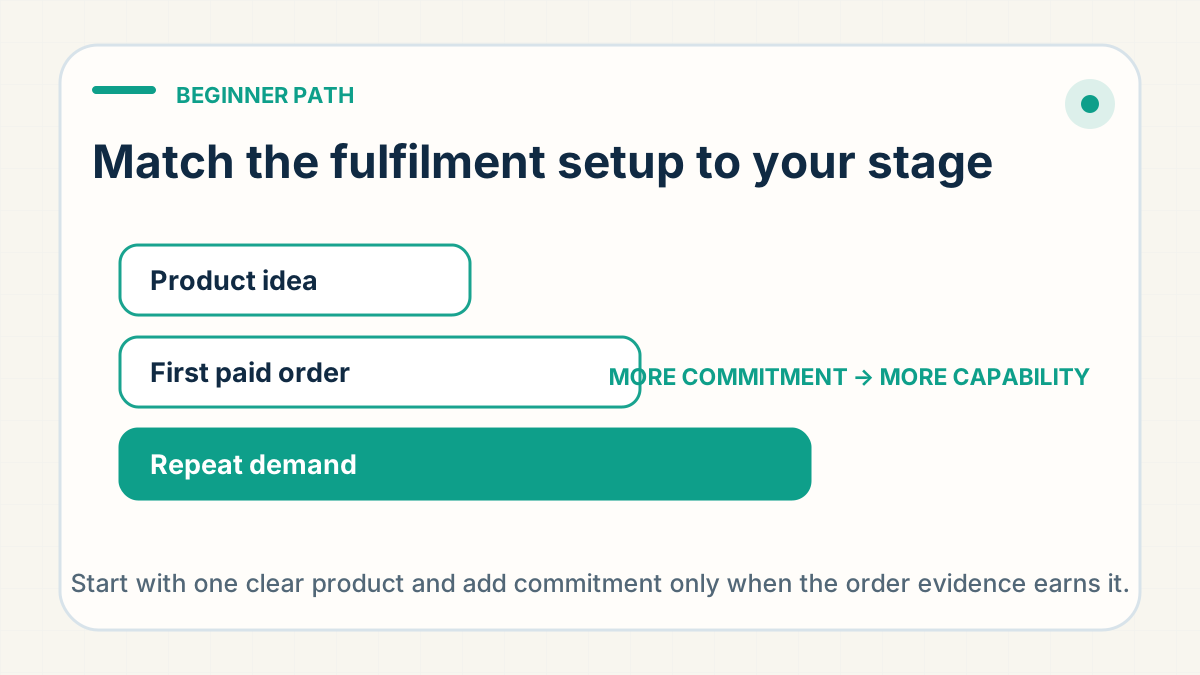
A practical beginner path for deciding when a private dropshipping agent helps, what to send for a real quote and how to test the first fulfilment workflow.
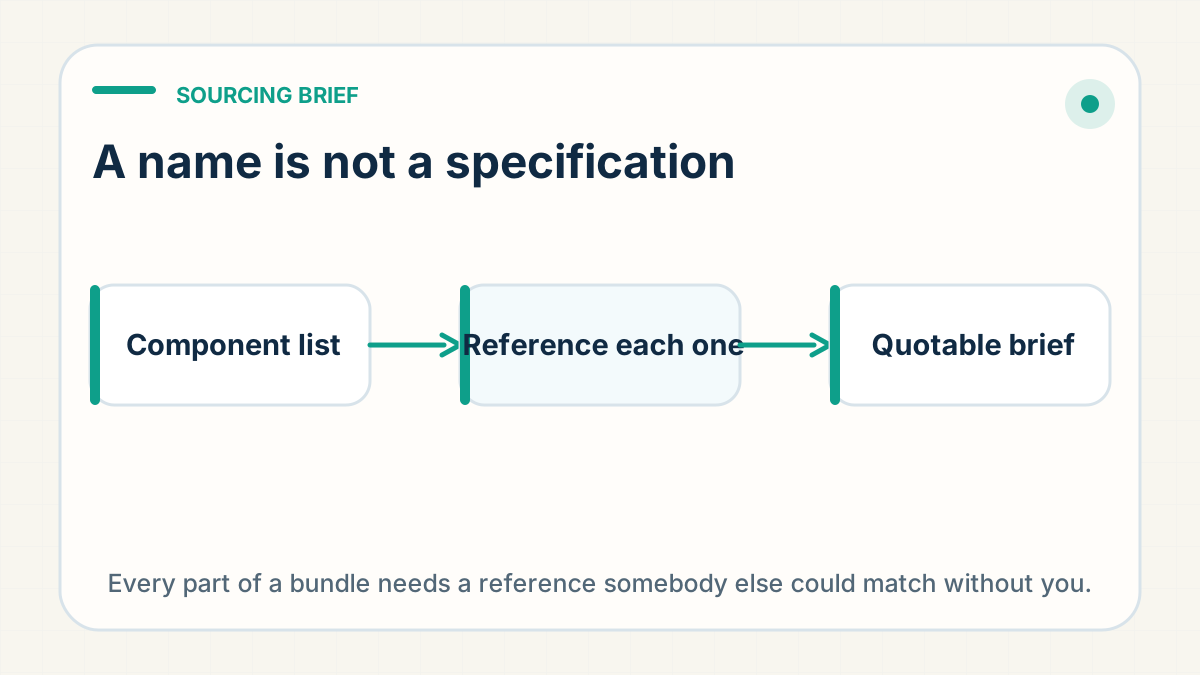
Give every order component a reference a supplier can match without you: a product photo, a bundle description or a colour name is not yet a specification.
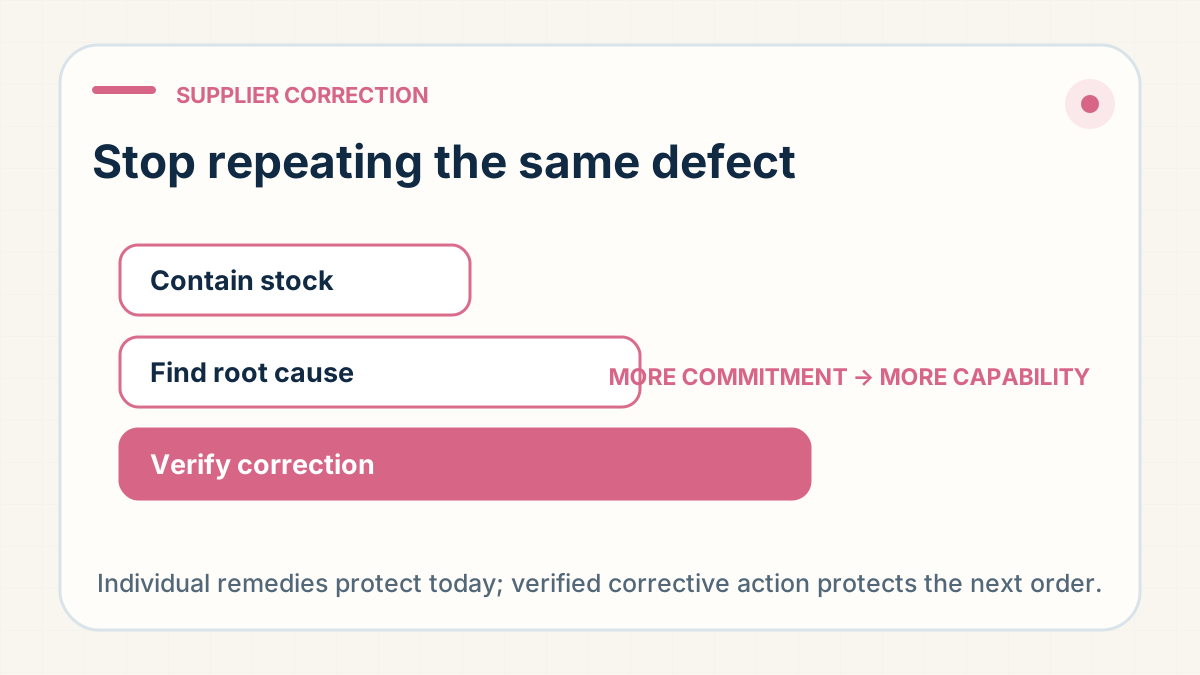
A practical escalation process for moving from individual refunds and replacements to batch control, root-cause work and verified supplier correction.
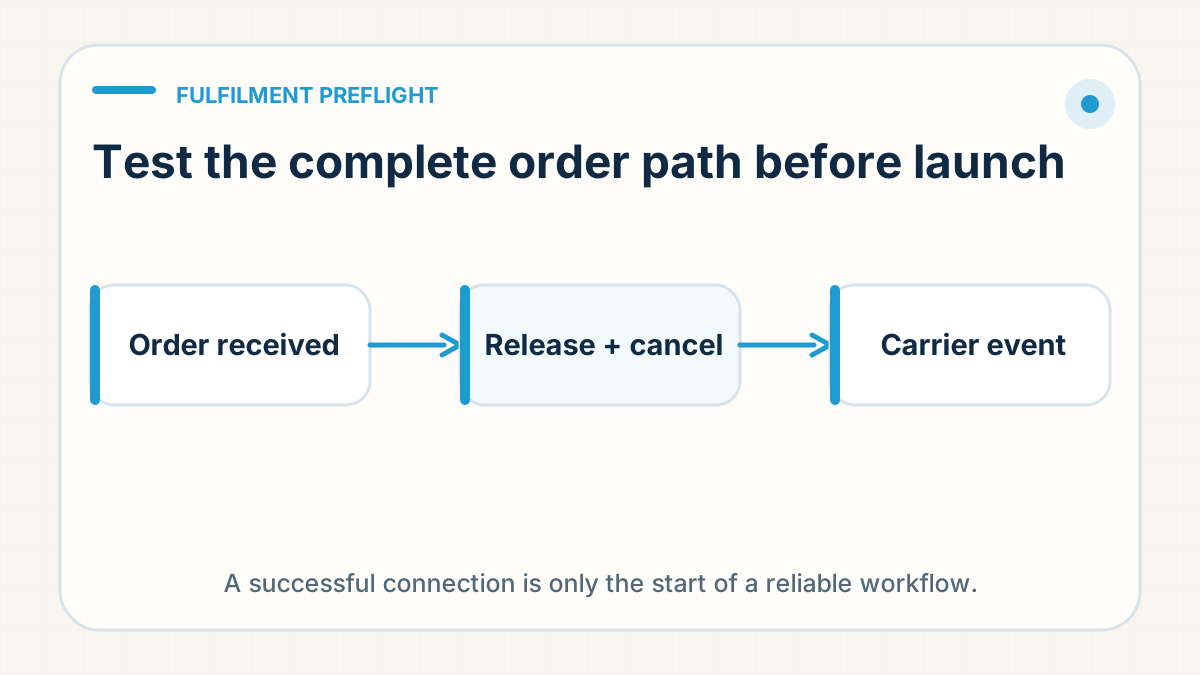
A controlled preflight checklist for proving that orders, addresses, cancellations, carrier tracking and customer notifications work before launch.
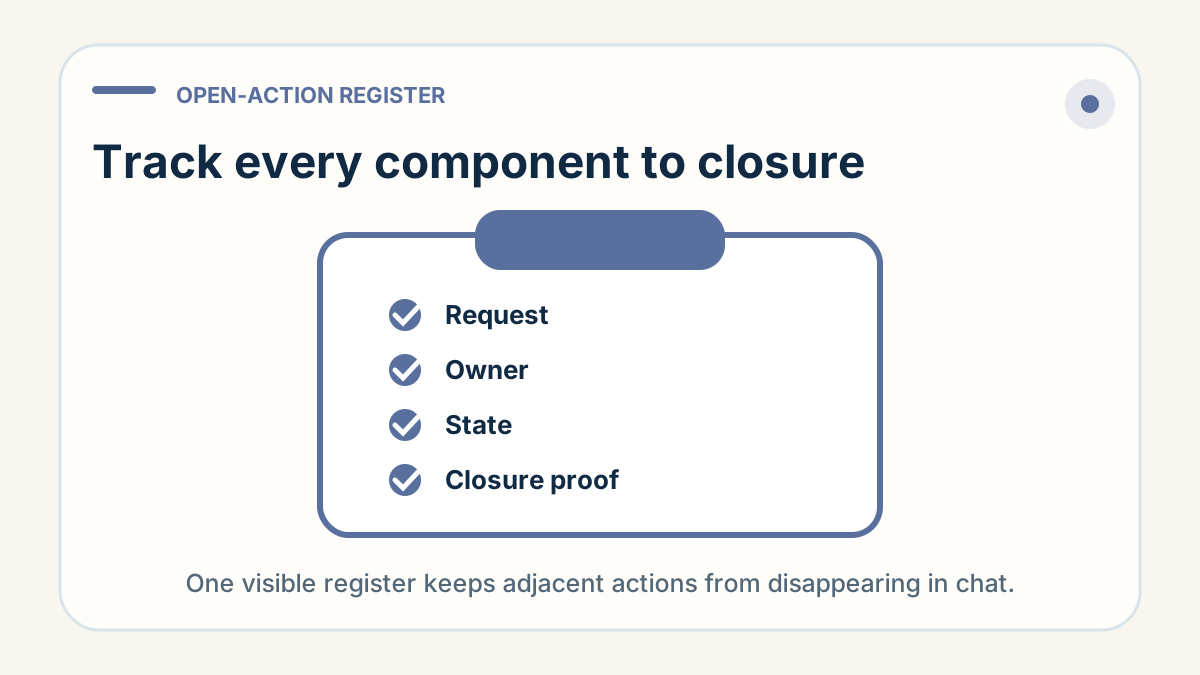
Keep an agreed list of open orders and claims with your fulfilment partner. Record the owner, next update and evidence needed so you can see what remains unresolved.
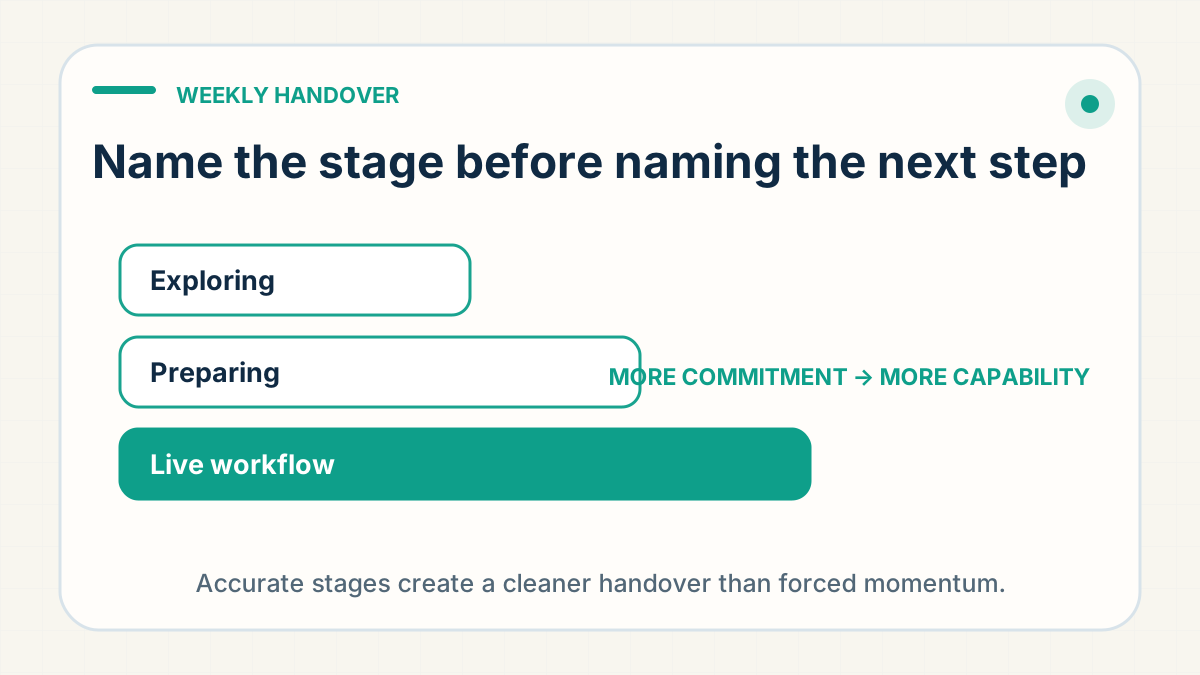
End the week with honest states: label an estimate as an estimate, measure a bundle before you sell it and agree the payment route before the first order.
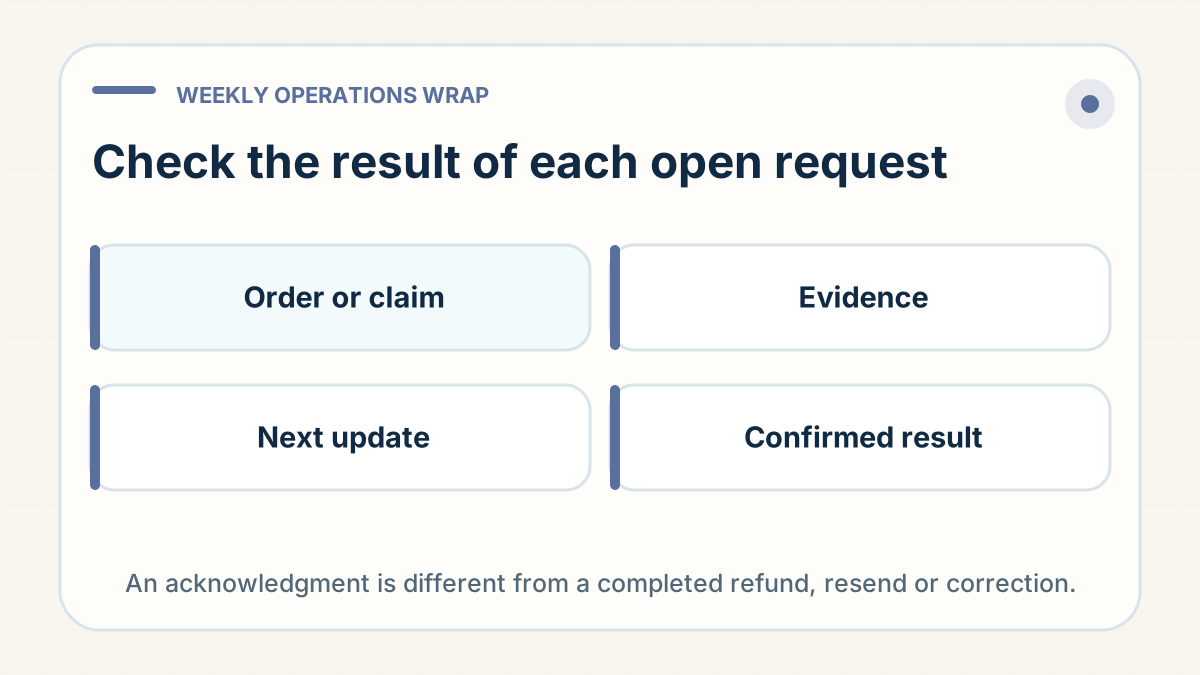
Keep one open-action register against the chats: request, owner, evidence, current state, next update, proposed remedy and closure proof for every promise.
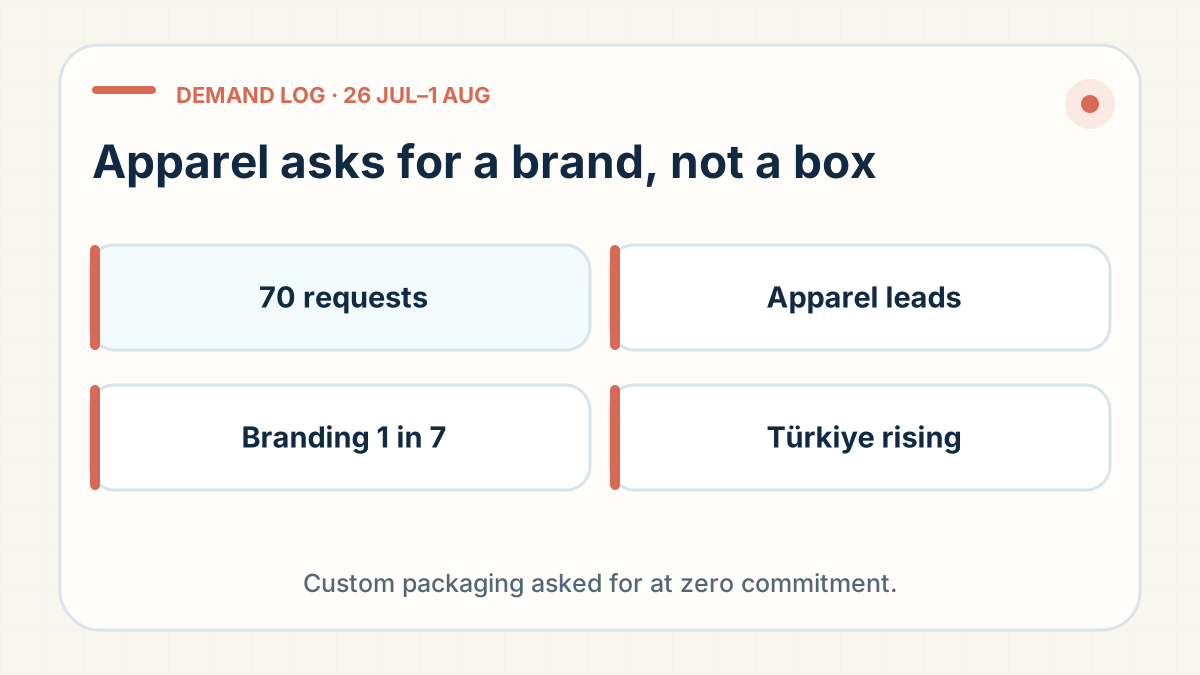
70 distinct supplier requests, apparel far in front, and a private-label or custom-packaging ask in one request out of seven.
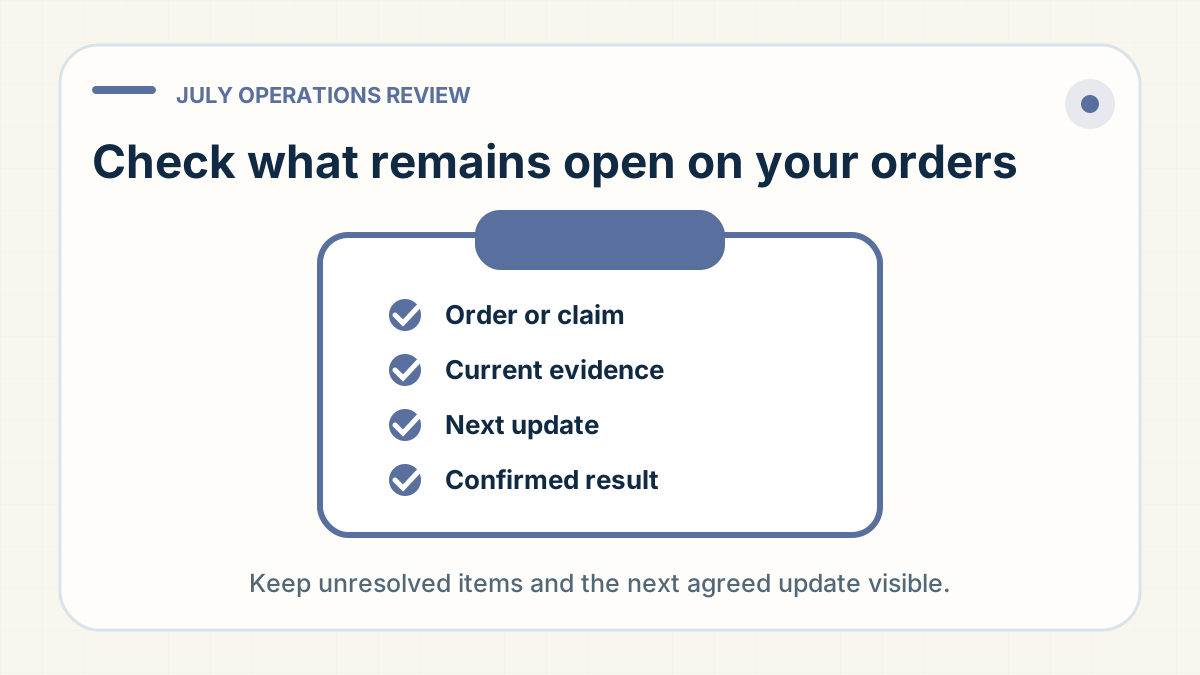
July in 31 daily notes and five weekly reviews, including dozens of likely new-seller conversations, live operational cases, lessons and dropshipper takeaways.
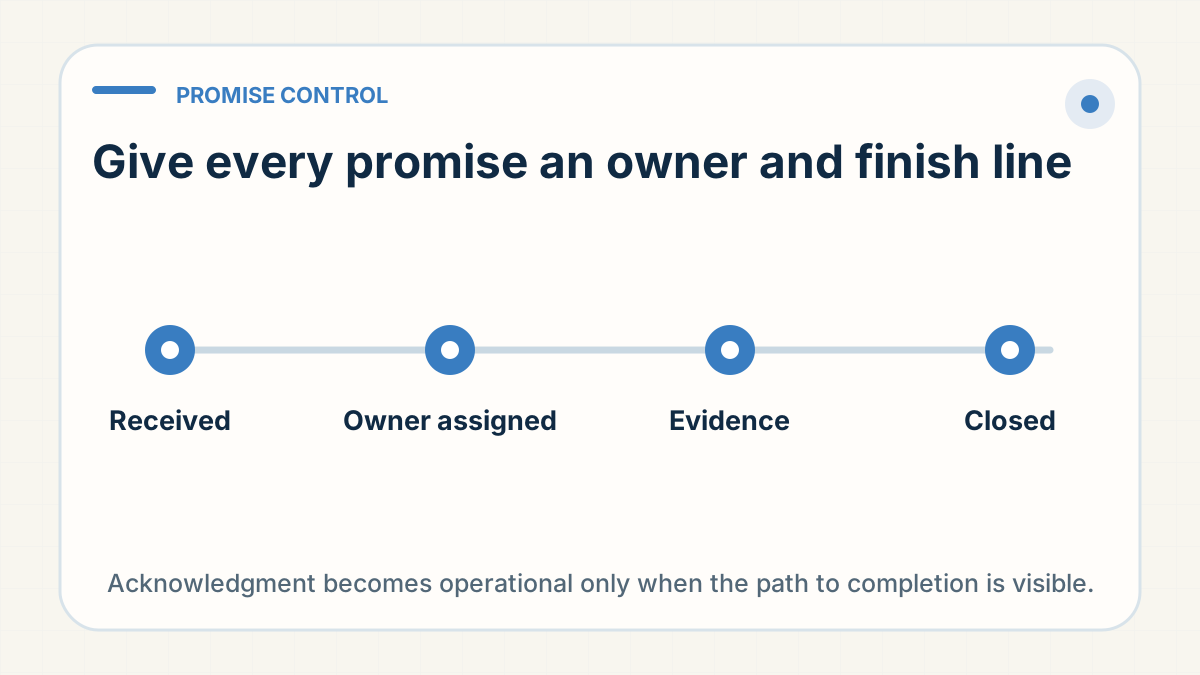
Give every sample request, quotation, tracking update and issue follow-up an owner, a visible next action and the evidence that will mark it complete.
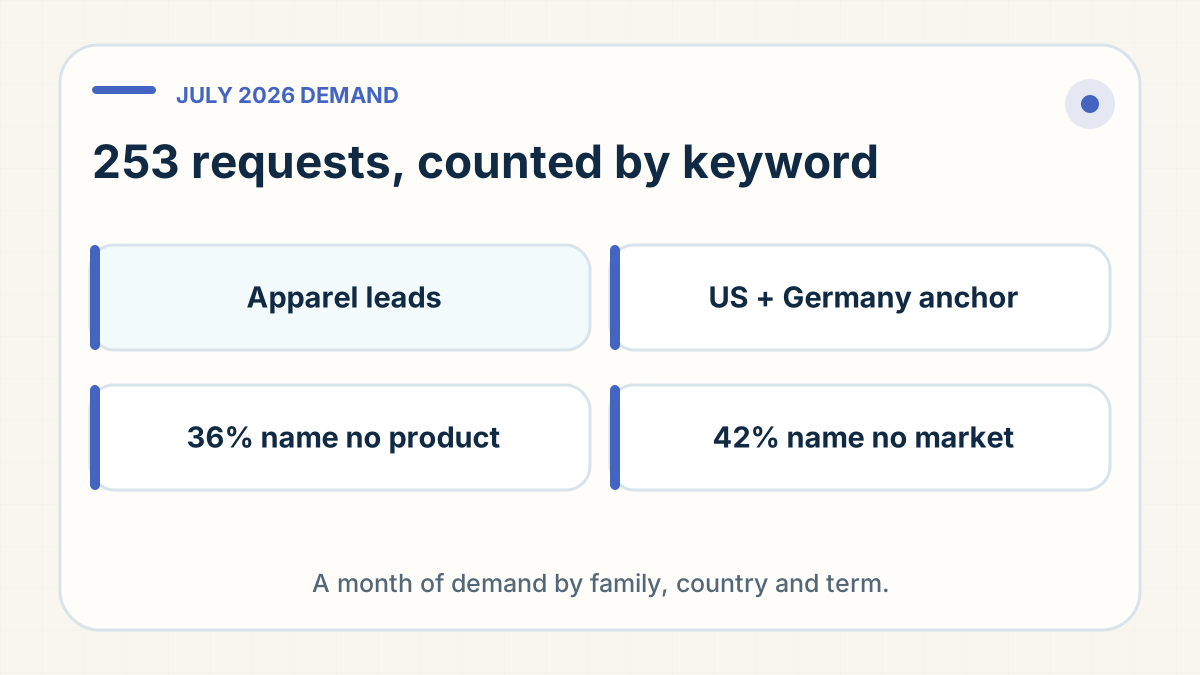
Public-community supplier demand for 7–31 July 2026 in proportions: the product families, destination markets and commercial terms buyers asked for.
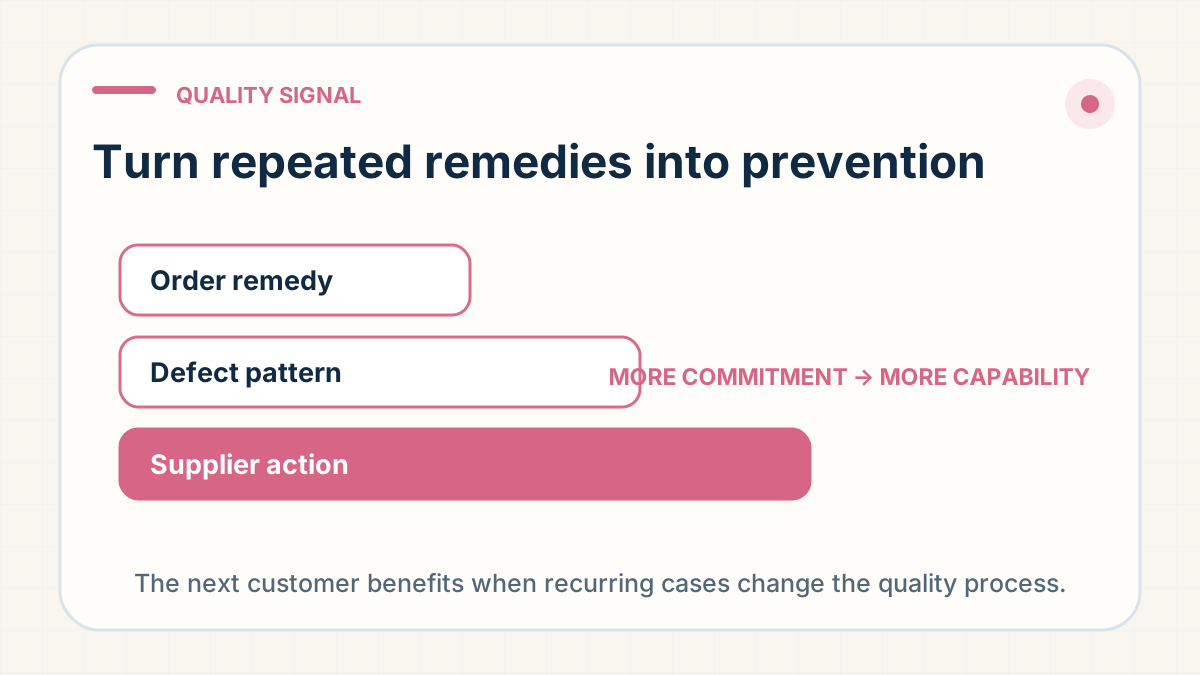
When refunds or replacements repeat, give the order its remedy, then check the batch, supplier and product system so the next customer avoids the same failure.
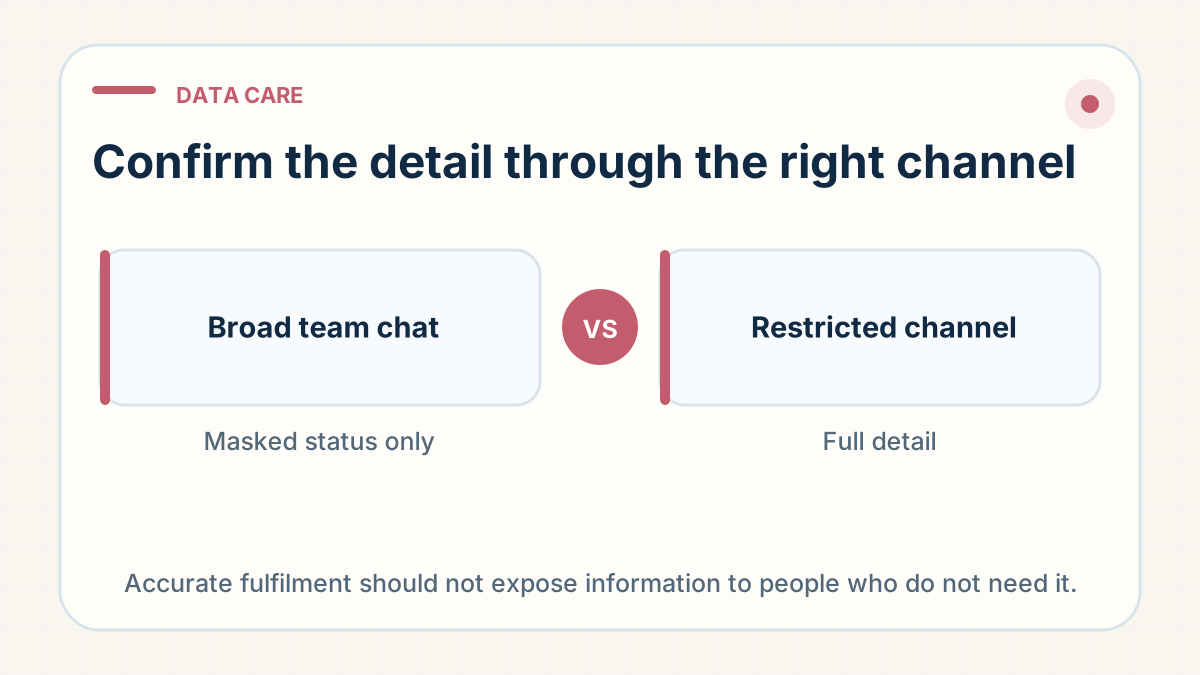
Confirm fulfilment details through the smallest channel that can do the job, and keep customer data and other sensitive details out of broad team chats.
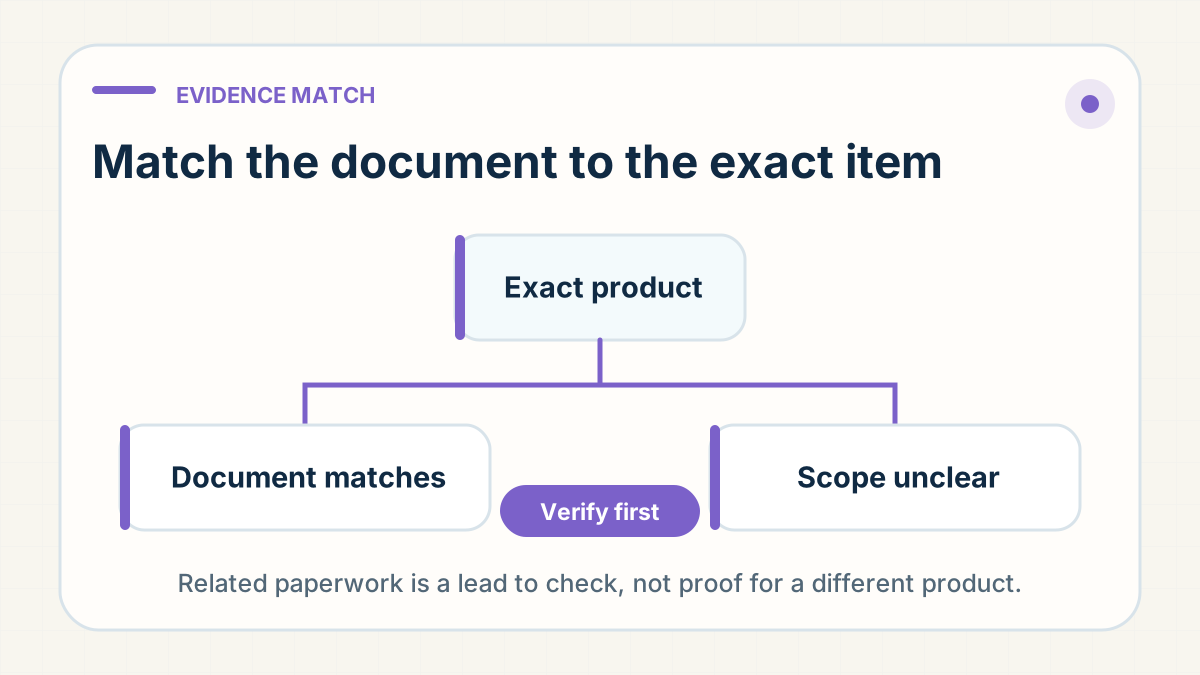
Match every certificate and supplier claim to the exact product, factory, version, label and destination, and mark what is verified and what is only claimed.
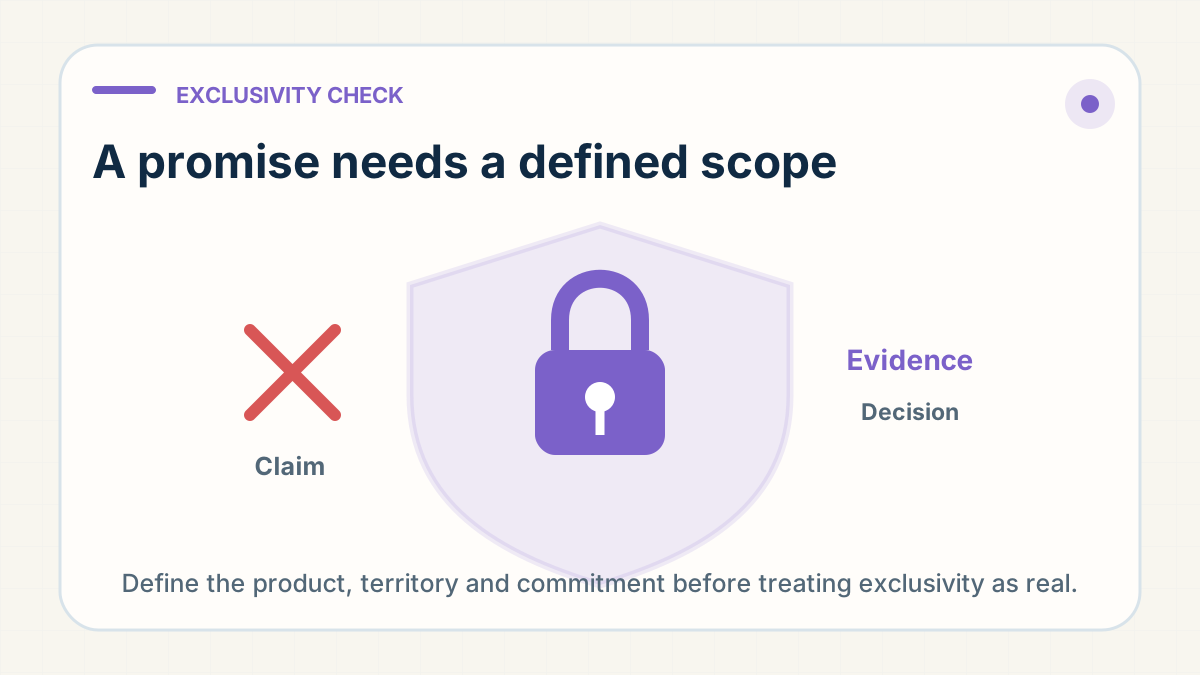
Do not assume a fulfilment partner can grant product exclusivity. Confidentiality is different: we never reveal your products, store or customer details to other clients, and we sign an NDA on request. If exclusivity matters, define the scope, evidence and written commitment before work begins.
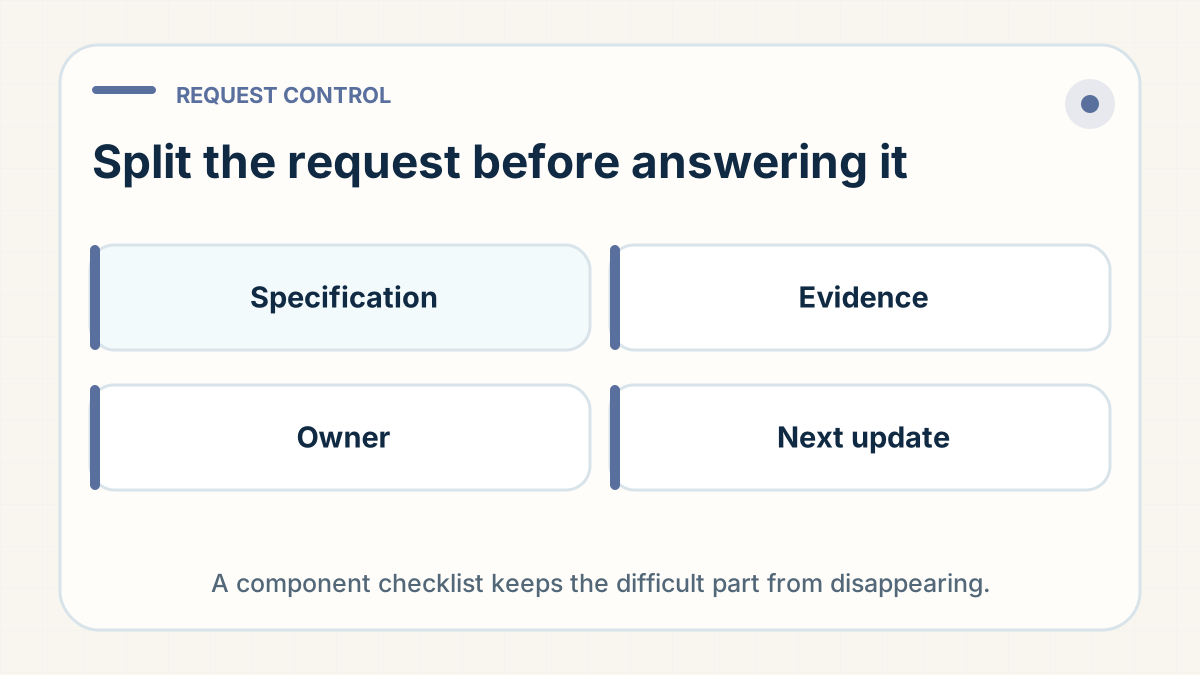
Break a complex request into a component checklist, so the hard parts get a visible next action instead of vanishing behind an easy partial reply.
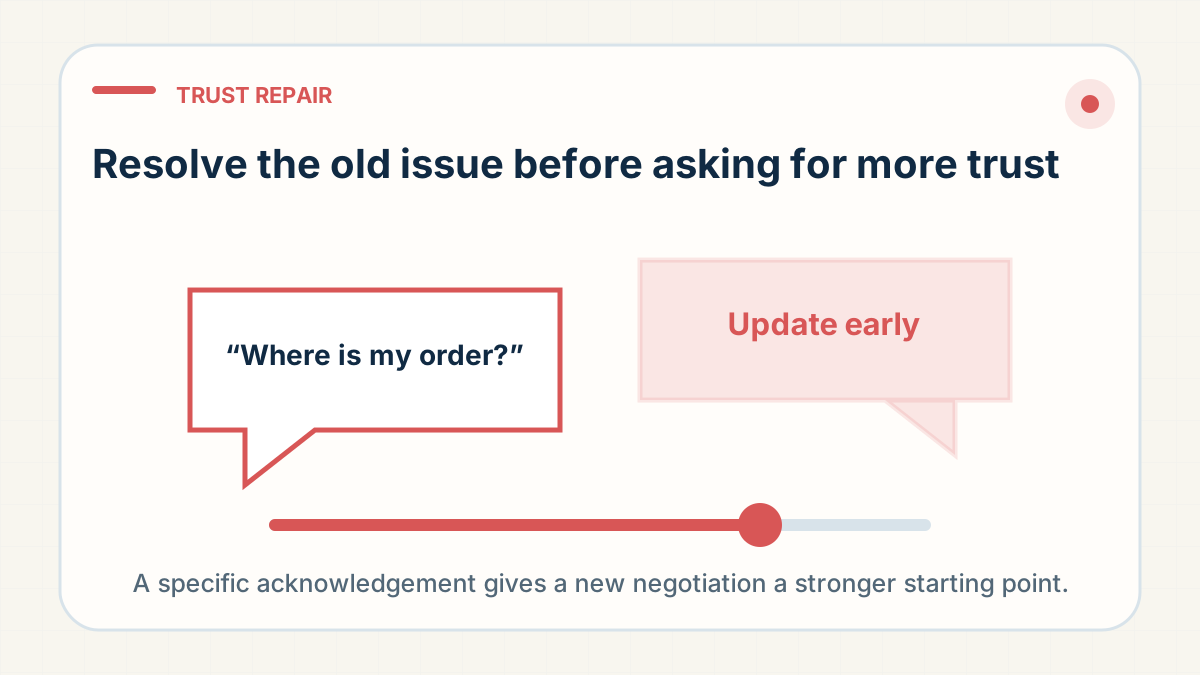
An old, unresolved mistake has a way of resurfacing right when you're asking for more trust, not less. Here's how we think about handling it when it does.
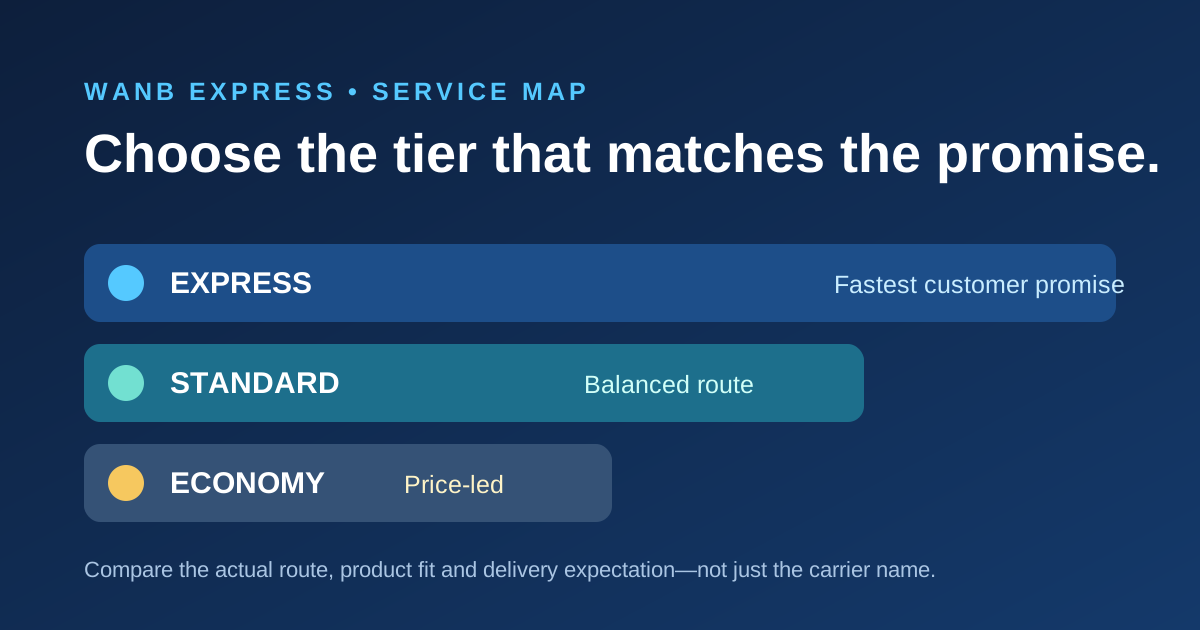
WANB Express runs several distinct product lines, fast, standard, and economy, each with different speeds, costs, and rules. Here's what actually separates them.
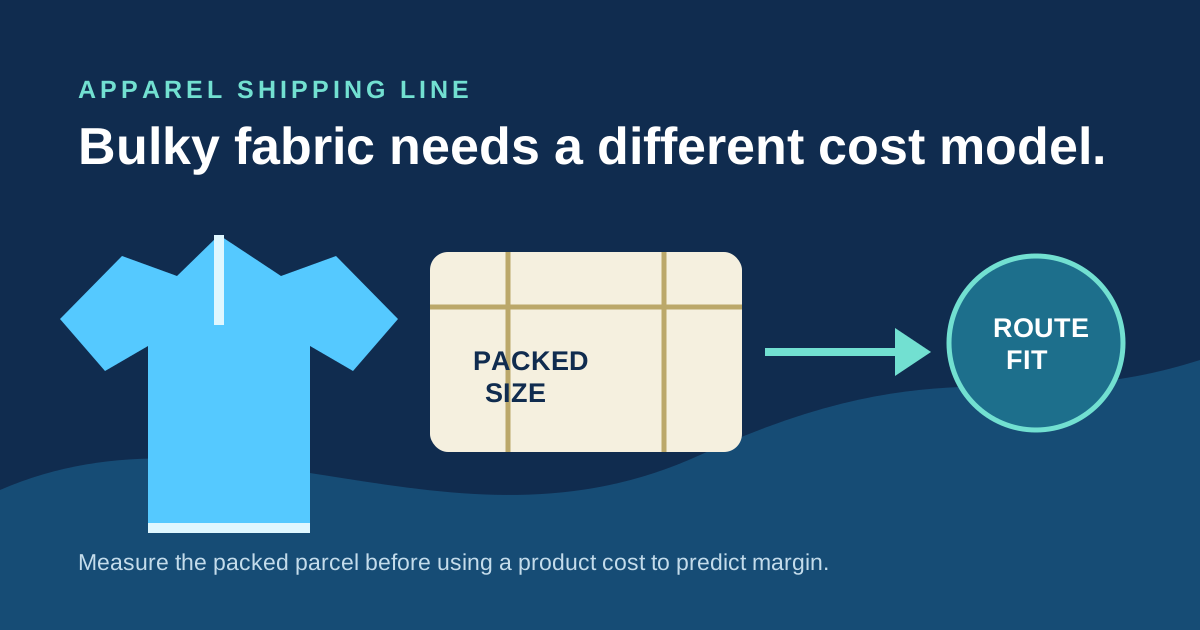
Clothing is bulky but light, which normally means paying for space you're not using. A dedicated apparel shipping line that skips volumetric weight changes that math.
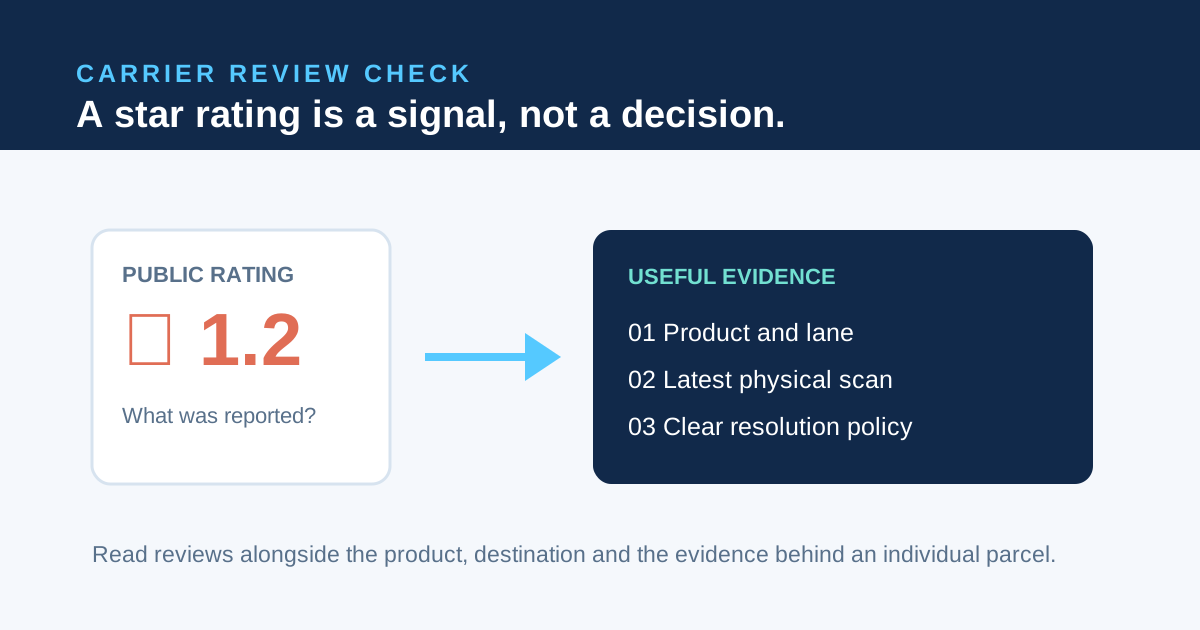
WANB Express is an operating logistics provider. Reviews can reveal route and custody problems, but no brand-wide rating proves whether a specific service fits your parcel.
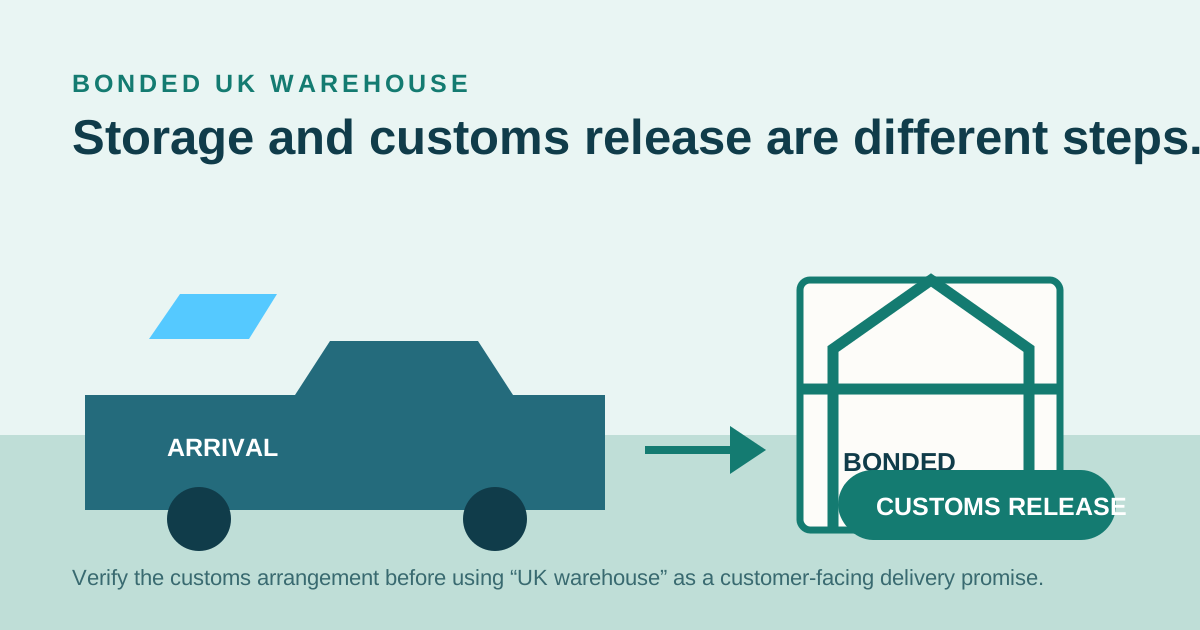
A bonded warehouse status isn't marketing language, it's a real customs designation you can actually verify. Here's what it means and why it's worth checking for.
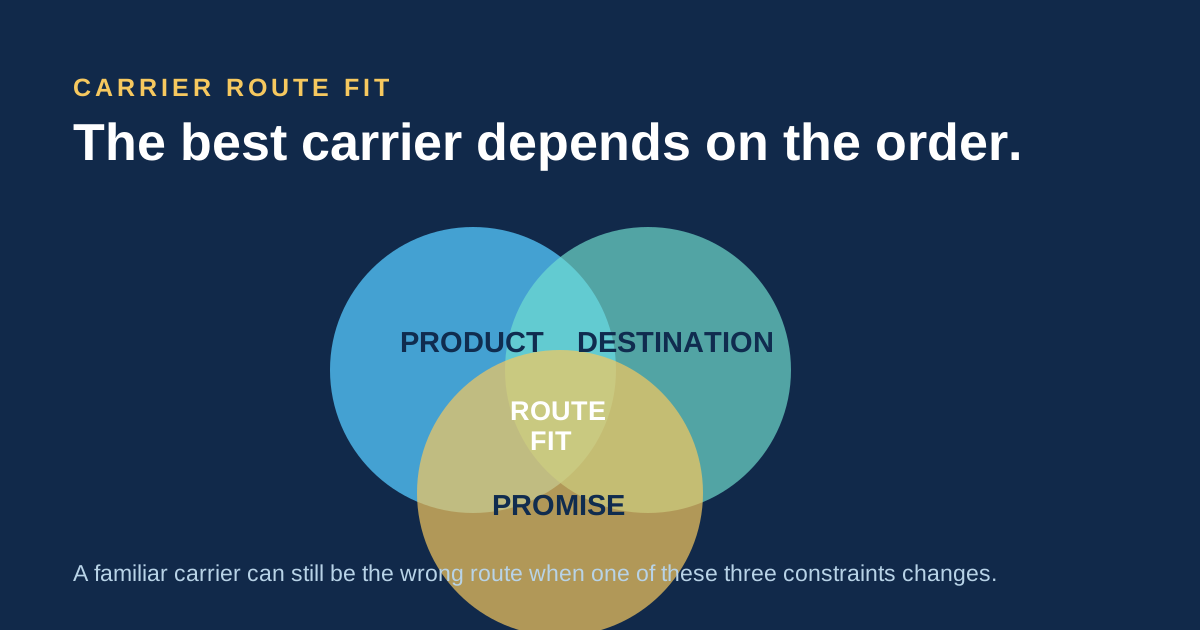
WANB Express is a genuinely good fit for some shipments and the wrong choice for others. Here's how we actually decide, rather than defaulting to one carrier for everything.
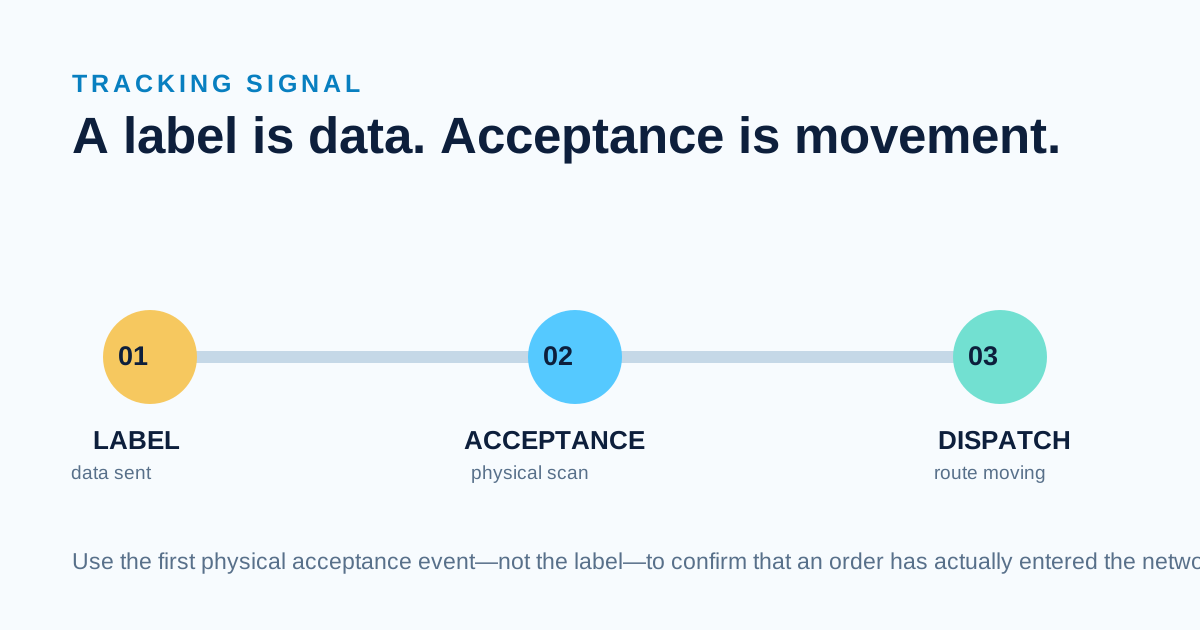
“Label created” confirms that shipment data exists. Look for carrier acceptance or a physical movement scan before describing the parcel as shipped.
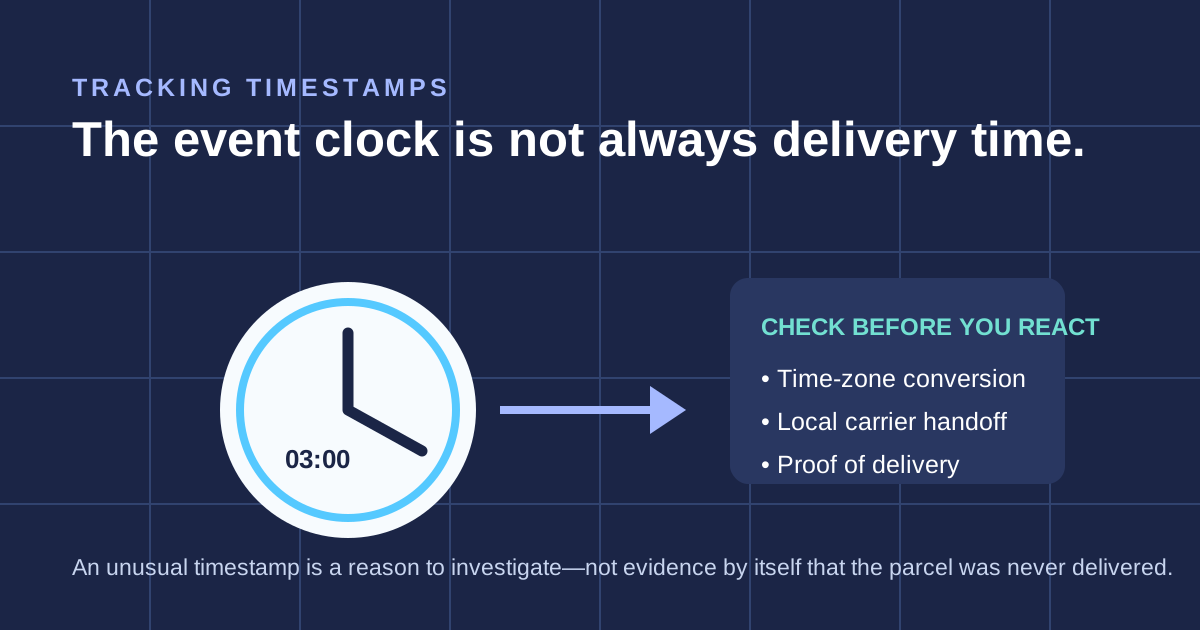
A tracking page says your parcel was delivered at 3am, or on a Sunday, or on a public holiday. Check the local-carrier event and recipient confirmation. Here's what's actually happening.
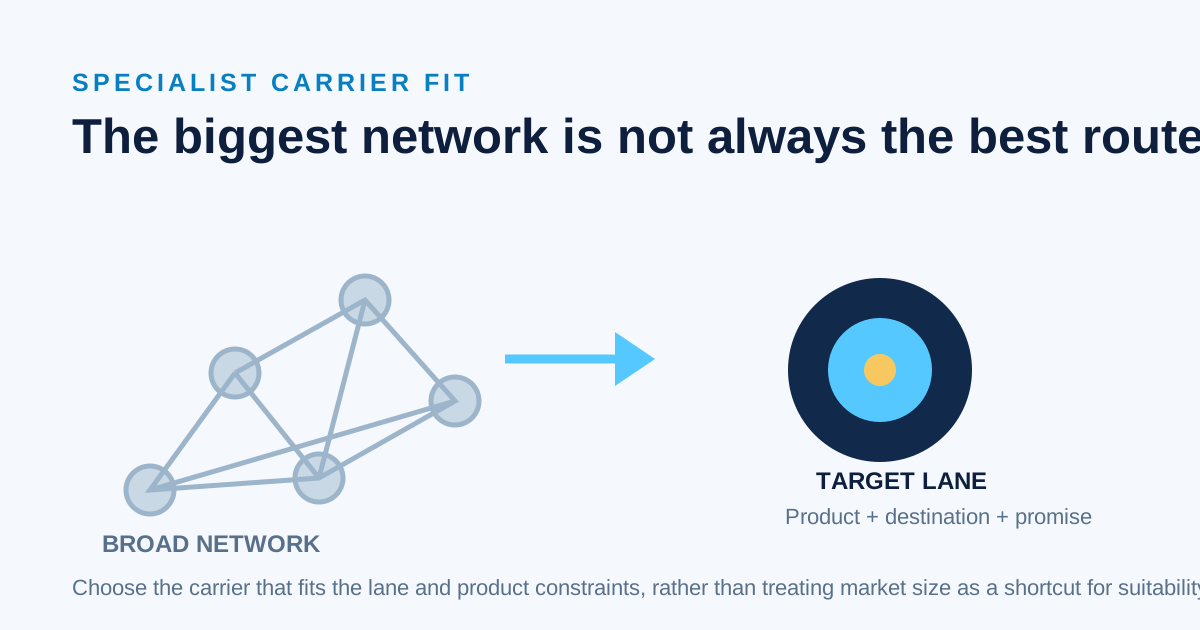
The biggest cross-border carriers aren't automatically the right choice for every shipment. Here's where a smaller, more specialized carrier like WANB Express can actually beat the bigger names.
Latin America must be tested country by country. Use this framework before committing an economy cross-border shipping route.
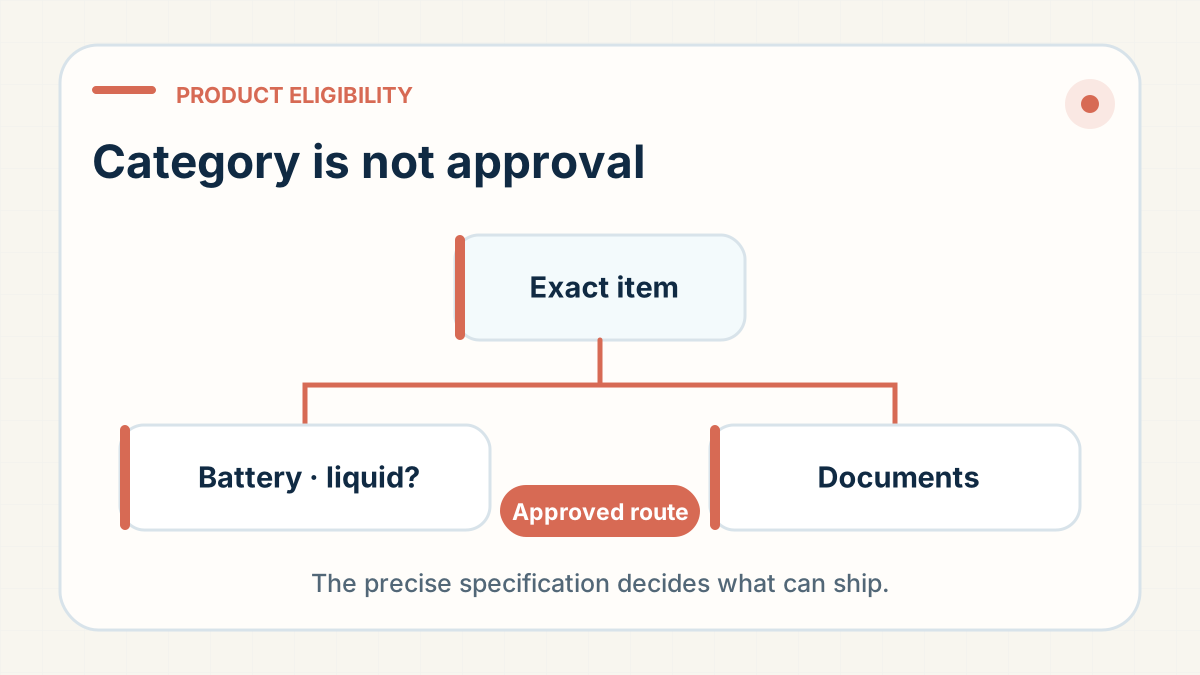
Special-goods lines are not a shortcut. Use this practical checklist before offering batteries, cosmetics, liquids, magnets or other sensitive products across borders.
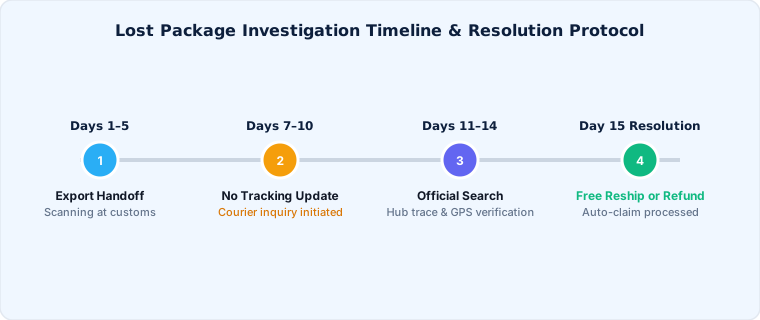
Sunyou is a real cross-border logistics provider, but economy parcels can have sparse tracking and long handoffs. Here is how sellers should separate a slow parcel from a genuine scam risk.
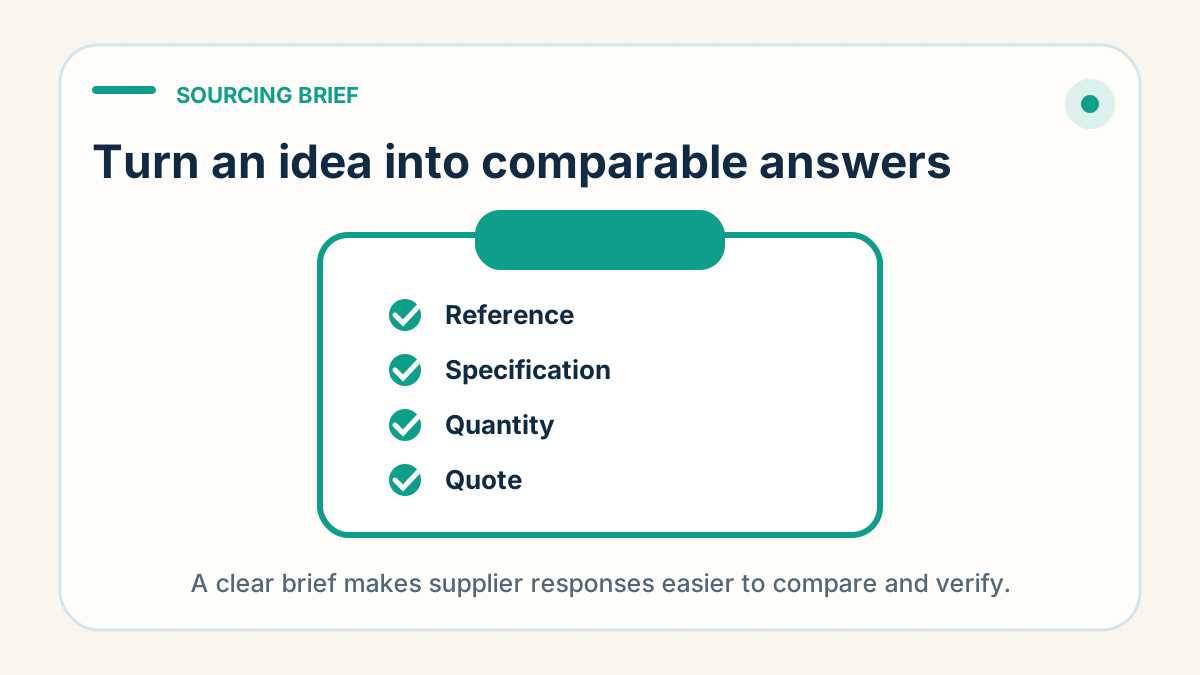
A practical sourcing-brief template that turns a product idea into comparable supplier answers, verifiable samples and a clear next decision.
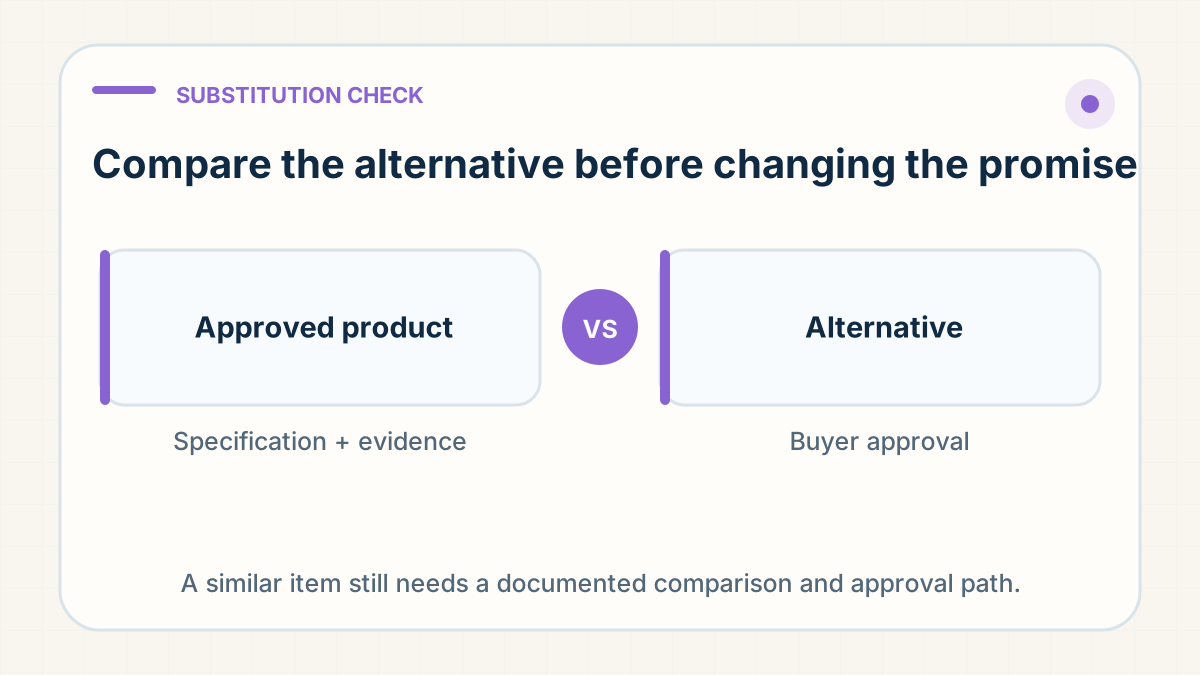
A practical process for evaluating a similar supplier alternative without quietly changing the product your customer approved or bought.
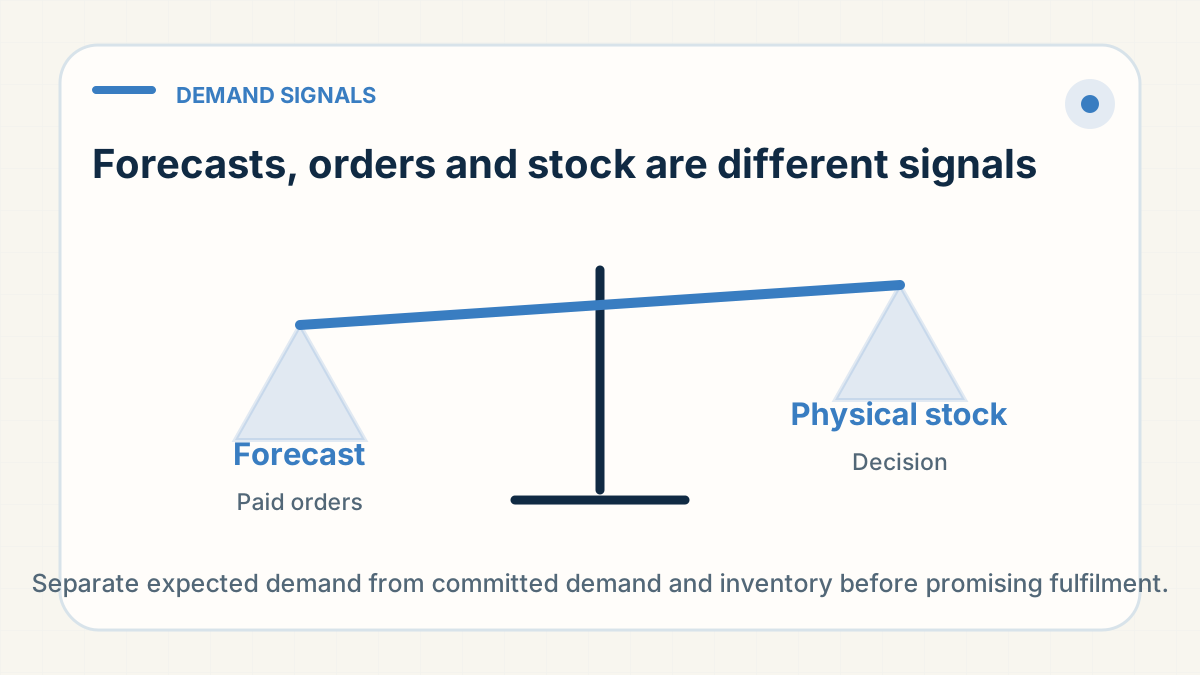
Before you fund stock or promise dispatch, separate what may sell, what customers have paid for and what the warehouse can actually release.
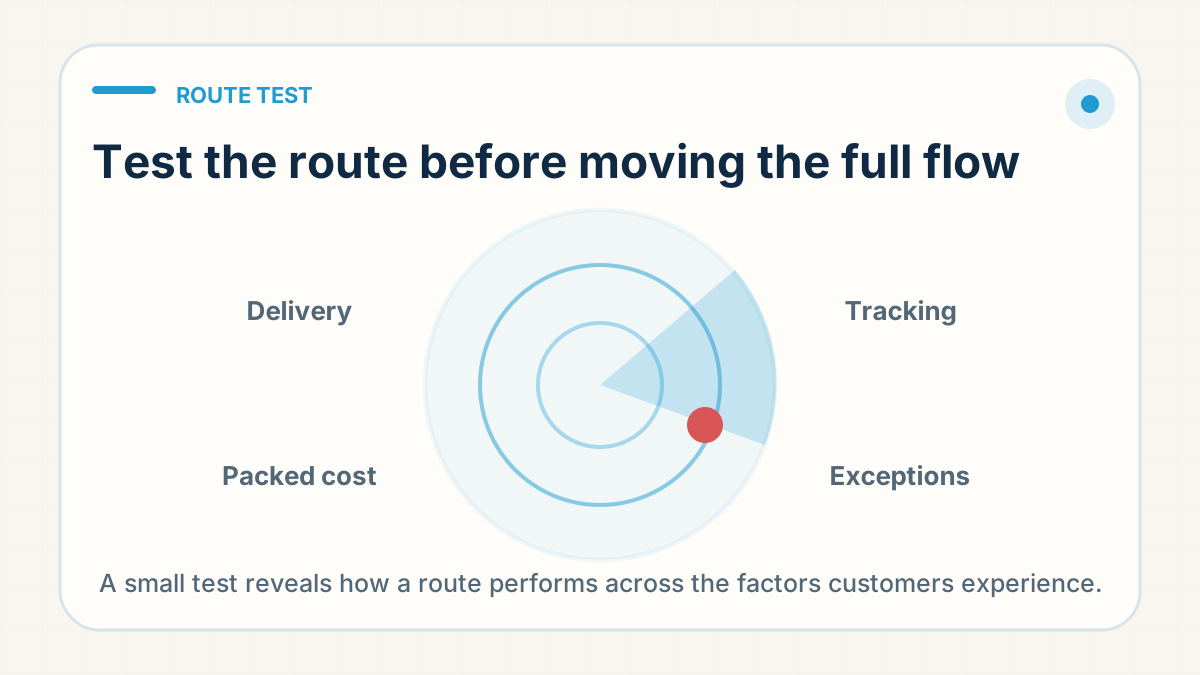
A route-testing scorecard for comparing delivery, tracking, exceptions and packed cost before moving a full order flow to a new service.
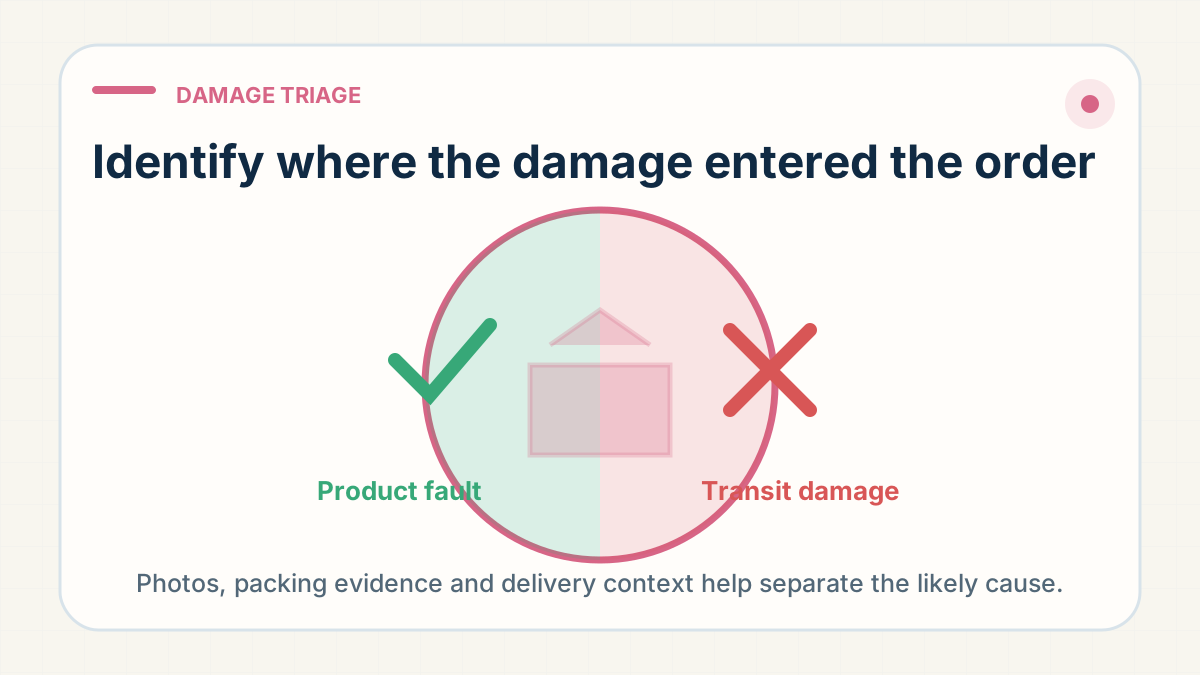
A practical evidence and decision framework for separating product faults, packing failures, transit damage and setup issues.
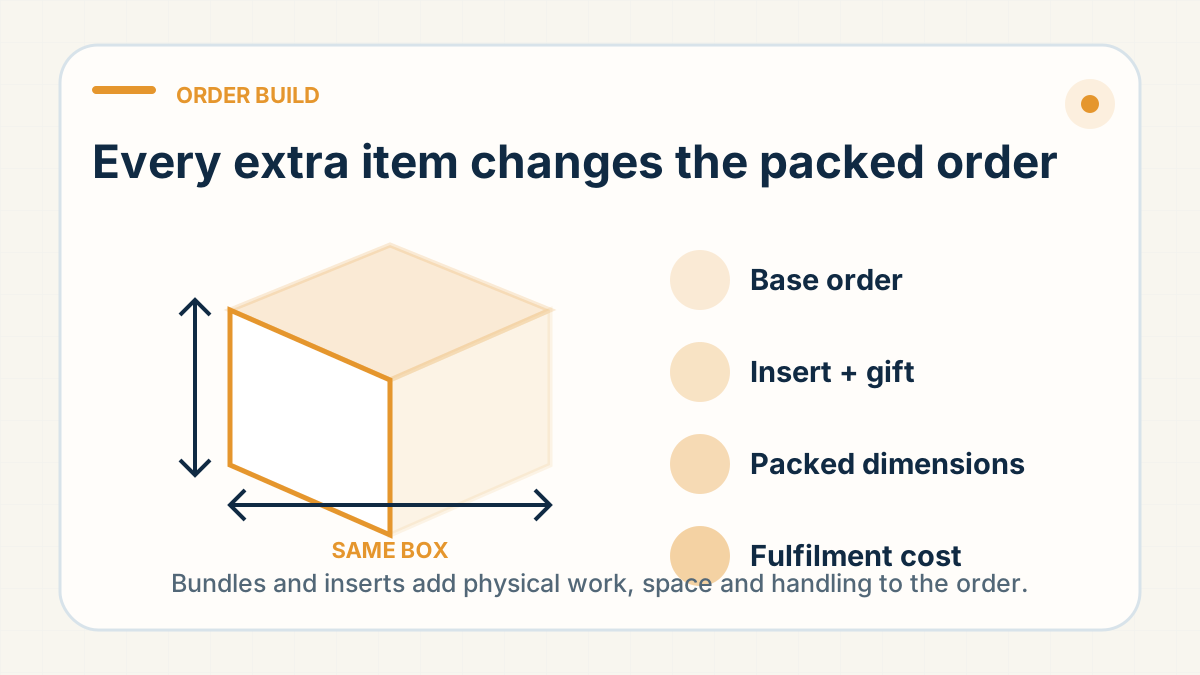
A practical landed-cost and operations checklist for bundles, inserts, gifts and add-ons that look free on the storefront but are physical work in fulfilment.
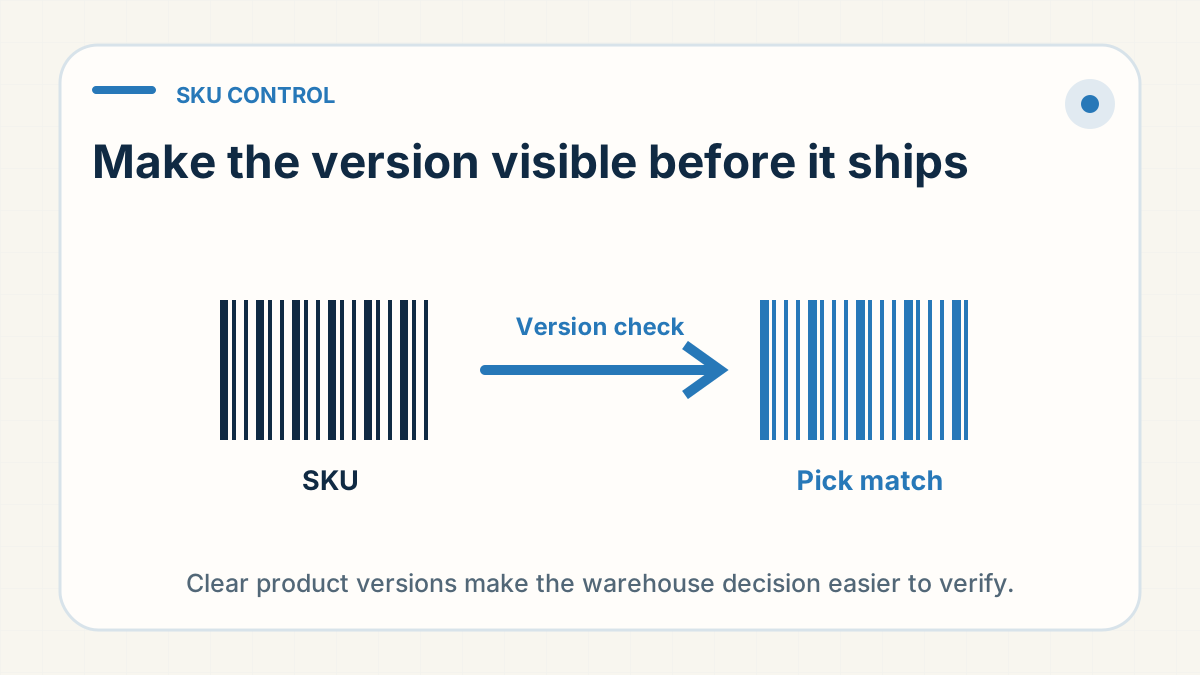
A practical system for keeping supplier names, store variants, warehouse stock and approved product versions aligned as a catalogue grows.
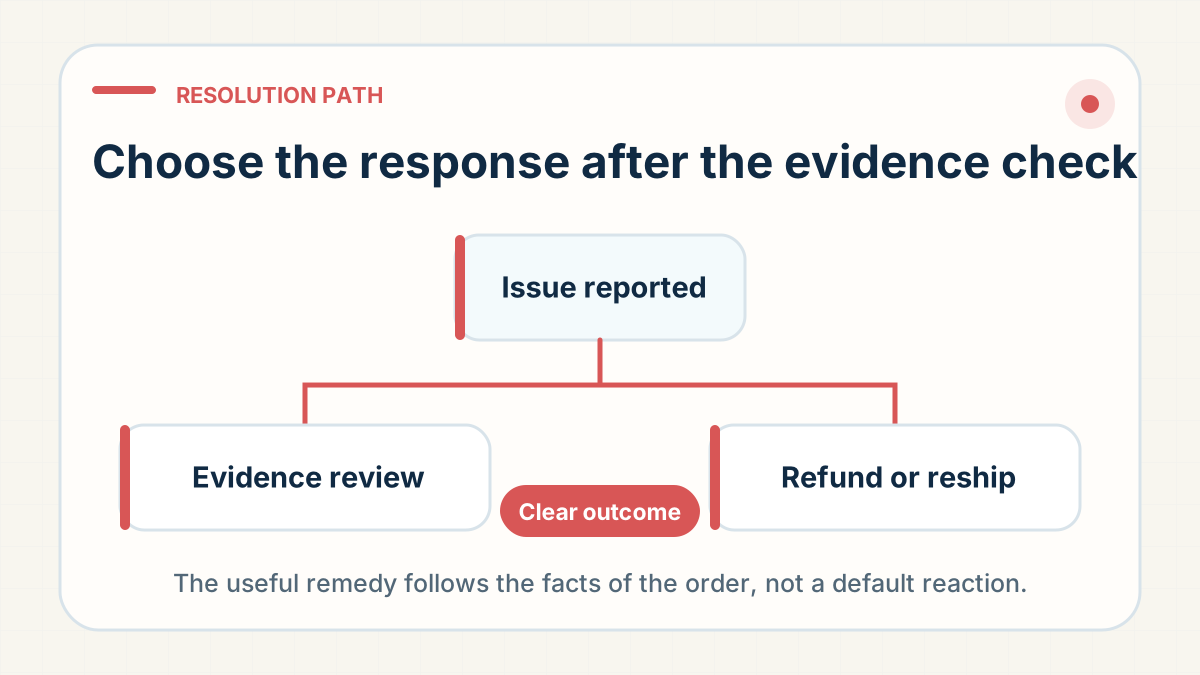
A customer-case decision framework that balances speed, evidence, product risk, repeatability and the seller’s applicable obligations.
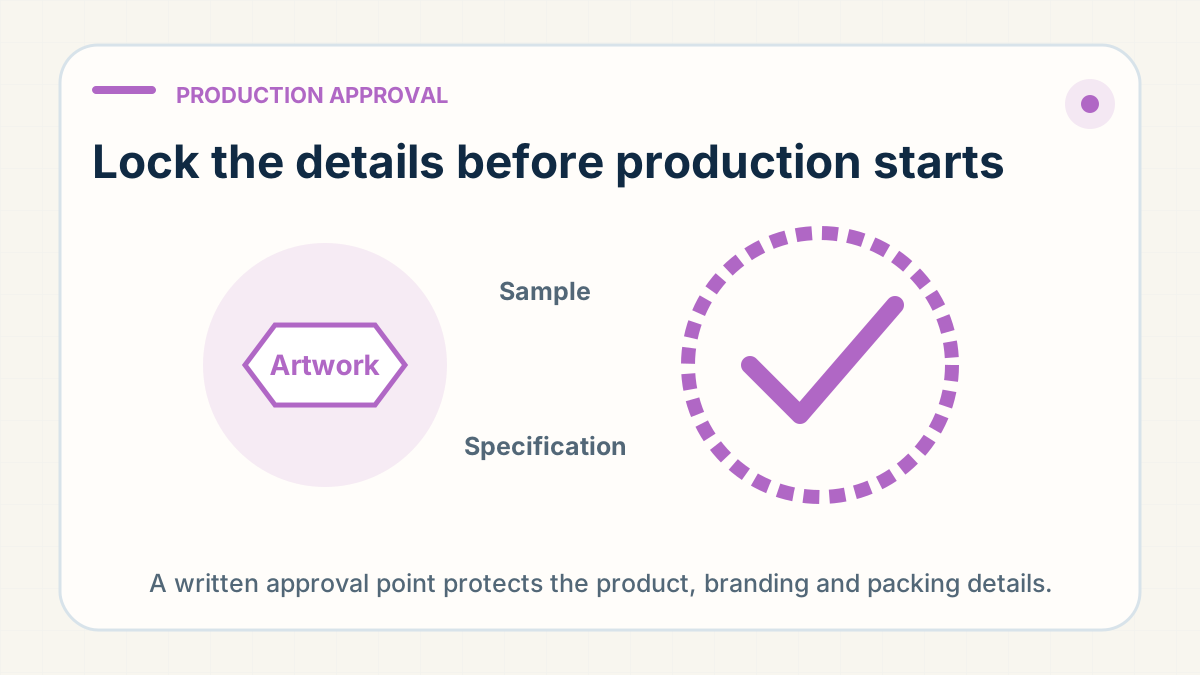
A release checklist for logos, packaging, labels, product versions, samples and production evidence before a private-label order begins.
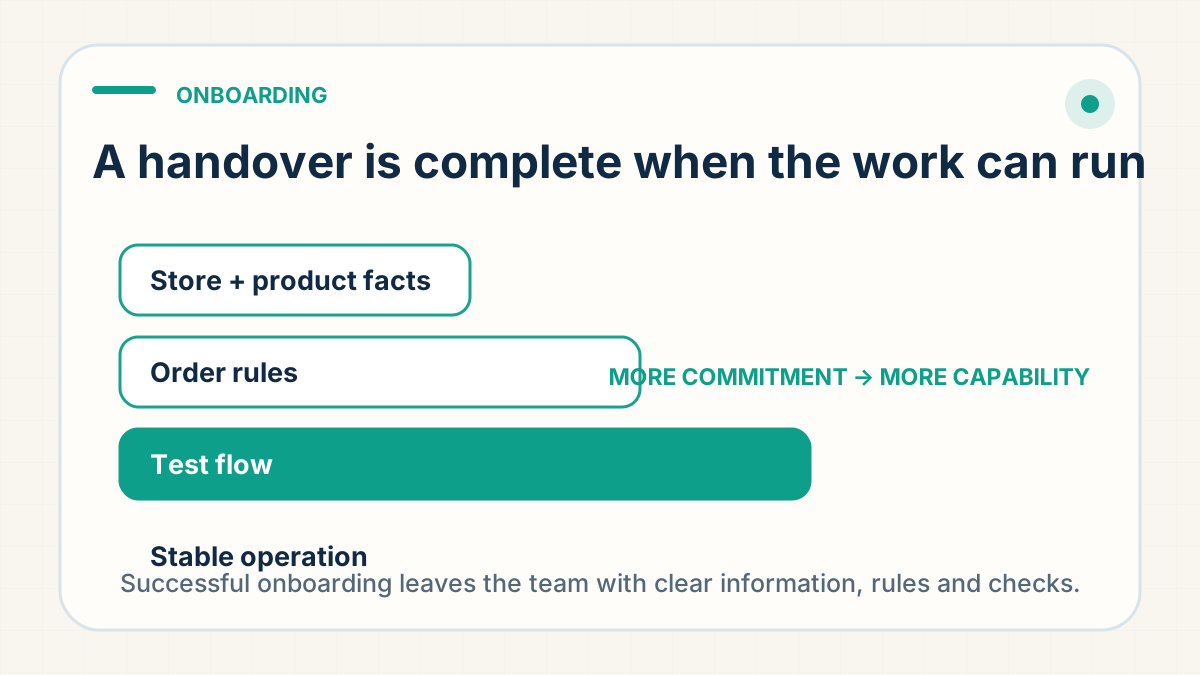
A milestone-based definition of onboarding that separates an enquiry, call or forecast from a fulfilment workflow that can process a real order safely.
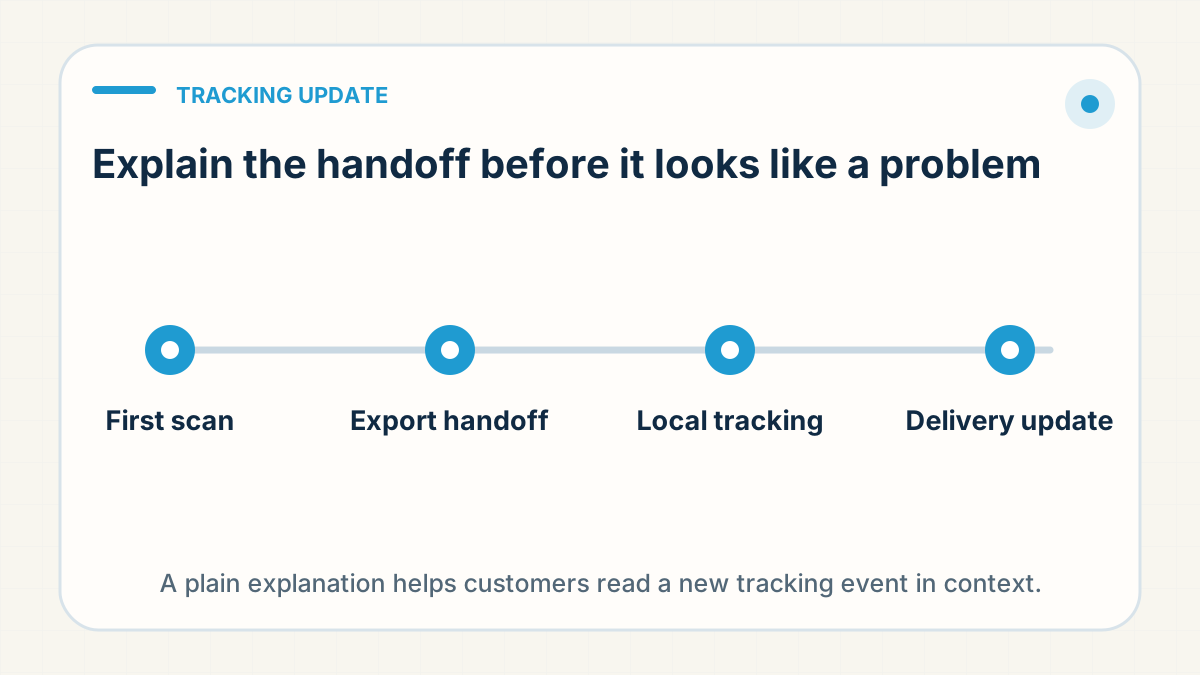
A customer-communication framework for label creation, origin scans, cross-border silence, local-carrier handoffs and delivery exceptions.
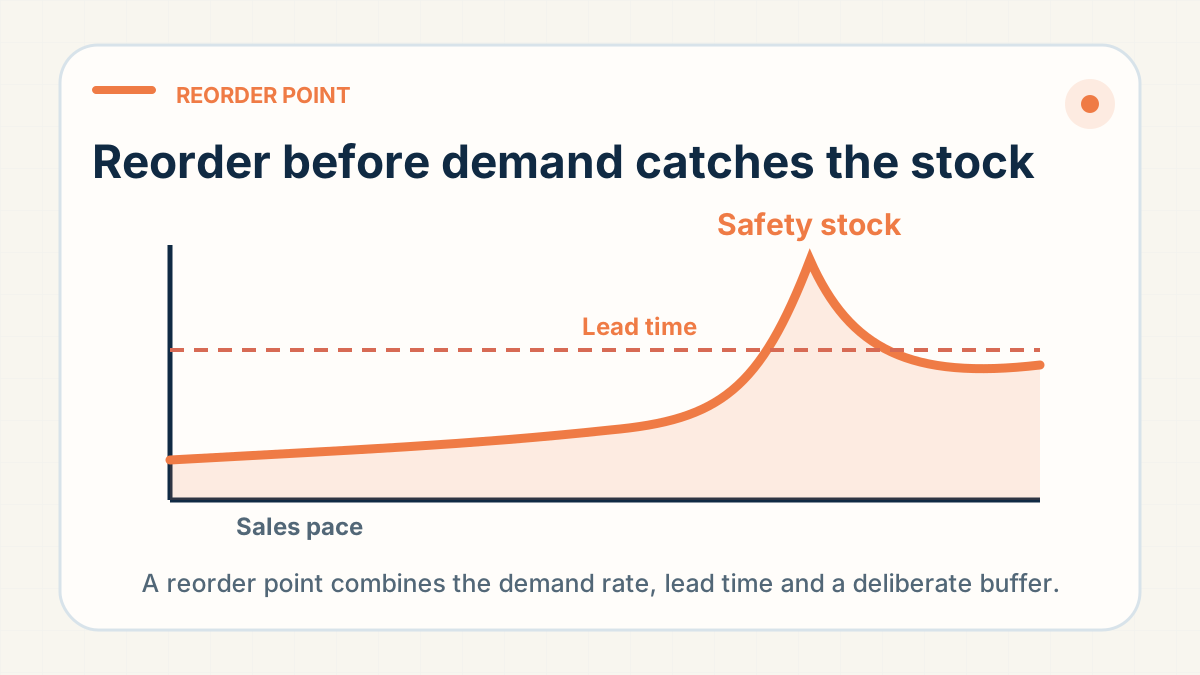
A simple SKU-level reorder calculation that includes production, inbound receiving, safety stock and inventory states instead of relying on a low-stock guess.
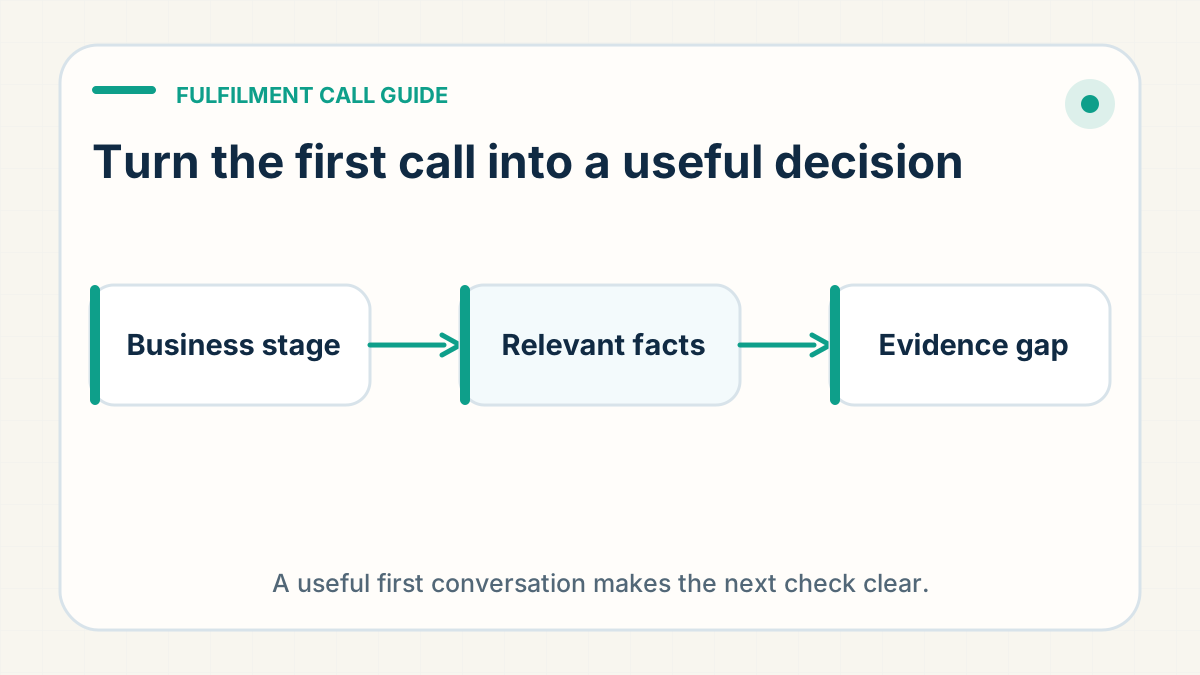
A practical guide to preparing for a first sourcing or fulfilment conversation: the questions that make a quote, route and next step genuinely useful.
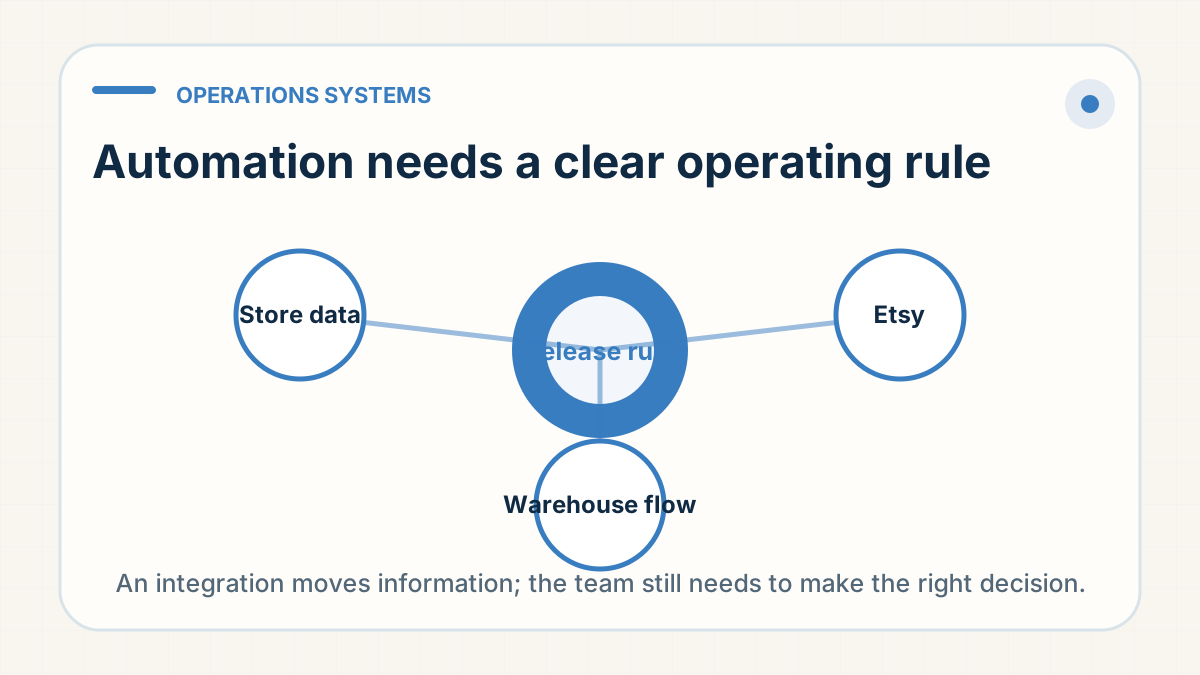
Store integrations can reduce repeated order handling, but they do not replace the operational decisions that make fulfilment accurate and customer communication realistic.
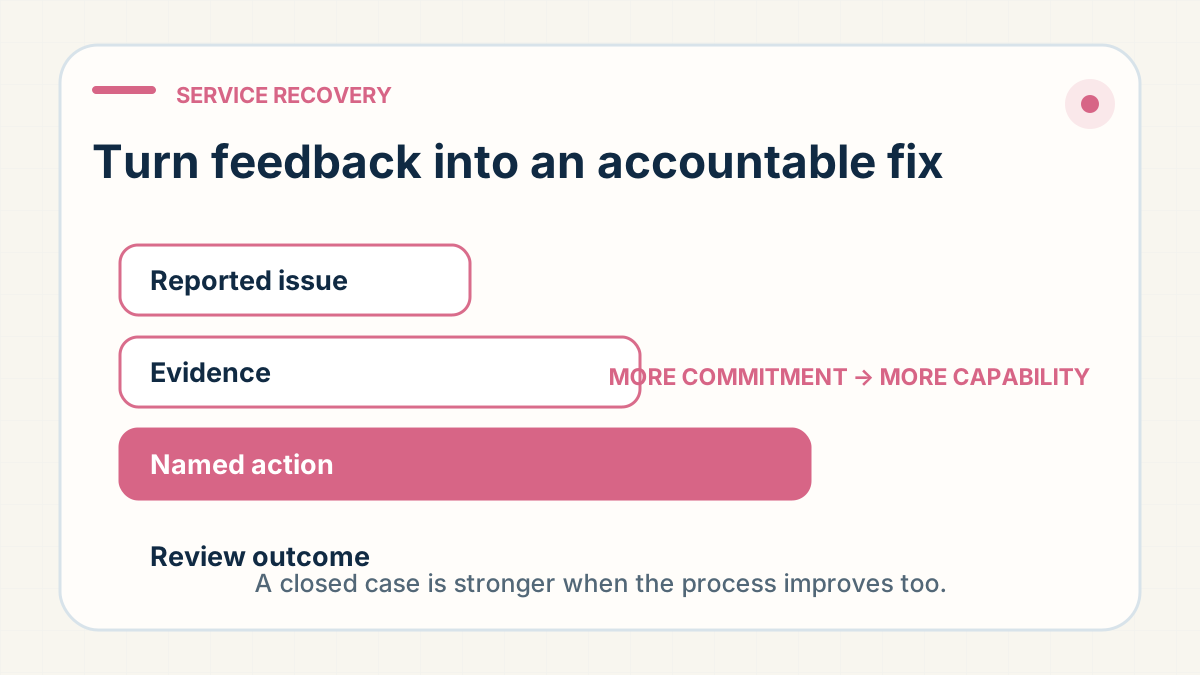
One refund closes one ticket. It does not tell you whether the next order will fail the same way. Classify the evidence, fix the right layer and check whether the change held.
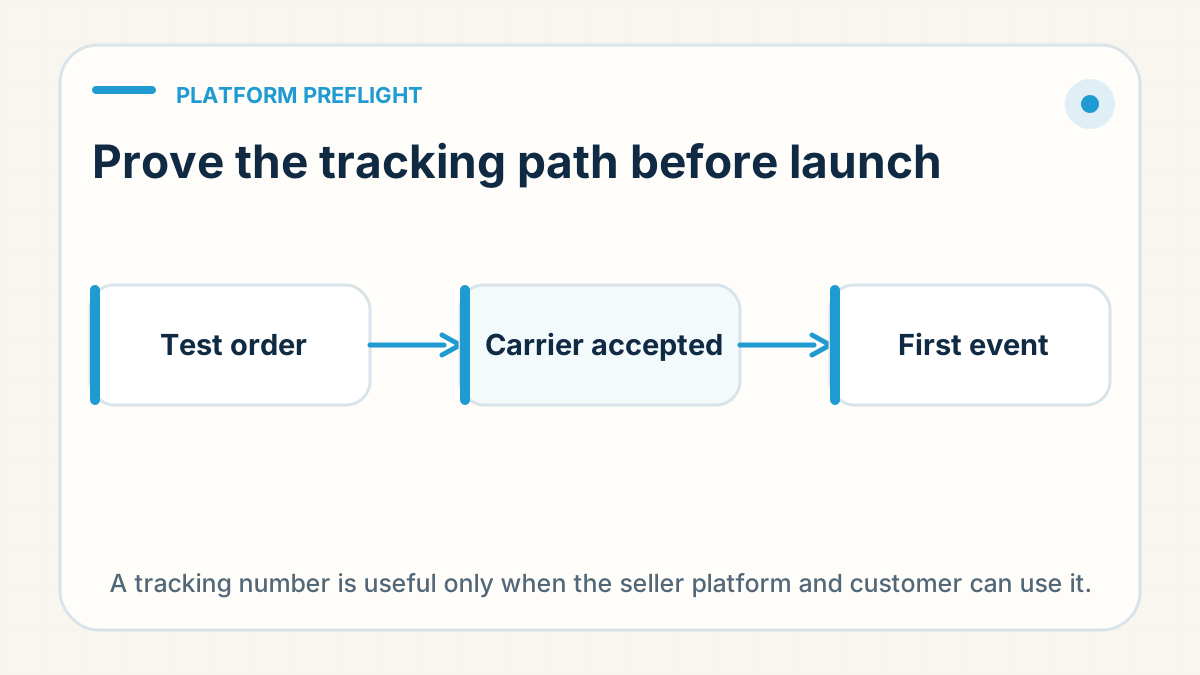
Before the first live order, run one controlled test on your platform: marketplace compatibility, address visibility and tracking where the customer sees it.
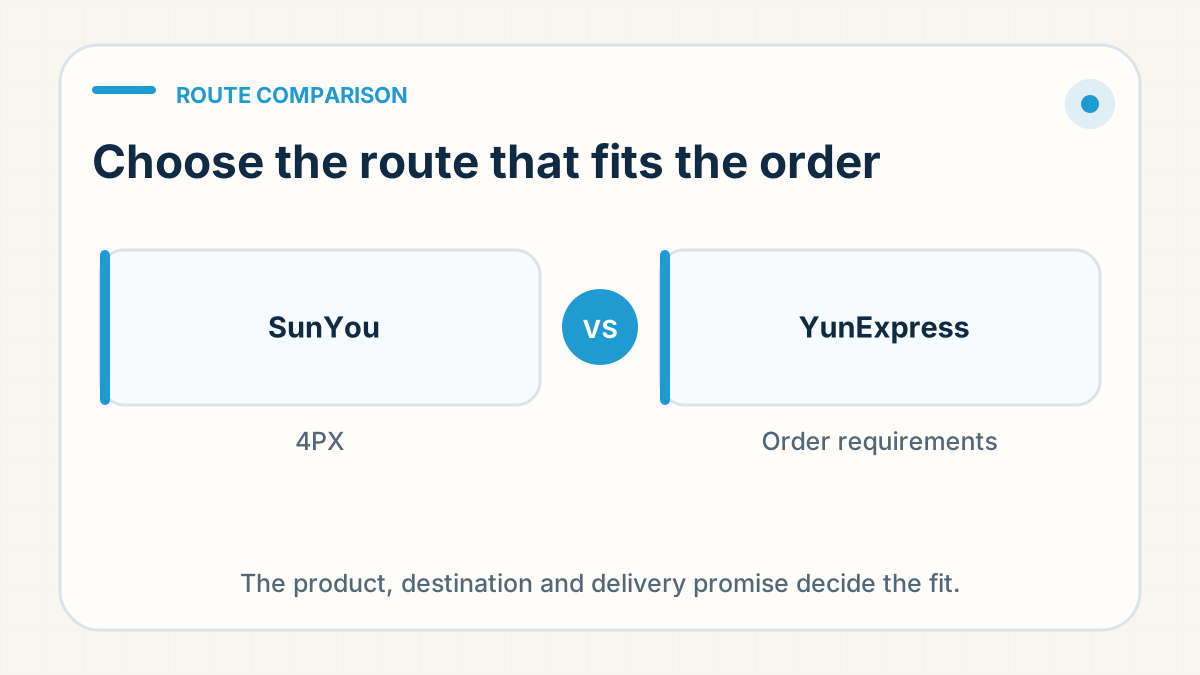
Sunyou, 4PX and YunExpress are not interchangeable labels. Compare them by product risk, tracking expectations, lane performance and the promise you make to your customer.
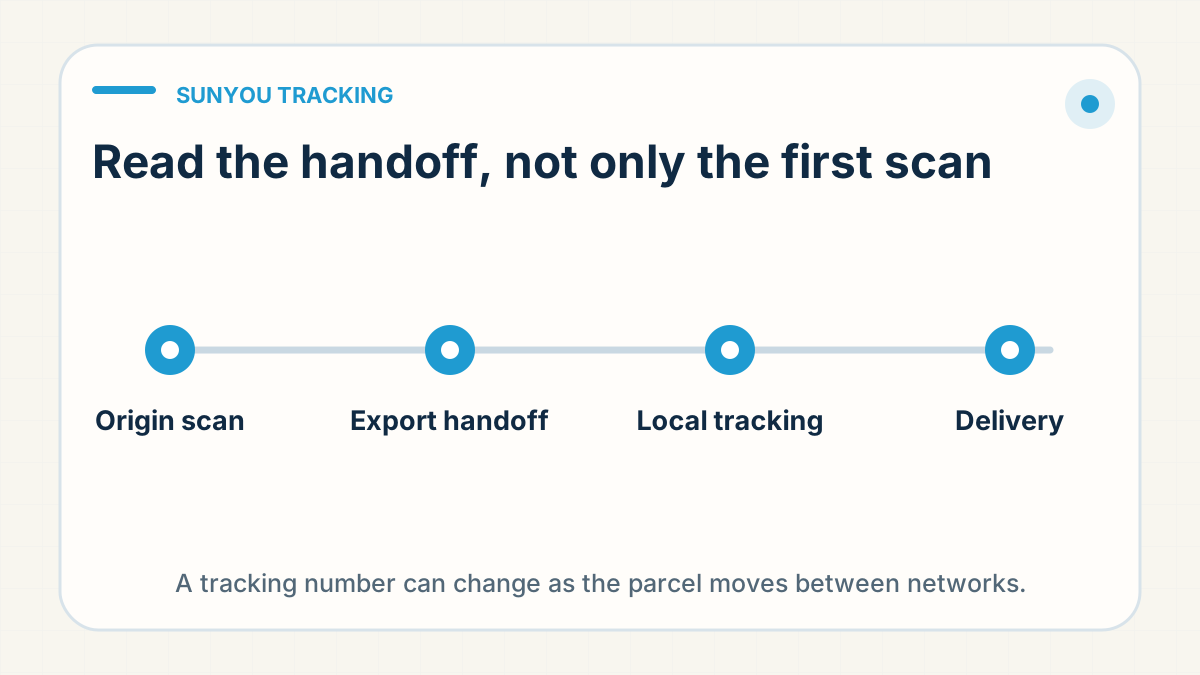
A seller-side guide to Sunyou tracking: what the common quiet period means, when to contact the delivery partner, and how to prevent a tracking question becoming a chargeback.
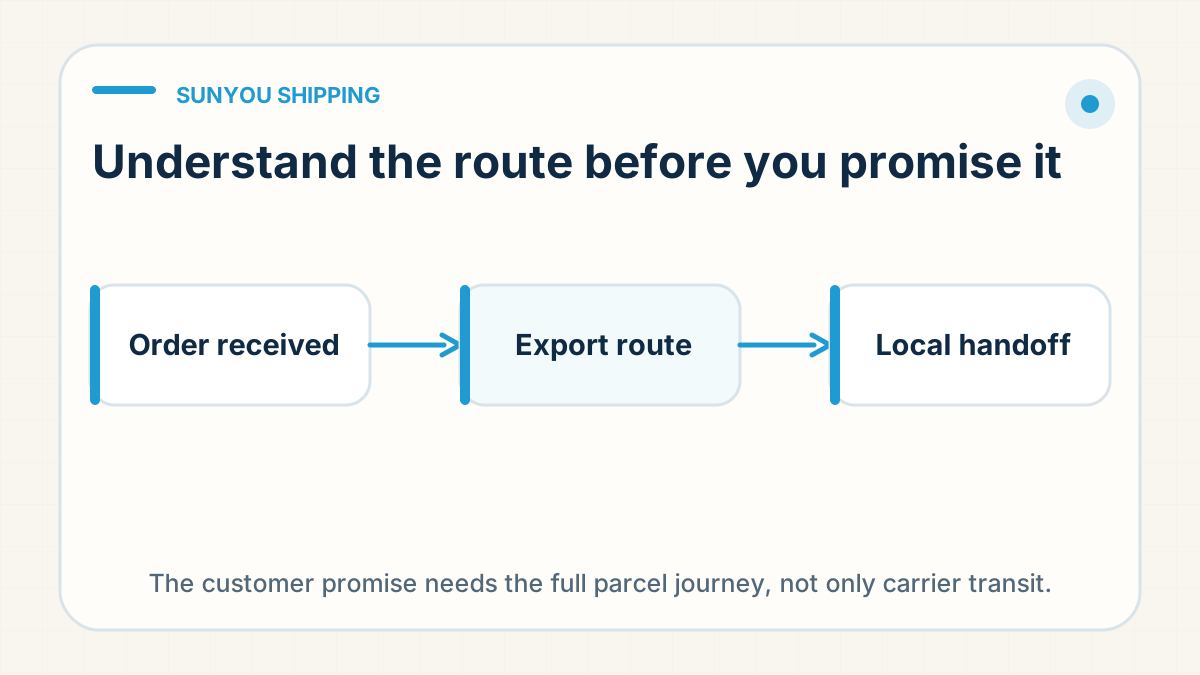
Use this overview to understand where Sunyou sits in a cross-border fulfilment chain and which route-fit questions to ask before moving to the separate tracking, eligibility or carrier-comparison guides.
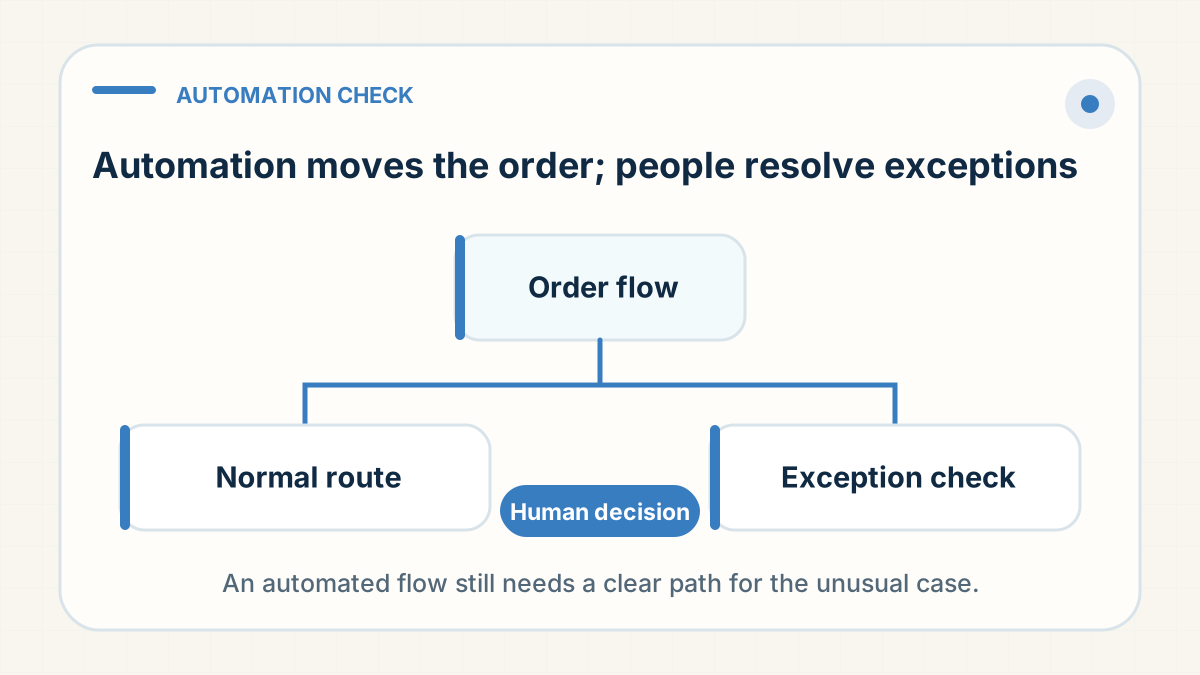
Let automation move routine order data, and send unclear tracking or a product report to a person with the last confirmed fact, an owner and a review point.
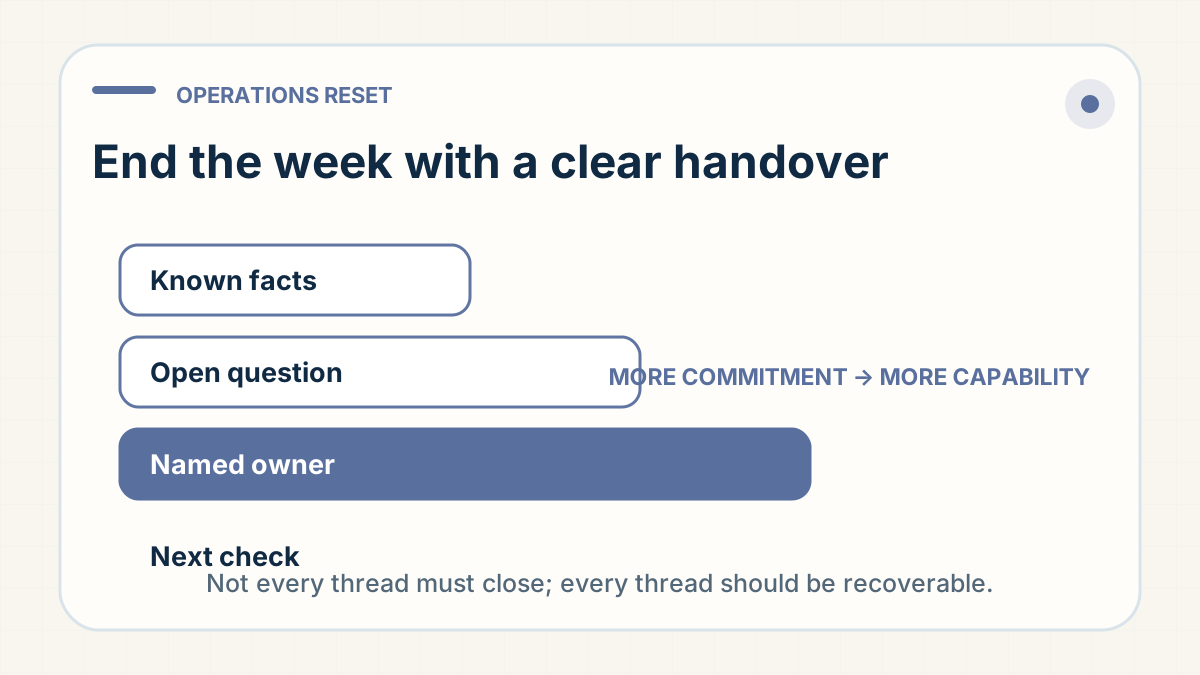
The last useful task of a week is not answering every message; it is making the remaining open questions explicit, owned and recoverable.
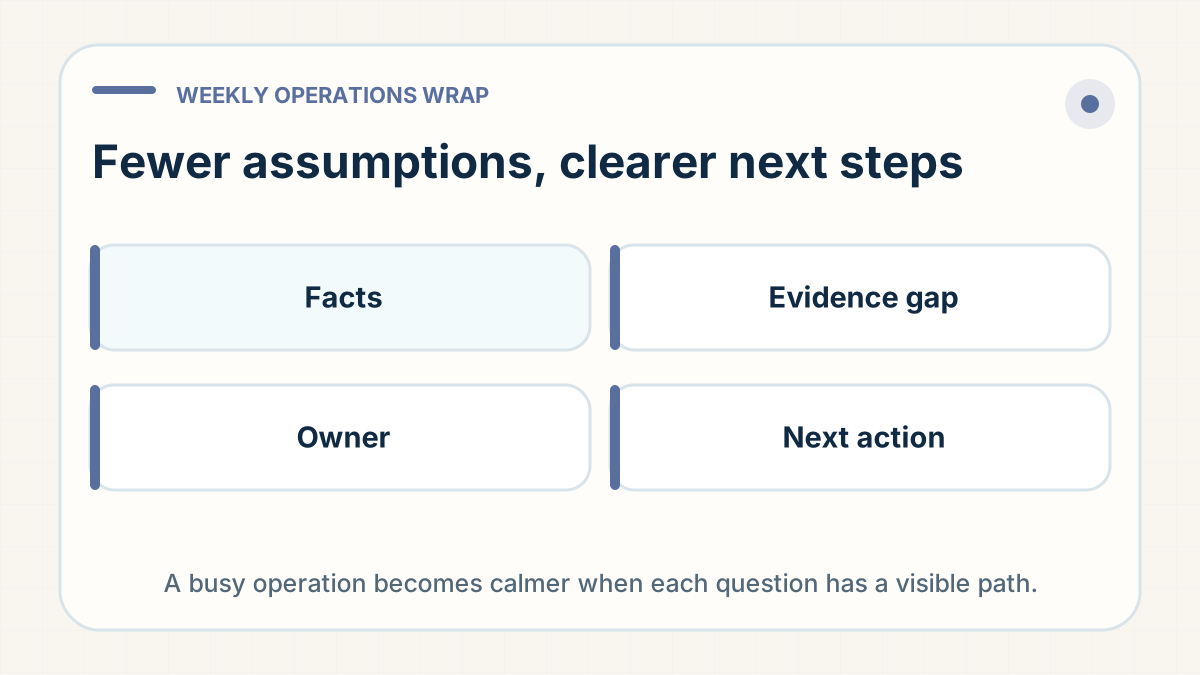
Connect the sourcing, quality, packing and shipping decisions through evidence, and give each of them a clearly owned next action.
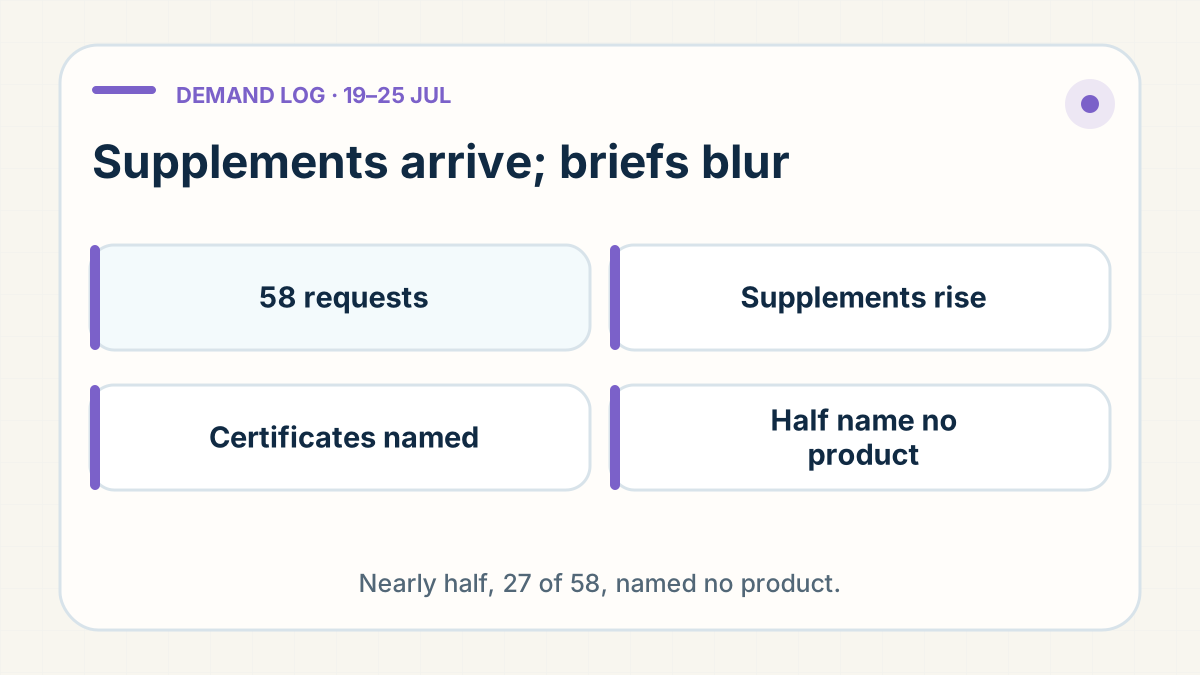
58 distinct supplier requests; supplement products entered the demand feed in numbers, compliance documents followed, and nearly half of the requests named no product at all.
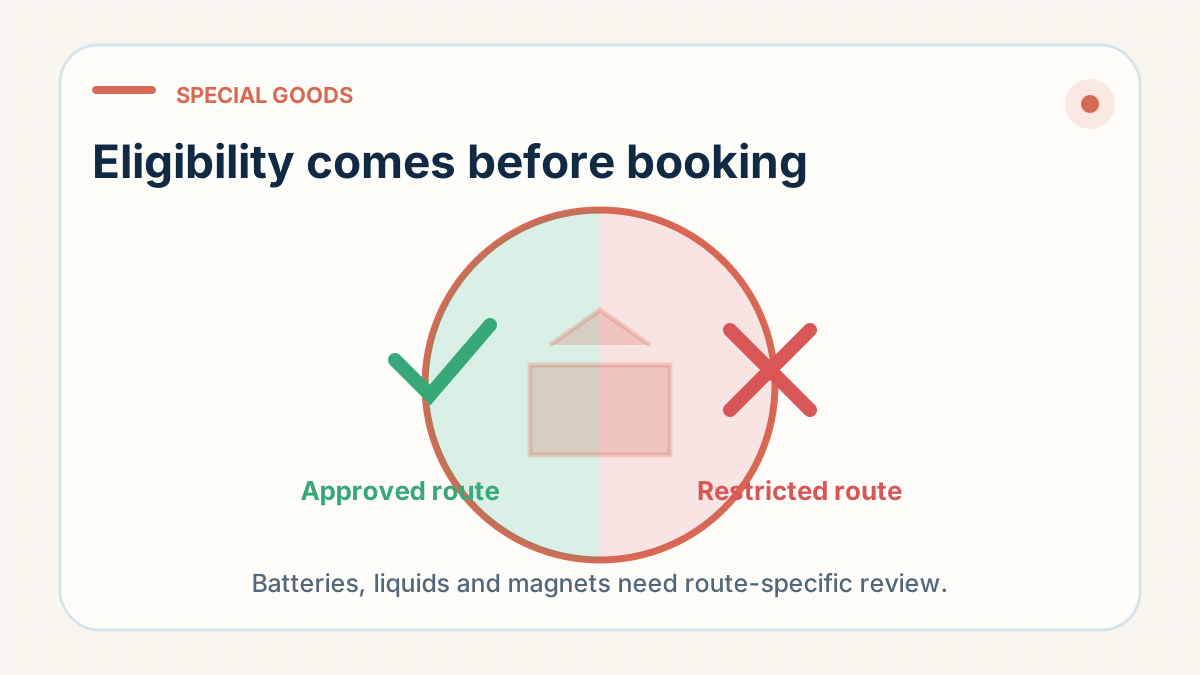
Some carriers advertise routes for batteries, cosmetics, and other regulated goods. A route existing doesn't mean your exact product is cleared to ship on it. Here's how we actually make that call.
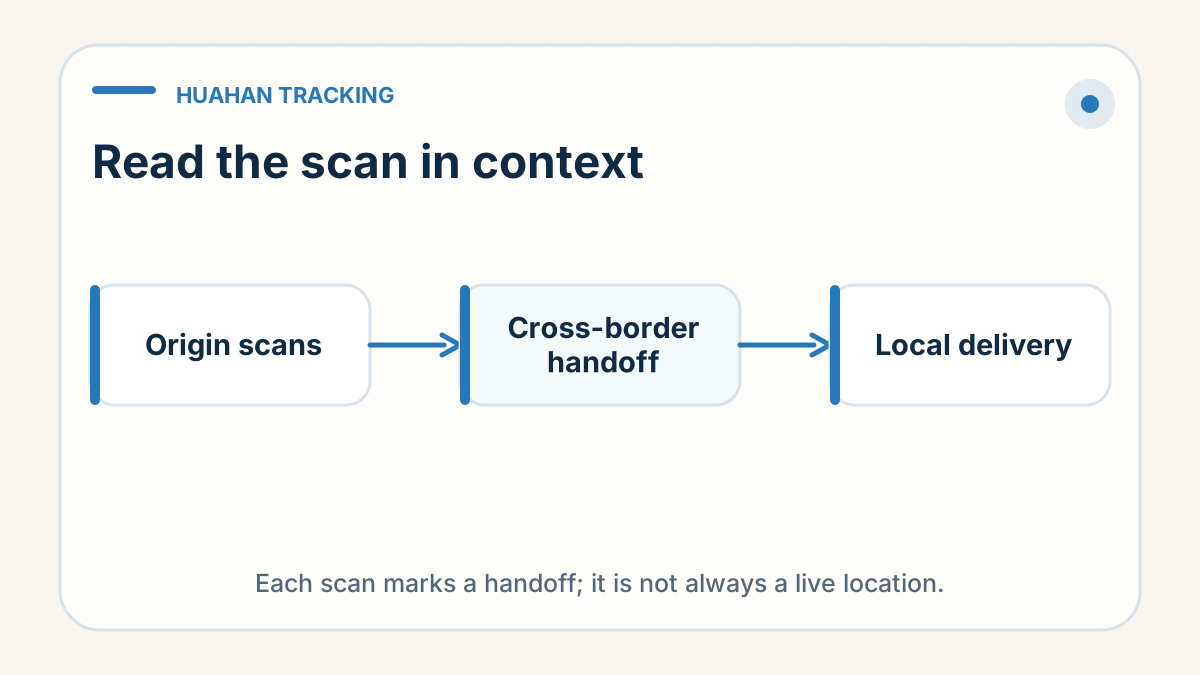
Huahan shows up in major tracking tools, but that doesn't mean every shipment gets the same visibility. Here's how tracking actually works once a parcel changes hands partway through.
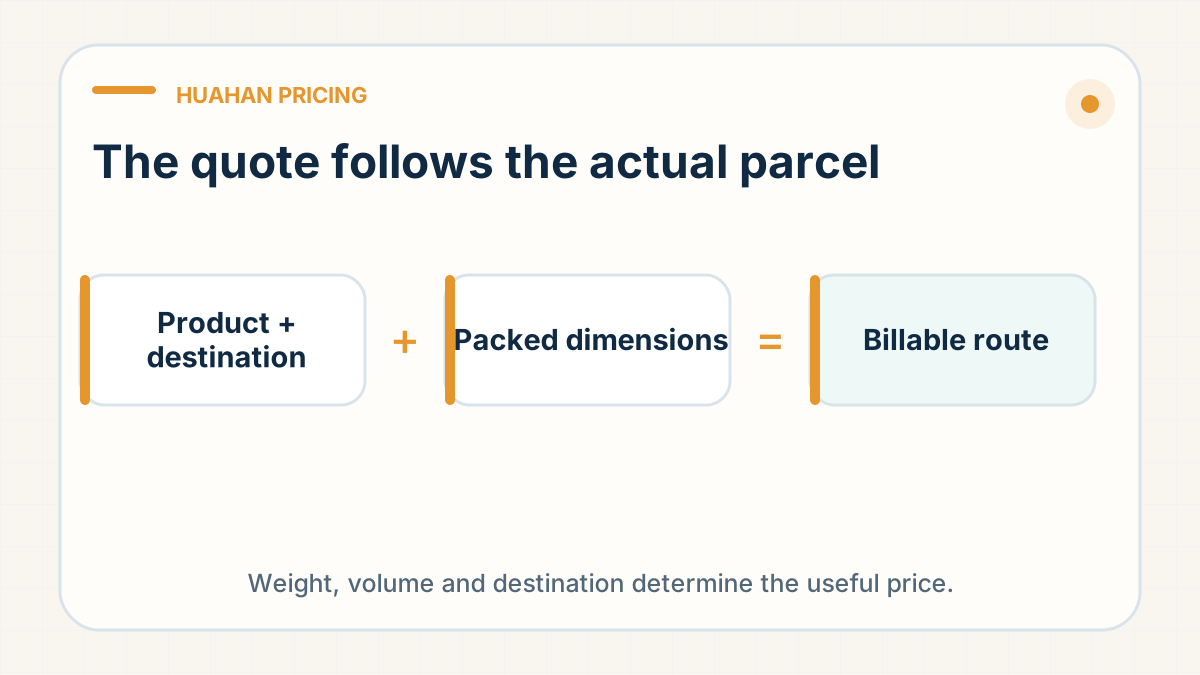
There's no single flat rate for shipping with Huahan. The real price depends on your product's final packed dimensions, its classification, and which specific route it ships on.
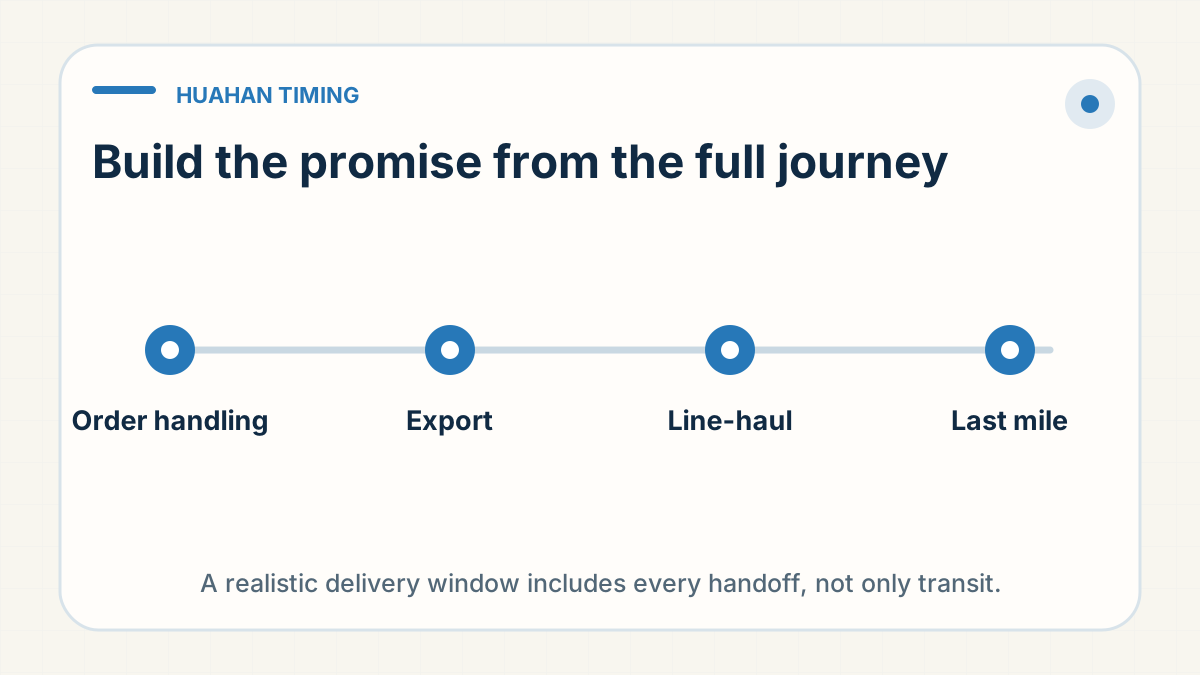
Your parcel reaches the carrier a median of 1.6 days after payment (orders paid 1 May – 3 October 2026). On RyanFulfil’s lanes, Express typically takes 2–9 working days from dispatch on major routes and Standard/Economy 5–12; the carrier depends on the lane we quote. Verify the live Huahan route expectation before publishing a customer delivery range.
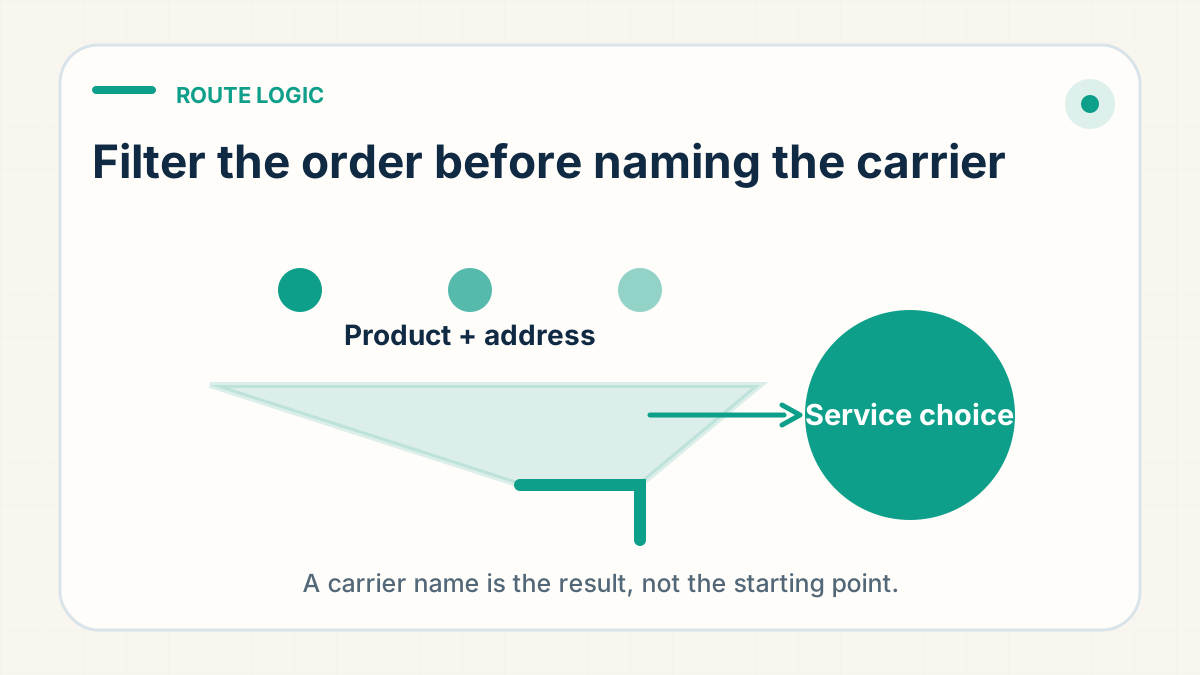
A carrier having a route for your product category doesn't mean your exact product is approved to ship on it. Here's how we actually screen a product before picking a service, Huahan or otherwise.
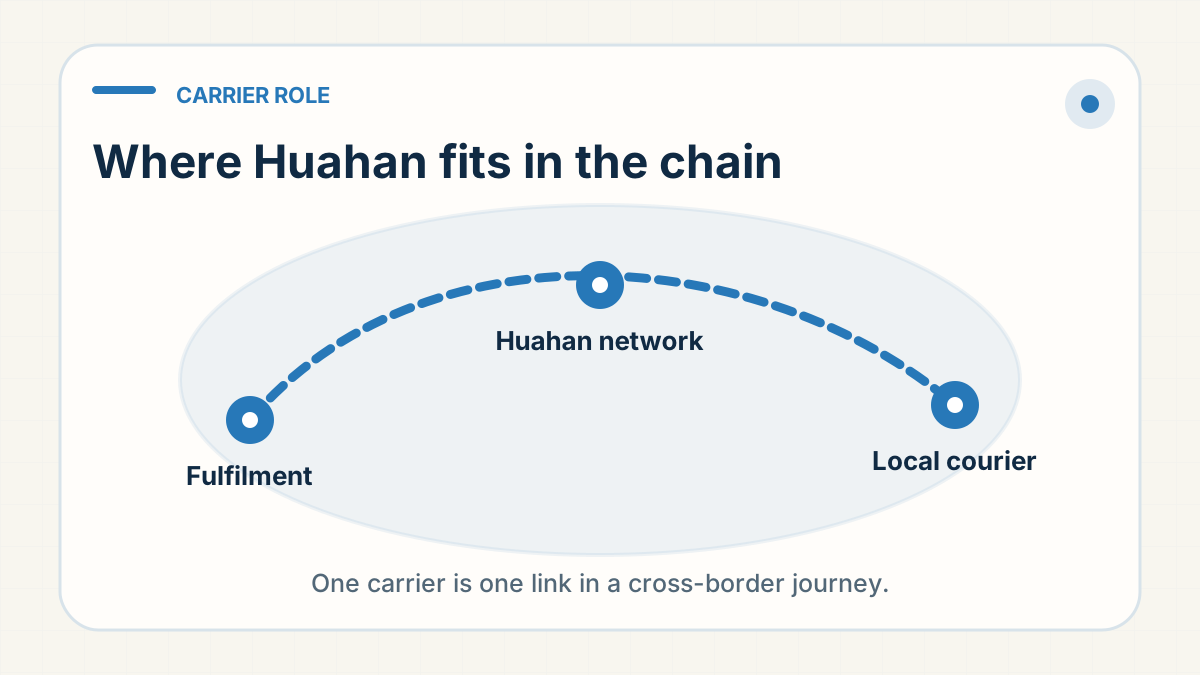
Huahan Logistics rebranded to Huahan Express. Same company, an updated name — here's what Huahan actually offers, and why a route existing doesn't mean your product is approved to ship on it.
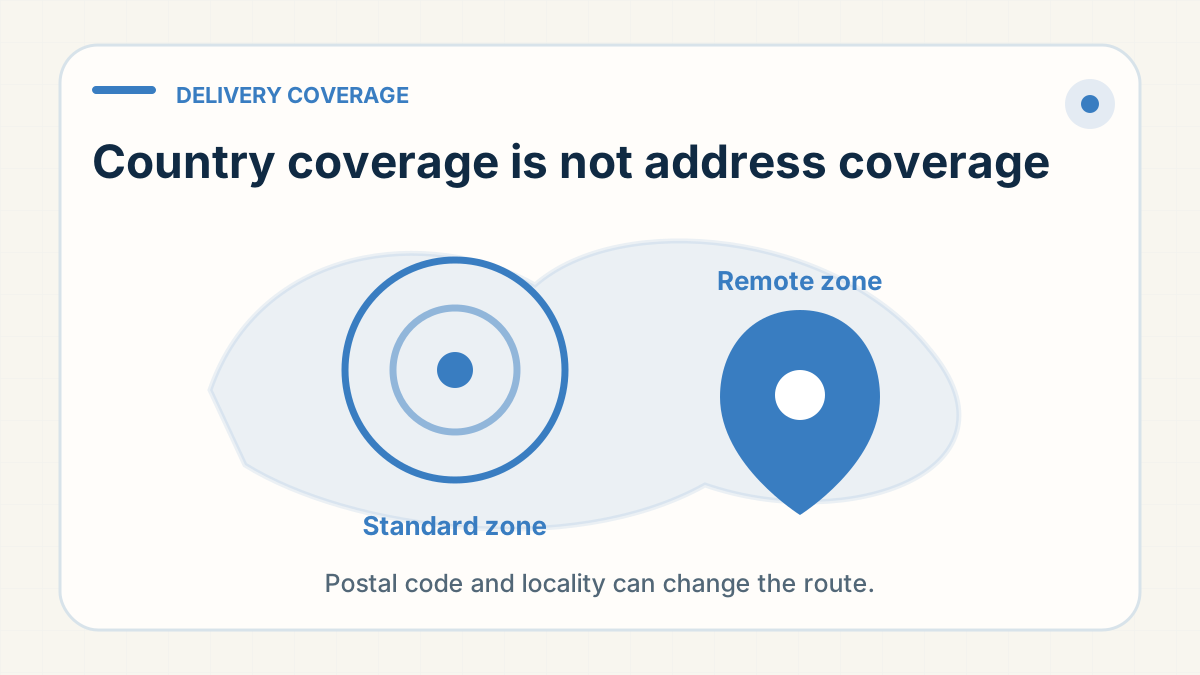
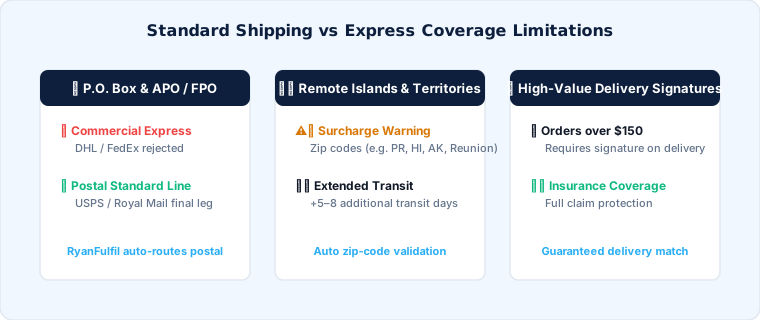
Postal boxes, remote locations, territories and high-value orders can have different service rules. Verify the actual address and route instead of assuming an automatic alternative or coverage level.
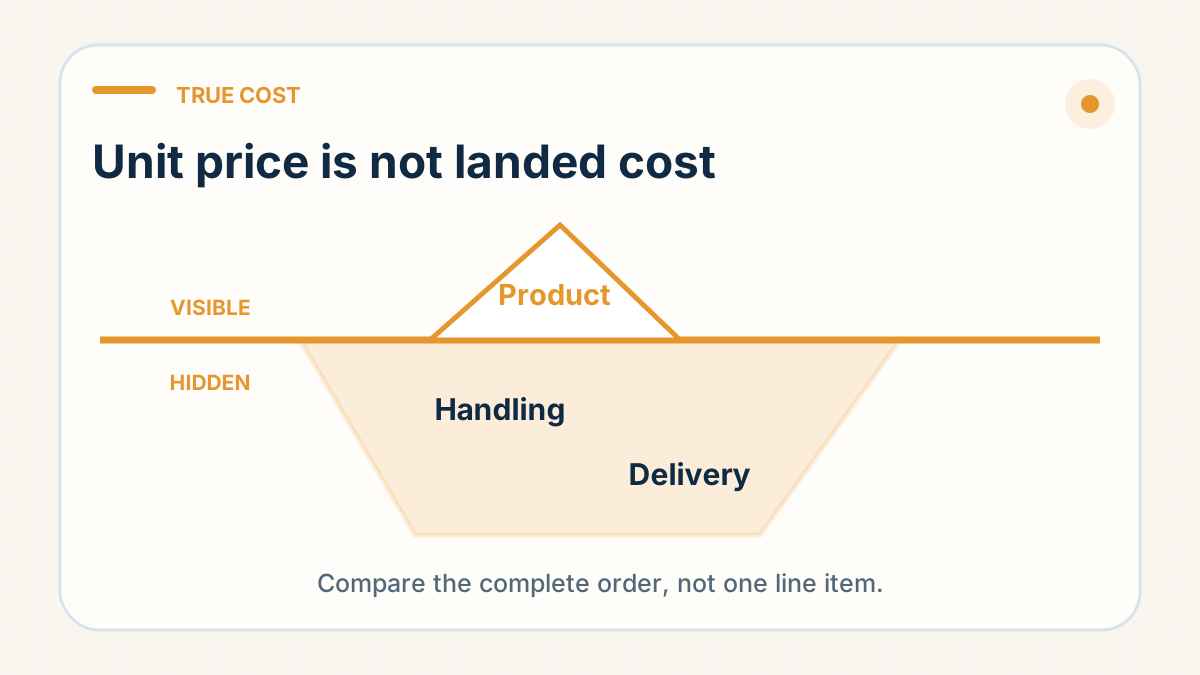
Factory-direct pricing looks cheaper on paper. Once you account for everything a fulfilment agent actually does, the comparison isn't as simple as unit price versus unit price.
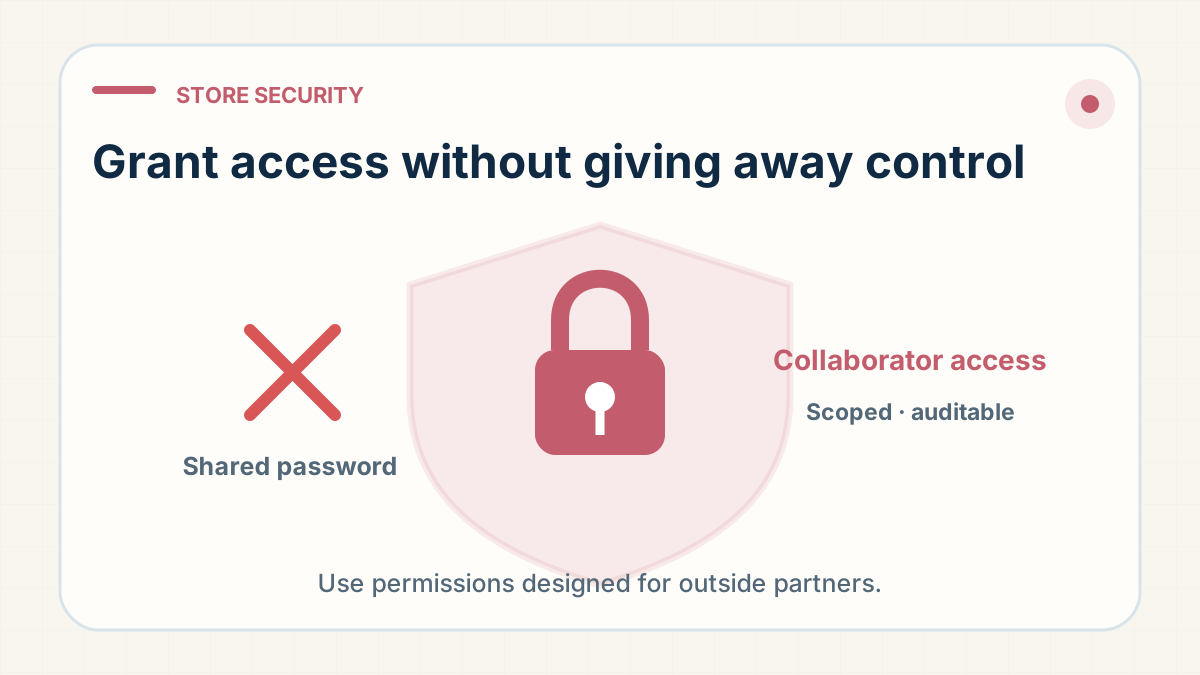
Sending your store password over WhatsApp so someone can "just log in and check something" feels efficient. It's also one of the easiest ways to lose control of your own store.
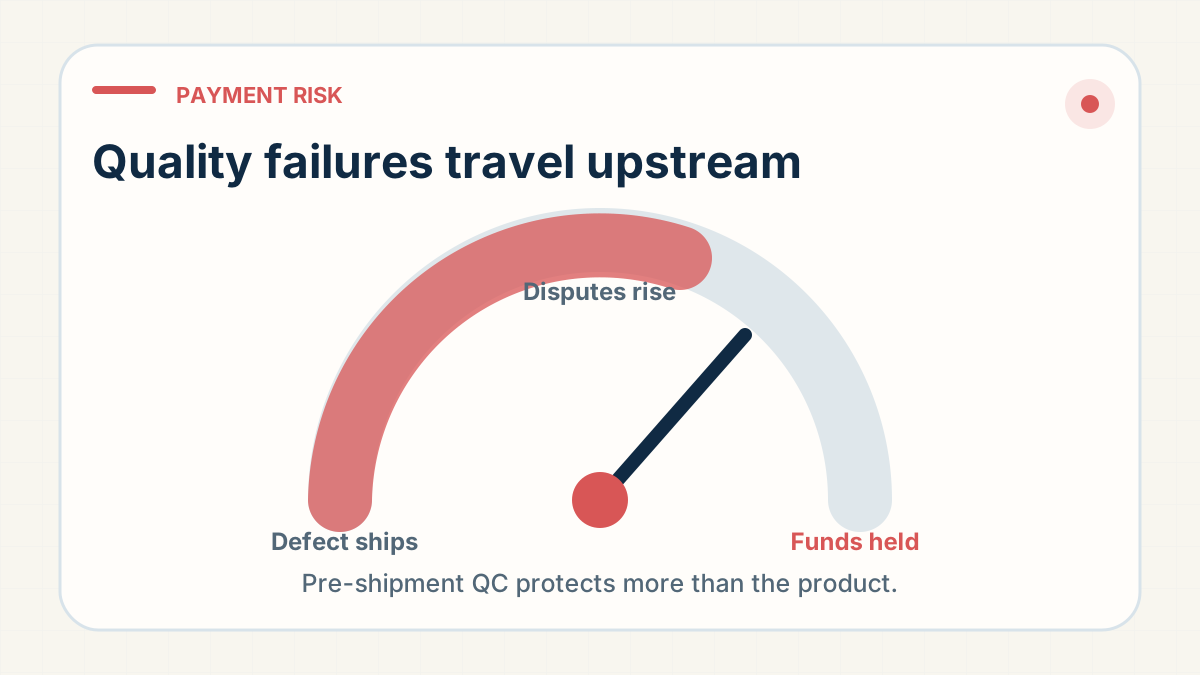
Disputes can affect a store’s payment-risk profile, but the outcome and any reserve or hold are platform-specific. Focus on prevention and evidence rather than citing a universal hold duration.
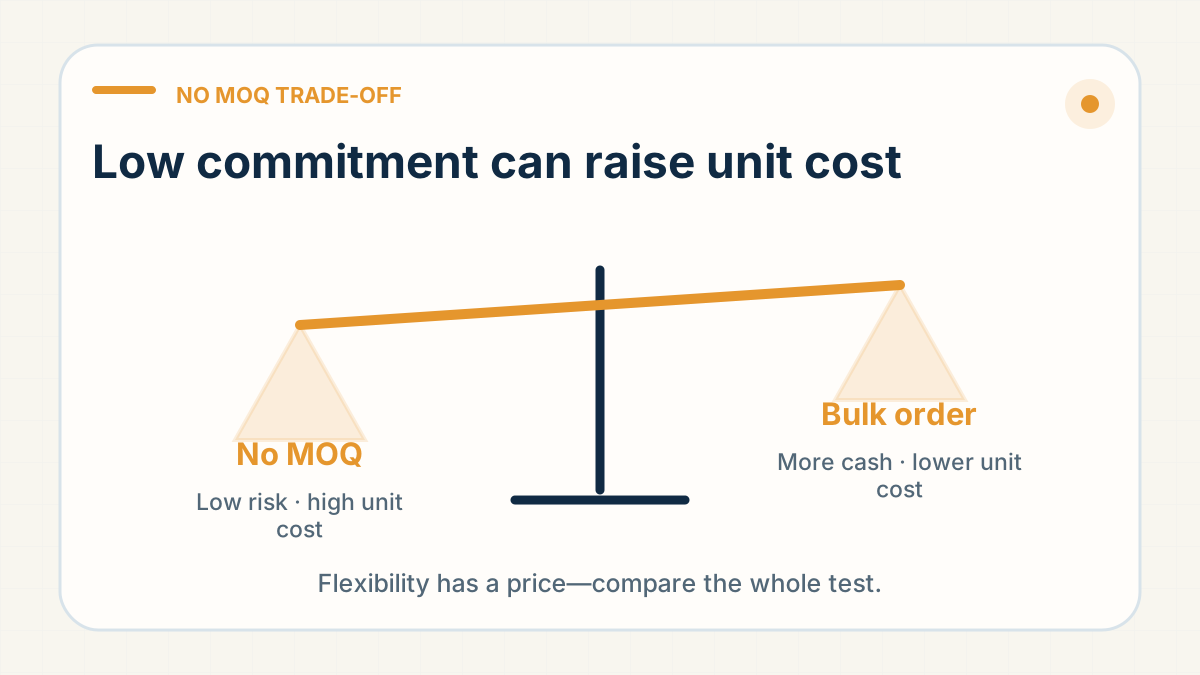
No minimum order quantity sounds like the better deal. It usually isn't, once you look at what you're actually paying per unit compared to buying in bulk.
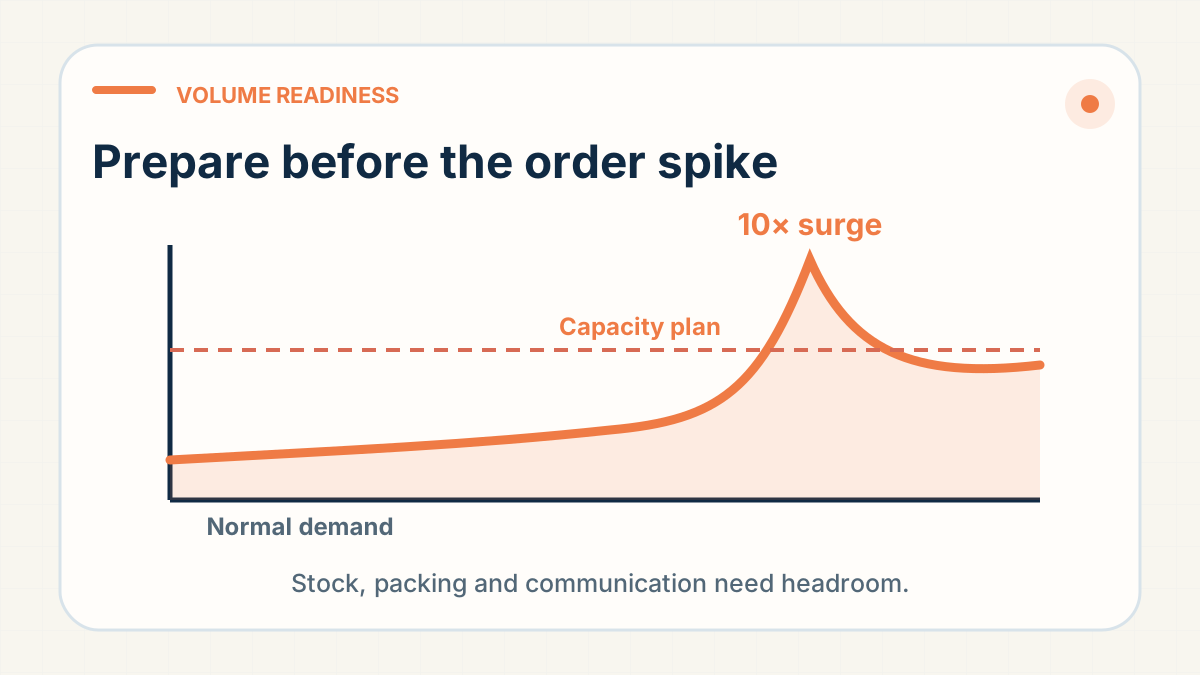
A product goes viral and orders jump 10x overnight. Whether your fulfilment holds up depends almost entirely on what you set up before the spike, not during it.
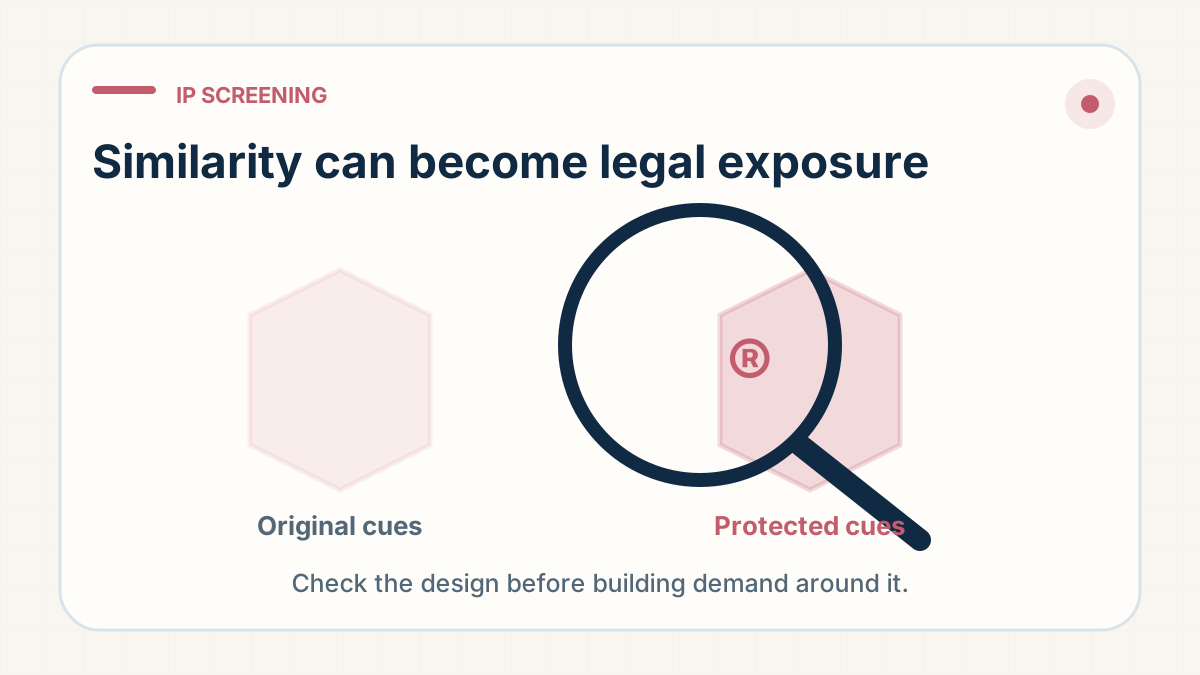
A product that looks like a popular design isn't automatically safe to sell. Here's how to spot real trademark and IP risk before you build a store around something, not after customs seizes it.
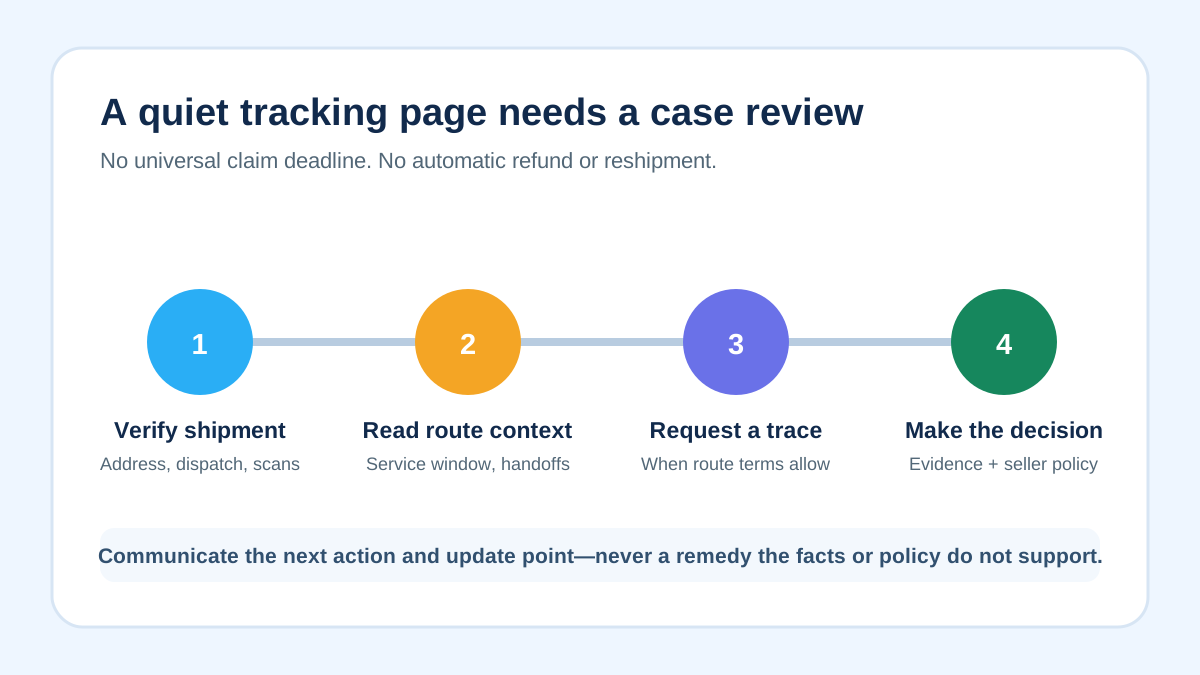
A quiet tracking page does not prove a parcel is lost. There is no universal claim deadline or automatic refund rule: the right next step depends on the route, carrier terms, evidence and the seller’s policy.
A supplier comparison becomes useful only when it makes the trade-offs visible: specification, communication, production fit and next verification step.
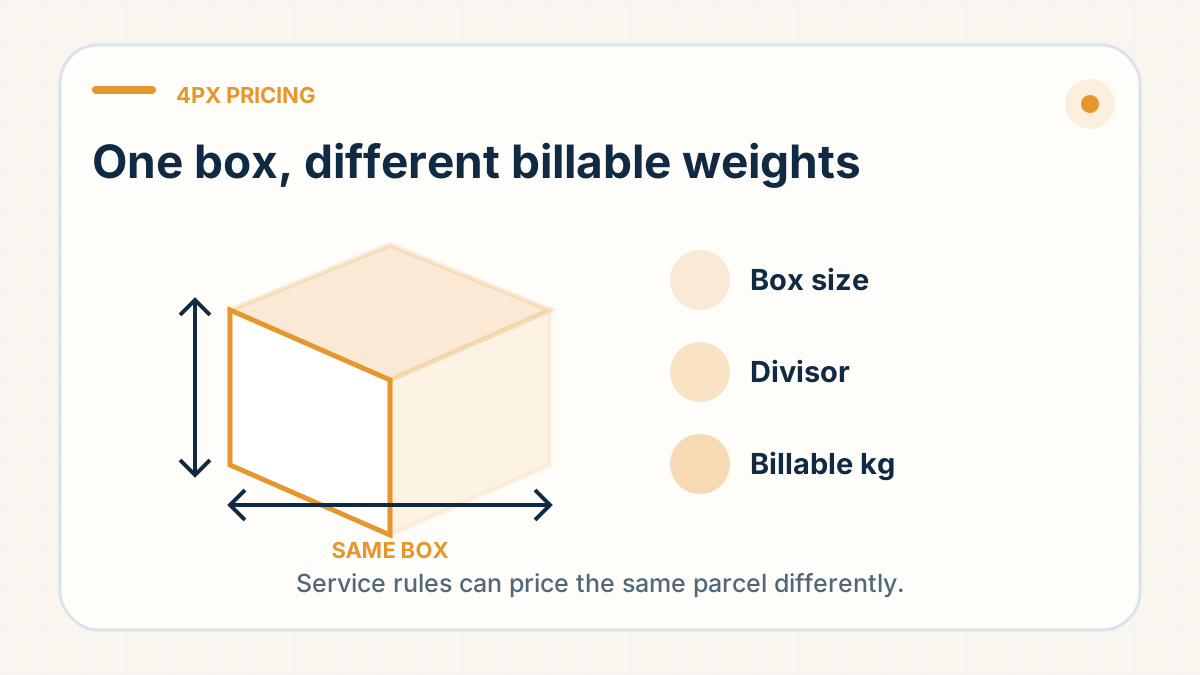
The same box can cost very differently to ship depending on which 4PX product it moves through. Here's why the divisor matters more than most sellers realise.
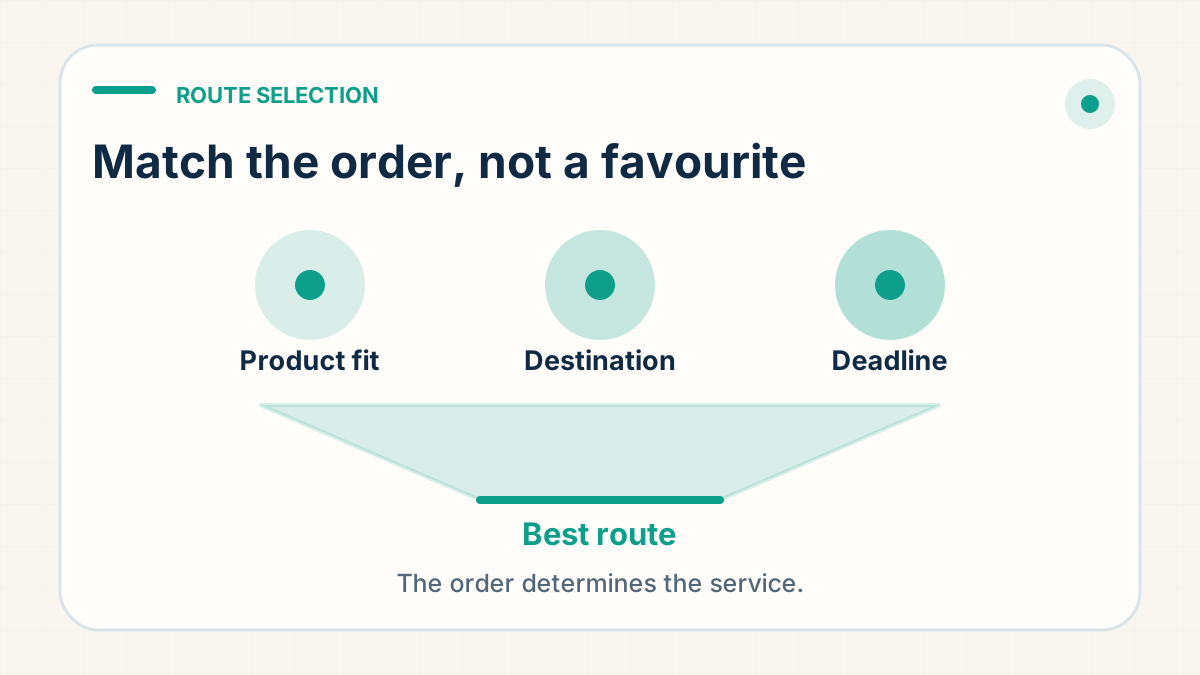
4PX vs YunExpress is a per-order decision, not a loyalty pick: product type, destination, speed promise and price choose the route. Here is the checklist we use.
4PX isn't just a parcel line, it can also warehouse, consolidate, and fulfil from stock. Here's when that actually matters for a dropshipper, and when it's overkill.
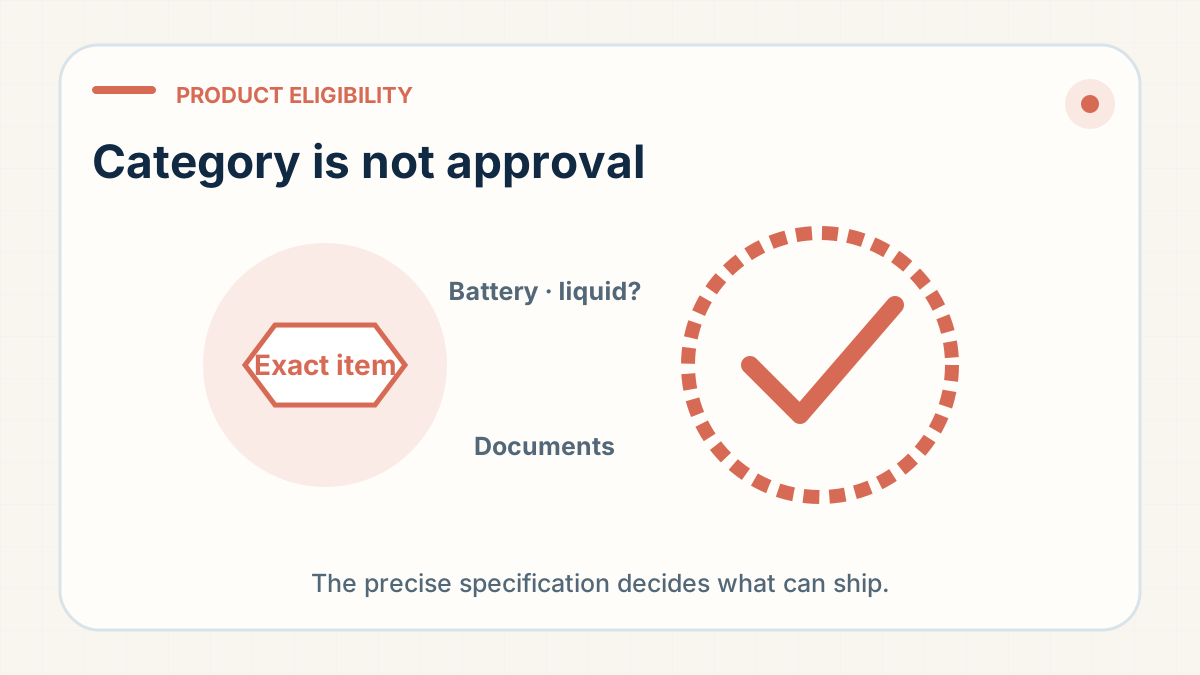
"Can 4PX ship batteries or cosmetics?" isn't a category question, it's a per-product question. Here's why, and what we actually need before we'll confirm a route.
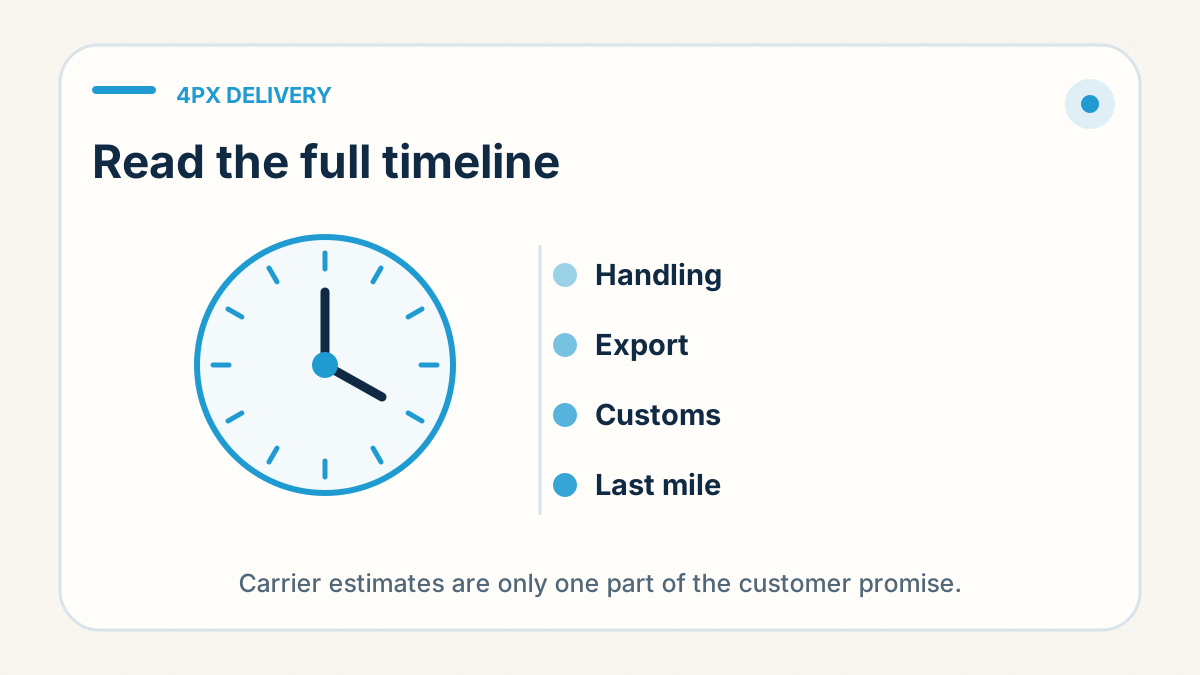
Your parcel reaches the carrier a median of 1.6 days after payment (orders paid 1 May – 3 October 2026). On RyanFulfil’s lanes, Express typically takes 2–9 working days from dispatch on major routes and Standard/Economy 5–12; the carrier depends on the lane we quote. A 4PX estimate is route-specific, not a universal promise.
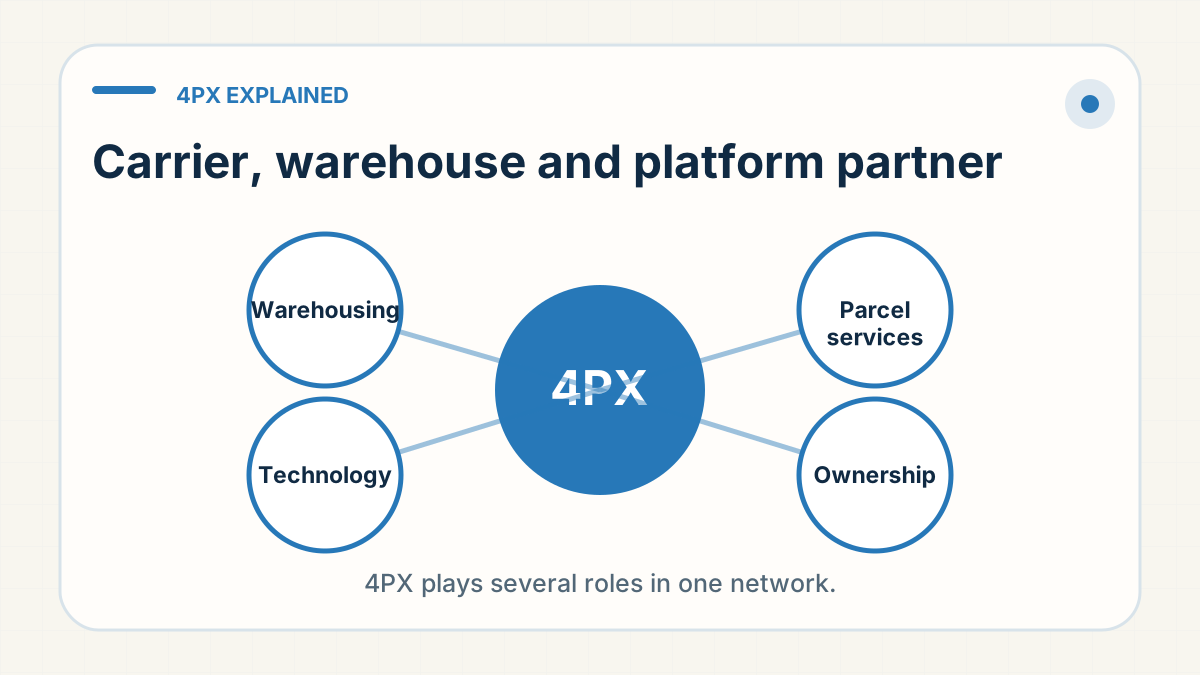
"Is 4PX a courier, a warehouse, or an Alibaba company?" Kind of all three. Here's what 4PX actually is, who owns it, and where it fits in your order's journey.
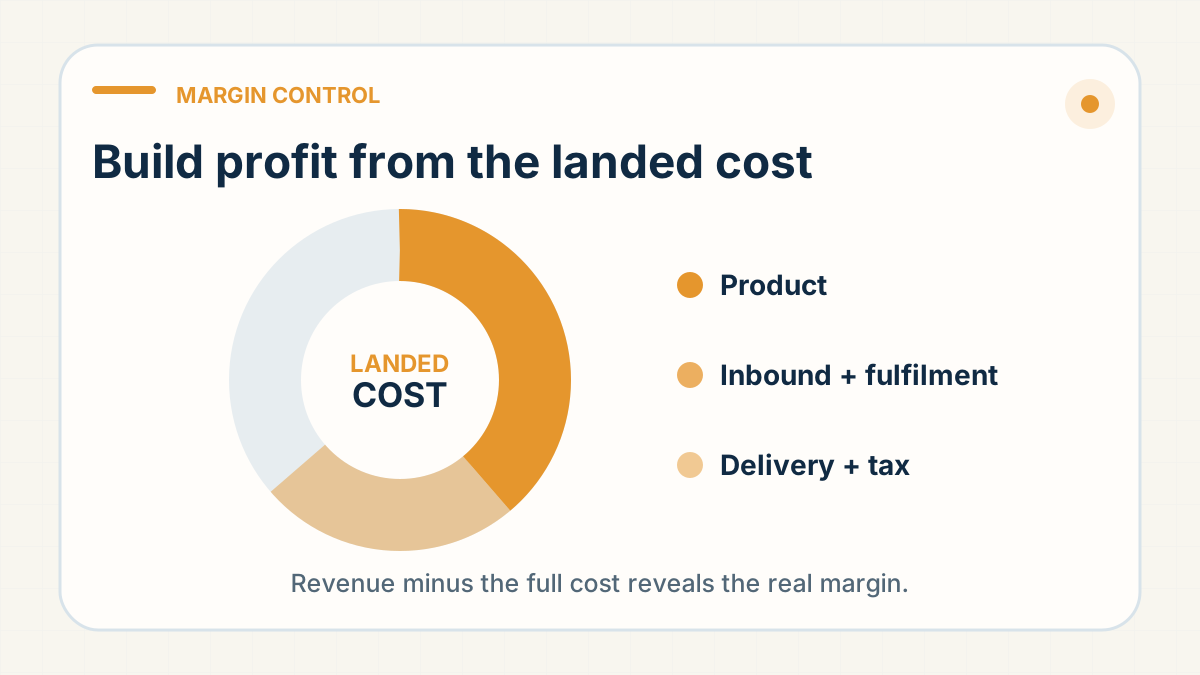
Your product cost isn't your real cost. Landed cost is, and a lot of sellers don't calculate it until their margins have already quietly disappeared.
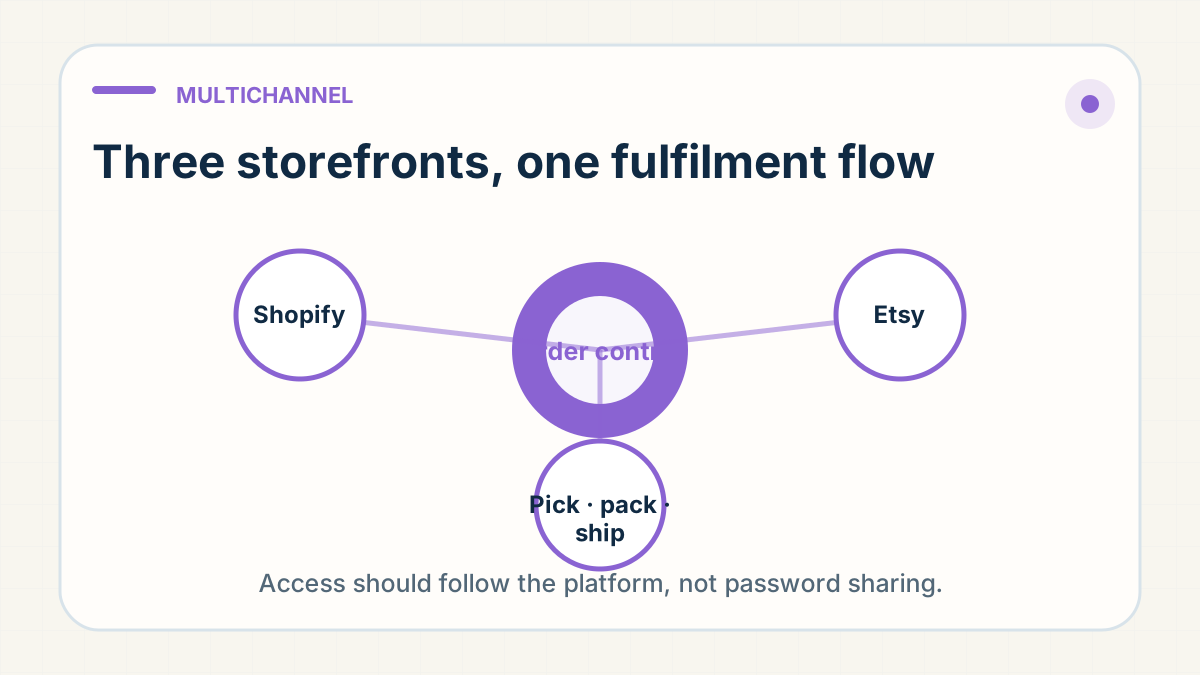
Store integrations and marketplace rules vary. Use the access method the specific platform supports, document exceptions and never solve a workflow problem by sharing a primary password.
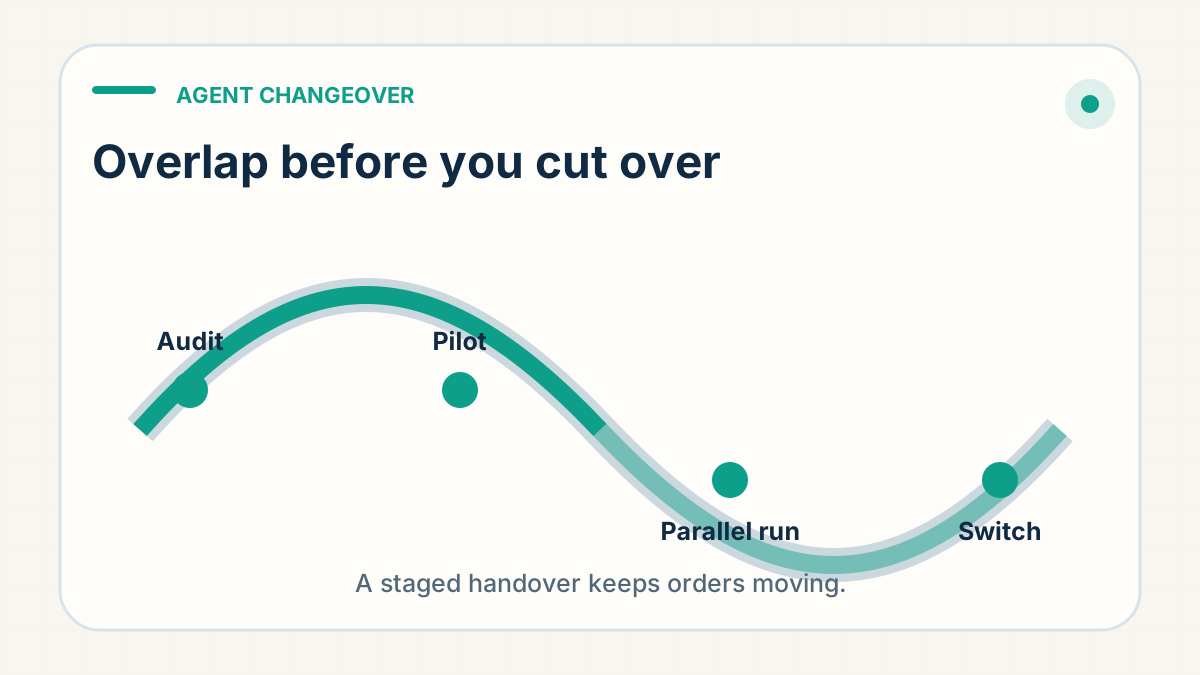
Moving stock or open Shopify orders to another provider? Check inventory, request states and confirmation that the previous service stopped work before handing orders over.
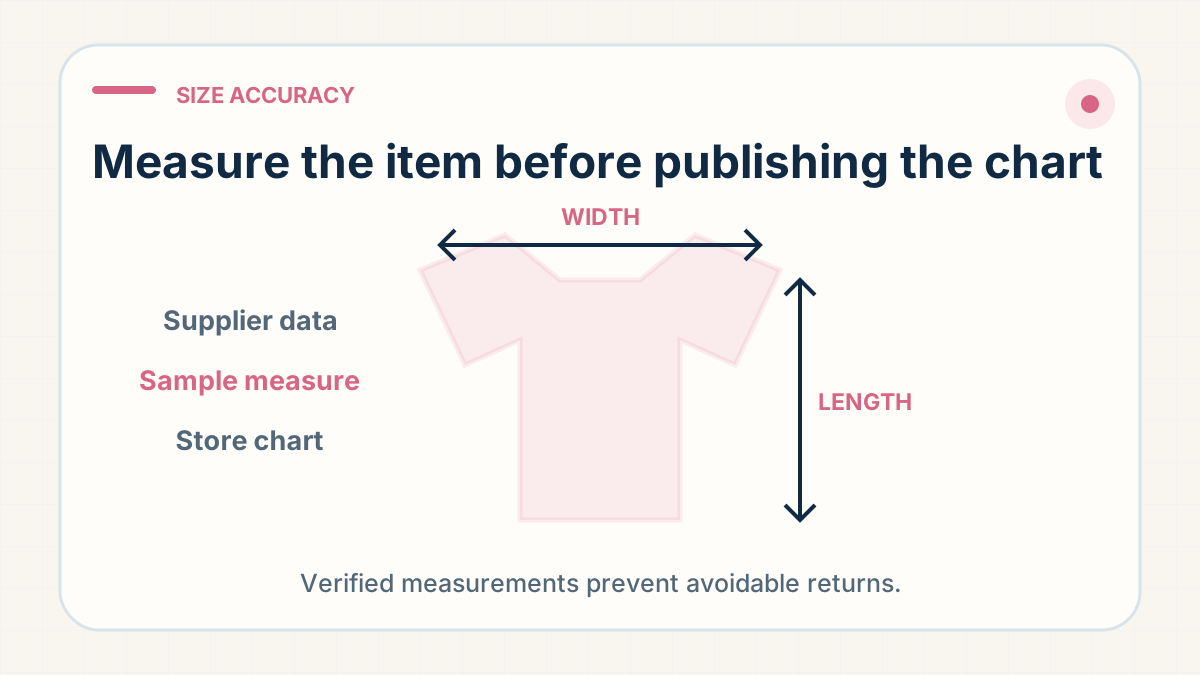
You can't try the product on before you list it, so your sizing chart is the only thing standing between you and a return. Here's how to actually get it right.
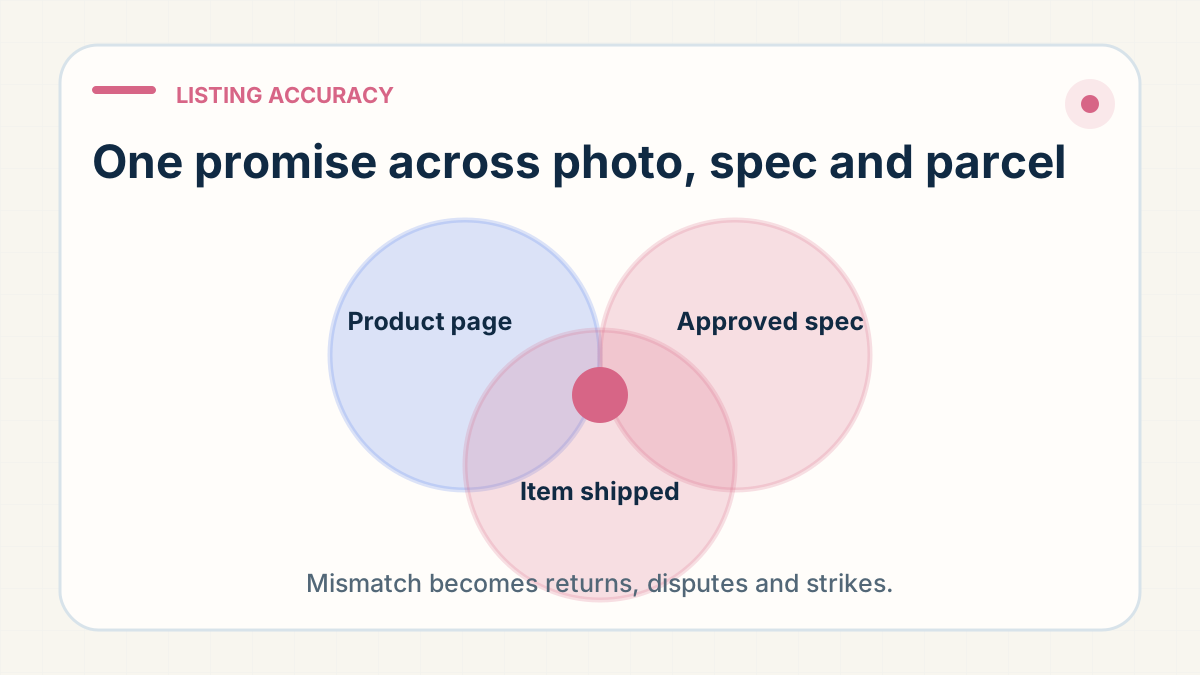
A listing photo that doesn't match what ships isn't a small thing. It's the single biggest cause of returns, disputes, and platform strikes we see across client stores.
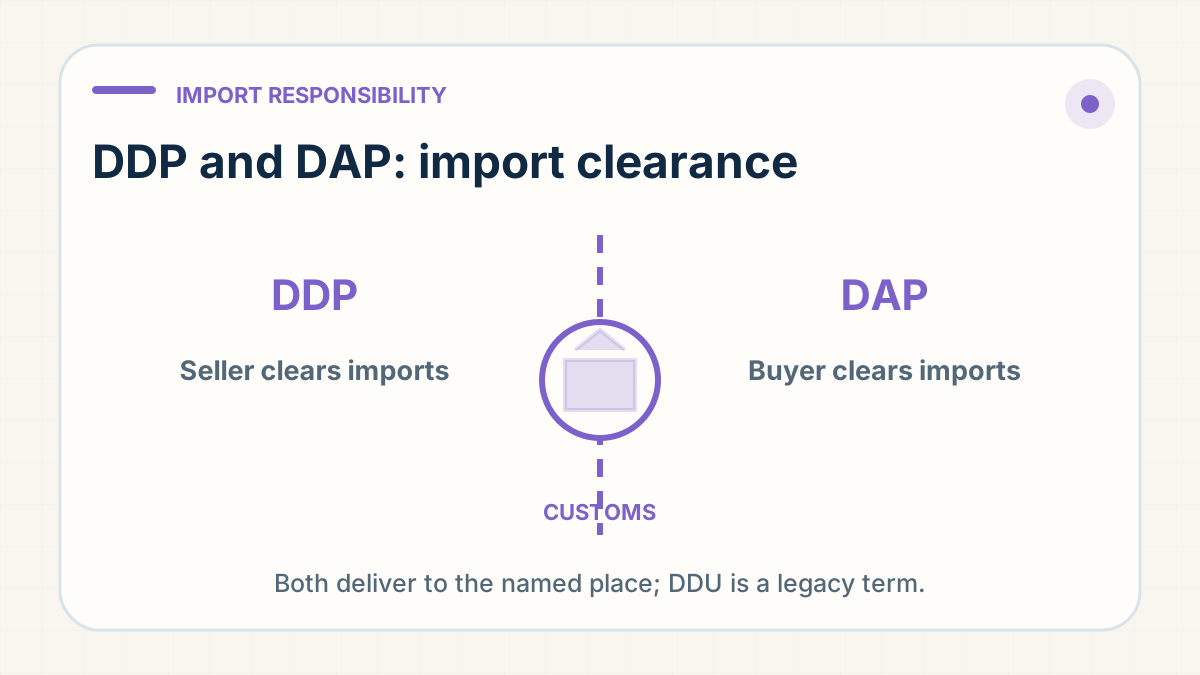
DDP and DAP both deliver to an agreed destination. Their main difference is who handles import clearance and charges. Confirm the named place and the terms in your quote.
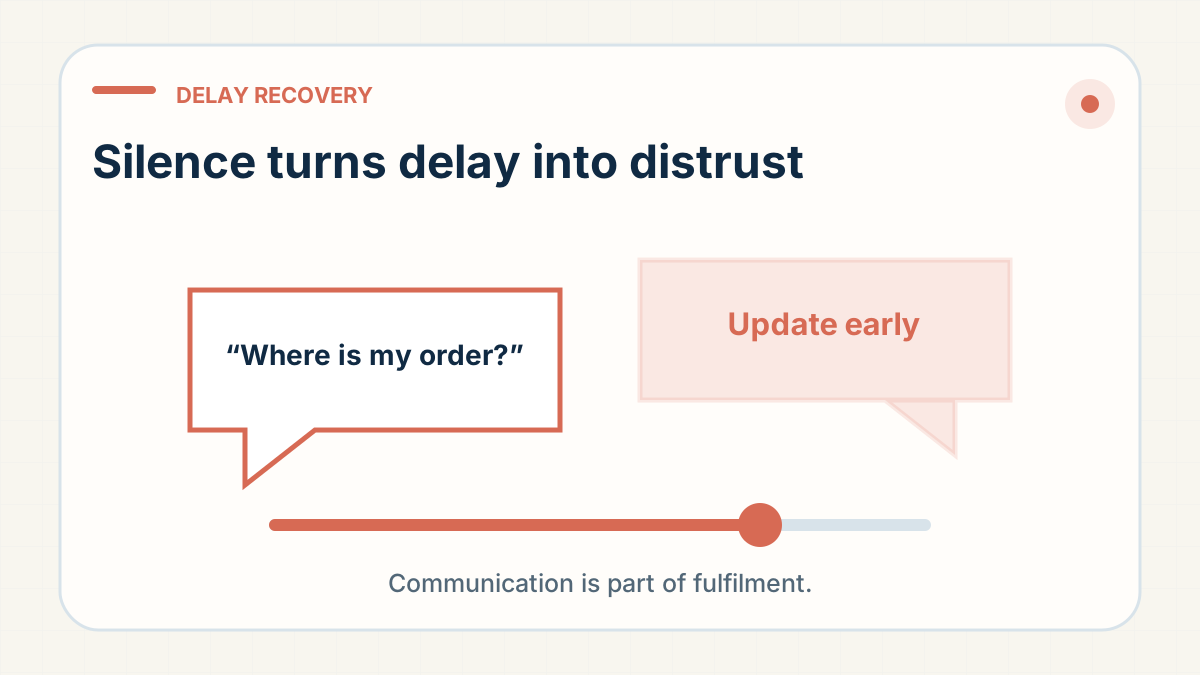
A delay does not justify an invented promise. Give the customer the last meaningful event, the next action and a policy-based remedy only when the facts support it.
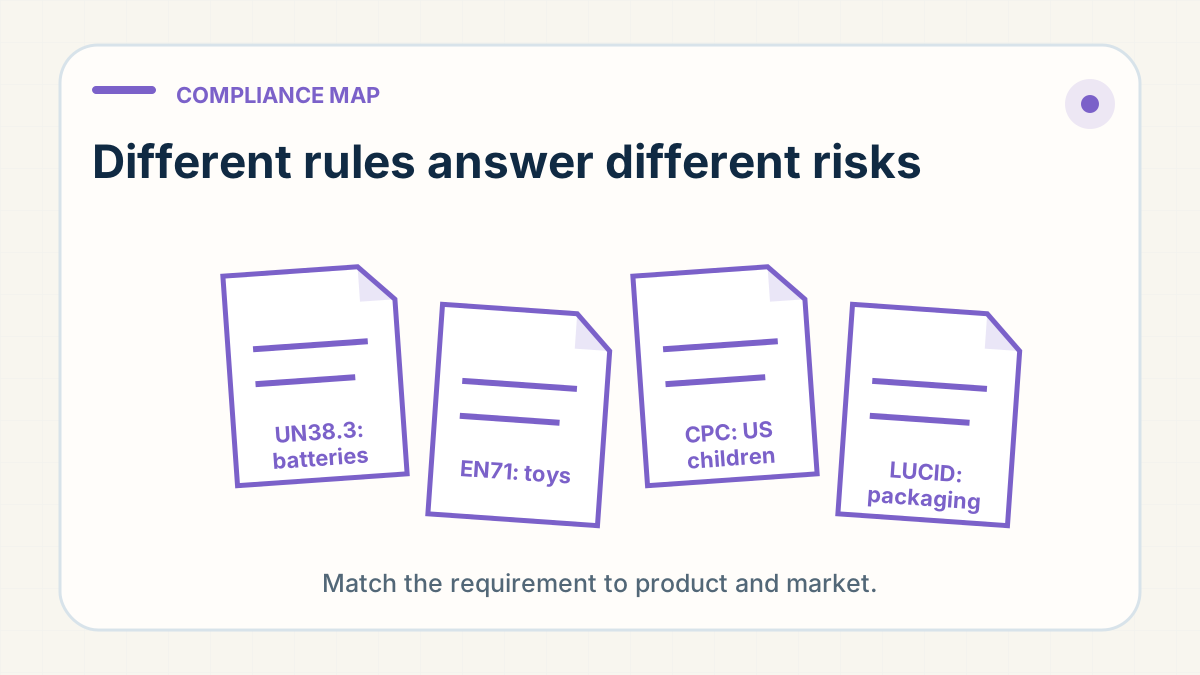
Match lithium-battery transport evidence, toy-safety testing, US children’s-product certification and German packaging obligations to the exact product and destination.
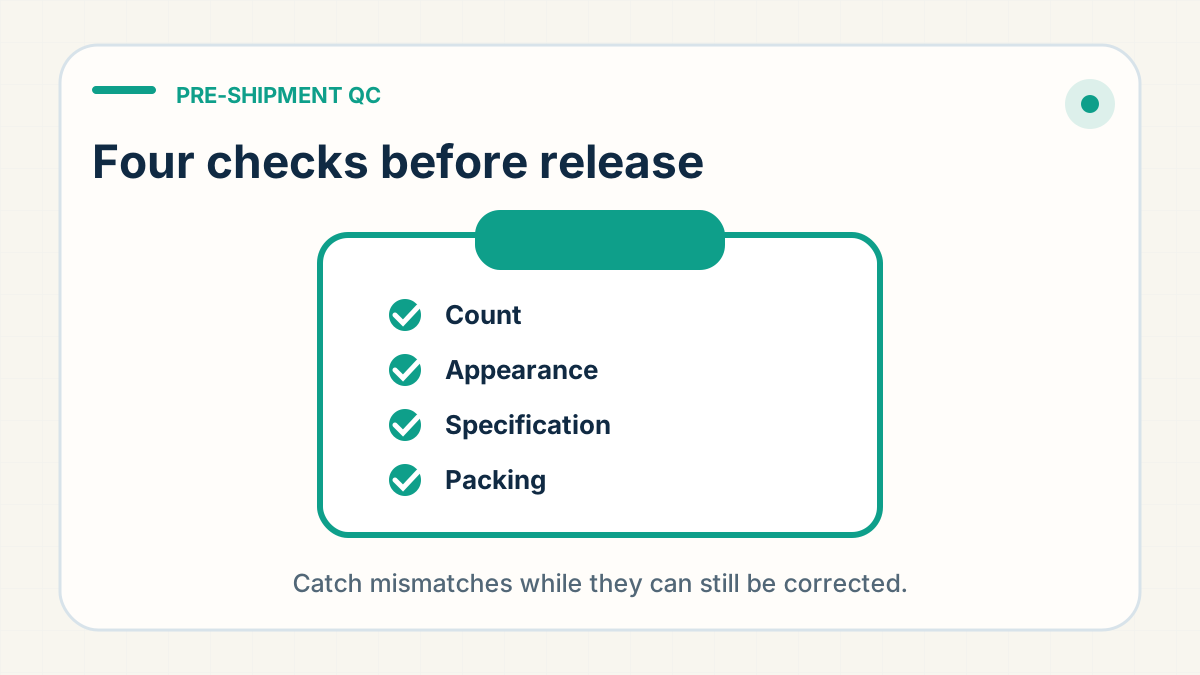
Checks cover the approved specification, visible condition, included parts and packing. Agree any additional testing before ordering; standard checks are not a 100% unit-level inspection.
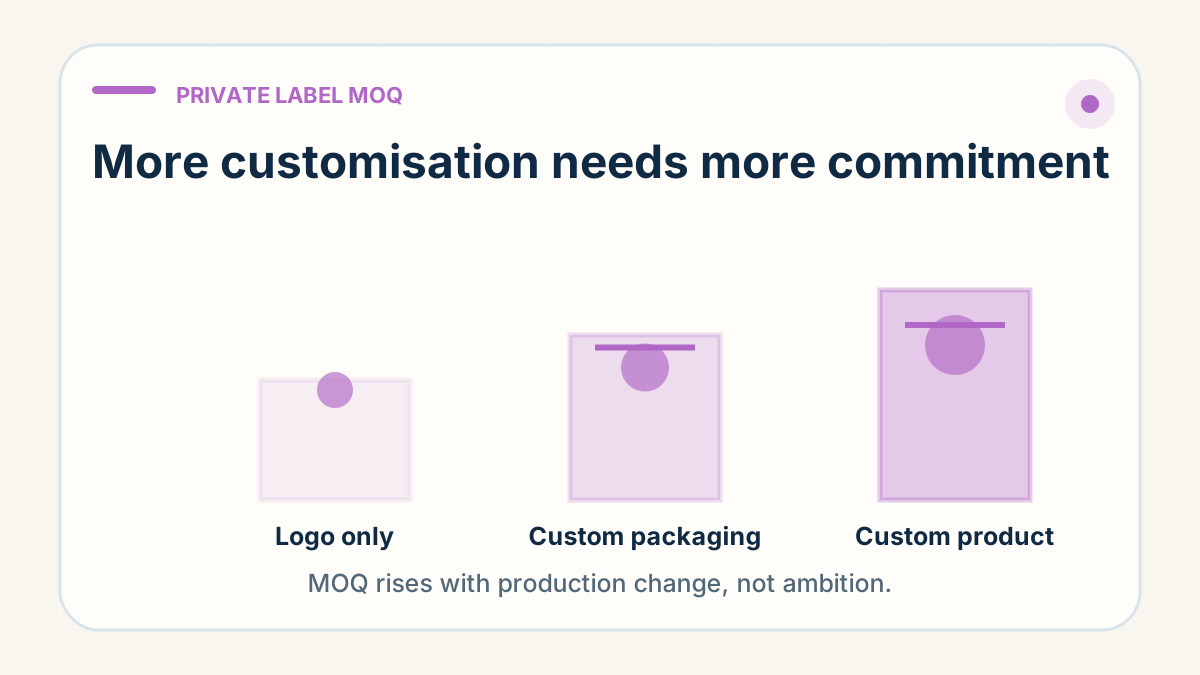
Minimum order quantities for private label runs in China vary a lot depending on what you're actually customizing. Here's what MOQs really look like by customization type, and how to start small.
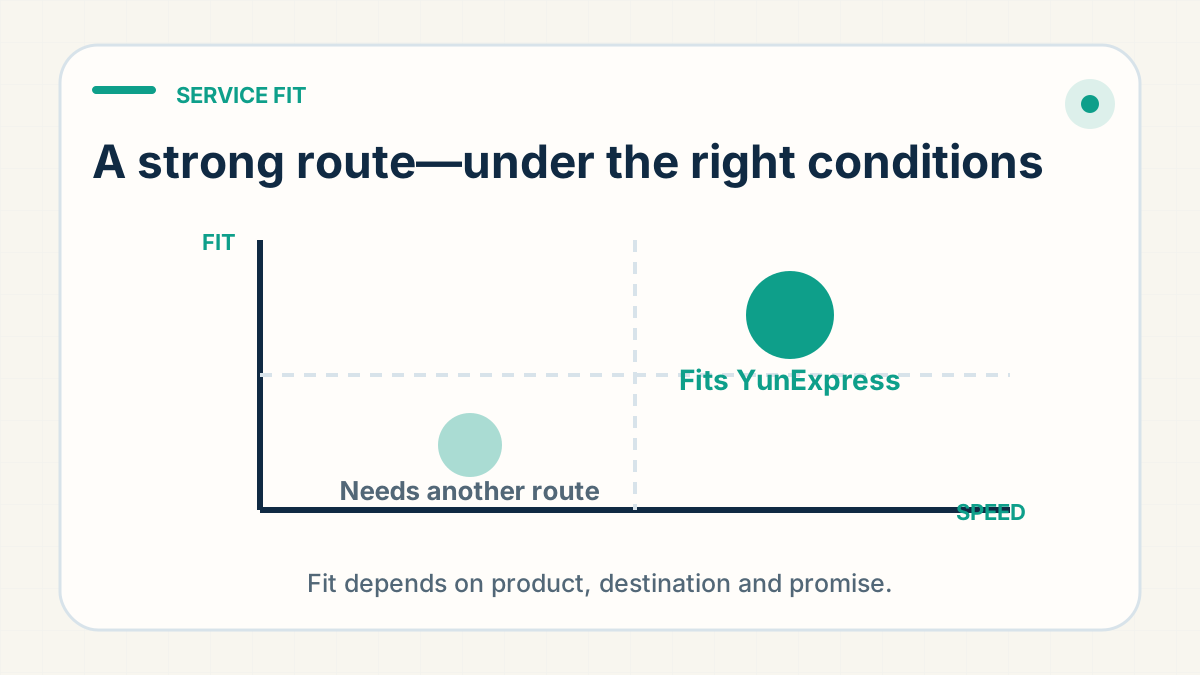
YunExpress is a good fit for a lot of dropshipping orders. It's not the right call for every order. Here's how we actually decide when to use it and when to pick something else.
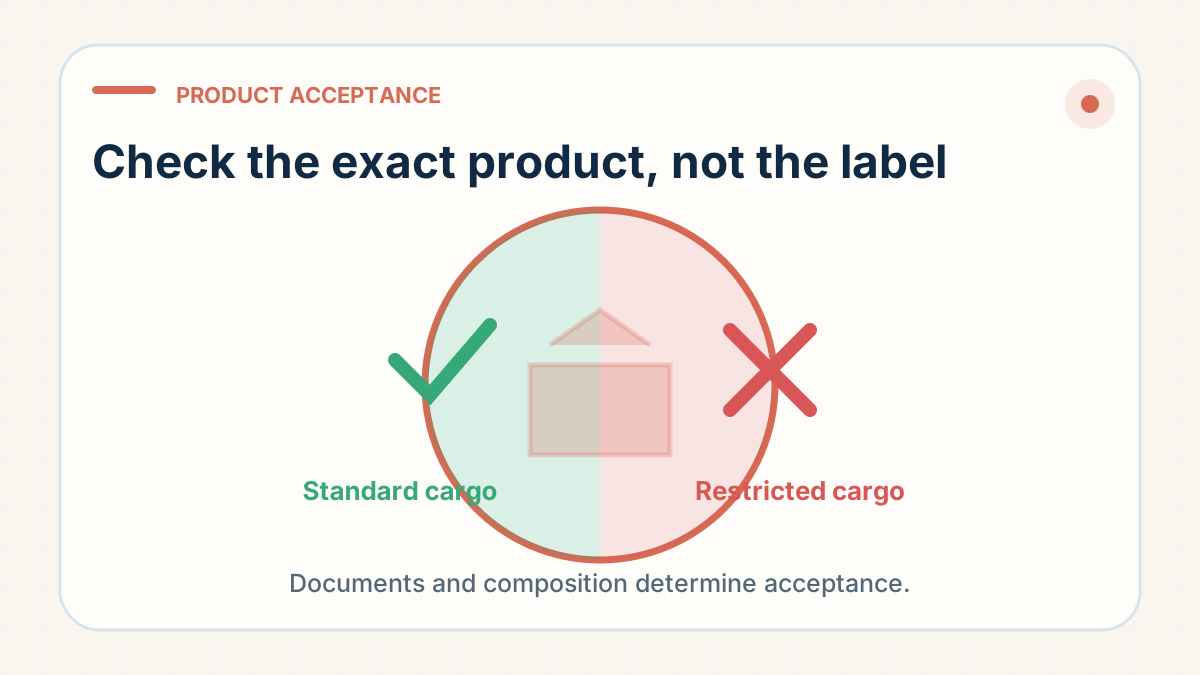
Eligibility is determined by the exact product and service—not by a generic carrier name. Check the current route terms before accepting batteries, liquids, magnets or other special goods.
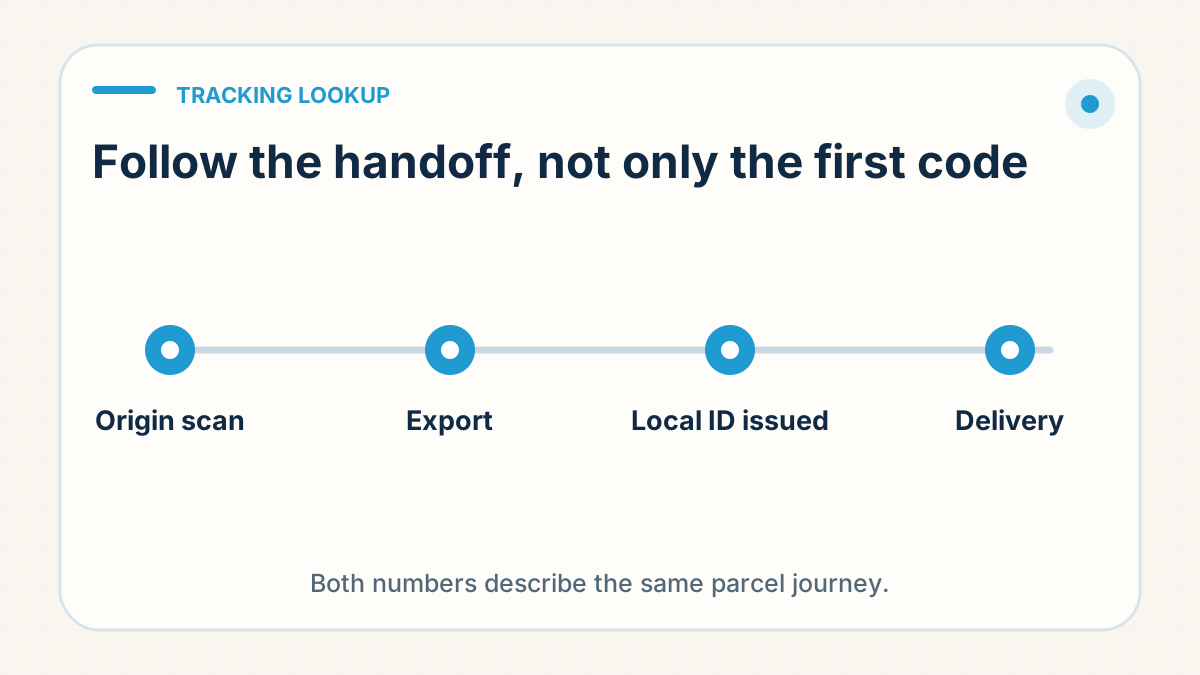
Your tracking number starts with YT, then a second number and different carrier name appear. Here's what's happening, and why the handoff causes most tracking confusion.
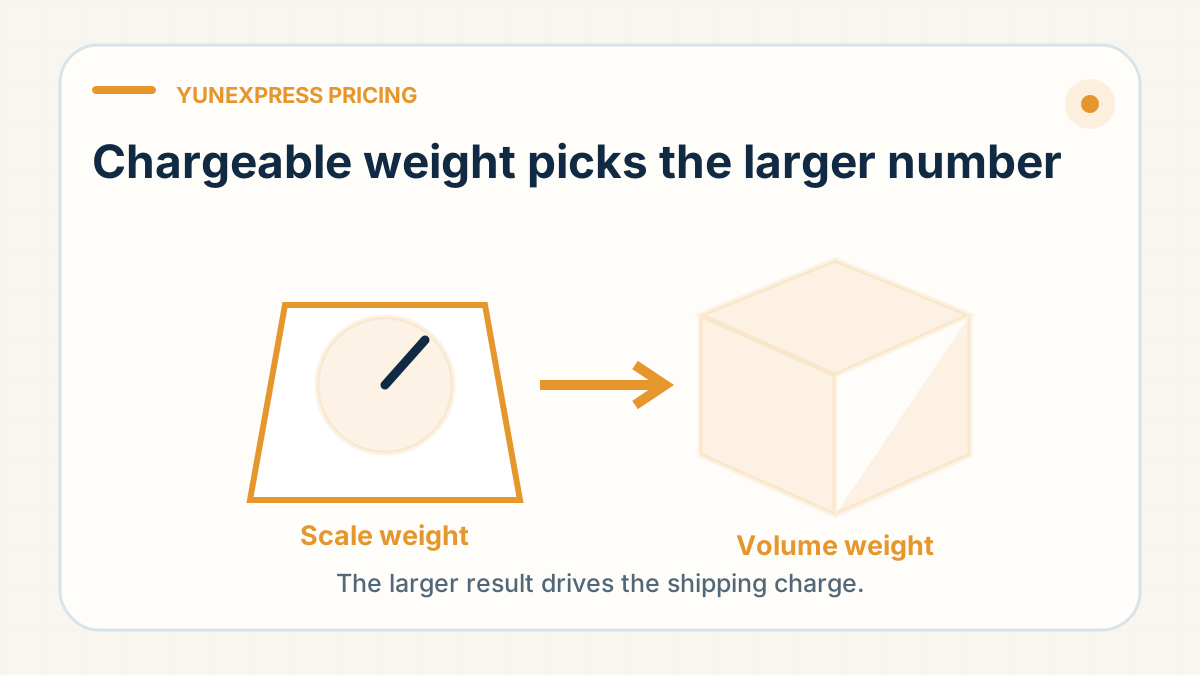
YunExpress bills whichever is higher: actual weight or volumetric weight (length × width × height in cm, divided by the route’s divisor). Measure the packed box, not the bare product, before pricing shipping into your margin.
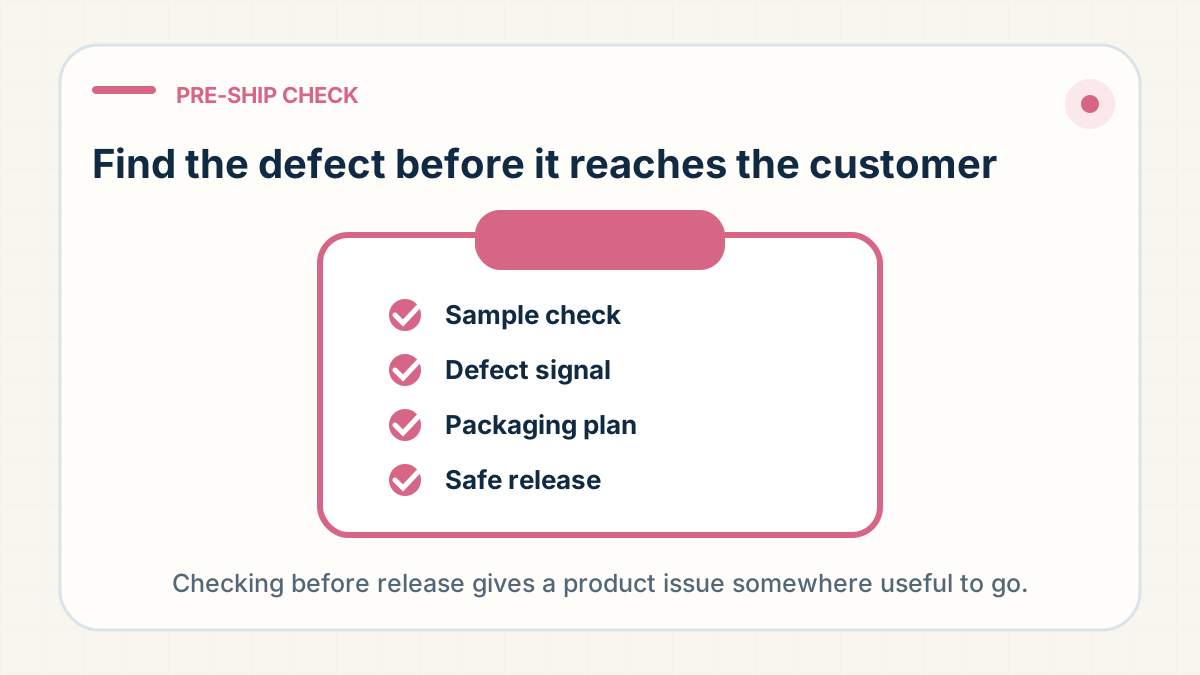
A product report became a multi-box sample check before release, while packaging and route decisions were held to explicit evidence rather than assumptions.
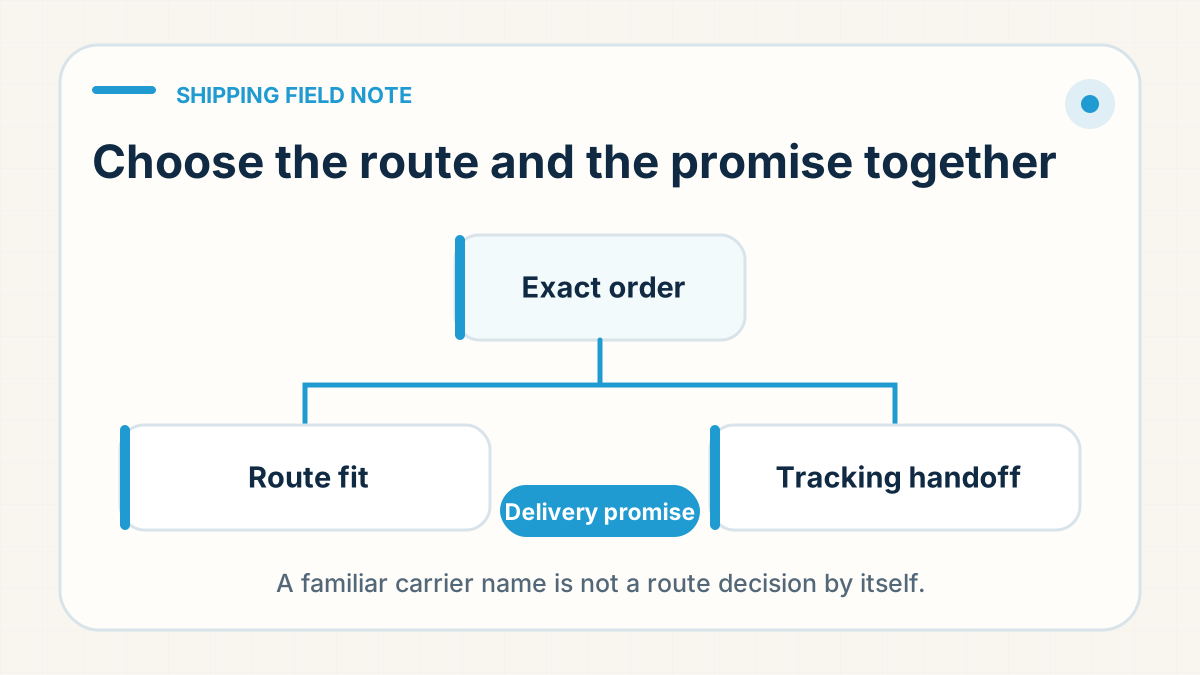
A route check is not just a price comparison; it is where product fit, destination, handoff and delivery promise are made compatible.
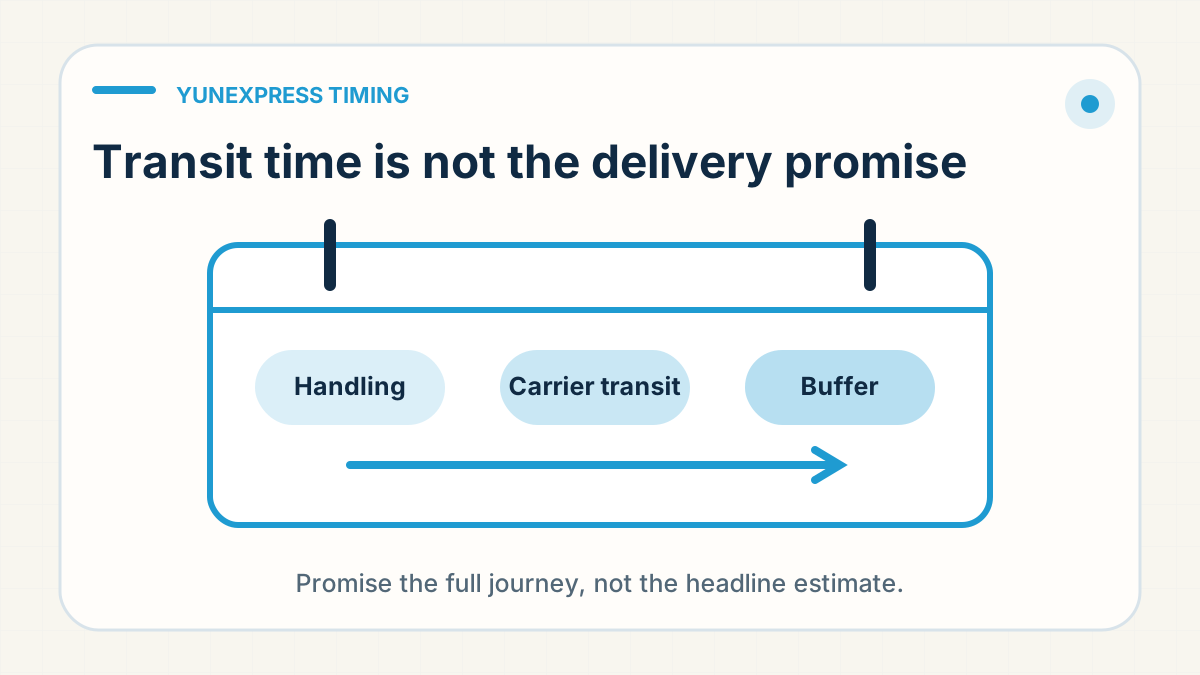
Your parcel reaches the carrier a median of 1.6 days after payment (orders paid 1 May – 3 October 2026). On RyanFulfil’s lanes, Express typically takes 2–9 working days from dispatch on major routes and Standard/Economy 5–12; the carrier depends on the lane we quote. Treat published YunExpress estimates as route information to verify, not a customer guarantee.
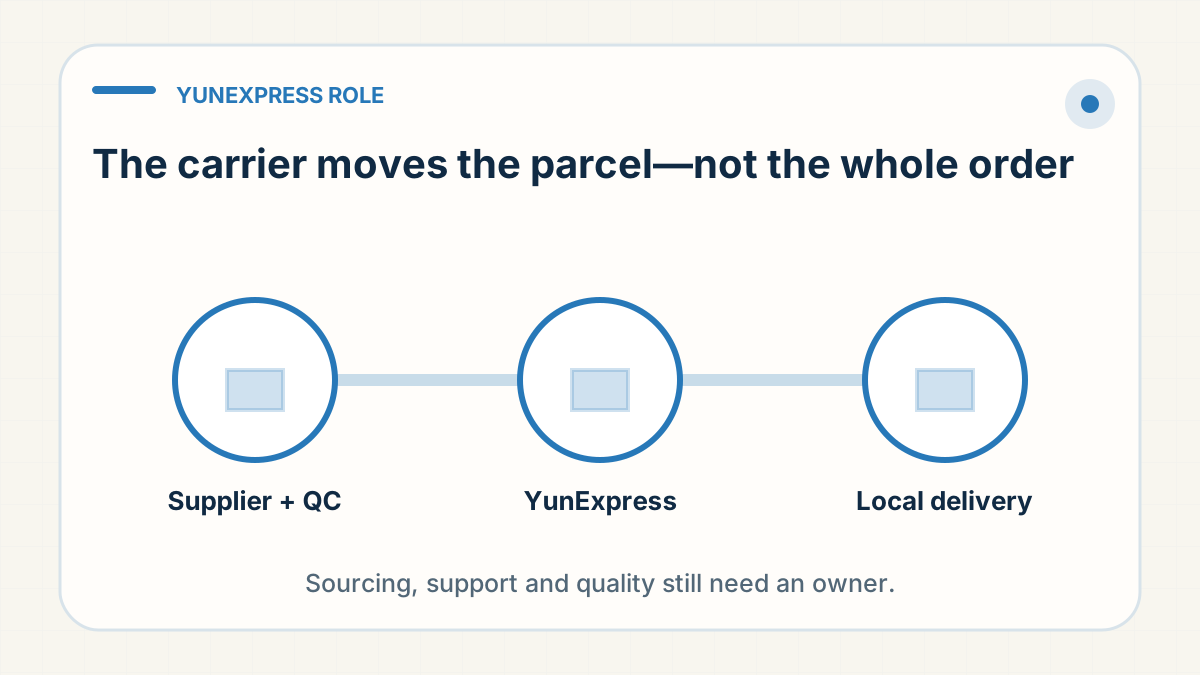
YunExpress shows up on a lot of tracking pages, but it's not your supplier, your QC team, or your support desk. Here's what it actually does, and what still has to be you (or us).
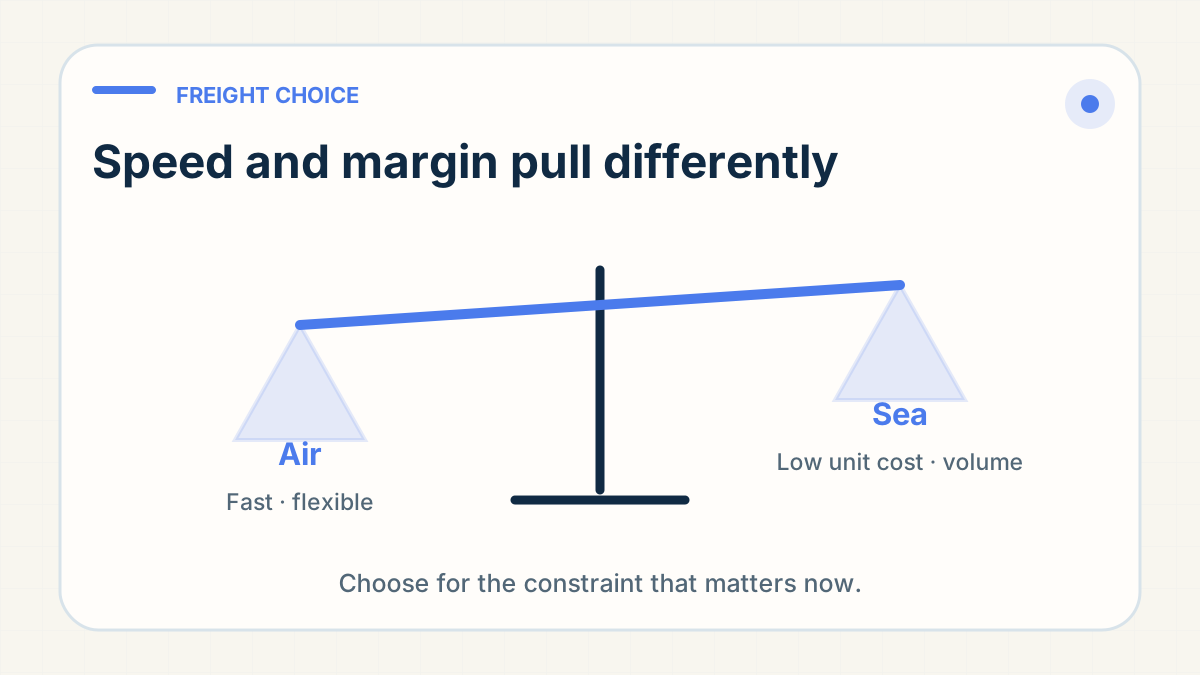
Air and sea are different inventory decisions. Compare the current route quote, total landed cost, packing requirements and stock-out risk before choosing either.
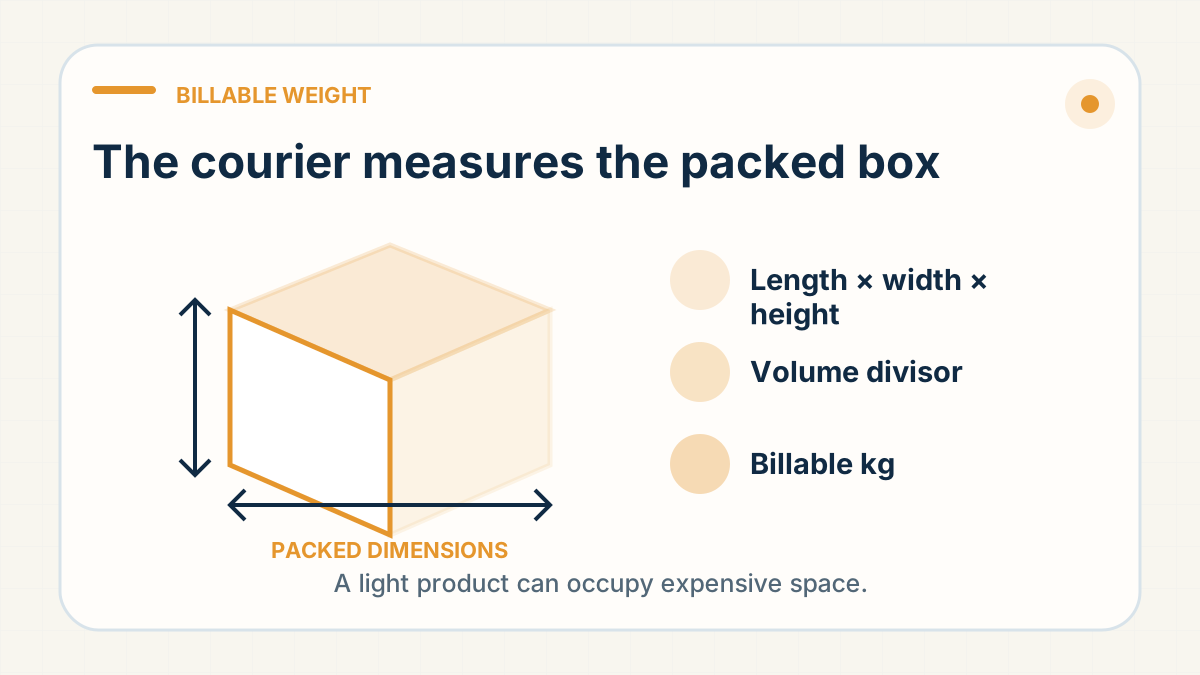
Couriers charge the greater of actual and dimensional (volumetric) weight — the box, not the product, sets the price. Measure the packed parcel before pricing.
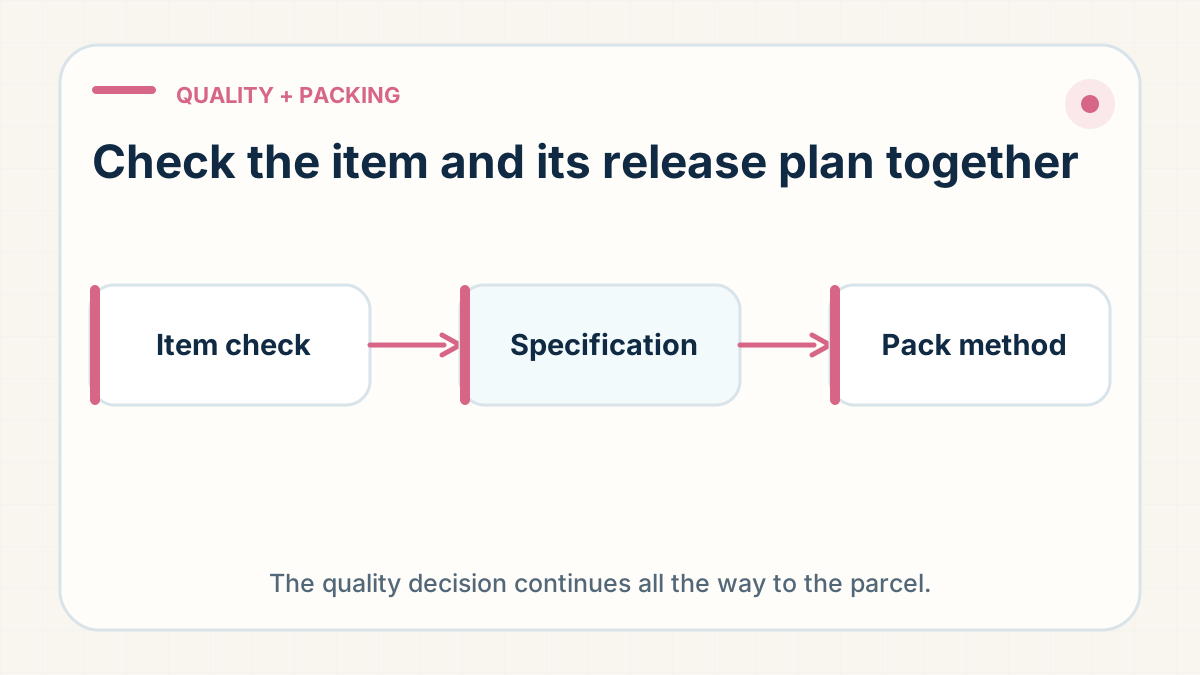
A quality check is incomplete if it ignores how the item will be packed, labelled and handled once it leaves the inspection table.
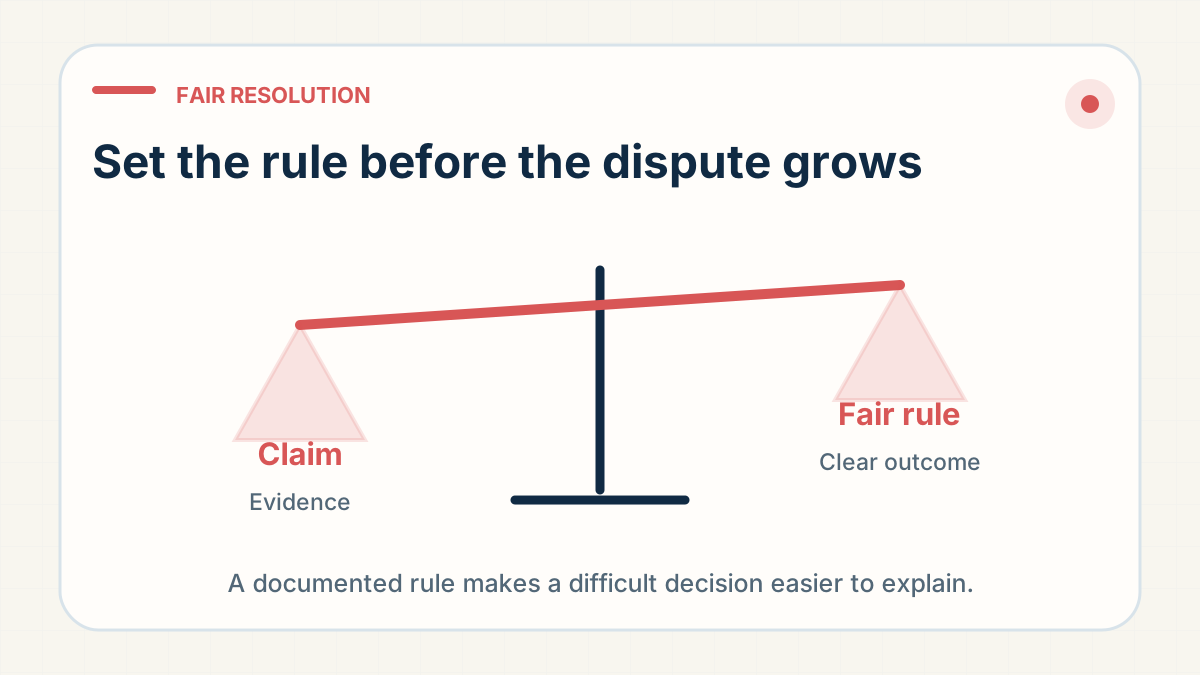
A damage-claim rule, a business-payment warning and a bulky sourcing enquiry each needed a different decision instead of one rushed answer.
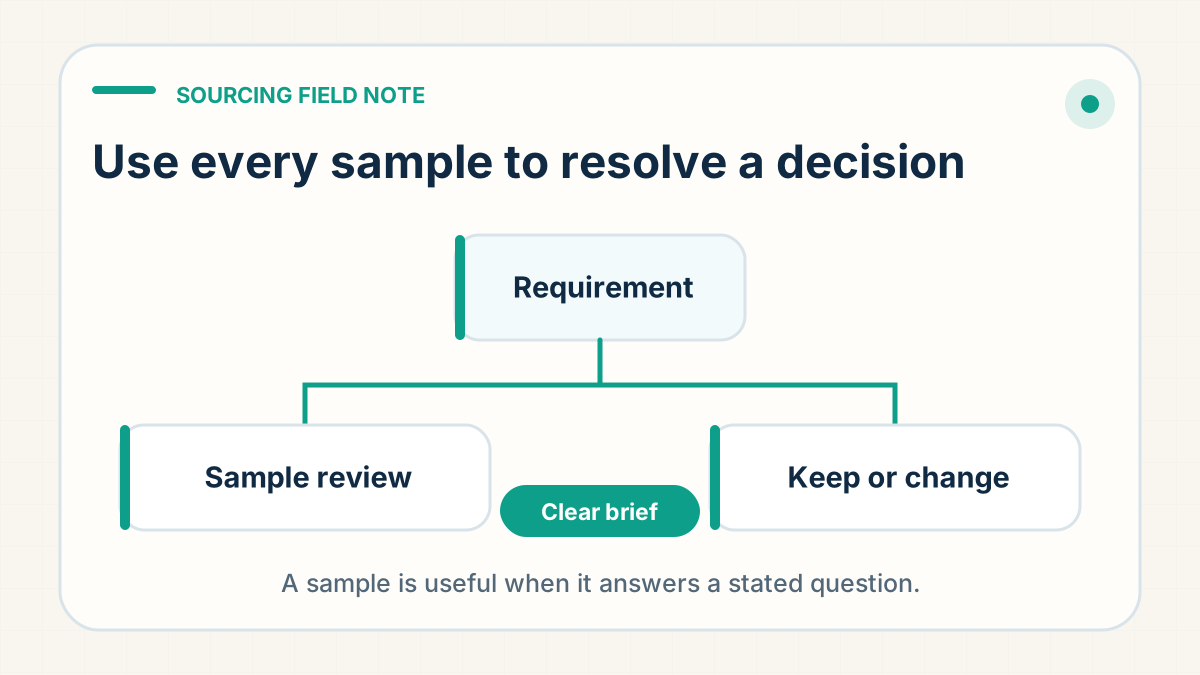
A sample is most valuable when it resolves a specific production decision, rather than becoming another vague option in a chat.
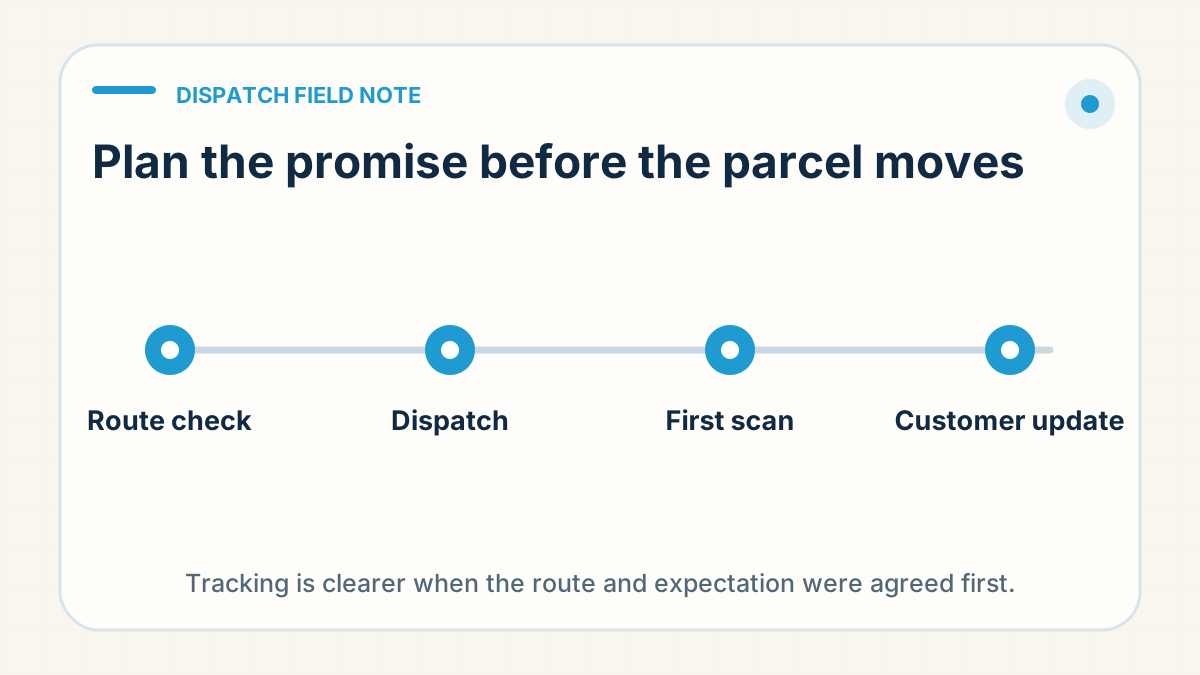
A dispatch-heavy day reinforced that tracking is not an afterthought; it starts with the route, address and handoff expectations before release.
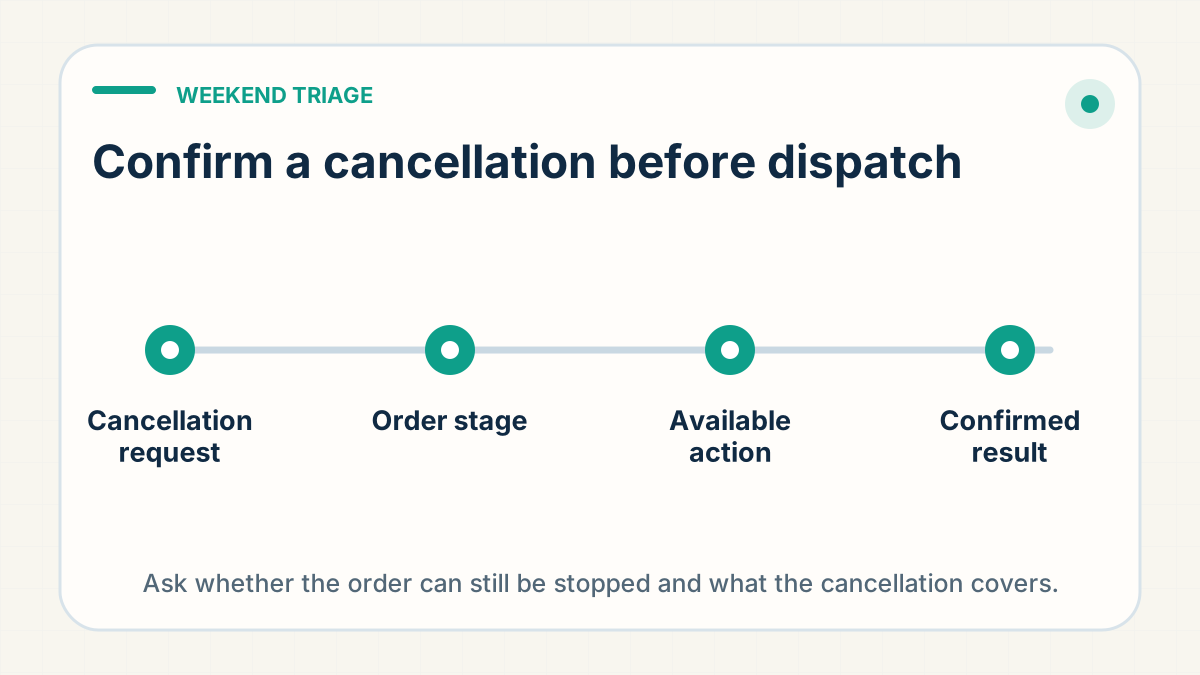
A quiet Sunday spent untangling weekend order cancellations, a first-order thank-you from a brand-new client, and a hat brand pushing us to go beyond generic dropship quality.
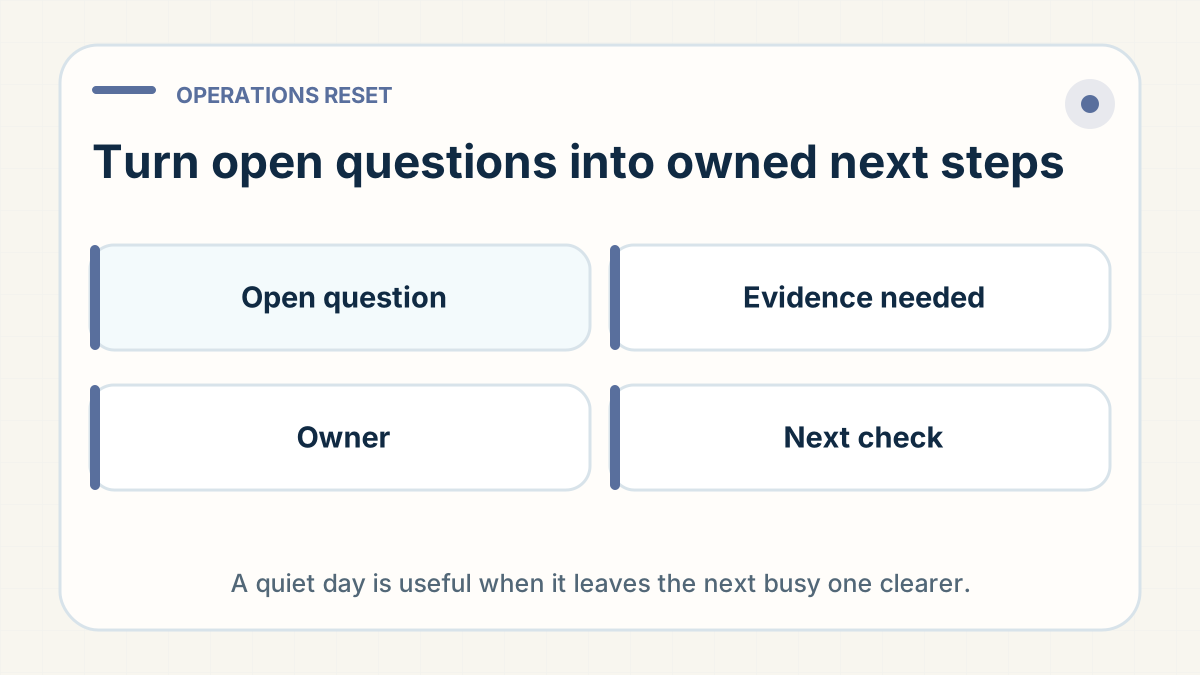
A quieter day is useful for turning open sourcing, stock and delivery questions into a short, owned list of next actions.
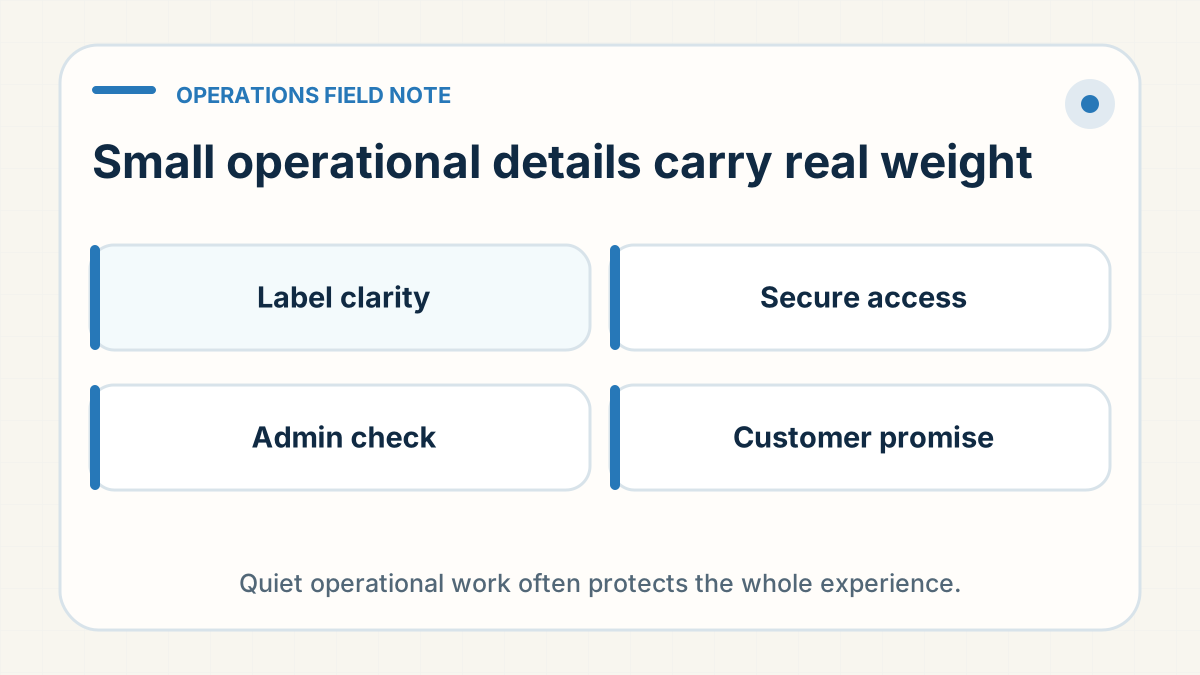
Keep the label origin and route truthful, give helpers authorised or collaborator access instead of a password in chat, and put payment decisions in a document.
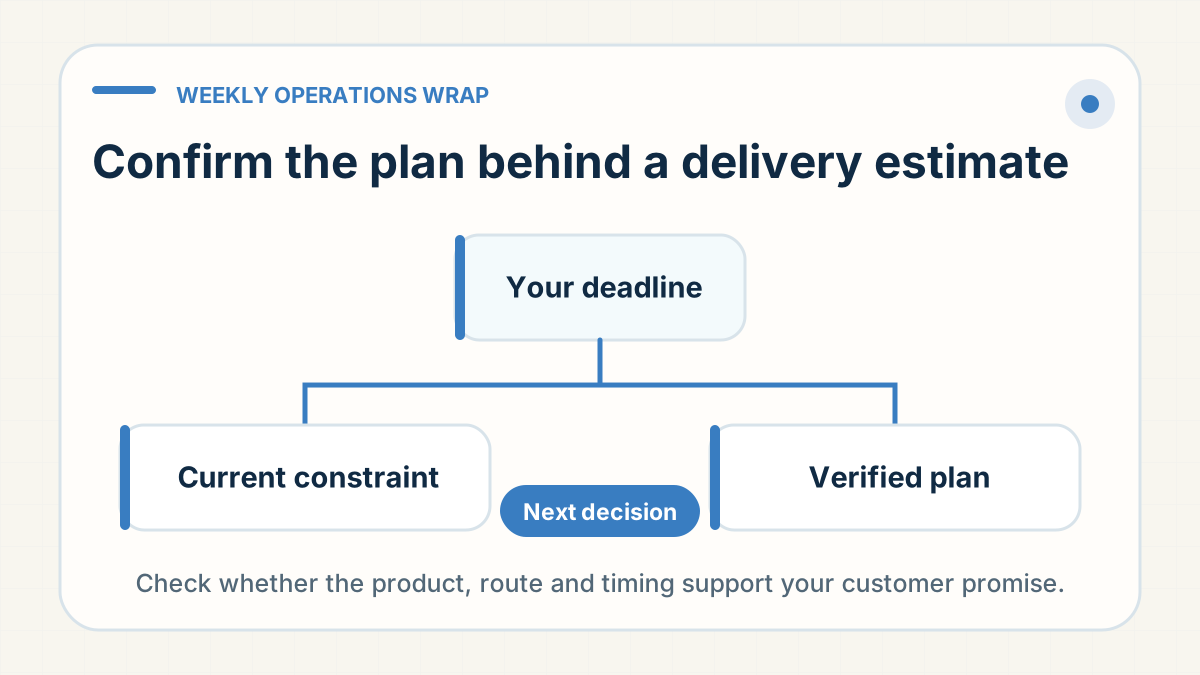
Turn every sourcing, quality and delivery promise into a practical step and a realistic expectation before you repeat it to a customer.
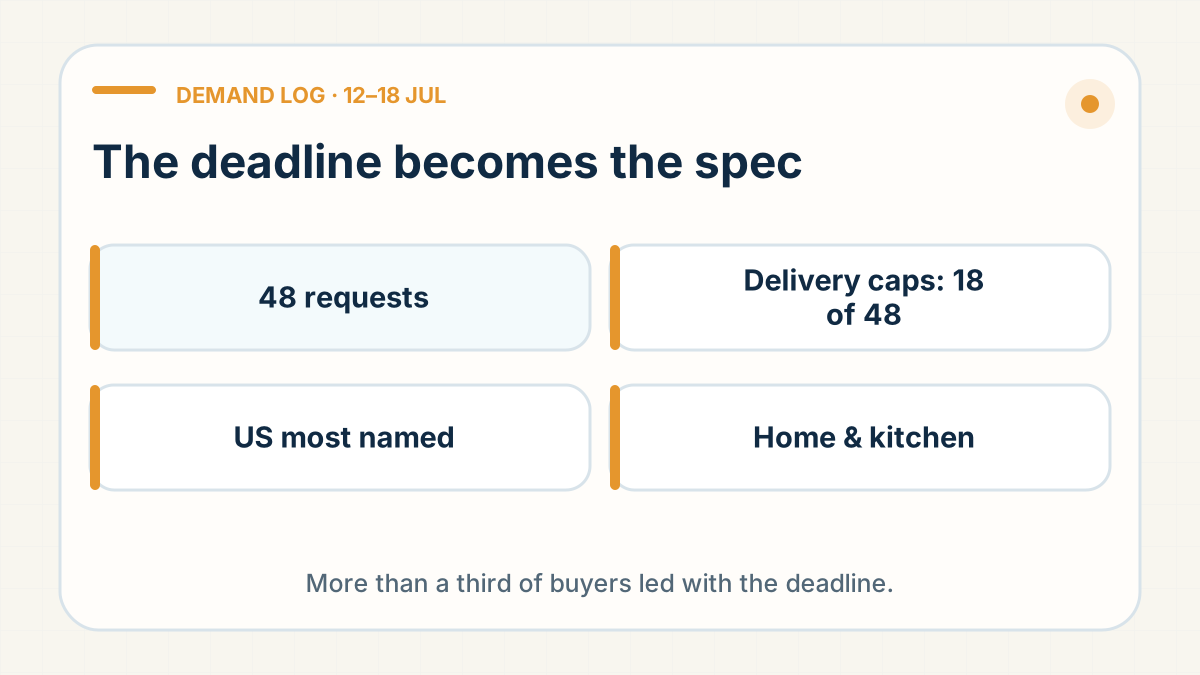
48 distinct supplier requests: 18 named a delivery-time cap or fast shipping, more often than any single product family was named.
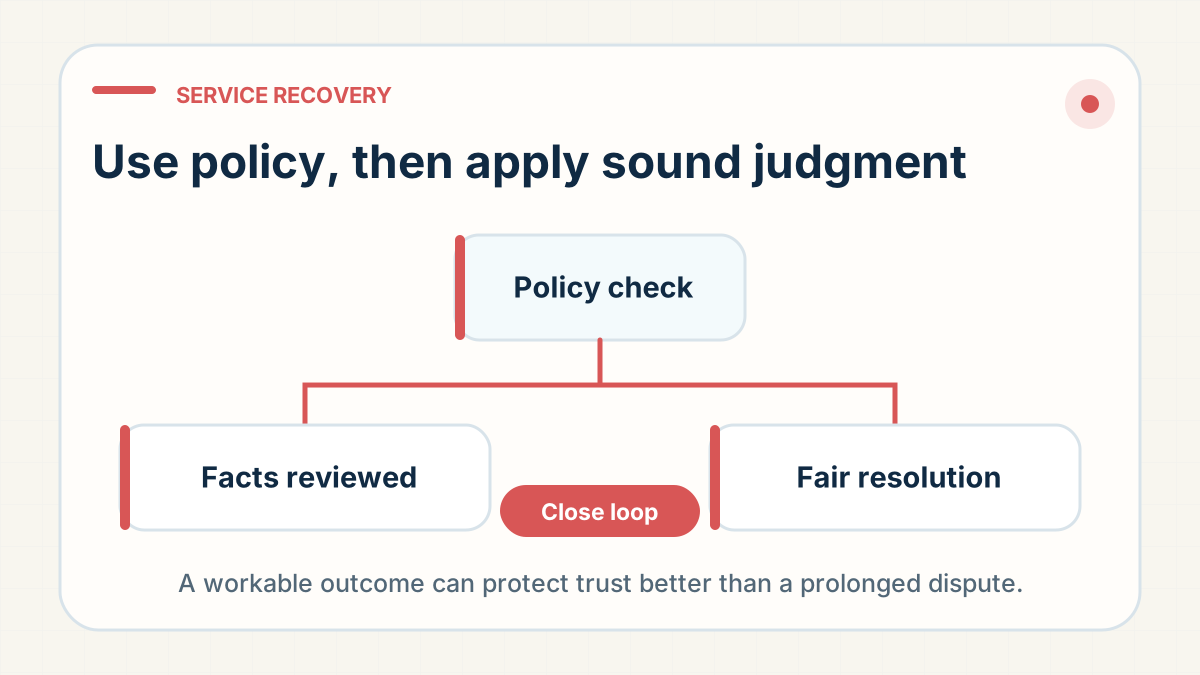
Keep forecast, sellable stock and confirmed inbound units apart, and resolve a long-running claim instead of asking for another round of inconclusive proof.
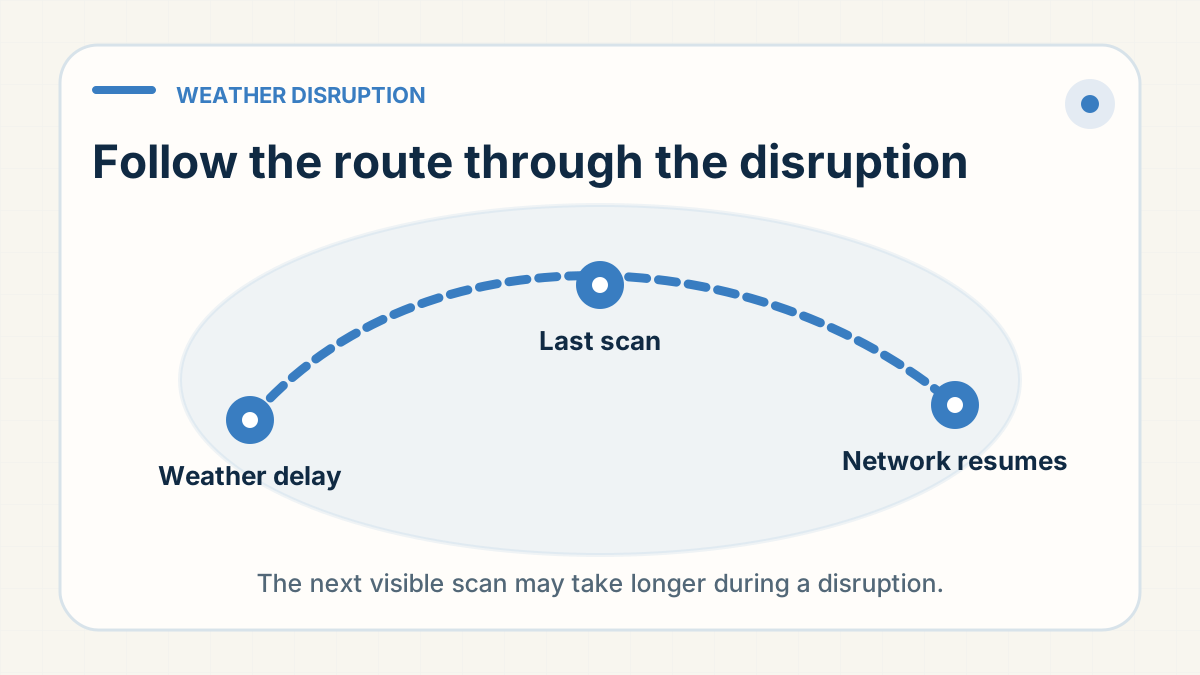
In a weather disruption, split parcels by state: give delayed stock a revised range, not a date, and work returned parcels as a finite list with fresh tracking.
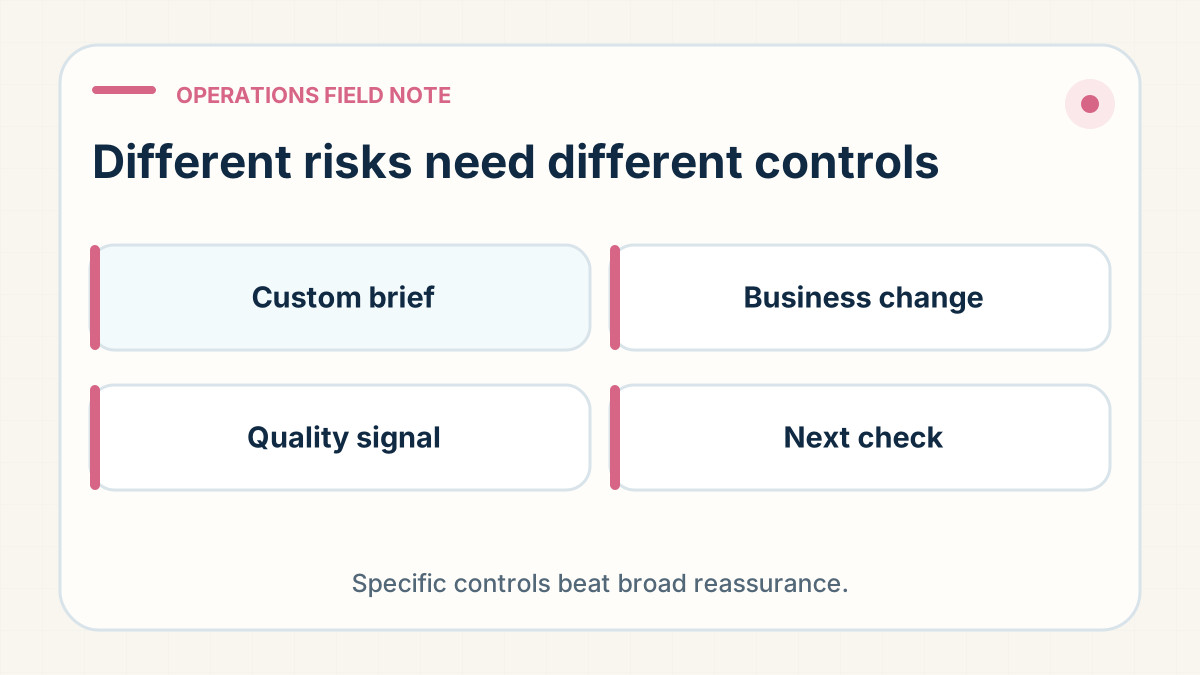
Give each problem its own control: custom dresses stay in sample-and-spec mode, a closing range becomes a stock decision, cracked screens get a batch check.
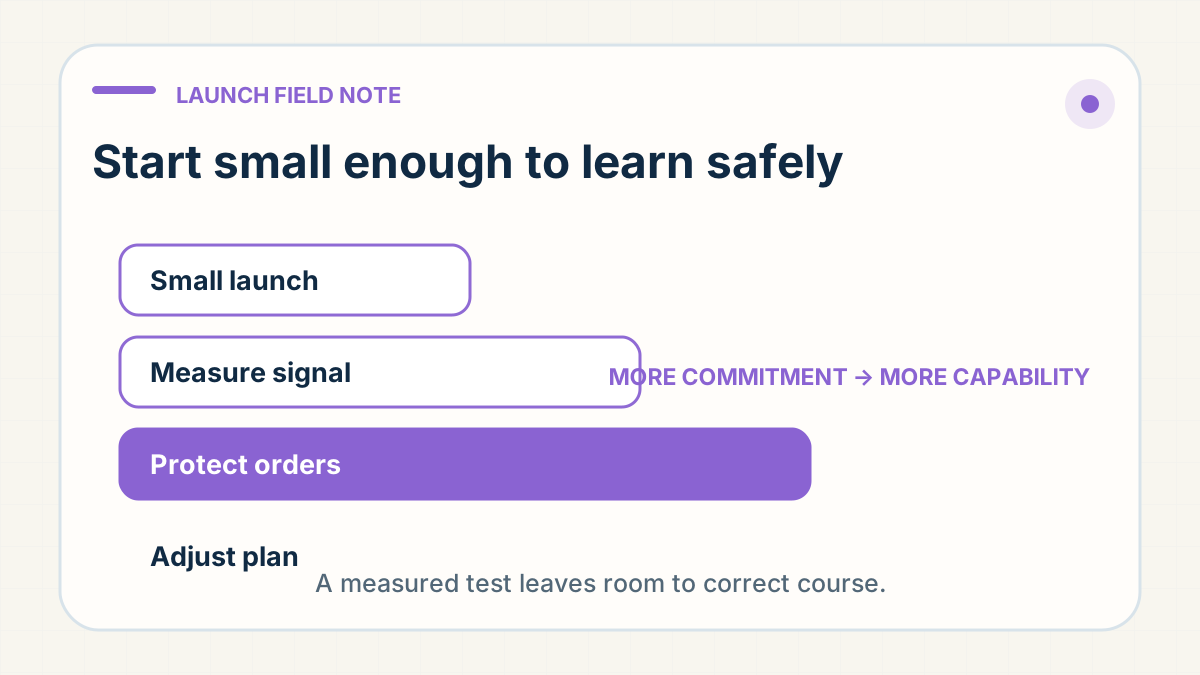
Keep a first restock small, tie the launch to the customer-ready sample and compliance evidence, and review an overnight platform issue order by order.
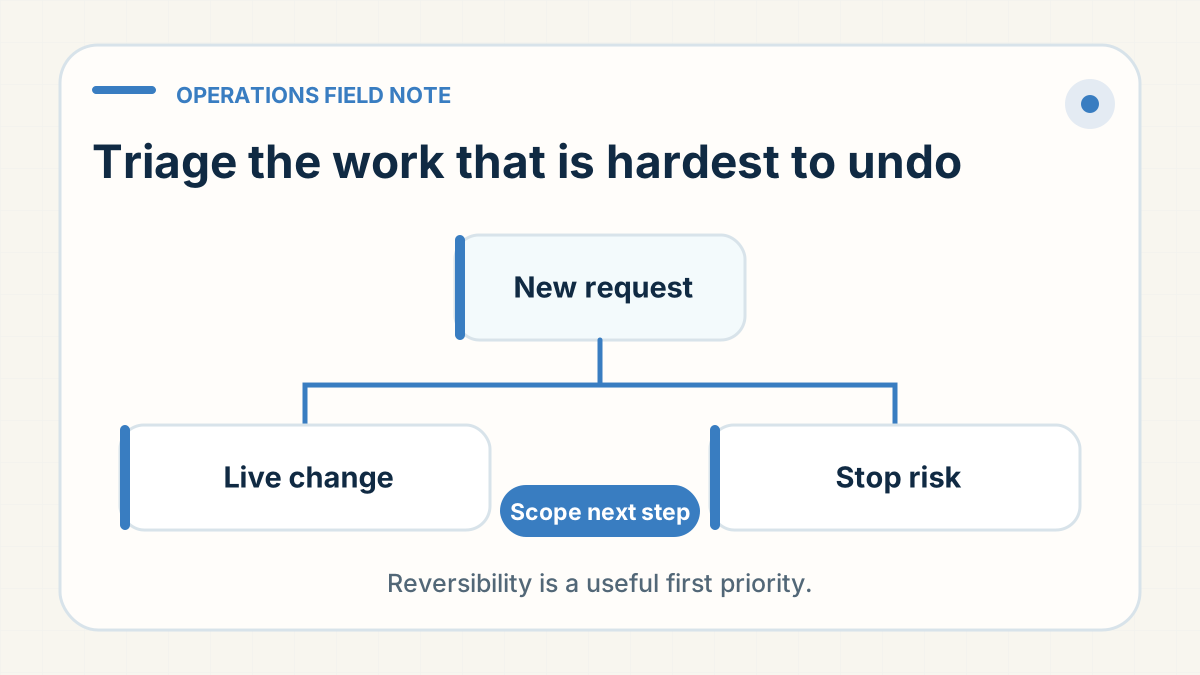
Triage by the cost of waiting: check whether a cancelled order was bought, packed, labelled or handed over, and give a new add-on its own sourcing brief.
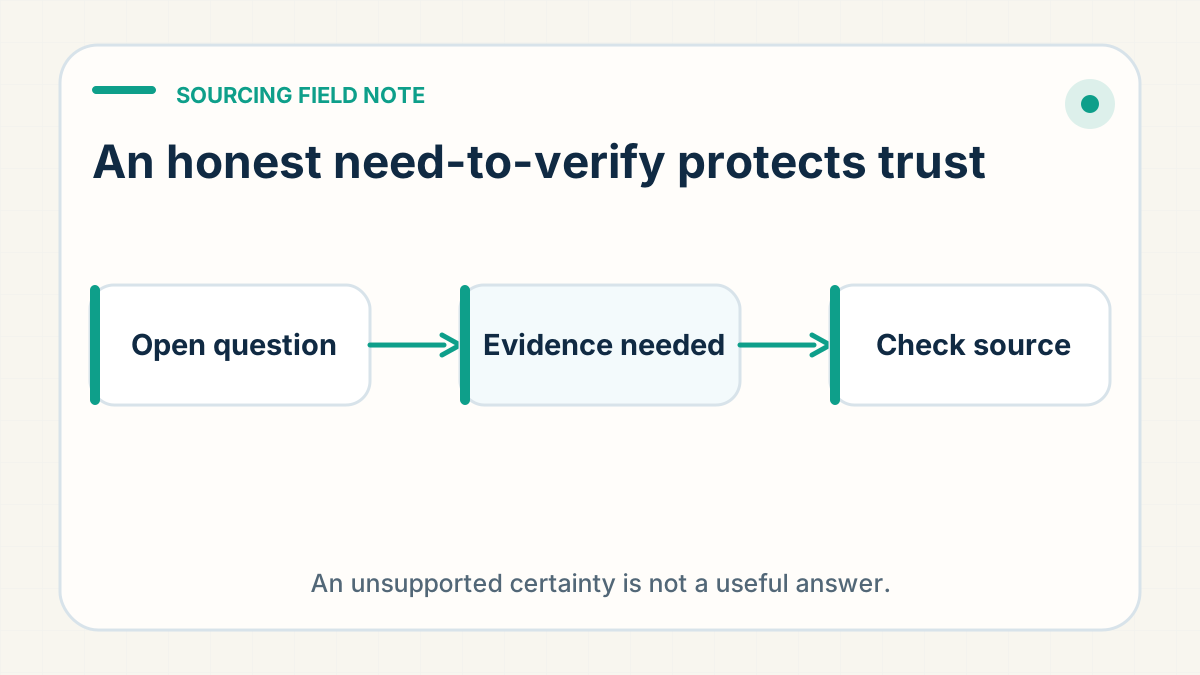
When you cannot answer a sourcing question yet, say so and send the supplier a short check: material, finish, construction, minimum, sample route and lead time.
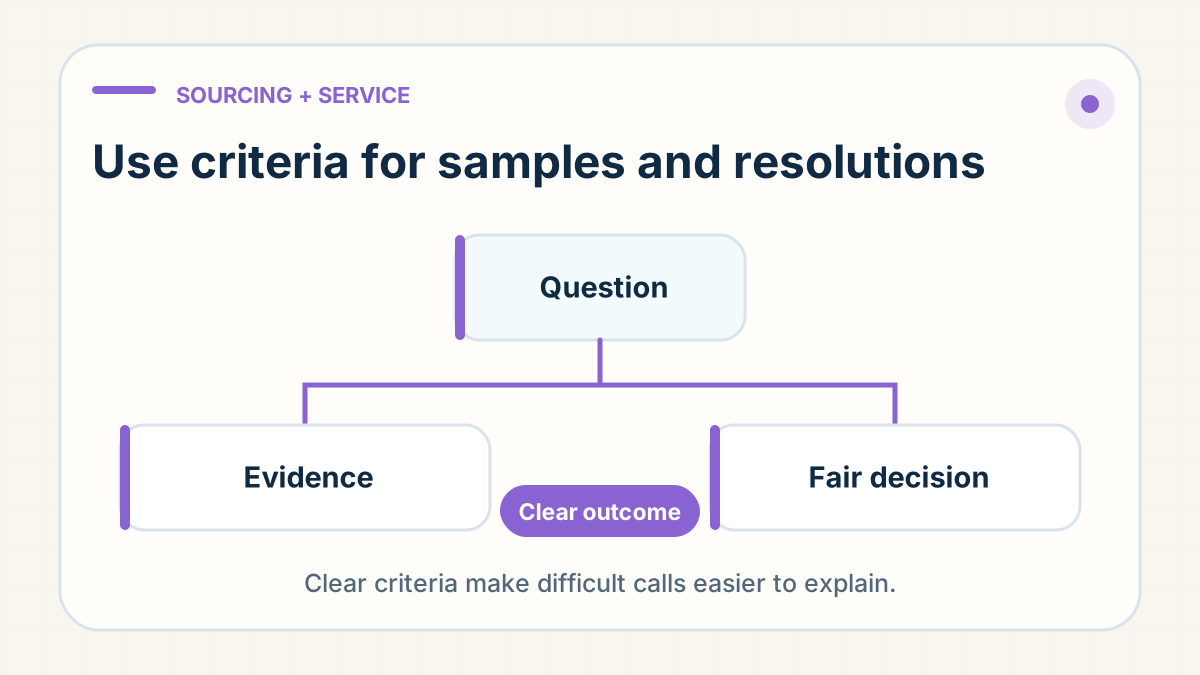
Use fabric swatches to decide keep, revise or sample again, with unchanged requirements beside each change, and settle a one-off issue without new policy.
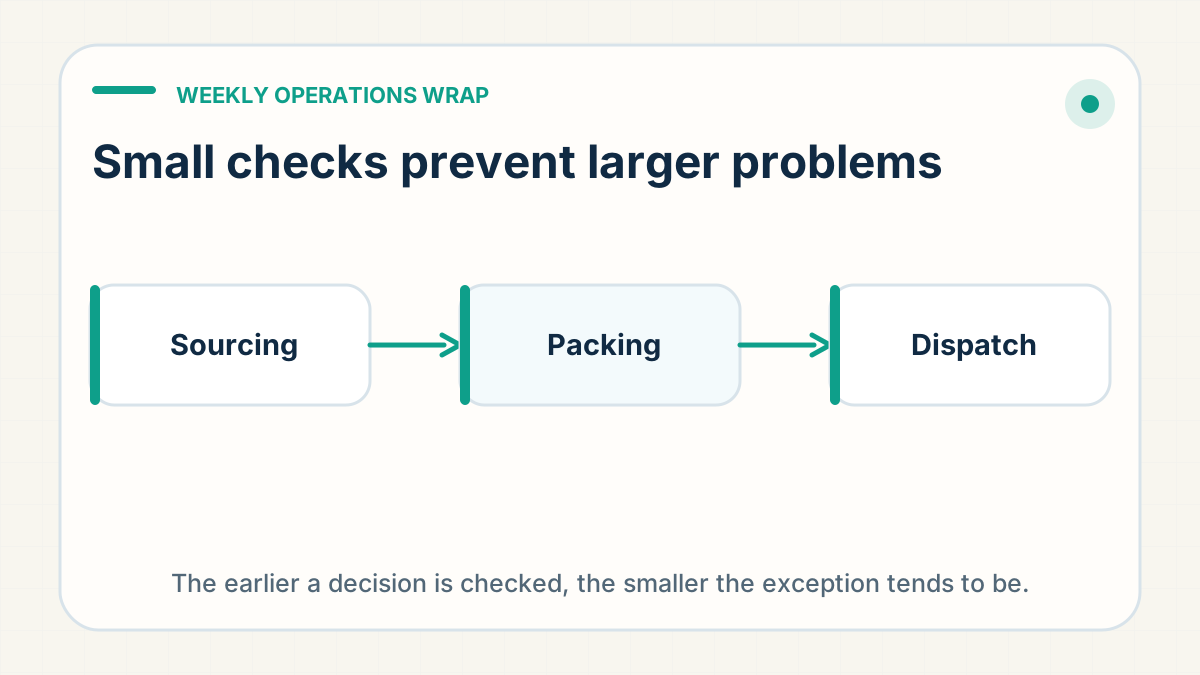
Check sourcing, shipping, packing and the commercial decisions early: early checks prevent disproportionate problems later.
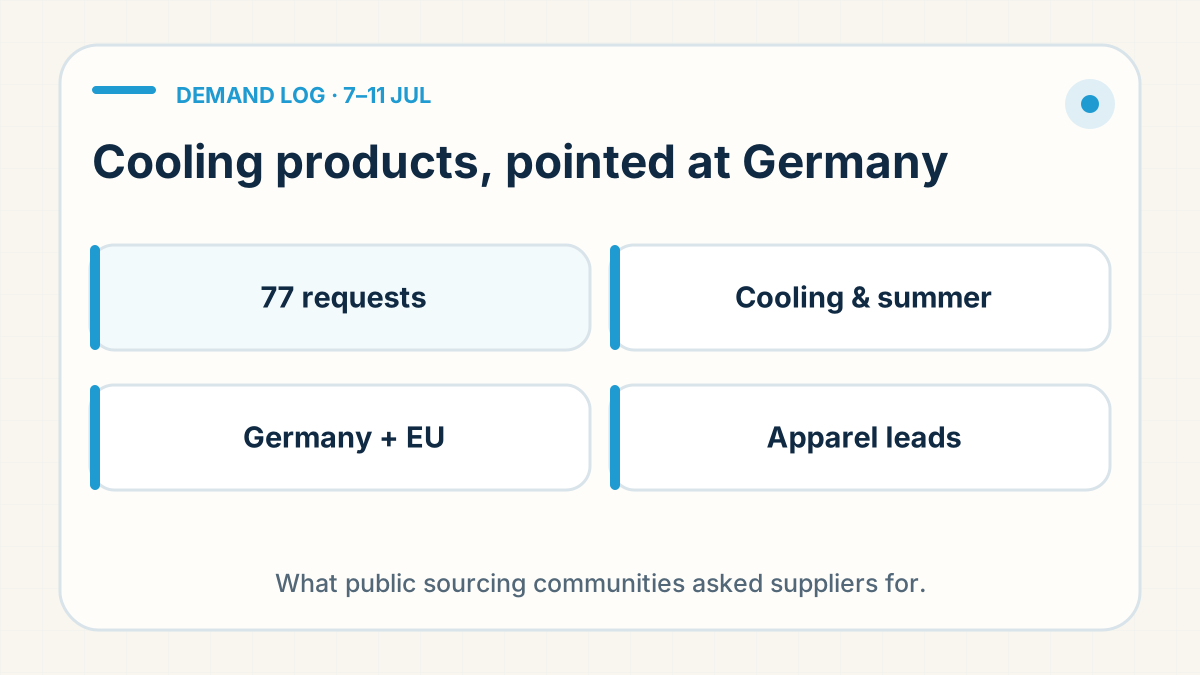
The first entry in our public-community demand log: 77 distinct supplier requests, led by apparel, cooling and summer products and jewellery — with Germany the most-named single market.
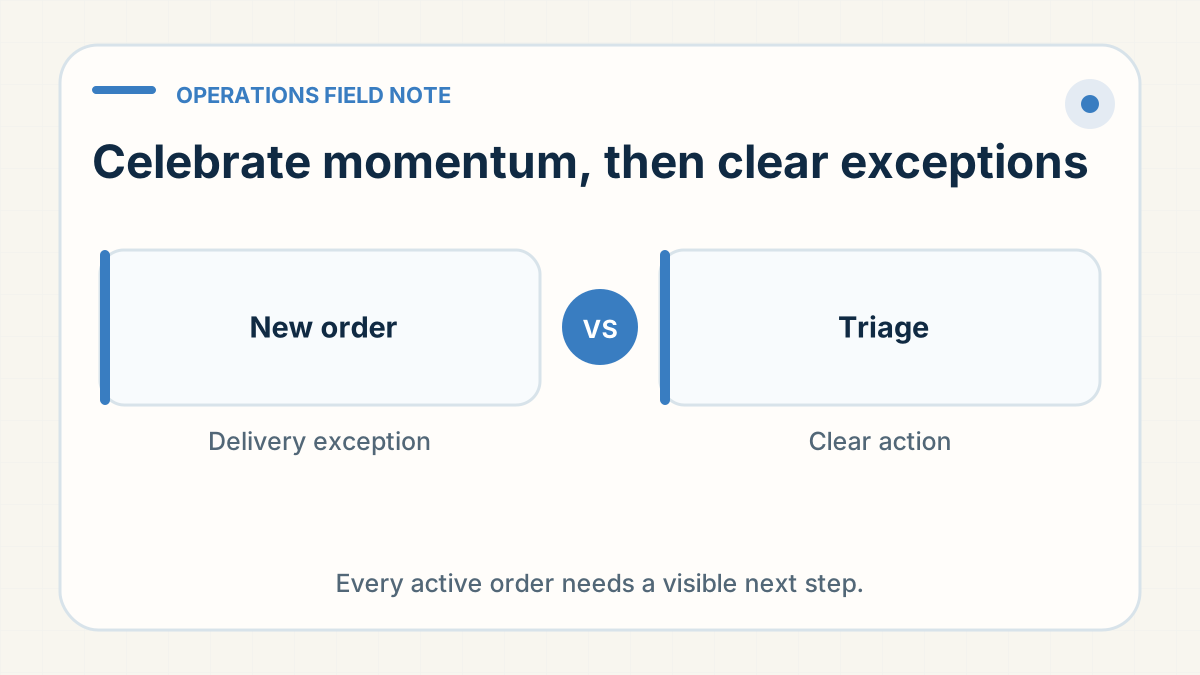
Sort stuck deliveries by physical state and next actor instead of calling them all delayed, so another operator can pick up each case without rereading chats.
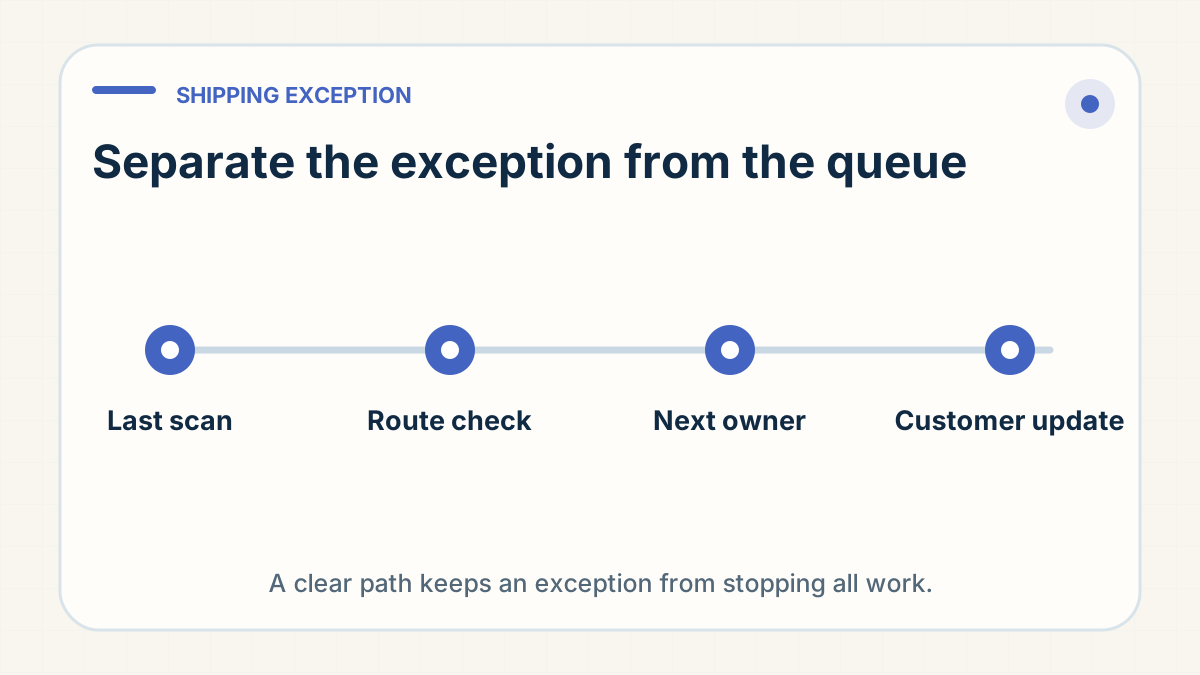
Pull a live customs exception out of the queue: record the last confirmed event, the redelivery or reship path, who acts next and the date of the next update.
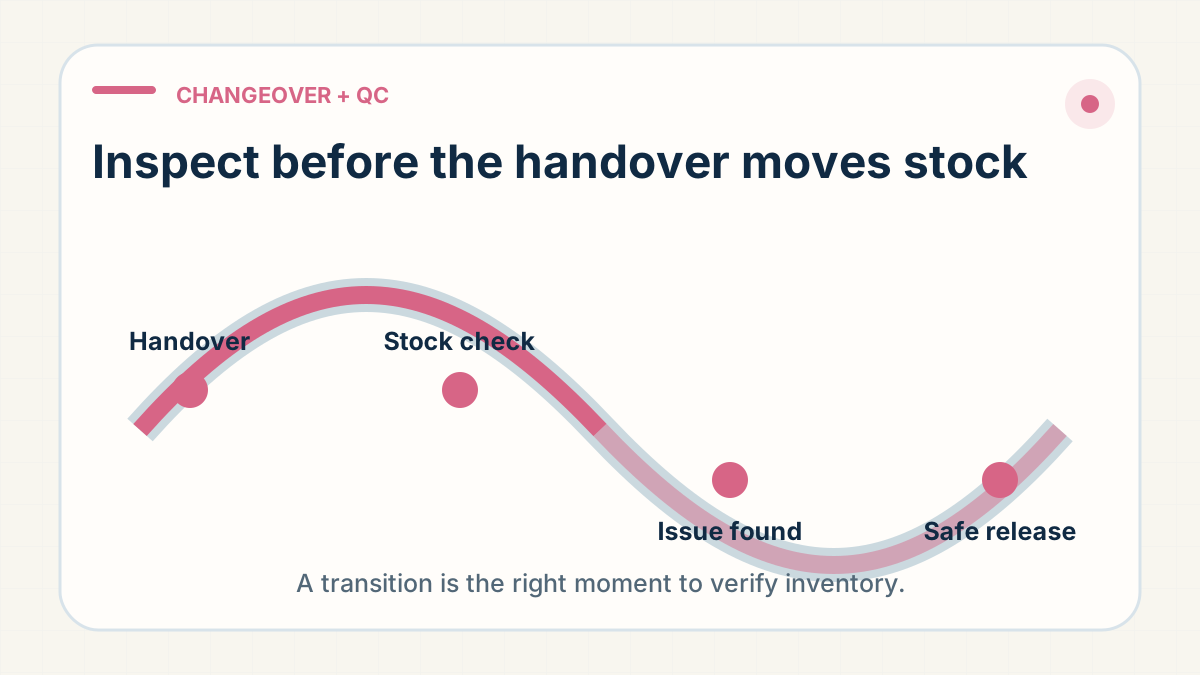
When you switch fulfilment agents, hold and photograph doubtful units, check them against the approved reference before release, and let clean stock move.
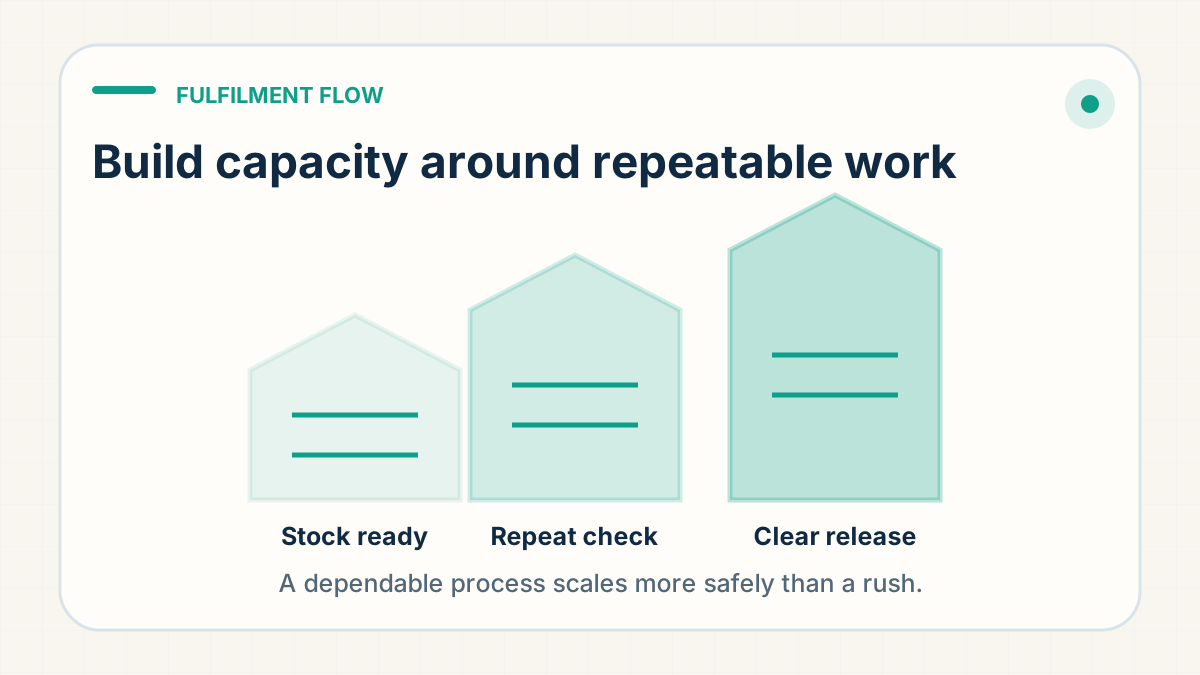
Grow warehouse capacity one batch at a time: make receiving, variant names, inspection and stock deductions repeatable before you add cover or a location.
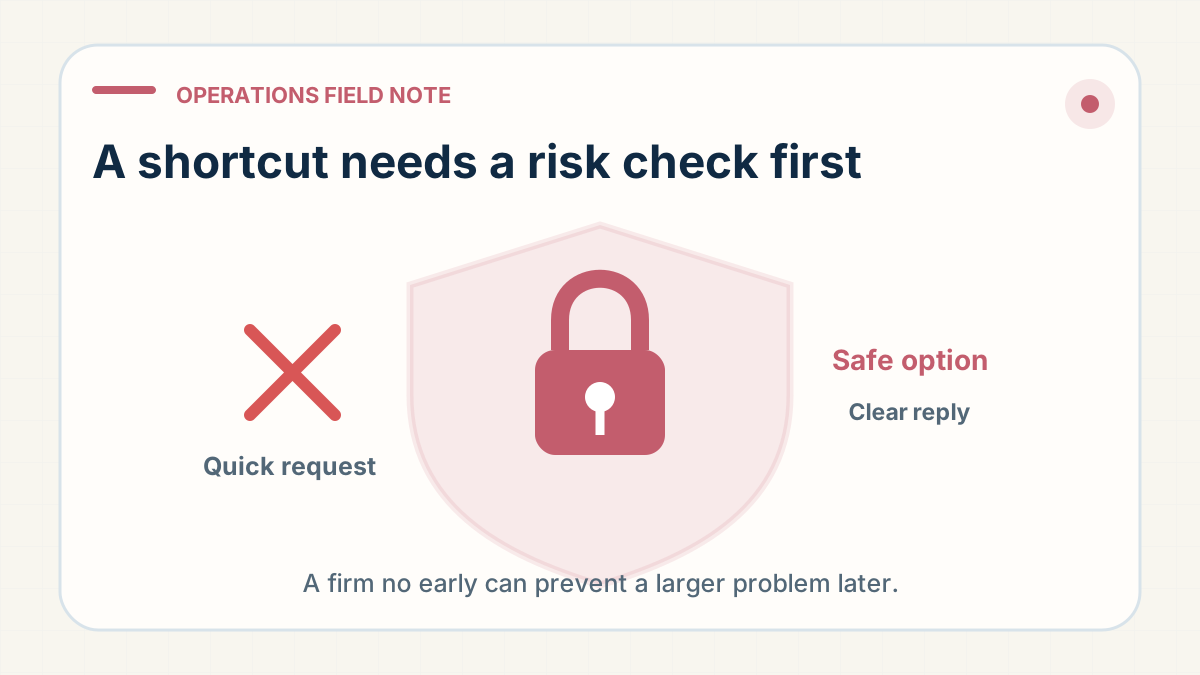
Say no early when a shortcut moves risk to customs or the buyer: decline branded apparel for Japan, redo the print batch and count the headwear before release.
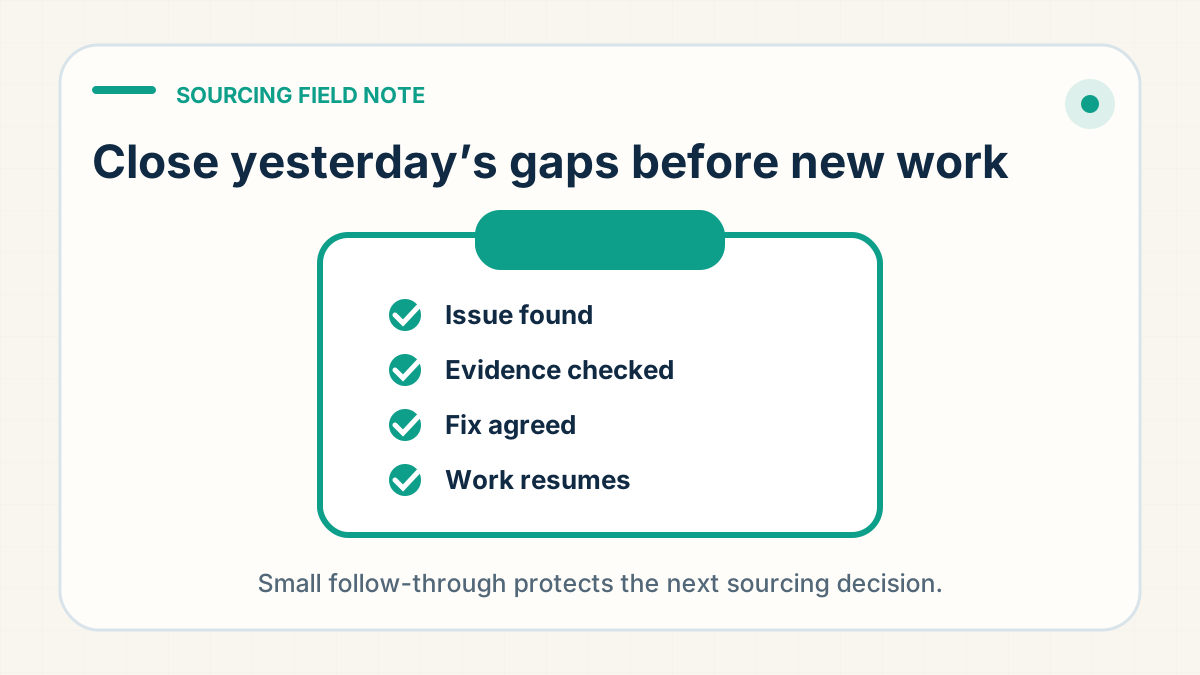
Before a new week starts, give each physical variant one name and a matching photo, and note what still needs supplier confirmation.
A fast-growing product faced factory stock shortages, smaller daily purchases and a pricing question when a later volume commitment secured a better rate.
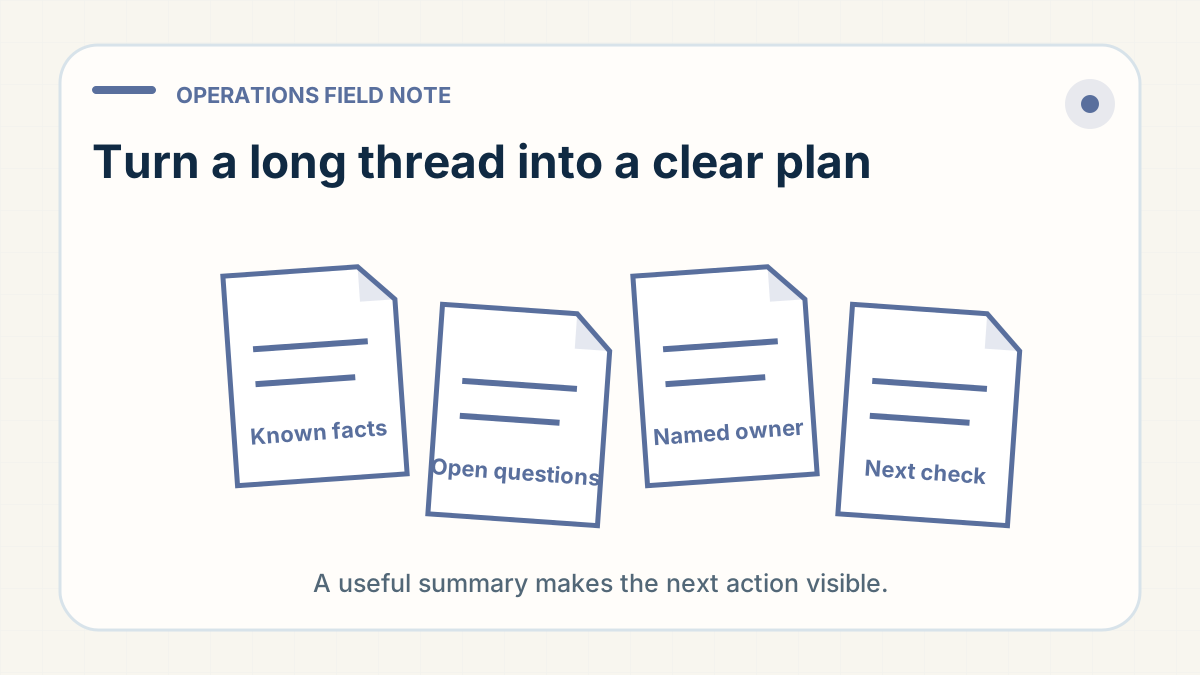
How a slower day helped turn a high-volume product plan and warehouse question into a clear, owned next step.
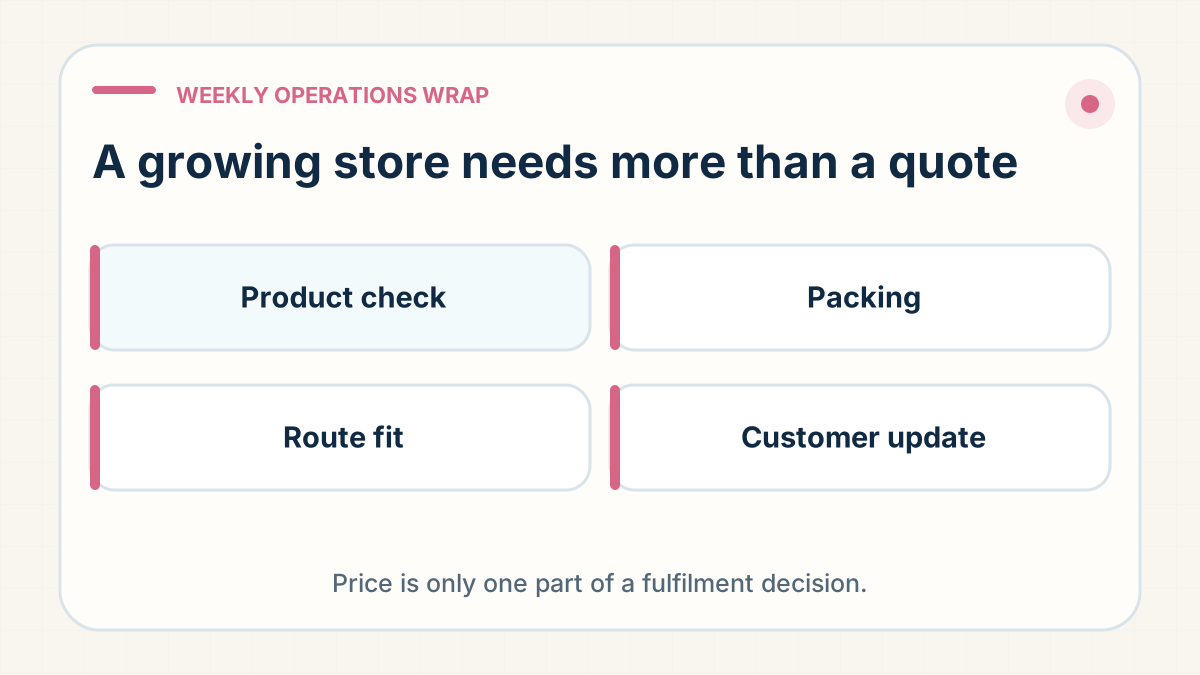
A growing seller needs product evidence, route fit, packaging and customer communication to work together; a unit price alone settles none of them.
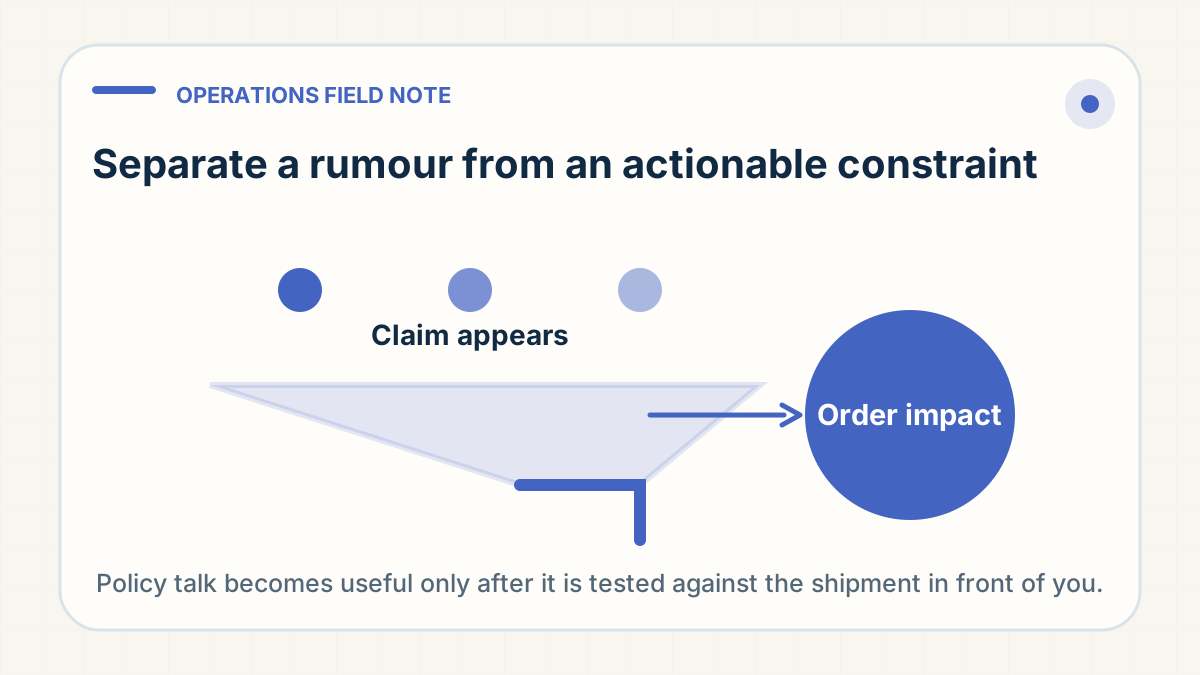
A buyer checked a reported US documentation change, while a separate apparel account needed order-line ownership across warehouses.
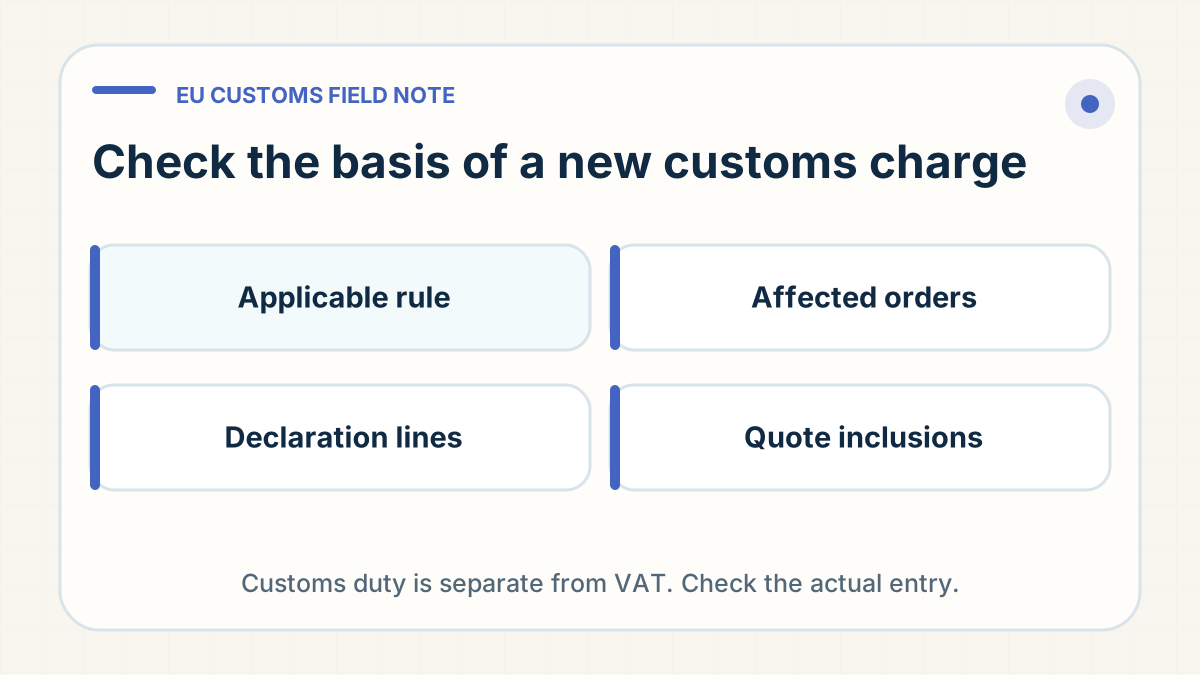
Check the basis of a new customs charge against the affected orders, and confirm access and open-order responsibility when a store changes hands.
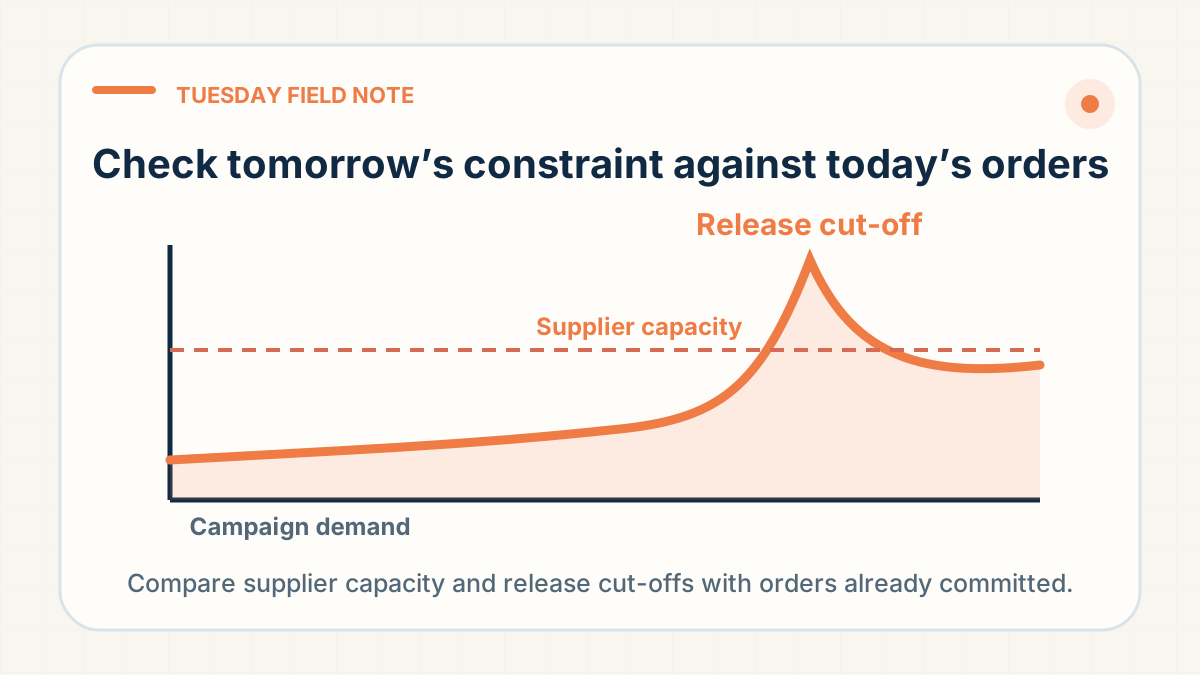
Before a rule change takes effect, check tomorrow’s fees, stock limits and release rules against today’s open refunds, address changes and delivery exceptions.
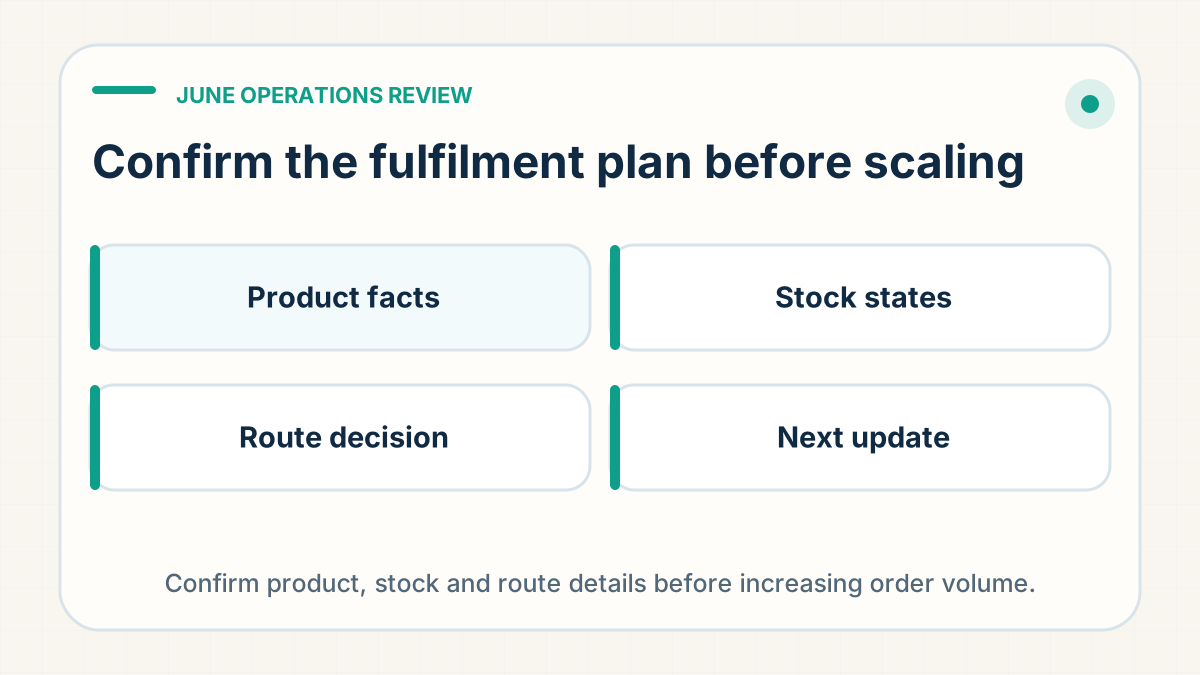
June in 30 daily notes and five weekly reviews: seller stages, sourcing and delivery cases, what the team overcame, and the controls dropshippers can reuse.
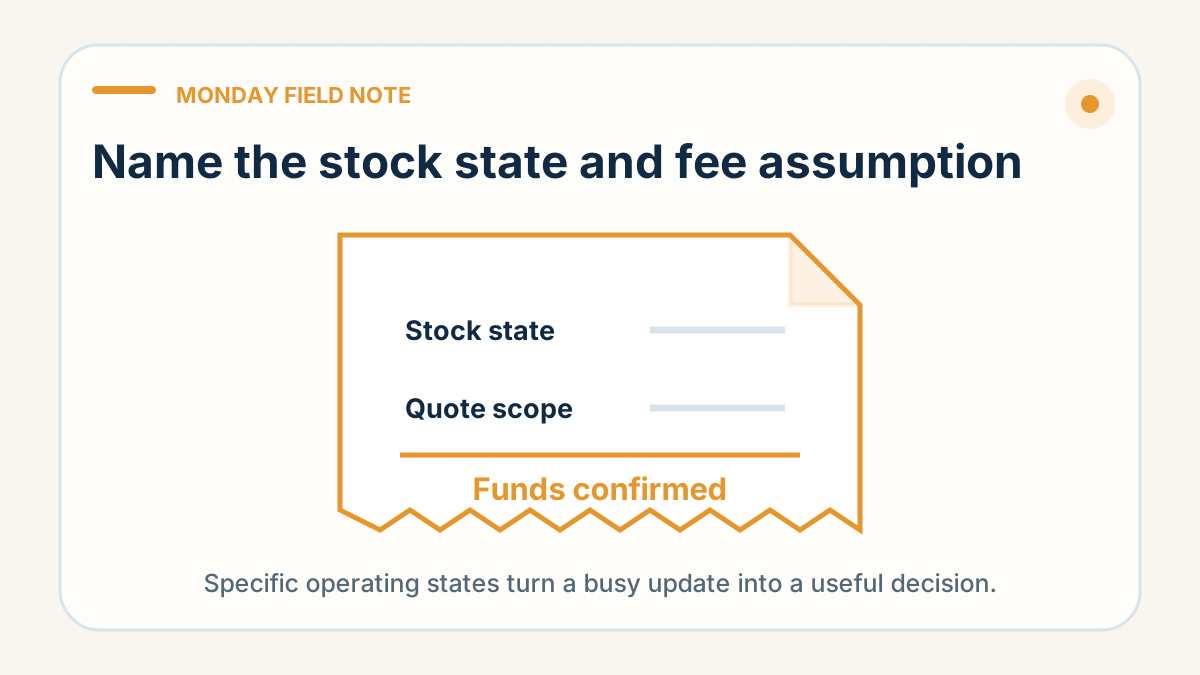
State stock status, fee changes, payments and shipping updates precisely enough that the seller can make a real order decision from them.
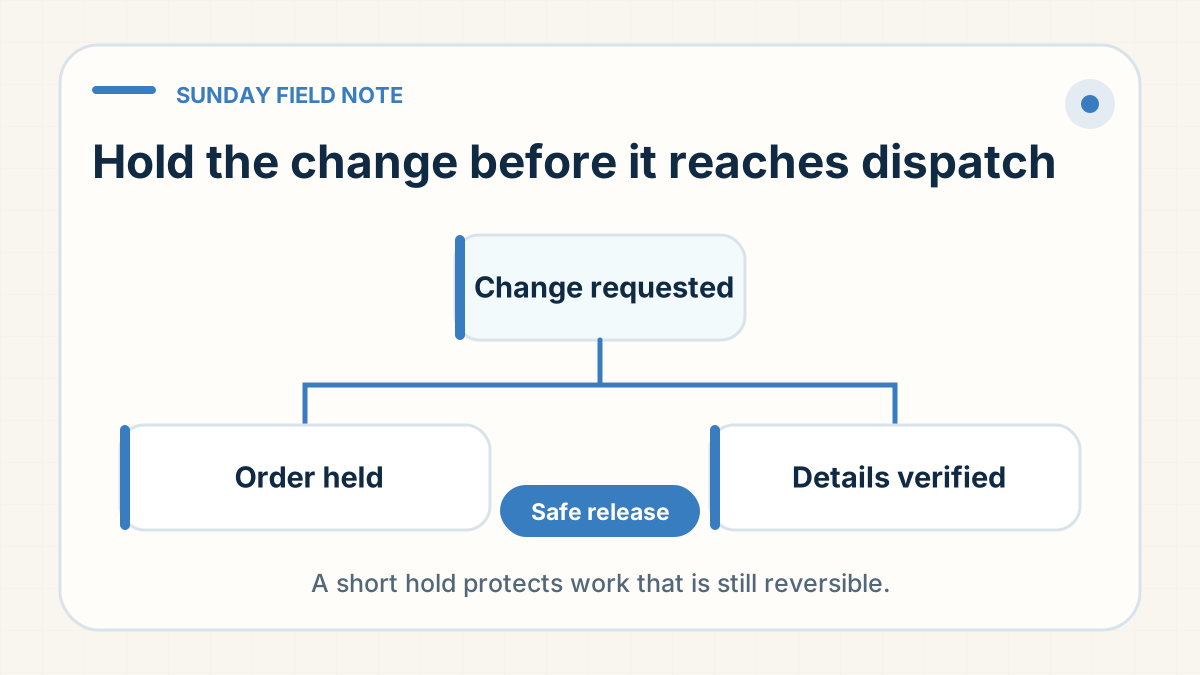
Hold changeable orders on a Sunday, check the sample and route dependencies, and give Monday a short list of exact checks before anything moves.
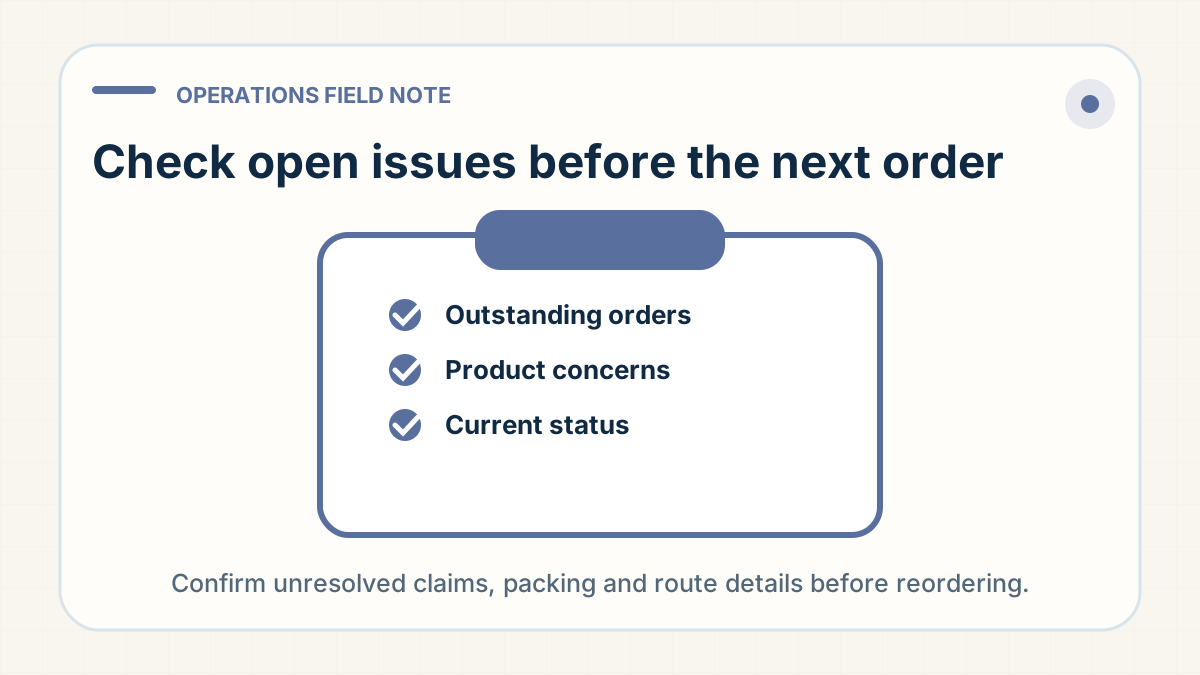
A seller accepted a newer product version, a custom case range reached two approved variants, and tax questions still needed dated order checks.
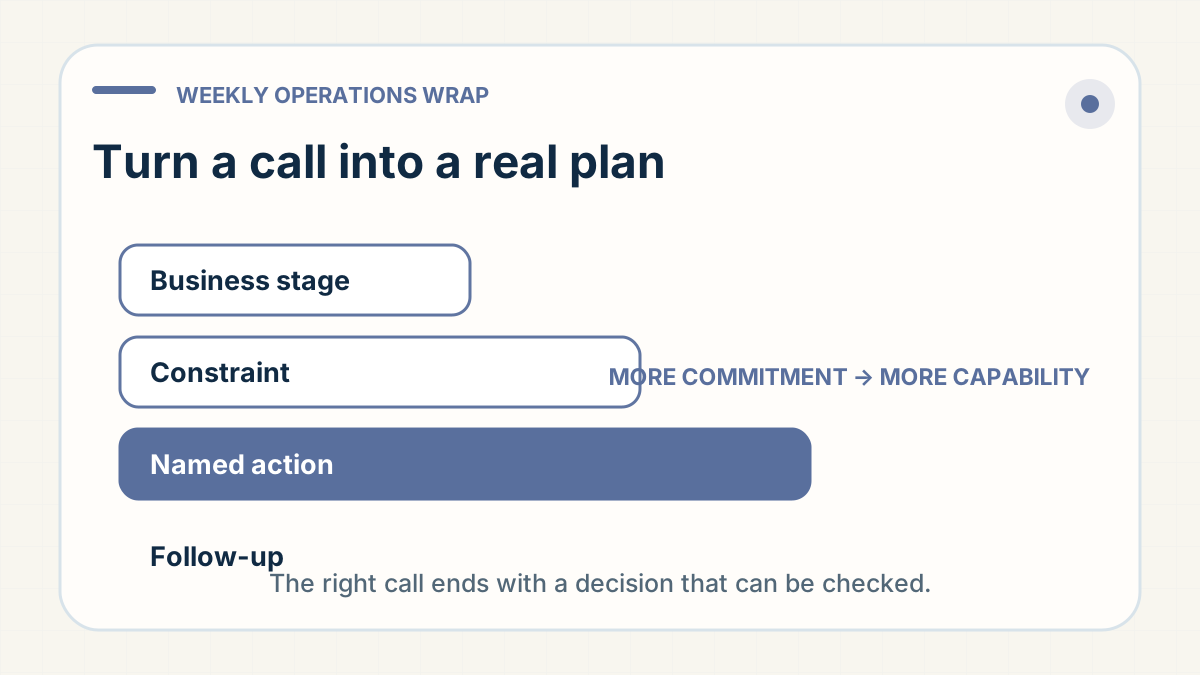
Use each seller call for three things: clarify the commercial stage, expose the constraints and agree the next useful commitment.
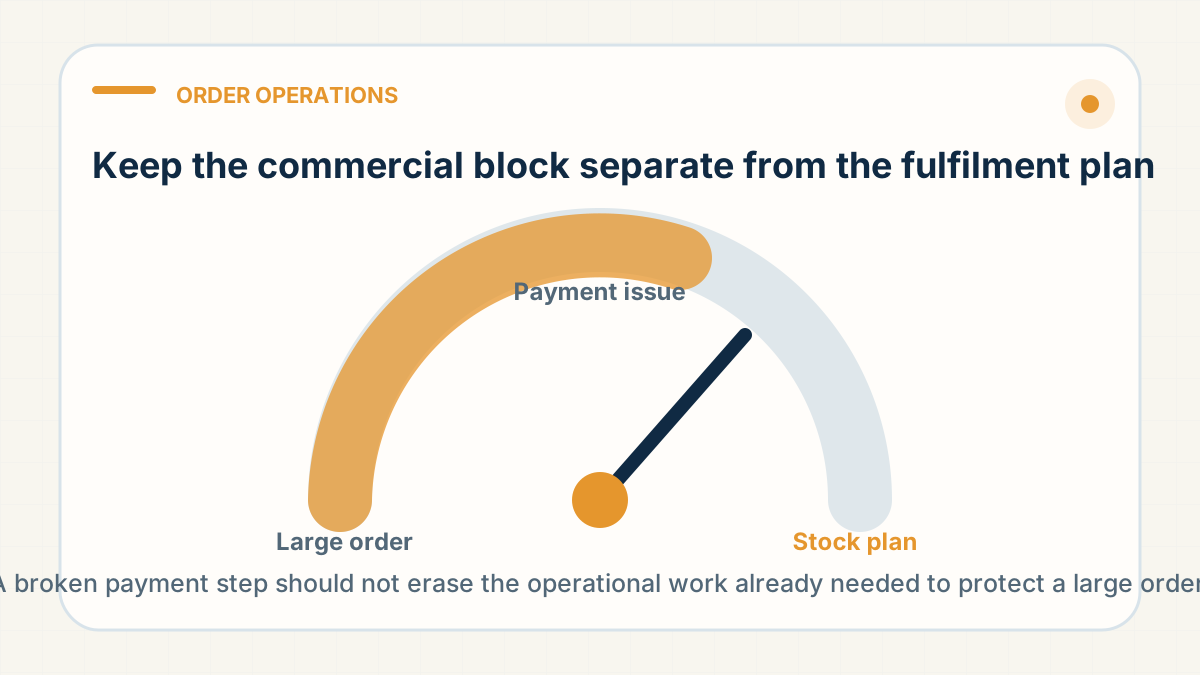
A payment link that took six messages to explain, and one client's very serious plan to order a large sourcing run of glasses.
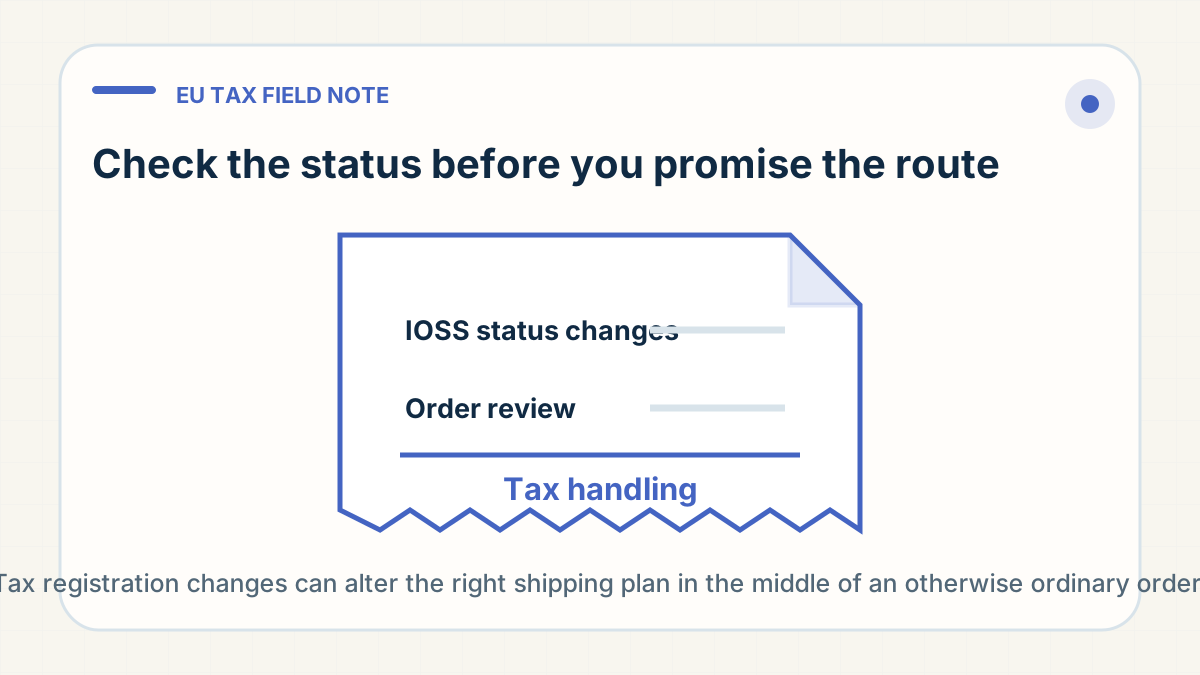
A client deregistering from IOSS over rising EU tariffs, an inventory deposit landing right before a tax deadline, and a new store going live.
A cluster of device complaints, a sourcing budget we could not meet and a marketplace-policy question each needed a different evidence-based answer.
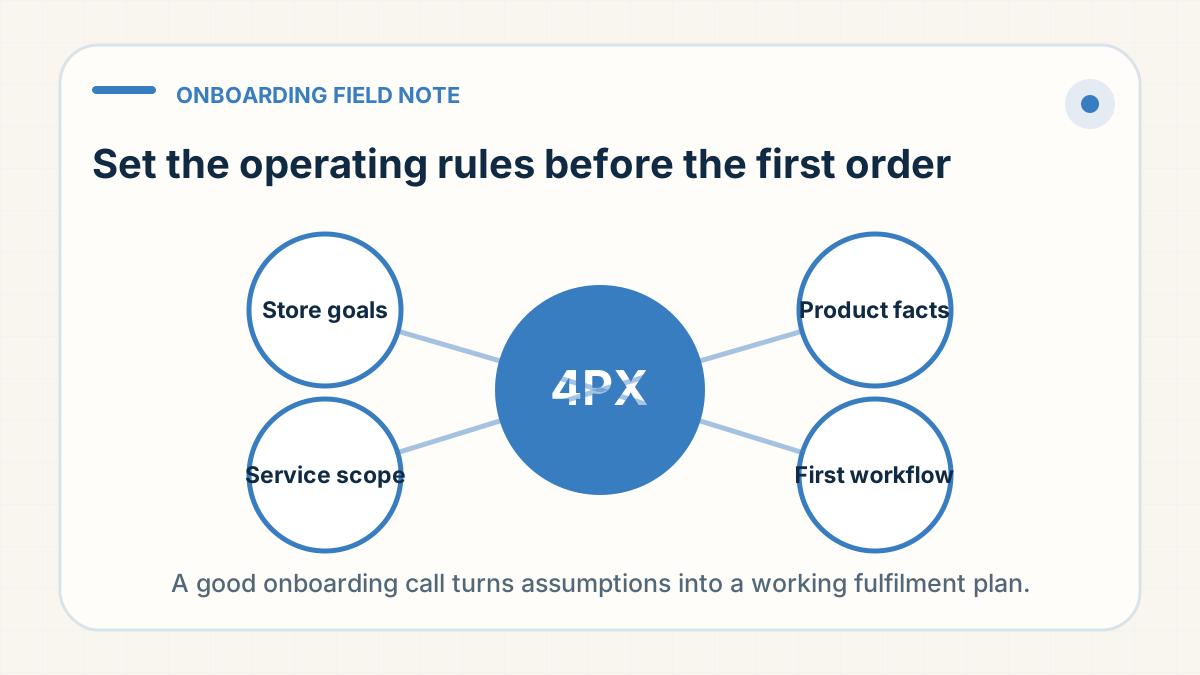
Before a new store sends live orders, run one documented test order, name an owner for every hold and agree what “ready to fulfil” means.
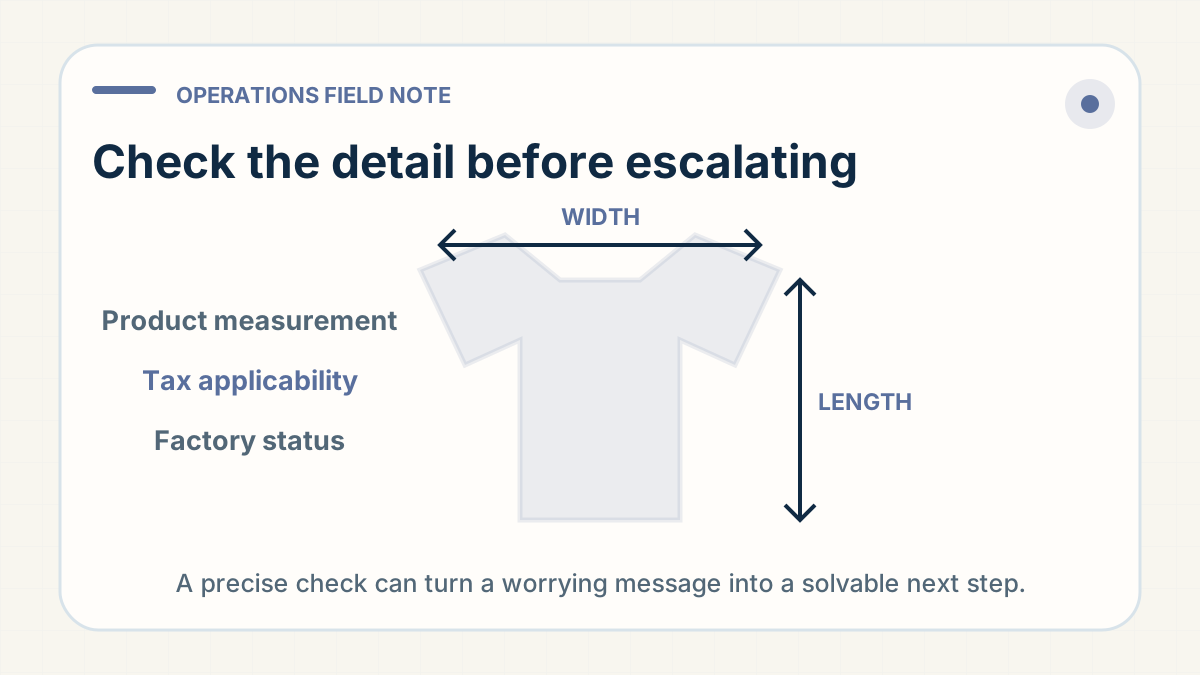
A garment measurement difference, an import-tax concern and a factory closure all needed separate evidence before anyone could make a safe promise.
Three Saturday requests concerned payment details, a quality photo and a first product quote. Each needed evidence matched to the next buyer decision.
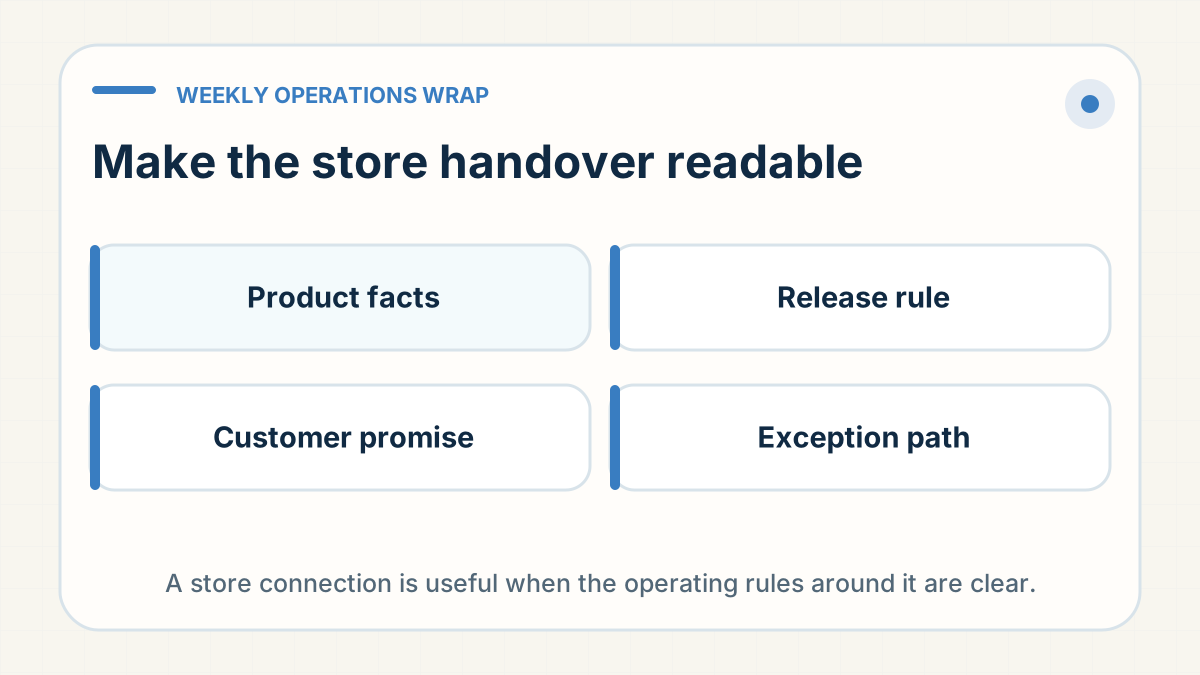
Connect the seller’s store, the product information and the fulfilment expectations before an order reaches dispatch, not after it.
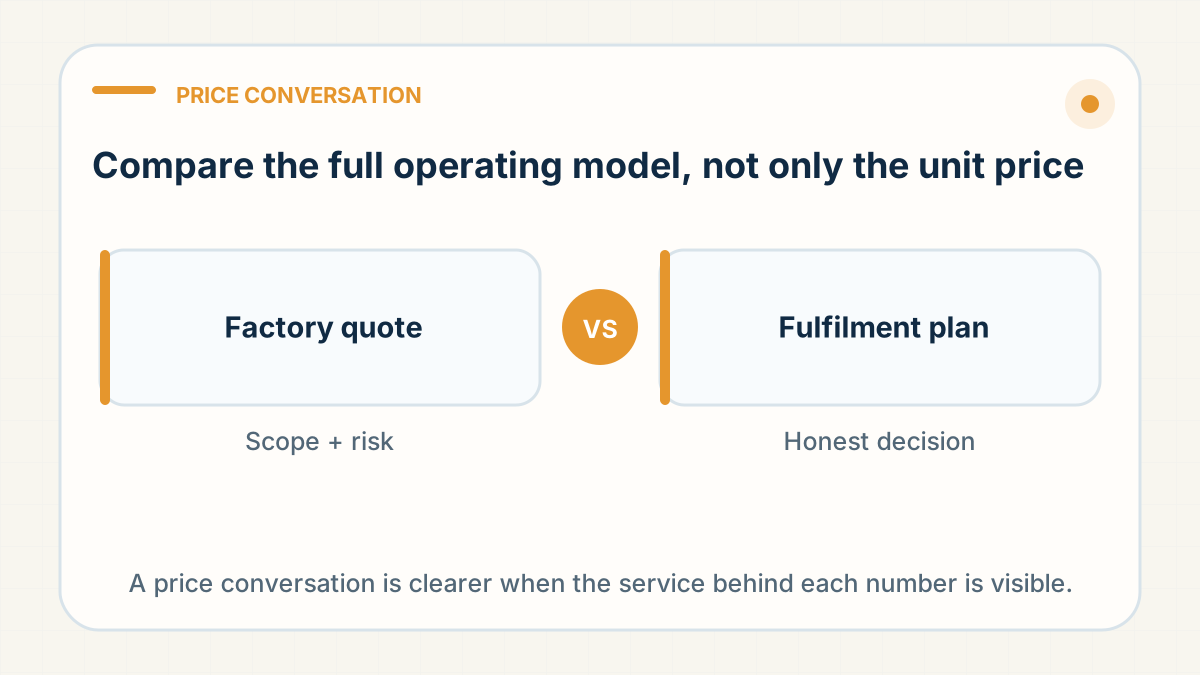
An established account requested a factory-direct price match. RyanFulfil declined that price and explained the service scope behind its fulfilment quote.
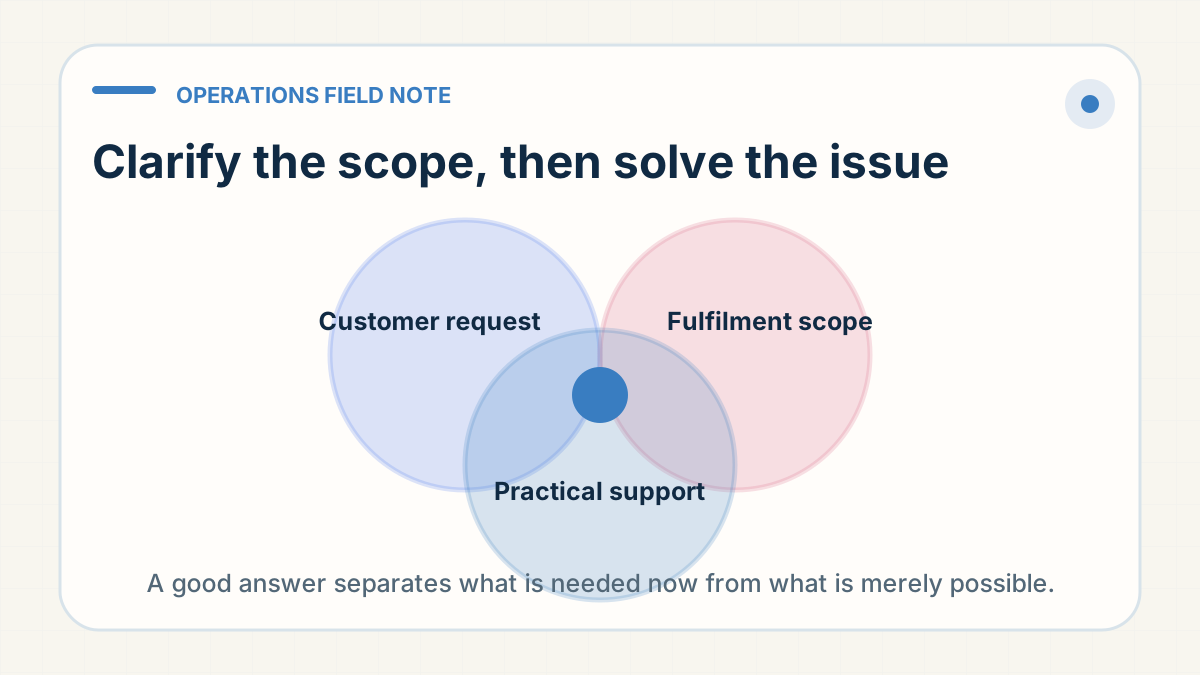
A wristband enquiry needed separate hardware and app suppliers. A holiday call and a device-specific setup question also needed clear next steps.
A footwear seller compared branding options, another seller checked chargeable weight, and a launch shipment met the last working-day cut-off before a factory break.
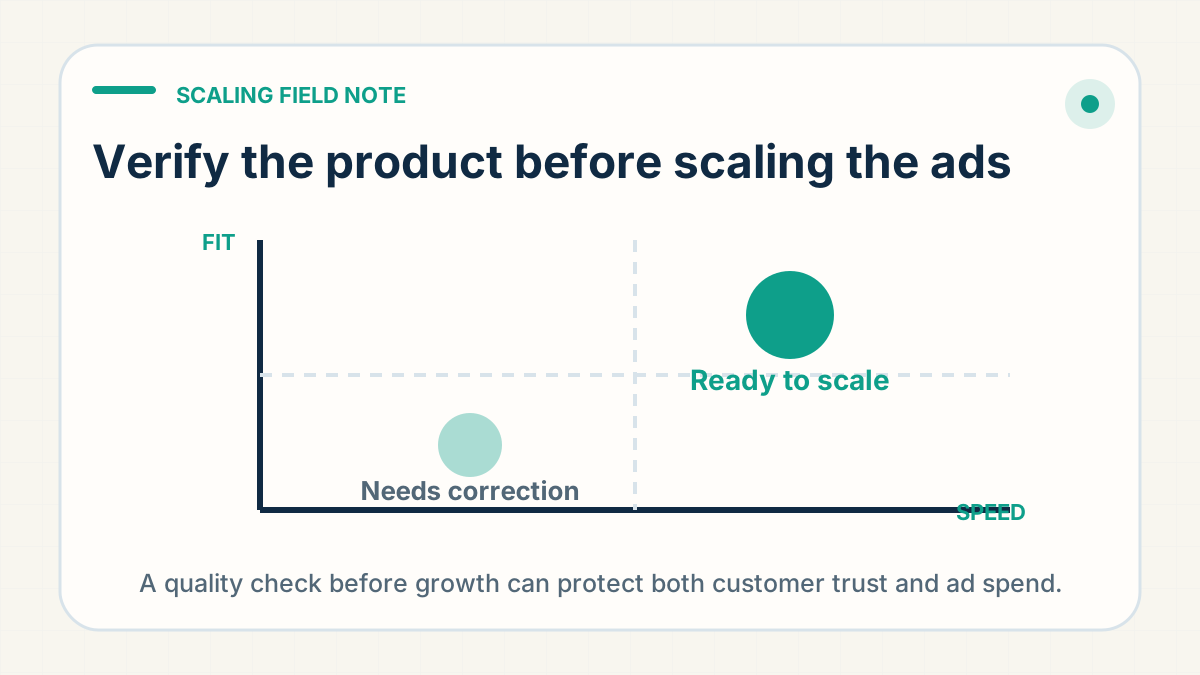
A private-label beauty brand asked us to be brutally honest about product quality before they scaled ad spend, and a hat shipment didn't add up.
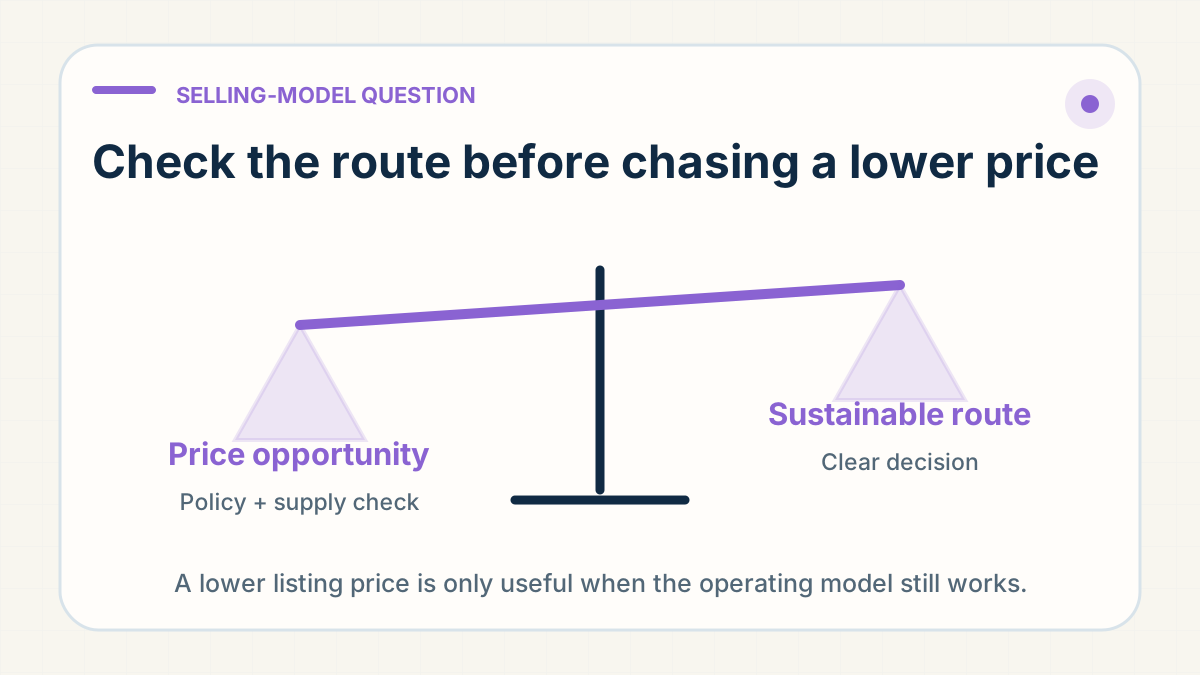
Someone asked if they should start buying our own products from Amazon to save money, and a shopper who'd talked to a dozen agents finally picked us.
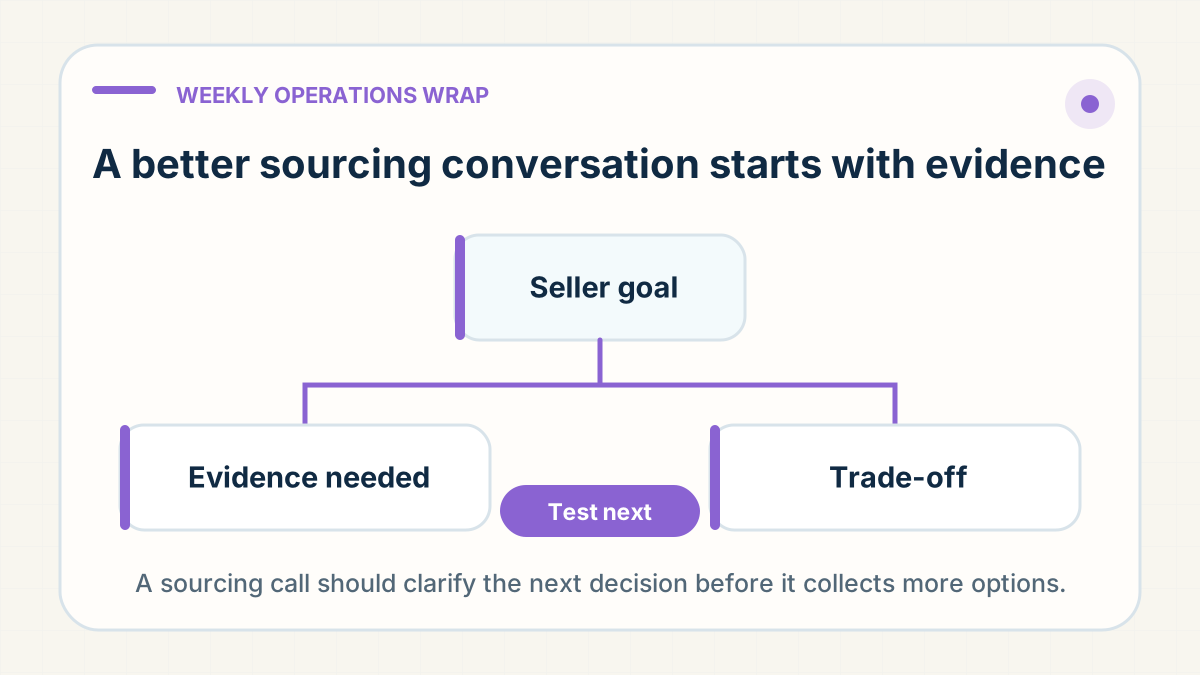
Before an order is placed, use the seller call and the supplier research to pin down the evidence, the trade-offs and the next commitment.
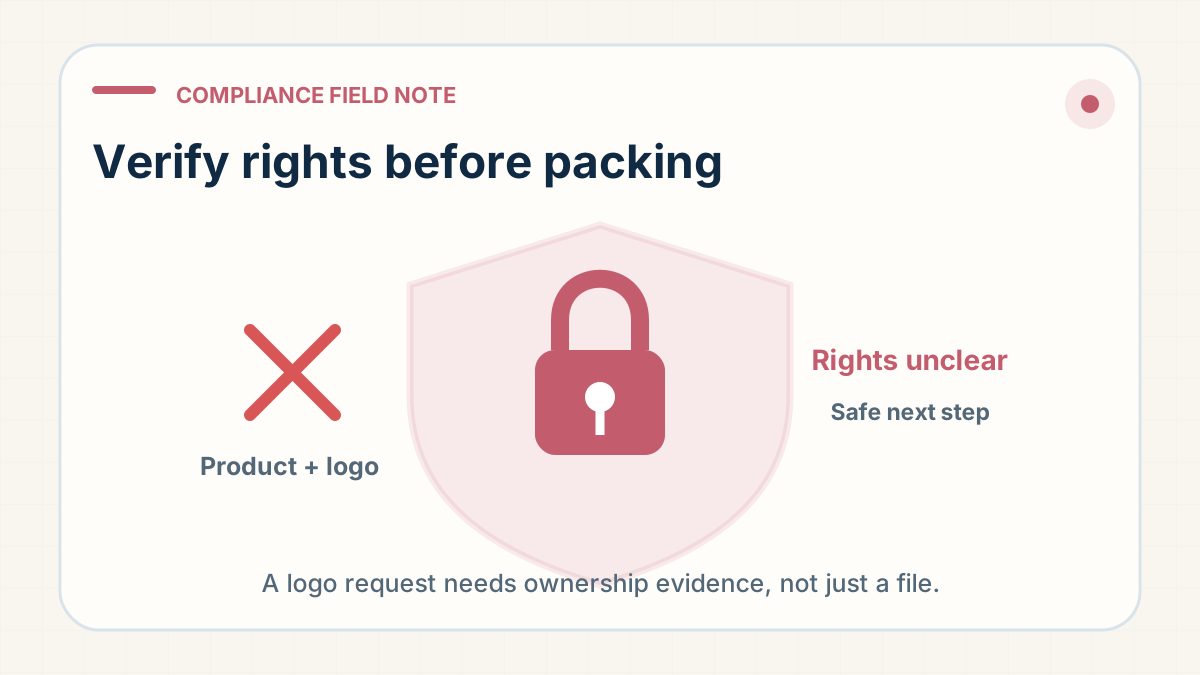
A buyer requested exact-product compliance evidence before ordering; a separate artwork enquiry needed a rights check and an alternative.
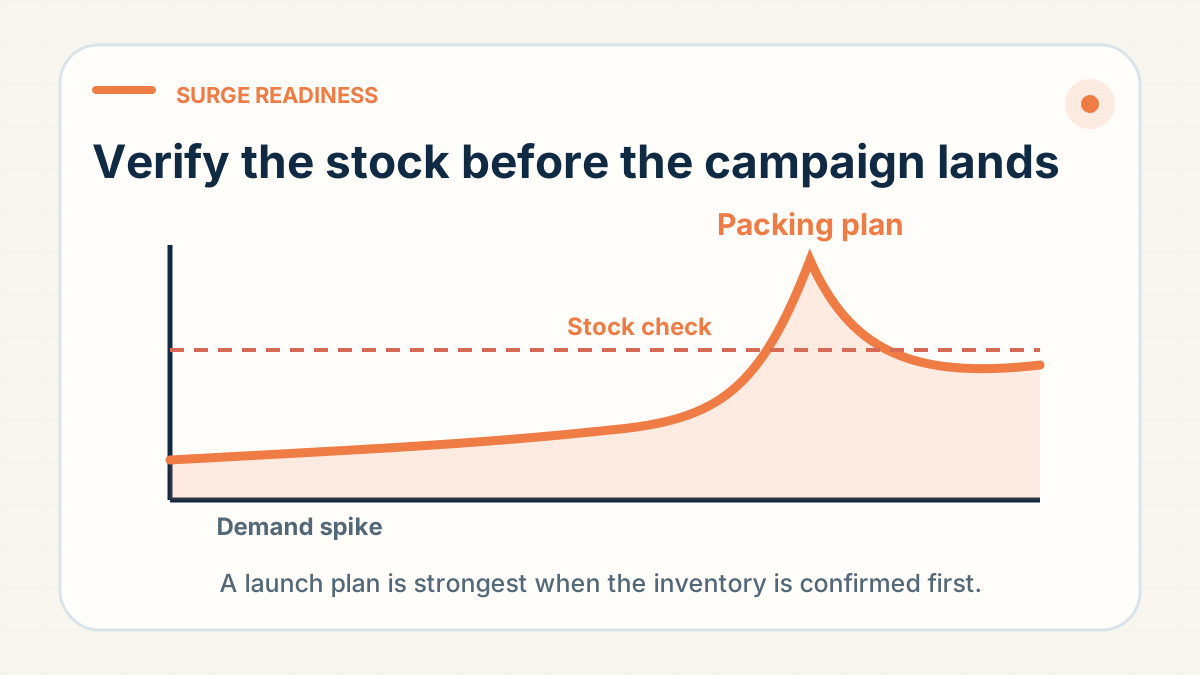
A major influencer collaboration, a large order surge expected in a very short launch window, and a short preparation window to make sure the stock was actually real, not just a supplier's word.
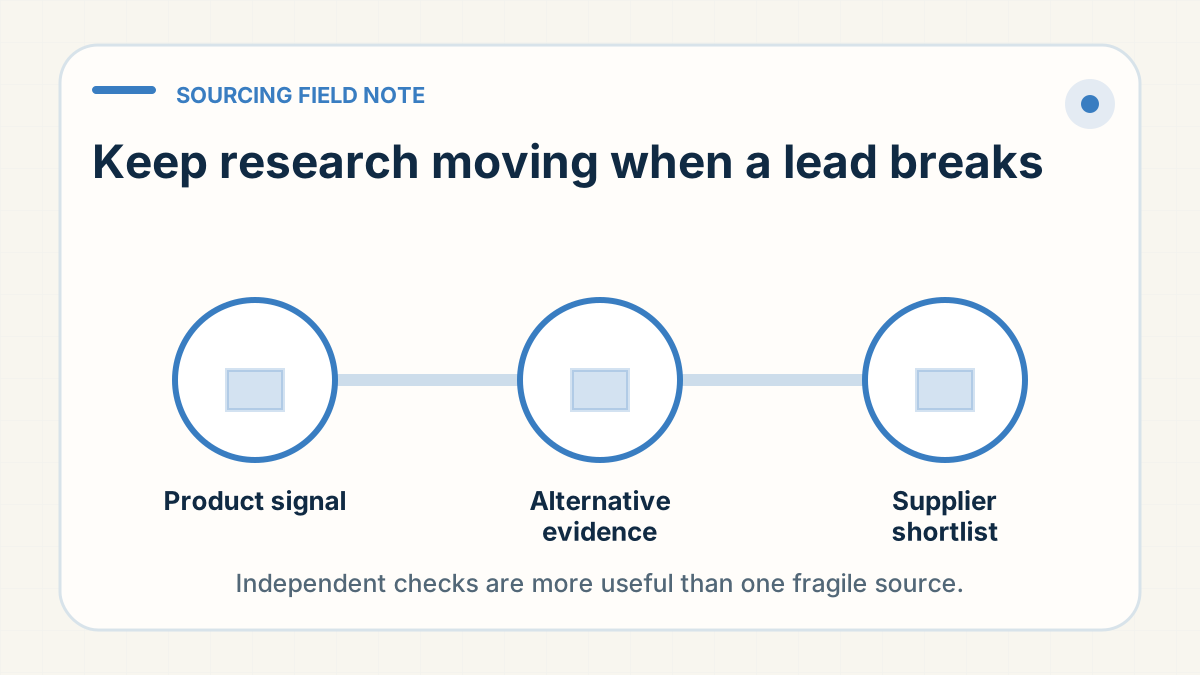
A blocked reference link, a destination check and a size mismatch each needed a different confirmation before approval.
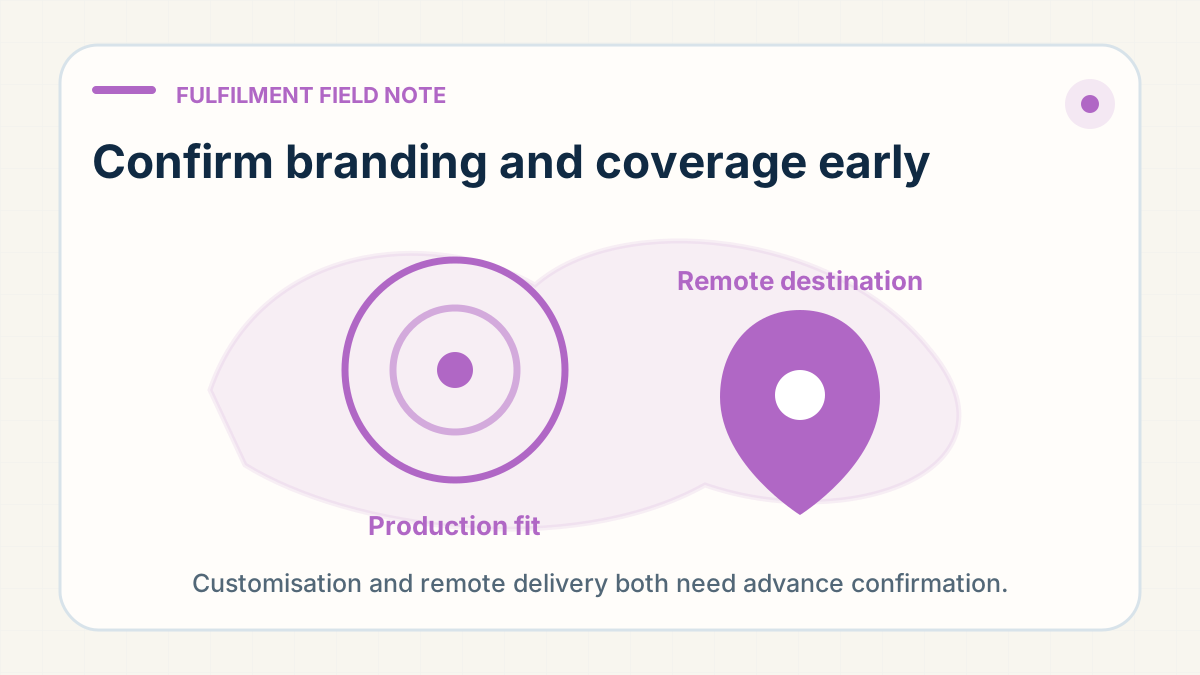
An own-logo enquiry, a rights check on rug artwork and delayed remote-address orders show why product and route approval come before dispatch.
A quiet Sunday — one customer-first order request, a lingerie brand still pressing us on delivery speed, and not much else worth writing home about.
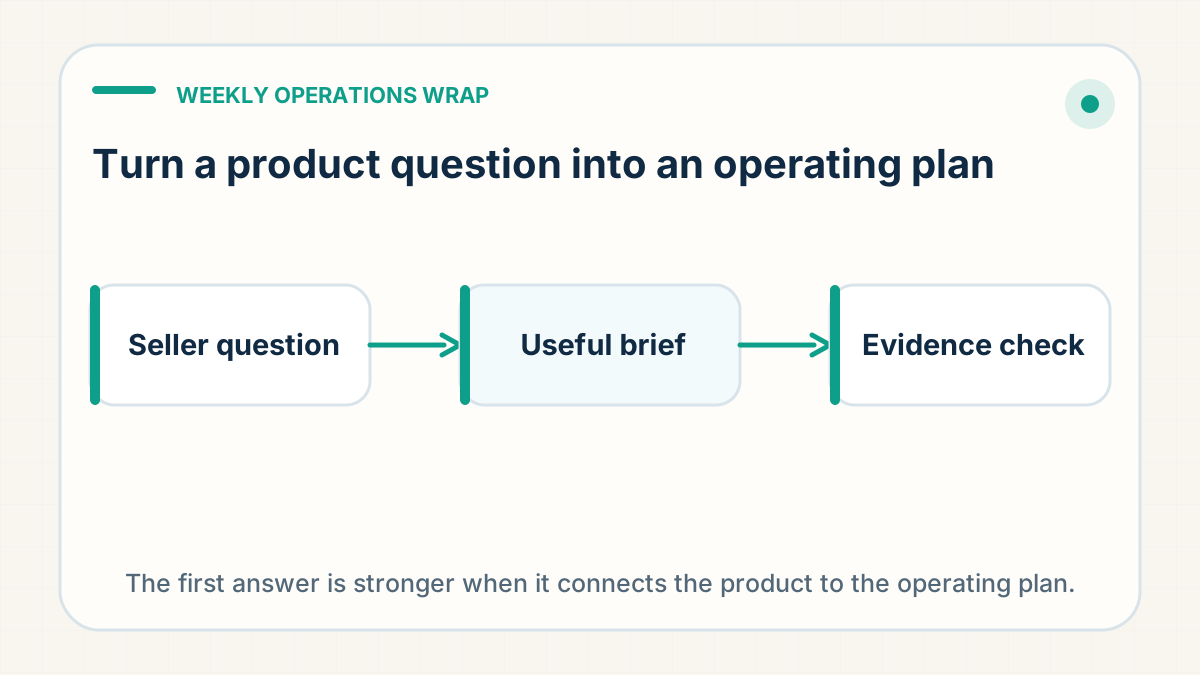
Give a new seller the right first answer: a practical plan for product fit, the evidence behind it, how fulfilment will run and the next decision.
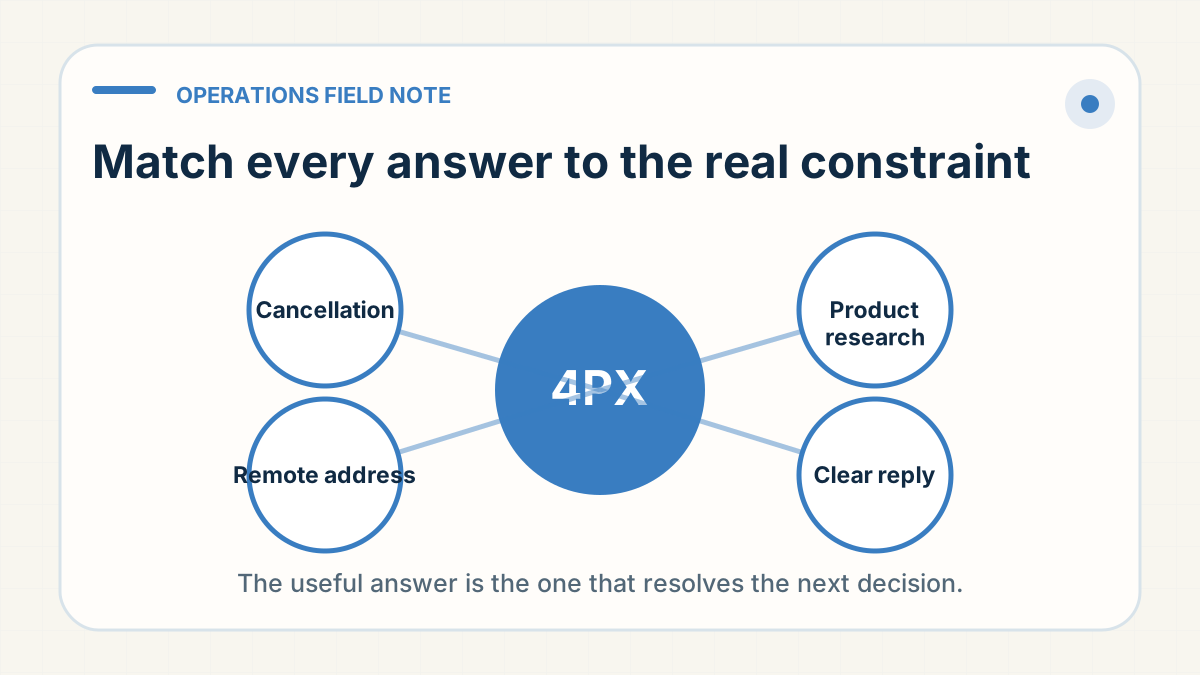
A cancellation, a product-finish question and a remote-destination delivery each needed a factual check before the next promise could be made.
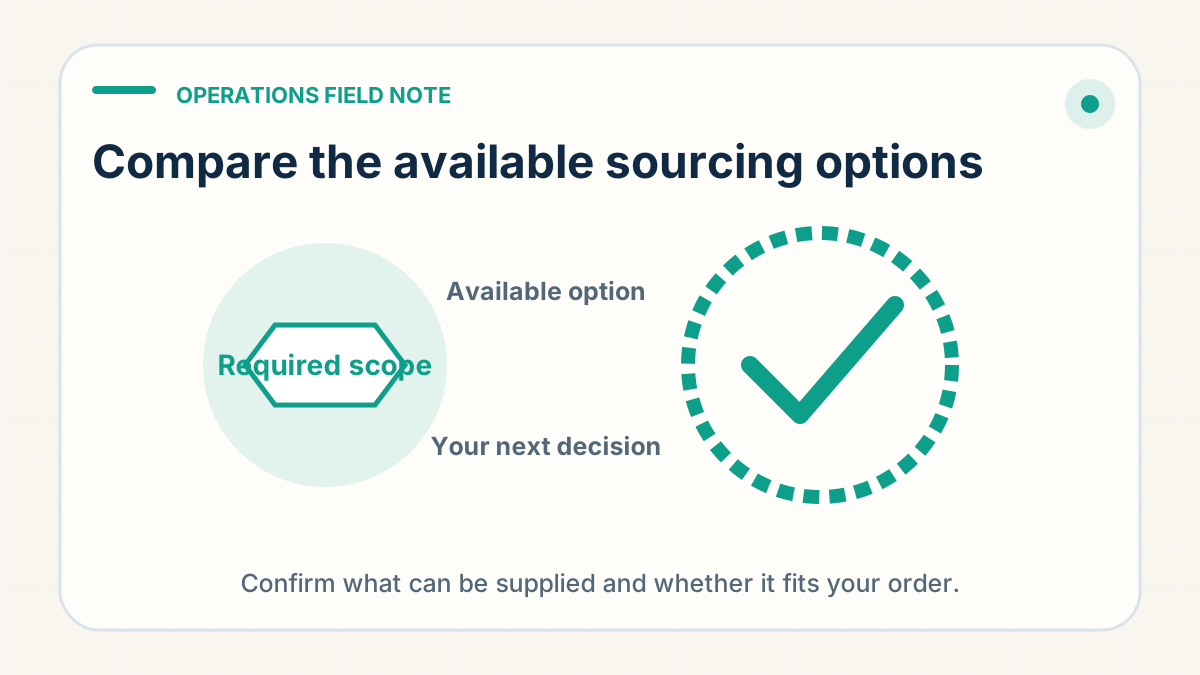
Prospective buyers requested business verification and a price explanation; a separate scent-insert idea needed a defined development scope.
A client asked us to source pharmaceutical peptides (hard no), another sent us the sweetest "thank you" burst of the month, and someone congratulated the team on a record May.
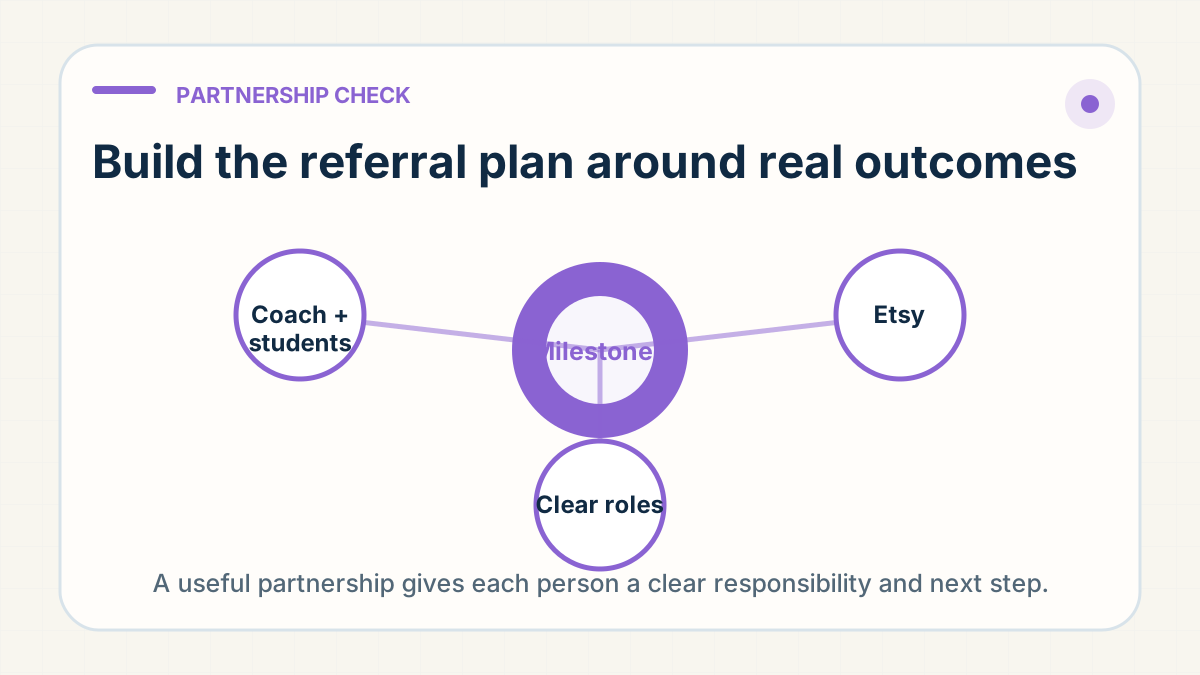
A coach who mentors dropshippers pitched us on a real partnership, referrals, co-branding, milestones for his students. Here's how we actually thought through it.
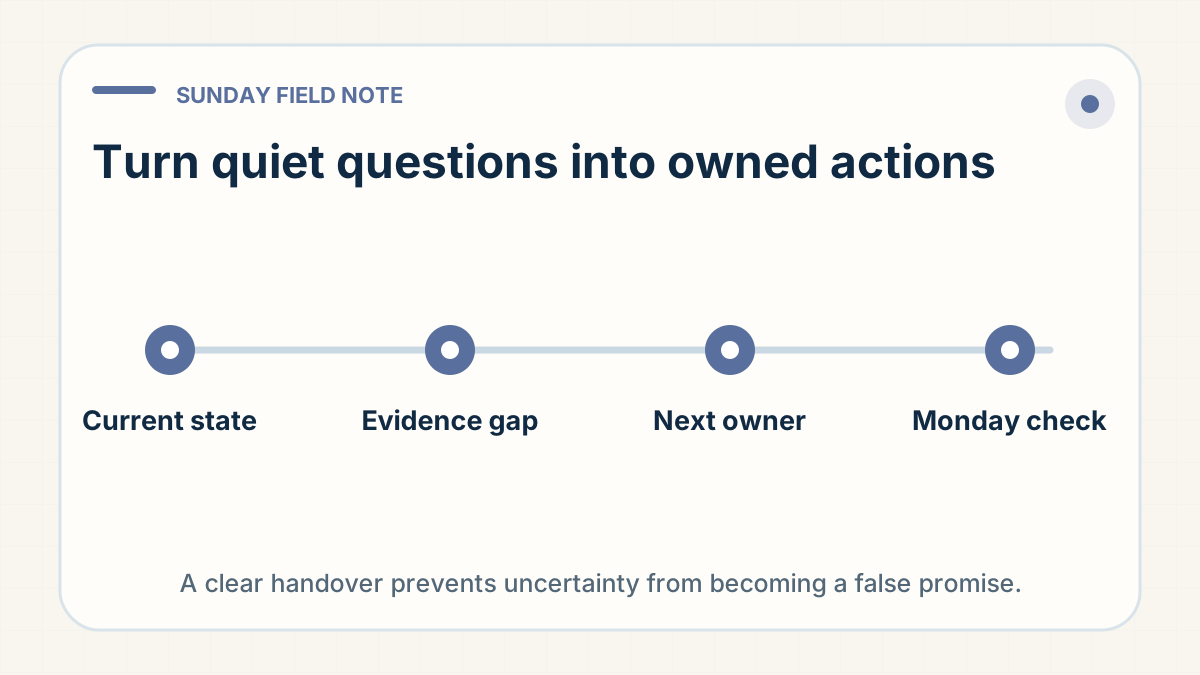
Split each request into a tracking, replacement or launch-readiness question first, so every one of them gets its own useful next action.
No posts match that search. Try a different date, carrier, topic, or keyword.