The situation
The seller had a clear ceiling
Write a product test in landed terms before you negotiate, because a lower MOQ alone can still leave you with the wrong test. A pre-launch seller wanted a small batch delivered to France before moving into dropshipping. The plan was reasonable: receive the goods, inspect the quality personally and place a much larger order only if the first batch proved itself. The all-in budget was around $300.
The factory initially required 50 units. The seller wanted fewer units and more than one colour, while also expecting the batch to arrive quickly enough to act as a meaningful test. Those requirements pulled in different directions before freight was even added.
- 01Set the test ceilingMaximum cash, latest useful arrival and required variant mix.
- 02Negotiate the minimumThe supplier moved from 50 units to one smaller case pack.
- 03Price the packed routeSea fit the cost better; air did not fit the budget.
- 04Keep the honest outcomeThe seller did not buy a test that no longer served its purpose.
Negotiating the minimum solved only one line
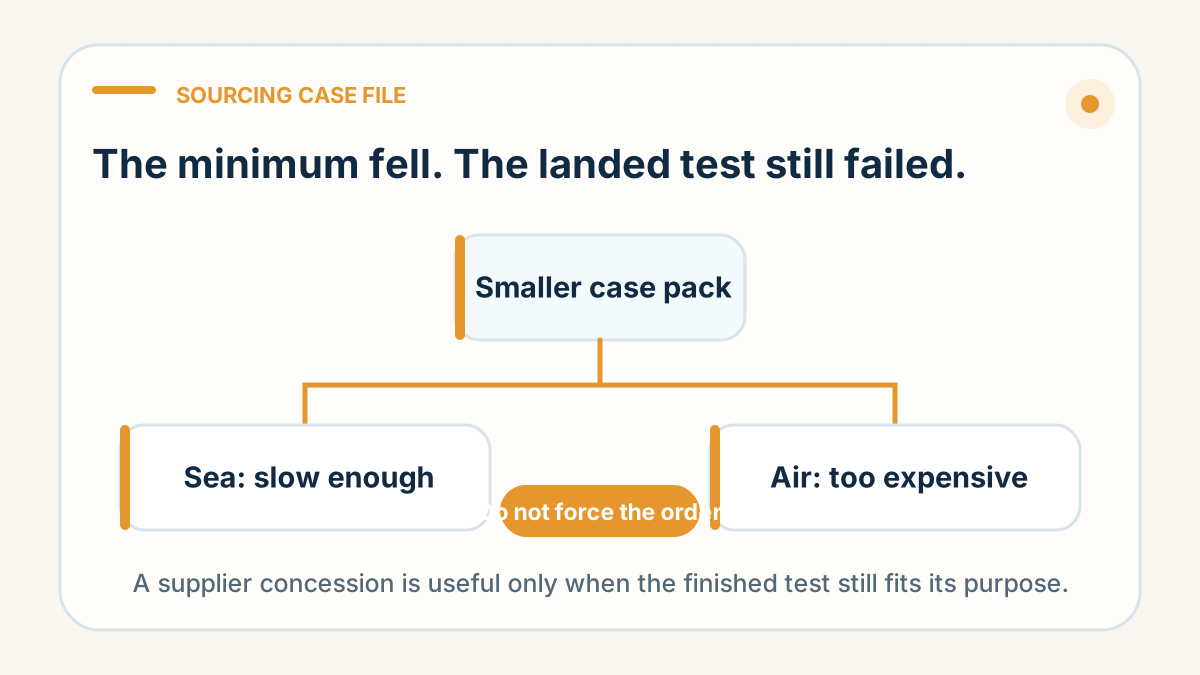
The supplier minimum was eventually reduced from 50 units to one factory case pack in the mid-twenties. That was real progress. It did not make the product commercially viable.
The packed item was unusually long, so the lower-cost route was sea freight split across two parcels. The resulting all-in quotation was roughly EUR 320 including tax, with a delivery window of about three weeks. Air freight was materially faster and too expensive for the seller's ceiling.
The seller asked the correct next question
Instead of treating the lower MOQ as a victory, the seller asked whether an even smaller air-freight batch could fit the budget. The honest answer was no. The factory had already moved to its case-pack minimum, and reducing the quantity again was not available on that product.
The conversation ended without forcing an order. That is an outcome worth keeping. A negotiated supplier concession is not useful if the finished test still breaks the budget or arrives too slowly for the purpose of the test.
Three constraints had to work together
- Factory constraint: the smallest production or case-pack quantity the supplier would release.
- Parcel constraint: a long package that made air freight disproportionately expensive.
- Commercial constraint: an all-in ceiling low enough that product, freight and tax could not all fit.
Changing one constraint did not remove the other two. The useful comparison was never MOQ alone; it was the smallest batch that could reach the seller, inside the budget, in a timeframe that made the quality test useful.
The lesson for a product test
Write the test in landed terms before negotiating: maximum cash at risk, latest useful arrival date, minimum variant mix and what evidence must be learned from the batch. A supplier can reduce the MOQ and still leave you with the wrong test. Walking away from that version is better than buying inventory simply because the negotiation succeeded.
How we kept it anonymous
This anonymised case follows a real sourcing situation with identifying details removed. The destination, approximate commercial figures, route trade-off and decision sequence are retained. The seller, exact product, address, supplier and private quotation media are omitted.
Facing a similar operating decision?
Send the product category, destination and current order stage on WhatsApp (+86 178 4666 9989). We'll tell you what we can confirm, what is still uncertain and the smallest useful next step.
Discuss Your Situation on WhatsApp →