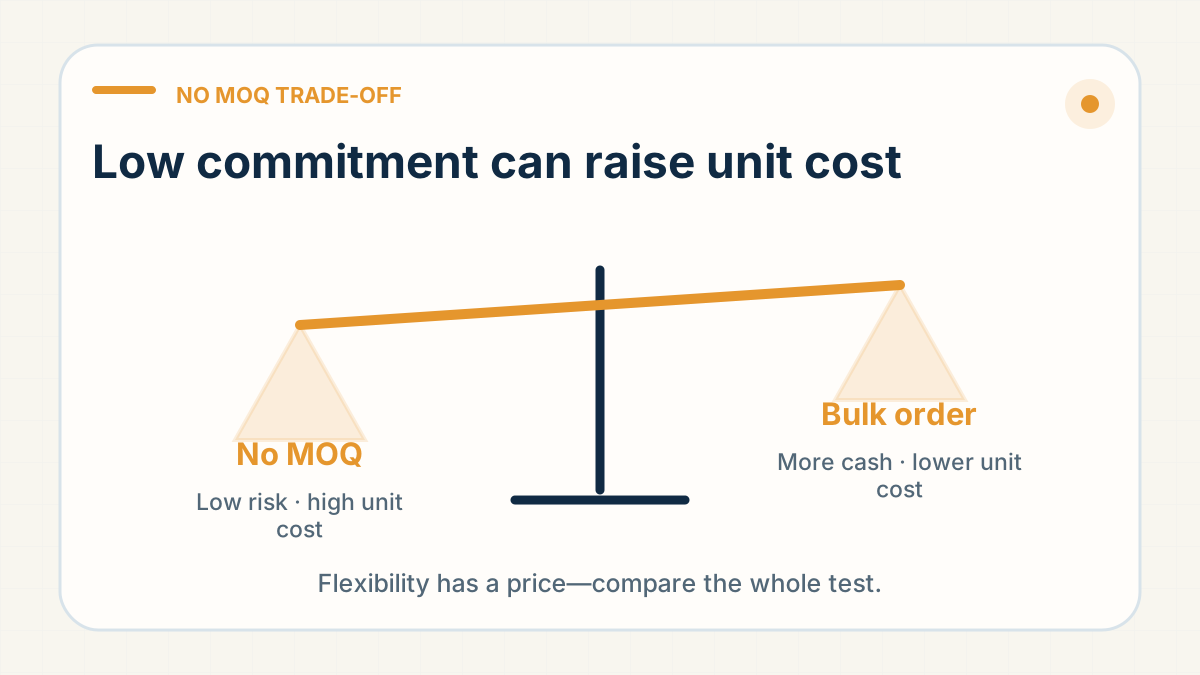
No MOQ means you can order any quantity, from one unit to a thousand, but the per-unit price does not stay the same. Each single unit still needs its own picking, inspection, packing and shipping, so it carries the same fixed handling cost whether you order one item or one of a thousand. Bulk orders spread that cost and often unlock better factory pricing. Knowing why helps you plan when to move past single-unit pricing.
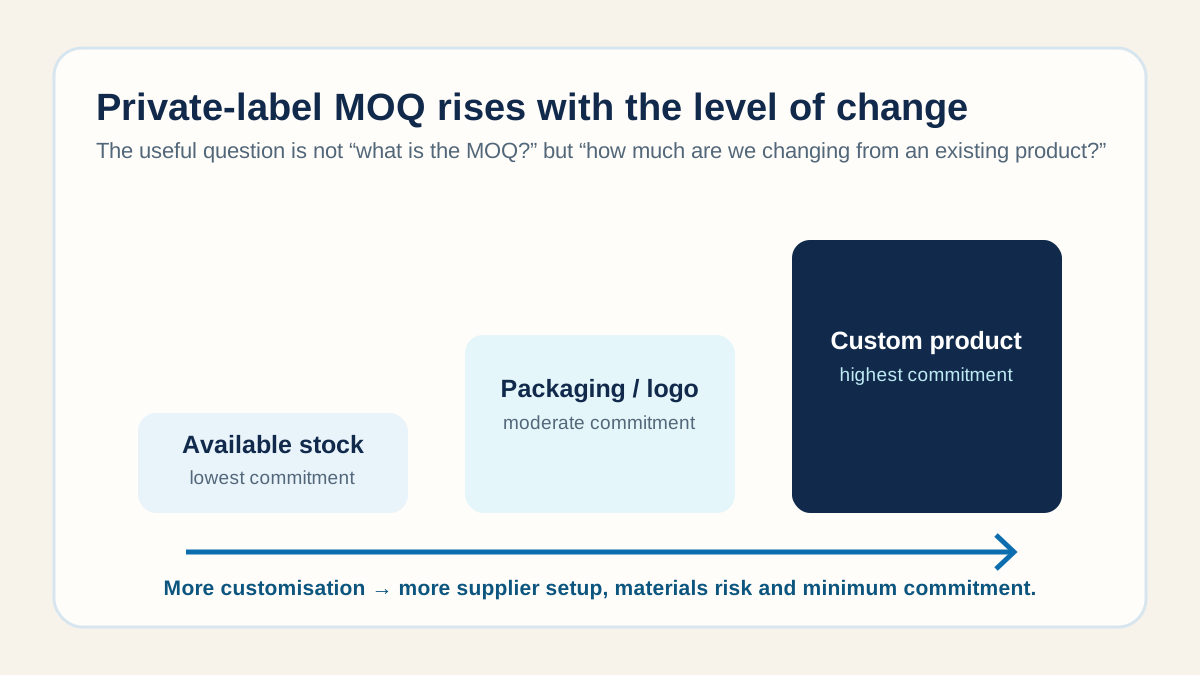
This guide covers what no MOQ costs per unit. For minimums by branding level, see what private-label MOQs look like in China. For minimums tied to certificates, see why product certificates come with an MOQ.
Why per-unit dropship pricing runs higher
Better factory pricing comes from batch work: the factory is producing and packaging in a batch rather than picking single items repeatedly. The gap between no-MOQ dropship pricing and bulk pricing for the same product can be substantial, often 50% or more, depending on the product and order size.
This isn't a markup being added on top for no reason. It's the real cost structure of handling one unit at a time versus handling a batch.
Why no-MOQ still makes sense at the start
When you're testing whether a product actually sells, paying a higher per-unit price for the flexibility to order one at a time is usually the right trade. You're not committing capital to inventory you're not sure will move, and you can stop or pivot instantly if the product doesn't perform. Locking into a bulk order before you know demand is real is a much bigger risk than a higher per-unit cost on your early sales.
When it's time to move past it
Once a product is consistently selling, the math usually flips. At that point:
- Bulk or pre-stocked pricing starts saving real money on every order, not just a future one.
- Faster dispatch from pre-stocked inventory tends to improve delivery times and reduce complaints.
- The cash you'd tie up in inventory is offset by the margin improvement per unit, if the demand is genuinely repeatable.
The threshold isn't the same for every product. A low-cost, high-volume item hits the point where bulk pricing pays off much sooner than an expensive, slow-moving one.
How to think about the transition
Don't switch to bulk ordering because a product had one good week. Switch when you can point to consistent, repeatable order volume over a real stretch of time, weeks, not days, and you're confident the demand isn't a one-off spike. Ordering bulk on a product that turns out to be a passing trend just moves your risk from "per-unit cost" to "inventory that doesn't sell."
Set the volume and contribution point at which better factory pricing, fewer repeated handling steps and deeper stock become worth the cash commitment. Stay flexible below that point; move only when the store's own numbers repay the change.
Demand check · public sourcing communities
One in five supplier requests asked for no MOQ
Of 679 distinct supplier requests from public dropshipping sourcing communities in Q3 2026, 136 (20%) asked for no MOQ, a low MOQ or single-unit dropshipping. That is more than asked for branding (98) or quality checks (94). Only speed (190 set a delivery cap or asked for fast shipping) and long-term partnership language (155) came up more often.
The same requests show the tension this guide prices. Forty-one of the 98 branding requests also asked for no MOQ, and 37 of the no-MOQ requests also asked for quality checks. Custom packaging and inspection both carry fixed costs. Zero commitment leaves nothing to spread them over, so a supplier can only meet the double ask by building those costs into the unit price.
No-MOQ fulfilment buys learning, not scale economics. Price one unit, then price your first committed run, and compare the two before you choose.
Where these numbers come from: we counted 679 distinct supplier-request posts in public dropshipping sourcing communities between 7 July and 30 September 2026 (805 collected before reposts and non-requests were excluded). We classified each post twice, independently, against fixed definitions, and a further reading settled any disagreement, so the counts understate unclear wording rather than inflate it. This page quotes, links and identifies no post and reproduces no contact details. Private client conversations are excluded. See the full breakdown in the Q3 2026 demand analysis.
The rule: Use no-MOQ fulfilment to buy learning, not to pretend small orders have scale economics. Compare the flexibility gained with per-unit purchasing, repeated handling, slower supplier coordination and limited customisation, then move to stock only when demand evidence pays for the commitment.
Need a product checked before you spend on ads?
Send us the product link and destination on WhatsApp (+86 178 4666 9989). We'll check sourcing, packing and shipping with you before you commit.
Get Sourcing Quote on WhatsApp →