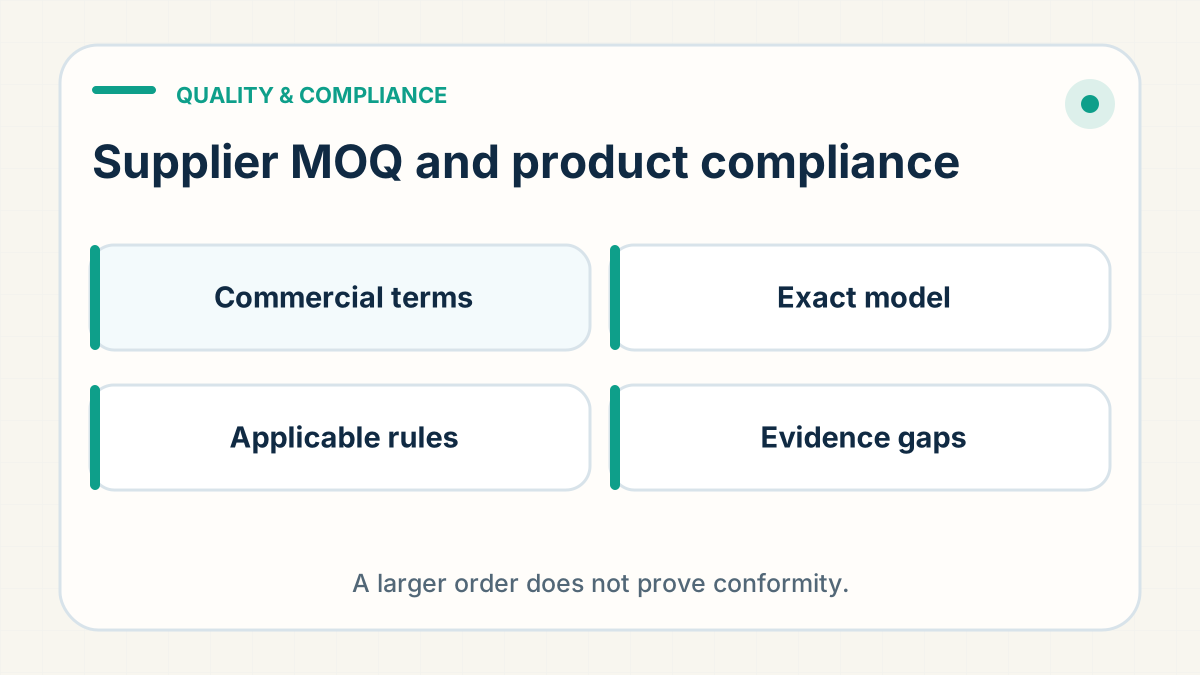
A supplier may set a minimum order or charge for testing or document work. That commercial condition does not establish whether the exact product meets your destination market's requirements. Paying for a larger order is not proof of conformity.
This guide covers supplier minimums and product compliance. For what no MOQ costs per unit, see what no MOQ really costs you. For minimums by branding level, see what private-label MOQs look like in China. For the full quote behind a low MOQ, see low MOQ is only half the supplier quote.
Separate the supplier offer from legal conformity
The August 2026 sourcing notes described suppliers linking access to documents or further document work to order quantities. Those are observations about the offers discussed, not a legal rule that every certificate is issued for a new production run or that every small order lacks valid evidence.
Before committing to an order, ask which documents already exist for the exact model, who holds them, what they cover and what remains unverified. Record any minimum quantity, testing fee or document-release condition separately in the quote.
For CE marking, identify the applicable product rules
CE marking is required only for products covered by EU rules that require it. Where it applies, the manufacturer must identify the relevant requirements, complete the required conformity assessment, prepare technical documentation and draw up the EU declaration of conformity. Whether an independent notified body is needed depends on the applicable product legislation.
There is no general EU certificate that a supplier can obtain simply by reaching an MOQ. A test report can support the assessment, but it is not interchangeable with the manufacturer's declaration of conformity. EN identifies European standards; asking for an EN certificate without identifying the product rules, standard and document does not define the evidence you need.
Match the evidence to the exact product
Check the manufacturer, model, product version and configuration against the document scope. Ask whether the supplied materials, components or design differ from the assessed product. A mark in a listing photograph and a report for a similar-looking item do not establish coverage for your order.
EU importers must check that the manufacturer has completed the required steps and that the necessary documentation is available. Establish your role and the applicable obligations before placing the goods on the EU market. A supplier's commercial promise to release papers after payment does not remove those obligations.
Treat missing documents as an unresolved evidence gap
If a supplier cannot provide the requested evidence, the conformity claim remains unverified. That response alone does not prove that the product was never compliant, and a larger order does not resolve the gap by itself. Ask what can be verified before commitment and what further assessment or testing is required.
If a platform requests documents after a sale, identify the exact goods and obtain the relevant records from the responsible manufacturer or supplier. Do not assume that another supplier's report covers them or that a new document can be guaranteed on a particular day.
The practical takeaway
Before comparing offers, state the destination, exact model and intended use, the applicable conformity requirements, the evidence available and any unresolved checks. Compare commercial minimums and testing costs only after defining that scope. If the necessary evidence cannot be established, reconsider the product or supplier before placing it on the market.
Want a product checked before it ships?
Tell us what to check on WhatsApp (+86 178 4666 9989), and we can build those product, packaging and quantity checks into the fulfilment process.
Request Quality Check on WhatsApp →