Start with the exact product and destination
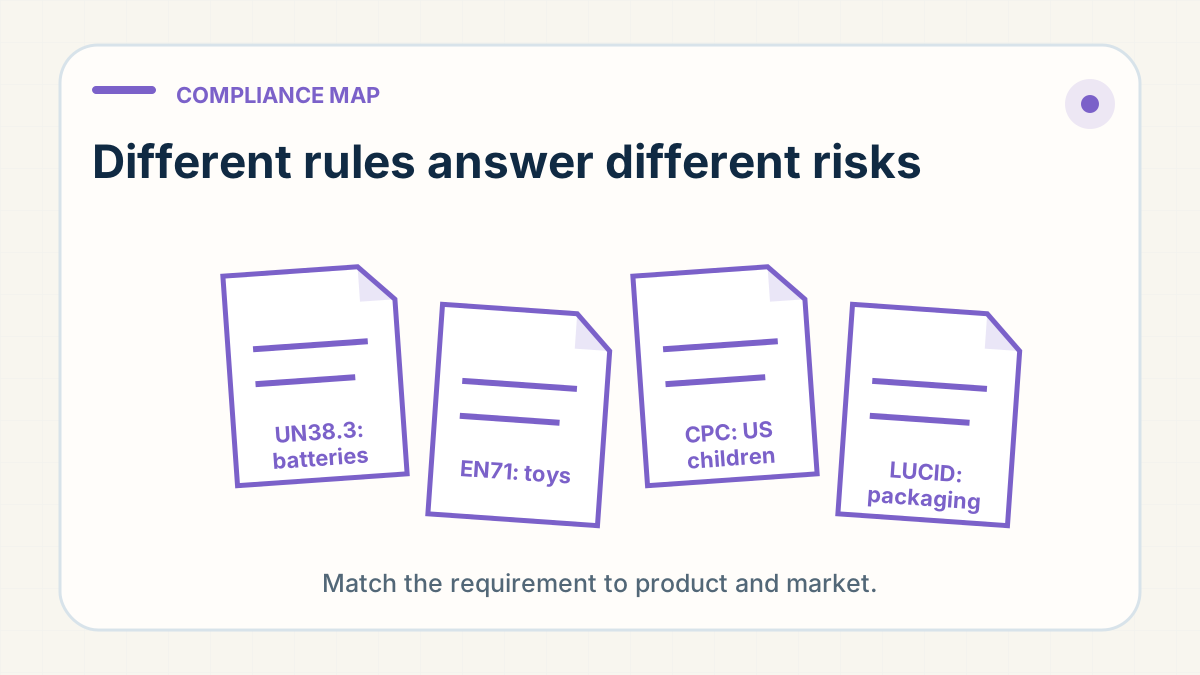
Start with the product and destination—not a certificate shopping list. A lithium battery, an EU toy, a US children's product and packaged goods sold into Germany trigger different evidence. Match the exact version before you list or ship it; a supplier PDF with the right acronym but the wrong item does not protect the order.
UN 38.3: lithium-battery transport evidence
UN 38.3 concerns transport testing of lithium cells and batteries. Ask whether the supplier already has valid evidence for the exact cell or battery pack. Match the chemistry, configuration and model to the goods you intend to ship.
Battery transport requirements also depend on the packing configuration and service. A battery shipped alone, packed with equipment or contained in equipment may follow different instructions. Confirm the applicable packaging, marking, documentation and state-of-charge requirements with the route provider using current guidance. Do not treat a test summary as a complete shipping approval.
EN 71: toy-safety standards
EN 71 is a family of toy-safety standards. The applicable assessment depends on the product, intended age, materials, functions and destination requirements. Provide the full product file to a qualified testing or compliance professional so the correct standards and current versions can be identified.
Ask whether existing reports cover the exact materials, colours and construction you plan to order. Obtain a product-specific testing quote and schedule where new work is needed; do not budget from a generic laboratory price or assume that a report for a similar toy applies.
CPC: certification for applicable US children's products
For a children's product subject to applicable US safety rules, the responsible domestic manufacturer or importer issues the Children's Product Certificate. Testing generally must come from a CPSC-accepted third-party laboratory for the relevant rules. A lab report supports the certificate; it does not transfer the issuer's responsibility to the lab.
Confirm the product identification, applicable rules, test basis and required certificate information. Check the current CPSC filing requirements for the actual import before shipment rather than relying on a date copied from an older article.
LUCID: packaging obligations in Germany
LUCID is a packaging register, not a product-safety certificate. Identify which business has the registration and other packaging obligations for the exact sale and delivery arrangement. Check the product and shipment packaging, system-participation requirements where applicable and required reporting.
Use the packaging authority's guidance for your business model, including dropshipping or imported packaged goods. Agree who supplies the packaging data and verify the relevant registration before relying on another party's assurance.
Define the support you need
The seller or importer remains responsible for identifying and meeting the requirements for the exact product, claims, destination and channel. Where separately agreed, RyanFulfil can request exact-version supplier documents, coordinate qualified testing or a certification application and apply approved labels or packaging details.
That assistance is separately scoped. It does not make RyanFulfil the responsible person, importer, manufacturer or legal adviser, and it does not guarantee certification or market acceptance. Ask what can be coordinated, what remains your responsibility and what needs a separate provider before approving the order.
Demand check · public sourcing communities
Compliance documents are appearing in supplier-wanted posts
In Q3 2026, 24 of 679 distinct supplier requests from public dropshipping sourcing communities named a certificate, registration or regulation as part of the ask. That is under 4% of requests, far fewer than the 136 that asked for no MOQ, even though the paperwork decides whether a listing stays live.
A certificate is not a feature that ships in the box. The evidence has to match the exact product version, battery set-up, age grading, destination and sales channel. Some obligations sit with the seller or importer, not the factory, so a supplier’s document alone may not cover you.
Pair every certificate name with the exact variant, market and channel, then check it against the examples on this page before you list.
Where these numbers come from: we counted 679 distinct supplier-request posts in public dropshipping sourcing communities between 7 July and 30 September 2026 (805 collected before reposts and non-requests were excluded). We classified each post twice, independently, against fixed definitions, and a further reading settled any disagreement, so the counts understate unclear wording rather than inflate it. This page quotes, links and identifies no post and reproduces no contact details. Private client conversations are excluded. See the full breakdown in the Q3 2026 demand analysis.
Start with the product and destination, not the certificate name
These labels solve different problems. Treating them as one generic “compliance certificate” is how sellers either buy irrelevant tests or miss a requirement that applies to their exact product, claim, material, battery configuration, destination and sales channel.
UN 38.3: transport evidence for lithium cells and batteries
UN 38.3 concerns transport testing for lithium cells and batteries. Before quoting a route, match the documentation to the actual battery or battery-containing product: chemistry, configuration, watt-hours, packing method and whether the item travels by air. A report for a different battery pack is not a substitute for evidence for the product being shipped.
EN 71: toy-safety assessment, not a universal passport
EN 71 is a family of toy-safety standards. Which parts matter depends on the toy, intended age group, materials, functions and the market where it will be sold. Build a product file first: images, age grading, bill of materials, warnings, supplier declarations and earlier test reports. A qualified testing or compliance professional can then identify the applicable assessment.
CPC: the responsible US manufacturer or importer issues it
For a children’s product covered by applicable US safety rules, the Children’s Product Certificate is issued by the domestic manufacturer or importer. Testing supports the certificate, but a laboratory does not take over the responsible party’s certification duty. Keep the test basis, product identification and required certificate information together before the first shipment.
LUCID: check packaging obligations before selling into Germany
For German packaging obligations, identify which business is placing the packaged goods on the market and which packaging is involved. Do this before product launch; packaging registration and system-participation questions should not be left until a parcel is ready to dispatch.
A practical pre-launch file
- Final product photos, variants, materials and intended age group.
- Battery specifications and matching transport documents, where relevant.
- Destination markets, product claims and listing copy.
- Applicable test reports, certificates and responsible-party details.
- Packaging details and a named owner for country-specific registrations.
Responsibility boundary: the seller or importer identifies and remains responsible for the requirements for the exact product, claims, market and sales channel. Confirm them with the relevant authority or a qualified adviser. Where separately agreed, RyanFulfil can request exact-version supplier documents, coordinate qualified testing or a certification application — including CE-related work where appropriate — and apply approved labels or packaging details. This is practical assistance, not legal advice, a transfer of responsibility or a guarantee of certification or market acceptance.
Want a product checked before it ships?
Tell us what to check on WhatsApp (+86 178 4666 9989), and we can build those product, packaging and quantity checks into the fulfilment process.
Request Quality Check on WhatsApp →