From the operations archive
A broad category almost became a false approval
A seller preparing a personal-care launch needed to know whether the product could use a special-goods line. The phrase sounded broad enough to cover the item. Yet the route decision depended on the actual construction, battery or power details, liquids or powders if present, packing quantity, documents and destination. A category heading could begin the check but could not finish it.
The commercial temptation was to translate “special goods available” into “our product is approved.” That would unlock advertising and a cleaner landed-cost estimate. If the exact version failed review after orders arrived, the remaining choices would be slower or more expensive shipping, a product change, or a difficult customer update.
The team kept the initial restock small and treated eligibility as conditional until the customer-ready version matched the named service rules. Special-goods shipping covers defined exceptions under defined evidence and packing conditions; it is not a miscellaneous lane for anything an ordinary service rejects. The narrower answer made the launch plan more reliable because everyone could see what still had to be proved.
About this story: it is an anonymised composite of client situations. It broadens markets and product families and leaves out identifying details. Read the dated field note: A new hair-tool launch, a deliberately small restock — and an overnight platform.
Some products don't fit on a standard parcel line: certain batteries, cosmetics, liquids, and other regulated categories need a carrier route built to handle them. A few carriers, including Huahan, publicly market dedicated services for exactly this. What that marketing doesn't tell you is that a route existing for a category is a starting point for review, not a guarantee your specific product is cleared to ship.
Why category acceptance isn't product acceptance
A route advertised for "batteries" might accept batteries installed in a finished product but reject standalone or spare batteries entirely. A route advertised for "cosmetics" might handle creams and lotions fine but treat a perfume or aerosol completely differently because of its flammability classification. The category name on a carrier's marketing page tells you a service family exists. It doesn't tell you whether your exact product, in its exact packaging, qualifies.
What we actually need before approving a route for anything in these categories
Full composition or ingredient information, and battery chemistry and specifications if relevant; any existing safety or compliance documentation for the product; final packaging, since packaging requirements can be as strict as the product classification itself; the destination country, since import rules for regulated goods vary significantly by market; and confirmation the product is genuinely legal to sell and import in that destination, not just physically shippable.
Carrier acceptance and legal sale are two different questions, and a product clearing one doesn't automatically clear the other.
Categories we won't ship, regardless of what a carrier's marketing suggests
Some categories carry compliance, safety, or legal risk significant enough that we decline them outright rather than attempt a route-by-route workaround: counterfeit or unauthorized branded goods, undocumented or unidentified chemical products, and anything where destination legality is genuinely unclear rather than just a documentation gap. If a category feels like it's in this territory, we'll tell you directly rather than stringing you along through an approval process that was never going to end in a yes.
Why we check before we quote a delivery date
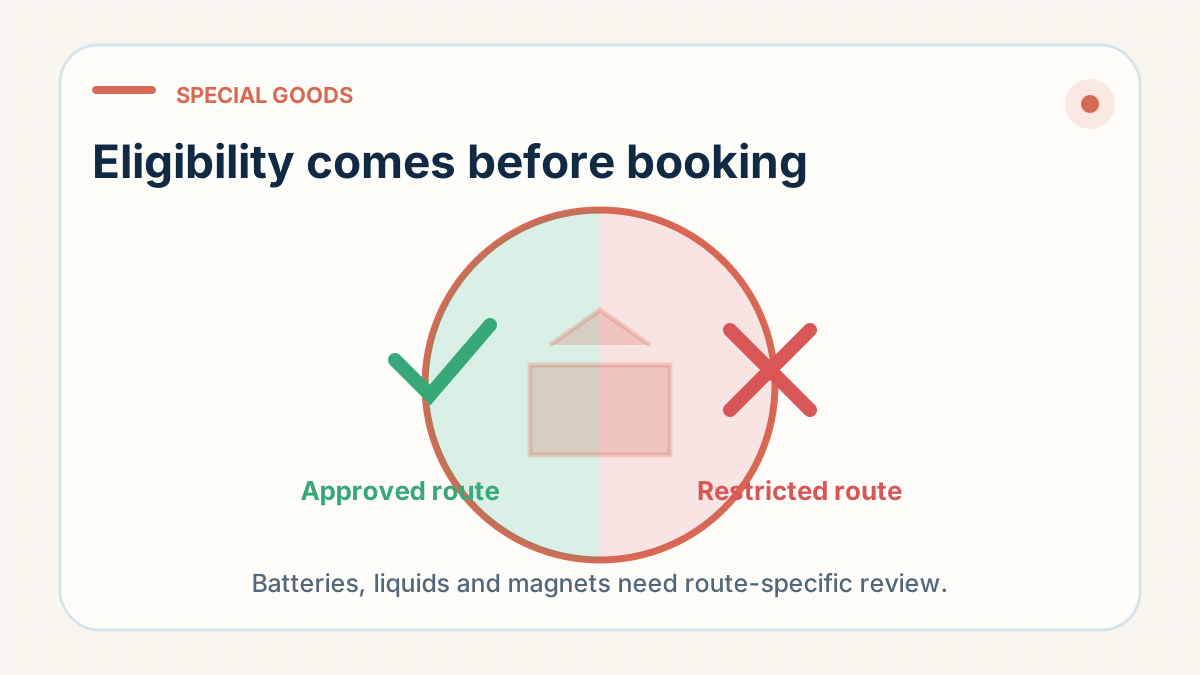
Category acceptance is not approval for an individual product. Confirm eligibility for the exact item, packaging and destination before advertising a delivery window or releasing the shipment; a mismatch can result in a customs hold or destruction.
Run an exact-product route check before listing a regulated or transport-sensitive item. Record the materials, battery or liquid details, documents, packing and destination, then treat any later version change as a new approval event.
What to prepare for a restricted-goods route check
- Product photos, ingredients or material details, and the exact variant being shipped.
- Battery chemistry, watt-hours, configuration and matching transport documentation where relevant.
- Safety data sheets, test reports, labels or declarations where the product category requires them.
- Destination, expected quantity per parcel and the intended transport mode.
Do not rely on a category label: “cosmetic,” “battery product” or “special line” does not by itself establish acceptance. The route must be checked against the actual product and documentation before you promise delivery.
Need a product checked before you spend on ads?
Send us the product link and destination on WhatsApp (+86 178 4666 9989). We'll check sourcing, packing and shipping with you before you commit.
Get Sourcing Quote on WhatsApp →