From the operations archive
A launch depended on one small classification detail
An early-stage beauty seller was preparing a heated personal-care device for overseas customers. From a merchandising perspective it was one compact product. From a route perspective, the power configuration, battery status, plug, materials and destination could move it out of an ordinary-goods service and into a special-goods review. Advertising was nearly ready, so a quick shipping price felt urgent.
The tempting shortcut was to rely on the supplier’s category name or on a similar item that had shipped before. That would let the launch proceed while leaving the most expensive question unresolved: whether this exact customer-ready version would be accepted on the quoted lane. If it failed after orders arrived, the seller would face a higher-cost alternative, delayed dispatch or cancellations.
The launch stayed deliberately small while the product and documents were checked against the destination service. Sunyou’s special-goods option was considered as a conditional route, not a blanket permission slip. That distinction protected the margin calculation and the customer promise. “Special goods” describes a review path for defined characteristics; it does not make every sensitive-looking product automatically eligible.
About this story: it is an anonymised composite of client situations. It broadens markets and product families and leaves out identifying details. Read the dated field note: A new hair-tool launch, a deliberately small restock — and an overnight platform.
Is a special-goods line an approval for your product?
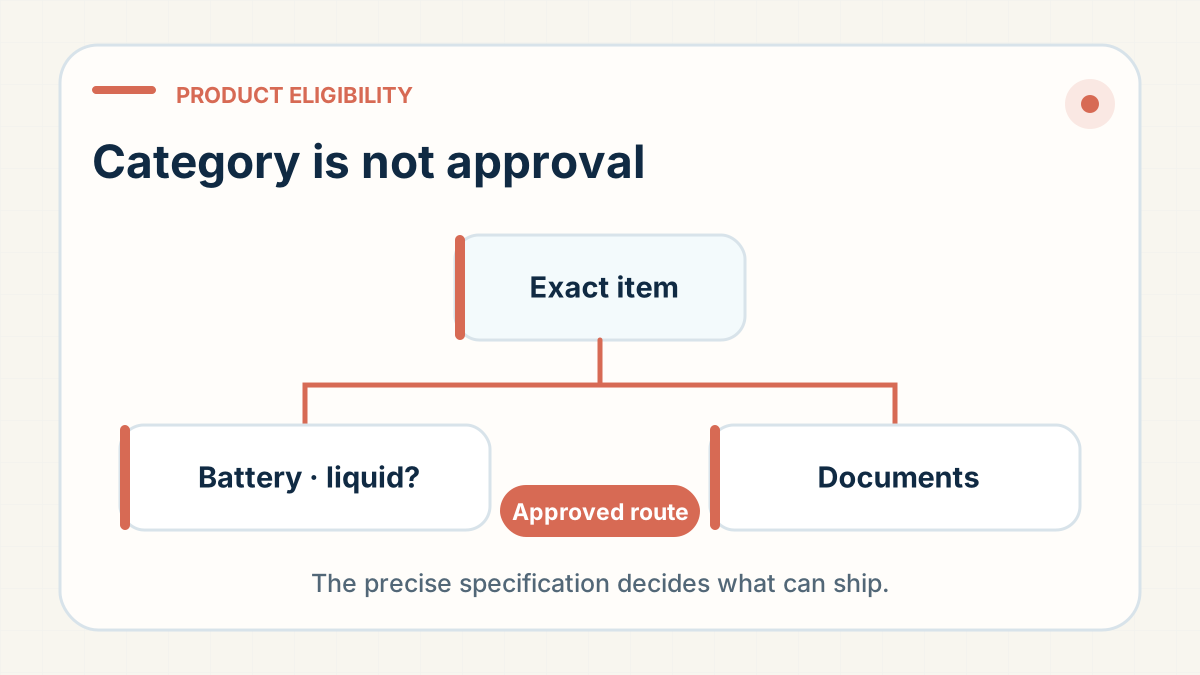
"Special goods" is a logistics description, not a blanket approval. A service may accept one battery configuration, cosmetic formula or liquid route while declining another destination or product presentation. Never assume a product is acceptable because a different seller shipped something similar.
Before promising a dispatch method, obtain written confirmation for the exact product, route and shipment format. The useful details are the item description, battery type and configuration where relevant, ingredients or safety documentation where relevant, quantity, destination and whether the product is packed with equipment or sent separately.
Which five checks should you make?
- Product classification: describe the actual item honestly. Vague descriptions create customs and claims risk.
- Route acceptance: check the provider's current acceptance rules for the destination. Routes change.
- Documents and labels: ask which safety sheets, transport declarations, marks or packaging are required.
- Destination restrictions: customs, postal and product rules vary by country.
- Customer promise: explain any longer handling time, delivery exception or return constraint before checkout.
Why do batteries need extra care?
Lithium batteries are a classic source of accidental non-compliance. The operational question is not simply "does
it contain a battery?" It is whether the battery is installed in equipment, packed with equipment or shipped by itself; its specification; how it is protected from short circuit; and what the selected route accepts. Ask the logistics provider to confirm the accepted configuration in writing. Do not alter a declaration to force a route.
Do cosmetics, liquids and magnets follow the same rules?
Cosmetics and liquids may trigger product, ingredient, packaging or transport restrictions. Magnets can raise handling questions depending on strength and transport mode. Each needs a product-specific review, not a copied battery workflow. Accurate documents and robust packaging are part of the service choice, not an afterthought.
How do you build a launch gate into your store?
For each sensitive SKU, keep a simple approval record: product photo and specification, supplier documents, approved destinations, approved service, handling estimate, declaration wording and the date the route was confirmed. Review it whenever the item, packaging or route changes.
When is a special-goods route ready to use?
Sunyou or any other cross-border partner may be useful only after the exact product and lane are approved. Good special-goods shipping is about matching a correctly declared product to a currently acceptable route, then setting a promise the customer can understand.
The rule: Treat special-goods acceptance as conditional approval for one product configuration, service and destination. Match the documents and packing to the shipped version, retain the approval conditions beside the SKU and reopen the check when any relevant input changes.
Waiting for a parcel you bought? Contact the store you ordered from: it holds your order details.
Need one order or route checked?
Worried about an order's tracking? Send us the order number on WhatsApp (wa.link/dropship) and we'll check what's going on.
Check Order on WhatsApp →