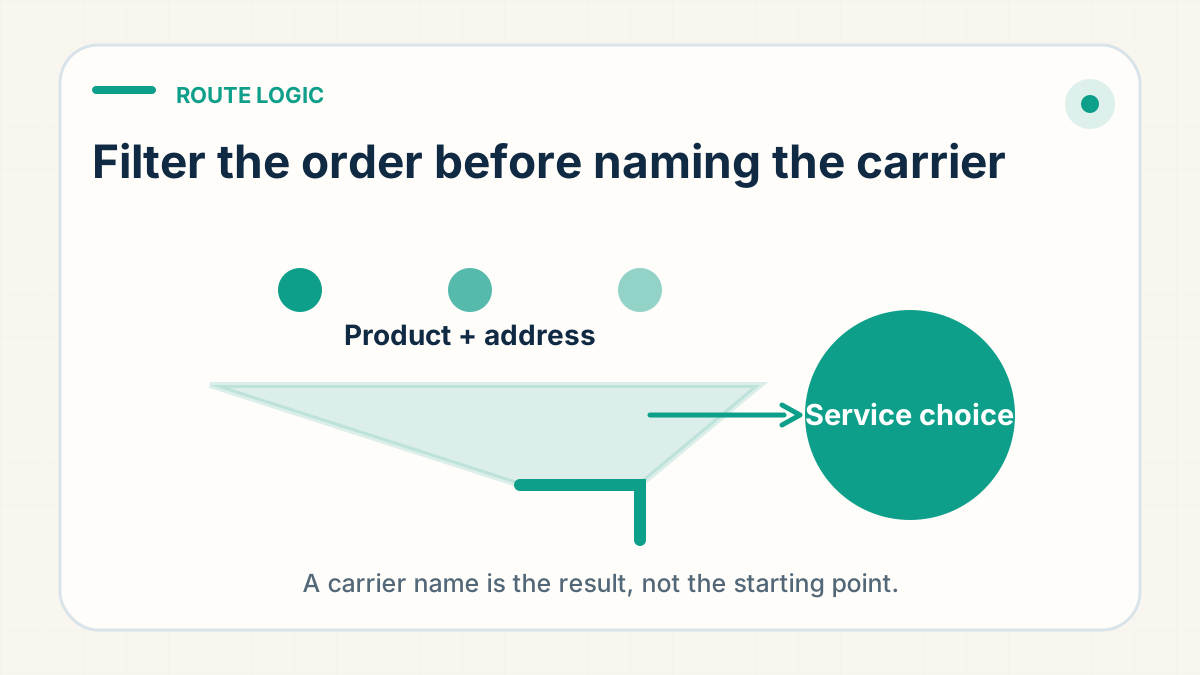
From the operations archive
One carrier question hid four different decisions
A seller asked for the best carrier while comparing shipments to the US, UK and European destinations. It sounded like one reusable answer. In practice, the items, postcodes, customer promises and last-mile expectations were different. One route had good headline speed but weak remote coverage; another accepted the item only under a particular packing condition; a third was cheaper but produced a later first meaningful scan.
Choosing the familiar name would have made the quotation quick and the explanation simple. It also would have hidden the real trade-offs until after checkout. The cheapest rate did not answer whether the customer’s address was serviceable, whether the packed dimensions changed the charge, or who would investigate if the parcel stopped between handoffs.
The team broke the request into lanes and recorded the reason for each choice. That created different answers without inconsistency: the route followed the shipment, not a preferred logo. A carrier can perform very well on one lane and still be the wrong choice on the next order. The durable policy is therefore a method—eligibility, total cost, milestones and exception ownership—not a permanent winner.
About this story: it is an anonymised composite of client situations. It broadens markets and product families and leaves out identifying details. Read the dated field note: The value of a clear route check.
"Does Huahan ship cosmetics?" is a question we hear a lot, about Huahan and about other carriers. The honest answer is that carriers publish service families, not blanket approvals. A route that accepts liquid cosmetics might reject perfume specifically. A route that accepts batteries installed in a product might reject standalone batteries entirely. The category label on a product page is a starting point, not a yes.
Why category labels aren't enough
Carriers organize their offerings into named product lines: a direct parcel service, a registered-tracking option, a bulk-air product, a line for certain regulated goods. Each of these has its own actual rules underneath the category name, weight limits, packaging requirements, which sub-types of a category it accepts, and which destinations it currently serves. Two products in the same broad category, say, two different battery-powered items, can have completely different approval outcomes depending on their specific configuration.
What we actually check before selecting a route
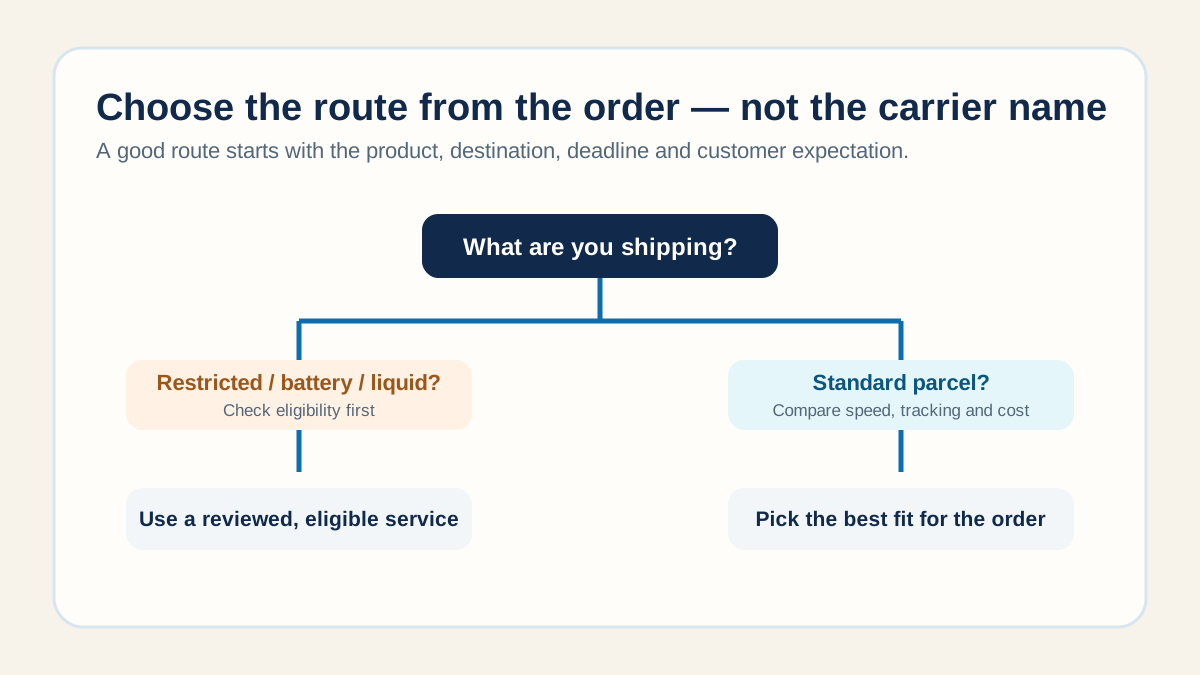
The exact product: composition, materials, any battery or liquid content, and its specific configuration, not just its general category.
Required documentation for that specific product and destination.
Final packaging, since packaging requirements can be as strict as the product rules themselves.
The destination and its current import rules for that product type.
What we're actually promising the customer, since a route that technically accepts a product isn't automatically the right choice if it doesn't fit your delivery timeline or tracking needs.
Only once all of that lines up do we assign an actual route, Huahan, another special-goods carrier, or a standard parcel line, to your product.
Why this protects you, not just us
A shipment that gets flagged, held, or rejected mid-transit because the product didn't actually fit the route costs you the product, the customer, and the money already spent on ads or marketing to get that sale. Checking upfront is slower than just picking whatever category looks close enough, but it's a lot cheaper than a shipment getting stuck at customs three weeks after you thought it was on its way.
Request a route decision for the exact product, composition, customer-ready packing and target country. Record why the named service fits and what change would invalidate that answer; a familiar carrier name is not a reusable approval.
The rule: Shortlist services only after defining the exact item, destination, packed size and customer promise. Then compare current eligibility, price, milestones and exception ownership; selecting a logo first encourages the team to explain away evidence that points to a different route.
Need one order or route checked?
Worried about an order's tracking? Send us the order number on WhatsApp (wa.link/dropship) and we'll check what's going on.
Check Order on WhatsApp →