Field note
One carrier name hid several decisions
Several sellers were asking for shipping answers across different destinations and service levels. The tempting response was to name a familiar carrier and give one delivery range. The actual work was to check the customer-ready item, postcode or region, packed measurement, expected handoffs and what the store had already promised.
One remote destination did not have the same practical options as a mainstream city route. Elsewhere, an early electronic event looked reassuring but did not yet establish that the parcel had entered the destination network.
Coverage, weight and handoff could change the answer
A fast carrier recommendation could fail on eligibility, remote coverage or chargeable weight after the customer had already paid. A tracking update that overstated the physical stage could buy a day of calm and create a harder trust problem when no delivery followed.
Build the route around the real parcel
Shipping questions kept returning this week, which is normal when orders are moving across different destinations and service levels. The important part is not reaching for a familiar carrier name. It is checking whether that route suits the item, destination, timing and handoff expectations—and being upfront when a remote region has no suitable line or requires a slower alternative.
What the route check needed to answer
The lowest available rate does not say whether an item is accepted, how it will be measured after packing, when the first meaningful scan should appear, or what happens at the final-mile handoff. Those details matter most when a customer is already waiting for an update. An early electronic event can be useful evidence, but it should not be presented as proof that the parcel is already moving through the destination network.
A useful tracking message says what stage the parcel is in, what scan should come next, and when it is sensible to investigate further. It explains the delivery stage instead of publishing a unique parcel identifier, and it does not turn an early scan into a delivery promise.
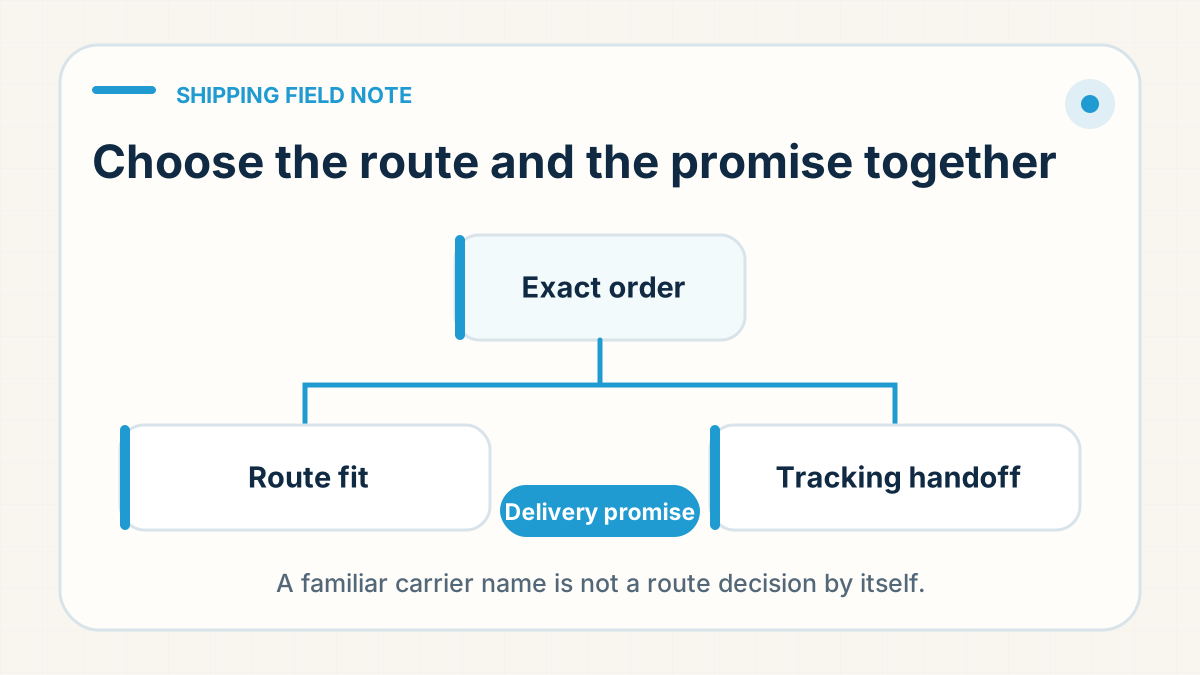
Route selection and customer communication should be planned together. The route is only right when the customer-facing expectation is one the operation can genuinely support.
The release record became the customer update
The route check became a compact release record: item and packing, destination, named service, current price basis, expected first meaningful scan and last-mile handoff. Customer updates used those same milestones. The carrier choice and the communication promise finally described one operating plan.