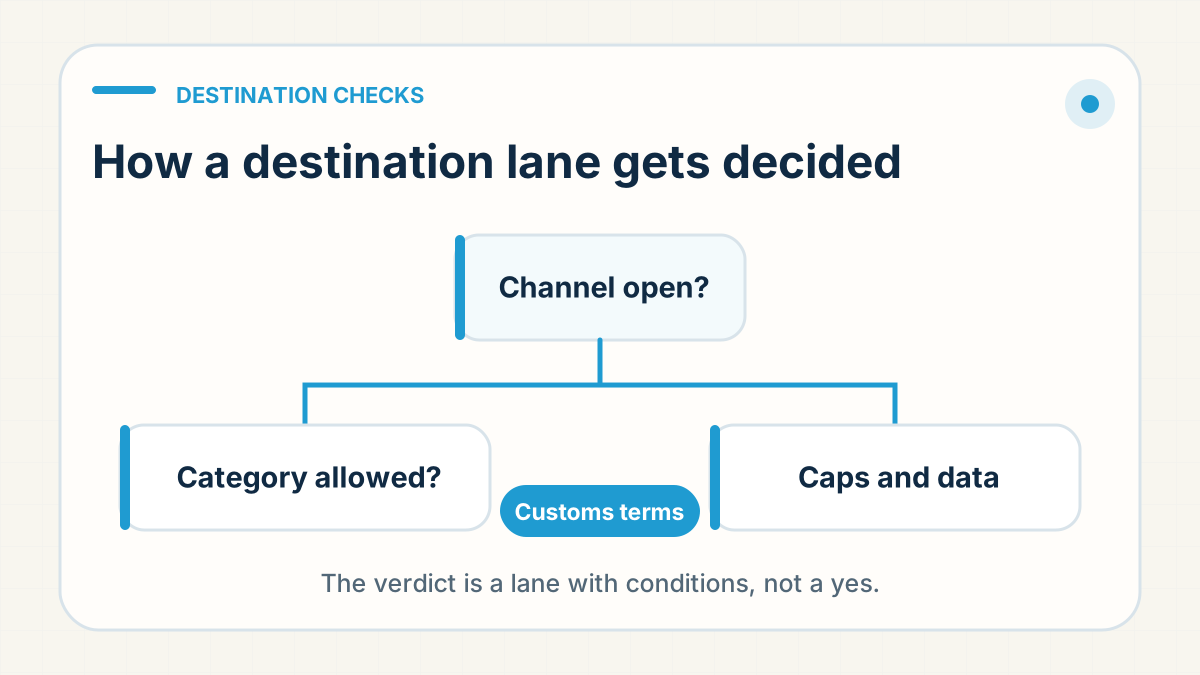
No fulfilment desk keeps a fixed list of countries it serves, whatever a sales page implies. What exists is a lane check, run for one product at one moment: whether a channel is open, whether the category qualifies, whether the parcel fits the caps, what the recipient must supply, and who clears customs. The verdict that comes back is a lane with conditions attached, and it can differ for the next product to the same address.
A destination is a lane, not a yes or no
Whether a country is served depends on the product and the moment, because what a carrier sells is not a country — it is a lane: a named service, accepting defined categories, at defined sizes, under current conditions. Lanes open, close and change terms without notice. The same week can produce a yes for a lamp to one market and a no for a speaker to the same market, and both answers are correct.
RyanFulfil declared 500+ clients and 4,000+ orders a day on 15 August 2026; that operating declaration is separate from the fixed May–August export. In a single week around that period, the desk received destination checks for more than a dozen countries across five continents. Most verdicts carried a condition, a cap or a refusal rather than a plain yes. That ratio is normal, and it is why the listing should wait for the verdict.
The five gates every lane check runs
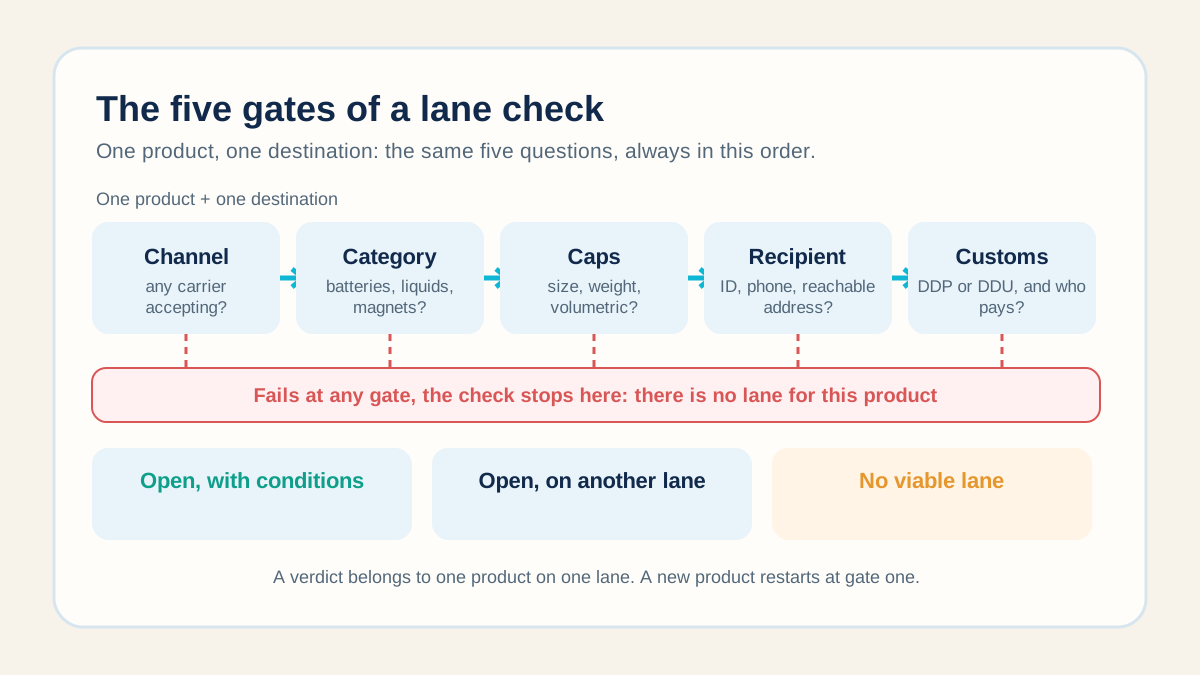
Every destination request passes the same five gates, in order, and a failure at any one of them ends the check for that lane.
- Channel — is any carrier currently accepting parcels to that country, and on which named service?
- Product category — batteries, liquids, powders, magnets and cosmetics each need a lane that accepts that category; a general-goods lane does not.
- Size and weight caps — some lanes are postal-only for parcels under 2kg; some carry a 10kg per-shipment cap; volumetric-weight rules can make one bulky unit cost more to ship than it sells for.
- Recipient data — tax IDs, phone numbers and full local addresses, where the destination requires them.
- Customs terms — whether the lane runs DDP, with charges settled before delivery, or DDU, with the recipient paying at the door.
The gates are cheap to run before a listing goes live and expensive to discover after an order exists.
What does DDU-only mean for my customer?
On a DDU-only lane your customer is the importer: clearance, duties and local taxes are collected from them before the parcel is released. That is not a defect in the lane; it is the lane's design, and it has to be priced and stated at checkout. Expect the local courier to contact your customer for payment, and expect the parcel to wait until they respond.
A seller who advertises an all-in price on a DDU-only lane has quietly promised to absorb a charge that will be billed to someone else. Decide who pays before the first order, not at the first complaint.
Are you sure you cannot ship there?
Usually, yes — a no is issued after the major carriers have been asked, not instead of asking. Türkiye is the clearest current example, and the desk treats it case by case: as of August 2026, every major small-parcel channel consulted for the Türkiye lane was quoting transit measured in months rather than weeks, parcels get stuck, and clearance cannot be guaranteed. Where a route is open at all, the recipient's ID is required. Faced with that picture, the desk would rather not ship than take the risk with a customer's parcel.
If a rival promises the same lane confidently, ask for recent tracking numbers on that lane and read the scans before believing the promise. A quote is an opinion; a tracking history is evidence.
Remote areas, islands and territories
Most remote areas and islands are reachable — at a higher cost and a slower pace than the mainland figure, which is why the desk asks sellers to name the destination before listing. A mainland transit band on a rate card says nothing about that country's islands.
Territories are the trap inside this rule. An overseas territory often rides a different lane from its mainland country, and some island territories are advised against outright: high transport cost, long transit and parcels that are easy to lose make a poor foundation for a customer promise. A parcel that clears one Nordic lane can also fail a neighbouring lane's size cap — borders decide more than distance does.
What does the recipient have to provide?
On a growing number of lanes, delivery depends on data only your customer can supply — most often a tax or ID number and a working phone number. Brazil is typical: the lane is open, but it requires the recipient's tax ID, phone and full address with postcode, serves no islands or remote areas, and customs collects any duties from the recipient directly. Several other destinations run the same way.
Collect the required fields at checkout, because an order that reaches dispatch without them does not ship slower — it does not ship. European destinations carry their own recipient and customs detail, from IOSS to per-HS-code charges, collected in the Europe fulfilment hub.
Does the no apply to everything, or just this product?
Just the product that was checked. Restrictions depend on the specific product as well as the country, so each new product can be checked separately for a workable lane — a ruling the desk repeats week after week.
The inverse holds too: a yes does not transfer to the next product, and it does not survive a change to the product it was issued for. Re-run the check whenever anything that touches a gate changes — a battery added, a liquid variant introduced, packaging enlarged past a cap.
What to send for a lane verdict
A lane verdict needs the exact product and the exact destination: the product link or photos, the composition that matters to carriers (battery, liquid, powder, magnet, or none), packed size and weight, the destination country and the kind of address, and the quantity per shipment. The desk returns the lane, its conditions and its transit band; for lanes already published, the standard and express figures per country sit in the shipping-times reference.
Run that check before the listing goes live, and repeat it for each new product to the same country. The control is short: no destination promise reaches your store before the lane verdict for that exact product exists in writing.
Need one order or route checked?
Worried about an order's tracking? Send us the order number on WhatsApp (wa.link/dropship) and we'll check what's going on.
Check Order on WhatsApp →