Identify the parties on the actual declaration
Before choosing a shipping model, ask who will be named as importer, who submits the declaration and in what capacity any customs representative acts. Confirm the answer for the destination and service you will use.
An individual customer parcel and a bulk warehouse shipment can use different arrangements, but the parcel format alone does not determine the importer or the records available to you. A DDP label allocates delivery and clearance responsibilities; check how those responsibilities will be carried out.
Separate VAT collected at checkout from import VAT
The EU Import One-Stop Shop can be used for eligible distance sales of imported goods in consignments not exceeding €150. Under the scheme, VAT is collected on the sale and reported through IOSS. When the conditions are met, the import is exempt from import VAT.
That is different from import VAT charged on an entry. Do not assume every small parcel uses IOSS, or that VAT collected from the customer is an import-VAT payment your company can recover. Ask which scheme is being used and what the quote and records show.
Confirm recovery with the destination rules
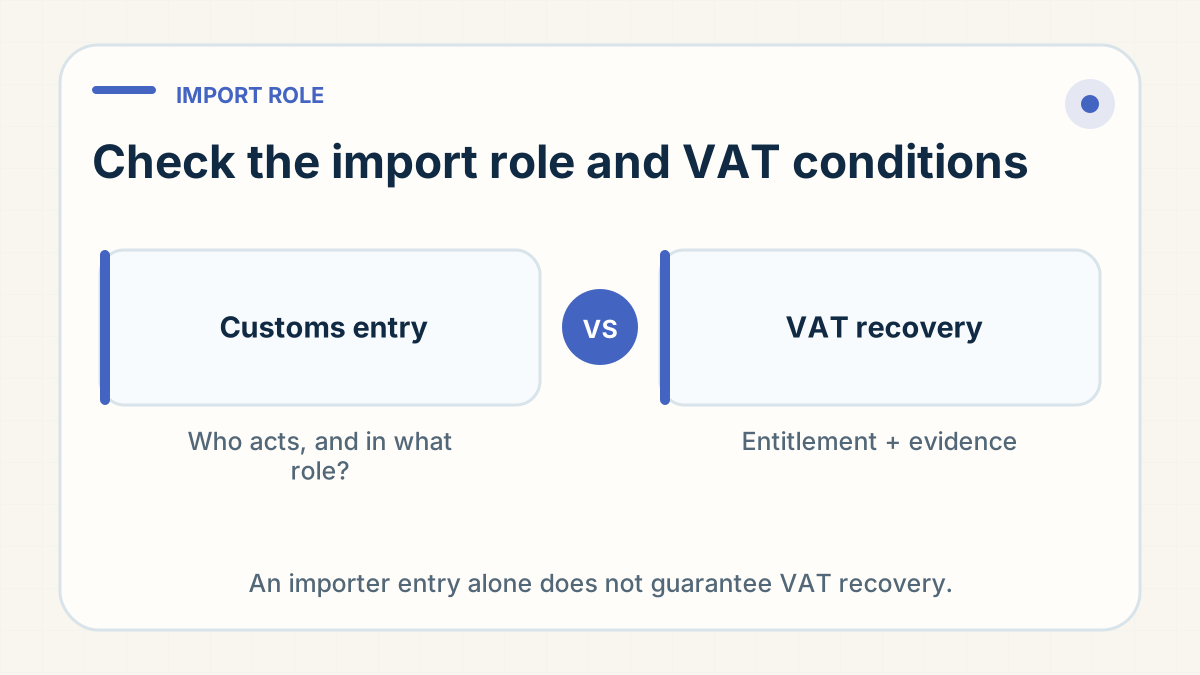
VAT recovery depends on the applicable law, your role, entitlement and evidence. Being named importer is not a universal guarantee of a deduction. For example, HMRC guidance links UK import-VAT recovery to ownership and the relevant legislative conditions; the required evidence depends on the accounting arrangement.
Give your accountant the actual declaration and VAT records, together with the supply and transport agreements. A freight invoice alone may not establish the tax treatment. Confirm what records will be available before changing the business model to obtain a tax result.
Keep customs duty separate
The EU temporary customs-item duty is separate from VAT and from any carrier charge. The charging basis is a customs item represented by a declaration line, not simply a physical unit or parcel. Check the current customs-item guide and the actual declaration when comparing the quote.
Compare direct parcels with destination stock
Direct customer parcels can keep the initial stock commitment smaller. Destination stock introduces bulk inbound freight, import arrangements, receiving, storage and local fulfilment. Compare those complete costs, the delivery benefit and the inventory risk for your product.
Do not choose bulk stock solely because a guide suggests it creates recoverable VAT. Confirm the tax position independently, then test whether the order volume and customer delivery promise justify the stock commitment.
Choose the import model before promising the tax treatment
Ask for the commercial invoice and packing information, importer and representative details, classification and valuation basis, applicable VAT arrangement and the customs or tax records you will receive. Confirm who responds if customs requests more information.
RyanFulfil can explain the product, route and documents it handles. Confirm tax recovery and registration requirements with your accountant or qualified adviser using the destination authority's current guidance. Keep the written answer with the shipment setup.
The rule: Name the importer of record before checkout promises and shipping labels are final. Confirm who is responsible for classification, declarations, tax or duty and required records on the actual route; DDP, IOSS or a carrier service does not make that responsibility safe to assume.
Need one order or route checked?
Worried about an order's tracking? Send us the order number on WhatsApp (wa.link/dropship) and we'll check what's going on.
Check Order on WhatsApp →