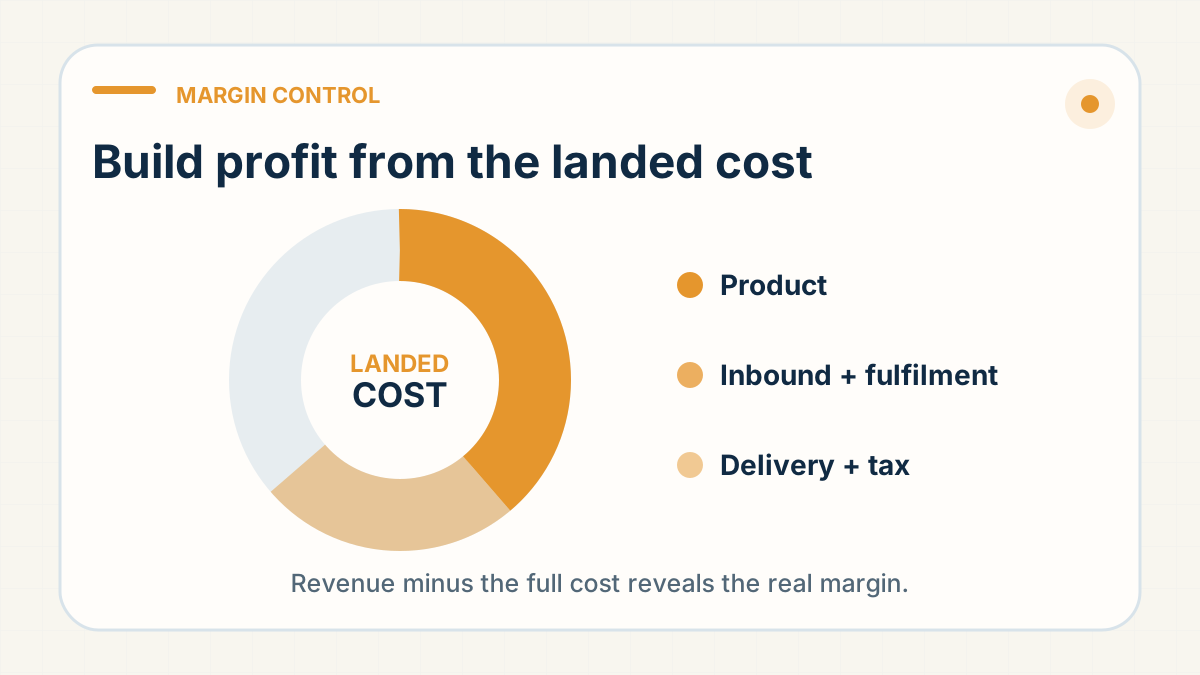
Landed cost is everything it takes to get one unit from your supplier to your customer's door, fully delivered: product cost, freight to the fulfilment warehouse, last-mile shipping, duties and import tax, fulfilment fees and payment processing. It is the only number that tells you whether a sale makes money. Plenty of sellers who know their COGS assume they know their margin. A product that costs $4 and sells for $19.99 looks like a fat margin, but that $4 is only the product cost, not what it costs to get the item into a customer's hands.
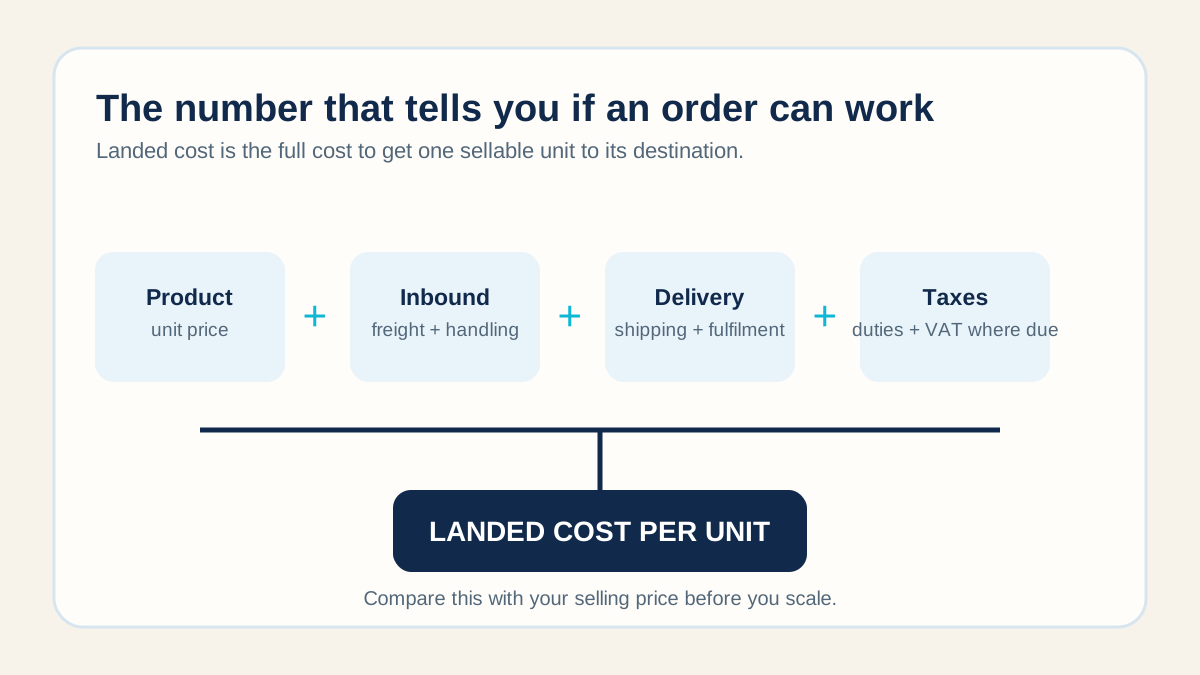
What landed cost actually includes
Line by line, that's product cost (what you pay the supplier per unit), shipping (freight from supplier to fulfilment warehouse, plus last-mile shipping to the customer), duties and import tax (what gets charged crossing into the destination country), fulfilment fees (pick, pack, and any warehouse handling charges), and payment processing fees (what Shopify Payments, PayPal, or your platform's processor takes off the sale).
Most sellers track product cost closely because it's the easiest number to see, it's right there on the supplier invoice. The other four line items get estimated, ignored, or forgotten entirely. That's where margin quietly disappears.
What does landed cost look like on a $24.99 product?
Let's say you're selling a small kitchen gadget. On paper it looks like this: sale price $24.99, product cost $3.80, "looks like" margin $21.19, or about 85%.
Now let's actually land it: product cost $3.80, freight from supplier to warehouse (per unit, averaged across a shipment) $1.10, last-mile shipping to customer $6.50, duties and import tax at destination $1.35, fulfilment fee (pick and pack) $2.20, payment processing (roughly 3% of sale price) $0.75.
Total landed cost: $15.70.
Real margin: $24.99 minus $15.70 equals $9.29, or about 37%.
Still profitable, but that's a very different number from the 85% the seller thought they had looking at product cost alone. And that's the good version of this example. Drop the sale price to $19.99 for a flash sale, or add a $2 return rate buffer, and that 37% margin can slide into single digits fast. We've seen sellers run a product for months thinking they had healthy margin, then do the full landed cost math and realize they were barely breaking even, or losing money on every unit once returns were factored in.
How often should you recalculate landed cost?
Recalculate landed cost at least once a quarter for your top sellers, and immediately after a shipping rate change, a new duty rule or a supplier price adjustment. Landed cost isn't a number you set once and forget. It moves. Freight rates change with fuel costs and carrier capacity, sometimes month to month. Duty and import tax rules get updated by customs authorities, and this isn't rare, we saw a meaningful shift in how low-value parcels get taxed entering the EU earlier this year that changed landed cost math for a lot of sellers shipping there. Fulfilment fees can shift if your order volume changes tiers, or if a product's weight or packaging changes. Payment processing rates vary by platform and sometimes by region.
If you calculated your landed cost six months ago and haven't touched it since, there's a good chance it's wrong today.
How to actually do this without it being a headache
You don't need a finance degree for this. A simple spreadsheet with one row per SKU and columns for each of the five cost categories does the job. Pull real numbers, not estimates, wherever you can. Your fulfilment agent should be able to give you actual average shipping and fulfilment costs per SKU rather than a guess. We give our clients this breakdown on request specifically because we know how often "profitable" products turn out not to be once it's calculated properly.
The bottom line
COGS tells you what the product costs. Landed cost tells you what the sale actually made you. If you're only looking at product cost when you decide what to sell or what price to set, you're making pricing decisions with incomplete information. Do the full math, and redo it regularly. It's the difference between a product that looks good on paper and one that's actually paying your bills.
A simple pre-launch margin worksheet
For one destination and one representative order, add the costs that must be paid before the customer receives the item.
- Product cost and any product-specific customisation.
- Inbound, picking, packing, packaging and shipping charge at the packed weight.
- Taxes, duties or route-specific charges where they are included in your model.
- Expected payment fees, refund allowance, replacement exposure and acquisition cost.
Then compare the remaining contribution with the margin you need to fund ads, support and growth. If the answer only works at an unrealistically low refund or ad cost, it is not yet a reliable offer.
Need one order or route checked?
Worried about an order's tracking? Send us the order number on WhatsApp (wa.link/dropship) and we'll check what's going on.
Check Order on WhatsApp →