From the operations archive
The box looked unchanged until it was measured again
A seller added or renamed product variants while the warehouse was preparing live orders. On screen, the offer still looked like the same compact parcel. At the packing table, a changed insert, accessory or protective layer altered the dimensions and sometimes the eligible route. The quote people remembered belonged to an earlier customer-ready configuration.
Reusing that rate would preserve the margin model until the carrier measurement arrived. Then the seller might discover a volumetric charge, a different weight band, a destination surcharge or a service change after the selling price was already public. The carrier had not priced the same box inconsistently; operations had asked two superficially similar parcels to share one assumption.
The fix was to tie cost to a dated packed reference: outer dimensions, actual weight, contents, destination and service. 4PX quotes can differ when any of those inputs—or the applicable rate card—changes. A dependable comparison keeps both the old and new configuration visible, so a price movement can be explained instead of dismissed as carrier randomness.
About this story: it is an anonymised composite of client situations. It broadens markets and product families and leaves out identifying details. Read the dated field note: Sunday sourcing — and fixing what broke yesterday.
If you've ever gotten a shipping quote that felt higher than your product's actual weight would suggest, dimensional weight is almost always the reason. With 4PX specifically, this gets a bit more complicated than usual, because the formula that converts box size into "chargeable weight" isn't the same across every product line.
This guide covers 4PX chargeable weight. For the general rule on dimensional weight, see why your shipping quote doesn't match the box weight.
The formula
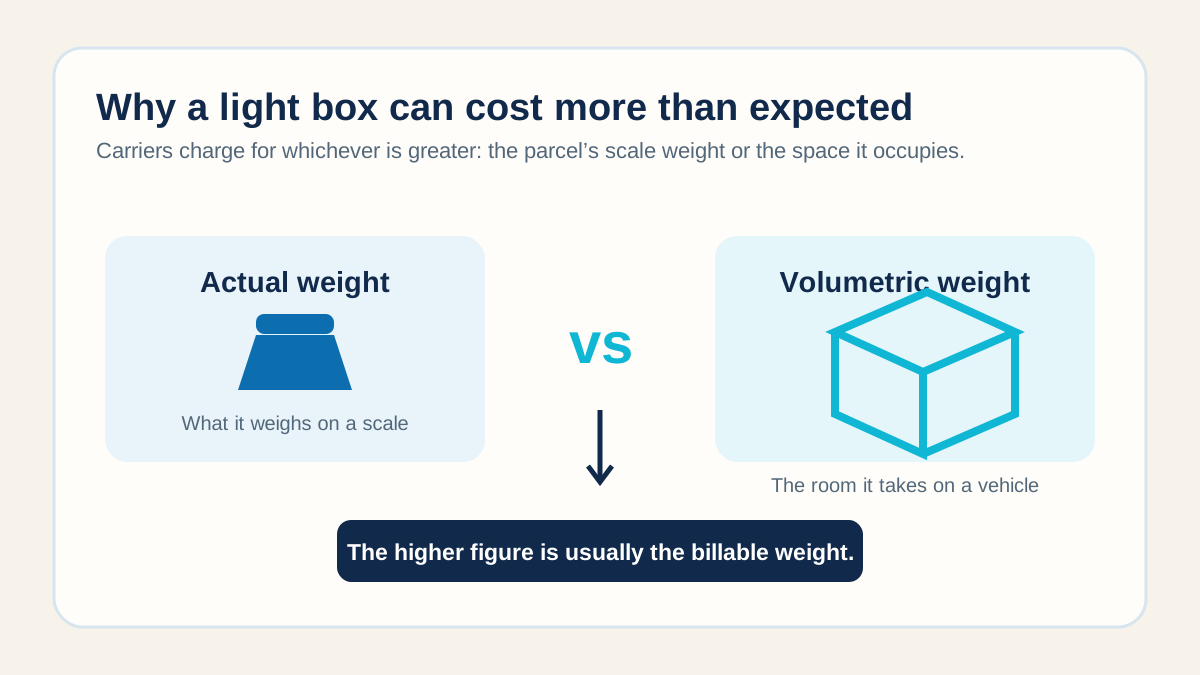
Chargeable weight is whichever is higher: the actual weight on the scale, or the dimensional weight calculated from the box's size. Dimensional weight is length times width times height, divided by a "divisor" number that varies by carrier and product.
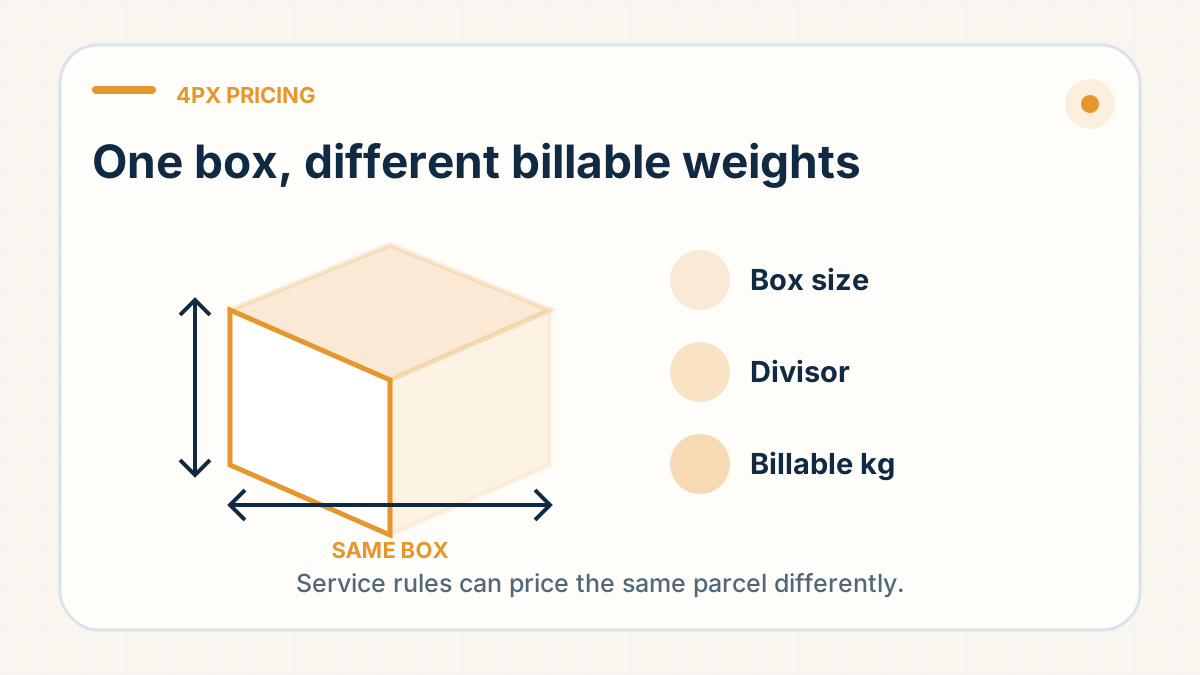
Here's the part that catches people out with 4PX specifically: publicly available 4PX materials show divisors ranging from 5,000 up to 18,000 depending on the product line. A bigger divisor means a lower dimensional weight for the same box, which usually means a cheaper shipment. A smaller divisor means the opposite.
A worked example
Say your parcel is 40 x 30 x 20cm and weighs 2kg on the scale. Volume is 24,000 cubic cm.
Divided by 5,000: dimensional weight comes out to 4.8kg. Chargeable weight: 4.8kg.
Divided by 6,000: dimensional weight is 4.0kg. Chargeable weight: 4.0kg.
Divided by 8,000: dimensional weight is 3.0kg. Chargeable weight: 3.0kg.
Divided by 18,000: dimensional weight is 1.33kg, which is below the actual weight, so chargeable weight reverts to the actual 2.0kg.
Same exact box. Four different chargeable weights depending on which product it's quoted through. That's not a rounding difference, that's potentially double the shipping cost for the identical parcel.
Why we don't quote off the supplier's listed weight
Supplier listings almost always show bare product weight, no packaging. But we can't ship a product naked, protective packing adds real weight and bulk on top, which can push both the actual weight and the box dimensions up, sometimes enough to bump the chargeable weight into a worse bracket. A light but bulky or fragile item can end up costing more to ship than the listing weight implies.
What we actually quote on
Final packed weight and dimensions, on the specific product line we're using for your route, not the bare product spec and not a generic "typical" rate. If packaging choices are pushing your cost up, we'll tell you, sometimes right-sizing the box or changing the void fill genuinely changes your landed cost.
If a shipping quote looks off to you, ask us to walk through the actual calculation for your product. It usually takes two minutes and it either confirms the number or catches something worth fixing.
The rule: Compare 4PX prices only after fixing the customer-ready configuration: contents, protection, outer dimensions, scale weight, destination, service and quote date. If any input changed, explain the cost movement against the two packed references instead of treating one remembered rate as permanent.
Waiting for a parcel you bought? Contact the store you ordered from: it holds your order details.
Need one order or route checked?
Worried about an order's tracking? Send us the order number on WhatsApp (wa.link/dropship) and we'll check what's going on.
Check Order on WhatsApp →