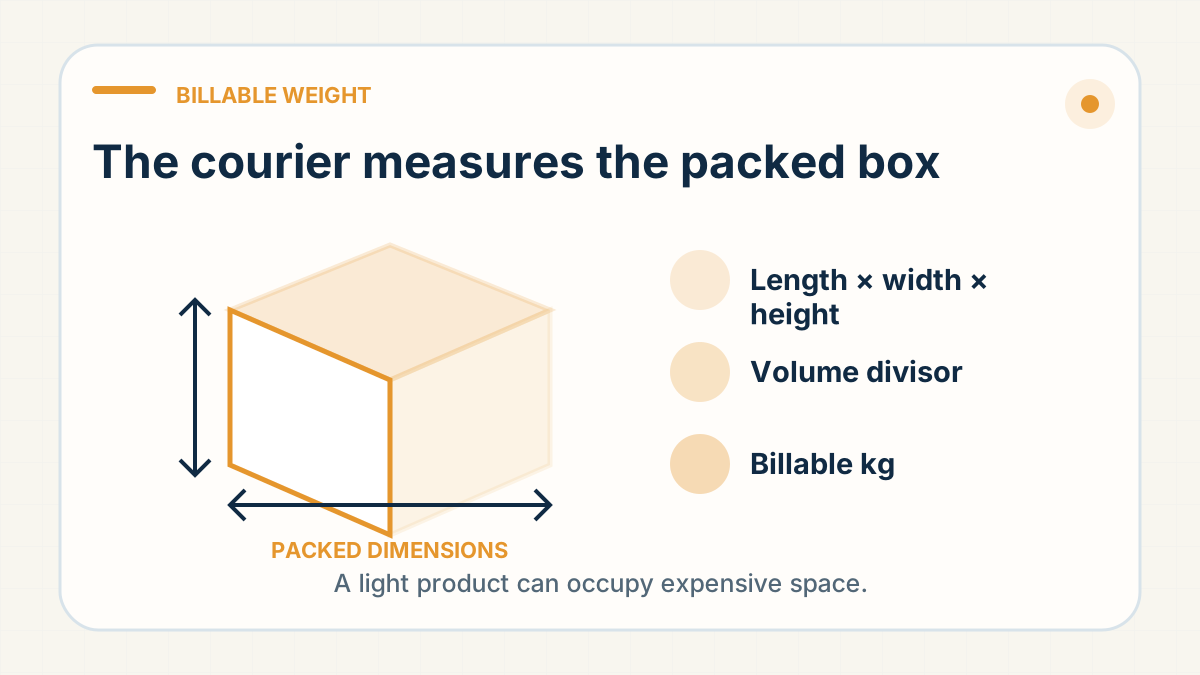
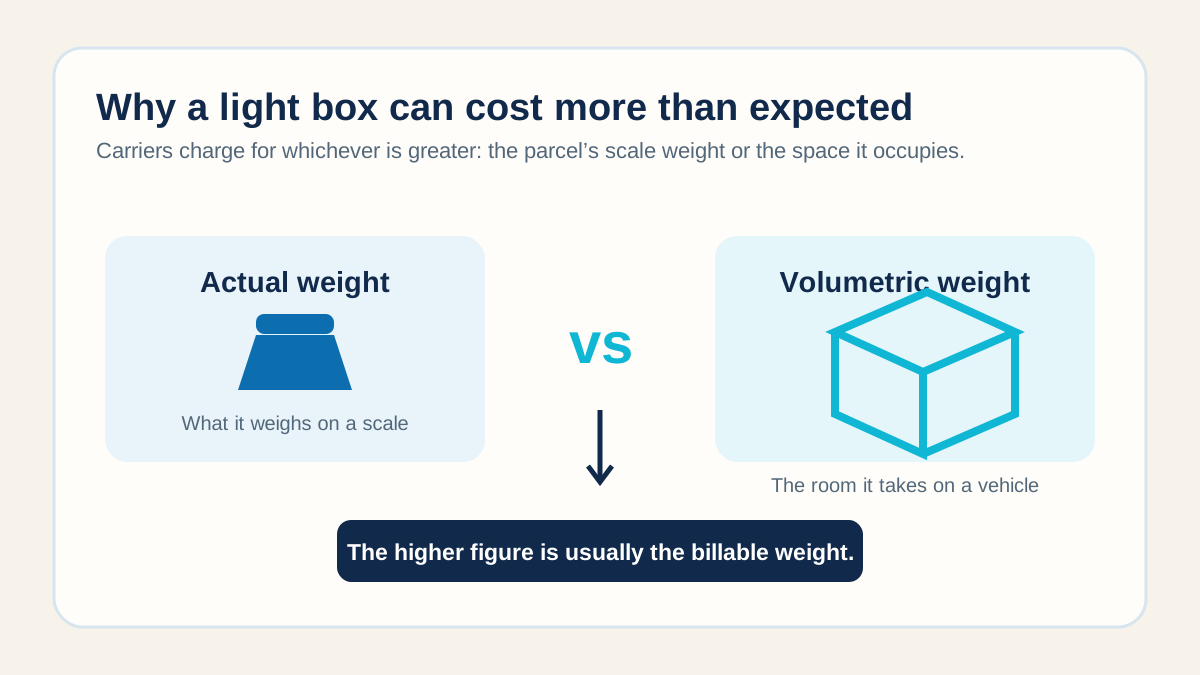
Couriers bill the higher of two weights: the parcel's actual weight or its volumetric (dimensional) weight, which they calculate from the space the box takes up on the plane or truck. Every few weeks a seller asks why the courier invoice came back higher than the weight they measured on a kitchen scale, and dimensional weight is one likely reason. A box of light, bulky items, such as inflatable toys, plush products or lampshades, takes the cargo space of a much heavier box, so the courier charges for the space. Measure the packed parcel, not the bare product, and check the packed measurements and billing basis against the quotation.
What is dimensional weight?
A commonly quoted dimensional-weight calculation is: Volumetric weight (kg) = (Length x Width x Height, all in cm) / 5000. Some air freight forwarders use a divisor of 6000 instead, so always check which one your forwarder or courier is quoting off. A divisor of 139 is also used for some services measured in inches and pounds; confirm the current rule for the selected service.
Whichever number is bigger, actual weight or volumetric weight, that's what you get billed on. That's called the chargeable weight.
The part everyone forgets: packaging adds bulk
Here's where most new dropshippers get their quotes wrong. They measure the product. Not the packed carton. Not the bubble wrap. Not the foam corners. Not the void-fill.
If you're shipping something semi-fragile, like ceramics, glassware, small electronics, anything with a screen, you need protective packaging. That packaging does two things at once: it adds real weight (foam, bubble wrap, corrugated inserts aren't free), and it adds volume, because a product wrapped in 2-3cm of padding on every side is now a noticeably bigger box than the bare item.
That extra volume is exactly what gets multiplied in the dimensional weight formula. Even a small increase in each dimension compounds fast, because you're multiplying three numbers together.
How much can packaging add to chargeable weight?
Say you're selling a ceramic mug. Bare product: 9cm x 9cm x 10cm, actual weight 320g. If you shipped it with zero packaging (you wouldn't, but let's use it as a baseline), volumetric weight = (9 x 9 x 10) / 5000 = 0.162kg. Chargeable weight would be the actual weight, 0.32kg, since it's higher. Looks cheap.
Now pack it properly. Bubble wrap plus a snug corrugated box with void fill adds about 2.5cm of padding on each side and a bit of extra box structure. New packed dimensions: 14cm x 14cm x 15cm, packed weight (with packaging materials) 480g. Volumetric weight = (14 x 14 x 15) / 5000 = 0.588kg.
Now the volumetric weight (0.588kg) is higher than the actual packed weight (0.48kg), so that's your chargeable weight. Compare that to the 0.32kg you might have budgeted for based on the bare product. That's an 84% jump in chargeable weight, purely from proper packaging, and it happened because the box dimensions grew, not because the product changed.
If you quoted a customer shipping cost based on the bare product weight, you're eating that difference on every order, or worse, you priced your product margin around a shipping cost that was never real.
What to do about it
Always get your dimensional weight quote off the packed carton, not the bare product. Ask your supplier or fulfilment partner for the packed dimensions and weight, not just the spec sheet numbers. If a product needs fragile handling, build the packaging cost and the dimensional weight hit into your landed cost calculation before you list the price, not after your first shipment goes out. Ask whether your forwarder quotes off 5000 or 6000 for the divisor, it's a fair question to ask upfront. If the service uses inches and pounds, confirm whether the 139 divisor applies; use the units and divisor stated in the quote.
We measure and weigh the actual packed carton for every SKU we fulfil, not the spec sheet number, specifically because this gap catches people out so often. If your supplier only gives you product dimensions, ask for packed dimensions before you finalize pricing. It's a five-minute question that can save you from a shipping cost surprise on your first big order.
Check this before you set a selling price
- Ask for the packed length, width, height and actual scale weight for the variant you intend to sell.
- Calculate volumetric weight using the route's stated divisor, then compare it with actual weight; the higher result normally drives the billable weight.
- Include inserts, protective packing and outer cartons in the measurement—those are part of the parcel the carrier receives.
- Re-check after changing packaging, bundling products, adding a gift, or moving to a new supplier.
Why this matters: a product can look profitable at its bare weight and lose margin once it occupies a larger shipping box.
Need one order or route checked?
Worried about an order's tracking? Send us the order number on WhatsApp (wa.link/dropship) and we'll check what's going on.
Check Order on WhatsApp →