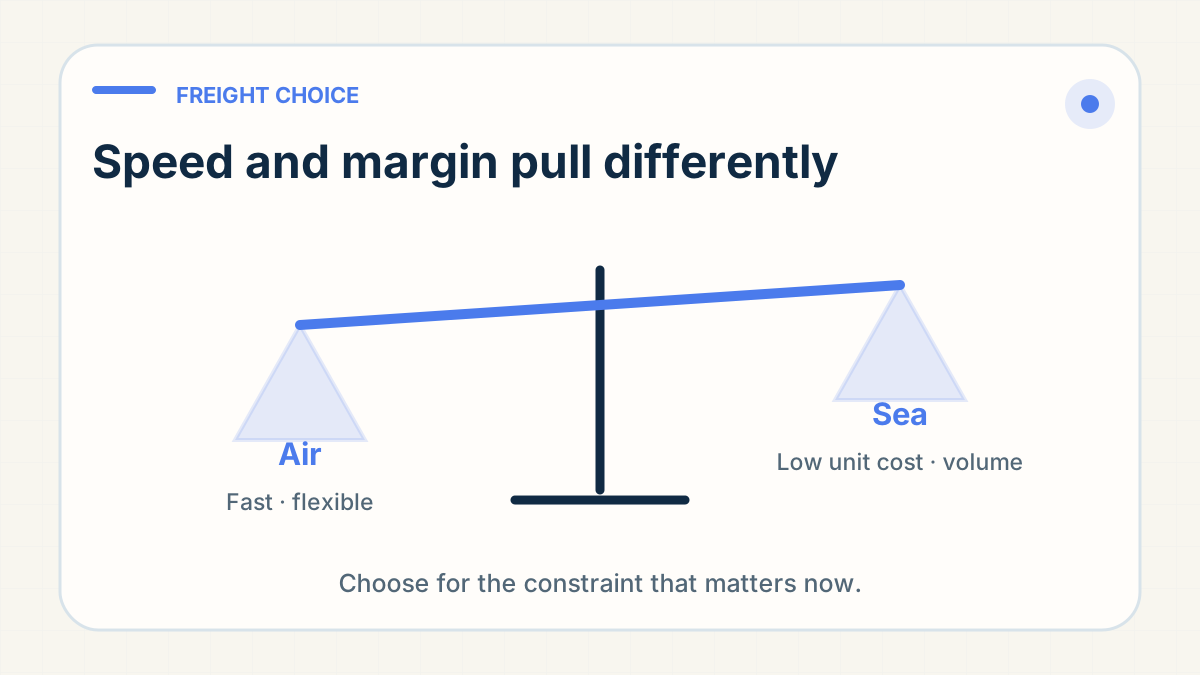
Air and sea freight solve different problems. Air may suit urgent replenishment or lower-volume stock; sea can suit planned replenishment where the product, destination, inventory position and cash cycle support a longer and more variable journey. Neither is automatically cheaper or faster in the way that matters to a specific order.
Compare the complete landed decision
Request a current quote that states the service, origin and destination handling, chargeable-weight or volume basis, customs arrangement, delivery scope and exclusions. Include packing, inbound handling, storage and the cost of a stock-out—not only the headline freight price.
Plan inventory around uncertainty
Sea freight requires enough stock cover for production, consolidation, sailing, clearance and onward delivery variation. Air can reduce lead time but may change the economics of bulky, heavy or restricted items. Use a replenishment plan with a buffer rather than a fixed generic day count.
Choose by the order in front of you
The right route can change with the destination, seasonal conditions, product classification and current carrier capacity. Re-quote before each material decision and do not turn a past transit experience into a future guarantee.
Freight choice is an inventory bet
A growing accessories or lifestyle brand may reach the point where per-order purchasing is adding too much time, yet a full regional warehouse still feels premature. The seller sees an attractive sea-freight unit cost and an urgent air quote. Neither number answers the real question: how much cash and customer demand should be committed before the next replenishment lands?
Air protects time but can erase margin on bulky or heavy goods. Sea protects unit economics only when enough of the inventory sells and the business can tolerate production, consolidation, sailing, clearance and onward-delivery variation. Sending the wrong variants cheaply is still an expensive inventory decision.
Model the constraint, not the mode
Start with sellable stock by SKU, paid demand, confirmed inbound units and the realistic reorder point. Then compare the landed cost and arrival range for the actual packed goods. Include origin and destination handling, customs arrangement, minimum charge, storage, onward delivery and the cost of running out before replenishment arrives.
The result may be a split rather than a winner: use air for a small quantity of proven fast movers while a planned sea batch carries the base replenishment. Keep unproven variants or likely product revisions out of the long commitment until demand and quality are clearer.
What must be true before sea makes sense
- The product version and packaging are stable enough to commit in bulk.
- Demand is measured at SKU level rather than inferred from total store traffic.
- Cash can remain tied up through the full replenishment cycle.
- There is a receiving, counting, storage and exception process at the destination.
- The plan includes a response if production or transit moves outside the expected range.
The best freight decision is not a permanent preference. It is the least fragile way to protect the constraint that matters now, with a trigger for reviewing the choice as demand, packaging and stock position change.
Write that trigger into the plan: a stock-cover threshold, a confirmed product revision, a material change in packed volume or a new destination warehouse. Without a trigger, a sensible one-off air shipment or sea batch quietly becomes habit long after the constraint that justified it has changed.
The rule: Choose air or sea against the latest useful arrival date, total landed cost and cash tied up in the shipment. Sea is not cheaper if the inventory arrives after the selling window, and air is not faster in a useful sense if its cost removes the product's margin.
Need one order or route checked?
Worried about an order's tracking? Send us the order number on WhatsApp (wa.link/dropship) and we'll check what's going on.
Check Order on WhatsApp →