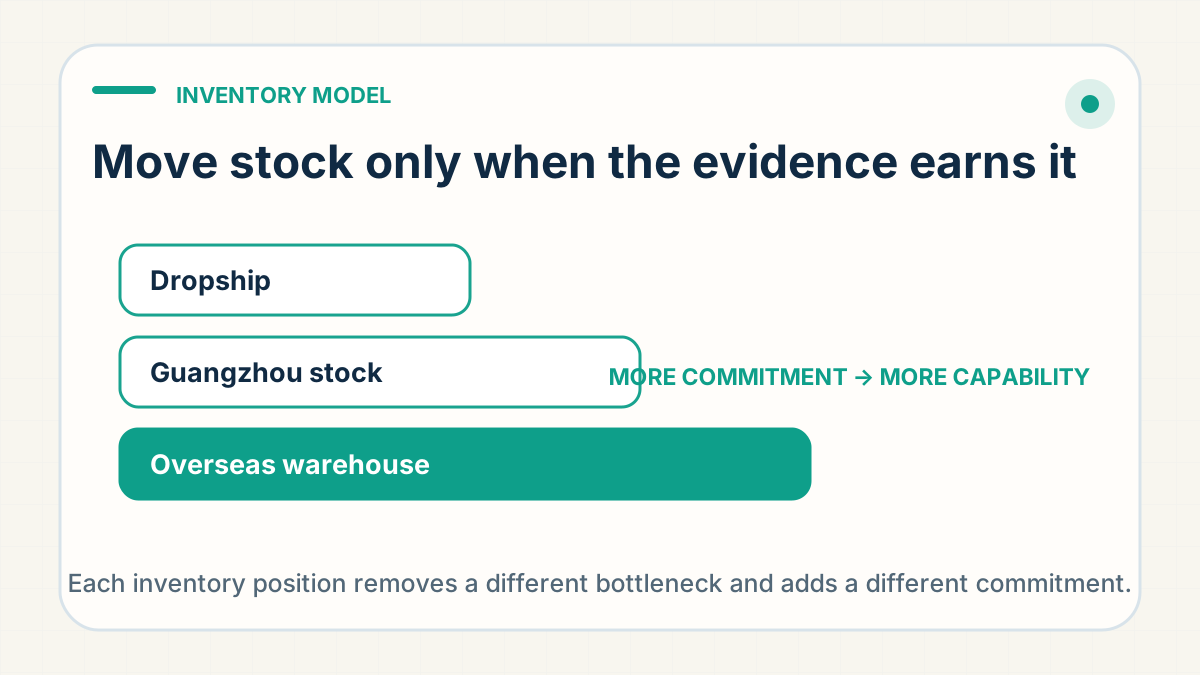
The three models solve different constraints
Order-by-order dropshipping keeps inventory commitment low. Pre-stocking in Guangzhou reduces supplier preparation time while preserving flexible international routing. Stocking in the destination country can shorten final delivery, but requires larger commitments, inbound freight, local storage and a reliable replenishment plan. The right model depends on proven demand, product stability and the customer promise, not on which option sounds most advanced.
Use order-by-order fulfilment while the offer is still changing
Dropshipping is usually the safer starting point when daily demand is uncertain, creative tests are still running, or the product, variant mix and destination spread may change. The trade-off is that supplier preparation sits inside every order cycle and an unexpected stockout can interrupt fulfilment.
The chats repeatedly showed early-stage sellers discussing forecasts before they had paid orders. In apparel, accessories and home categories, the safer response was to quote the tested configuration, confirm the real order flow and avoid converting enthusiasm into an inventory purchase. A campaign estimate is planning input; it is not the same as customer demand already paid for.
Pre-stock in Guangzhou when preparation is the bottleneck
Guangzhou stock is useful when an item is proven, supplier preparation is slow, or a launch needs units ready for same-day or next-day warehouse handling. It can also support faster combination of products, inserts and branded packaging. The international leg still begins in China, so it does not create domestic delivery times in the destination market.
Several reviewed accounts used recurring stock deposits or replenishment payments once repeat volume became visible. Other accounts were advised to wait because a colour had just been discontinued, a version was changing or the supplier lead time was still uncertain. The same deposit can be sensible for a stable accessories line and risky for a trend-led item whose specification is moving.
Use an overseas warehouse when local delivery changes the offer
Destination-country stock makes sense when the sales concentration, delivery promise and return economics justify bulk inbound movement. It can be especially useful for marketplaces that expect local fulfilment or for high, steady volume in one region. It also adds forecasting risk: the stock is committed to that market and cannot be redirected as easily.
One anonymised electronics account moved proven inventory into a European warehouse in regular batches. The benefit was not a magical reduction in product cost; it was a different delivery proposition after stock arrived locally. Another fast-growth launch considered local stock because a promotion could create several thousand orders in a short window. The operational question was whether the integration, inbound stock and packing capacity would be ready before the traffic arrived.
An overseas warehouse ships only your stocked inventory
An overseas warehouse ships only inventory you have stocked there. It is not a catalogue you can dropship from: the stock is bought by you, shipped inbound by you and owned by you, and until it has physically arrived and been received, every order still ships from China. The short local delivery window that makes an overseas warehouse attractive exists only for the products, variants and quantities sitting on the shelf.
The question arrived repeatedly across a reviewed week in August 2026: sellers asking to dropship from an EU or UK warehouse without holding stock in either. The consistent answer was stock-first. The warehouses exist, but they hold client-owned inventory — who owns the stock behind your deposit explains the ownership side — and the sensible time to fund that inventory is after orders are consistent, not before the first sale. Until then, order-by-order dropshipping from China keeps the commitment reversible.
Warehouse coverage and customs treatment depend on the destination. Confirm the available dispatch point for Switzerland or Norway separately from your EU orders. Before you promise local delivery to a market, confirm that the warehouse's country actually covers it — the Europe fulfilment hub sets out how EU lanes, VAT and customs terms fit together.
Use five gates before funding stock
- Demand: use recent paid orders by SKU and destination, not one headline forecast.
- Stability: confirm the supplier, version, packaging and documentation are not about to change.
- Coverage: choose enough stock for a defined period plus buffer, with a reorder point.
- Exit: decide what happens to slow variants, discontinued items and returned inventory.
- Cash: keep product, branding, inbound freight, storage and local dispatch visible as separate commitments.
Place stock only where the evidence supports it
Move inventory closer to the bottleneck you are trying to remove. Start with flexible fulfilment, pre-stock in Guangzhou when supplier preparation limits speed, and use an overseas warehouse when concentrated demand makes local delivery worth the extra inventory risk.
Operating rule: Choose the next inventory stage by the problem you can prove. Dropship while demand is uncertain, pre-stock in China when procurement delay is the constraint, and evaluate overseas stock only when stable destination demand can repay the extra cash, complexity and split inventory.
Have a specific fulfilment question?
Send us the product, destination and order context on WhatsApp (+86 178 4666 9989). A clear answer is more useful than a generic estimate.
Ask Questions on WhatsApp →