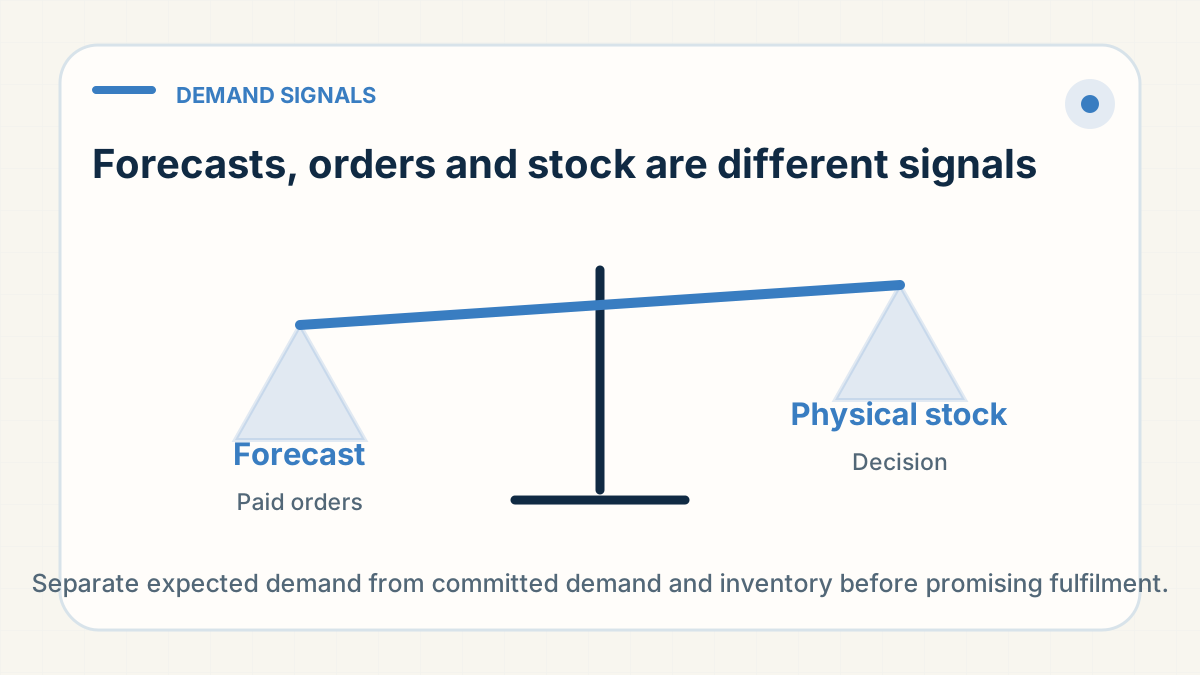
The three numbers answer different questions
A sales forecast estimates what may happen. Paid orders create committed demand. Stock describes physical units in defined states. Treating those numbers as interchangeable is how optimistic campaigns create shortages—or speculative volume becomes dead stock.
1. Forecast demand supports planning
A forecast can come from advertising plans, waitlists, past sales, seasonality or a creator campaign. It helps a supplier and fulfilment team discuss capacity, lead times and possible buffers. It should carry a confidence range and assumptions rather than being recorded as one guaranteed number.
- Base case: the volume the current evidence most strongly supports.
- Upside case: what the operation must handle if the launch performs well.
- Downside case: what remains sellable if demand is slower than hoped.
A forecast becomes more useful when it is tied to a decision date: when stock must be ordered, when a campaign launches, and when the estimate will be refreshed.
2. Paid orders create allocation decisions
A paid order is stronger evidence of demand, but it is not automatically ready to ship. Payment risk, cancellation windows, address completeness, stock status and release rules can still matter. Record committed units by exact SKU and destination rather than only counting orders.
3. Inventory needs states
Shopify distinguishes available, committed, unavailable, incoming and on-hand inventory. That is a useful operating model even if another system is used. Incoming units are not sellable until received and checked. Damaged, reserved or QC-held units should not inflate the available number.
- Available: received, released and genuinely sellable.
- Committed: allocated to placed orders but not yet fulfilled.
- Unavailable: held for QC, damage, safety stock or another defined reason.
- Incoming: ordered or moving, but not yet received and released.
A shipment can be received and still not be sellable
Shopify's Inventory Shipments API 2026-10 now includes a CANCELED receive action for units that never arrive. Canceled units count toward total received quantity, which is decomposed into accepted, rejected and canceled quantities. Keep that distinction in your own inbound bridge: a canceled unit can close the receiving expectation without increasing sellable stock. The API update is dated 17 September 2026 and is not a substitute for checking the actual shipment record or downstream inventory state.
If you consume receiving webhooks, Shopify also changed the events payload's fields_changed value to report added, updated and removed fields as object arrays. Treat that as a change signal and re-read the shipment or inventory record before triggering a reorder. The event tells you what changed; it does not by itself say that the units are available to sell.
Use a demand-to-stock bridge
For every important SKU, show forecast demand, paid demand, available stock, committed stock and incoming stock on one line. Add the production-plus-inbound lead time and the next reorder decision. This reveals whether the risk is total quantity, one variant, timing, or a stock-state misunderstanding.
Do not reserve against a verbal forecast by accident
A lead may discuss large future volume because it explains the opportunity. That is valuable context, not a purchase commitment. Define what causes stock to be bought or reserved: a deposit, purchase order, approved sample, signed stock plan or another explicit commercial milestone.
Choose the commitment that fits the stage
- Early test: supplier-ready option, low quantity and limited customisation.
- Proven demand: small buffer based on actual sales velocity and replenishment time.
- Campaign: staged purchasing with a clear upside trigger and cancellation plan.
- Repeat volume: SKU-level reorder points, incoming visibility and version control.
Do not spend a forecast as if it were paid demand
Forecasts prepare capacity, paid orders allocate supply, and released inventory fulfils demand. Keep all three visible and separately labelled. Do not buy or reserve stock from a verbal forecast alone; wait for the deposit, purchase order, approved stock plan or other trigger you named before the campaign.
The rule: Keep forecast, paid demand and sellable stock as separate fields with separate owners. A forecast can justify preparation, paid orders require fulfilment, and only inspected available units can be promised; combining them creates confidence without physical inventory.
Have a specific fulfilment question?
Send us the product, destination and order context on WhatsApp (+86 178 4666 9989), and we'll answer for that order instead of giving a generic estimate.
Ask Questions on WhatsApp →