A promotion date is an operating deadline
A marketing calendar affects sourcing, production, quality checks, packing material, store integration, cash flow and carrier capacity. If any of those is still unproven when traffic arrives, more demand creates a larger exception queue rather than a successful launch.
The operating examples included predictable and sudden pressure: factory closures around a public holiday, typhoon disruption, sellers preparing seasonal lines weeks ahead, and an influencer campaign expected to create several thousand orders over a short period. The lesson is not to predict every disruption. It is to identify which work must finish before the fixed date and which decisions can wait for real paid demand.
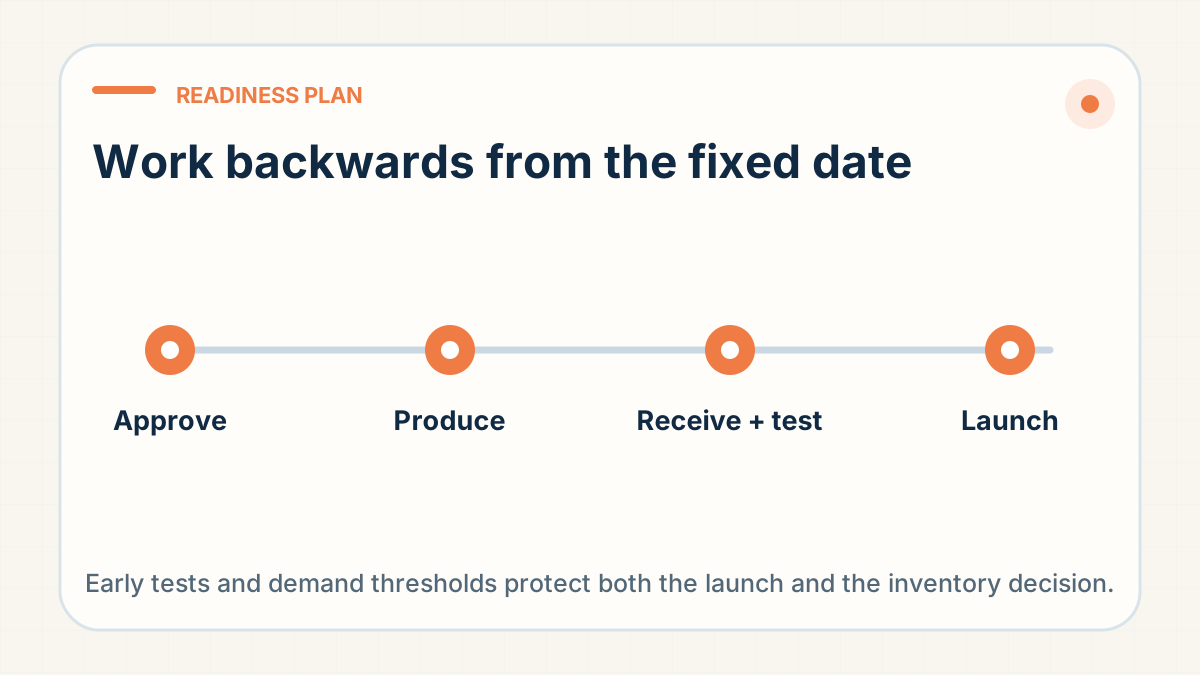
Work backwards from the customer promise
- Customer delivery window and the event that starts it.
- International transit plus a route-specific buffer.
- Warehouse receiving, quality check, packing and release time.
- Supplier preparation or production, including custom packaging.
- Sample and approval time for any new product, version or factory.
- Payment, integration and test-order deadlines before the first live batch.
A closure calendar should include the last reliable order date before the holiday, the likely restart period and the time factories need to return to normal capacity. The published holiday date alone is not enough; suppliers and couriers can slow before it and ramp up unevenly afterwards.
Separate scenarios from commitments
Build a base case from recent paid orders, an upside case for a successful campaign and a stress case for a short spike. Decide in advance what stock, staffing and carrier action each threshold triggers. A seller can prepare packaging, approve a backup supplier and test the order workflow without purchasing the entire upside forecast.
One anonymised apparel launch had a fixed promotional date while the store connection was not yet fully proven. The safest sequence was to test the end-to-end order and tracking flow, confirm the initial stock and define a controlled overflow path. Another accessories account planned well ahead for a peak season, making time for samples and branding rather than asking the factory to compress every approval into the final week.
Protect the stable parts of the plan
Confirm backup stock or a second source only after checking that the alternative matches the approved product. Reserve packaging materials that can be reused across variants where sensible. Keep a route alternative for eligible products and destinations, but do not promise the backup until its current price, restrictions and transit expectation are checked.
Communicate the stage honestly
Use distinct states such as forecast received, stock approved, inventory paid, production started, received at warehouse, inspected, integration tested and ready to release. That language prevents a forecast from being reported as inventory and prevents a created label from being reported as a moving parcel.
Turn the calendar into a dated stock decision
Holiday and launch readiness comes from completing reversible tests early and delaying irreversible commitments until the evidence supports them. Work backwards, test the full workflow, use demand thresholds and keep the product reference stable when backup capacity is introduced. Record the final cut-off and the person authorised to change the plan when the real orders arrive.
Operating rule: Work backward from the latest useful receipt date using factory closure, production, inbound and warehouse-release milestones. Reserve only the quantity supported by demand evidence, identify which promise changes if supply slips and give one owner the update cadence before the holiday begins.
Have a specific fulfilment question?
Send us the product, destination and order context on WhatsApp (+86 178 4666 9989). A clear answer is more useful than a generic estimate.
Ask Questions on WhatsApp →