From the operations desk
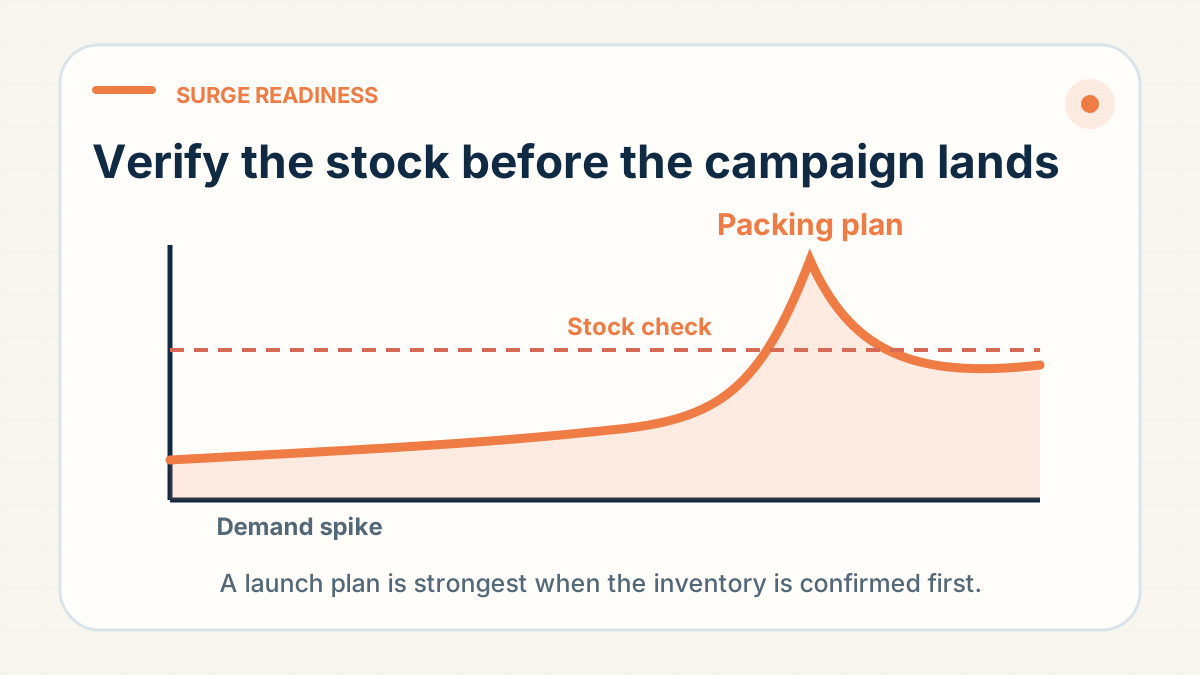
A message came in that started casually and got serious fast: a client selling a compact personal fan had lined up a collaboration with a major influencer, the kind with millions of daily views on their content, and the launch was expected to drive a large order surge in a very short launch window. He needed to know, today, whether we could actually handle it. If we couldn't commit, he told us plainly he'd go to another agent.
We didn't just say yes. We told him the truth first: no factory is going to reserve thousands of units of inventory for free on the strength of a promise, deposits or a track record are usually how that works, and we weren't going to pretend otherwise just to keep the conversation friendly. What we could do was go find out for real, contact multiple factories, ask for actual stock counts, and come back with something honest instead of something reassuring.
What we actually did in the days that followed
1. Contacted several factories in parallel rather than betting everything on one supplier's word. 2. Found one that could genuinely produce at the volume needed within the timeline, and got real numbers, not just a verbal yes. 3. Ordered physical samples before committing to bulk, because a factory's promised quality and its actual quality are two different things, and we weren't going to find out the hard way with a live launch on the line. 4. Kept the client updated with real information as it came in, including the uncomfortable parts, rather than only sharing good news.
Why we didn't just tell him what he wanted to hear
It would have been easy to say "yes, no problem, we've got it handled" the moment he mentioned the deadline. That's also how launches fall apart, a fulfilment partner overpromises to avoid an awkward conversation, and then the actual event exposes the gap between what was promised and what was real. We'd rather have the harder conversation upfront, "here's what we actually know, here's what we're checking, here's what we don't know yet," than a smooth conversation followed by a bad surprise on launch day.
What we think this is really about
A launch like this isn't really a shipping problem, it's a trust problem wearing a shipping problem's clothes. The client needs to know, with real confidence, that the thing he's about to point a large audience at will actually work. Giving him that confidence honestly, backed by real factory numbers and real samples, is worth more than giving him a fast yes and hoping it holds up.
If you've got a launch or collaboration coming that could spike demand fast, tell us early. The more runway we have to verify real capacity rather than just promise it, the better the odds it actually goes the way you're hoping.