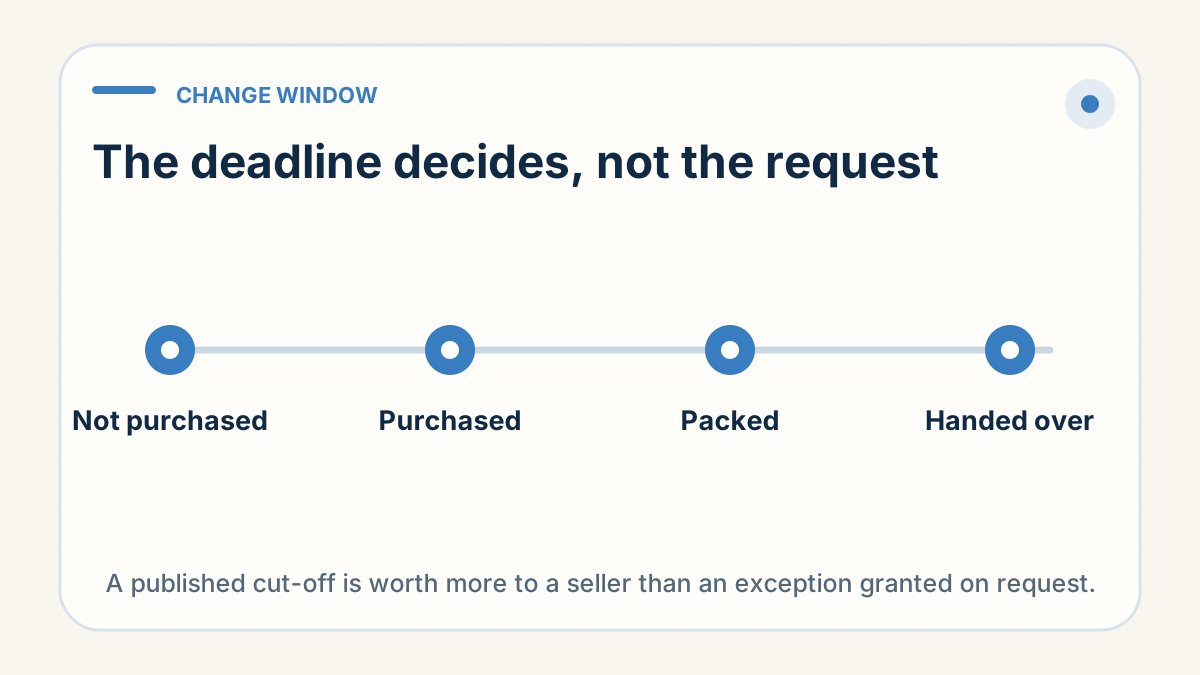
Every order stops being editable at some point
A customer emails a corrected address. A buyer chooses the wrong size. A marketplace account is suspended and every open order has to stop. In each case the seller asks the same question, and the answer almost never depends on how reasonable the request is. It depends on where the parcel physically is when the request arrives.
Most friction between sellers and fulfilment partners on this subject is not disagreement. It is that nobody wrote the deadline down, so every request becomes a negotiation and every refusal feels arbitrary.
Why a cut-off exists at all
Sellers sometimes read a cut-off as an arbitrary convenience for the warehouse. It is not. Cross-border fulfilment runs in batches for reasons that are physical and administrative, and the deadline is where those batches close.
Purchasing runs in batches because a warehouse buying one unit at a time from a factory pays more and waits longer than one placing a consolidated daily order. Picking and packing run in batches because a picker walks a route once for many orders rather than repeatedly for one. And the shipment itself is manifested as a batch: the carrier receives a consolidated handover with a declaration attached, and once that manifest is submitted, individual entries inside it can no longer be quietly edited.
Each of those closes at a different moment, which is why "can I still change it" has several different answers on the same day depending on what you want to change. An address change depends on the current label, warehouse and carrier status. A product is a physical object that has to be bought, received and picked. A cancellation touches money that may already have moved to a supplier.
Add a time zone. A request sent at a perfectly ordinary hour in Europe can arrive after the batch has closed in China, which is why a published deadline needs a stated timezone to be useful at all — and why weekends need their own row rather than being inferred.
What each stage still allows
- Order received, not yet purchased. Ask whether the product, variant, quantity, destination or packing can still change and whether cancellation carries any charge.
- Purchased from the supplier, not yet received. A product change may require supplier agreement. Confirm whether address and packing changes remain possible. Cancelling is often still possible but may carry a domestic handling or restocking deduction, because goods have already moved.
- Received and inspected, not yet packed. Address, packing treatment, inserts and consolidation can still change. A variant swap depends on stock.
- Packed and labelled, not yet handed over. An address change means unpacking, relabelling and repacking. It is work rather than an impossibility, and it is the last cheap moment.
- Handed to the carrier. Treat the order as gone. Remaining options are refusal at the door, return to sender, redelivery to a new address at a cost, or letting it land and handling it as an after-sales case.
- Delivered. This is no longer an order change. It is a returns, replacement or refund decision under whatever policy and evidence window applies.
Ask for the cut-off in writing
The single most useful thing to agree with a fulfilment partner is a short table, not a promise to be flexible. It should answer four questions. Which day's orders are processed on which day? What is the exact hour after which that day's batch stops being editable? What happens to orders placed at the weekend or on a public holiday, when factories and warehouses are closed? And which specific changes survive past the cut-off — usually an address correction, and usually not a product change?
Weekend rows matter more than they look. A rule that quietly assumes seven-day operation will be wrong every single week, and it will be wrong on exactly the orders a seller is least able to explain to a customer.
Why a published deadline is better for you than flexibility
Relying on individual exceptions makes your customer policy difficult to apply consistently. It is unpredictable, so it cannot be built into customer-facing policy; it depends on who is available; and it silently competes with every other order in that batch. A published cut-off can be quoted directly in your own store policy and in your own support replies. It converts "let me ask and find out" into "changes are possible until this time" — which is a better customer experience even when the answer is no.
Design your own side to fit the window
- Put the cut-off, in your customer's timezone, into your order-confirmation email and your support macros.
- Validate the address at checkout rather than correcting it later; most late change requests are address requests.
- Route cancellation requests to whoever can actually stop a batch, not into a general inbox that is read the next morning.
- Decide in advance what you will do when a change misses the window, so support does not improvise: intercept, redeliver at cost, or refund and reship.
- For marketplace suspensions or payment holds, have a single stop-everything message ready. Speed matters more than detail in that first message.
When a cancellation still costs something
A cancellation after purchase is not always free, and a partner who says so early is being straight with you. Goods may already have moved between a factory and a warehouse, a customised item may not be resellable, and a supplier may apply its own deduction. The right time to hear that is when the cancellation is requested, not when it appears as an unexplained line on the next statement. Ask how post-purchase cancellations are costed before you need one.
Publish the last safe change point
Get the cut-off in writing — the hour, the day, the weekend rule and the list of changes that survive it. A window you can quote to your own customer is worth considerably more than an exception you have to ask for.
The rule: Define the last reversible milestone for address, variant and cancellation changes, then check the parcel's physical state before agreeing. After purchasing, packing, manifesting or carrier handoff, the available remedy changes; saying yes before locating the order creates a second exception.
Have a specific fulfilment question?
Send us the product, destination and order context on WhatsApp (+86 178 4666 9989), and we'll answer for that order instead of giving a generic estimate.
Ask Questions on WhatsApp →