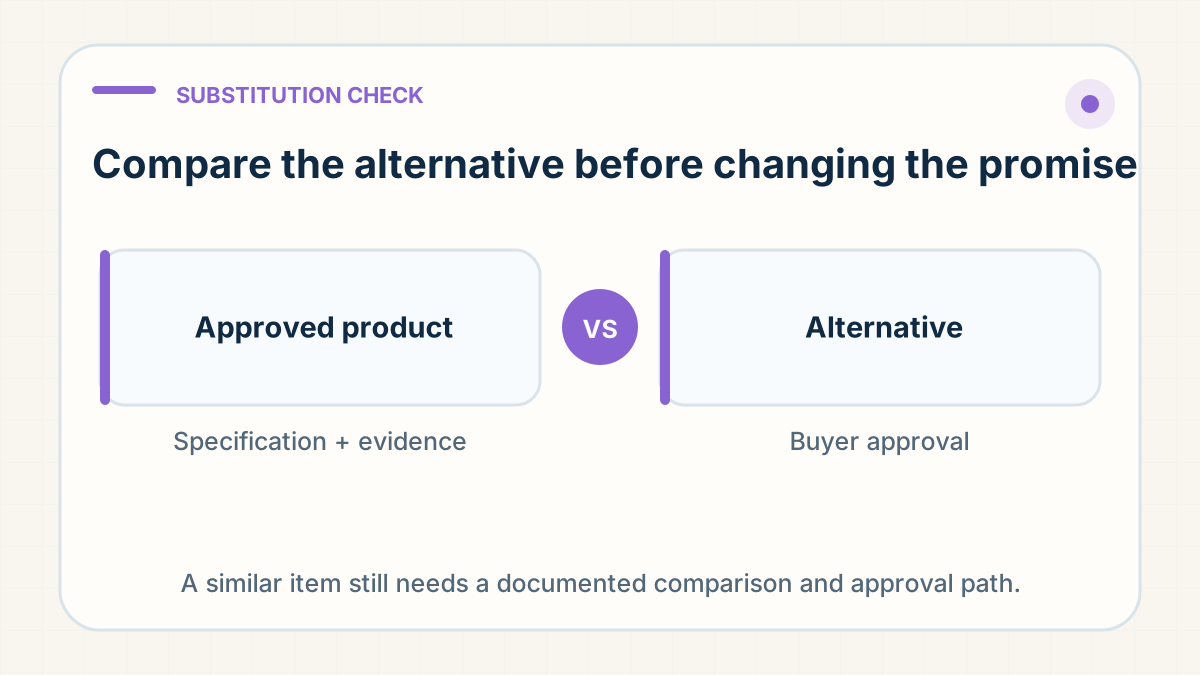
"Similar" describes a gap, not an approval
A supplier may offer a related material, colour, factory version or construction when the requested item is unavailable. That can be a useful option, especially during product exploration. It is not permission to purchase or ship the substitute as though it were exact.
The central question is whether the difference could affect the seller's decision, the customer's choice, product eligibility, packing, use or after-sales risk. If it could, the difference is material to the approval process.
Freeze the reference before comparing
Keep the listing or concept as the enquiry reference, then create a separate approved-product record from evidence. Record the actual photo, supplier, variant, material, measurements, components and packaging that define the requested version. Without that baseline, a team can compare a new option with a memory rather than with the product that was approved.
Classify the difference
- Cosmetic: shade, finish, pattern, logo placement or visible construction.
- Functional: capacity, compatibility, strength, controls or included parts.
- Commercial: price, MOQ, lead time, warranty or replacement availability.
- Fulfilment: packed dimensions, weight, fragility, route eligibility or labelling.
- Compliance: material, formulation, electrical component, age grading or required documentation.
A small physical change can create a large operational consequence. A slightly larger box can change volumetric weight; a different battery can change route eligibility; a new fabric can change fit and care instructions.
Show the difference instead of summarising it
Prepare a short comparison with side-by-side actual evidence. Use the same angle, measurement points and test where possible. State which facts are supplier claims, which were observed from media, and which require a sample or document check. "Almost the same" hides the decision; a difference table exposes it.
Choose the right approval level
- No new approval: a non-material administrative correction that changes neither product nor customer promise.
- Media approval: a visible but low-risk difference that can be judged reliably from current photos, video or measurements.
- Sample approval: fit, feel, finish, function or construction cannot be judged responsibly from media.
- Specialist verification: the change may affect safety, compliance, intellectual property or a regulated product claim.
Are all the listed colours and sizes really available?
Rarely all of them. The option menu on a marketplace product page belongs to that page, not to the factory behind it, so the sellable list is the overlap of three states: produced in the option you asked for, in stock, and photographed in a form your page can use. Each option has to be named to be answered for.
Colour is where the list collapses fastest. A decorative-homeware enquiry quoted to the US and the UK on 8 September came back with one colour available, the shade the seller asked for out of stock for that model. One quotation at the start of September covered two named colours, with other or mixed colours priced higher. On 11 September a seller shipping into France asked how many shades there were, was told two, and needed three — the one maker offering all three not having replied before the weekend. Across this desk's order flow, 1 May to 14 August 2026, about 3% of 143,000+ orders were held for stock replenishment.
Size is set per style, not per product line. A home-textile seller got the maker's list on 5 September style by style: one design in a single size, another in two, the rest in four. Three days later she sent a whole set of designs and asked whether every one came in two named sizes; the answer was one blanket yes across the set, with a third size added. Ask for the size list per style, and again for designs added later.
An image you can use is the state checked last: the maker's pictures were all unfolded, and that seller's page needed the product shown folded. Made-to-order sits outside the three — in early September an accessories seller's chosen finish existed only as a production run, its production time ahead of dispatch, so the seller switched to a finish that needed none.
What you want back is a verdict on each row, not one yes across the set:
- List now: produced, in stock, and with an image you may publish.
- Hold: produced but not available now — ask for the date the answer is due.
- Evidence first: a sample or a fresh photo is needed before the page can go up.
- Made to order: production time sits ahead of dispatch, and belongs in the promise.
- Off the plan: not produced in the option you asked for, so the row comes off the page.
Ask who confirmed each line and on what date, and keep the date beside the row: a maker's word about stock describes one day. Re-check the line before the range goes live and after any restock.
Never substitute after sale without a clear rule
For US online orders, FTC guidance gives a useful warning: materially different merchandise should not be substituted without the customer's express agreement. Other markets have their own consumer rules, so sellers should verify the obligations that apply to them. Operationally, the safer default is simple: hold, obtain approval, or cancel and refund according to the seller's policy and applicable law.
Version the result
Once approved, give the alternative its own supplier reference and warehouse SKU when the difference must remain distinguishable. Update the product page, packing instruction, QC reference and reorder record together. Do not let an approved exception silently overwrite the original specification.
Approve the difference before accepting the substitute
A substitution is safe when the difference is visible, the right person approves it, and the approved version remains traceable. The aim is not to reject every alternative; it is to stop "similar" from becoming an accidental product change.
The rule: Do not let a supplier's similar option become an automatic substitute. Compare the proposed version with the approved reference, show every material customer-facing difference and obtain the seller's decision before purchase or dispatch.
Need a product checked before you spend on ads?
Send us the product link and destination on WhatsApp (+86 178 4666 9989). We'll check sourcing, packing and shipping with you before you commit.
Get Sourcing Quote on WhatsApp →