From the operations desk
The situation
Thursday contained several after-sales threads where individual remedies were necessary and useful. A damaged, missing or malfunctioning item still needs a decision for the affected order. The larger lesson appears when similar failures keep returning: the queue is no longer only a set of customer-service cases.
Order-level recovery can hide a product-level problem
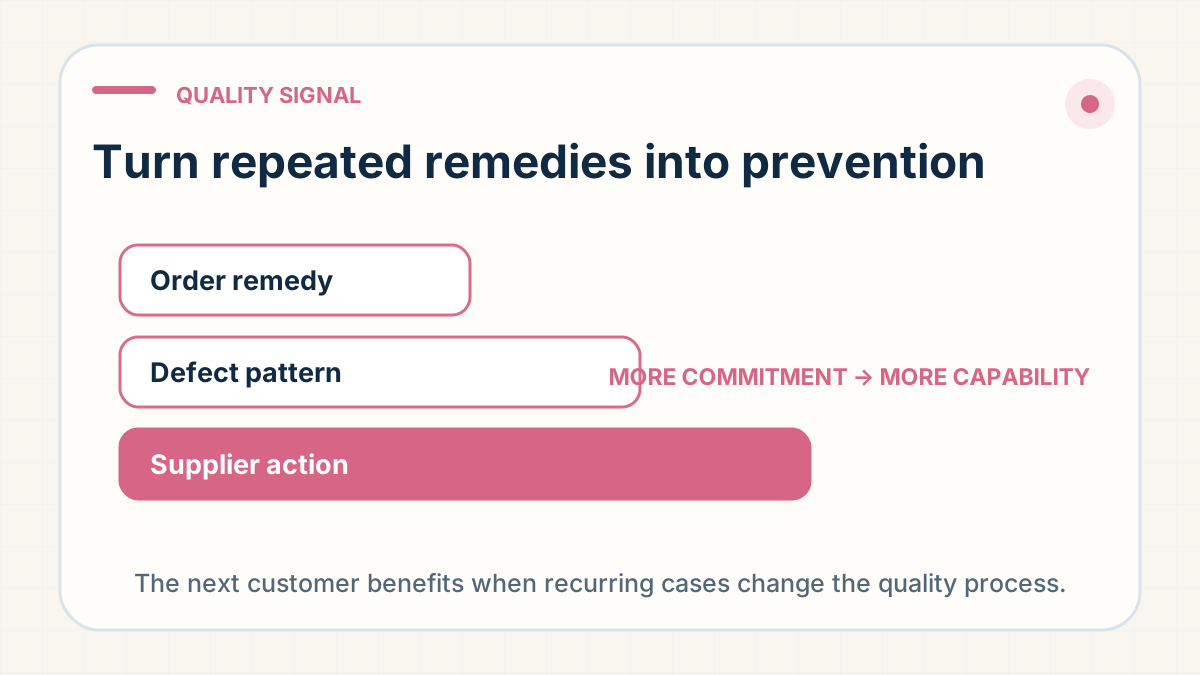
A refund or replacement closes one immediate obligation, but it can also make the pattern harder to see if every case stays in a separate chat. Repeated power failures, damage, wrong items or packing problems should be grouped by product version, supplier, purchase batch, shipment date and failure mode. Without that view, a team can become very efficient at paying for the same unresolved defect.
The response needs a threshold
A recurring issue should trigger a defined escalation: check whether sellable stock should be held, inspect representative samples, compare the approved reference, ask the supplier for root cause and corrective action, and verify the next batch before normal release resumes. The exact threshold will vary by product risk and volume, but it should be agreed before frustration becomes the trigger.
New seller desk
Every newer conversation in this part of the archive included a route or delivery question, usually alongside sourcing. Some sellers also needed sample evidence, branded packing, stock planning or a store connection. The reusable lesson was to quote the customer-ready path—product, preparation, packed shipment, expected route and open assumptions—rather than sending a factory price that left the commercial decision unfinished.
The market mix leaned toward the US and UK, with other European and international destinations in the background. Most briefs still focused on one or a few priority products rather than a proven large catalogue, so a narrow route test was more credible than broad automation promises.
Let repeat replacements trigger product control
Responsiveness still matters. Sellers should receive a clear remedy and update for the individual order. At the same time, the operations team should show what is being done to stop the next customer from experiencing the same failure. That second layer is where after-sales work becomes quality control.