From the operations archive
The fifth complaint was not five separate accidents
An after-sales queue contained device complaints that could each be handled with a replacement, refund or request for more evidence. That approach was reasonable for an isolated case. As similar symptoms accumulated, the important question shifted from “what do we owe this customer?” to “what do these cases have in common?” Version, batch, supplier process, packing and route all became possible shared causes.
Continuing case by case kept customer service moving but allowed the source to remain untouched. Freezing every unit would protect customers while potentially stopping clean stock. The team needed enough evidence to define the affected population and enough urgency to prevent the next avoidable dispatch.
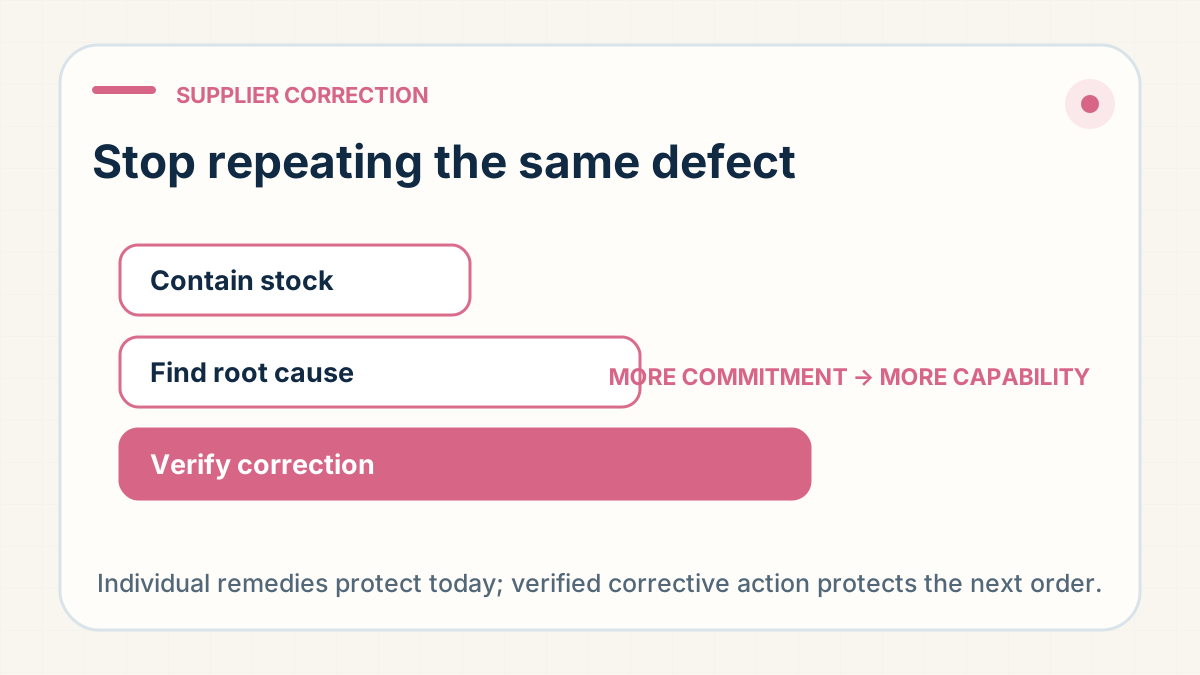
They grouped the reports, compared them with approved references and receiving evidence, and turned the pattern into a supplier corrective-action request: defined defect, affected version or batch, containment, root-cause finding, correction and proof before normal release. The point was not paperwork for its own sake. It was to make the supplier change the process that produced the defect, then verify that later units no longer repeated it.
Reality check: This is a privacy-safe composite drawn from reviewed operations conversations. Markets and product families are broadened, and identifying details are removed. Read the dated field note: Warranty windows, a growing brand’s spreadsheets, and knowing when to just refund.
A remedy and a corrective action solve different problems
If your store keeps refunding or replacing the same failure, customer service is containing the symptom while the product problem continues. A refund, reshipment or replacement protects one customer; supplier corrective action explains why the failure happened and what will stop it happening again. Your after-sales operation needs both, or a bad batch can hide inside a series of apparently unrelated tickets.
Build a defect view across orders
Record the product and version, supplier, purchase batch, shipment date, observed failure, customer evidence, packing condition and final remedy. Use consistent failure categories so similar reports can be grouped. "Not working" is a starting description; power failure, broken connector, water exposure, missing component and wrong product are more useful for investigation.
Define escalation and stop-release thresholds
The threshold should reflect product risk, sales volume and the seriousness of the failure. It may be a repeated failure mode within one batch, a defect percentage, a potential safety concern or a mismatch with the approved product. Agree in advance who can hold stock, pause release or require additional inspection. Waiting until a client becomes angry is not a quality threshold.
Contain the current risk
- Identify affected stock and purchase batches.
- Hold or increase inspection on stock that may share the failure.
- Protect customers with the appropriate refund, replacement or safety instruction.
- Preserve representative evidence and, where practical, a returned sample for examination.
Ask the supplier for a structured answer
A useful supplier response separates immediate containment from permanent correction. It should state the confirmed root cause, affected scope, short-term action, permanent change, responsible person and verification method. A simple denial or reminder to use the product differently is not enough when credible evidence shows a repeated pattern.
Verify the correction independently
Do not close the corrective action because a supplier says it has been fixed. Inspect or test representative units from the next batch against the approved reference and the failure mode that triggered the case. Record the result and watch subsequent orders for recurrence. If the failure returns, reopen the action and reassess the supplier or design.
Feed the lesson back into purchasing and QC
The outcome may require a new incoming inspection, packing method, functional test, supplier term, product revision or approved-sample record. Update the operating instruction that will control future orders. Otherwise the investigation remains a report rather than a change in the physical workflow.
Escalate the pattern, not just the next claim
Protect today's customer with the right remedy, then protect your next orders with a measured defect register, a clear hold threshold and a supplier correction you verify on the next batch. Do not reopen sales because the supplier says "fixed"; reopen only when the product passes the check tied to the original failure.
Operating rule: Escalate from ticket handling when comparable defects form a pattern by version, batch or failure mode. Contain affected stock, preserve evidence, require a supplier cause and corrective action, then verify a later sample or cohort before claiming the problem is fixed.
Want a product checked before it ships?
Tell us what must be verified on WhatsApp (+86 178 4666 9989). We can build the product, packaging and quantity checks into the fulfilment process.
Request Quality Check on WhatsApp →