Field note
The situation
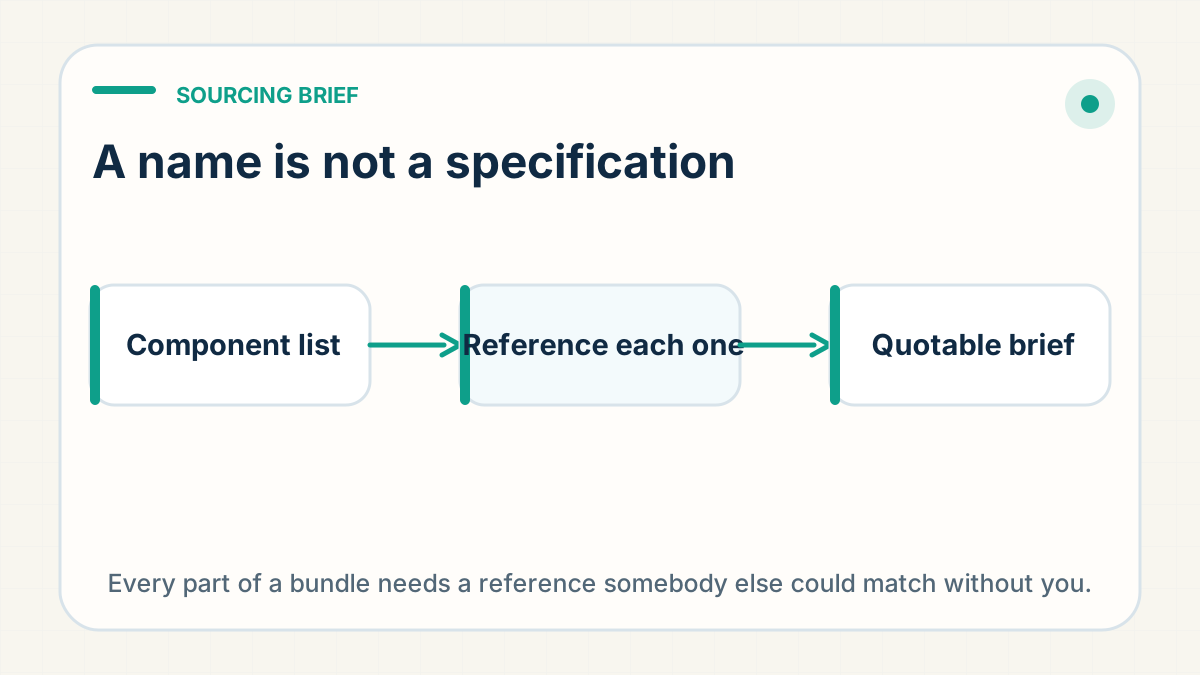
Give each part of an order a reference that someone else could match without you in the room. Sunday was mostly written work rather than dispatch: bundle enquiries, colour and texture questions, and one long-running disagreement about whether two deliveries of the same item were really the same item. Unwillingness blocked none of those threads. What blocked them was a reference too imprecise for anyone to act on.
- 01List every componentA bundle is several products, each needing its own source.
- 02Attach a reference to eachA product name covers a wide range of material, size and cost.
- 03Name what is still unidentifiedThe gap is the finding, not a delay to apologise for.
- 04Quote only what is matchedA guessed line becomes a substitution nobody approved.
A bundle is several references, not one
One seller described a main product plus two low-cost add-ons and asked for an all-in delivered price for two different bundle shapes. The main item had a link. The add-ons had only names. A name is enough to picture a product and nowhere near enough to source one: the same words cover a wide range of material, size, packing and cost. The honest reply was to quote the part that could be identified, say plainly which part could not, and ask for a reference for each remaining component rather than guessing and quoting something the seller never intended to sell.
A colour name is not a variant map
Another thread asked a question worth copying. The seller had photographs of what looked like two finishes of the same product and wanted to know, before publishing the listing, exactly which physical item a customer would receive when they chose the option labelled one way rather than the other. That is the right question at the right time. Once a listing is live, an ambiguous option label becomes a stream of after-sales work, and every correction costs more than the five minutes it would have taken to map option to item first.
When versions genuinely differ, say so plainly
The harder conversation involved a seller who believed two batches of the same product were not identical and wanted a straight answer. Investigating a mould or component change is slow, and the temptation is to let a supplier reassurance stand in for a finding. It should not. Where a version difference is real, the useful reply names what changed, what it does and does not affect, who is responsible for the gap and what the seller can offer their own customers now. A refund policy is the floor of that answer, not the whole of it.
What makes these cases genuinely hard is that the seller is usually holding both units and we are not. They can feel a difference in weight, hear a difference in a motor, or see a difference in a plastic housing that no photograph settles. The only honest position is to say which parts of their account we can corroborate, which parts rest on a factory statement we have taken at face value, and what it would take to move a claim from one category to the other — usually buying a unit from the same line and taking it apart ourselves.
A property is not the same as an adjective
One cosmetics enquiry drew a distinction worth borrowing. The seller had heard a product was waterproof and wanted to know separately whether it was transfer-resistant, because those are different properties and only one of them was going into the advertising. That is exactly the right instinct. A supplier adjective describes a marketing position; a product claim on your own store is something a customer can hold you to.
The safe version is to treat every performance word as needing its own confirmation, and to be explicit about which words came from the factory and which have been tested. Where a claim cannot be verified before launch, the choice is to test it on a sample or to leave it out of the copy — not to inherit it from a listing and hope.
New seller desk
Weekend enquiries leaned toward general consumer products and broad accessories, mostly at the exploring or first-test stage. Their common gap was the same as the bundle thread: enough enthusiasm to describe a product, not yet enough specificity to buy one. The most useful thing to send back on a Sunday is not a price. It is the shortest list of missing facts that would make a price meaningful.
The destination mix was mainly European markets with some US interest, and the commercial context ran from no paid orders to first single-digit tests. That is exactly the stage where a controlled reference costs least to establish.
Turn the reference into something a supplier can match
Give every component of an order a reference someone else could match without you in the room. If it cannot be matched, that is not a delay to apologise for — it is the finding, and naming it is faster than quoting around it.