Field note
What was happening
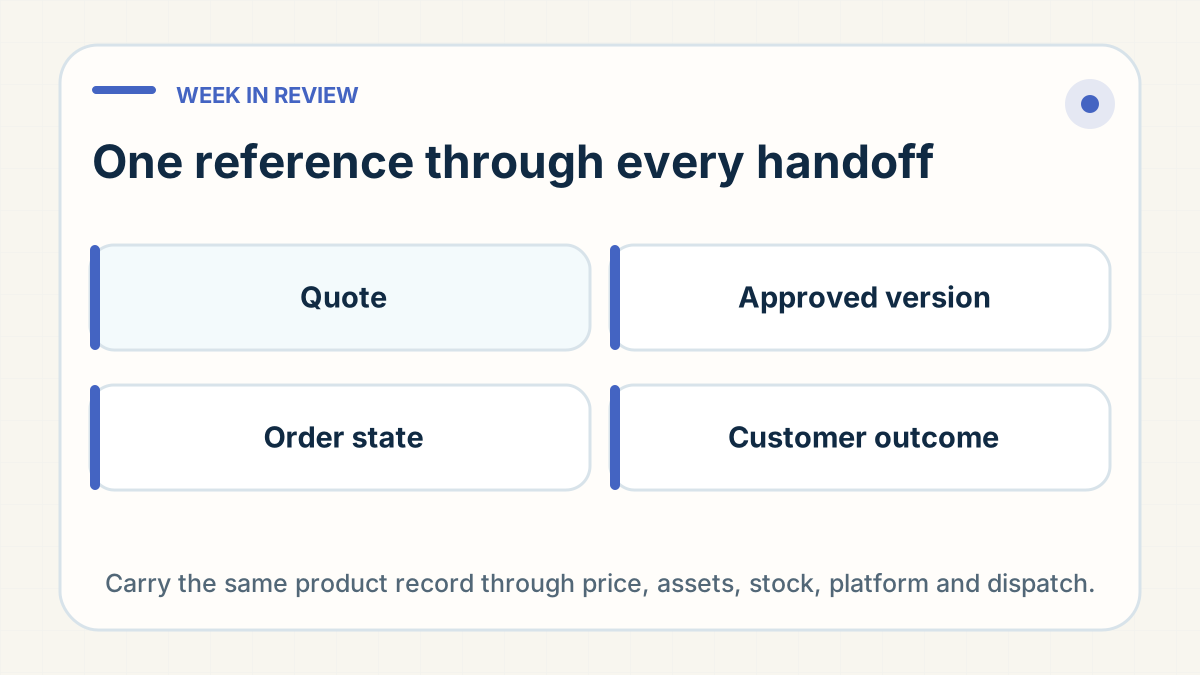
Carry one versioned product reference through every handoff: quote, sample, asset, stock, order line, platform and dispatch. The week moved from early product selection through quotations, samples, customisation, seller-supplied stock, store and marketplace questions, live order changes and after-sales decisions. The categories varied across apparel and accessories, home and lifestyle, electronics, personalised goods and other general consumer products. The commercial stages varied even more: some sellers had not chosen a product, some were preparing a first test, and others were coordinating repeat fulfilment. These are pooled patterns, not the story of one identifiable account.
The theme of the week
One reference has to survive every handoff. The cost breakdown must point to the same product and pack the seller approved. The warehouse state must reflect the hold or release the chat describes. An artwork file must remain attached to its order line. The photo library must show the version that will ship. The route and tracking flow must fit the platform where the order lives. When any handoff creates its own interpretation, the customer eventually receives the disagreement.
Make the quote reconstructable
A correct grand total was not enough when the quote allocated product and shipping incorrectly inside it. Sellers use the components to set retail price, compare bundles and estimate what another unit changes. Product, domestic movement, packing, shipping and one-off custom work therefore need a scope another person can audit. The same discipline separates a blank one-unit purchase, per-order personalisation, batch branding and custom packaging instead of flattening them into one misleading "no MOQ" answer.
A request becomes real only when the operation changes state
Hold, cancel and change messages appeared repeatedly, but the transferable lesson is not their count. It is the state ladder: request received, warehouse action confirmed, amended or released, and final commercial closure where relevant. "Noted" cannot prove that buying, packing or handover stopped. State and next dependency can.
Approval follows the same rule. A correct base product is not yet the approved customer-ready unit if the included accessory, box fit, protective piece, branding direction or final presentation is unresolved. The release record needs the whole unit.
A public link is a reference, not a catalogue
Newer conversations repeatedly asked for a RyanFulfil store, catalogue, winning-product list or clarification about whether a non-AliExpress page could be used. The answer is now explicit on the site: public marketplace listings and clear photos can start the search. They do not mean RyanFulfil owns the listing, buys from that page, guarantees an exact match or adopts its retail price.
The sourcing work begins after the link arrives: exact version, materials by component, included parts, packing, supplier availability, quality evidence and destination route. RyanFulfil can assess sourceability and fulfilment fit. It does not disclose another client's products or prove that a candidate will sell.
The product is not ready until the workflow is ready
Personalised goods made that boundary obvious. A workable blank item can still fail if the customer file has no supported format, does not map to the right unit, cannot be accessed, misses the production cut-off or changes during conversion. Marketplace orders add another workflow: production plus China inbound, warehouse QC, carrier transit, recognised tracking and customer-visible dispatch must fit the selected platform setup.
This is why one-unit availability, a fast shipping lane or a successful store connection cannot stand alone as readiness. The complete data and physical path needs a controlled test.
Evidence needs a declared purpose
Product photo and video requests appeared across most of the week. Quick warehouse proof and polished creative are different jobs. Evidence should show the exact variant, label, measurement, packaging or function needed for an approval. Professional or styled content needs a separate brief, provider confirmation, rights, formats and revision scope. Neither should be promised by the vague instruction "take more photos".
Version control applies to the files as much as to the stock. A supplier, construction, visible finish, packaging or included-component change should reopen the affected shots before old imagery silently becomes a customer promise about a new unit.
In stock is not an approval state
Available alternatives still needed exact-match comparison and seller approval. Seller-supplied stock still needed receiving quantity and condition checks, SKU mapping, storage and packing scope, ownership and return rules. Stock answers whether units exist. Approval answers whether those units match the record and can enter the promised workflow.
Close the handoff with one owner and one next action
A first answer should do more than resolve the literal question. It should establish the product, destination and stage, give the relevant recommendation, and end with one useful next action: complete a missing specification, approve a sample, run a test order, confirm a stock receipt or perform a platform preflight. The working channel and escalation path should be visible too, especially when a factory, warehouse, finance step and seller are moving on different calendars.
What to carry into next week
Use one versioned source of truth for the customer-ready product and carry its reference through quote, sample, asset, stock, order line, platform and dispatch. At each handoff record the accepted input, confirmed state, owner, evidence and next release condition. That is the small operating structure that turns a chain of correct individual answers into one correct customer outcome.