Field note
The situation
Bind each customer file to its own order line, and treat every personalised unit as a separate production job. Saturday included a multi-item personalised order where each unit needed a different customer image. Another personalised workflow showed why checking only the physical surface is not enough: the supplied digital content and the product's accepted media path also have to work together. Alongside that production work, a seller was trying to find the active support channel and complete a payment step over the weekend.
Personalisation belongs to the order line
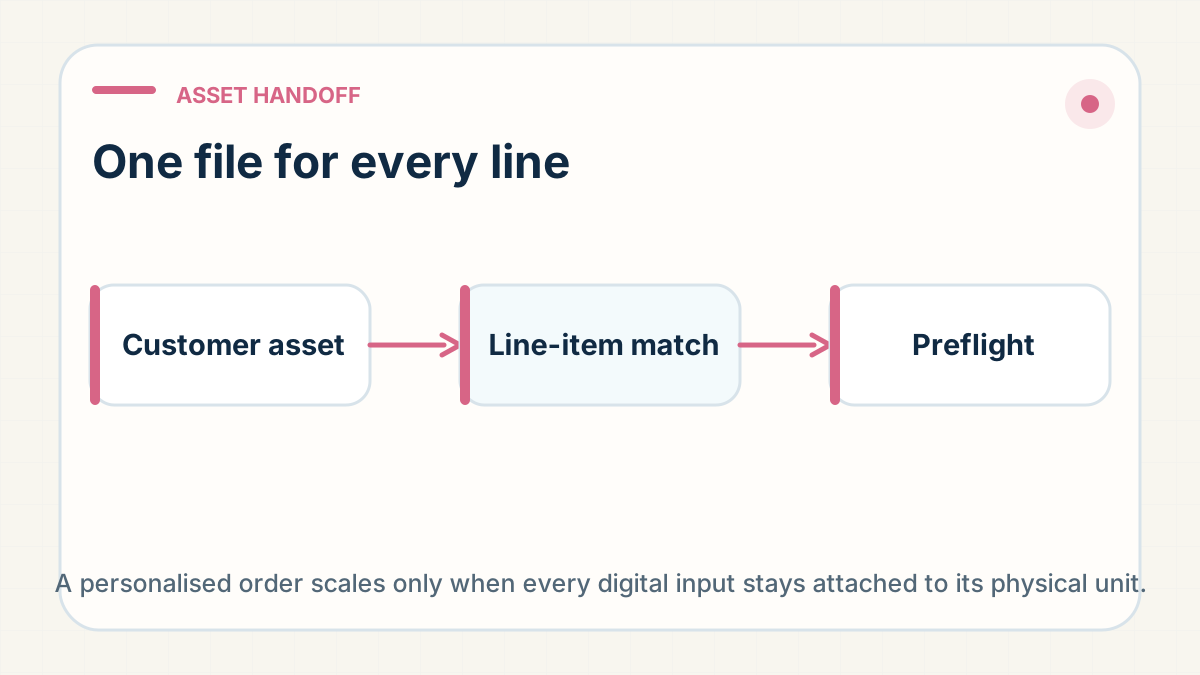
An order-level note cannot safely carry several customer files. Bind each asset to one line item, quantity, variant and approved version. Keep the original submission, use a stable internal reference, and make any replacement file supersede the earlier one explicitly. The factory should never have to infer which of several images or names belongs to which physical unit.
Accept the file before releasing production
The storefront and supplier need one acceptance rule: supported file types, useful size or resolution limits, access permissions, naming, and what happens when the upload is empty, corrupt, expired or incompatible. A label such as audio, image or artwork is too broad to prove that the production tool can use the actual file.
Where cropping, conversion, trimming or layout can change the result, approve a proof before the irreversible step. If the file fails preflight, hold that line and request a replacement rather than guessing, silently converting it or letting the wrong asset hold unrelated units without explanation.
QC has to test the intended use
Appearance-only inspection can confirm that a printed surface is clean and still miss that the content is wrong, unreadable or unusable. Test the property the customer bought: scan the code, open the file, play the supported media, check the personalised text, or perform the agreed function. Record the result against the same line-item reference that travelled through production.
The working channel is part of the handoff
A weekend request should make clear which group or contact owns the next action, what can move outside supplier hours and where a seller escalates if the operating thread is quiet. Payment evidence and private account details stay in the appropriate restricted path; the wider group needs only the confirmed state and next dependency. Clear channel ownership keeps one unanswered message from fragmenting into several conflicting versions.
Map every asset to its order line
Treat every personalised unit as its own production job even when several sit inside one order. Map the asset to the line, validate it before release, test the customer-facing function and keep one owned operating channel. Personalisation scales when the reference survives every handoff without relying on memory.