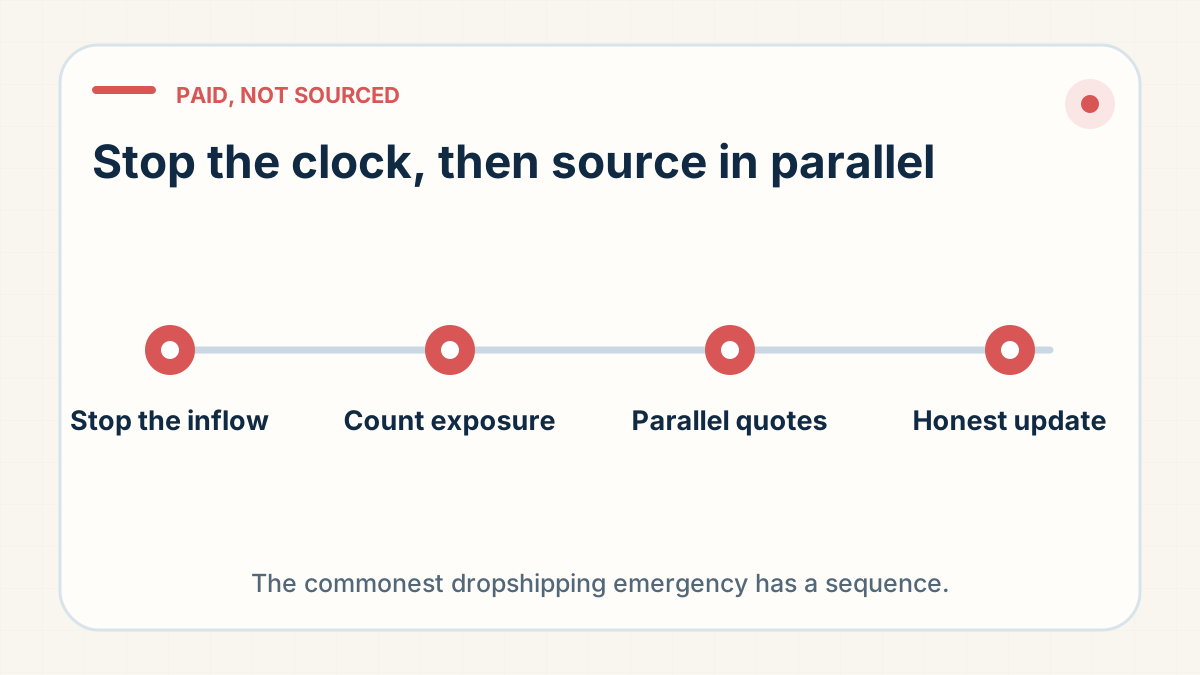
This emergency is routine, not rare
In five and a half weeks of public supplier-request posts, nine buyers were openly in this exact position: a store already holding paid orders with no supplier lined up for the product. One had two customers waiting on a beauty product with a one-week promise. One had paused advertising over a backlog after a supplier relationship failed. Several simply wrote the word urgent and hoped. Every one of them was negotiating from the weakest position a buyer can occupy: no leverage, no time to sample, and a refund clock already running.
The sequence below exists because the panic version of this situation reliably makes it worse — a supplier chosen in an afternoon on price alone, no substitution boundary, no landed-cost check, and customers hearing nothing until the complaint arrives.
First hour: stop the clock from getting worse
Before sourcing anything, stop adding to the problem. Pause the advertising or cap the listing quantity, so today's emergency does not compound overnight. Then count the true exposure in one place: how many paid orders, which variants, which destinations, what delivery promise each customer saw at checkout, which platform service-level clocks apply, and when each order's refund or dispute window opens. That table is the deadline you actually have — and it is usually tighter for some orders than others.
Segment it immediately. An order to a market with a fast lane and a generous promise is a different problem from one with a tight platform clock. Rescuing everything the same way usually means overpaying for half of it.
Source in parallel, not in sequence
Send the same brief to several suppliers at once, structured so their answers are comparable — the sourcing-brief format works under time pressure precisely because it forces the decision-relevant facts to the front: exact product, destination, quantity band, deadline and the evidence you need before release. Asking one supplier, waiting, then asking another is how a one-week deadline becomes a two-week apology.
Decide the substitution boundary before quotes arrive, not after. If the exact item cannot be found in time, the safe-substitution process defines what may vary, what must not, and who approves the change — because a near-match the customer did not agree to is a refund with extra shipping attached.
When there is no time for a sample
Normally a sample is a decision, not a detail. In an emergency, replace the sample with evidence instead of skipping the step: a written pass/fail specification, pre-dispatch photos and video of the actual units against that specification, and a small first batch released before the remainder. The pre-shipment QC checklist is the template; the emergency version simply runs it on someone else's timeline.
Price the rescue before you promise it
Expedited routes rescue deadlines by spending margin. Before committing, run the landed-cost check per order segment: product, expedited freight, any duty and the exception reserve. The honest arithmetic sometimes says that refunding the tightest orders and rescuing the rest is cheaper than expediting everything — a refund costs one margin; a rushed wrong decision can cost the margin, the freight and the review.
Tell customers the truth early
The message that protects the store is specific and early: what happened in one honest clause, the new dispatch estimate, the options the customer can choose, and when the next update comes. The delay-and-review guide covers the structure, and the refund, reship, replace or investigate framework keeps the remedies consistent instead of negotiated one complaint at a time.
Afterwards: make the repeat impossible
The prevention is boring and works: a platform preflight before the first live order so supply, route and tracking are proven before advertising spends a dollar, and a demand-and-stock view that separates forecast, paid orders and sellable stock — the confusion between those three is where most of these emergencies begin.
What this guide can and cannot show
The urgency pattern uses public supplier requests posted between 7 July and 14 August 2026 and pooled, anonymised client situations. No poster or client is quoted or identified; product references are generalised to broad families. The sequence is an operating method, not a guarantee that every late order can be rescued.
Demand check · public sourcing communities
Urgent and already-sold requests keep appearing in public
In Q3 2026, 28 of 679 distinct supplier requests from public dropshipping sourcing communities were urgent or already sold. Twenty-six said urgent, ASAP or immediately, and 5 said paid customer orders were already waiting with no supplier attached.
A buyer in that position negotiates from weakness: little time to sample, little leverage on price and, once customers have paid, a refund clock running. An urgent request with no product detail is the least useful brief a supplier can receive, at the moment a complete one matters most.
Use the first hour to stop further exposure. Pause the listing, write a clear supplier brief and update affected customers while you check the supply options on this page.
Where these numbers come from: we counted 679 distinct supplier-request posts in public dropshipping sourcing communities between 7 July and 30 September 2026 (805 collected before reposts and non-requests were excluded). We classified each post twice, independently, against fixed definitions, and a further reading settled any disagreement, so the counts understate unclear wording rather than inflate it. This page quotes, links and identifies no post and reproduces no contact details. Private client conversations are excluded. See the full breakdown in the Q3 2026 demand analysis.
Have a specific fulfilment question?
Send us the product, destination and order context on WhatsApp (+86 178 4666 9989), and we'll answer for that order instead of giving a generic estimate.
Ask Questions on WhatsApp →