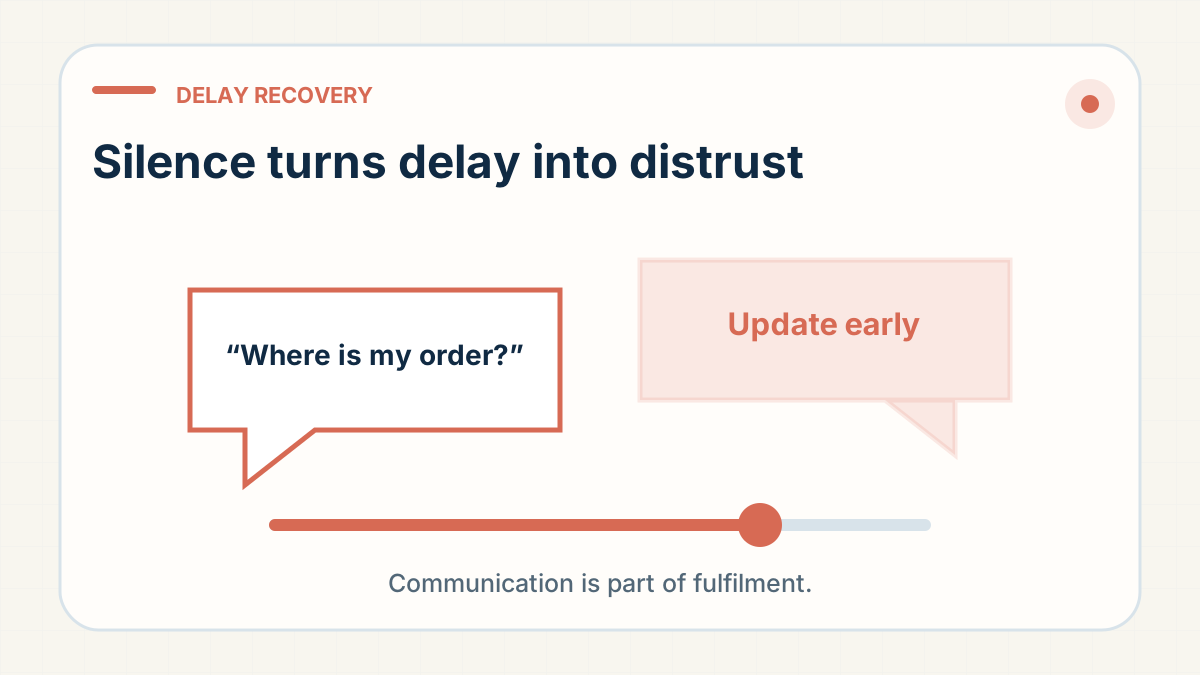
A bad review often reflects uncertainty as much as the delay itself. The useful response is factual: confirm the last meaningful tracking event, explain the next action, give a realistic update point and avoid promising a remedy that the seller's policy or route evidence does not support.
Separate the customer problem from the carrier diagnosis
Check the order details, route, dispatch event, tracking history, address and any relevant customer report. A tracking pause can have different causes, so do not label it lost or promise a carrier outcome before the case is reviewed.
Use a clear update message
Tell the customer what is known, what is being checked and when you will contact them again. Do not use a generic "reship token," automatic refund or fixed claim deadline unless it is part of the seller's written policy and applies to the order.
Choose the remedy deliberately
A refund, replacement, reshipment, goodwill gesture or continued investigation can each make sense in different circumstances. Decide from the customer promise, the evidence and the applicable policy; then record the cause so the next order can be improved.
A late parcel creates two separate problems
In the operations queue, delayed parcels often became emotionally difficult before they became technically unusual. A customer in Europe or another cross-border market had paid, the tracking page stopped giving a useful update, and the seller had no new sentence to send. The physical problem was the parcel. The trust problem was that nobody could explain who was checking it or when the next answer would come.
Those problems need different actions. Repeating “please wait” does not move the parcel or protect the relationship. Declaring it lost may create an unnecessary duplicate shipment. Promising a refund before the route and policy are checked may solve today's conversation by creating tomorrow's inconsistency.
Write the update before choosing the remedy
A useful customer message has four parts: the last verified physical event; the specific check now open; the next update time even if the investigation is still running; and the options that may follow under the store's policy. This gives the buyer something concrete without inventing a carrier result.
Behind that message, separate parcels awaiting carrier acceptance, export, customs, local delivery, pickup, redelivery or return. “Delayed” is not a workable queue because each state has a different next actor. The warehouse can answer a handover question; a destination carrier may own a delivery trace; the customer may need to collect a parcel before a deadline.
Use the review to fix the operation
If the criticism is fair, acknowledge the experience rather than arguing over the tracking vocabulary. Close the promised follow-up, then record whether the root cause was an unrealistic storefront range, late dispatch, weak address data, a route exception or silence during investigation. That finding should change a delivery promise, release control or support template.
The goal is not to make every reviewer happy. It is to make the next customer less likely to encounter the same avoidable uncertainty—and to leave a defensible record when a normal cross-border exception still occurs.
Close the internal case only when the customer outcome and the operational learning are both recorded. A refund without a cause leaves the next parcel exposed; a route investigation without a customer update leaves the relationship exposed. The same owner does not need to perform both tasks, but both need an owner.
The rule: Respond to the review with the last verified milestone, the action already opened and the next update time. Resolve the shipment on its evidence and the seller's policy; do not debate the customer's frustration or promise an arrival date that the route no longer supports.
Need one order or route checked?
Worried about an order's tracking? Send us the order number on WhatsApp (wa.link/dropship) and we'll check what's going on.
Check Order on WhatsApp →