From the operations archive
The parcel was not simply “lost”
A parcel bound for a West African market stopped producing useful tracking events. To the customer, that looked like one fact: it was late. Behind the screen were several possible physical states. It might still have been moving between export partners, waiting for a clearance step, sitting with the destination network, or moving toward return. Each state belonged to a different party and supported a different next action.
The seller wanted to protect the relationship and understandably asked whether to resend immediately. That would create a quick answer, but not necessarily a good one. If the first parcel resumed, two shipments could arrive and the seller might absorb the product, freight and duty twice. Waiting without a review point was equally weak because the customer would hear only another version of “we are checking.”
The case became manageable only when the team stopped treating “lost” as a status. They recorded the last physical event, opened the relevant trace, named the next evidence expected, and set a time to choose among wait, resend, refund or return. The delay did not disappear, but the seller regained a decision. That is why resolution can take longer than creating a replacement label: the work is establishing which outcome is actually occurring.
About this story: it is an anonymised composite of client situations. It broadens markets and product families and leaves out identifying details. Read the dated field note: Chasing a package through customs — and a genuinely hard day.
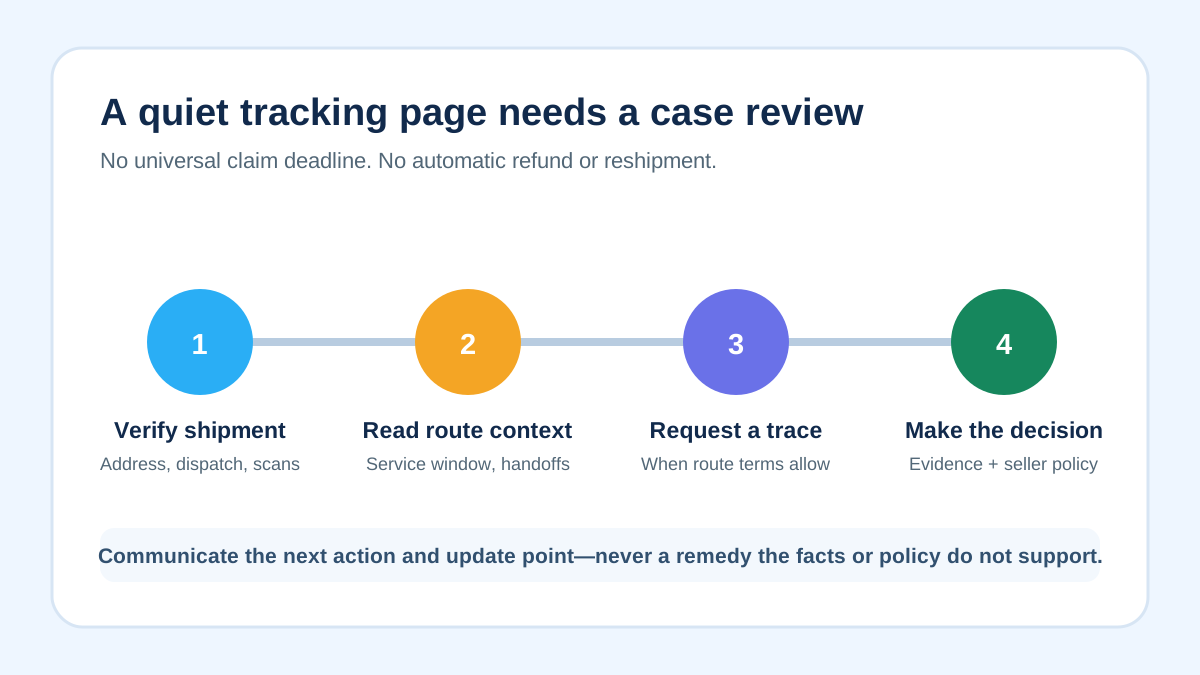
A parcel with no new scan can be delayed, held for an address or customs issue, waiting for a local handoff, or genuinely lost. Tracking alone rarely tells you which. The responsible response is to investigate the specific shipment before promising a remedy.
There is no universal "Day 15" claim rule
Carrier trace windows, compensation terms and evidence requirements vary by service, destination, shipment date and the contract behind the shipment. RyanFulfil does not offer an automatic claim, free reshipment or refund after a fixed number of days. Once tracking or the carrier confirms the loss, we reship free or refund in full (see the FAQ). A seller should not promise their customer a fixed-day remedy unless their own written policy and the relevant route terms support it.
Use a case review, not a countdown
First confirm the dispatch record, full address, contact details, original and local tracking numbers, latest scan and route expectation. Then compare the pause with the relevant service window and ask whether a correction, local-delivery check or carrier trace is available. Preserve the customer report, delivery evidence and any supporting photos so the case can be assessed properly.
Decide the remedy from evidence and policy
A refund, replacement, reshipment or continued investigation may each be appropriate in different cases. The decision belongs to the seller's customer policy and the facts of the order; it is not an automatic carrier outcome. If the same kind of case repeats, review the route, address capture, packing or delivery promise rather than treating every report as an isolated event.
What to tell the customer
Give the customer the last meaningful tracking event, the next action being taken and the next update point. Be clear about what is still unknown. Avoid inventing a delivery date or guaranteeing a refund or reshipment before the evidence and applicable policy support it.
What to collect when a parcel appears lost
- The original and local tracking numbers, plus the latest scan and date.
- The customer's delivery address, contact details and any report from the delivery location.
- Photos of the parcel, delivery area or proof of damage where relevant.
- A clear timeline of the customer's report and every update already sent.
Communication matters while the trace is open: tell the customer what is being checked, when you expect the next update, and what the possible outcomes are. Wait for tracking or the carrier to confirm the loss before you promise your customer a refund or reshipment.
Waiting for a parcel you bought? Contact the store you ordered from: it holds your order details.
Need one order or route checked?
Worried about an order's tracking? Send us the order number on WhatsApp (wa.link/dropship) and we'll check what's going on.
Check Order on WhatsApp →