Your parcel reaches the carrier a median of 1.6 days after payment: that is across 197,000+ paid orders in our order-management records for orders paid 1 May – 3 October 2026 (how we count it). The shipping table lists RyanFulfil's lane ranges by destination.
On RyanFulfil's lanes, Express typically takes 2–9 working days from dispatch on major routes: United States 5–8, United Kingdom 3–5, Germany 4–6, Australia 4–7, Hong Kong 2–5. Standard/Economy typically takes 5–12: United States 6–12, United Kingdom 5–8, Germany 6–10. The carrier on your order depends on the lane we quote, and the quote states the route and ETA before you commit.
YunExpress runs different services and destination lanes, so a YunExpress time belongs to one service and one route. Ask what the current expectation is for this service, product, origin and destination.
What happens before YunExpress has the parcel?
Confirm when the product can be released, when the parcel will be accepted by the carrier and what the quoted window actually measures. Quality checks, packing, restricted-goods review, customs and last-mile delivery can each affect the customer's total wait.
What delivery range should your store show?
Set your storefront range from the service currently quoted for the relevant lane and add a realistic buffer for conditions outside the seller's control. Recheck it when the product, destination, service or season changes. Do not promise a fixed arrival date or call ordinary international delivery guaranteed.
What does a YunExpress tracking pause mean?
A tracking pause may occur around export, customs or the local-carrier handoff. Compare it with the route expectation and request a trace when the applicable service terms and evidence support one.
When does the YunExpress clock start?
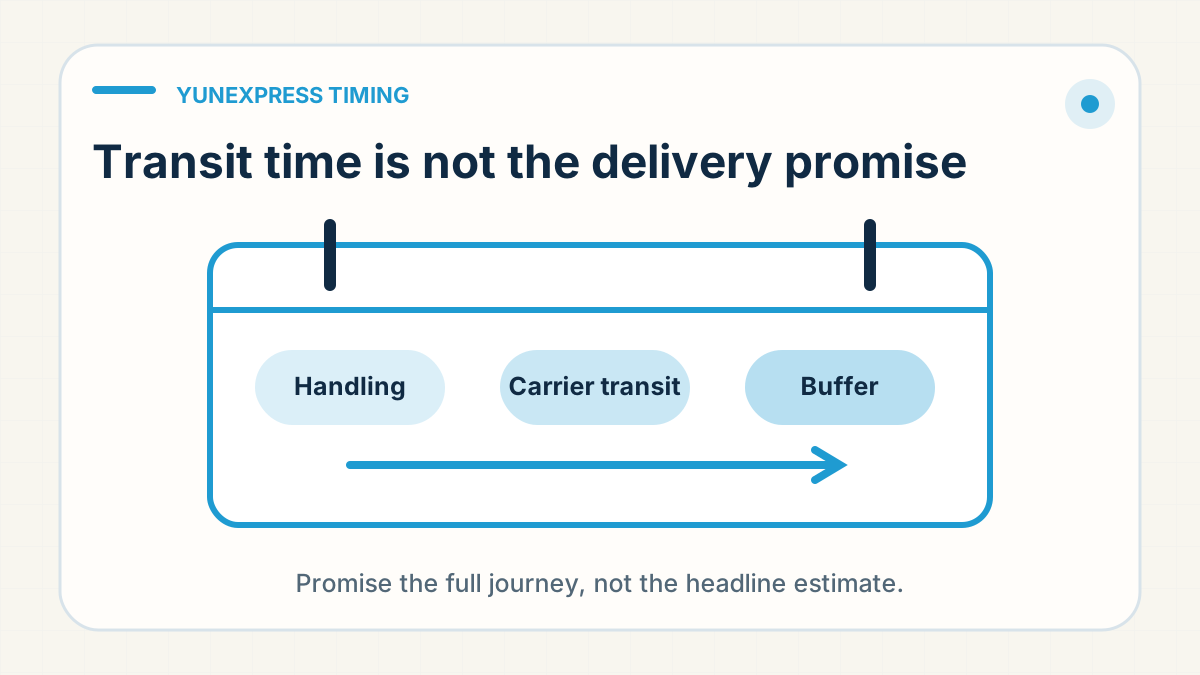
Suppose a seller is testing a lightweight lifestyle product with US and European customers. The supplier can usually prepare it quickly, and a YunExpress lane has a plausible transit range. The temptation is to publish that carrier range as the store's delivery time. Yet the buyer's clock begins at checkout, the carrier's clock may begin only after acceptance, and support's clock begins when the published range is missed.
That gap creates the tension. A shorter promise can help conversion, while a padded promise may deter a buyer. But a range that omits sourcing, quality checks, packing or a local handoff creates false certainty rather than useful speed.
How do you calculate the customer-facing range?
Start with the current service and destination, then add the order's real preparation path. Separate stock already held at the warehouse from goods bought after payment. Add time for any approval, custom packing or restricted-goods check that must happen before release. Finally, include a measured operating buffer based on current conditions rather than hiding ordinary variation in a footnote.
Keep the components in the internal record even if the storefront shows one range. When performance changes, this reveals whether the issue is supplier readiness, warehouse release, export transit, clearance or last mile. Without that split, every late order is blamed on the carrier and the wrong process gets “fixed.”
When does quiet YunExpress tracking need action?
Read the last meaningful physical scan, not only the elapsed days. A parcel not yet accepted needs an origin-side check. One between export and destination events may be moving without a public scan. One awaiting pickup or address clarification needs customer action. Use the service's current trace terms and the store's remedy policy once the evidence supports escalation.
A credible delivery range is not the fastest number found online. It is a range the seller can explain stage by stage, review with real performance and update before a repeated gap becomes the normal customer experience.
Sample recent orders by lane and compare promised versus observed milestones. Do not average unlike services into one reassuring number. The decision is stronger when the seller can see whether a change affects preparation, export transit or last mile—and can revise only the part of the promise that the evidence says has moved.
The rule: Separate sourcing and warehouse processing from YunExpress transit, then add the destination handoff and normal variation for the current lane. Promise a range that begins at a named milestone; otherwise a correct carrier estimate can still produce a misleading checkout date.
Waiting for a parcel you bought? Contact the store you ordered from: it holds your order details.
Need one order or route checked?
Worried about an order's tracking? Send us the order number on WhatsApp (wa.link/dropship) and we'll check what's going on.
Check Order on WhatsApp →