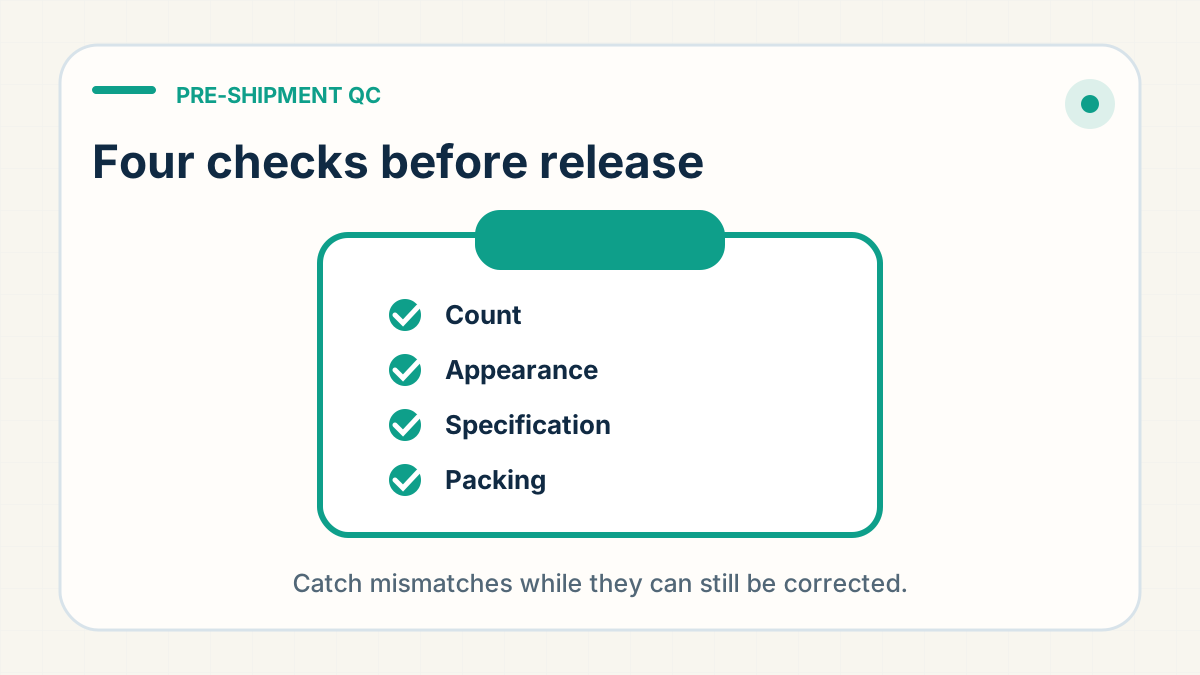
RyanFulfil checks goods against the approved specification (usually the product link you supplied), plus visible damage, included parts and packing condition. These standard checks are not a 100% unit-level inspection; functional or dimensional testing for high-value or complex products is available separately and quoted. Before you order, tell us what must match your listing and what would make the goods unacceptable, and name any known defect so the checks include it. A clear reference lets you compare what arrives with what you approved and decide what to correct before dispatch.
What the standard checks cover
Defects learned from earlier orders also inform later checks. If you need a particular test, sampling method, report or photo record, agree that scope before the order is released.
Confirm the exact product and variant
Send the product reference and the size, colour, material, model and included components you approved. If a sample is your reference, identify that sample and record any agreed changes. A similar-looking replacement should be checked against the specification before you accept it.
For bundles, list the complete contents of one customer order. Confirm which accessories, inserts and packaging belong with the main item so a complete product is not confused with a complete set.
Name the visible defects that matter
Examples include scratches, stains, damaged parts, uneven stitching or misplaced printing. State the concern that matters for your product instead of asking only for good quality. Clear photos can help show a fault or the appearance you approved.
Photos cannot establish every material or performance property. If feel, fit or operation matters to the purchase, discuss a physical sample or an additional test before committing to the run.
Check the customer-ready packing
Confirm the bag or box, included parts, protective inserts and any agreed branding, barcodes or labels. Packing needs to match both the product and the delivery route. A change to the box or padding can also change the packed dimensions and shipping cost.
Agree additional testing before paying
For a product with an electrical, mechanical or dimensional requirement, name the function or measurement you need checked. Ask what method can be used, what result you will receive and what it costs. Do not assume that a basic visual check includes powering on every unit, pairing an app or measuring every component.
Inspection does not issue a product certificate. Where a factory holds valid documents, RyanFulfil can request them. Confirm that any document you need covers the exact product and destination; discuss separate testing where required.
Decide what happens if a check fails
Before dispatch, agree who approves a replacement, correction or changed product version. Ask for the finding, the affected items and the proposed next step. Keep the decision with your approved specification so a later order does not repeat an old instruction.
If the same defect appears across orders, send the pattern as well as the individual claim. The product version, batch, photos and dates help the team investigate the supplier issue. Replacement of one item and correction of a recurring fault are separate decisions.
Send a short inspection brief
Include the product and variant, approved reference, included parts, known defects, packing instructions and any additional test you require. Confirm the inspection scope and any separate charges with your quotation. Use the written result to decide whether the goods match the order you approved.
Write a QC brief that someone can execute
“Check quality” is too vague to protect a product. Make the pass/fail conditions visible before the first order is packed.
- Count and variant: state the SKU, colour, size or bundle that must be in each parcel.
- Appearance: name the defect types that matter—for example scratches, stains, broken parts or printing alignment.
- Function and specification: identify the feature, measurement, material, accessory or label that must match the listing.
- Packing: show the required carton, insert, protection, label and photo-proof expectation.
Best practice: turn the first confirmed sample into the reference for later checks, rather than relying on memory or a supplier photo.
Want a product checked before it ships?
Tell us what to check on WhatsApp (+86 178 4666 9989), and we can build those product, packaging and quantity checks into the fulfilment process.
Request Quality Check on WhatsApp →