The dataset, and its limits
Between 7 July and 14 August 2026 the sample contains 355 distinct supplier-request posts from public dropshipping sourcing communities — the same dataset behind the weekly sourcing demand log and the July demand review. Those pages count the requests; this one reads them together. The limits do not change: counts are keyword tallies of what posters wrote, so paraphrased asks are undercounted; no post is quoted, linked or identified; exact products are generalised to broad families.
The week-by-week tallies live in the sourcing demand log and the month view in the July 2026 demand review. Use the cross-tabulated patterns below to identify questions for your own sourcing brief.
October 2026 update: the Q3 2026 analysis extends this dataset to 679 requests between 7 July and 30 September, with every post read twice; read that way, this page's window gives 340 distinct requests.
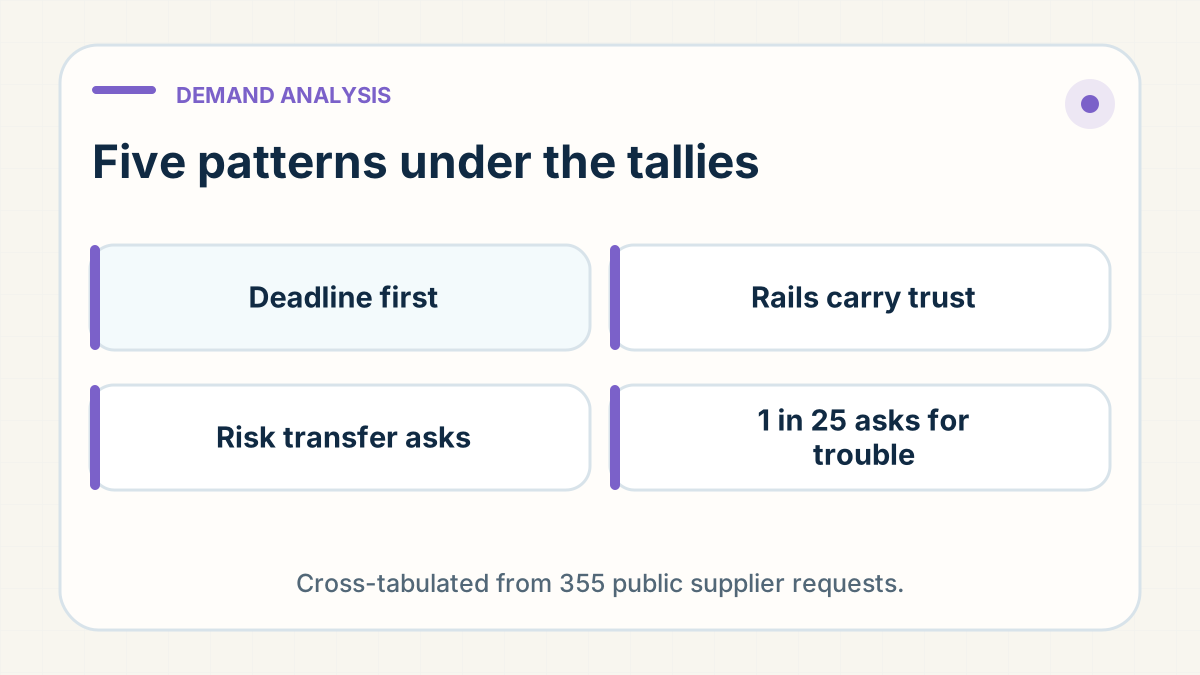
Pattern one: the deadline is the real specification
Seventy-two requests named a delivery-time cap or demanded fast shipping outright — one in five across the feed. Crossing that with geography sharpens it considerably: exactly half of the 34 requests naming Germany carried a deadline, roughly two and a half times the baseline rate. For the requests carrying a deadline, service timing was an explicit part of the sourcing brief.
A smaller group makes the mechanism visible by quoting a marketplace rule as the reason: TikTok Shop UK sellers cited the platform's four-day delivery expectation, and others rejected any tracking their marketplace would refuse. When a platform sets the clock, the supplier question becomes binary — either a controlled route test proves the date, or the listing does not survive contact with the rule.
Pattern two: payment rails are carrying the trust
Twelve requests named a payment rail as a condition of doing business — PayPal goods-and-services, Stripe, Alibaba Trade Assurance, Payoneer — and fifteen demanded references, customer reviews, tracking proofs or warehouse photos and videos before a conversation could begin. One poster refused PayPal and insisted on a platform instead. These requests suggest that some buyers use payment arrangements and provider evidence to assess risk. Payment protections vary by service, transaction and terms; a named payment method does not itself guarantee recovery.
A rail limits the damage of a bad supplier; it cannot select a good one. Useful evidence to compare includes — a real sample, a controlled first order, tracking records on the lane you need, and billing that reconciles. The same records are what a payment processor eventually asks for anyway.
Pattern three: risk transfer is requested openly
Five requests asked the supplier to hold stock in advance, ship before payment cleared or stay flexible when the buyer's cash ran short. Sixteen of the 45 branding requests also demanded no minimum order quantity — custom packaging at zero commitment. Twenty requests wanted stock already positioned in the destination country. Each ask is coherent alone. Read together, the requests show why stock ownership, payment timing and customisation commitments need separate agreement.
Compare the deposit, prepaid balance, minimum and settlement cycle with the stock or work each party agrees to fund. Who owns the stock behind your deposit and what no MOQ really costs put numbers on the two halves of that trade.
Pattern four: geography selects the first question
- Türkiye: five of the 13 requests naming it raised customs, clearance or duty-paid delivery — around eight times the baseline rate. On that lane the first question is not price; it is whether the parcel clears.
- The United States: the most-named single market at 57 requests, and roughly twice as likely as the baseline to demand domestic or destination-warehouse stock.
- Germany: half deadline-led, as above. Delivery timing was a frequent requirement in the German requests.
A supplier conversation moves fastest when the buyer opens with the lane's real constraint rather than a generic request. The DDP and DDU guide covers the customs half of that; the pre-stock and overseas-warehouse guide prices the domestic-stock half.
Pattern five: check rights and origin requirements
Thirteen requests named a protected brand's exact product, an explicit one-to-one replica or licensed club and motorsport designs, and two asked outright for China-origin evidence to be removed from parcels. Roughly one request in twenty-five. Before sourcing, verify the right to use the brand or design and preserve required origin information. A supplier's willingness to proceed does not establish that the goods or markings meet the destination requirements.
The hidden IP risk in inspired-by products covers the design side, and the marketplace origin and fulfilment rules guide covers why a purchased workaround is still the seller's account at risk.
The vague majority, revisited
Underneath all five patterns sits the baseline: 127 of 355 requests — 36 per cent — named no product at all. One honest null result belongs on the record too: long-term-partnership language did not predict vaguer briefs. Twenty-one of the 71 long-term requests named no product, slightly below the baseline rate — sounding committed and being specific turn out to be independent skills. The buyers who collected same-day, comparable quotes were the small group who did both.
That group's template is already written: the product sourcing brief suppliers can actually quote.
How this analysis is built
Requests are collected from public dropshipping sourcing communities and tallied by keyword into product families, destinations and commercial terms; this page adds cross-tabulations between those labels. Posts are never quoted, linked or identified; contact details are never reproduced; exact products are generalised to their family. Counts are keyword tallies and understate paraphrased requests — they measure what buyers asked for, not what sells.
Use the patterns as questions, not product picks
Choose the pattern that matches a constraint you have actually observed: a delivery deadline, an unclear payment risk, a destination-specific customs issue, or a request that transfers too much risk to the supplier. Do not copy the popular product or warehouse choice from this dataset. Stop and verify your exact item, market, packed route and paid demand before you spend on stock or advertising.
Need a product checked before you spend on ads?
Send us the product link and destination on WhatsApp (+86 178 4666 9989). We'll check sourcing, packing and shipping with you before you commit.
Get Sourcing Quote on WhatsApp →