Field note
The month in one view
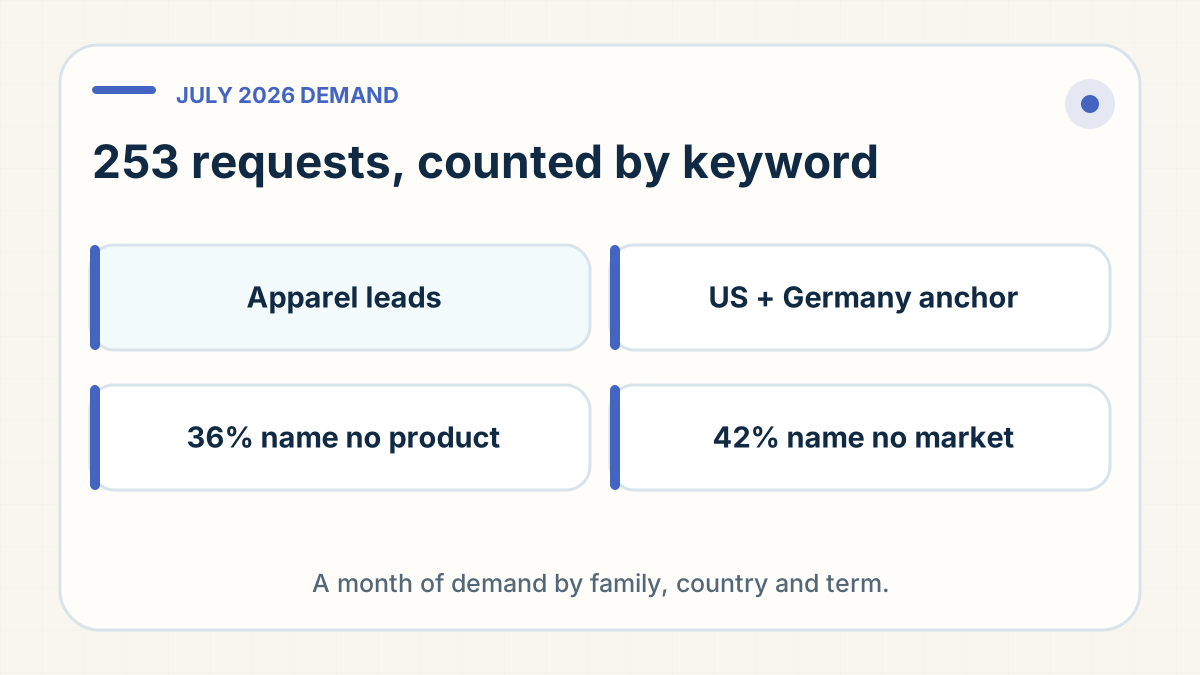
Across 7–31 July the sample contains 253 distinct supplier requests in public dropshipping sourcing communities. This review reports the month in proportions — by product family, by named destination and by commercial term — using the same rules as the weekly log: no post is quoted or identified, exact products are generalised to their family, and counts are keyword tallies that understate paraphrased asks.
Product families, in order
- Apparel and fashion: 36 requests — the largest family, and the steadiest from week to week.
- Home and kitchen: 26. Electronics and gadgets: 26.
- Jewellery and watches: 19.
- Cooling and summer seasonal products: 17, concentrated in the first half of the month and fading after it.
- Beauty and personal care: 17. Health and supplements: 14, arriving mostly in the second half.
- Toys, kids and baby: 12. Pet supplies: 11. Pillows, sleep and comfort: 11.
- Furniture and travel bags: eight each; custom business supplies and auto products: seven each; sports and fitness: six.
Ninety of 253 requests — 36 per cent — named no product at all.
Destinations, in order
- Europe named without a specific country: 36 requests.
- The United States: 33 — the most-named single market of the month.
- Germany: 27 — the most-named European country by a wide margin.
- France: 17. The United Kingdom: 16. Türkiye: ten. Italy: nine.
- Southeast and South Asia and the Gulf: seven each; Latin America: four; Israel, Switzerland and Africa: three each.
One hundred and seven requests — 42 per cent — named no destination.
Commercial terms, in order
- Long-term-partnership language: 52 requests, about one in five.
- A delivery-time cap or fast-shipping demand: 51 — effectively tied for first.
- No MOQ or single-unit fulfilment: 33. Private label, branding or custom packaging: 31.
- An exact product supplied to match: 28. Quality control or inspection: 22.
- Compliance documents: 16. Store integration or automation: 15. DDP or customs handling: 13.
What July's shape says
The season is visible in the data: cooling products dominated early July and faded by month-end, while supplement demand rose in the second half — a reminder that the demand feed is a calendar as much as a catalogue. Geography is concentrated: the US and Germany anchor demand, and Türkiye's ten mentions carry a distinct profile, almost always about customs clearance rather than product discovery.
The most commercially useful number is not a product family at all. With 36 per cent of requests naming no product and 42 per cent naming no destination, most buyers in these communities are competing for supplier attention with briefs a supplier cannot price. The minority who stated a product, a market, a volume band and a deadline were asking a question that could be answered the same day — and they were competing against very few others.
The sourcing-brief guide turns that observation into a template, and the beginners guide orders the stages so the brief exists before the orders do. The operations-side counterpart to this review is the July 2026 operations review.
The weekly entries behind these totals: 7–11 July, 12–18 July, 19–25 July and 26 July–1 August. The patterns underneath the proportions — deadline-first buying, payment rails carrying trust, open risk transfer — are cross-tabulated in the full demand analysis.
A later re-read of every post, with a stricter check for reposts, counts 242 distinct requests for 7–31 July; the months that follow use that method, in the August 2026 demand review and the September 2026 demand review.
Where these numbers come from
Requests are collected from public dropshipping sourcing communities and tallied by keyword into broad product families, named destinations and commercial terms. Posts are never quoted, linked or identified; contact details are never reproduced; exact products are generalised to their family. Posts without an exact timestamp are assigned to the earliest plausible day. Counts are keyword tallies and understate paraphrased requests — they measure what buyers asked for, not what sells.