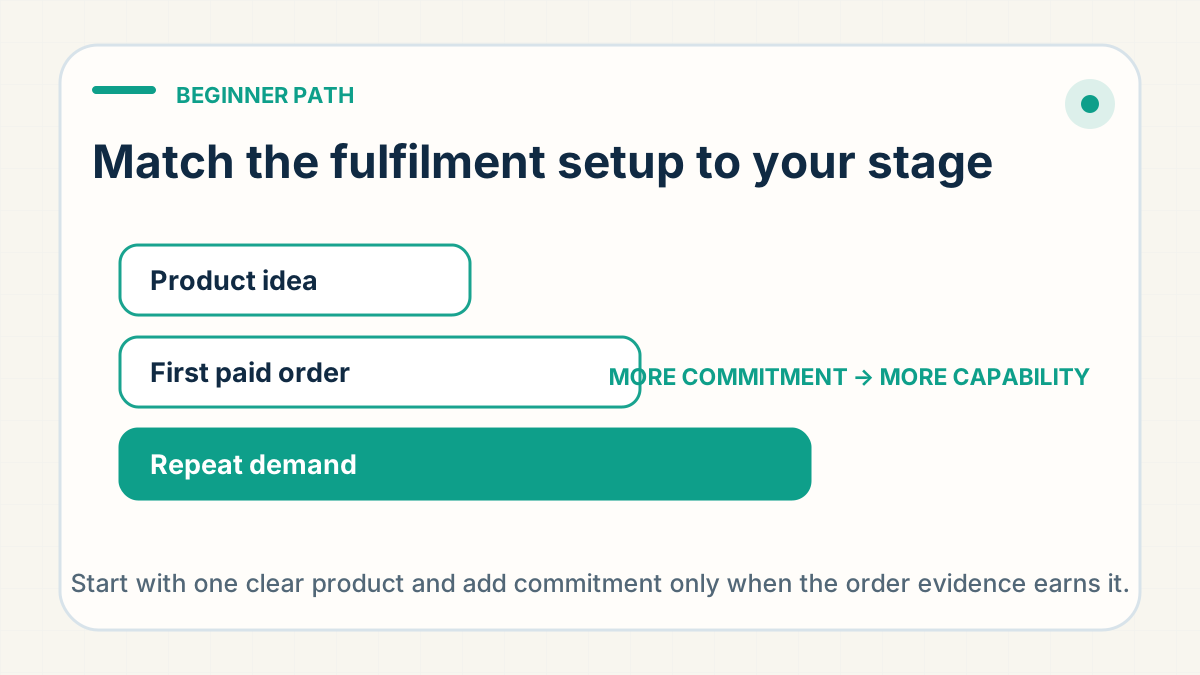
The short answer
A dropshipping agent is a China-side operations partner who can source a product, compare suppliers, check the item, prepare the customer parcel and arrange shipping after an order is placed. The agent can also help return tracking to a connected store and coordinate exceptions. That does not mean every new seller needs a complex agent setup on day one. The right starting point depends on whether you have an idea, a first paid order or repeat demand.
Stage 1: You have a product idea but no sales
Keep the first request narrow. Use one or two priority product references, one likely customer market and one decision you need help making. If you are still testing many unrelated ideas, a retail marketplace such as AliExpress can be the faster way to validate demand before asking an operations team to source every possibility. An agent check is most useful when you are serious enough about a product to define what must match and what a quote needs to prove.
You do not need a polished sourcing document. A product link, photo or clear description can start the conversation. Add the exact variant, target country and any feature that would make a similar product unacceptable. The agent can then say what is available, what remains unverified and whether the sensible next step is a quote, current product evidence or a sample.
Stage 2: You have a first paid order or a product ready to test
This is where order-by-order fulfilment becomes concrete. Ask for the complete customer-ready cost and the route for the real destination, not only a factory unit price. For standard dropshipping, the commercial test can begin without committing to a full custom-production run. Product printing, custom boxes and other manufacturing changes have separate minimums and should be quoted as their own decision.
A first order should prove the physical and information flow: the right variant is sourced, the packing instruction is clear, the destination is serviceable, the parcel receives usable tracking and the customer-facing status changes at the right time. One controlled order can reveal more than a long discussion about how the workflow ought to behave.
Stage 3: You have repeat demand or you are switching fulfilment
Once sales repeat, the operational questions change. Decide whether proven products should be pre-stocked, whether branding now earns its setup cost, how stock is replenished and which service level fits the customer promise. If you are switching from AliExpress or another agent, use a short overlap. Move a small product set first, compare the result and keep the old route available until the new one has passed live orders and exception checks.
Send these seven inputs for a useful quote
- Product reference: an AliExpress, Alibaba or 1688 link, or a clear photo and description.
- Exact product: variant, material, size, colour, included parts and anything that must not be substituted.
- Destination: the country or main markets where customers will receive the order.
- Commercial stage: researching, first order, current daily orders or an existing flow you want to replace.
- Delivery priority: lowest practical cost, faster delivery, or a customer promise already shown in the store.
- Packaging: neutral parcel, insert or sticker, custom box, or direct product branding.
- Evidence: actual photos, measurements, a short test video, a physical sample or a product-specific document where it matters.
Send your top two products first: how a list gets quoted
Send your top one or two products first and let the rest of the list follow behind them — that is the request a sourcing team can quote quickly and accurately. A long list sent "for everything, worldwide" answers slower and worse: every line needs the same supplier check, and a quote is priced to a destination, so "worldwide" is not a quotable place. Priorities first, then the rest in batches, is how the queue moves.
During a reviewed week in August 2026 this pattern held across every list that arrived: the desk asked for the top priorities and pasteable links, quoted those first and returned the remainder in batches. Sellers who arrived with three to five best-sellers and two or three launch countries got usable numbers in the first exchange; sellers who arrived with an unfiltered catalogue and an open destination got questions instead. Clear priorities and destination markets let you compare usable quotes sooner.
For a long list with no orders behind it, a small refundable per-product sourcing fee may apply. Confirm the fee and the conditions for a refund or credit before requesting the longer list. While the rest of your list waits its turn, marketplace listings with standard shipping give a workable approximate price for each item — close enough to judge margin before asking for the exact figure.
When a product graduates from the list to a real quote, the details that must not change travel with it: a sourcing brief suppliers can actually quote covers what to pin down, and how to read the landed-price quote covers what the number you get back should contain.
What a useful quote should explain
The quote should define one customer-ready unit and state the product cost, expected packed shipping cost or all-in total, route, destination, preparation assumption, delivery range and important exclusions. It should identify what has been confirmed and what could still change after an actual packed measurement, supplier check or sample. A universal price or delivery promise made without the product and destination is not yet an operating answer.
When a sample is worth the time
Order a sample when feel, fit, finish, colour, construction, function, branding or customer-facing packaging could change the decision. Current photos or video can be enough for a simple, low-risk visual check, but they are not a substitute for a physical sample when the buyer experience depends on qualities the camera cannot verify. Turn the approved sample into the reference for later sourcing and quality checks.
Start neutral; add branding deliberately
Neutral packaging keeps an early test simple and avoids supplier promotional material inside the parcel. Small brand assets such as an insert or sticker may be feasible earlier than a fully printed box or a product modification. Ask for the minimum, setup cost, sample, lead time and storage implication for each brand element separately. The useful question is not whether branding is possible; it is which level makes sense at the current sales stage.
Connect the store after the product flow is clear
A store connection moves order and tracking data. It does not approve a product, decide a substitution, correct an incomplete address or determine when a parcel is physically dispatched. Use the platform's supported collaborator or authorised access method, document every manual step and run a controlled test. Never solve an integration problem by sharing a primary store password over chat.
Agree the exception rules before live volume
Ask what happens when the exact product is unavailable, an address changes, tracking is not recognised, a parcel is delayed, or the customer reports damage or a defect. Separate change-of-mind returns from product, packing and transit problems. Agree what evidence is needed, who decides the remedy and when the next update is due. A low quote is not a complete service if nobody owns the exception.
A ten-minute readiness check
- Can you name one priority product and one main destination?
- Can you state the current stage honestly: idea, first paid order, repeat demand or agent switch?
- Do you know which product or packaging details must not change?
- Do you know whether a sample would change your decision?
- Can the first order be tested without moving every product at once?
- Do you know how tracking, cancellations and issue evidence will be handled?
If you run an agency, not a store
Some people searching for a dropshipping agent are not sellers at all. They are agencies, Shopify developers, media buyers or consultants whose client needs sourcing and fulfilment, and who would rather run that as their own service than hand the client away. If that is you, the same China operation is available through an agency account, where you keep the client relationship and set your own price: see RyanFulfil Agency Desk, and the difference between referring a seller and reselling fulfilment under your own brand is set out in the referral programme.
Bring an agent a real product and a real route
A good dropshipping-agent relationship does not begin with the biggest catalogue or the most automation. It begins with one clear product, one real market, a complete quote and a small test that proves the promise. Add stock, branding and deeper integrations only when the order evidence makes the next commitment useful.
Demand check · public sourcing communities
What early-stage sellers are posting while they look for an agent
Eleven of the 355 distinct supplier requests we tallied from public sourcing communities identified themselves as complete beginners or first-sale sellers, and many more described a store that had just launched or a single product still in testing.
Two patterns repeat. The first is asking for “a supplier” before naming a product, market or stage — those posts collect greetings from every agent with a catalogue and help from none. The second is urgency inversion: more than one poster had already taken paid customer orders with no supplier lined up for the product, turning a sourcing question into an emergency with a refund deadline. That sequencing failure is exactly what the stages on this page are ordered to prevent.
The requests that drew useful replies stated the stage plainly: one product, one destination market, an honest volume band and the decision the seller needed next — a quote, a sample or a live test.
How this was counted: between 7 July and 14 August 2026 we tallied 355 distinct supplier-request posts from public dropshipping sourcing communities (388 collected; reposts and non-requests excluded). Figures are keyword tallies of what posters wrote, so paraphrased requests are undercounted rather than inflated. No post is quoted, linked or identified, and no contact details are reproduced. The same requests reach RyanFulfil’s own enquiry inbox daily; nothing from private client conversations is published. The cross-tabulated patterns behind these counts are in the full demand analysis.
Operating rule: Start with one product, one destination market and the next decision you need the agent to make. Move from enquiry to quote, sample or live test only when the current stage has evidence; onboarding more catalogue than you can verify creates complexity before it creates sales.
Have a specific fulfilment question?
Send us the product, destination and order context on WhatsApp (+86 178 4666 9989). A clear answer is more useful than a generic estimate.
Ask Questions on WhatsApp →