Field note
The sample was setting the production reference
A soft-goods sample needed review across feel, fit, drape, construction and smaller design details. The seller was not merely choosing whether the object looked attractive; the decision would determine what a supplier could reproduce and what customers would later see in the listing and parcel.
The difficulty was interaction between changes. Improving fit could alter the cut, material weight or packing behaviour. A photo could show colour and general shape while saying little about recovery, seams or use. Approving one visible feature did not prove the rest stayed unchanged.
"Looks good" would multiply ambiguity
Vague "looks good" feedback would allow production to proceed without a stable reference. Conversely, an unstructured list of preferences could trigger another sample without making the next decision clearer. The cost was not only one sample fee; it was the risk of multiplying ambiguity across a production run.
Mark every detail keep, revise or verify
The situation
A sample can look like a small step, but it often decides the whole direction of an order. A review of a soft-goods product this week made that clear: fabric feel, fit, drape, construction and small design details had to be considered together, not as isolated preferences. An adjustment that improves one issue can easily change the shape, cost or packing behaviour of the finished item.
Why "looks good" was not enough
A photo can show colour and general appearance, but it cannot answer every question about feel, recovery, seams, proportions or how the item behaves in use. The risk is not only choosing an unattractive sample. It is approving one feature while assuming the rest of the specification has stayed unchanged. That is how a supplier can solve a fit issue by quietly changing the material weight, cut or construction elsewhere.
The decision framework
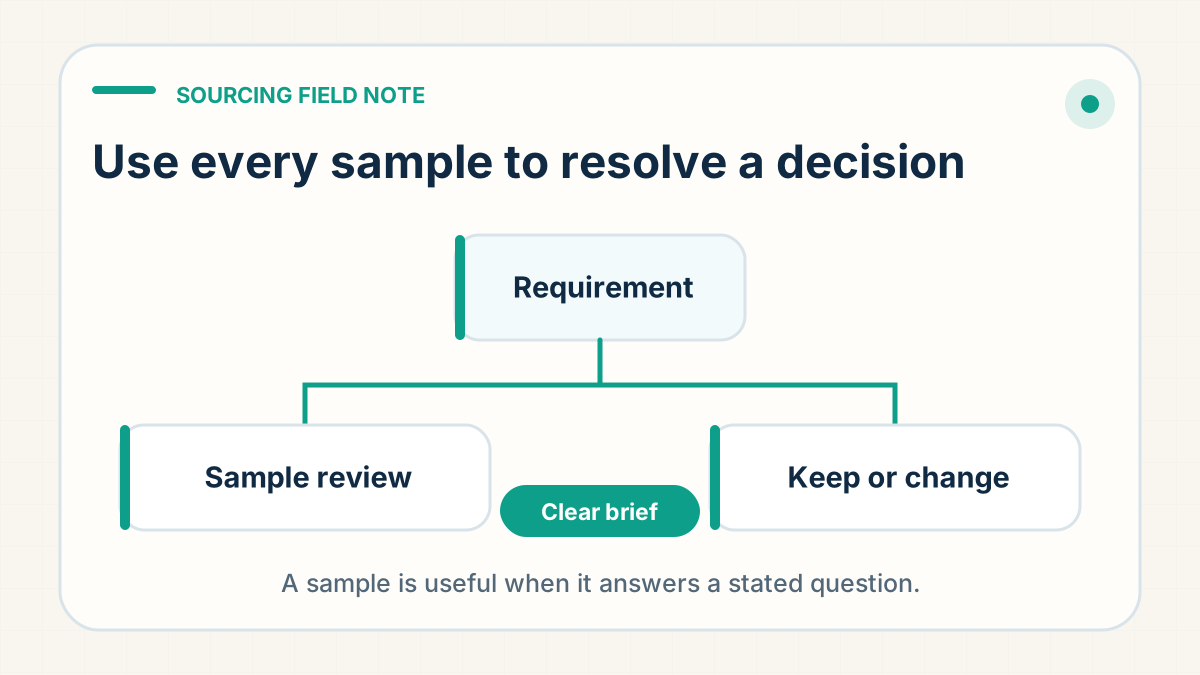
The best review starts with a short brief: what is being tested, what counts as acceptable, and what changes if the answer is no. We compare the actual sample with the intended reference, list observations rather than vague preferences, and mark each point as keep, revise or verify again. A revision list should also say what must remain unchanged. If a new sample is needed, it should have a clear version label so feedback does not drift between iterations.
Give the sample one decision to resolve
Turn feedback into a versioned decision: keep, change, or compare once more. It makes supplier communication cleaner and prevents production from moving ahead on an assumption.
The next sample carried a decision
The review became versioned: observations against the intended reference, each marked keep, revise or verify, plus an explicit list of what must remain unchanged. Any further sample would carry that decision forward rather than reopening the whole brief. The sample became evidence with a release consequence.