Approve the supported setup, not the product photo
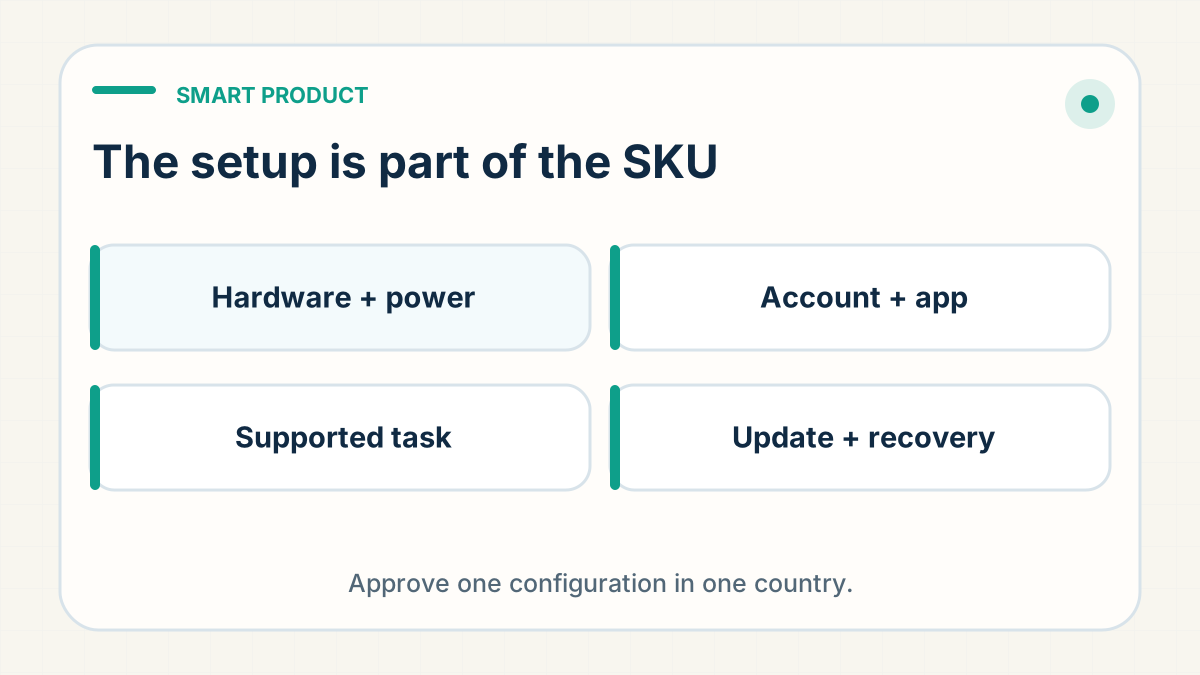
Do not approve a connected gadget from the box alone. The full setup is part of the product. Record its hardware, country, power, phone or computer, network, account, app, cloud service, plan, update state and support owner. Then run the promised task on the final unit. Use the same conditions that your buyer will face.
If one needed part is unknown, the SKU is not ready. A factory video may show that one sample worked once. It cannot show that your buyer can set it up, keep it working, fix it after an update or use a new unit with the same parts.
The normal exact-SKU and product-version record still matters. A smart product needs one more layer. Software, accounts and other devices can change what your buyer gets without changing the box.
One launch announcement can contain several product states
UGREEN's brand-supplied 4 September 2026 AIoT announcement is a clean example of why "launched" is not an inventory state. It said deposits for three HomeAgent products opened on 3 September ahead of a Kickstarter campaign on 27 October; other AIoT accessories would be introduced with that campaign; and three MagFlow charging products were already available.
The current official HomeAgent page goes further. It says the deposit is not a final purchase, the final pledge must be made on Kickstarter, add-ons may have different compatibility and shipping schedules, and shipping is planned in phases beginning in late January 2027. Those are several states inside one product story.
Nothing there says you should carry the products, and this guide does not recommend them. The example shows a simple problem: announced, reservable, crowdfunded, scheduled to ship and available are not the same state. Available is not the same as verified in your destination or supported after your customer installs it.
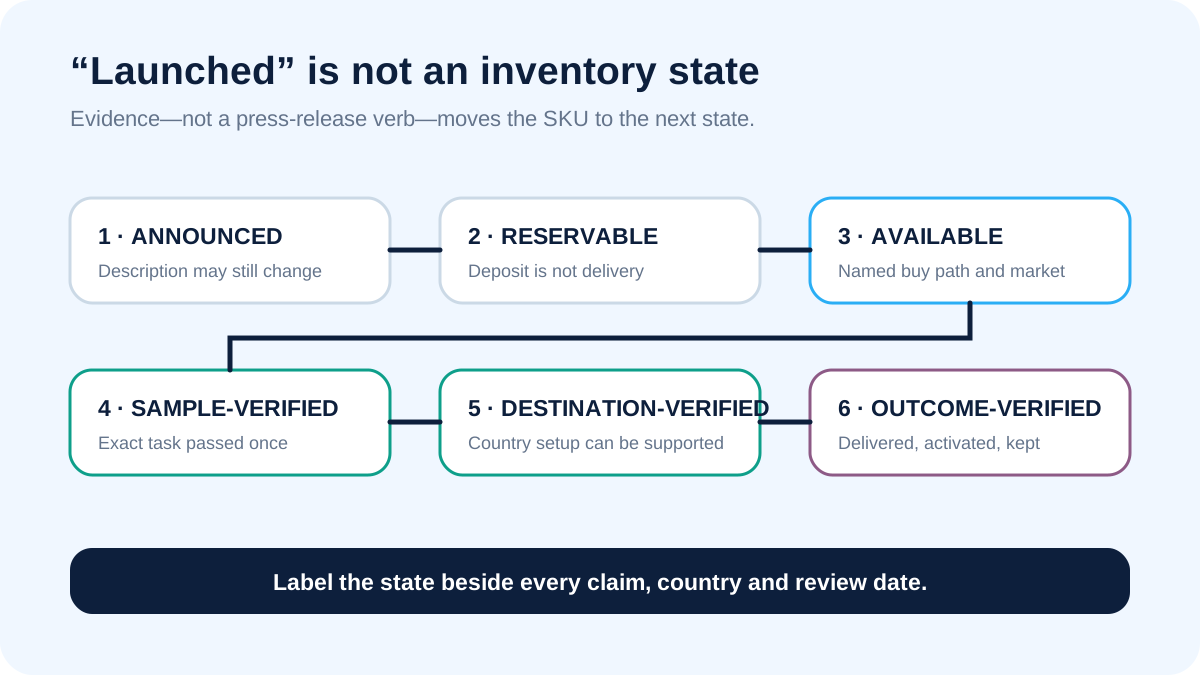
Use six launch states and never skip the label
- Announced: the maker has described the product or feature. There may be no order path, final specification or ship date.
- Reservable, pre-order or crowdfunded: money or a deposit may be accepted, but the final purchase, specification, delivery or return terms can still depend on another event.
- Available: a named seller shows a buy path for a named country. This does not prove stock, route or support for your customer.
- Sample-verified: your exact revision completed the advertised task under recorded conditions.
- Destination-verified: power, radio, network, account, app, language, privacy, route, label and support conditions were checked for one target market.
- Customer-outcome-verified: delivered buyers activated, used and kept the product through a named observation window, with failures and support cost counted.
Put the state beside every claim you publish. "The manufacturer announced" is honest. "Available from this seller in this country on this date" is inspectable. "Works with iOS" is too broad unless you name the app version, operating-system range, account region, required hardware and the task that passed.
The configuration passport is the real SKU
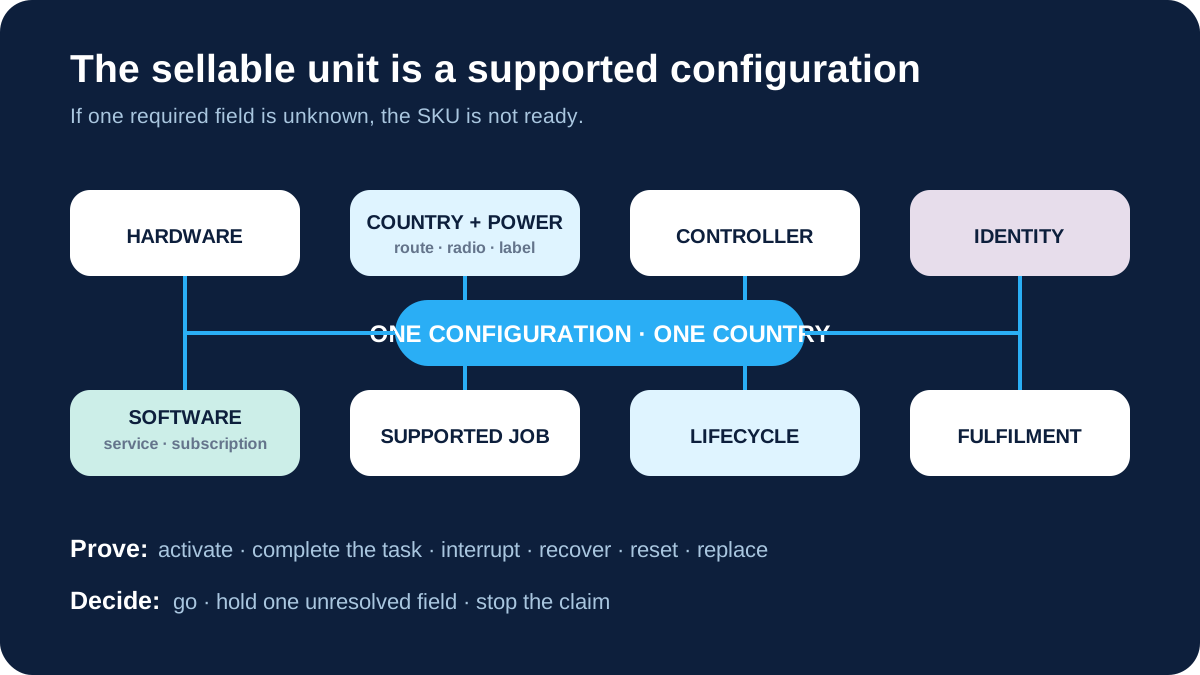
Create one passport for each setup you support, not one for each marketing name. If a dependency changes what your customer can do, it belongs in your record even if the carton barcode stays the same.
- Hardware: model, revision, component or module version, firmware at approval, serial or batch range, included parts and customer-ready packaging.
- Country and power: target country, plug, input voltage and frequency, charger, permitted radio configuration, required labels and language.
- Controller: supported phone, tablet or computer models; operating-system versions; Bluetooth, Wi-Fi or other network requirements.
- Identity: required account, region, phone number or email, age or business restrictions, multi-user behaviour and what happens if the buyer changes country.
- Software and services: exact app, app-store availability, firmware, internet need, cloud feature, subscription, paid tier and third-party service.
- Supported job: the customer task you advertise, required setup, expected output, exclusions, failure behaviour and recovery steps.
- Lifecycle: update owner, support channel, security contact, known end-of-support date, replacement compatibility and the trigger to stop selling.
- Fulfilment: battery and other route-sensitive parts, packed weight and dimensions, accessories, reset state, data-wipe rule, return route and replacement test.
Local processing does not mean no internet dependency
UGREEN's release calls HomeAgent a local AI product and then states that account registration and authentication, remote access, mobile notifications, software updates and optional cloud-enabled services may require internet or cloud services. That footnote is more useful to a seller than the label "local". It separates where some processing occurs from everything the customer still needs to set up and maintain.
Ask the same questions about any connected product you sell. Which task works with the internet removed? Which task fails when the maker's account service is unavailable? Can your buyer still use the physical product? Does a subscription gate the feature shown in your ad? Does a reset remove personal data? A product can keep a local core and still rely on remote identity, notifications, updates or integrations.
Do not publish "works offline", "no cloud", "private", "compatible" or "no subscription" from a headline or supplier chat. Turn each phrase into a task, condition and failure test. If the claim touches privacy, safety, radio, import or consumer law, the seller or importer must identify the requirements for the exact product, claim, market and channel.
Run the advertised task from a sealed-box start
A useful sample test starts where your buyer starts. Use a customer-ready unit from the batch or revision you plan to ship. Reset it. Open only the included instructions. Use an ordinary account in the target region and the supported phone or computer. Record every dependency you had to add from outside the box.
- Activation: install the right app, create or sign in to the account, pair the device and complete any required update.
- Core task: run the exact action shown in the product page or ad, not a nearby feature that is easier to demonstrate.
- Interruption: remove internet, restart the router, deny one permission, change the phone or interrupt the update. Record what stops and what recovers.
- Second user: test transfer, household sharing or a new phone if the offer implies more than one user.
- Reset and return: remove the account, wipe stored data where applicable, reset the unit and prove that another supported account can activate it.
- Replacement: swap one device or accessory and confirm whether the customer's remaining setup still works.
Photograph labels and included parts; record screen versions without exposing credentials or personal data. A passed sample is evidence for that configuration on that date. It does not approve an undisclosed supplier substitution or future firmware.
Use the same discipline as turning a product claim into evidence: the exact words shown to the buyer decide which test must pass.
Destination support belongs in the offer
A smart product can be physically shippable and commercially unusable in the destination. Build one country row before you open another market. Record the buy path, app-store region, supported language, plug and power, network bands or standards, account restrictions, subscription currency, data and privacy responsibility, warranty path, return address and support hours.
Do not copy the first country row and change only the flag. A new market can change activation, remote services, radio rules, delivery, tax, returns and the words the customer sees when something fails. If you cannot support the promised task there, block the country before an ad finds the order.
The country decision still needs the market-specific profit and route check. This passport adds the service and dependency layer that landed cost cannot see by itself.
Support is part of the configuration
Write your first response for five predictable cases before launch: cannot activate, cannot pair, feature missing, update failed and account or cloud unavailable. For each one, state what your customer can check, what evidence support needs, who owns the next action, and when replacement or refund becomes the right remedy.
The support owner may be the seller, manufacturer, app publisher, cloud provider or a third-party platform. A sourcing or fulfilment team can verify the physical unit and packing, but it cannot repair a service it does not operate. If no party accepts an issue that can stop the advertised task, the configuration is not supportable.
Set your update trigger too. Re-verify when the supplier changes a component, the app changes its minimum operating system, a service becomes paid, a market disappears from the app store, a firmware release changes the task, a security notice arrives, or the maker names an end-of-support date.
Use a go, hold or stop decision
- Go: the exact customer-ready unit passes the advertised task in the target setup; dependencies and exclusions are stated; route and support owners are clear; settled economics survive expected support.
- Hold: one material dependency, market condition, document, route or support answer is unresolved but can be tested before more buyers are exposed.
- Stop: the advertised task cannot be reproduced, a critical component can change without approval, the account or app is unavailable in the market, a foreseeable failure has no owner, the product cannot follow the required route, or the legal responsibility remains unresolved.
A hold does not give you permission to sell with softer wording unless the remaining wording describes a smaller task you have genuinely proved. If your video shows remote alerts but only local recording passes, remove the alert claim or stop the listing until it works.
Download the blank smart-product configuration passport. One row is one exact configuration in one country, with the test date, result, owner, failure action and next recheck.
Approve the setup the customer must use
RyanFulfil can help source the exact model, coordinate a sample, photograph labels and included parts, record the approved physical version, run agreed setup checks, keep the version tied to the SKU, quote customer-ready packing and a named route, and flag a later physical substitution. We can also keep packing and exception evidence readable when a customer reports a fault.
RyanFulfil does not create the app or cloud service, guarantee a third-party integration, decide legal or privacy duties, guarantee market acceptance, provide cybersecurity certification, or promise that future software will keep a feature working. The seller owns the product claims, market choice and customer support plan.
If you want a connected product checked, send the exact listing, target country, phone or controller, network setup and the one task the customer must complete. We can scope what the China-side sample and parcel test can prove, and name what remains outside it.
The practical takeaway
For a connected gadget, the box is only the beginning of the SKU. Approve the configuration that completes the customer task, label its launch state, test it from a reset unit in the target setup, and name who owns every predictable failure. If you cannot fill the passport, do not fill the store page with the claim.
Here is how you would prove this guide wrong. If a product sold from one hardware-only SKU keeps working across the countries, accounts, apps, networks, updates and replacements your buyers use without a configuration record, the passport adds no value. Run the sealed-box, interruption and replacement tests. The first unexplained failure tells you which missing field belonged in the SKU.
Where the figures come from
Sources as of 5 September 2026. UGREEN's 4 September brand-supplied release says three HomeAgent products opened for deposit or pre-order before a Kickstarter campaign scheduled for 27 October, other AIoT accessories would be introduced with the campaign, and three MagFlow products were already available. Its product note says local AI can still require internet or cloud services for named functions. The current official HomeAgent page says a deposit is not a final purchase and gives phased planned shipping dates beginning in late January 2027. Those pages can change; recheck them before using any product-specific state.
The six launch states, configuration passport, test sequence, go/hold/stop rule and worksheet help you check your own product before launch. They do not establish product safety, legal compliance, privacy protection, market acceptance, future availability or commercial demand.
Need a product checked before you spend on ads?
Send us the product link and destination on WhatsApp (+86 178 4666 9989). We'll check sourcing, packing and shipping with you before you commit.
Get Sourcing Quote on WhatsApp →