From the operations desk
The month in one view
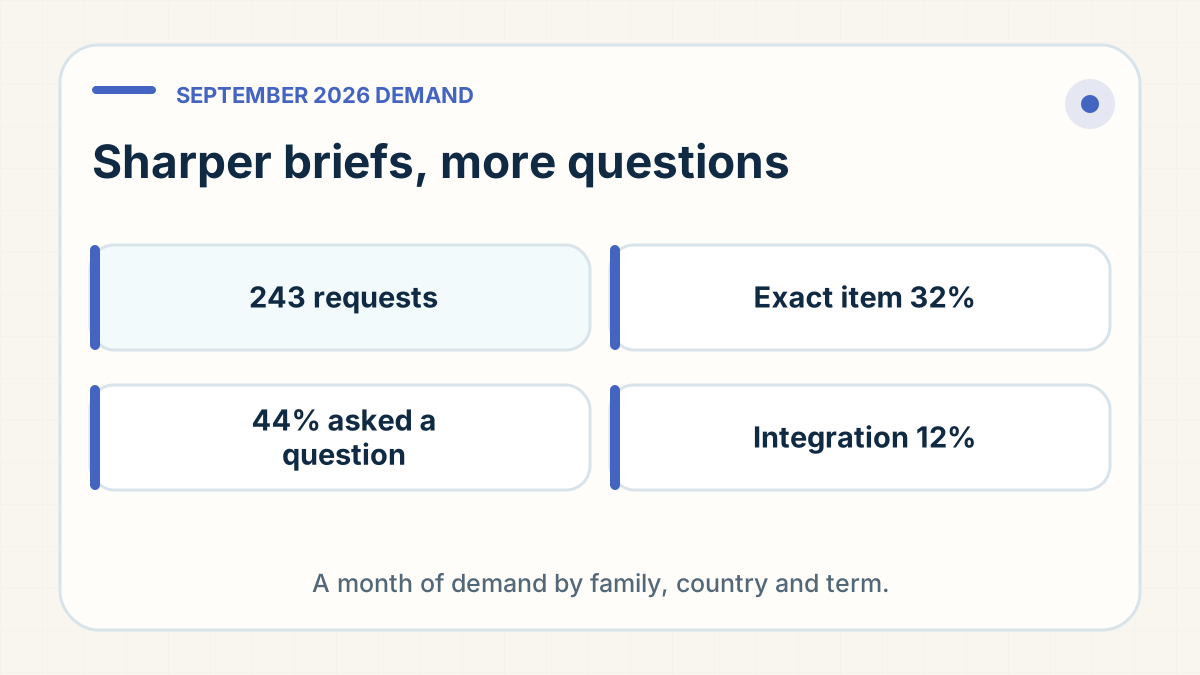
In September 2026 we counted 243 distinct supplier requests in public dropshipping sourcing communities. We collected 297 posts. Of those, 44 were reposts and ten were not supplier requests, such as course questions and adverts. Only the 243 are counted below.
August had 194 requests, so this review compares shares, not raw counts. The main change is sharper briefs. Buyers named more exact items, asked suppliers more direct questions and talked more about integration. Electronics and bags also gained ground.
Product families, in order
- Apparel and fashion: 47 requests, 19% of the month. The share was 19% in August, so the leader held steady.
- Home and kitchen: 39 requests, 16%, up from 13% in August.
- Electronics and gadgets: 32 requests, 13%, up from 6% in August. This is the biggest rise of the month.
- Bags and travel: 14 requests, 6%, up from 3%.
- Toys, kids and baby: 13. Health and supplements: 10. Pillows, sleep and comfort: 10.
- Auto and motorcycle, sports and fitness, and beauty and personal care: seven each. Beauty fell from 9% of August requests to 3%.
- Pet supplies: six requests, 2%, down from 8% in August.
Sixty-two requests, 26% of the month, named no product at all. That was 27% in August. Seventy-eight, 32%, named one exact item to match, against 24% in August.
Destinations, in order
- The United States: 43 requests, 18% of the month, the most-named market.
- Europe named without a country: 35 requests, 14%.
- Germany: 25 requests, 10%.
- France: 18 requests, 7%, up from 5% in August. The United Kingdom: 18, 7%.
- Italy: ten. Worldwide: ten. Türkiye: seven. Switzerland: seven.
- Israel, Austria and Canada: six each.
Eighty-one requests, 33%, named no destination. That is down from 39% in August, so more buyers told suppliers where the parcel was going.
Commercial terms, in order
- Speed, meaning a delivery cap or a fast-shipping demand: 76 requests, 31%, against 27% in August.
- Long-term partnership language: 68 requests, 28%, up from 20%.
- No MOQ or single-unit dropshipping: 56 requests, 23%, against 21%.
- Private label or custom branding: 39, 16%. Quality control before dispatch: 36, 15%, down from 18%.
- Stock or a supplier already in the destination country: 34, 14%, against 12%.
- Store integration or automation: 30, 12%, almost double August's 7%.
- Protected-brand or replica asks: 21. DDP or customs handling: 18. Neutral packaging: 18. Sample requests: 18.
What buyers asked suppliers to tell them
Of 243 requests, 107, or 44%, ended with a direct question for suppliers. In August the share was 35%. Buyers wanted answers they could act on.
- Unit price: 59 requests, 24%. Delivery time: 54, 22%.
- Process or service fee: 33, 14%. Shipping cost: 30, 12%. Catalogue or product list: 30, 12%.
- MOQ terms: 23, 9%. Company proof or references: 22, 9%.
- Product photos or video: 15. Samples: ten.
What September's shape says
Compared with August, the posts got more specific. The share naming no destination fell from 39% to 33%, and the share naming an exact item rose from 24% to 32%. Electronics and bags took share from beauty and pet supplies. Fourteen requests, 6%, gave a product, a destination and a volume together, up from nine and 5% in August. Still, a quotable brief is rare.
If you sell, answer the question the buyer asked first. Price, delivery time and fees led the asks. Say where you ship from. We prepared replies to 231 of September's 243 requests, and 39 of those replies, about one in six, said plainly that we ship from China, not from a local warehouse. State your lane before the buyer asks. If you buy, write the brief with the product, the country, the volume and the deadline.
Our guide to writing a sourcing brief suppliers can quote covers that template. Dropship, pre-stock or overseas warehouse covers the local-stock question.
The weekly entries for the month: 30 August–5 September, 6–19 September, 20–26 September and 27 September–3 October. The quarter view is in what dropshippers ask suppliers for in Q3 2026.
Sample and limits
Requests come from public dropshipping sourcing communities. Every post was read and classified twice, independently, against fixed definitions, and disagreements were settled on a further reading. Reposts and posts that were not supplier requests were removed. Posts are never quoted, linked or identified; contact details are never reproduced; exact products are generalised to their family. Each post is dated to the day it was collected, so busy days partly reflect collection rather than posting. Counts measure what buyers asked for, not what sells, and they undercount when the wording was unclear. These figures come from a re-read of every post, so they can differ slightly from the weekly entries published at the time.