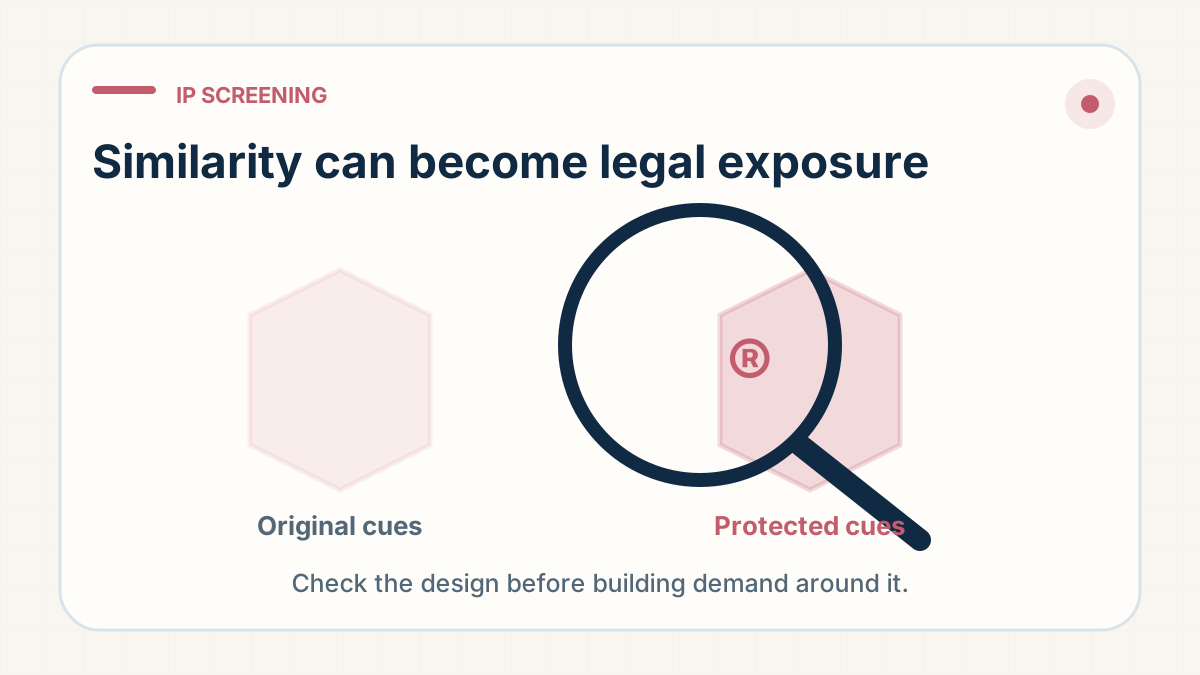
A product listing calls itself "inspired by" a famous brand, character, or design. Sounds safe enough, it's not using the actual name. It's one of the most common ways sellers accidentally build a store around something that gets seized at customs, delisted from a marketplace, or refused by a fulfilment partner partway through.
Why "no logo" doesn't mean "no risk"
Trademark and design risk isn't only about a brand name printed on the product. It also covers:
Recognizable character designs, even without an official logo.
Product shapes and silhouettes closely copying a specific branded design, not just a general style.
Packaging or box design that mimics a known brand's look.
Instruction manuals or inserts referencing a brand name for compatibility claims.
Color combinations and patterns tied closely to a specific brand identity.
None of these need the actual trademarked name on the product to create exposure. Customs authorities and platforms look at the whole impression a product creates, not just whether a logo is present.
Why a fulfilment partner might decline a product you already paid for
A product too close to a protected design or brand can face customs seizure and a rights-holder complaint that puts your seller account or payment processing at risk. Confirm the rights to the design before committing inventory; a supplier offering to make it does not establish permission to sell it.
How to spot the risk before you build a store around it
Search the product image and closely related terms to see if it traces back to a specific branded product, not just a general trend.
Be suspicious of listings that use phrases like "inspired by," "similar to," or a well-known brand name in the title or description, even as a comparison.
Check whether the design has a distinctive, recognizable shape or pattern versus being a generic style anyone could have made.
Ask your supplier directly whether they have rights to the design. A vague or evasive answer is itself a signal.
When in doubt, ask before you order in volume, not after.
The safer alternative
If a product category feels risky but you like the market, private label is usually the better path: your own design or a genuinely generic version, your own branding, no borrowed intellectual property. It takes more setup than copying a listing, but it doesn't come with a shipment getting destroyed at customs or a marketplace account getting flagged.
If a product depends on resemblance to someone else's brand, character, artwork or design, pause before sourcing or advertising it. Obtain evidence that the rights are yours to use in the target market, choose an original or authorised alternative, or reject the product.
Demand check · public sourcing communities
Replica asks are sitting in the open feed
In Q3 2026, 38 of 679 distinct supplier requests from public dropshipping sourcing communities named a brand the poster did not own as the product wanted, asked for a one-to-one replica, or wanted licensed team or character designs. That is about one request in eighteen, posted openly.
The count matters less than the signal. A supplier that says yes to those asks shows how it treats rules when they get in the way, and that answer applies to every client on its books. A factory that will copy someone else’s design will not treat your original design as sacred either.
Run the screening on this page over your own “inspired-by” designs before you brief a factory, and use it to screen the factory too.
Where these numbers come from: we counted 679 distinct supplier-request posts in public dropshipping sourcing communities between 7 July and 30 September 2026 (805 collected before reposts and non-requests were excluded). We classified each post twice, independently, against fixed definitions, and a further reading settled any disagreement, so the counts understate unclear wording rather than inflate it. This page quotes, links and identifies no post and reproduces no contact details. Private client conversations are excluded. See the full breakdown in the Q3 2026 demand analysis.
The rule: Do not source or advertise from resemblance alone. Identify the protected branding, design, artwork and claims, obtain evidence that you may use them in the target market, or change the product; supplier availability is not permission to sell.
Need a product checked before you spend on ads?
Send us the product link and destination on WhatsApp (+86 178 4666 9989). We'll check sourcing, packing and shipping with you before you commit.
Get Sourcing Quote on WhatsApp →