From the operations archive
The warehouse decision started before the warehouse
A growing accessories seller serving European customers was considering held stock and eventually regional warehousing. Faster UK delivery sounded like the obvious next step. Yet the current catalogue still contained variants with uneven demand, and the team was still proving that receiving counts, product names, inspection and stock deductions remained accurate from one batch to the next.
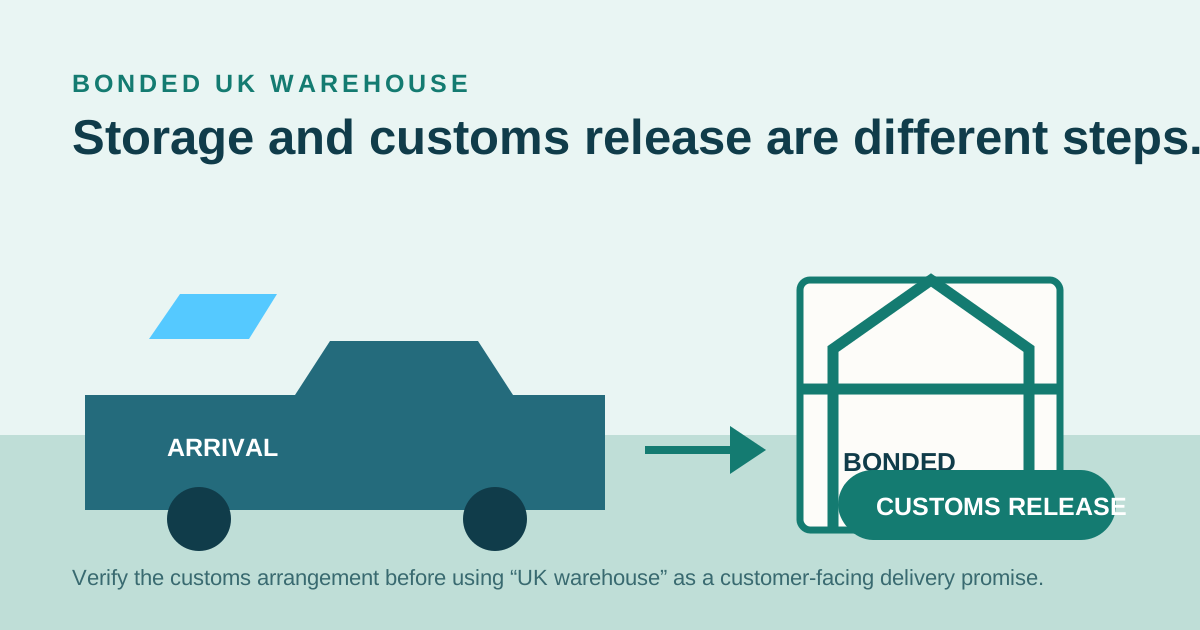
A bonded facility can postpone certain import charges while goods remain under customs control, but it does not remove the commercial decisions. Stock still needs an importer and compliant documentation; release into the UK market still creates tax and customs consequences; unsold variants still tie up cash. Moving a weak stock record into a more sophisticated building only makes the mismatch harder to see.
The seller therefore built evidence in stages: receive a controlled batch, reconcile it, release known-good units and compare real demand with replenishment time. Only after that could a bonded UK option be judged against ordinary UK storage or China-side fulfilment. The term describes a customs status and control regime, not a promise of duty-free inventory or automatically better economics.
About this story: it is an anonymised composite of client situations. It broadens markets and product families and leaves out identifying details. Read the dated field note: Building out a warehouse one batch at a time.
Plenty of carriers describe their UK operation with confident marketing language, "state of the art," "fully licensed," "premium facility." Most of that is unverifiable from the outside. A bonded warehouse status is different: it's a specific, named customs designation that gets registered with UK tax authorities, and you can actually check whether it's real rather than just taking a company's word for it.
What "bonded" or "ETSF" status actually means
An External Temporary Storage Facility designation allows goods to be held off-port, before customs duties and VAT are settled, while awaiting formal customs declaration. In practice, this means imported goods can be received, consolidated, and processed at a facility away from the port itself, with duty and tax obligations suspended until the goods are actually declared, rather than triggered the moment the container lands. It's a meaningful piece of customs infrastructure, not a nice-to-have.
Why it matters for a carrier's actual capability
Setting up and maintaining a genuine bonded facility means passing customs authority requirements and staying in continuous compliance, it's not something you announce on a website and walk away from. A carrier that holds this status, verifiably, on the customs authority's own published list, has demonstrably invested in UK-side infrastructure that goes beyond just having a warehouse address. WANB Express is one carrier that holds this status, verified directly against official UK customs records rather than just its own marketing claims.
How this can translate into a practical benefit
Bonded, off-port processing generally supports faster and more controlled clearance, since goods aren't waiting in a generic port queue for duty settlement before they can move to the next step. For a business shipping regular volume into the UK, that can mean more predictable transit times through the customs stage specifically, which is often the least visible and most unpredictable part of a cross-border shipment.
What we'd actually check before relying on this
1. Whether the bonded status is verifiable against an official government list, not just claimed on the carrier's own site. 2. What the facility actually handles, general goods, specific categories, fulfilment services, since bonded status doesn't automatically mean every service type runs through it. 3. Whether the location and status are current, since warehouse locations and registrations do change over time.
If UK-bound shipping speed and predictability matter for your product, ask us which routes currently have this kind of verified infrastructure behind them, rather than assuming marketing language reflects the real setup.
The rule: Evaluate a bonded warehouse as a customs and inventory design, not a shortcut to duty-free goods. Confirm who imports, when tax and duty become due, which records and movements are allowed, and whether the volume and destination pattern justify the additional control.
Need one order or route checked?
Worried about an order's tracking? Send us the order number on WhatsApp (wa.link/dropship) and we'll check what's going on.
Check Order on WhatsApp →