Field note
Growing demand did not make every variant equal
A European-facing accessories account was considering how to move from China-side per-order purchasing toward held stock and, eventually, regional warehousing. Demand was growing, but not every variant moved at the same rate and the seller still needed proof that replenishment, naming and quality checks could stay consistent.
The attractive version of the story is a bigger warehouse and faster delivery. The operational version begins earlier: a controlled batch arrives, every variant is counted and located, the customer-ready unit is checked, and the stock record survives contact with real orders.
Stock in the wrong place would turn growth into trapped cash
Buying a large quantity too soon would lock cash into slow variants and magnify any product mistake. Staying entirely per-order would preserve flexibility while adding a domestic purchasing wait to every shipment. The decision was not "warehouse or no warehouse"; it was how much proof to earn before taking the next irreversible step.
Move one proven batch at a time
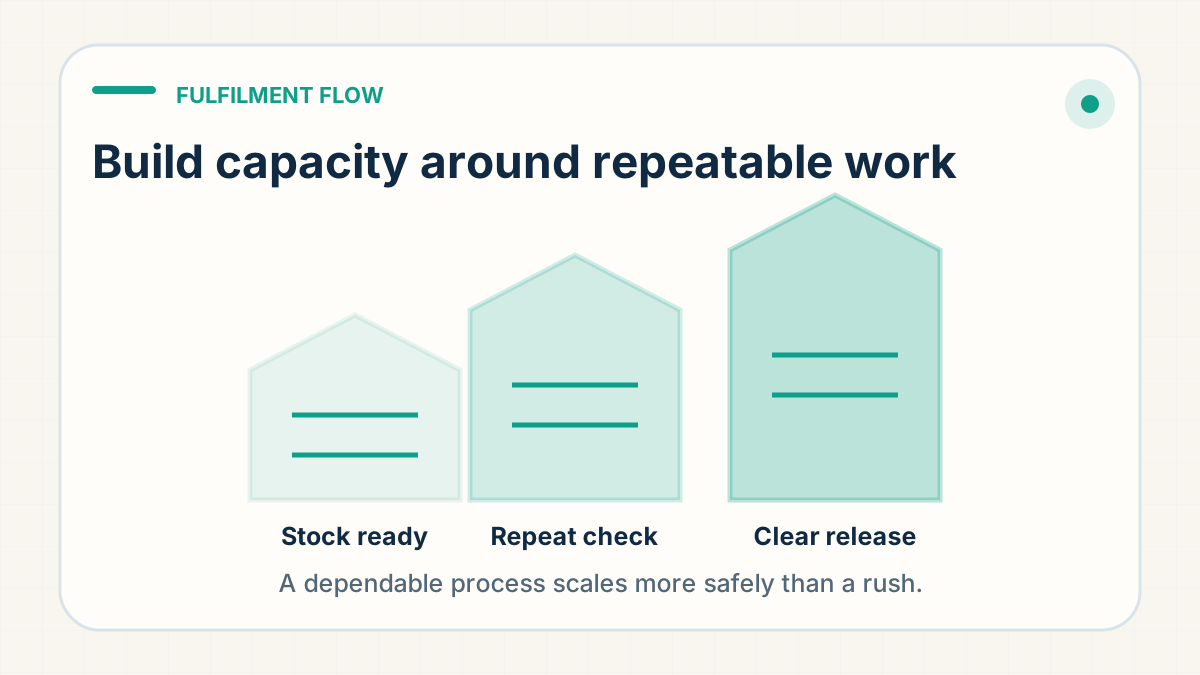
Reliable warehouse work is built from repeated steps: knowing what is ready, what needs checking, and what can move without creating uncertainty for the next team member. That includes giving similar product variants a clear physical location and a reliable stock name.
The aim is not to make every day look busy. It is to make the path from stock to dispatch understandable whether the work is a small apparel test, an accessories restock or a larger batch.
Improve the process that repeats, then add capacity around it.
Each batch had to earn the next warehouse step
The plan moved in batches. First establish repeatable receiving, variant names, inspection and stock deductions; then increase cover for the products that actually sell; only then compare an overseas location. Capacity became the result of a process that worked, not a substitute for one.