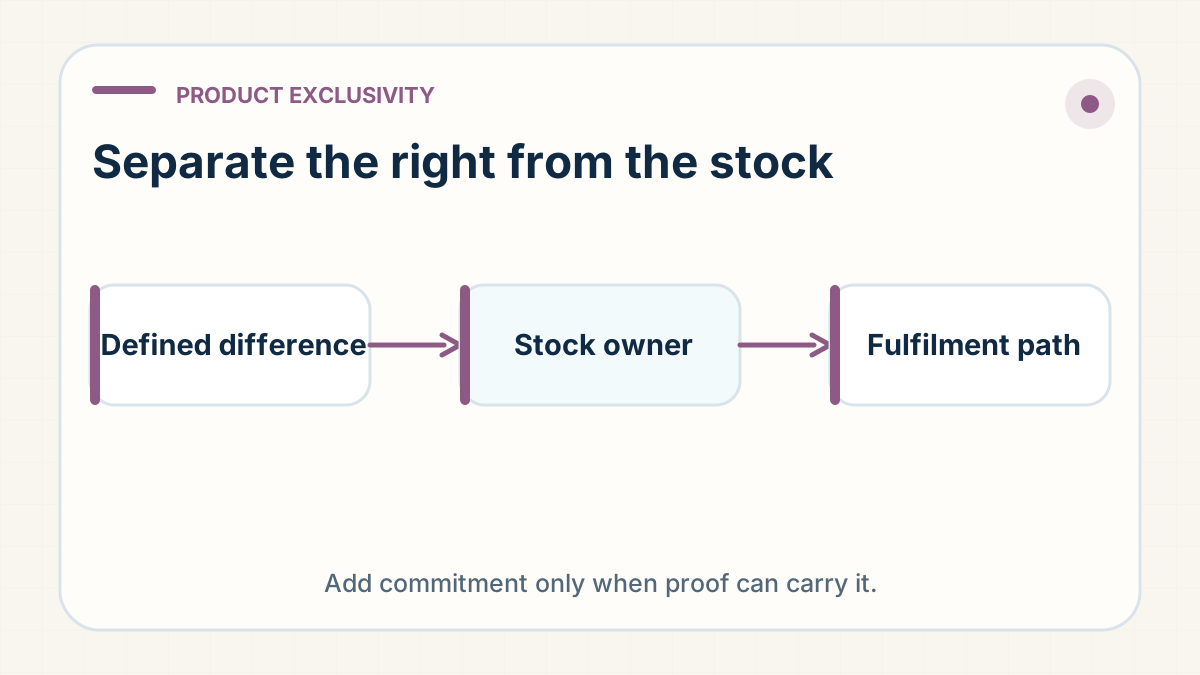
Buy a narrow difference before you buy a warehouse of stock
You can protect one product difference without buying every unit in the factory's batch. First, name what other sellers may not use. Then write down who buys and owns the stock, and who releases each order. These are three different decisions. Keep them separate before you pay for tools, packaging, material or finished goods.
Start narrow. Pick one visible or useful difference customers care about. Name the market and the term. Approve a small first lot. Write the exit for files, tools and stock. "Exclusive" on its own says almost nothing. If the supplier cannot describe the boundary, you do not yet have a term you can use.
RyanFulfil's current product-exclusivity policy explains the basic scope questions. This guide adds the commercial structure: rights, stock and fulfilment are separate lines, and each line needs its own downside.
A large retailer's exclusive share does not tell you who held the stock
Temple & Webster's official results announcement for the year ended 30 June 2026 says exclusive products represented about 51 per cent of checkout revenue, up from 45 per cent in FY25.
That line combines private-label products with exclusive drop-ship products. The same announcement says its drop-ship range is complemented by private label sourced directly from suppliers.
The number is useful because it puts two different stock models under one commercial word. It does not establish how much stock was held by which party, and it is not a target for your store. Some exclusive products were private label; some were exclusive drop-ship. The public number does not split the 51 per cent between them.
For your store, the question is not "Can I be exclusive?" It is "Which part must I own to protect the difference customers buy?" Sometimes that is a drawing, mould, finish, bundle or channel right. Sometimes the only workable protection is buying the whole batch. You should discover which before the word becomes a deposit.
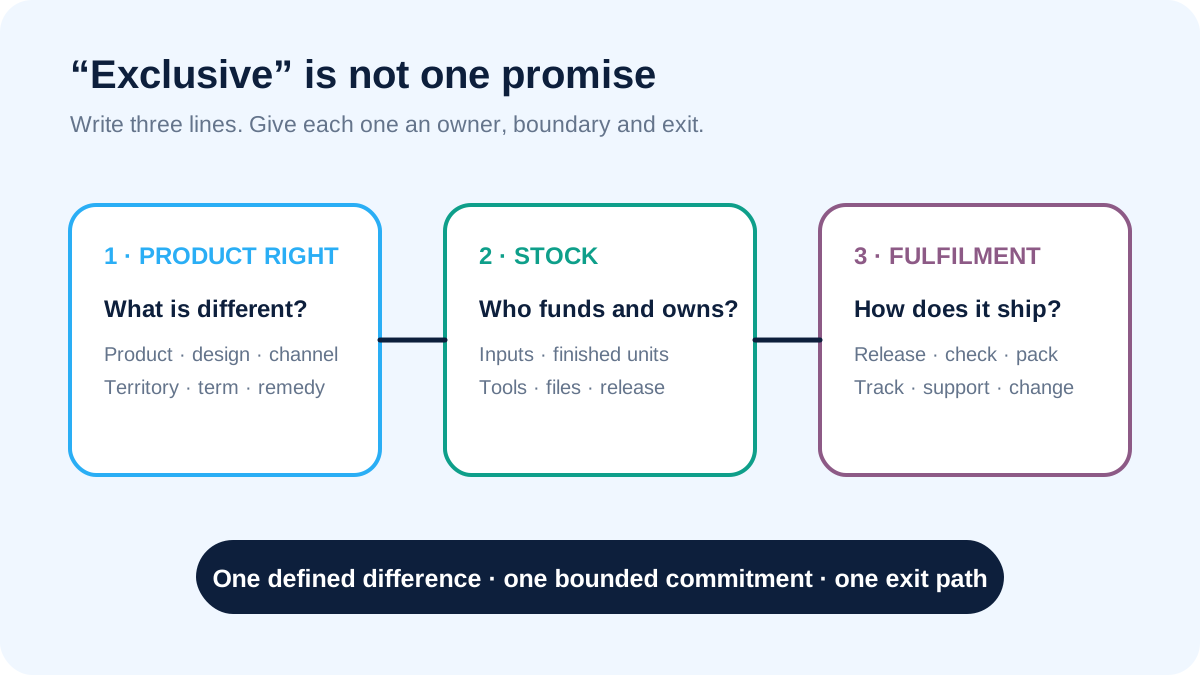
Line one: define the product difference and the right
Start with the exact product version. Attach the approved drawing, bill of materials, sample record, colour standard, packaging art, bundle list or functional requirement that makes it different. A vague promise not to sell "the same product" is hard to inspect when the supplier can change one component or photograph and call the result different.
- Subject: exact product, version, design, mould, colour, packaging, bundle, content asset or supplier relationship covered.
- Right: whether the restriction concerns manufacture, sale, supply, listing, advertising, use of your files or use of your customer information.
- Scope: named country or territory, sales channel, customer group and supplier or factory entities bound by it.
- Term: start date, end date, renewal rule, minimum performance if any, and what happens during a stock-out or quality hold.
- Evidence and remedy: what records you may inspect, how a suspected breach is raised, and what the written agreement says happens next.
Keep intellectual-property ownership separate again. A supplier's promise not to sell a version to another buyer does not prove that you own the design, mark, packaging or right to sell it in your market. Where those rights matter, use qualified legal advice for the exact agreement and country.
Line two: state who buys, owns and may use the stock
Now map every form of inventory. Finished units are only one layer. A supplier may ask you to fund raw material, printed packaging, a mould, a jig, a setup run or reserved production time. Record the amount, owner, location, approved use, count evidence and release condition for each one.
Do not let payment stand in for ownership. The guide on who owns the stock behind your deposit explains why an invoice, supplier message and warehouse count must agree before paid goods become usable stock.
- Supplier-held input: the supplier owns and reuses normal material unless the written order reserves a named quantity or batch for you.
- Merchant-funded material: state whether unused material belongs to you, can be used for another customer, can be refunded, or must be collected by a date.
- Finished stock: state who owns each completed unit, where it is stored, whether it can satisfy another buyer's order, and what evidence proves the count.
- Tooling and files: state who owns the physical tool and the production files, who may use them, and how you receive them when the relationship ends.
If you agree to buy the full batch, call it a full-batch commitment. If the supplier agrees to make a small lot and keep normal inputs at its risk, call it that. If units are made only after paid orders, record the production lead time and what stops the supplier from using your protected difference elsewhere.
Line three: decide how orders are released and fulfilled
A stock-light arrangement still needs an operating path. Name the event that starts production or releases a unit, the order cut-off, the version identifier, checking rule, packing instruction, tracking return and owner of exceptions. A commercial right that cannot reach a customer-ready parcel is not yet an offer.
- Made after order: good for low stock exposure, but the customer promise must include repeatable production time and any material shortage.
- Small finished buffer in China: faster release, but the seller owns a defined amount and must decide when to reorder or stop.
- Supplier-held finished stock: only useful when your allocation, version and release right are evidenced; a general "in stock" message is not reservation.
- Destination stock: may shorten delivery, but adds bulk movement, local storage, returns and a larger exit problem.
Choose the operating model with the same discipline as dropship, China pre-stock and overseas warehouse stock. Exclusivity does not make one of those modes automatically correct.
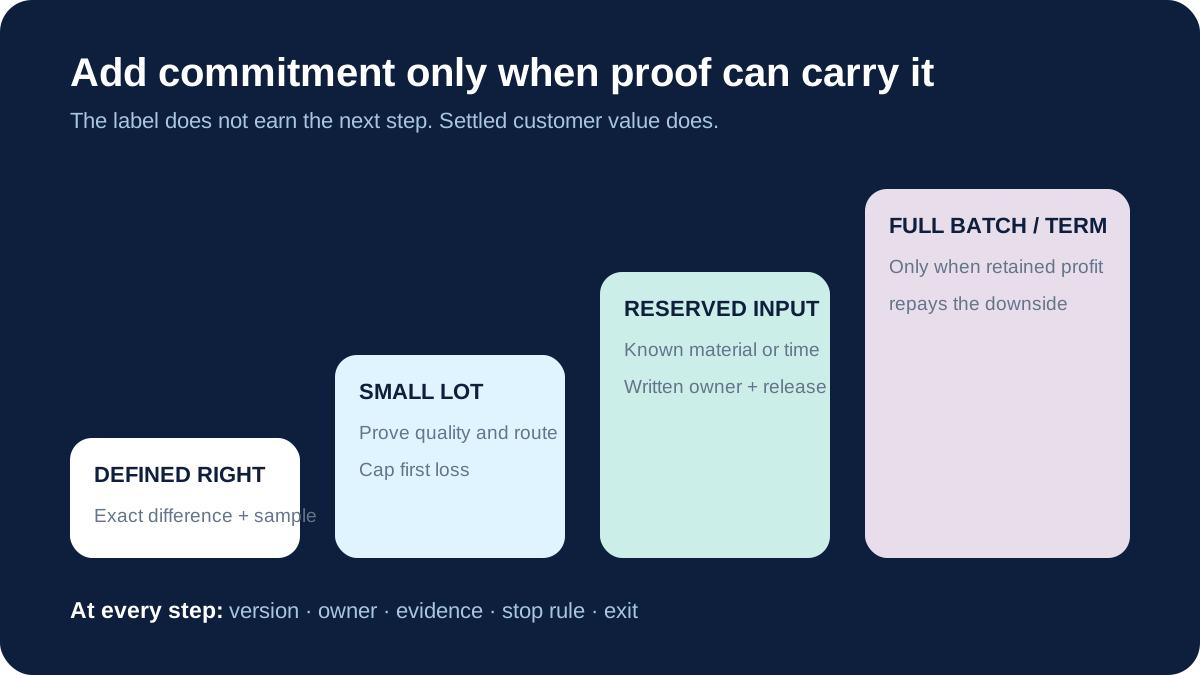
Make the protected difference repay its setup
Write the extra cost of the exclusive version before negotiating the minimum. Include design work, samples, tooling, printing plates, setup waste, inspections, unique packaging and any stock or material you cannot return. Then estimate the extra profit after variable order costs that the difference retains on each settled unit.
An illustration with made-up figures: the protected version costs 1,200 dollars to set up and keeps 3 dollars more profit after variable costs on each unit than the standard version. It needs 400 retained units to repay setup: 1,200 divided by 3. If 80 units later need discounting or disposal and lose 5 dollars each, the recovery target rises to about 534 good units: 1,600 dollars of total setup and loss divided by 3.
Those numbers are not a target. Your gain may come from better conversion, a higher price, fewer refunds, stronger repeat or lower acquisition cost, and each needs its own evidence. If the difference produces no measurable gain customers keep paying for, the word exclusive has not earned the commitment.
Use profit after settled first-order costs rather than gross margin alone. Returns, reships and support can erase the premium that looked obvious at checkout.
A staged deal gives both sides something real
A supplier is unlikely to reserve a valuable difference forever without volume, payment or a clear route to it. A seller should not promise a large batch before the product proves itself. A staged structure makes the exchange visible.
- Stage one — definition: approve the exact product difference, ownership of files and tools, permitted use, market, channel and term.
- Stage two — proof: buy samples or a small pilot lot, then verify the function, finish, packing, route and customer claim.
- Stage three — narrow protection: apply the restriction to a named market or channel for a short term, with a clear performance review.
- Stage four — earned commitment: add reserved material, larger stock or a longer term only after retained profit and repeat production support it.
- Exit — release: state what happens to open orders, stock, inputs, tooling, files, packaging and listings when the term ends.
The supplier gets an honest path to volume. You get a limit on the cash and stock exposed before proof. Neither side has to pretend a one-message promise can carry a long commercial relationship.
Stop when the boundary cannot survive one change
Before paying, change one assumption at a time. Ask what happens if the product misses the sample, the supplier replaces a component, the factory changes, your main country slows, a channel suspends the listing, or sales arrive at half the expected rate. The deal should still tell you who owns what and what you can do next.
- Stop if the protected difference is unclear or customers cannot see why it matters.
- Stop if the supplier can change a critical component without new approval.
- Stop if you cannot establish your right to use the design, mark, content or claim in the target market.
- Stop if the first stock and setup loss exceeds the downside you wrote before negotiation.
- Stop if the exit depends on the same supplier voluntarily giving you files, tools or stock that the agreement never says you control.
- Stop if quality, route or support becomes harder and no extra customer value pays for it.
Put the three lines on one sheet
Download the blank exclusive-product decision worksheet. It keeps the protected difference, scope, stock and material ownership, fulfilment mode, setup recovery, stop rule and exit evidence together. A filled sheet is a negotiation record, not a legal agreement.
Review it at every version change and renewal. An agreement can stay signed while the actual product, factory, channel or fulfilment mode drifts outside the thing it described.
Separate the right from the stock
RyanFulfil can help turn a product idea into an exact sourcing brief, coordinate samples, record the approved version, ask the supplier to state material and batch commitments, quote small-lot and stock modes, check agreed visible points, hold or fulfil stock where separately agreed, and return order, packing and exception evidence.
RyanFulfil does not guarantee exclusivity, decide intellectual-property ownership, bind a factory it does not control, or give legal advice. Supplier and factory identities and the commercial relationships behind them remain with RyanFulfil. Any protected scope, stock ownership, file ownership or remedy that matters must be stated in the relevant written agreement.
If you have a specific difference in mind, send the exact product, the change, the country, the sales channel and the maximum first commitment. We can find out which part is a sample, a setup cost, a stock decision or a term that needs separate agreement.
The practical takeaway
Do not buy "exclusive". Buy a defined difference, a bounded right and an operating path. Keep stock ownership and fulfilment on their own lines. Start with the smallest arrangement that proves customers value the difference, then add commitment only when settled profit repays it.
Here is how you would prove this guide wrong. If a full-batch deal with vague rights produces a more defensible difference, lower recoverable downside and better settled profit than the narrow staged version, keep the full batch. But compare the rights, stock, fulfilment and exit—not the label on the supplier message.
Where the figures come from
Sources as of 5 September 2026. Temple & Webster's official FY26 announcement says exclusive products, including private label and exclusive drop-ship, represented about 51 per cent of checkout revenue, up from 45 per cent in FY25. Its footnote defines checkout revenue as excluding accounting adjustments for deferred revenue and refund provision. The announcement does not split the 51 per cent between private label and exclusive drop-ship or identify who held stock behind the combined share.
Use the three-line structure, staged deal, stop rules and worksheet to document your own agreement. The 1,200-dollar setup, 3-dollar retained gain, 400-unit recovery and 534-unit revised recovery are illustrative. No supplier term, legal right, customer result or product suitability is promised. Recheck the agreement and operating sheet whenever the product, supplier, factory, market, channel, term or stock mode changes.
Need a product checked before you spend on ads?
Send us the product link and destination on WhatsApp (+86 178 4666 9989). We'll check sourcing, packing and shipping with you before you commit.
Get Sourcing Quote on WhatsApp →