Field note
A private-label buyer asked about reports of a new US product-documentation requirement and whether affected products could still ship. Logistics partners were contacted to check the available route information. A carrier's acceptance policy does not establish legal product compliance; check the exact product and effective requirement with the relevant authority or qualified adviser before relying on a shipment decision.
We spent a good chunk of the day chasing this down properly instead of just reacting — checking with our logistics partners directly, because as far as we could tell, none of the major shippers had actually made this mandatory yet. Turned out to be real but overstated: certification helps if goods get spot-checked at customs, but it wasn't the shutdown-everything moment it first sounded like.
Still, better to run it down properly than guess, especially when a client's whole product line could be at stake.
Meanwhile, a bigger apparel brand we work with hit us with a genuinely interesting operational problem: they run inventory across multiple warehouses — ours in Asia, plus their own in the US and UK — and when an order has items split across locations, they needed a way to make sure nobody double-ships the same item. Assign each order line to one warehouse before either location releases it.
Also spent a chunk of the afternoon reassuring a client whose tracking numbers weren't playing nicely with her sales platform's shipping deadlines — a small logistics quirk that turns into a big deal when you're staring down a 3-day compliance clock on your storefront.
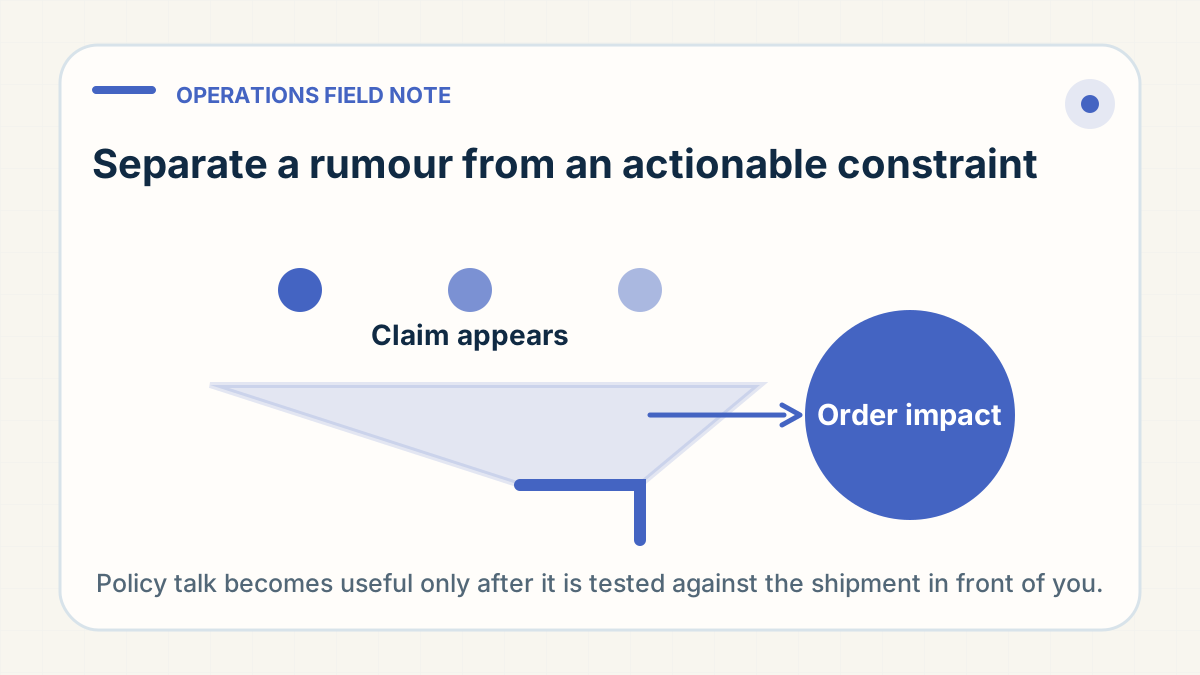
Check a reported customs change against the exact product, destination and effective date
Check a reported customs change against the exact product, destination and effective date. Confirm route availability separately. Where stock sits in more than one warehouse, agree which location owns each order line before picking starts.