Restock from the orders your customers paid for, not the parcels you sent
Restock from the orders your customers placed and paid for in the period. Not from the parcels you sent, not from the parcels that arrived, and not from the cash that landed. Those are the same orders on different dates, and each date answers a different question. Parcels sent tell you whether your operation is keeping up. Parcels delivered and kept tell you whether the product and the route are good. Cash tells you whether you can afford the next lot. Only the paid orders tell you what people want this week.
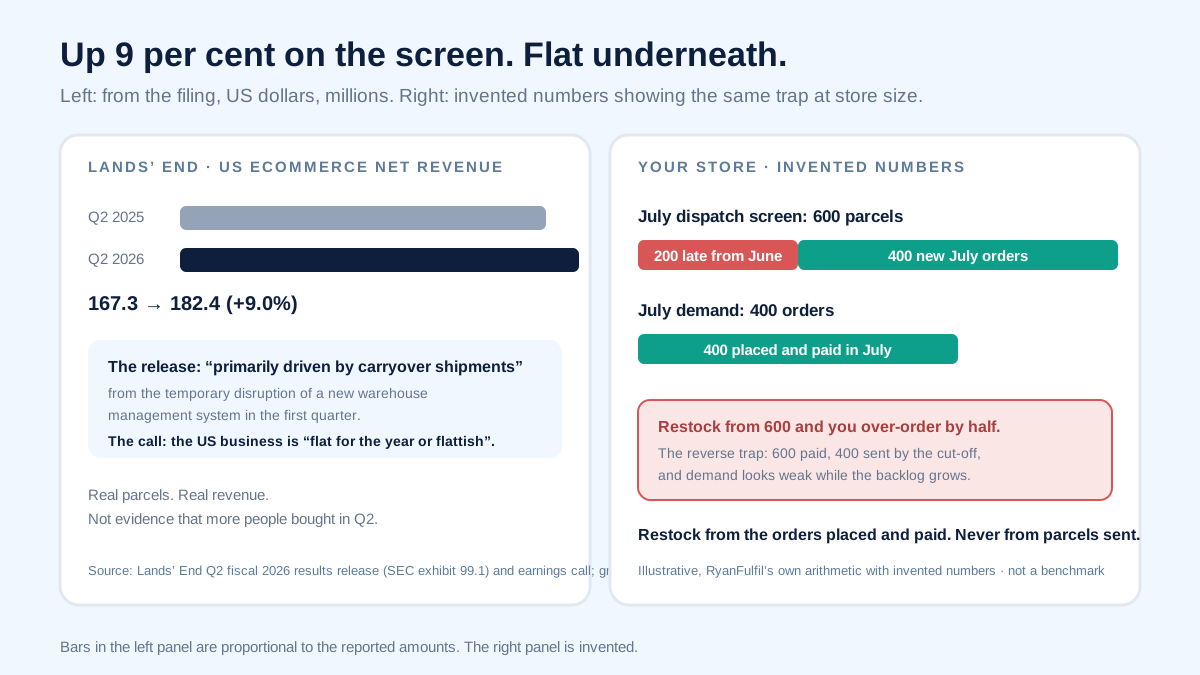
Lands' End just showed why at company scale. It reported US ecommerce revenue up 9 per cent for the quarter and, when an analyst asked what the underlying growth was, its finance chief said the business was flat. The 9 per cent was largely parcels from first-quarter orders leaving the warehouse late. A store that restocks from its dispatch screen makes the same mistake with its own money.
This follows on from low inventory is not a dropshipping moat, which asks you to give every order one id and join what happens to it, and from forecast, paid orders and stock, which separates what you expect from what was paid for. This guide is about the dates on one order, and which of them each decision should read.
What Lands' End's numbers do and don't tell you
In its second-quarter results of 3 September 2026, Lands' End reported US ecommerce net revenue of 182.4 million dollars, up from 167.3 million, an increase of 9.0 per cent. The same sentence says the increase was primarily driven by carryover shipments from the temporary disruption of a new warehouse management system in the first quarter. On the earnings call, an analyst asked what the underlying ecommerce growth would have been without that catch-up. The finance chief answered that on a year-to-date basis, with the carryover completed, the US business was flat for the year, or flattish.
Every one of those parcels was real, and the revenue is real under the company's accounting. What the 9 per cent is not is evidence that more people decided to buy in the second quarter. The orders were placed earlier; the parcels went out later; the quarter that shipped them got the revenue. Read the dispatch number as demand and you would restock for a surge that had already happened.
Here is the same thing at your size, with invented numbers. Five hundred customers order in late June. A supplier problem delays 200 of those parcels into July, where they go out alongside 400 new July orders. Your dispatch screen shows 600 parcels in July. Demand in July was 400 orders. Restock from the 600 and you have over-ordered by half. The reverse trap is just as common: 600 paid orders in a week, 400 sent before the cut-off, and a shipment report that makes demand look weak precisely when your backlog is growing.
One order, four dates
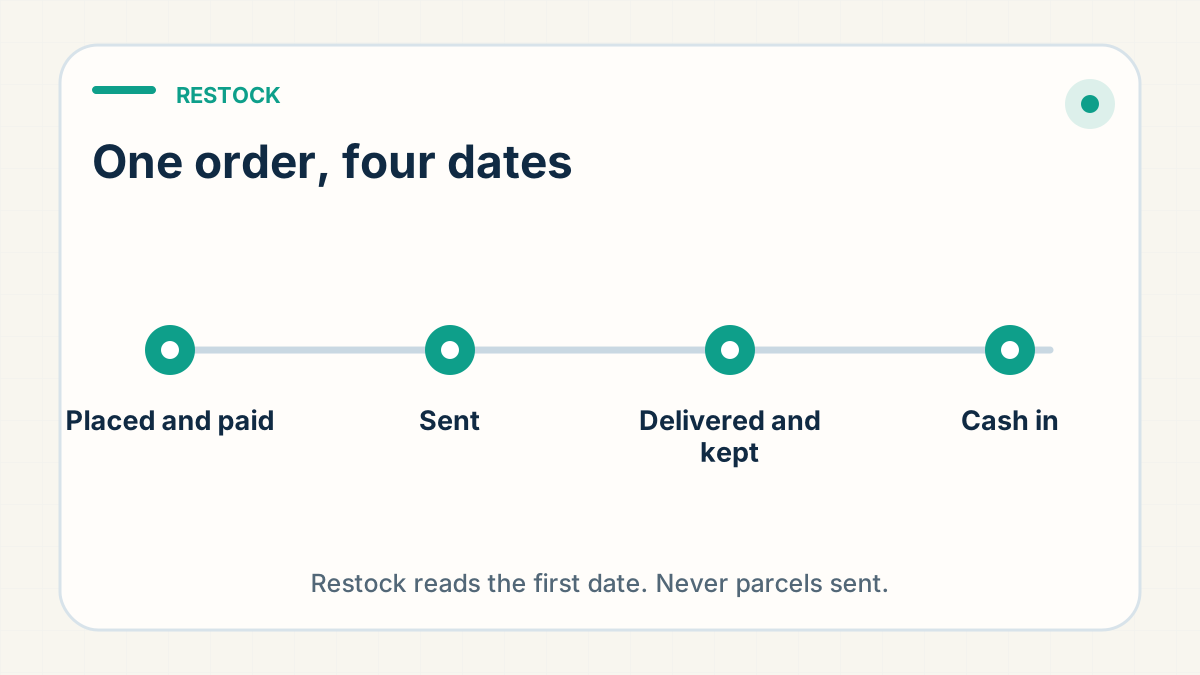
Every order you take passes through the same four moments, and each one is a different date on a different screen.
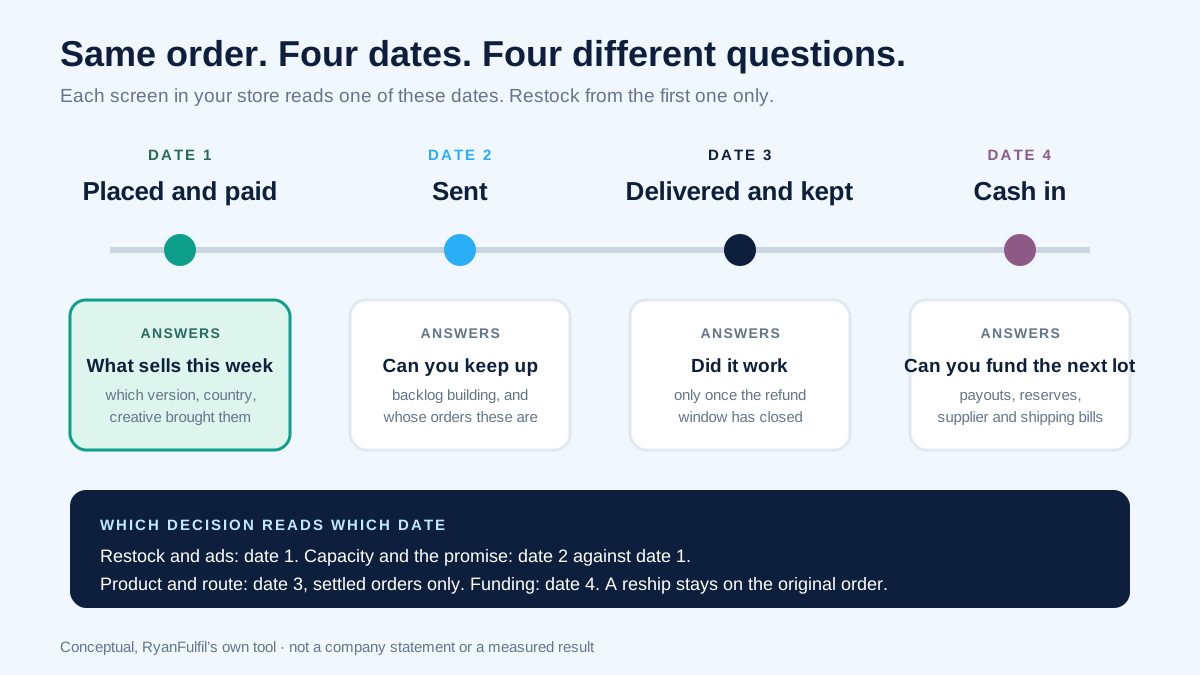
- Placed and paid. The customer decided. This date answers: what sells, which version, which country, which creative brought them. It is the only date that measures demand. Strip out tests, fraud, cancellations, duplicates and replacements first.
- Sent. Supplier told, stock received, checked, packed, dispatched, first carrier scan. This date answers: can you keep the promise, is a backlog building, and how much of this week's work belongs to last month's buyers. It measures your operation, not demand.
- Delivered and kept. Arrived, or failed; complained, refunded, reshipped, charged back; or kept, once the refund window has passed. This date answers: did the customer get and keep the approved version, and did the product or the route eat the margin. An order sent last week has not answered this yet.
- Cash. Payout from the processor, reserve held back, supplier paid, shipping paid, refunds out. This date answers: can you fund the next lot. A product can make money after delivery and still leave you unable to pay for stock while it grows.
Two other guides on this site already use "four clocks", and these are not those. The learning-loop guide's clocks measure how fast you learn; the fading-product guide's clocks separate a tired product from tired creative, a changed audience and a slow operation. These are four dates on one order, and they are the join those guides ask you to keep.
Three more ways one growth number can mislead
Lands' End is the cleanest case, but the same quarter offered three others, each a different way for a number to say more than it means.
A channel can grow because its definition changed. Victoria's Secret's second-quarter results show International sales of 273.4 million dollars against 227.8 million a year earlier, up 20 per cent. The release's footnote says that from the third quarter of 2025, direct sales in the European Union are reported in the International channel. On the call, management said that adjusting for that shift of European digital sales from Direct to International, second-quarter International sales grew 10 per cent. Neither number is wrong. The basis moved. You do the same thing when you move European orders to a new storefront, rename a campaign or change agencies, and then compare this month with last on two different definitions.
Digital can rise while the whole barely moves. PVH's second-quarter results show owned digital revenue of 194.1 million dollars against 186.6 million, up 4.0 per cent, while owned stores went from 868.0 million to 862.0 million, down 0.7 per cent, and the two together went from 1,054.6 million to 1,056.1 million, up 0.1 per cent. Digital's share went up. Direct demand did not. Channel mix and total demand are two questions.
The calendar can make most of the change. Campbell's fourth-quarter results report net sales down 8 per cent, including an estimated 7-point impact from an extra week in the prior-year period, with organic net sales down 1 per cent. You will not have a 53-week year, but you have launch days, stockouts, a checkout outage, an ad pause and a warehouse move. Compare two months without marking those and you get a precise number that is wrong.
Which date drives which decision
- Restocking and ad budgets read the paid orders in the period, after cancellations, fraud, duplicates and replacements are taken out. Never parcels sent.
- Capacity and the delivery promise read parcels sent against paid orders: how many of this period's orders have gone, and how many of the parcels going out belong to earlier periods.
- Product and route quality read delivered-and-kept orders, and only the ones old enough for the refund window to have closed. A batch with no refunds may simply be too young.
- Funding reads cash: payouts, reserves, supplier terms, shipping bills and refunds out, matched to the orders that caused them.
Two rules keep the four dates honest. A reship must never become a second sale: it is a cost on the original order, so join it there. And a changed supplier version must never hide under the old SKU: give it a version field, or a steady refund rate will hide a batch that has started to fail.
Four numbers worth adding to your dashboard
- Backlog share of this week's parcels: parcels sent this week for orders placed before this week, divided by all parcels sent this week. This is how much of your activity is last month's demand.
- This week's completion: this week's paid orders already sent, divided by this week's paid orders. This is whether your newest customers are being served.
- Settled share: orders old enough to have passed your refund window, divided by paid orders in the batch. There is no universal number of days; it depends on the route, the country, your returns policy and the decision you are making.
- Profit after costs per paid order, once settled: revenue, less product, checking and packing, shipping, payment fees, refunds, reships, chargebacks and support, put back against the week the order was placed. Do not scale from a gross return on ad spend while the losses belong to earlier weeks.
A 30-minute check on one product
- Take one hero product and one recent week of paid orders.
- Remove staff tests, fraud, cancellations, duplicates, replacements and reships.
- Tag each order with the approved version, the supplier batch, the country, the route, the offer and where the customer came from.
- Count how many parcels sent that week came from earlier weeks' orders.
- Count how many of that week's orders are still waiting to go.
- Join delivery, failed delivery, refund, reship and chargeback back to each order.
- Mark which orders are old enough to judge. Leave the young ones blank rather than calling them successes.
- Work out paid orders per week and profit after costs per settled order. Then compare the restock you would make from paid orders with the one you would make from parcels sent. A big gap is the signal to pause before you commit cash.
Download the blank restock-date worksheet. One row is one order. It carries the four dates, the version and batch, the outcome, the settled flag and the week the order belongs to, so a reship or a late parcel can never be counted as new demand.
What to do at your stage
- Testing with direct parcels: scale ads from paid orders per visitor, then watch early cancellations and product and route problems. Parcels sent is not your demand number.
- Early scale: watch paid orders per week alongside the spread between paid and sent. A growing backlog makes later weeks look strong and this week's customers unhappy.
- Holding stock in China: forecast from paid orders by version and country, then add the supplier's lead time, what is reserved for you, whether the version is stable, and the cash the next lot needs.
- Moving stock overseas: you need evidence that faster local delivery lifts conversion or cuts losses by more than inbound freight, storage and dead stock cost. A dispatch spike is not that evidence.
- Custom packaging or private label: these lock in material, printing and stock. A backlog clearing is never a reason to sign an MOQ.
When demand is steady, the reorder-point calculator turns your restock time, your stock and a buffer into a trigger. Feed it paid orders per week. Feed it a dispatch spike and it will tell you to buy a backlog.
What to watch and what not to assume
- Watch: Lands' End's next quarter, to see whether US ecommerce gives back the carryover; whether Victoria's Secret restates the prior year on its new channel basis; and, in your store, your backlog share of parcels sent, week by week.
- Ignore: "ecommerce is up 9 per cent" read as a demand signal for anything; "shipments are up so demand is up"; and "digital share rose so digital is growing".
- Choose a settled-order window for your own product. The cited company reports do not provide paid-order counts or units, and no universal settled window applies. The carryover effect concerns how dashboards count orders; it is not evidence of demand for your product.
Where RyanFulfil fits
The dates between paid and delivered live on the China side, and that is where we can help you keep the join. For every order we handle we can give you the approved version, the supplier batch, the check date, the dispatch date, the first carrier scan and any exception, against your order id, so that a late parcel, a reship or a changed batch never turns into new demand on your screen.
We do not run your ads, decide your restock quantity or see your payouts. Those are yours. What we can do is make sure the two middle dates on every order are real, recorded and yours to read.
If your dispatch report and your paid orders are telling you different stories, send us the product, the country and a week of orders and we will show you the dates we hold for each one.
Restock from the orders, not the parcels
A busy warehouse does not mean demand rose, and a quiet one does not mean it fell. A delivered order is not yet a kept one, and a profit on paper is not yet cash for stock. Restock from paid orders, run your operation from parcels sent, judge the product from settled orders, and fund the next lot from cash. Four dates, four questions, one order.
Here is how you would prove us wrong. If a store that restocks from parcels sent ends the season with less dead stock and more profit, once refunds have settled, than one that restocks from paid orders, this guide is wrong. Run the 30-minute check on one product and see how far apart the two restocks are.
Where the figures come from
Sources as of 4 September 2026. Company figures are from the documents linked in the text: Lands' End's second-quarter fiscal 2026 results release of 3 September 2026 as filed with the SEC, and its earnings call on a third-party transcript host; Victoria's Secret & Co.' s second-quarter 2026 results release as filed with the SEC and its earnings call on a third-party transcript host; PVH Corp.'
s 2026 second-quarter results release; and The Campbell's Company's fourth-quarter fiscal 2026 results release. The 9.0, 20, 4.0, 0.7 and 0.1 per cent changes are calculated from the companies' reported amounts. Call quotations use third-party text transcripts, which may differ from the audio. The four companies report on different fiscal calendars and channel definitions, and none of their figures is a benchmark for a store.
Those disclosures show the trap. Use the four dates, four dashboard numbers, 30-minute check and worksheet to check your own backlog. The 500-order example is illustrative. No product is recommended, and this is not investment research or an opinion on any share. Re-read it when Lands' End reports its third quarter, or when your backlog share moves.
Need a product checked before you spend on ads?
Send us the product link and destination on WhatsApp (+86 178 4666 9989). We'll check sourcing, packing and shipping with you before you commit.
Get Sourcing Quote on WhatsApp →