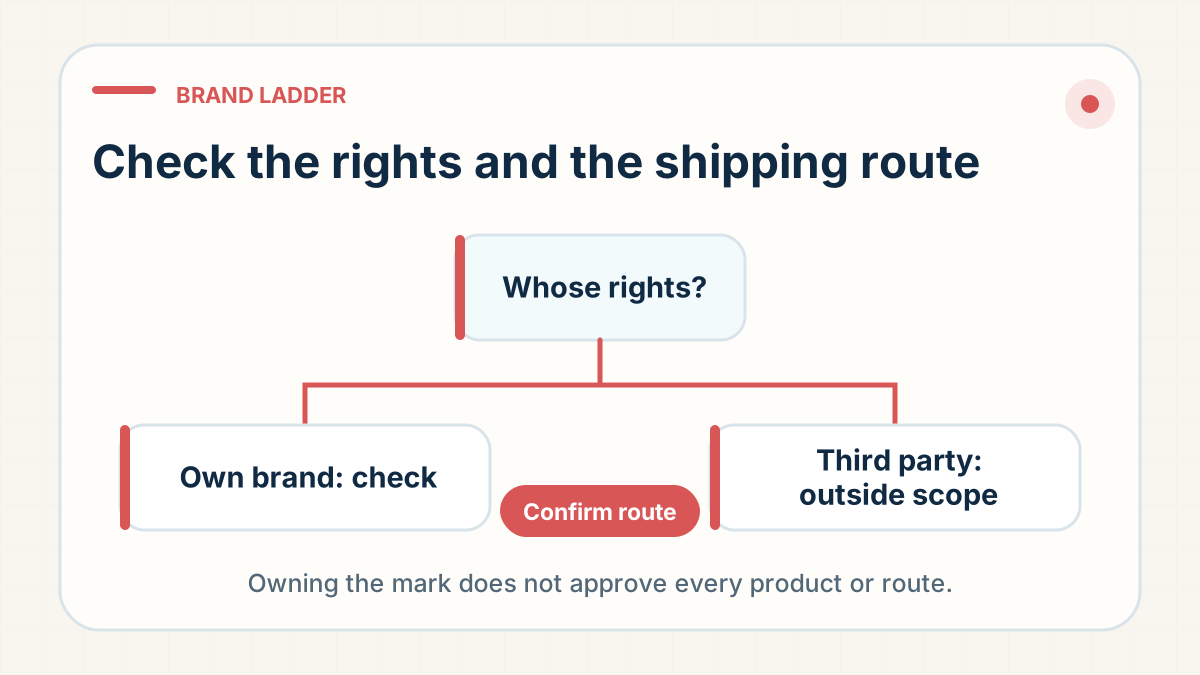
Whose mark is it? One question sorts every request
The desk receives the same family of questions every week, dressed differently: can you put my logo on this, can you make my brand in China, can you ship this jersey, this car accessory, this cream, this ring. They read as sourcing questions. They are one eligibility question, with a single sorting key: whose mark is on the product, and can the person asking show the paperwork for it.
Sorted that way, the answers stop being case by case. Your own logo on an unbranded item is a yes with conditions. Your own registered brand is a yes with documents. Somebody else's registered mark is a no, and the no does not move with quantity, destination or who books the freight. A lookalike sits closer to the no than most sellers expect. Copyrighted artwork on personalised goods is a warning the seller has to own.
Your own logo on an unbranded product
This is the most common yes and the one sellers under-ask. A plain garment, case, box or jar with your logo added is ordinary private-label work. Two things decide whether it is possible on a given product: the printing method the factory can offer on that material, and the minimum the factory attaches to it. Raised or moulded logo techniques are often unavailable on a test run, and the factory will offer a plain print instead. The minimum ranges from none on a stitched label to several hundred on a printed product or box, and only the factory can say which applies.
The honest answer at quote time is therefore yes, once the artwork, the position and the quantity are known. Colour count and logo size change the price, which is why a price per number of colours cannot be given in the abstract. Send the file with the first request, and decide which rung of the packaging ladder you are buying before the factory is asked.
Your own registered brand, made in China
A brand owner who manufactures in China and wants the agent to receive, store and ship the finished goods is also a yes. The goods carry a registered mark, so the carrier and customs treat them as branded; what makes them shippable is that the mark belongs to the shipper. Keep the registration certificate and, where the factory is not the registrant, a short authorisation letter ready. The logistics side will ask for them before confirming a route, because some lines treat niche branded footwear as high-risk until the paperwork is in hand.
This is also where the screen can misfire. A brand owner who is told that the goods would be safer without the logo has just been treated as a trademark risk, and the conversation cools fast. The team's rule for itself is to ask first and screen second: whose mark is it, and do you have the paperwork. If the answer is mine, and yes, the conversation moves straight to the private-label approval checklist and the freight quote.
A third party's mark, whoever ships it
A product carrying someone else's registered mark is the one request the desk cannot take. That covers a sports club's crest on a jersey, a car maker's badge on a car accessory, a luxury house's signature print on a shoe, a sportswear label's word mark on a garment, a trademarked material or stone name in a jewellery listing, a licensed character on a case, and sponsor logos across a replica racing jacket. The reason is practical: no carrier channel will take it, and when it goes anyway it is detained, fined or destroyed at the border. An agent that does ship it is unlikely to refund when the parcel is held, while the store, the payment gateway and the ad account pick up the flag.
Sellers try three ways around this and each gets the same answer. Quantity does not help; the no applies to a sample and to a container. Shipping it yourself does not help either: the policy is no branded or counterfeit sourcing, not merely no branded shipping, so a request to just find the factory while your own forwarder moves the goods is declined too. A reseller or partnership route is a question for the brand owner, not for the agent. The short version sits in the FAQ answer on counterfeit and branded goods, and this guide agrees with it.
The lookalike problem is the design, not the logo
Removing the logo is the usual next suggestion, and sometimes it works: a plain cream in a plain jar, a blank hat, a blank garment of the same cut are routinely quoted. It stops working when the protected element is the design itself. A distinctive silhouette, a signature print, a recognisable character, a packaging look that copies a known brand, a model car shaped like a specific racing prototype: these carry the same seizure risk with the name filed off, and on some lines they force a slow special channel with no fast option.
So when the team says it can find a similar item, similar means a generic product in the same category, not a de-badged copy. If the reference is a boutique's own exclusive designs, similar is the realistic outcome and it is said on day one rather than after days of sourcing. The longer reasoning is in the guide to the hidden IP risk in inspired-by products.
Artwork, album covers and faces on personalised goods
Personalised goods move the question from the product to the file. A printed disc, a photo magnet or a custom case is blank until the seller supplies the artwork, and the agent does not clear the rights behind each file. What the team does is warn, in writing, when an instruction carries obvious exposure: official album art, a celebrity portrait, a track ripped from a streaming service. The warning says that the artwork is copyrighted or carries portrait-right risk, that customs can detain the goods, and that the seller bears the rights. If the seller replies noted, proceed, that decision is recorded with the order.
Two habits follow. Use royalty-free or customer-owned images wherever the customer will accept them. And keep the files on your side of the handover: the seller supplies the finished artwork and audio, so the responsibility for what is printed stays with the person who holds the rights to it.
Why the answer should arrive within the hour
The screen does not need a factory. A club crest, a car maker's badge, a luxury print or a brand-style product name is visible in the listing title or the first photo, so the eligibility answer is available at intake, before anyone is asked for a price or a certificate. When the check runs in the right order, a no takes minutes. When it runs in the wrong order, a prospect waits a day while the team chases a supplier for a safety certificate on a product that was never going to ship, and then leaves the group.
A fast no is not a brush-off when it arrives with the alternative attached: the unbranded version of the same item, a private-label route, or a note that the design itself is the problem so a de-badged copy will not help. Consistency matters as much as speed; a seller who has seen a public reply to a branded request will assume the rule is softer than it is. The field note on why saying no early is part of the service shows the same pattern over a single day.
What to send so the screen is fast
- The listing link rather than a screenshot, so the title, brand field and every photo can be checked.
- Whose mark is on the product: yours, the factory's or a third party's. If yours, say whether it is registered and in which markets.
- For your own brand: the registration certificate and, where the factory is not the registrant, the authorisation letter.
- For your own logo on a blank product: the artwork file, colour count, size, position and the quantity for the first run.
- For personalised goods: who supplies the artwork and audio, and confirmation that you hold or have licensed the rights.
- Whether a similar generic item is acceptable if the exact reference cannot be shipped.
Ship only what you have the right to sell
Ask whose mark it is before you ask the price. Your logo on a blank product and your registered brand made in China are both routine once the artwork, the minimum or the paperwork is in hand. Someone else's mark is not shippable through this desk at any quantity or by any forwarder, and a copy with the logo removed is only safe when the design itself is generic. On personalised goods the rights travel with the file, and the seller holds them. For the team the rule is the mirror image: screen at intake from what the listing already shows, ask the ownership question before suggesting a logo-free version, and put the no and the alternative in the same message within the hour.
Evidence boundary: this guide is a privacy-safe composite drawn from reviewed operations conversations in August 2026 and from the desk's standing answers. It describes what this agent will and will not ship, not the rules of any market. Trademark, copyright and customs rules differ by market, and a brand owner should confirm which documents a destination requires before routing stock.
Need a product checked before you spend on ads?
Send us the product link and destination on WhatsApp (+86 178 4666 9989). We will help you assess sourcing, packing and shipping before you commit.
Get Sourcing Quote on WhatsApp →