Storage looks free until the window closes
Most fulfilment warehouses receive pre-stocked inventory without an upfront storage charge, and many give an explicit free window — a month is common. The fee begins when stock outstays it. The trap is timing: the decision that causes the fee is the purchase, made in an optimistic week, while the invoice arrives months later, after sales slowed. By the time storage appears as a line item, the options have already narrowed.
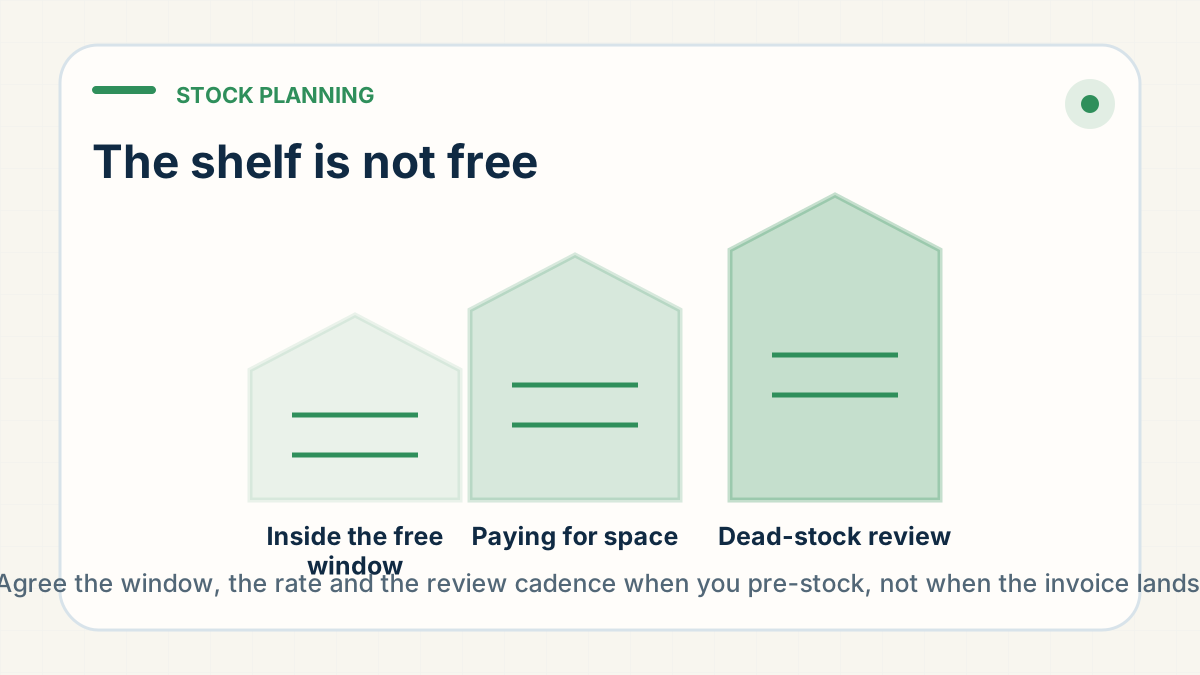
Match the buy to the free window
Not every warehouse runs a clock. At RyanFulfil, storage is free for products with consistent orders fulfilled through us, and if inventory sits for a long time without active orders we discuss a practical storage plan with you before any charge is applied. Where a warehouse does give a free window, a useful default is to pre-stock what you expect to sell and ship inside it, and treat anything beyond that as a deliberate decision to pay for shelf space. That converts a vague forecast into a bounded commitment. If a supplier case pack forces you above the window, price the expected storage into the unit economics before ordering rather than discovering it afterwards.
Overseas warehouses are the expensive tier
Destination-country warehouses cut delivery times, but their storage pricing behaves differently: rates are higher, they move with the market, and they climb after the first month. Use a US warehouse once orders are consistent, and stock small test quantities first. A slow product sitting in a Guangzhou warehouse is a carrying cost; the same product idle in a US warehouse is a monthly bill that can outrun its margin.
Dead stock compounds quietly
Stock nobody is selling still occupies paid space. A recurring storage dispute follows this pattern: a seller pauses a store, the stock sits, and half a year of accumulated fees arrives as one unwelcome invoice. Nobody enjoys that conversation, and by then no answer feels fair. A monthly dead-stock review prevents it — for each idle SKU, decide to push it, discount it, return it to the supplier where terms allow, or dispose of it, and stop the meter.
Agree the terms before the stock arrives
- The free window: how long it runs, and whether it is measured from arrival or per batch.
- The rate after it: per unit, per carton or per volume, and how often it is reviewed.
- Notification: an alert when stock approaches the fee threshold, not an invoice months later.
- Exit: what happens to unsold stock if you pause or leave — sell-down period, return options and disposal cost.
Agree storage terms when stock arrives
Storage fees are not a trick; they are the price of holding inventory somewhere useful. The failure mode is not paying them — it is discovering them. Fix the window, the rate and the review cadence on the day you decide to pre-stock, and the fee stays a planned cost instead of a dispute.
Have a specific fulfilment question?
Send us the product, destination and order context on WhatsApp (+86 178 4666 9989), and we'll answer for that order instead of giving a generic estimate.
Ask Questions on WhatsApp →