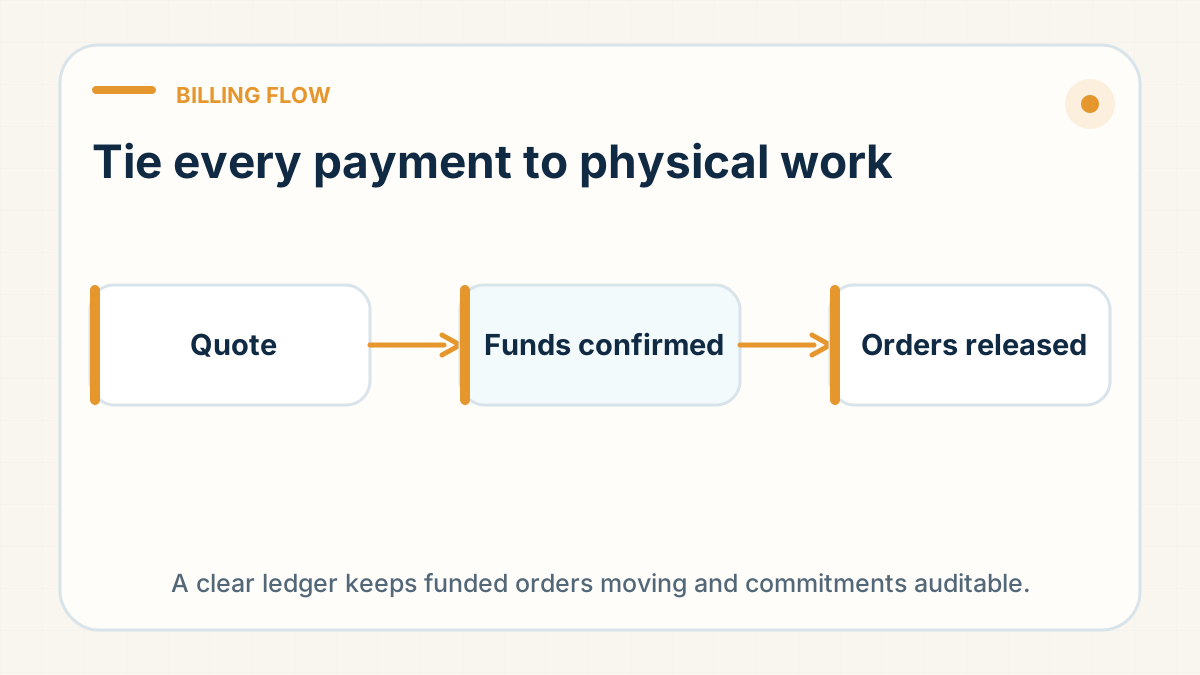
Billing should mirror the physical workflow
A fulfilment payment is not only a transfer. It authorises a defined commercial action: buying a sample, purchasing inventory, producing branded packaging, releasing an order batch or topping up an operating balance. Good billing makes that purpose visible so a seller knows what has been funded and the team knows what can move.
Understand the common payment structures
- Pay per order or batch: fund a specific set of orders after the quote is confirmed.
- Prepaid balance: maintain funds that are deducted as approved orders are processed.
- Stock deposit: commit funds to defined inventory, separate from later fulfilment and shipping charges.
- Branding or production deposit: fund setup or manufacturing subject to the approved specification and supplier terms.
RyanFulfil commonly uses Wise or bank transfer, with the exact currency, beneficiary details and timing confirmed on the current quote or invoice. Payment alternatives should be treated as available only when the team confirms them for that account; a method mentioned in an old conversation is not a permanent public promise.
Why a prepaid balance can reduce operational friction
When repeat volume is steady, a balance lets approved orders move without waiting for a separate transfer each time. It can reduce bank fees and missed dispatch windows, but it is not unlimited credit. The seller should be able to see the opening balance, deductions, top-ups, adjustments and closing balance for the period.
The operating examples included both arrangements. Some repeat accounts topped up ahead of order flow and used consolidated invoice batches. Others preferred larger, less frequent transfers because international bank fees made small payments inefficient. Newer sellers sometimes asked to pay only after dispatch, which would shift purchasing risk to the fulfilment team. The workable structure depends on order regularity and trust, but the funding point must be agreed before work begins.
Separate the money into clear buckets
Do not let one total hide different commitments. Show product cost, international shipping, packing or inserts, branding setup, inventory deposit, local warehousing and exceptional charges separately where practical. A stock deposit should identify the category, quantity or allocation it funds. A credit for a claim should identify which balance or invoice receives it.
Use a simple reconciliation
- Opening balance and period covered.
- Top-ups received, including currency and the net amount credited.
- Order or batch deductions tied to safe internal references.
- Credits, refunds, recharges and manual adjustments with a reason.
- Closing available balance and the trigger for the next top-up.
In high-volume chats, payment questions often sat beside live order, stock and replacement discussions. Keeping the financial action linked to the operational action prevents a paid order from remaining on hold and prevents an unfunded promise from being treated as ready to ship.
Choose a billing rhythm your cash flow can carry
Choose the billing rhythm that keeps approved work moving without making the ledger hard to audit. Confirm the accepted method on the current invoice, state what each payment funds, reconcile balances regularly and keep inventory deposits distinct from day-to-day fulfilment charges.
Demand check · public sourcing communities
Payment terms are being negotiated in public
Twelve of 355 distinct supplier requests tallied from public sourcing communities named a payment rail as a hard condition of working together — PayPal goods-and-services, Stripe, Alibaba Trade Assurance or Payoneer — and five went further, asking the supplier to hold stock in advance, ship before payment cleared or stay flexible when the buyer’s cash ran short.
Payment method and payment timing are separate buying criteria. Confirm the accepted method, when funds must clear, what the payment authorises and the applicable dispute or refund terms before ordering. Payment protections vary by method and transaction. Keep any agreed billing cycle or exception in the written payment terms.
How this was counted: between 7 July and 14 August 2026 we tallied 355 distinct supplier-request posts from public dropshipping sourcing communities (388 collected; reposts and non-requests excluded). Figures are keyword tallies of what posters wrote, so paraphrased requests are undercounted rather than inflated. No post is quoted, linked or identified, and no contact details are reproduced. The same requests reach RyanFulfil’s own enquiry inbox daily; nothing from private client conversations is published. The cross-tabulated patterns behind these counts are in the full demand analysis.
Operating rule: Reconcile each balance movement to an agreed scope, order batch or charge type before topping up again. Keep product, handling, packing and shipping visible enough to explain the deduction, and confirm any alternative payment method before building the operating plan around it.
Have a specific fulfilment question?
Send us the product, destination and order context on WhatsApp (+86 178 4666 9989). A clear answer is more useful than a generic estimate.
Ask Questions on WhatsApp →