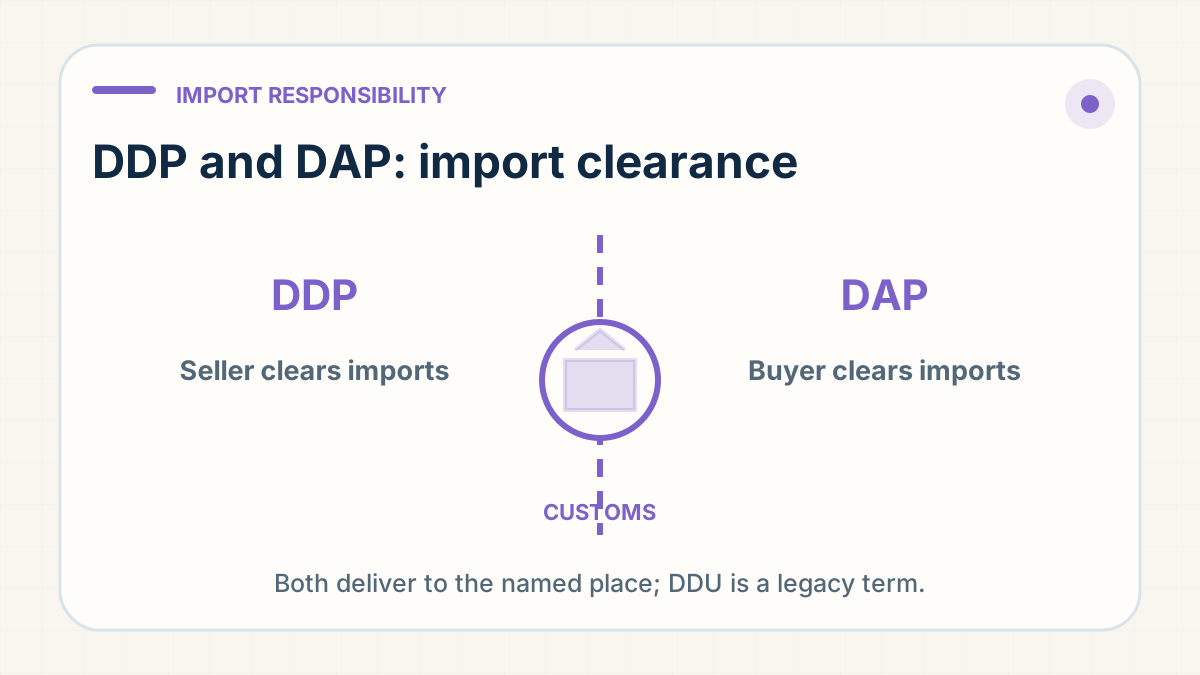
DDP (Delivered Duty Paid) means the seller handles the export, transit and import formalities and pays the associated duties and taxes. DAP (Delivered at Place) means the seller still arranges transport to the named place, but the buyer handles import clearance and pays the import charges. Some parcel quotes still say DDU, a legacy term, so ask the provider to state the current rule and exactly who does what. Under both rules the seller delivers to the agreed destination with the goods ready to unload, so the real difference is who clears customs and who pays. Before you choose, decide whether your checkout price includes import charges or whether your customer may pay at delivery, and get the named place in the written quote.
What is the difference between DDP and DDU?
Under DDP, the seller pays the import duties and taxes. Under DDU (Delivered Duty Unpaid), those charges are not prepaid, so your customer may have to pay at the border. RyanFulfil ships DDP as standard on the vast majority of routes and names any extra charge on the quote. It ships DDU only when you ask for it, and tells you upfront.
A shipping term helps define which party arranges transport, pays costs and carries risk. It does not tell you the delivery address by itself. Ask for the rule, its version and the exact named place in the quotation.
DDP: the seller handles import clearance
DDP stands for Delivered Duty Paid. The seller handles the required export, transit and import formalities and associated duties and taxes. The buyer normally handles unloading at the agreed delivery point.
Check that the seller can carry out the import obligations in the destination. A DDP label does not remove local registration requirements, product restrictions or the need for accurate customs information. Confirm what information the recipient must provide and how an unexpected carrier request will be handled.
What does DAP mean, and where does DDU fit?
DAP stands for Delivered at Place. The buyer handles import clearance and the associated import charges. The seller still arranges transport to the named delivery place; responsibility for import clearance is a separate issue from the delivery destination.
Under both DAP and DDP, the seller arranges transport to the agreed destination and delivers with the goods available to the buyer, ready to be unloaded. DAP does not mean that delivery responsibility automatically stops when a parcel enters the destination country.
Some parcel quotes still say DDU, a legacy term. Ask the provider to state the current rule and the exact responsibilities instead of assuming that the abbreviation defines a complete arrangement. Confirm who the importer of record is and who receives the carrier or customs request.
Compare the quote and the customer price
Put the exact product, quantity, destination and delivery service beside the price. Check which charges are included, which are separate and which remain provisional. Ask whether the recipient may have to pay anything before receiving the parcel.
If your checkout price is presented as the total delivered price, choose and confirm a route that supports that promise. If import charges may be payable separately, explain that before payment and make your delivery and returns policy consistent with the arrangement.
Customs treatment is route-specific and keeps changing. Confirm the current official requirements for the product, destination, declared value and customs classification. For EU orders, check how the customs-item duty is treated in the quote instead of assuming that parcel count alone determines the charge.
Check restrictions before selecting the service
Confirm that the actual goods qualify for the quoted route. Batteries, liquids, branded goods or regulated products may require additional checks or documents. A delivery term allocates responsibilities; it does not establish that the product is eligible for shipping or sale.
Ask how customs questions, missing recipient information, failed delivery and returns will be handled. Record the contact, evidence required and next update for a problem. Where a route is new to your store, use a controlled shipping route test before relying on it for normal volume.
Treat bulk-stock quotations separately
A bulk shipment into your warehouse is a different transaction from a parcel delivered to each customer. If the quotation uses EXW or FOB, confirm the collection or port arrangements and which costs begin after the supplier completes its delivery obligation.
FOB is intended for sea and inland-waterway transport. An air or courier quotation needs a rule appropriate to that transport mode. Ask the supplier or forwarder to identify the correct rule rather than carrying a familiar abbreviation into a different shipment.
Confirm the arrangement before ordering
Keep the named place, import-clearance responsibility, included charges, product restrictions and exception contact with the written quote. Compare providers on that same basis. The useful choice is the arrangement that matches your order and the delivery promise your customer sees.
Demand check · public sourcing communities
Buyers ask for DDP and customs handling by name
In Q3 2026, 42 of 679 distinct supplier requests from public dropshipping sourcing communities asked for DDP, customs clearance, duties or VAT paid upfront, or no extra fees for the customer at delivery. The goal behind the ask is an end customer who pays nothing at the door.
The ask concentrates where clearance is hard. Türkiye was named as a destination in 24 requests, and 10 of those asked for DDP or customs handling — a far higher share than across all requests.
A shipping term is a statement about who owns the border step. If a quote cannot say who pays duty and VAT, and when, the surprise lands on your customer and then on your support queue. Ask every route for its term in writing, and check it against the comparison on this page.
Where these numbers come from: we counted 679 distinct supplier-request posts in public dropshipping sourcing communities between 7 July and 30 September 2026 (805 collected before reposts and non-requests were excluded). We classified each post twice, independently, against fixed definitions, and a further reading settled any disagreement, so the counts understate unclear wording rather than inflate it. This page quotes, links and identifies no post and reproduces no contact details. Private client conversations are excluded. See the full breakdown in the Q3 2026 demand analysis.
Before you choose a customs arrangement
- Decide whether your checkout price is meant to include import charges or whether the customer may be asked to pay at delivery.
- Confirm the destination, product classification, declared value and any route limitations for the actual item.
- Make the delivery and returns policy match the arrangement; a surprise border charge can become a support and refund problem.
- For regulated, high-value or fast-changing markets, confirm the current obligations with a qualified adviser or the relevant authority.
Customer-experience test: if a buyer could be asked for money after checkout, make that possibility clear before they pay.
Need one order or route checked?
Worried about an order's tracking? Send us the order number on WhatsApp (wa.link/dropship) and we'll check what's going on.
Check Order on WhatsApp →