From the operations desk
The situation
Tuesday included product enquiries where documents mattered as much as price. The temptation in these situations is to treat any certificate, report or supplier assurance as progress. The real question is narrower: does the evidence belong to the exact item that may be bought and shipped?
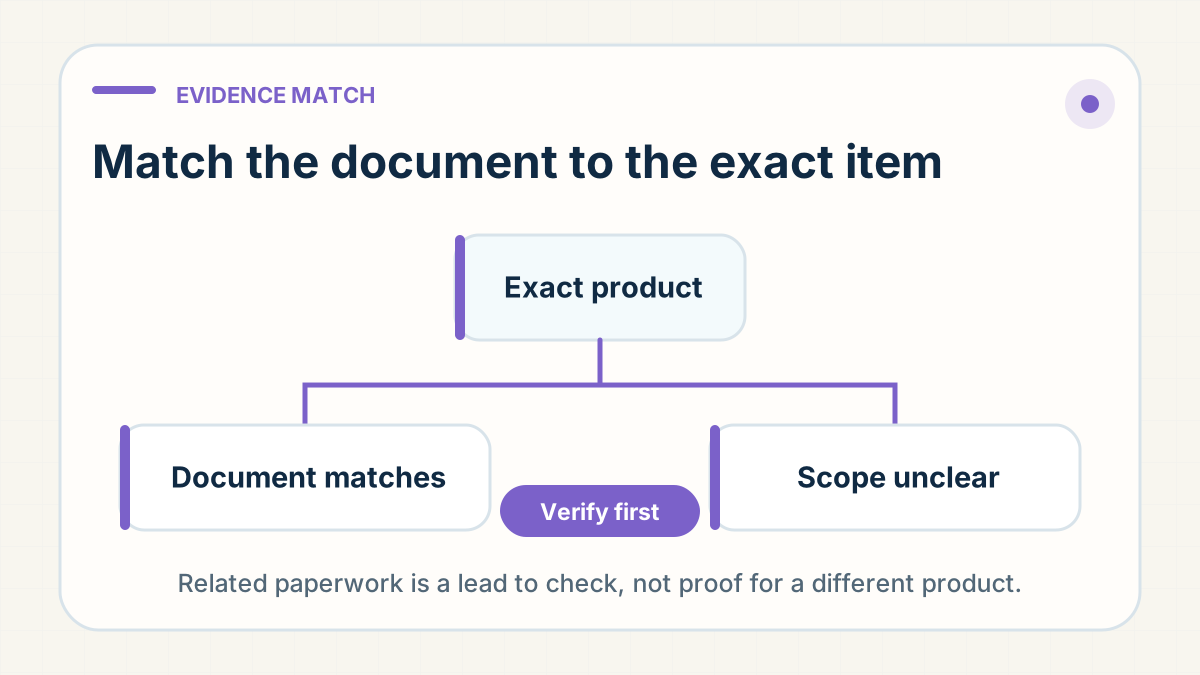
Related is not the same as verified
A report for a similar model can be useful evidence to investigate, but it does not automatically cover a different formula, component, factory or brand label. The same applies to a supplier statement such as certified or safe. Until the document scope and current product identity are matched, the honest status is supplier-claimed or not yet verified.
Build the evidence map before the confident answer
The practical check is a small matrix: exact product photo or SKU, manufacturer, important materials or formulation, destination, document name, model covered, document holder, date and verification status. If branded goods are involved, authorisation is a separate question from product documentation. If a qualified specialist or authority must confirm a requirement, that dependency should be visible before the quote is presented as ready.
New seller desk
The early-stage requests that day also showed why stage matters. Sellers across general consumer, apparel and accessories categories were comparing sourcing and shipping, but some were already asking about stock or a connected order flow. The right sequence was to verify the product and route first, then decide whether a sample, controlled order or small stock position was the next justified commitment.
The route questions centred on the US and continental Europe, but the product discussions were still mostly at one-product or small-test level. Geography added real quoting context; it did not turn early interest into proven volume.
Match every document to the exact product
Sellers do not need false certainty. They need a clear line between what has been verified, what the supplier claims, what is unavailable and what still needs specialist review. That distinction may slow one reply, but it prevents a much more expensive correction later.