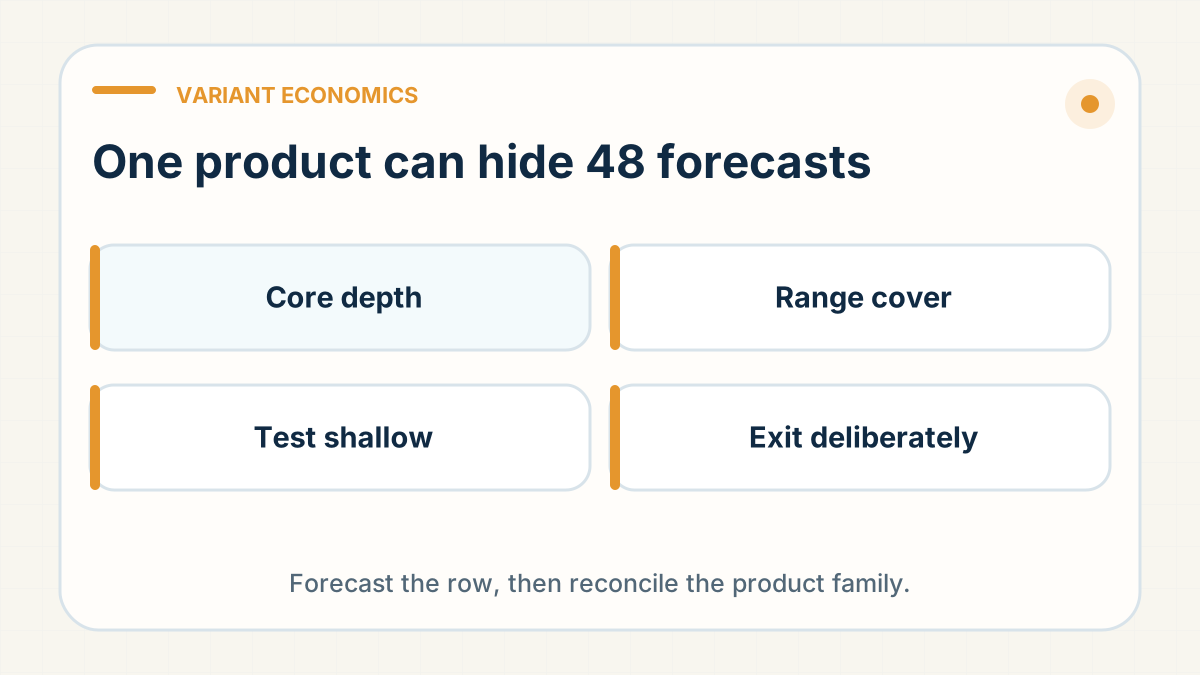
Plan each size and colour, not the product total
Six sizes and eight colours is 48 things you have to stock. They share one product page, one supplier and one ad. They do not share demand. Each one sells at its own speed, comes back at its own rate and ties up your cash on its own terms. Your dashboard can say 240 units in stock while the two your customers actually want are gone.
Plan stock at the smallest level you have to stock, pick, refund or reorder on its own. Keep the product total for the story you tell yourself about sales. Make the stock call from the size, colour and version grid. You are not trying to guess all 48 rows right. You are trying to protect the ones that pay you, test the ones you are unsure about cheaply, and stop the slow ones eating cash just because the parent product is a winner.
If the item itself may have changed, lock the SKU and the exact version you approved first. This guide assumes every row is one version you have approved and can ship.
Why the product total hides two opposite problems
Your demand piles into a few sizes and colours. Your cash and your warehouse spread across all of them. A product-level number hides both problems that come out of that.
- You are out of stock and cannot see it: the page says 240 units, but black medium and black large are on zero. The traffic still lands, and the choice your customer came for is gone.
- You are overstocked and cannot see it: the fast rows sell so well that the odd colours and edge sizes sitting on the shelf never show up in the blended number.
The answer is not always fewer options. More choice can fit more people and sell more. The answer is that every row has to earn the depth you buy for it, while you accept that a full size range can be worth keeping even when the ends of it sell slowly.
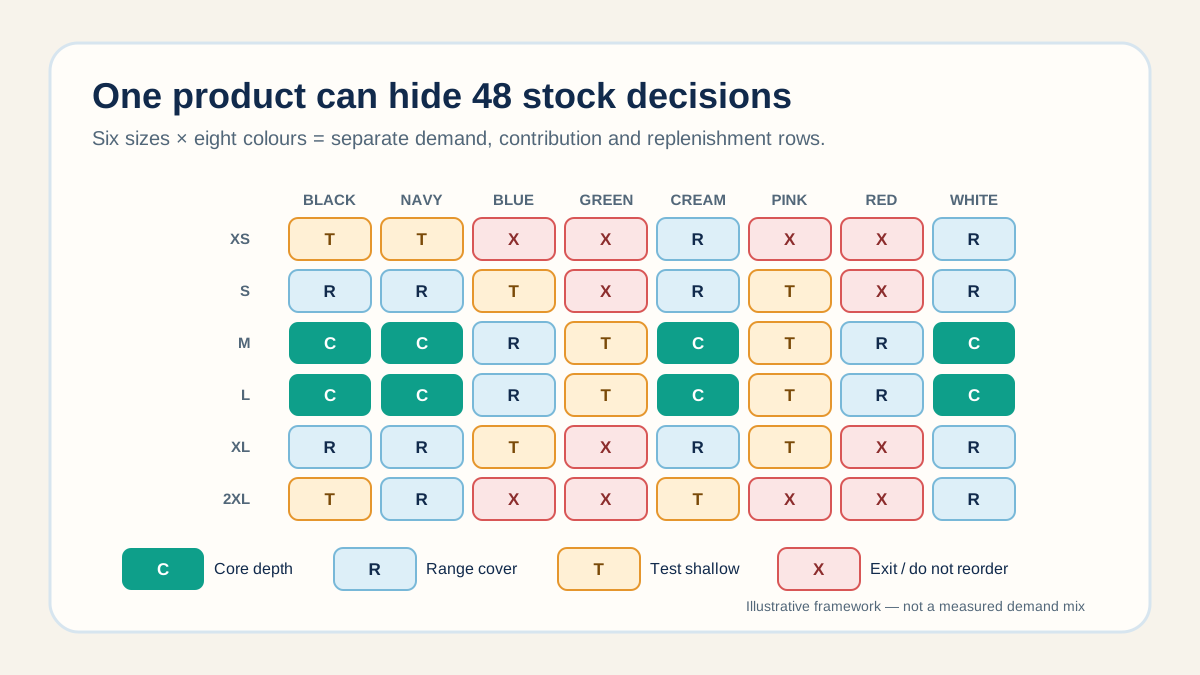
Build one grid before you change any stock
One row per size and colour you actually sell, and keep the meaning of each column the same every week. If colour, material, pack size, plug, fit, design or packaging changes what gets picked or what lands on the doorstep, it belongs in the row. For clothes that is size and colour. For electronics it may be model, plug and kit. For a design-led product it may be artwork, finish and pack.
- Who it is: parent product, your store SKU, the version you approved, the supplier reference and where it sits.
- What sold: paid units, cancelled units, delivered units, and how fast it has been selling in the same market at the same offer.
- What you have: sellable, committed, held, incoming and damaged units, the lead time your supplier actually hits, and the MOQ or pack size.
- What it earns: price, discount, product and packing cost, packed shipping cost, what refunds and reships cost you, and what you keep.
- What came back: size or fit returns, faults, wrong item sent, exchanges, reviews and support reasons where you can record them safely.
Every count needs a date and a state. Incoming is not available. "The supplier has stock" is not received. "On hand" can include damaged and reserved units. Show the date a shipment becomes checked and sellable, not the date you placed the order.
Give each row a job instead of one rule for all 48
Not every row deserves the same service. Give it a job from what you have actually seen it sell and what it does for your customer, then look at it again on a fixed date.
- Keep it in stock: the rows that bring in real money and sell every week. Protect them, work out their own reorder point, and chase a stockout the day it happens.
- Keep the range honest: rows that make the offer look complete, or serve people you want, but sell less often. Hold less, review them less often, and do not treat low volume on its own as failure.
- Test it or drop it: new rows, uncertain rows and rows that keep failing. Order per sale or buy the smallest amount you can live with, and stop reordering when the rule you wrote down is broken.
For a row you stock, work out the trigger with the reorder-point method for one SKU. The reorder point tells you when to act. The job you gave the row, and what you will do if you are wrong, tell you how much cash to put in.
Work out the row, then check it against the family
A row plan starts with what it has been selling lately, how many you will sell while you wait for more, and a buffer. Use weeks you can compare: a sale, a stockout or a price change makes the average lie. Show the counts next to the rates, and mark the rows where you have too little history to be sure.
- Units you sell while you wait = your recent daily paid units multiplied by the full time it takes to get more.
- Reorder point for a row = the units you sell while you wait + a buffer you can justify.
- Weeks of cover = sellable units divided by recent weekly paid units. If sales are zero or all over the place, say so instead of printing a neat number.
- What a row keeps = delivered money you did not refund, minus product, checking, packing, freight, payment, the ads you can put against it, refunds, reships and anything else that moves with the unit.
Then look up at the family. You want to see how much of your demand and your money sits in the top rows, how many rows have not sold at all lately, how much cash is stuck above the cover you agreed, and how often somebody landed on the page and could not pick the one they wanted. A healthy product total does not save a broken row.
Do not kill a size because it sells least
A slow size can still be worth carrying. Drop it and you may weaken the promise, lose trust in the range, or shut out people worth having. The other way round, a popular colour can still lose you money if it comes back, gets discounted or causes trouble. Check five things before you drop a row.
- Who buys it: does it serve a real person with a real need, or is it there to fill the page?
- What it keeps: is there money left after shipping, refunds and the problems that turn up late?
- What happens without it: when it is gone, do people pick another one, leave, or buy the wrong fit and send it back?
- What it costs to carry: does the MOQ, the lead time or the material tie up cash you cannot get back?
- What goes wrong: are similar codes, labels or bags causing the wrong one to be picked?
The most likely other explanation is that the weak row is not weak demand at all. It may have been out of stock, buried in the picker, mapped to the wrong code, shown with the wrong photo, priced differently, or left out of the ads. Check that people could see it and buy it before you drop it. A row cannot sell while it is hidden or gone.
Run a range test you can stop
Write the decision down before you add or remove anything. "I think two more colours will bring in money I would not otherwise get, without hurting the main colour or leaving me with stock. I will drop that idea if the money per visit does not improve by the date I set, or if the new rows are still sitting above the cover I agreed."
- Hold the version, the price logic, the page and the market steady where you can.
- Tag which visits and orders could actually pick each row, and keep "there but not chosen" apart from "never offered".
- Buy a small amount you can undo, or order per sale, until the row has enough real orders and settled outcomes to read.
- Ask whether the range grew, not just what the new row sold. Did it bring new people in, lift the conversion, or just take sales from a row you already had?
- Look again after delivery, returns and exchanges have settled. Fit problems and wrong-item picks almost never show up at checkout.
Keep the plan, the paid orders and the physical stock apart with the three types of demand. If the range is still moving fast, stay order-by-order or on shallow Guangzhou stock rather than paying for every combination you could sell.
What to do at your stage
- Testing: only offer rows your supplier can identify and ship every time. Test breadth on the page, or order per sale, before you buy depth.
- First real volume: protect the rows that pay you, write down the demand you lost when something was unavailable, and keep the long tail shallow.
- Established winner: set a reorder point per row, give each row a job, review sell-through and old stock, and tie returns and exchanges back to the exact version.
- Several stores: reuse the way you measure, not the winning mix. A black-medium winner in one market is a guess, not a plan, for another store.
Where RyanFulfil fits
We can keep the China side of this straight for you: one warehouse code per row, the product and packaging version you approved, what is sellable and what is still incoming, the lead time your supplier actually hits, packed weight, the checks we run, evidence from the first changed batch, and the reason each problem happened. You stay responsible for demand, range, ads, pricing and the size or fit promise you make your customer.
Send the parent product, the exact list of sizes and colours, your current SKU map, the approved photos or spec, recent paid units by row, the countries you sell to and the stock decision you are weighing up. Use supplier-change control if the next batch may come from somewhere else, because the same size and colour label does not mean the same physical thing.
What these numbers cannot tell you
The 48 rows are six times eight, not a hint that you should stock 48 things. The privacy-safe May-to-August 2026 review behind this guide covered 145,005 unique store-orders across 141 store labels, a lot of them hero-led and multi-unit. It does not hold complete row-level visits, availability, refunds, cash timing or money kept for every store, so it cannot set a best range, a reorder number or a proven effect on sales for everyone. The grid, the jobs, the sums and the test are ours. Run them on your own market, product, cash and returns.
Need a product checked before you spend on ads?
Send us the product link and destination on WhatsApp (+86 178 4666 9989). We'll check sourcing, packing and shipping with you before you commit.
Get Sourcing Quote on WhatsApp →