The short answer
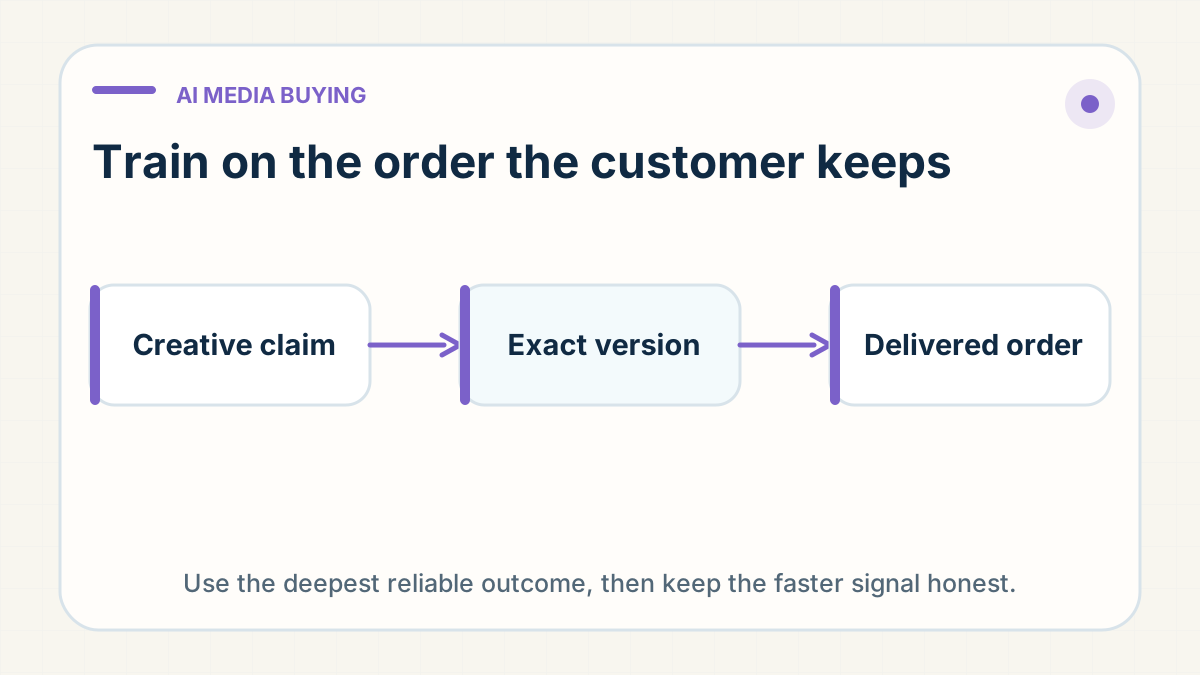
Letting the platform buy your media does not let you off the hook. As it takes over the audience, the bid, the placement and the creative, the thing you still control is what you feed it: the exact version you ship, the claim you make, the route it travels and whether the customer kept it. A sale lands fast. It can still cancel, ship late, arrive wrong, come back or lose you money. Look at your winners again once dispatch, delivery, refunds and reships have settled.
Use the deepest number you can actually trust with your order volume, your feedback delay, your data and your privacy rules. For a young store that may still be the sale itself. What changes is that you stop pretending a sale means a happy customer: keep every order joined to what happened to it, keep the later outcome in front of you, and only change what you feed the platform when the later number is solid enough to teach from.
If the thing hurting right now is a rising cost per customer, work through the Meta CAC diagnostic first and find out which part moved. This guide picks up at the next question: what truth should the machine be learning from?
What changed when the platform started making the calls
Meta said its Advantage+ products passed a $75 billion annual revenue run-rate in Q2 2026. It also described models that weigh the ad and the person together, and said early pilots lifted Instagram app-event conversions by 1%. On the same call it said its model updates together raised clicks by 8.3% and conversions by 15.7% on Facebook. Those are Meta's own platform numbers. They are not tests run on a store like yours, and they are not a lift anybody has promised you.
The useful bit is narrower. More of the buying decision now happens somewhere you cannot open up and check. Your campaign settings still matter, but they go stale every time the platform changes. What you own keeps its value: which item was shown, what you claimed about it, which version actually shipped, which route carried it, whether the customer kept it and what you had left.
The machine can only spend against what you show it. It cannot spot that the warehouse swapped your supplier, that the parcel got heavier once it was packed, or that a refund reason never made it back to the order. A platform can get very good at chasing the wrong thing. Your job is to move what it chases closer to your actual business, without making it so slow, so noisy or so risky that the machine cannot use it.
A sale is not the same as a customer who kept it
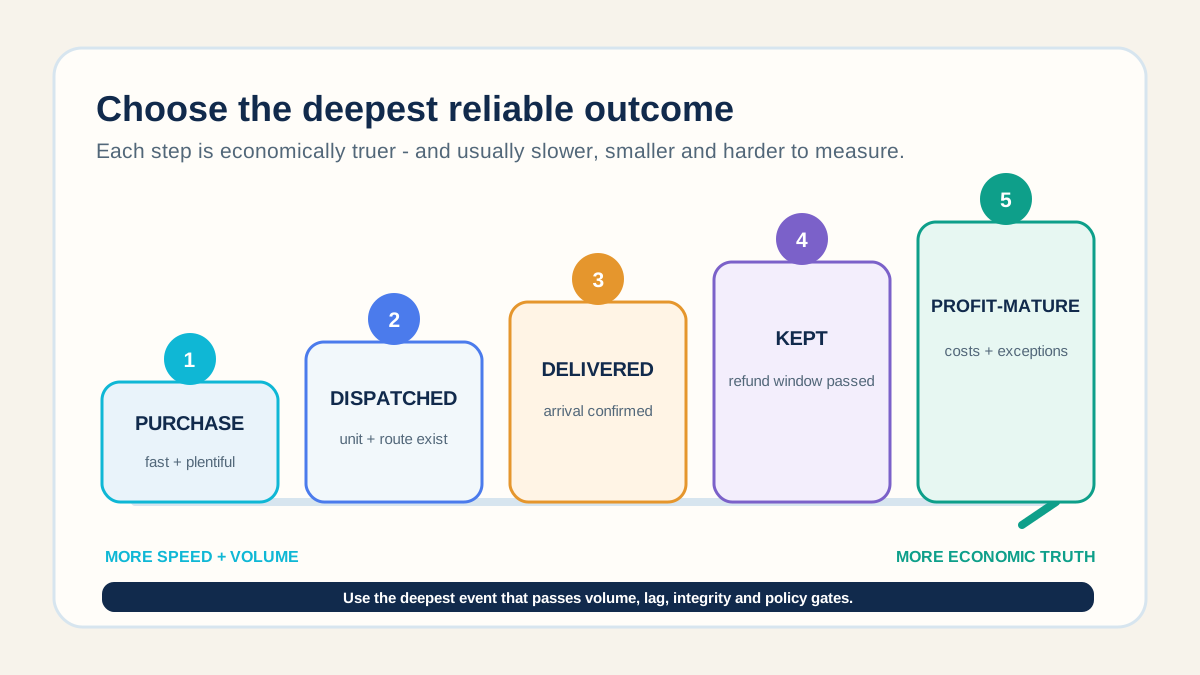
A purchase event answers one narrow question: did your store record an order under the rules you set? It does not tell you the unit was in stock, the version you approved shipped, the parcel arrived, the customer kept it, or you had anything left afterwards. That gap is wider when you ship from China, because the physical stuff lands weeks after your dashboard has already crowned a winner.
- Sale: fastest and most plentiful, but it can cancel, be counted twice or bring you a customer you did not want.
- Dispatched: proves a sellable unit and a working route existed. Tells you nothing about delivery or the customer.
- Delivered: clears the parcels that never left and most of the ones that went missing. It can still hide refunds, reships and chargebacks.
- Kept: delivered and not refunded inside the window you chose. This is the first number close to a happy customer.
- Money left: kept sales minus the costs and problems you know about on the day you look. Truest and slowest, and there is least of it.
Pick the deepest number you can trust, not the deepest you can imagine
"Optimise for profit" is not a plan. A small store can build a beautiful profit number that turns up weeks late and fires too rarely to teach anything. A big store can build a fast sale number that is simply wrong, because of duplicates, missing consent or a broken link back to the order. Run four checks before you change what a campaign is fed.
- Enough of it: the events happen often enough, in that week's orders, for you and the platform to tell a real move from noise. No count works for every account.
- Fast enough: it comes back in time for the way you buy. Long routes and long refund windows may mean a fast event for the machine and a separate settled review for you.
- Clean enough: the event names, values, currencies, de-duplication, attribution settings and order joins are tested and written down.
- Allowed: you can use that event and that customer data under your consent, privacy, platform and contract rules. Send the least you can, and do not upload something new just because a tool makes it easy.
In practice you start with the sale, and keep your own record of dispatched, delivered, kept and money left. Move the platform up a rung only when the next one passes all four checks. Until then, let it learn from the fast number you trust, and make your own budget calls from the settled one.
Check which conversion action receives the correction
Before you treat a later refund as a change to Google bidding, find the conversion action that received the original purchase. Google's Klaviyo Data Manager page describes Customer Match and event-based conversion actions. On 7 September 2026, its Shopify page contained conflicting guidance: one section describes server-to-server purchases using the Google & YouTube app setup; a later connection note says conversion import is not supported. The page does not explain how these statements fit together. Check your actual account, app and connection. Neither statement proves that refund corrections reach the action used for bidding.
Start with one settled order. Write down its original order or transaction ID, the conversion action name, the source path, its primary or secondary setting and whether the original conversion appears in Google Ads. Primary actions are normally used for bidding. Secondary actions are normally for observation, except when used in a custom goal.
Google says conversion adjustments can restate the value after a partial return or retract a conversion after a return. That does not prove your connector already sends those changes. For online conversions, Google identifies an adjustment by transaction ID and conversion action name. Check your documented connection and a small matched sample before changing uploads or bidding.
Read the source details: Google's Klaviyo connection; Shopify connection guidance; conversion adjustments; and primary and secondary action settings. If you use the native Shopify integration, first check the partial-refund gap in Klaviyo.
Join the ad promise to the order the customer kept
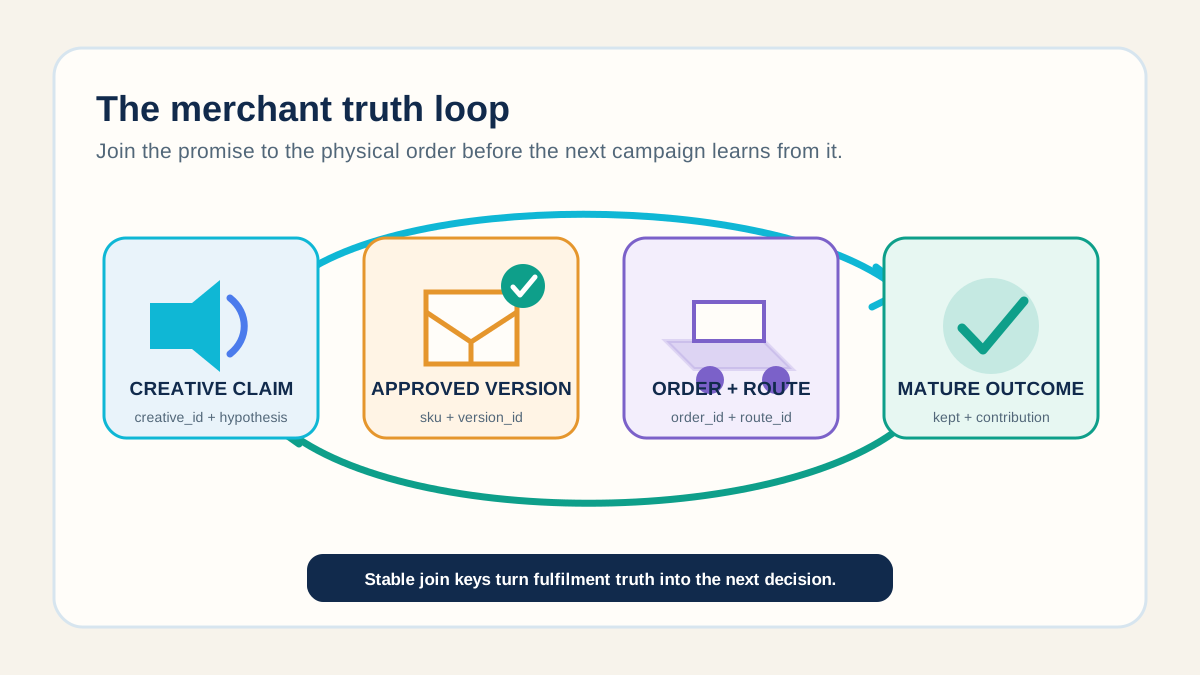
This is the part nobody can take from you. If your ad team names a file, your store names a product, your supplier sends a listing link and your warehouse uses a different code, nothing that happens later can reach the promise that sold the order. The loudest dashboard wins the argument, even when the physical item is what lost the money. One joined-up record is the thing you own.
- The ad: creative ID, the hook, the problem, how it works, the proof, the objection, the offer and the exact claim.
- The product: your store SKU, the version you approved, the supplier or factory version date and the sample you signed off.
- The order: order ID, line, size or colour, quantity, discount, destination and the week it came from.
- The parcel: which unit was used or reserved, how it was packed for the customer, packed weight, route, dispatch and tracking coming back.
- What happened: delivery, refund, reship, chargeback, the reason it went wrong, the money you kept and the date you read it all.
Start with your hero product and the decision that is costing you most. The SKU and product-version guide shows how to keep the physical item you approved from moving; the bundle-cost guide shows how a promotion can change the parcel and your margin while the ad stays the same.
A worked example: the winner that lost money
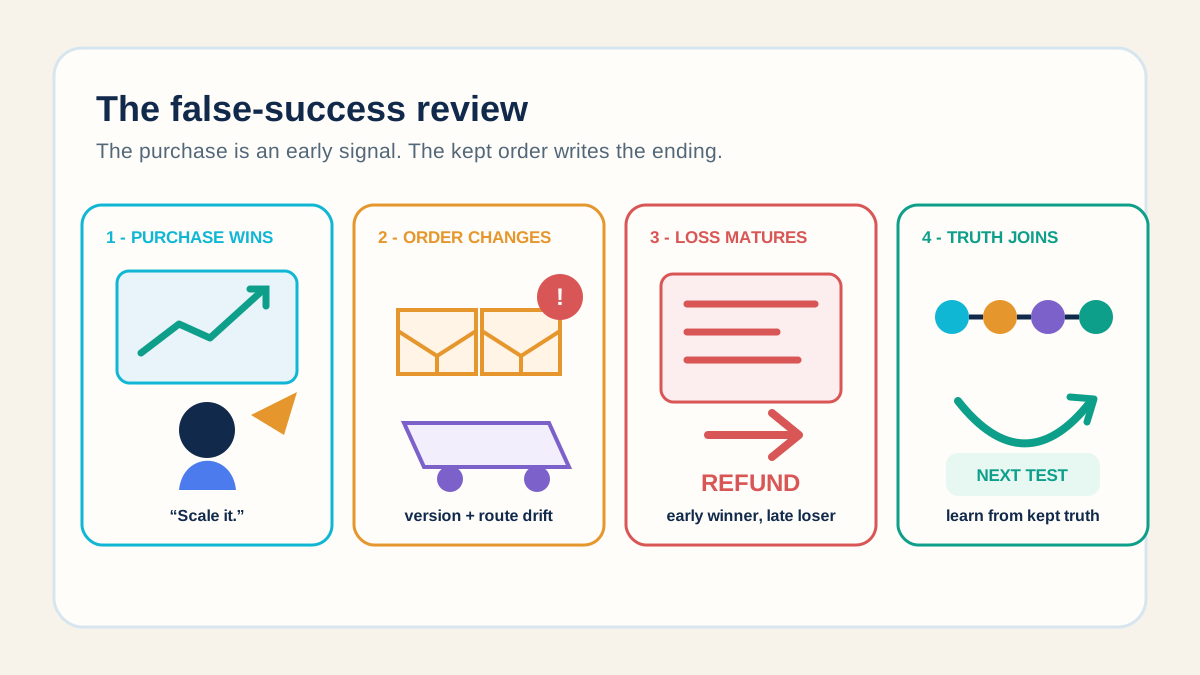
Say Campaign A brings in 200 purchases at a $24 cost per purchase. Campaign B brings in 160 at $27. The dashboard puts A first. Now wait until delivery and refunds have settled.
- Campaign A: 200 purchases, 170 dispatched, 145 delivered, 132 kept and $3,960 left before ad spend. Ad spend was $4,800, so you are down $840.
- Campaign B: 160 purchases, 155 dispatched, 148 delivered, 144 kept and $5,760 left before ad spend. Ad spend was $4,320, so you are up $1,440.
The numbers are made up, not a benchmark. A has the cheaper purchase and the worse result. The next question is not "can the platform find more people like B?" It is "what made the gap?" Look at the market, the offer, the version, the route, the cancellation reasons, the delivery times, the refund reasons and who bought, before you blame anything. If A shipped a changed supplier version and B did not, then your warehouse, not your audience, created what looks like a failed ad.
Keep the way you count money steady with the first-order margin and real lifetime value guide. Sales, delivered money you kept, money left before ads and money left after ads are different things. Do not rename one as another because the answer is uncomfortable.
Check the winner again before you spend more
Every apparent winner should face a second look at the same week of orders. Write down, in advance, the result that would change your mind. That turns a celebration into a claim you can test.
- The early claim: this ad and this campaign found better customers at a price you can live with.
- The other explanations: attribution moved, a discount pulled in different buyers, one country delivered faster, one version failed, one route cost more, or it is simply too early.
- How you would know it failed: the early winner loses its lead on kept orders, on money left after ads, or on refunds and reships by the date you named.
- What you do: keep it, narrow it, fix the product or the route, change the claim, or stop. Write down why, and the date you decided.
Do not make a campaign sit still while every parcel lands. Run two speeds: fast events so the machine can learn and your budget guardrails can bite; settled outcomes for your own judgement and for improving what you feed it. The bridge between them is the joined record, not a hope that the fast number is final.
A 30-day plan
- Days 1 to 3: write down what you mean by sale, dispatched, delivered, kept and money left. Name the window you will wait and every cost you count.
- Days 4 to 7: test your order IDs, event values, currencies, de-duplication and consent states. Reconcile one sample across the ad data, your store export and the warehouse record.
- Week 2: add the version ID, the ad idea, the destination, the route and the problem reason to your hero product only. Do not start with the whole shop.
- Week 3: build one weekly early dashboard and one separate settled table. Show counts beside rates and label the weeks that are not finished.
- Week 4: take one early winner and one early loser and look again once things settled. Write the other explanation and the failure test before you see the result.
Only once that works should you think about sending a deeper event back to an ad platform. Check the platform's current documentation, whether the event is allowed, how values are handled, what you owe your customers on privacy and who will keep the setup honest. A server-side connection can move data better. It cannot fix a wrong version, a missing refund cost or data you should not be sending.
What to watch, and what to ignore
- Watch: AI product discovery and shopping assistants. Shopify said traffic from Catalog-powered AI searches converted at twice the rate of general AI search in its Q1 2026 investor deck. That is Shopify watching its own platform, not a reason to rebuild your checkout around assistants. Keep your product data exact and machine-readable, and wait until you see real orders of your own.
- Watch: deeper numbers once you have the volume and you trust your costs. Test them on a small slice before you move the whole account.
- Ignore: a platform-reported lift treated as a promise for your store. Their pilots show a direction, not a result you will get.
- Ignore: "more creatives" as a plan, with no idea behind each one, no proof of the exact version and no decision attached to the test.
- Ignore: any tool that wants your customer or profit data before you have checked consent, what you are sending, security, platform rules and who is responsible.
Teach the system what a kept order looks like
We do not run your ad spend and we do not tell a platform who to buy. What we can do is make the China-side evidence line up: sourcing the exact version, sample and first-batch checks, what is sellable and what is incoming, how the parcel is packed for your customer, packed cost and route quotes, controlled live orders, tracking coming back and evidence when something goes wrong.
That lets you test an ad or a campaign without a quiet supplier, bundle or route change spoiling the answer. Services shows what we can take off your hands; Pricing shows which customer-ready costs belong in your sums; and Proof shows what we will and will not claim.
Send the exact product reference, the version you approved, the main sizes and colours, the countries you sell to, where your orders are today and the outcome you are trying to join up. If the product itself may be changing, run the four-clock hero-product check before you ask a machine to scale a conclusion your records cannot back.
What these numbers cannot tell you
Meta's Advantage+ scale, its recommender and its model lifts are Meta's own Q2 2026 numbers. Shopify's AI-search comparison is Shopify watching its own platform. Neither describes a RyanFulfil client, proves one thing caused another, or predicts what your ads, your conversion or your profit will do. The ladder, the four checks, the joined record, the worked example, the second look and the 30-day plan are ours. They do not guarantee accurate attribution, platform learning, sales, delivery or profit. Consent, privacy, the claims in your ads, how you use data and platform rules stay with you.
Need a product checked before you spend on ads?
Send us the product link and destination on WhatsApp (+86 178 4666 9989). We'll check sourcing, packing and shipping with you before you commit.
Get Sourcing Quote on WhatsApp →